


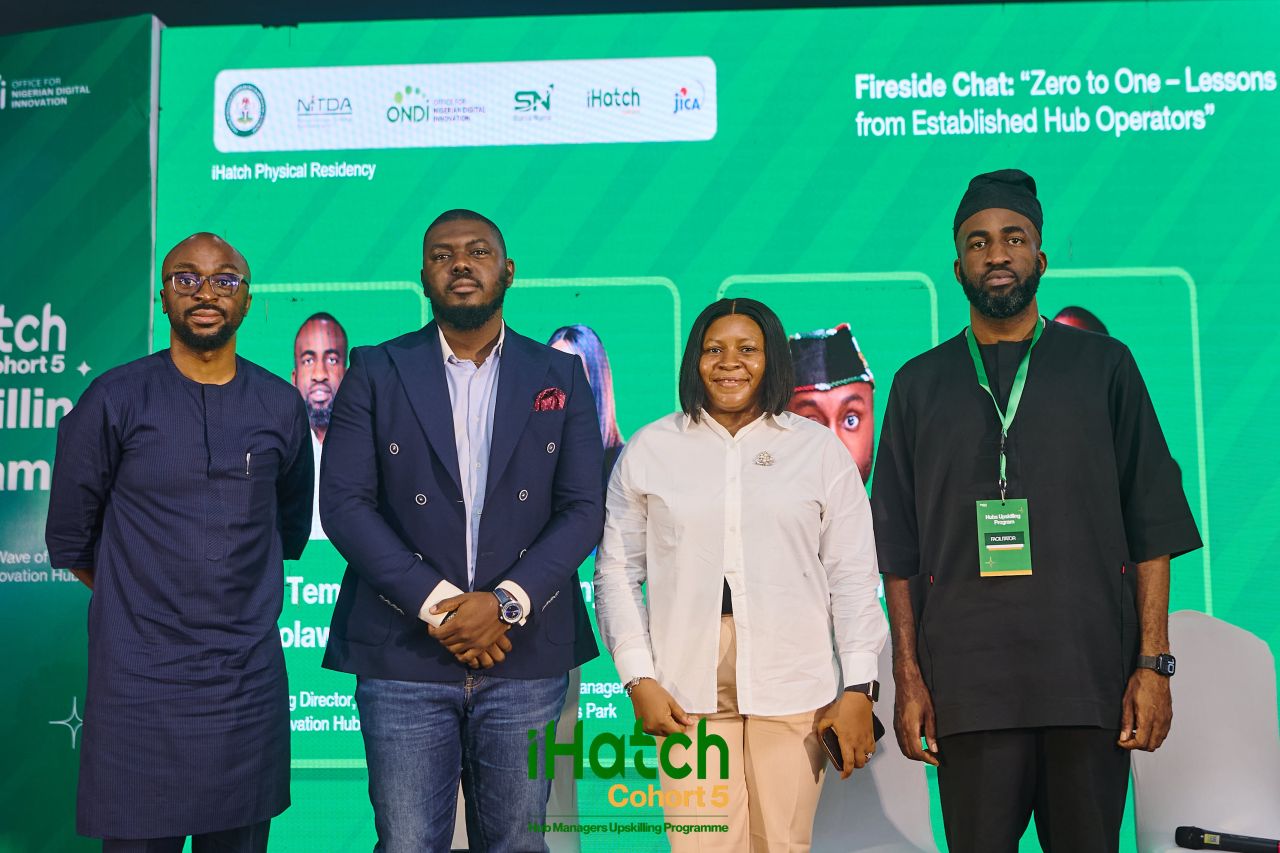






ABUJA — Technology ecosystem leaders, innovation hub managers, and digital transformation advocates gathered in Abuja for the iHatch Cohort 5 Hub Managers Residency Upskilling Programme, a national initiative aimed at strengthening innovation infrastructure and expanding startup support systems across Nigeria.
The programme, convened by the Office for Nigerian Digital Innovation under National Information Technology Development Agency (NITDA), was organised in partnership with Japan International Cooperation Agency and StartupNigeria.
Among the facilitators at the event was Temi Kolawole, a govtech and digital transformation expert who contributed to multiple strategic sessions during the three-day residency programme.
The initiative brought together 37 innovation hub managers representing all states of the federation and the Federal Capital Territory, highlighting what stakeholders described as one of the country’s most ambitious efforts to decentralise innovation support systems and startup infrastructure.
Kolawole participated in a fireside discussion titled “Zero to One: Lessons from Established Hub Operators,” where ecosystem leaders examined the realities of building and sustaining innovation hubs in emerging markets.
The discussions focused on operational sustainability, ecosystem collaboration, and the long-term role of hubs in supporting entrepreneurs, startups, and technology-driven economic growth.
He also joined the Triple Helix Panel, which explored the intermediary role innovation hubs play in connecting government institutions, the private sector, and academia.
According to participants, the session addressed how innovation hubs can maintain neutrality while effectively translating the priorities of different stakeholders into collaborative outcomes that support entrepreneurship and innovation.
Kolawole additionally delivered a masterclass on fundraising and resource mobilisation, where he challenged hub managers to rethink traditional approaches to sustainability.
“Fundraising is not the goal, institutional permanence and sustainability is,” he stated during the session, emphasizing the need for innovation hubs to develop diversified and sustainable revenue models rather than relying solely on short-term funding cycles.
Participants reportedly engaged in extensive discussions around building resilient institutions capable of supporting startup ecosystems over the long term.
Industry observers say the iHatch Cohort 5 initiative represents a significant milestone in Nigeria’s effort to expand innovation infrastructure beyond major urban centres such as Lagos and Abuja.
With participating hubs spread across all six geopolitical zones, the programme is expected to create stronger regional support systems for founders and entrepreneurs in underserved areas.
Stakeholders at the event noted that establishing innovation hubs across every state and the FCT could help reshape access to entrepreneurial opportunities by ensuring that founders outside traditional tech clusters have recognised local support networks.
Kolawole highlighted the broader significance of the initiative, describing it as an important step toward changing “the geography of who gets to build” within Nigeria’s innovation ecosystem.
He also praised the role of Ilorin Innovation Hub in setting standards for innovation hubs nationwide, noting that ecosystem development should extend beyond individual states to national impact.
The residency programme reflects growing efforts by public and private sector stakeholders to strengthen Nigeria’s digital economy, support startup growth, and build inclusive innovation ecosystems capable of driving economic development across the country.
Organisers reaffirmed their commitment to empowering innovation managers and creating sustainable structures that can accelerate entrepreneurship, technology adoption, and digital transformation nationwide.