


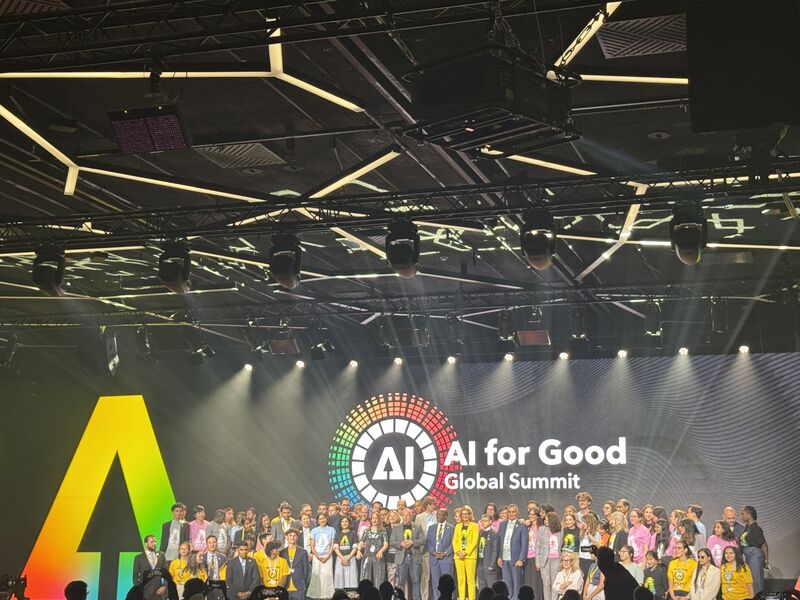






Geneva, Switzerland — International trade and digital governance lawyer Gbemisola Osadua has called for stronger, context-specific regulatory frameworks to guide the development and deployment of artificial intelligence (AI), warning that Africa risks adopting systems that do not align with its socio-economic realities if governance is not deliberately shaped.
Osadua shared insights from her participation in the AI for Good Global Summit 2025, convened by the International Telecommunication Union in Geneva, where global leaders, policymakers, and technology experts discussed the future of artificial intelligence and its impact on societies and economies.
She noted that the discussions underscored a critical shift in global thinking — from whether AI will influence development outcomes to how it can be governed responsibly and intentionally. According to her, the pace of technological advancement has outstripped the development of regulatory safeguards in many regions.
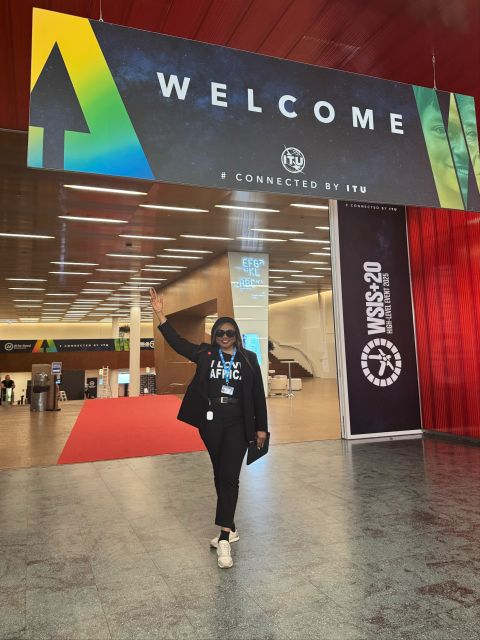
Osadua stressed that for Africa, artificial intelligence presents both significant opportunities and regulatory challenges. She highlighted potential gains in sectors such as finance, healthcare, trade, and public service delivery, where AI could accelerate development and improve efficiency.
However, she cautioned that without strong governance frameworks, African countries risk importing digital systems that fail to reflect local priorities, institutional capacities, and development needs. She described this as a challenge of “agency,” where the continent must actively shape, rather than passively adopt, emerging technologies.
Her remarks are informed by her ongoing academic and policy work as a Fellow at the Berkman Klein Center for Internet & Society at Harvard University, where she focuses on the ethics and governance of artificial intelligence. Her research explores how regulatory systems can be designed to reflect local contexts while remaining aligned with global standards.
Osadua argued that AI governance cannot follow a one-size-fits-all model, particularly for developing economies. Instead, she advocated for a combination of regulatory innovation, stronger institutional coordination, and active participation in global standard-setting processes.
She further emphasised the importance of translating global discussions into actionable policies that support inclusive and sustainable digital transformation across African economies.
Looking ahead, she expressed interest in continued engagement with international platforms, including preparations for the AI for Good Global Summit 2026 in Geneva, where global stakeholders are expected to further advance discussions on ethical and inclusive AI governance.