On the 7th of January, I was at Neni at the invitation of the Martina Chinyere Enidom Foundation. The foundation, led by Paul Enidom, Chairman of Paul B Construction Ltd, organised its 3rd lecture series, and I chaired the occasion. The lecture titled Government and Community Partnership in Development Initiative: The Neni Example was eye-opening.

Neni community, like most communities in Anambra, boast of eminent business people, scholars and entrepreneurs. My back of the envelope calculation shows a combined net worth of between 700 million to 1 billion dollars of Neni indigenes. It is the town of the owner of the Young Shall Grow Transport and Rockview Hotels, the owner of Chelsea Hotels and the late owner of Tonimas Group, amongst others.

Some years ago, Paul B approached some of the town’s rich men and proposed an internal road drainage and asphalt construction at cost using his expertise. He started with a road paid for by him. After initial scepticism, Chief Anthony Enukeme (Tonimas) joined the initiative with others.

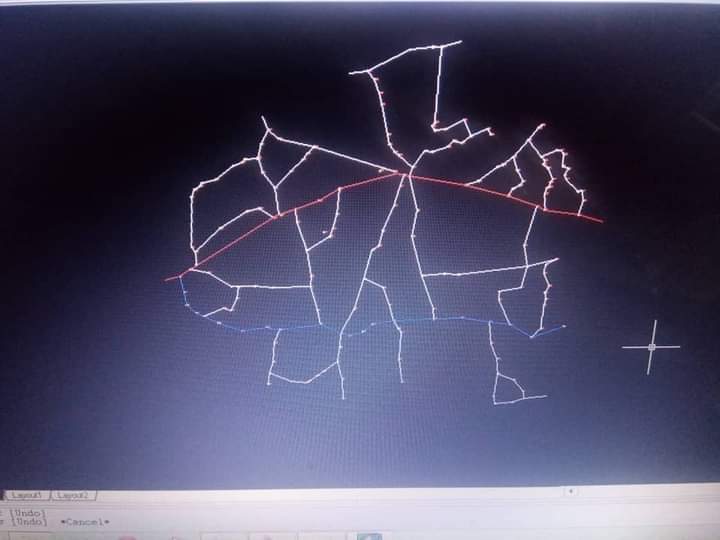
Today, Ndi Neni have constructed 24km, and the Anambra State government, in a rare show of support, constructed 2.7km of asphalt road. These are internal roads within Neni town. To understand the impact of 24km of asphalt road, consider that Anambra State is the second smallest state in Nigeria after Lagos; most towns in Anambra are no more than 25sq KM. Neni is probably the town with the best stock of internal roads in Nigeria.

To ensure sustainability, the Neni community, under the umbrella of the Neni Town Union, approved the setting up of its road maintenance agency; Neni Road maintenance Agency, NERMA. The Agency’s mandate is not limited to the roads constructed by the town but includes other state roads crossing the town.

In what I consider a significant departure from typical attitudes in our environment, the town documented a maintenance protocol articulating standards. The road maintenance handbook contains guidelines, which they plan to harmonise with State and LGA standards, if they exist.

Success begets success; now, the town is focused on rebuilding and retooling the schools in the community. There are 7 Primary schools and a secondary school in Neni. The state government had handed over six primary schools to both the Catholic and Anglican churches, with only one primary school and the secondary school under state control. Initial studies reveal a sad state of affairs at the schools. The schools are crying for upgrades, and the quality of instruction has declined progressively.

The Neni community, from its experience with the roads, is set to intervene. The community has set up the Neni Development Initiative Group(NDIG) to raise funds for the immediate reconstruction of all the schools. Already, about #25m was raised this Christmas towards this plan.

The NDIG is also handling the upgrade of the three health care centres in Neni. The plan is to provide quality health care for residents at affordable rates while sustaining infrastructure and operations cost through the NDIG.

Last December, Dr Christopher & Mrs Victoria Anago, under their NGO, Lifecare Coalition Outreach in California, deployed over 100 medical personnel to Neni for free medical outreach valued at over 500 million Naira. Dr and Mrs Anago plan to intervene in their community Neni to provide health care services to the underprivileged and people from neighbouring communities.

The story of the Neni community is a profound expression of the idea of Unlock Naija. It is an example of community-based governance that Igbo communities and Nigeria should emulate.

The idea of coming together to delink from the moribund Nigerian state where the government has become the obstacle to unlocking our potentials is the path to the future.

For Ndi Igbo and Nigerians in general, I have preached the message of applying Uche, Uchu na Egwu Chukwu as the triple virtues that will unlock our capabilities and lead us on a sustainable path to development.

Speaking at Neni, I called on those who want to move to Naija Nation, that space where we do not wait for restructuring, secession or constitutional amendment to unlock our potentials, to come together now. We, in Unlock Naija Movement, believe in the fierce urgency of now, like the Neni community.

To achieve this pivoting from the gridlock of Nigeria, we must eschew the triple evil rearing its head in our society. The first is Nkali, the superiority syndrome where we all want to display our superiority over others through flaunting our wealth and the emerging income discrimination in our society.

The second is Nkpali, a disrespectful and abusive disorder growing like a stage four cancerous tumour. To disrespect and abuse elders and those we consider beneath us is now described as courage; we must excise it now.

The last is Mmegbu, that urge to oppress and suppress. Oppressing the poor and those beneath us is now a sign of success. The powerful and noveau rich identified by our convoys and retinue of hangers-on do not obey traffic or any rules. We have figured how to use state apparatus for our personal end. I will describe these vices in another post soon.

For our communities to thrive and our society renewed, we must eschew Nkali, Nkpali na Mmegbu. To shun these vices is critical in the effort to make the wealthy come together and deploy their resources for communal benefit and not impose their will on the community using their unfettered powers made possible by a corrupt and moribund Nigerian state.

Neni is an example to follow.

Osita Chidoka
January, 2022

Map of tarred Roads in Neni

I was about six and on holidays in our hometown. Did we live in the city? Yes, but every Friday Evenings, we went home so we’d cultivate my parents’ yam, cocoyam and cassava plots on Saturdays, peel and process cassava or process palm oil on Sundays, then hurry back to Onitsha to get ready for school Sunday evenings. It was just about twenty minutes drive from our town. So, you’d consider us regular village kids because we knew and experienced life as our mates in the villages. Meanwhile, we attended school in the town. Every term, the day that school vacated is the day we were taken home to the village.

I already bonded with this family that had kids my age from constantly spending weekends in the countryside. Theirs was a peculiar family, all five kids were dada, boys and girls. They came to our house to play, and in turn, we went to theirs.

That’s how I found out details that threw me about one of them, even as a kid. The third child in the family and a girl, she was fondly called “Queen.” I can’t say if it was metaphorical or not that she was addressed thus, but the name stuck and she had an august carriage about her.

Every night when she slept, her locks were arranged in a new way different from how she wore it the previous day. So she always woke up to a new hair do. What I mean is this; if she had a bun on her hair today, tomorrow, she’d have four buns with the hair parted in the middle, and another day, it’d be left flowing. Every night! What was more perplexing to me is that there were no strings holding the hair in the position, yet it looked neat, brushed and we’ll cared for. When she slept, no light was allowed anywhere near her. People had to knock to enter any room where she slept. Aside these seemingly mysterious aspects of her, a was a good kid and fun to be with.

It was at the time I was friends with her that I encountered another dada. At the time, he was a boy of about twelve and was well known in Eziowelle, Abacha, Abatete and the environs. An uncle brought him to our house. I was astonished to find that the boy could read palms! He looked into my cousin’s palm and told him that he had a twin sister who died young and who was still very much with him! He told the uncle that brought him that he would have a tumultuous marriage, which in hindsight, turned true!

Now, you’d ask what became of this seer dada with big locks who brought much fame and material possessions to his parents.

It happened that he told men whose wives couldn’t conceive quickly what to do. His remedies were applauded as they were effective. Those who were helped by him brought bags of rice and money in shows of appreciation. The boy’s mother’s nwunye di became jealous, extremely so.

She waited and on one of those days that the woman left her son at home to get things from the market, the nwunye di took a pair of scissors, removed the entire locks and dumped them in their pit toilet.

The boy not only lost his powers, became crippled after a life threatening illness.

Ada Obi

Obi Cubana awards scholarship to the sachet water seller caught in a viral video sharing money to prison inmates in a Nigeria’s prison truck

In a live interview with Daddy Freeze, Cubana promised to sponsor the boys education from his first degree to his master’s in any universities of his choice any where in the world.

He assured him of a job placement in any of his organisations at the completion of his education.

Meanwhile, the young man has been tracked. In an interview with Freeze, he said he was a one hundred level law student of Ebonyi state university but dropped out of school when he could no longer pay his school fees

Ambrose Onwuegbuzie

Nightclub celebrity, Obi Iyiegbu, popularly known as Obi Cubana has declared that 2022 is the year he showcases what he does for a living.

In a post on his page on Thursday, he revealed that he established his first club in Abuja in 2006.

He said, “Established 13th October 2006, 16 years and still standing. If you never come here that year for Abuja, you never start. This year: showcasing what we do for a living.”

Obi Cubana had been grilled by the National Drug Law Enforcement Agency over suspicious payments into his account by three convicted drug dealers from Nigeria, Malaysia and India.

The Economic and Financial Crimes Commission had last year also invited the businessman to answer questions about the sources of his wealth.

NDLEA granted him bail after hours of questioning. He’s expected to return at a later date.

Punch

Governor Hope Uzodinma of Imo state has appointed Popular socialite and Club Owner, Paschal Okechukwu alias Cubana Chief Priest as his Special Adviser on Social Media Influence in a letter dated 14th of January, 2022 , signed by the Secretary to the government of Imo, Chief Cosmas Iwu, Okechukwu’s appointment was approved by the Governor and he is to begin work immediately.

The letter read; “His Excellency, Distinguished Senator Hope Uzodimma, Governor of Imo State, has approved your appointment as Special Adviser to Governor on Social Media Influence. This appointment is with effect from 10″ January, 2022.”

Credit: Okwa C ifugo

Africa No Filter, a narrative change organisation, and Meta have announced a partnership to launch “Future Africa: Telling Stories, Building Worlds” program, aimed at boosting the use of Virtual Reality in Africa’s storytelling.

Supporting Extended Reality storytellers to develop new and compelling content about Africa, the program will provide grants and mentorship. “Future Africa: Telling Stories, Building Worlds” forms part of Meta’s focus on immersive technologies and Africa No Filter’s investments in innovative storytelling that shifts negative stereotypes about Africa.

Moky Makura, Executive Director at Africa No Filter, said, “Virtual Reality has the potential to take storytelling to another level. In this new metaverse, audiences don’t just get to watch a story unfold, they get to live in it. This is an opportunity for African content creators to push the boundaries of their creativity and innovation.”

Open from today, Africa No Filter and Meta are inviting Extended Reality creators to apply to the program, and recieve funding of up to $30,000. Applicants must be of African descent and living in the continent, aged over 18 years, have a track record of XR content creation and have a portfolio of work showing their creativity and innovation.

They also need to show how the proposed project will tell an exciting African story that changes stereotypical narratives about the continent. Projects can use 360 Video, Virtual Reality, Augmented Reality and Mixed Reality.

The application is open to organisations and individuals.

Delivered in collaboration with Electric South and Imisi 3D, participants will also get ongoing mentorship, production support, and opportunities to launch their projects in a virtual or in-person showcase, including the Electric South’s Creators Lab held in February 2022 in Cape Town, South Africa.

Commenting, Sherry Dzinoreva, Meta’s Public Policy Programs Director, Africa, Middle East, and Turkey said: “We’re excited to be partnering with ANF to launch a fund that brings together the best of the African tech ecosystem to showcase innovations for the future and tell positive stories about Africa. Meta sits at the intersection of innovation, technology, entrepreneurship and social connection, and this investment is a vote of confidence in the strength of the African tech industry and its ongoing potential. I’m certainly proud that Africa will be helping to shape the metaverse experience from the start.”

Applications close on 7 January 2022 at 6pm GMT. The program runs from 13 February to 13 August, 2022. Participants must be available on these dates. The proposed project must also be completed within six months.

Apply here.

WhatsApp, has announced the launch of #YouSaid, a campaign to educate people on how to verify information they come across before passing it on, to help reduce the spread of false news in Nigeria.

The campaign offers tips for WhatsApp users to spot false news and take responsibility in minimizing its spread, by encouraging people to think carefully and check authoritative sources before deciding to share any information with their friends and family.

“At WhatsApp, all personal messages are protected with end-to-end encryption because the safety and security of our users and their messages is important to us. ” Akua Gyekye, WhatsApp Public Policy Lead said while commenting on the launch of the campaign. “While we remain committed to creating a safe space for our users to communicate privately, we encourage everyone to verify any information they receive and confirm whether it is true or false before sharing it with other people. Regardless of the person you received the information from, as soon as you share any information, it becomes something people think #YouSaid. Our hope is that this campaign will open up a conversation on the importance of verifying information and thinking carefully about what people read, trust and choose to share” Gyekye added.

Here are four easy ways to reduce the spread of false news on WhatsApp

  1. Understand what a ‘Forwarded’ message means: Any message that has the ‘forwarded’ label (an arrow or double arrow icon) did not start with the person who sent it to you. They will also have received it from someone else before passing it on to you. If you are not sure the information is true, do not forward it to someone else without verifying it.

A double arrow icon and “Forwarded many times” label will be displayed when a message has been forwarded more than five times since it was originally sent and will restrict sharing to just one chat at a time.

  1. Always fact check information with other sources:  False news can go viral, and photos, audio recordings, and videos can be edited to mislead you. If you’re unsure whether a message is true, check trusted news sites to see where the story came from. When a story is reported in multiple places and from trustworthy sources, it’s more likely to be true.
  1. Look out for messages that look different: If you receive messages that have such things like misspelled words, wrong dates, awkward layouts, unrelated pictures and web addresses (URLs), it’s a sign that the information could be false.
  1. Read the message objectively: Don’t let what you think you know get in the way of your judgment. Review the facts yourself before sharing information. Stories that seem hard to believe are often untrue.

Today, WhatsApp protects the personal communication of over two billion users all over the world, securing it with end-to-end encryption by default. 

Enterprise and small to medium business technology end-users have noted ESET as a major player in two recent global IDC MarketScape reports noting that they regarded ESET as a security solutions provider with excellent capabilities and strategies that will deliver what customers will need in three to five years’ time.

ESET is a global leader in cybersecurity. With the rising number of security threats globally, its major focus is on providing end-point security to organisations of all sizes. The IDC MarketScape reports – the Worldwide Modern Endpoint Security Enterprise 2021 Vendor Assessment (Doc #US48306021, November 2021), and the Worldwide Modern Endpoint Security SMB 2021 Vendor Assessment (Doc #US48304721, November 2021), assessed various vendors’ endpoint security offerings across the SMB and enterprise market.

Thorough detection and response mechanisms and modern endpoint security products protect personal computing devices from cyberattacks. Endpoint protection (EPP) and endpoint response (EPR) are two critical criteria assessed for the IDC MarketScape reports. In both reports, ESET was noted for reinvesting its profits into software development, core threat research, and threat hunting – the essential areas for advancing its products.

ESET was also recognised for its local language support across an expansive base of global customers. ESET’s participation in independent EPP and EDR evaluations and willingness to put its products to the test were highlighted, and its broad and natively integrated cross-product platform solutions. 

A major benefit for customers is derived from the in-house threat hunting services and the unique threat data that ESET collects and analyses continually.

Steve Flynn, Sales and Marketing Director ESET Southern Africa, notes, “All this has been enabled by ESET’s constant drive for self-improvement throughout its history, robust research, technology-driven culture, and stable leadership.”

“We are proud to be named a Major Player in the IDC MarketScape evaluation of our endpoint solutions. With cyber-attacks being one of the most pertinent threats to modern businesses, at ESET, we invest heavily in our people and our technology to deliver solutions that address the constantly evolving threat landscape,” added van Flynn.

ESET is committed to protecting businesses of all sizes, including its managed service providers and partners with cutting-edge modern endpoint security. “We are proud that our continued investment in our customers and partners, through our ever-improving services and solutions, is recognised externally too,” concludes van Flynn.

Everyone, from software developers to school children, watched in awe as the world rapidly shifted online during the past two years. In fact, COVID has accelerated digital transformation by seven years, says Marilyn Moodley, Country Leader for South Africa and West, East, Central Africa at SoftwareONE. “This has changed, and will continue to shape, the world as we know it. Though the information technology sector creates digital transformation, these trends are informed by consumer demands.”

Here are seven ways these demands will influence the sector in the near future:

Continuous virtualisation

Also referred to as the metaverse, continuous virtualisation might sound like garble from a science fiction film. But its real-world applications are diverse, and already impact consumers in their everyday lives. “Virtualisation is not only confined to artificial intelligence and robotics. When someone talks to Alexa, they’re interacting with the virtual world. When you switch on your washing machine from your smart phone, that’s virtualisation. Such everyday applications are in demand and will continue to flourish,” says Moodley.

Hyper automation

Along the same vein, hyper automation will become more prevalent. “Again, this not only refers to robotics and tech automation, but also commercial automation for the everyday consumer. The process of buying technology, the tech and digital supply chain, is becoming more democratised. Consumers around the world want to digitally buy services from any vendor in any country, quickly and easily – and as this demand grows, so does automation of the process,” says Moodley.

Balancing the cloud

The proverbial cloud floodgates have opened, and consumers are adopting it at a rapid pace. But demand is quickly outgrowing governance, and many users are at a loss when it comes to levering their cloud spend. By some estimates, around 30% of cloud spend is wasted, says Moodley. “Big corporates are creating fin-ops departments tasked with looking after their cloud spend, as widening choice, complexity of procurement as well as complexity of migration increases. At SoftwareONE, we’re placing a lot of focus on supporting customers through this transformation, providing transparency and predictability to reduce software and cloud spend. And we predict more organisations will lean on us as a partner as we aim to increase education about cloud use and financing.”

Software subscription models

Subscription-based services are increasing in every sphere – streaming services outpacing traditional television being just one example, says Moodley. “Consumers are now used to this flexibility and expect subscription-based models in IT too. Licenced models are making way for subscription models where users only pay for what they consume.”

Increased security

Ransomware has become big business. Gone are the days of the anonymous hacker sitting in a far-off bedroom; today’s hackers are professionals, sitting in offices and earning a salary for their efforts. Moodley warns that smaller and smaller companies are being targeted, and they suffer the most. “Large corporations can often absorb the losses, but a ransomware attack on a small and medium enterprise can close their doors permanently. Businesses, small and large, are investing in better IT security – and these solutions are also becoming bigger and better to stay ahead of criminals.”

Sustainable transformation

For almost every problem these days, there’s a fantastic tech solution. But, of course, not everyone needs, or can afford, a shiny new convertible – for some, a robust pickup makes more sense. Moodley explains: “Consumers are now aiming for that sweet spot between technological and commercial transformation, so that both are sustainable. There’s no sense in buying the best technological upgrades around if they’ll only start reaping dividends five years down the line. Consumers are aiming to get more value for their money, investing in tech that can make a truly measurable difference in their business.”

Cognitive consumption

When Google announced that it had offset all its previous carbon emissions last year, other tech companies sat upright and took notice. And transparency around environmental sustainability will become essential in the sector, says Moodley. “Consumers are more knowledgeable about sustainability and are actively engaging with green brands over their competitors. SoftwareONE’s future growth strategy is supported by the enablers of innovation, people, culture and sustainability, and we expect many suppliers in the sector will follow suit.”

…Urges youths to embrace digital skills acquisition

The adoption and utilisation of Information and Communication Technology (ICT) is synonymous with empowerment, as it transforms processes efficiently acting as an enabler of effectiveness in operations in every sector of the economy, including commerce, agriculture, health, security and governance.

Prof. Umar Garba Danbatta, the Executive Vice Chairman (EVC) of the Nigerian Communications Commission (NCC), made this assertion on Thursday, January 13, 2022, while delivering the 10th and 11th combined Convocation Lecture of the Fountain University at Osogbo, Osun State.

In the paper titled: “Empowering the Nigerian Youth though Information and Communication Technology”, Danbatta recalled the impact of ICT revolution in all parts of human endeavour across countries and continents, insisting that technology will continue to penetrate and foster qualitative and quantifiable changes in all aspects of life.

In all continents of the world, people, organisations and countries have continued to witness leaps and bounds in economic, social and political activities through instrumentality of ICT, which, according to Danbatta, has meshed computing, information and communication technology to catalyse development in ways and manners humans never envisaged decades ago.

According to Danbatta, Uber, the world’s largest taxi company, owns no vehicle; Airbnb, the world’s largest accommodation provider, owns no real estate; Facebook, world’s most popular public-facing digitally-mediated social networking platform, creates little or no content; Alibaba, a leading global retailer, has little or no inventory, yet they have become signposts of prosperity riding wholly on ICT resources.

To Danbatta, it would be a failing prophesy decades ago if anyone had said a company with no vehicle, just via an application, will control more than 75 million active commercial drivers in, at least, 80 countries. It would also be contested that through a mere app, a company will provide accommodation to millions of travellers and tourists in more than 100,000 cities of the world.

Similarly, just as Alibaba, without inventory, had over 828 million annual active customers across its China retail markets, as at June 2021. Needless to mention that the troves of contents synonymous with Facebook are actually generated by its 2.89 billion monthly active users.

The NCC CEO stated that the foregoing contextual demonstrations of the possibilities of ICT explain Federal Government’s policy decisions to strengthen ICT adoption in building a robust digital economy in Nigeria, eloquently expressed in the National Digital Economy Policy and Strategy (NDEPS), 2020-2030; the Nigerian National Broadband Plan (NNBP), 2020-2025 and other series of policies, guidelines and regulations derivative of the NDEPS and NNBP.

He explained that adoption of digital revolutions by government is creating multiplier effects across critical sectors, aiding job creation, better governance, youth empowerment and overall socio-economic development. “It is the reason this objective reality is cited as the Fourth Industrial Revolution (4IR).

Indeed, for over 10 years, ICT has consistent contributed more than 10 per cent of the Nigeria’s Gross Domestic Product (GDP) – the telecom sector alone contributed 12.45 per cent to GDP as at the fourth quarter of 2020,” he said.
Given that Nigeria accounts for 82 per cent of Africa’s ICT market and 29 per cent of continental Internet usage and sub-Sahara Africa being the fastest growing region for ICT adoption, the Federal Government, in its determination to ensure that the nation harness full benefits of ICT, instituted a broadband vision that will see Nigeria as a society of connected communities of high-speed broadband access and connectivity.

The EVC said the envisioned society will deliver Internet connectivity speed 10 megabits per second (Mbps) in rural areas and 25 Mbps in urban areas by 2025. Additionally, effective coverage will be available to, at least, 90 per cent of the population by 2025 at a price not more than N390 per one gigabyte of data.

Explicating further, the professor of telecommunications engineering informed the audience that the NCC has connected to the policies of government through its Strategic Management Plan (SMP) 2020-2024 and the Strategic Vision Plan (SVP), 2021-2025, which streamline the provision of key extant policies for effective implementation by the Commission.

Danbatta, therefore, passionately appealed to the Nigerian youths to take advantage of Federal Government’s laudable policies, which have found expression in many activities of the Commission targeting the Nigerian youths. These activities and interventionist programmes has, as primer, the ICT Hubs Support and Engagement programme, which brings youths together in the Nigerian tech ecosystem to deliberate and recommend frameworks and strategies for the development of the sector.

He stated that the overarching objective of the engagement is to harness the innovative and creative energy of the young people to promote ICT innovation and entrepreneurship, provide the linkage between policy makers, industry, entrepreneurs and tech enthusiasts to leverage the power of digital technology through local content development. “This engagement and collaboration aligns with the Commission’s policy of inclusiveness which by the reckoning of development scholars, is imperative for growth and development,” he said.

Earlier in his welcome address, the Vice Chancellor of the University, Prof. Olalekan Sanni, described Prof. Danbatta as an accomplished academician and administrator, whose wealth of experience was considered worthy of tapping into by the university community towards proffering solutions to the issue of youth empowerment and to suggest ways for enhancing Nigeria’s socio-economic life through effective leveraging of ICT.