
From better healthcare access to improved food security, machine learning could tackle a wide range of challenges in developing countries.

In 2020, a study published in Nature showed that Google’s machine learning artificial intelligence programme, DeepMind AI, outperformed radiologists in detecting breast cancer. After being trained on thousands of mammograms, the system was able to accurately identify 89% of breast cancer cases, compared to radiologists’ 74%. Just imagine what a difference the deployment of such a system could make in sub-Saharan Africa, where there are 0.2 doctors per 1000 people, according to the World Bank.

And that’s just the start. Marilyn Moodley, Country Leader for South Africa and WECA (West, East, Central Africa) at SoftwareONE, says machine learning can help with some of the region’s most pervasive problems, from reducing poverty and improving education to delivering healthcare and addressing sustainability challenges such as food demand. “Machine learning democratises access to innovative and productivity-boosting technology to fuel the growth the continent needs. It’s fundamentally reshaping how work is done, allowing for a more efficient allocation of resources leading to increased productivity and, in the case of government, improving the delivery of services to citizens.”

Agricultural improvements

The agriculture sector employs over 65% of Africa’s labour force and accounts for 32% of gross domestic product (GDP), says Moodley. “The World Bank estimates that African food markets will be worth US$1 trillion by 2030, up from the current $300 billion. Demand for food is projected to at least double by 2050, yet the sector is burdened with limitations. Land is degrading, soil is becoming less fertile, water tables are dropping, pests are becoming more resistant, and the climate is more vulnerable and unpredictable. All this could have disastrous effects on food availability in the future.”

Machine learning has the potential to improve productivity and efficiency at all the stages of the agricultural value chain, she says. “These technologies can empower small-holder farmers to increase their income through higher crop yield and greater price control. For example, analytics of crop data can help identify diseases, enable soil health monitoring without the need for laboratory testing infrastructure, and facilitate the creation of virtual cooperatives to aggregate crop yields and broker better prices with suppliers.”

Healthcare developments

Machine learning can not only analyse tests and images to suggest diagnoses, but also aggregate data and update patients’ charts. It’s also rapidly expanding into other healthcare areas, including early detection of diseases, treatment and research, says Moodley. “This would free up physicians’ workloads, allowing them to spend more time with patients and on actual patient care. Japan is already looking at augmenting their doctors with artificial intelligence to combat their doctor shortage.”

In Africa, machine learning could plug the same gap, but also address other challenges, she says. “Health systems in Africa face several structural challenges such as shortages of qualified professionals or supplies, resulting in divergent outcomes for patients. Even when facilities and staff are available, affordability and rural/urban disparities can put needed services out of reach of patients.”

Machine learning can enhance these outcomes in the following ways, she says:

· Improve healthcare delivery: Advanced data analytics can help practitioners identify potential problems early and tailor better preventive care. Early interventions make healthcare more affordable and easier for the patient, with better outcomes.

· Better diagnostics and detection: Analysing patterns in data, such as machine vision analysis of x-rays, can make diagnoses faster and more accurate.

· Improved access: Tools such as online conversation agents can extend access to millions of people and remotely diagnose various health conditions using images from the cameras of everyday smartphones.

Moodley concludes: “Machine learning is a powerful tool that can benefit multiple industries, including Marketing; Financial services; Transportation and Manufacturing. Possible use cases are boundless and clearly demonstrate the importance of innovative technology for ensuring efficient business processes.”


The latest entrant into the commercial banking industry in Nigeria, Parallex Bank has officially launched on Friday, January 14, 2022, with the promise to redefine the banking landscape in Nigeria and Africa at large. According to Church Gist sources, the bank launch was graced by several dignitaries from both the private and public sector. Also in attendance were several celebrities who witnessed the unveiling of the bank’s logo.

Introducing the bank to the gathering at the bank’s headquarters in Victoria Island Lagos, the chairman of the bank, Dr. Pastor Adeola Phillips, CEO of Loveworld Nation said Parallex Bank is here to make a unique statement about what innovation can do in an industry that is constantly reinventing. She further stated that the bank will operate broadly with a competitive mindset, to disrupt the market and delight customers with very attractive offers. The goal is to empower the banking public and to drive convenient and efficient commerce through the bank digital platforms.

She added that the Parallex mobile app offers customers the freedom to do much more. The app will eliminate inconveniencies and hardships often faced by customers while carrying out transactions.

Corroborating the Chairman’s claims, the Managing Director of Parallex Bank, Mr. Olufemi Bakre, popularly known as Mayor, said the bank’s promise to its customers is to be an enabler of limitless banking. He established that Parallex Bank is the first bank in Nigeria to migrate from a microfinance bank to a commercial bank. He is convinced that Parallex Bank limited will achieve more as the bank partners with customers to explore more business opportunities.


Mr Olufemi said the vision of Parallex Bank is to be the preferred financial solution provider redefining customer experience through innovation. He assured customers of excellent banking products and services stating that the bank offerings are designed to address the yearnings of Nigerians. With a strong ecosystem anchored around the customer, Mr Femi informed the guests that the bank has a robust product portfolio that is customer focused, innovative and simple.


According to him, the Parallex mobile app has unique features and benefits that are quite rare in this market. On the app, customers can choose to create their unique account numbers, increase their transfer limits, make five free transfers per day to any bank in Nigeria. They can request for free debit cards, which will be delivered to them for free. They will receive prompt responses to enquiries.
Beyond the app, Mayor added that customers will enjoy zero maintenance fees while current account holders will further enjoy up to 5% interest rate provided, they maintain a minimum average balance of N100,000 ($200).

The bank which began as a micro-finance bank is now a full blown commercial bank.

Sunday Ọbasi

Femi Otedola and Aliko Dangote went to a Drivers Licence Center (DLC) in Lagos to renew their licences a few days ago. I saw the pictures online and called Aliko to verify the story. He confirmed.

I was happy. The reason for my happiness is that this was my goal in revamping the drivers licence. It was not only to provide a secured and verifiable document, but I included the more significant social issue of equality of all Nigerians—the removal of Nkali (superiority) in our society. The need for physical presence for data capture was a significant issue for me in the brief I gave PwC the consultants to the project.

In the past, big men like Femi and Aliko would have sent their staff or driver to procure a licence for them from DLC at a cost. They would not have appeared in person for data capture or verification. Their presence at the DLC was a good signal and example. I am sure they rarely drive and would not have been stopped for licence check by law enforcement officers. The public show also helps in building a culture of respect for rules.

The first test of my resolve to get everybody to come physically for data capture was the launch of the new Drivers License by President Goodluck Jonathan. After agreeing with him to go for the launch, I told his staff that I needed his old licence and details for the new licence. His villa staff flatly rejected my request, insisting that the President cannot go to my office for a ‘mere’ licence when other bigger agencies come to the villa for data capture.

They said he could only come to launch the licence and leave; if I want to issue him a licence, I have to come to the villa for the capture and present it to him on the launch day. I quietly left. I was resolute that the data capture at the villa was not on the table, even if it meant the President might not come.

As a young under 40 then and oblivious of the word fear, I went back to the President with the offer that if he couldn’t come for data capture, it would send the wrong signals about the new system. However, I am willing to accept a representative in his stead, though that will reduce the prominence we wanted for the event.

President Jonathan overruled his staff and came to FRSC Hq for his licence. We paid (I collected the N6000 from him, he asked his staff to pay) the FCT VIO and followed through the whole process.

Ten years later, the system is still robust and working despite known challenges. Femi and Aliko collected temporary licences and will get the permanent cards in about six weeks, if everything works fine.

When rules are enforced, everybody obeys. My team at FRSC and I set out to use technology to limit officers’ discretionary powers to bypass the system and benefit from offering elite privileges. We succeeded.

The greatest tragedy of the Buhari administration is in the inability to equalise access for all Nigerians. No Nigerian Leader was equipped like President Buhari in 2015 to restore order in Nigeria. He had a solid support base, a party in control of both Houses, and an unparalleled moral authority to redefine Nigeria.

Sadly under his watch, recruitment to government agencies are done without a competitive process. The Bureau for Public Procurement (Due Process office) have become another bureaucracy and checkpoint dampening the visibility around public procurement that was becoming a culture. Nigeria’s elite still move around with Mobile Policemen and pay scant attention to rules neither on the roads or other areas of our national life.

A pervading culture of impunity has morphed into a macabre, violent show of superiority. President Buhari’s most significant legacy would have been restoring law and order in our country. The total demystification and destruction of elite privilege is critical because lawlessness and a sense that there is no consequence for bad behaviour is at the root of the violent rebellion and the widespread corruption in the land.

His pledge to fight corruption would have been impactful if he made it clear that elite privilege was not acceptable. His tenure is a great opportunity lost. He had all the ingredients for creating a new society: soldier, austere, angry, overthrown from office, suffered electoral defeats many times and old enough not to care.

A missed opportunity, yet we need to restore order in Nigeria. 2023 presents another opportunity.

Osita Chidoka
January 2022

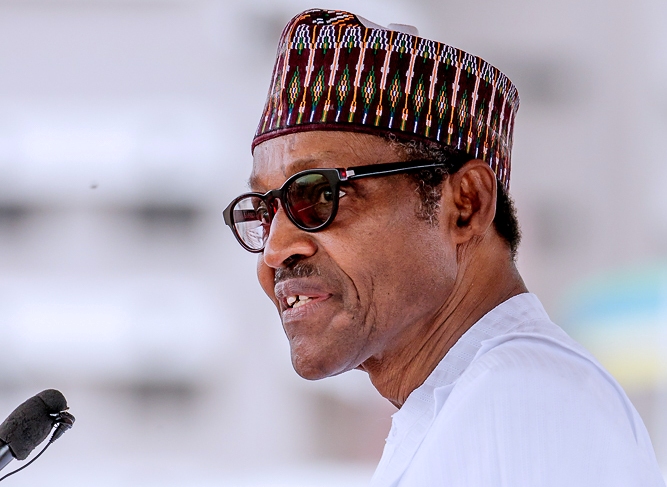
President Muhammadu Buhari Thursday inaugurated five key projects in Ogun State, assuring Nigerians that two major Federal roads under construction, the Sagamu-Benin Expressway and the Lagos-Ibadan Expressway, would be commissioned before the end of 2022.

Addressing residents of the State, the President heaped praises on Governor Dapo Abiodun, for delivering visionary and trail-blazing projects for the people, even in the midst of prevailing and challenging circumstances occasioned by the COVID-19 pandemic.

Describing Abiodun as the ‘‘performing Governor of Nigeria’s Gateway State,’’ the President said he is a worthy example of ‘‘promises made, promises kept.’’

The President noted that the lofty projects: the Gateway City Gate; the 42-Kilometre Sagamu Interchange-Abeokuta Road; the 14km Ijebu-Ode-Epe Expressway and two Housing Estates for low, medium and high income earners at Kobape and Oke-Mosan in Abeokuta, respectively, could not have materialised without the State government’s huge investment and commitment to security of lives and property.
‘‘This has made Ogun State one of the safest and most peaceful States in the country and investors’ destination of choice.

‘‘You (Prince Abiodun) have justified the mandate of the people of Ogun State. You have represented our Party very well,’’ the President said.

The President expressed delight that the 14km Ijebu Ode-Mojoda-Epe Road commissioned by him has been reconstructed into a modern expressway by the State government.

He noted that the impressive road would complement the Sagamu-Benin Expressway that the Federal Government is currently reconstructing; also due for commissioning this year.

‘‘Just across the road is the 42-kilometer Sagamu-Interchange-Abeokuta Road which the state Government has reconstructed and equipped with street lights.
‘‘That road enjoys a direct linkage with the Lagos-Ibadan Expressway that the Federal Government is rebuilding and due for completion later this year.

‘‘I am particularly impressed by the quality and standard of your road projects, and the creative way you have deployed resources to reconstruct and rehabilitate them.
‘‘It is significant to note that the two road projects being commissioned today are federal roads. This is an example of constructive engagement, cooperation and collaboration between the States and Federal Government.

‘‘These roads also fit well into our rail transportation masterplan that connects Lagos, Nigeria’s economic capital to Kano, with Ogun State having more rail stations, along the Lagos-Ibadan rail corridor.’’

On the housing programme of the Ogun Governor, the President commended its inclusiveness, saying it is equally heart-warming that it cuts across different social strata, capturing the low, medium and high income earners.

Admiring the Gateway City Gate Project, the Nigerian leader said ‘‘it is not just a Park beautification project. It depicts that something new is happening in Ogun State, a welcoming entrance into the State Capital at the centre point of the State.’’
He added that the project is also an ICON depicting the joining of hands for building the future of Ogun State in togetherness.

‘‘Your Excellency, well done! I am proud of what you have done for your State and your people.

‘‘You have made our great Party, the APC, proud too. You are a worthy example of promises made, promises kept.

‘‘These lofty projects could not have materialised without your huge investment and commitment to security of lives and property.’’

Responding to requests by the State governor to give priority to the Lagos-Ota-Abeokuta and the Sango Otta-Idiroko Roads respectively, the President assured the people of Ogun State that these roads will receive Federal Government attention.
The President announced that the Federal Government would consider extending tax credit as funding option for the reconstruction of these roads, as done for the 100km Sagamu Interchange-Papalanto-Ilaro Road.

Similarly, the President promised to consider the approval of the reconstruction of Sagamu-Ogijo Road by the Nigerian National Petroleum Company (NNPC) Limited under the tax credit scheme.

The President thanked the residents of the State for the warm reception accorded him and his entourage in the Gateway State, which is his first visit to any State in the New Year.

‘‘This welcome by the large crowd brings back the nostalgia of my first arrival on this soil as a young infantry officer in the Nigerian Army at the then Lafenwa Barracks in Abeokuta, not long after independence.

‘‘The traditional hospitality of the people of this State has not waned a bit. Today, I am “Omowale” and very happy at this homecoming to meet my brothers and sisters whose goodwill I have always enjoyed. Thank you.’’

The President also congratulated the people of Ogun State for having such a focused, deliberate and inclusive Administration under the watch of Prince Abiodun, urging them to continue to support the governor for the successful implementation of the “Building our Future Together” Agenda of his Administration.
‘‘The reward for success is more hardwork to meet the increasing expectations of the people.

‘‘When state governments deliver impactful projects, in consultations with stakeholders, like we have witnessed in Ogun State, the trajectory of our national development will be enhanced.’’

The President, who was bestowed with ‘‘honourary indigeneship’’ of the State, said:
‘‘It is also with a sense of responsibility that I receive and cherish the honourary indigeneship bestowed on me as symbolized by the presentation of the key to the Gateway State by Governor Abiodun.

‘‘I will leave Ogun State with fond memories and look forward to enjoying the privilege of my honourary indigeneship.’’

Mr Femi Adesina, Special Adviser of the President, Media and Publicity, Friday in Abuja, stressed the need for national unity, saying Nigeria needs peacemakers who will entrench nationalism and patriotism in the polity, and not spoilers.
Adesina spoke when he received a merit award from the Ambassadors of Voice for Change, a group of Nollywood actors and entertainers, led by Ahmed Bala.


The President’s spokesperson said the Buhari administration would continue to support Nigerians working assiduously to promote peace, harmony and development.

He invoked the words of renowned novelist, Chinua Achebe, in his book ”Arrow of God”, to warn on the consequences of internal conflict and underscore the need for Nigerians to see themselves as one:

”When brothers fight to death a stranger inherits their father’s estate.”
Commending the group on their vision to promote unity in Nigeria, Adesina said the sheer volume of talents and exceptional Nigerians on their network, including those in the entertainment, media, sports, fashion and arts industry, makes them a formidable voice for positive change in the country.

”The Media office of the President will always support you and I wish you the very best in all your endeavours.

”What you are doing for the country makes our work easier. When you hold town hall meetings in different parts of the country, advocating for unity, peace and change, it is easier for me to do the job and I am very glad to identify with this group, which is nationalistic and patriotic,” he said.

The spokesman of the group, Ben Kure, said Adesina, a two-time president of the Nigerian Guild of Editors (NGE), has distinguished himself as an excellent journalist, writer, media executive and spokesperson of the President, writing his ‘‘name in gold’’ in the media profession and discharge of his duties.

”He has been adjudged the best spokesman by journalists in Nigeria and one of the reasons adduced to this feat is his humility and accessibility, he deeply cares about the welfare of journalists in Nigeria,” he said.

Referring to a recent piece authored by Adesina in his weekly article, Kure thanked the president’s spokesperson for making Nigerians understand President Buhari as a good man and one who remembers and rewards the labours of the living and the dead.

”Thank you for quoting the Scripture: ‘Blessed be he of the Lord, who has not left off his kindness to the living and the dead,’ Kure said, noting that Buhari has demonstrated, through his appointments of Margery Okadigbo, Constance Harry Marshall, Justice Adesola Oguntade and Justice Sylvanus Nsofor of blessed memory, that he is a detribalised Nigerian, passionate about the country.

The representatives of the group that came with Bala, the leader, to the State House to present the award are Kure, Gentle Jack, Saheed Balogun, Mr Ibu, Shina Peters and Onyekweli Harry B.

COVID-19 has propelled the adoption of digital payment platforms for millions of people across the African continent. The need for contactless methods of making transactions, transformed what was once a nice-to-have into a necessity. 

Indeed, whereas the pandemic has bolstered the adoption of digital payments across industries, demographics and payment types on the continent, Africa has always been at the forefront of the payments space led by mobile money services since 2010. 

As a company, serving thousands of businesses at varying growth stages across 35 African countries, we’ve witnessed firsthand the sheer drive and resilience that underpins this revolution in digital payments.

It’s the entrepreneurship spirit of the continent that inspires us to innovate for businesses, connecting people and their resources, aligning our strategy to bolster the adoption of digital payments by…

Deepening Our Presence in Existing Markets

Recently, we expanded into 8 new countries – South Africa, Egypt, Senegal, Côte D’Ivoire, Cameroon, DRC, Angola, Ethiopia – in a bid to accelerate the digitization of payments for global, regional and local businesses to build a more connected Africa. By creating seamless payment experiences for businesses and consumers, we’re opening up opportunities for millions to do business, access basic services and even connect with their loved ones when it matters the most. Whereas what we’ve achieved so far is impressive, with coverage across 220 million banking, mobile money and cards consumers, we intend to go deeper in the countries we’re already in. We firmly believe we’ve only scratched the surface and there is unparalleled opportunity in…

Mobile money accounts grew to 1.2 billion with 43% of new users all from Africa

Tapping into the Underserved Offline Payments Sector

In a report by GSMA released earlier this year, mobile money accounts grew to 1.2 billion with 43% of new users all from Africa. Inferring from this growth rate in just one year, it’s clear that the market size for offline payments is significantly larger than online payments. In coming years, we’ll be focusing on this space even as we continue to grow in online payments.

In sub saharan Africa alone, there are 44 million micro, small and medium enterprises providing the majority of jobs effectively serving as the backbone of the economy in their countries. Most of these enterprises and the individuals they serve or employ still use offline or cash payments. Whereas we’re keen on expanding access to these businesses, we can only scale by…

Creating a Win-Win Ecosystem through Partnerships

As a fintech company, we’re deeply connected with the banking ecosystem and view them as partners not competitors. Leveraging partnerships with different entities in the industry from banks, to mobile network operators and large enterprises is a fundamental aspect necessary for growth in the fintech space.

Why?

Because as consumers increasingly use digital methods for their payments – from peer-to-peer transactions to purchasing household goods, paying their bills and accessing fundamental services such as healthcare and education- this presents wonderful opportunities for retailers and businesses to grow their digital capabilities as people move from cash dependency.

Enabling businesses to adapt quickly to these changing demands by providing the right infrastrastructure and relevant value-adds is our driving force.

The availability of domestic credit is a key requirement for consistent economic growth in developing countries. The vitality of financial services such as banking, savings, debt and equity financing, investment management, and point-of-sale lending is largely dependent on the maturity of its domestic credit industry. Nigeria’s domestic credit market pales in comparison to similar countries of the same size. For context, credit to the private sector in Nigeria is about 12 percent of GDP, lower than South Africa’s 129 percent and Malaysia’s 134 percent. High ratios of credit to the private sector in these countries have helped to ramp up real sector growth, create innovative innovation possibilities for technology-enabled businesses, accelerate financial development, ensure the efficient functioning of the economy and guarantee the prosperity of the private sector.

The Central Bank of Nigeria (CBN) and other development partners including the Bank of Industry (BoI), the Bank of Agriculture (BoA), among others have embarked on significant credit injections to support the critical sectors of the economy, but the paucity of credit assessment infrastructure ensures many potential borrowers are denied access to loans, and when they do, they can be charged as much as triple the base interest rate. This financial exclusion has significant outcomes for the real sector as lack of access to credit can be a disincentive to entrepreneurship, investment, and economic growth.

Canadian fintech startup and credit assessment company, Periculum, has launched in Nigeria to tackle the challenge of domestic credit to the underserved markets. Focused on improving financial inclusion in emerging markets through automated credit assessment tools that close the consumer credit gap and help financial institutions provide credit facilities to the financially excluded while making smarter decisions, Periculum officially launched its financial service product offerings at a media interaction today.

Speaking at the launch, Michael Temitope Collins, Periculum’s founder and Chief Executive Officer, said “Africa needs domestic credit to stimulate real economic growth. And this is not only bank-to-business credit; it can also be digital lending for short-term credit as well as “buy now, pay later” schemes. The absence of tech-enabled credit assessment infrastructure has limited the quality and quantity of lending and may be behind the risk premiums borrowers have to pay, and the harassment practiced by predatory lenders in countries like Nigeria. Periculum will change that. We are a top provider of data analytics and credit assessment services targeted explicitly to underserved markets. We help our customers to reduce their lengthy loan application processing times and loan default rates and offer loans to the underbanked and unbanked consumers as well as micro, small and medium-scale enterprises. With reliable, tech-enabled, credit assessment services, financial institutions can increase lending to those that need credit.”

The company has also announced the appointment of a Managing Director, Damilola Aluede, to accelerate its business in Nigeria.

Nigeria’s domestic credit market pales in comparison to similar countries of the same size

Founded in 2019, Periculum helps its banking and lending customers identify fraud risk, assess creditworthiness, and analyze existing data. Periculum offers real-time decision-making, analysis, and credit underwriting solutions to financial institutions including banks, non-banking financial companies, and fintech companies. By providing information on the financial worthiness of customers and automating the loan decision process, Periculum’s customers can gather and analyze borrower information and assign a credit score faster, with real outcomes on financial inclusion in Nigeria and other markets.

Canadian Fintech Periculum, Officially Launches In Nigeria, Set To Build  Credit Assessment Infrastructure For Africa
https://www.Periculum.io/media/

Periculum offers data aggregation APIs and platform solutions that aggregate data from partners including open banking APIs and the credit bureaus, to provide complete financial and data profiles of prospective borrowers and third-party entities. Some of its clients include Fundii, Lendaba, Sycamore, Golden Ox Partners, Vola Africa and Venero.

On its product roadmap and current services, Collins added “We offer services that include Credit model development, SMS data aggregation and analysis, financial data analysis, and other data analytic solutions. We can help our customers with solutions such as fraud detection, insights for lenders based on customer segmentation and customer lifecycle value, insights to retailers and ATM operators, and several other benefits”.

The startup was accepted into Techstars in 2021 and is among the 2021 Techstars Montréal AI cohort, as well as the Founder Institutes’ Select Portfolio. In October 2021, Periculum raised a $620,000 pre-seed funding round to help it expand its team, improve product development and scale its operations in Nigeria and other markets. The company currently delivers services to customers in Canada and Nigeria and plans to expand to Ghana, Kenya, and Egypt before the end of 2022.

For many countries in Africa, there is still a financial divide. By tackling the credit assessment challenge, Periculum can build the financial infrastructure that helps in addressing the issue of access to financial services and improves development outcomes for millions of people, with better opportunities for businesses, financial institutions, and lenders.

Mrs. Emmanuelle Blatmann, Ambassador of France to Nigeria and Mrs. Zainab Ahmed, Federal Minister of Finance, Budget & National Planning, signed on 13 January the first loan from the Treasury to Nigeria since 1990.

Several hospitals will also be provided with new specialised care units, including paediatrics and surgery, as well as ambulances

This concessional loan of EUR 55 million aims at renovating public health infrastructures and equipment in Oyo State.

In line with the wishes of the Governor of the State, Mr. Seyi Makinde, particular emphasis has been placed on the renovation of all the 300 or so clinics in the State. Several hospitals will also be provided with new specialised care units, including paediatrics and surgery, as well as ambulances.

…Existing policies are designed to accelerate the delivery of digital economy benefits – Pantami

…We’re poised to deepening digital access – Danbatta

The Federal Government has applauded the commitment and dedication of the Nigerian Communications Commission (NCC) towards enhancing digital skills development among youths, through implementation of various Information and Communication Technology skill acquisition programmes.

Minister of Interior, Ogbeni Rauf Aregbesola and the Minister of Communications and Digital Economy, Prof. Isa Ali Ibrahim Pantami, gave the commendation during the inauguration of a Digital Nigeria Centre (DNC), a project executed by the Universal Service Provision Fund (USPF), an arm of NCC, at the Ijesa Muslim Grammar School, Ilesa, Osun State recently.

Representing President Muhamadu Buhari at the event, Aregbesola commended the NCC for timely and thorough implementation of the project, saying he was confident that the project will promote the connection of public secondary schools to broadband internet in Ilesa community and ultimately equip beneficiaries with 21st century skills.

“I would like to thank my very good friend and brother, the Honourable Minister of Communications and Digital Economy, Prof. Isa Ali Ibrahim Pantami, for assenting to our request to have the first of this remodeled project in Osun State sited in Ilesa. I will also like to thank the Executive Vice Chairman of NCC, Prof. Umar Garba Danbatta and the entire Management and staff of NCC and the USPF, as well as their technical partners for a timely and successful completion of this laudable project,” he said.

On the sideline of the commissioning, Aregbesola also announced the establishment of President Muhammadu Buhari N100 million Technology Fund for Youth Empowerment, to nudge the emergence of world class technology experts. The Minister of Interior stated that the Fund targets 2,000 youths in the next two years, who will be provided with devices for training in different areas such as software development and design, amongst others.

The Governor of Osun State, Adegboyega Oyetola, who was represented by the State’s Commissioner for Innovation, Science and Technology, Dr. Babatunde Olawale, expressed the gratitude of the State Government to the Federal Government, the Ministry of Communications and Digital Economy and the Nigerian Communications Commission, for initiative and particularly for inaugurating the pioneer remodeled DNC project in Osun State. Oyetola also informed the enthusiastic gathering that Osun State Government was willing and ready to collaborate with NCC to replicate the project in other parts of the State.

Speaking in the same vein, Pantami, who was represented at the event by the Chairman, Board of Commissioners of NCC, Prof. Adeolu Akande, also commended the NCC and USPF on the delivery of the DNC project on behalf of the Federal Republic of Nigeria. He declared that the project and similarly instituted ones were initiated by government to give expression to its vision to effectively digitise the nation’s economy for increased prosperity for all Nigerians.

Pantami stated that the Federal Government is focused on promoting digital economy across the country and that this had informed the renaming of the Ministry of Communications to the Ministry of Communications and Digital Economy. On the heels of the re-christening, Pantami recalled that the Federal Government emplaced Digital Nigeria-oriented policies to reinforce the focus of existing policies in order to accelerate the delivery of derivable benefits of digital economy to Nigerians, regardless of their locations and circumstances.

Very central among the policies is the National Digital Economy Policy and Strategy (NDEPS) 2020-2030, a 10-year, eight-pillar focused blueprint for actualising Federal Government’s digital economy agenda unveiled in November, 2019.

Pantami asserted that the DNC inaugurated at Ilesa was a concrete implementation of the Digital Literacy and Skills, the second pillar of NDEPS.

According to Pantami, the overarching objective of the DNC project is to facilitate adoption of digital lifestyle in the schools as well as in the school communities. The Minister averred that the project’s significance cannot be under-estimated, considering its ability to improve digital skill for the youths and subsequently make them globally competitive.

Pantami said the Nigerian government is determined to arm the youths with digital skills, strong literacy and numeracy skills, critical and innovative thinking skills, complex problem solving aptitude, the ability to collaborate, and deploy socio-emotional skills, which they require to transform their lives and build the economy.

“We have already made a number of giant strides in the development of our digital economy culture and the deployment of initiatives such as the Digital Nigeria Centre eloquently demonstrates the current administration’s commitment to connecting all Nigerians,” Pantami said as he equally expressed Federal Government’s commitment to its tripartite agenda of improving the economy, curbing corruption and enhancing national security through effective deployment of ICT in all nooks and crannies of the country.

In his remark, Danbatta, who was represented at the event by the Commission’s Director of Projects, Iyabode Solanke, said all the regulatory activities, initiatives and programmes that the Commission had undertaken since 2019, in collaboration with its critical stakeholders, including its arm, the USPF, have been targeted at giving concrete expression to Nigeria’s deliberate policy to migrate to a full digital economy.

He said the Commission achieves this by consistently committing itself to expansion of appropriate infrastructure to enhance digital literacy and skills in view of the economic and social impact of digitization on all sectors.

The NCC Chief Executive restated the Commission’s commitment to the overall objective of bridging the digital divide through the provision of Information and Communication Technology (ICT) as well as broadband access to the unserved and underserved institutions and communities in the country.

Earlier, the Principal of Ijesa Muslim Grammar School, Ramota Ilesanmi, thanked the President Buhari-led Federal Government for the project, saying that it will go a long way in meeting the ICT needs of students and residents of the city.

The DNC, formerly known as School Knowledge Centre (SKC), is one of the projects in the Access Programme framework of the USPF, conceptualized to promote the availability and utilisation of ICT and resources of the Internet in teaching and learning in public schools in underserved, unserved and rural areas.

Specific objectives of DNC are to increase ICT literacy among school teachers and students; provide a platform for accessing online educational resources; equip students with ICT skills; facilitate ICT adoption in teaching and learning; as well as increase pass rate in Mathematics, English language and other science subjects.

VMware Cloud Verified and VMware Principal Partner, Routed, has launched its channel partner portal. It aims to provide curated resources for partners, managed services providers, and ISPs selling, marketing, and operating as resellers of VMware Cloud through Routed.

Routed became the first VMware Cloud Verified partner in Africa in 2019 and has gone on to become a VMware Principal Partner, too. Andrew Cruise, managing director for Routed, explains that Routed has built a resilient and robust channel to assist its partners in delivering the best solutions that their end-customers have come to expect from VMware.

“VMware has a discerning customer base with specific requirements of their cloud technologies. Building our Partner Platform has allowed us to curate and focus our efforts on providing our partners with the right tools, material, and support for VMware Cloud presence in Africa through Routed,” says Cruise. 

Sumeeth Singh, Cloud Provider Business Head at VMware South Africa, confirms: “Cloud computing solutions are driving the current wave of digital innovation. Through partners like Routed and their channel, we see the acceleration we look forward to, in an age where organisations big and small can benefit from a secure, efficient, and scalable VMware Cloud service delivery platform.”

According to Gartner, spending on the public cloud is forecast to grow over 18% in 2021, with Infrastructure-as-a-Service (IaaS) expected to gain the most. Managed Service Providers, ISPs, even ISVs and distribution partners will do well to capitalise on this as organisations’ needs evolve. The market has already shifted from supply-driven to demand-driven, and it’s become essential for all organisations to consider how the cloud fits into their infrastructure plans.

On-premises infrastructure will always have its place in organisations, especially when more control is required, but it is asset-heavy and slow to adapt to change and growth. For the right use-cases migrating infrastructure to the cloud provides end-customers with agility and cost savings.

Routed depends on partners who can manage the implementation of its solutions, some of the most complete VMware Cloud-based infrastructure deployments available locally. “The opportunity exists for our partners who, with the right resources, knowledge and support from Routed and VMware, can confidently engage with their end-customers to provide the world-class solutions that VMware is renowned for with the level of support and service that they come to expect,” adds Cruise.

Over the past five years, Routed has established itself as the leading provider of VMware Cloud on the continent. Its success has followed from its relentless focus on providing an integrated cloud platform that addresses enterprise cloud, recovery, and modern application development requirements, which are taken to market through trusted partners.

Cruise explains: “The Routed Partner Portal is the start of an exciting journey for cloud and specifically VMware Cloud in South Africa. End-user enterprises deserve a reliable, highly available and secure cloud infrastructure. Now the channel has the resources to grow their skills and access some of the best support materials available to develop this customer base.

With its Principal Partner status as a Cloud Provider – the highest tiered recognition within the VMware Partner Connect programme – Routed’s partners now benefit from the same level of resources and support that a Principal Partner will enjoy but facilitated by Routed.

“We are changing the cloud landscape, and this is just the start because, at Routed, we want the industry to develop because when the end-customers realise the benefits, we all win,” concludes Cruise.

New partner applications to the Routed Partner Portal will commence in 2022 by engaging with the Routed team.