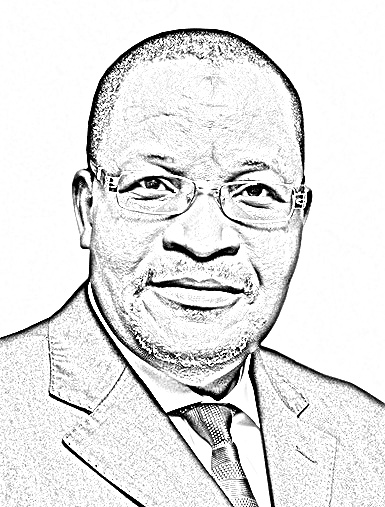
Mr. Peter Obi, Mazi Sam Ohuabunwa, Dr. Nwachukwu Anakwenze, and myself, all of us from the South East, who have declared intention to run for the office of president of Nigeria and have obtained the normination form of our great party the PDP, met in Abuja. The main purpose of our meeting was for us to resolve to work together to promote understanding, unity and collaboration among the four of us and any other person from the South East zone who may later join in the race. We had a very fruitful meeting in an atmosphere of friendliness and respect for one another.

At the end of our meeting, we addressed the media on our resolutions as follows:

1) That we have agreed to work together as a Team.
2) That we will work together to ensure that a South Eastern emerges as PDP flag bearer;
3) That we intend to consult with other zones on this issue and it is based on fairness and equity;
4) That in doing so it is important to note that we have always supported other zones and we now expect them to reciprocate.

We are committed to working with our party leadership and party members from across the country to ensure that the founding principles and ideals of our great party are upheld to reassure Nigerians that PDP is ready to rebuild and reunite our dear country. We ask Nigerians to give us the chance to fix this country. Together we will get Nigeria to work again.

A Greater Nigeria I see.

By Anyim Pius Anyim

Public Relations and media professionals and other important institutions/agents of change in Nigeria have been urged to join advocacy for gender balancing, inclusion and fairness for the promotion of socio-economic development in the country.

Mrs. Grace Bose Ojougboh, Head, Media and Public Relations at the Nigerian Communications Commission (NCC) and producer/host of the weekly inspirational programme ‘Amazing Grace with Bose’ on YouTube, made the call while delivering a paper around gender balancing and fairness at the March 2022 monthly meeting of the Nigerian Institute of Public Relations (NIPR), Abuja Chapter which took place at the National Press Centre, Radio House, Abuja recently (Wednesday March 30, 2021).

Speaking to NIPR members, including Fellows of the Institute at the event on the thought-provoking paper titled: “Achieving Gender Equality In Nigeria: The Role Of Public Relations”, Ojougboh perceptively re-awakened the consciousness of the audience to the often-misconstrued concept of feminism while taking pragmatic look at how this concept should be understood by all to actualise the lofty desire of maximizing the innate potentials of female gender towards achieving greater developmental goals in the society.

She equated feminism with the philosophical aspiration for gender equality as a fundamental human right, which also finds concrete expression in the Goal Five of the Sustainable Development Goals (SDGs) centering on gender equality and empowerment of all women and girls with the hope to end all acts of discrimination against the female gender.

Ojougboh noted with copious instances, that, till date, issues pertaining to women gender has not always received the expected attention, whether by government, parents, the media, communication professionals; traditional and religious leaders, adding that there was need for a change of narrative with respect to how issues pertaining to gender balancing and fairness are effectively mainstreamed into Nigeria’s developmental drive.

According to her, the continuous imbalance in women participation in politics and governance and all the sectors of the economy is glaring, as she submitted that, women are given almost no opportunity to participate in politics and in other spheres of life, this is in spite of the advocacy and call for inclusion and the strategies by various international agencies to reduce gender inequality to the barest minimum.

“Only recently, bills seeking gender equality were rejected by the National Assembly. Appointments across parastatals are dominated by men, this has got to change. If we want economic growth, we must include women, women are transformational agents. We need much more that 35 per cent affirmative action,” she said.

She stated that the fact that women represent about 50 per cent of Nigerian population, according to a 2020 report, means that Nigeria, as a country, cannot afford to neglect the wisdom and the capability of this group and the contribution that women can bring to make Nigeria a truly prosperous nation.

Justifying the need for media/Public Relations practitioners to be at the forefront of driving the narrative for gender balancing, Ojougboh cited an empirical study on media and gender inequality in Nigerian politics, which found that women were denied fair access to the media just as the study also identified media bias in the coverage of female news stories.

She said the findings of the study is a wake-up call that media and Public Relations practitioners have a whole lot to do in the fight for gender balancing in Nigeria. “We need to understand our social responsibility as perception drivers to promote unity, social cohesion, gender balancing/equality and the fundamental human rights of every Nigerian,” she said

She also tasked them to be deliberate and intentional about their communication such that it builds understanding, trust, and acceptance and becomes a win-win for men and women alike and all who desire to see equal representation of men and women across all sectors of the society.

“As Public Relations practitioners, we must help to create gender-sensitive and gender-transformative content that will change perceptions and break gender stereotypes. We must use every available medium to challenge traditional and cultural norms and attitudes that demean womanhood and does not serve humanity,” she said.


Flour Mills of Nigeria PLC, a leader in the Fast-moving consumer goods (FMCG) recently passed the PECB ISO 27001certification audit for its Information Technology (IT) and cybersecurity framework and policies. This certification has placed Flour Mills of Nigeria PLC as the foremost Nigerian firm in the FMCG sector to be presented with such a certification. ISO 27001(Information Security Management System) is the most recognized international standards for information security management for any organization globally. It provides clear processes for effective implementation and continuous mitigation to data/security breach for any organization. This certification has placed Flour Mills of Nigeria PLC as an organization that is in line with the global best practices when it has to do with cybersecurity and data breach.

The PECB ISO 27001 Certification was facilitated by Nigeria’s cybersecurity firms, Kecam Technologies Limited and DataSixth CyberSecurity Limited. These firms in line with an international recognized audit firm conducted series of interviews, ensured that the right implementation was in place and also guided the organization to achieve the PECB ISO/27001 certification.

On the importance of the certification to Flour Mills of Nigeria PLC, Omoboyede Olusanya, Group Managing Director / CEO said ” We appreciate this certificate and the credit should go to the team that ensured that this happened. This is a document that shows that we have done something and we are very particular in the areas of cybersecurity. We are desirous to build a world-class organization. It is a process and it is an engrained process, there is a continuous stride that we have here. We will keep improving.”

Speaking to the media, Serge Yao, the Group Head of Information Technology (IT) Flour Mills of Nigeria PLC said, “This certification brings reassurance to business’s cybersecurity posture. It proves that we have well-defined system to handle cyber-attacks and cybersecurity. This certification testifies that FMN take seriously the confidentiality of information asset and IT risks are controlled. (Financial loss and damage to reputation are mitigated). We started our cybersecurity program fourteen months ago; the whole organization was engaged, and I want to thank FMN leadership team for the continuous support. It has been a transformational journey for all our employees toward cybersecurity; weak areas were exposed and rectified. Globally targets for cyber-attacks have shifted toward manufacturing firms; so, we must mitigate IT risks and potential damage. We are the first indigenous FMCG to be certified and many more will follow for sure. This is a beginning, and we will continue to follow the best practices and ensure that we have our recertification next year. “

On the importance of certification, Bonny Mekwunye, the Chief Executive Officer of, Kecam Technologies Limited, an indigenous Cybersecurity company in Nigeria said “About 10.5 trillion dollars will be the cost of cybercrime by the year 2025, what does this mean, it is basically that many organizations will be exposed to cyber-attack, it is important that organizations must start thinking how to build their cyber security framework such as people, processes and technology. This is where ISO certification comes in. This is a globally recognized body that is designed for organizations that are desirous and serious to look into their cyber security processes. Flour Mills Nigeria PLC has seen the relevance to protect their digital infrastructure and we were invited to provide a consulting service with our other partner which is DataSixth CyberSecurity Limited. This certification means that they are globally recognized in the area of data security just like other big firms in the world. “

The country manager of DataSixth CyberSecurity Limited, Happiness Obioha said “This certification is all about data security for the organization and the need to have a round the clock continuous protection. This is a bold step for Flour Mills of Nigeria PLC. There is cyber resilience and they are sure that their critical infrastructure is protected. This certification demonstrates that the organization is equal to task in the area of cybersecurity and it shows that they are digitally inclined. This certification will build a lot of moral, trust and confidence for the organization and their stakeholders.”

The ISO 27001 is a globally acceptable certification for organizations that are desirous of strengthening the IT and cybersecurity frameworks. It uses a top down, risk-based approach and most time it is technology-neutral. The approach mostly is in six phases such as the organization’s security policy, the scope of their Information Security Management System, risk assessment, how they manage identified risks, how objectives and controls are implemented and statement of applicability.

ANTHONY EMEKA NWOSU

As long as cash still dominates the payments landscape in Africa, it remains a stumbling block to much-needed technological progress and innovation, particularly for SMEs. According to Andrew Springate, CEO of tech and financial gateway service provider PAYM8, things are starting to shift as Africa’s digital payments race begins and true financial participation and inclusion becomes a reality.

The continent is on the cusp of some exciting developments. The Covid-19 pandemic has accelerated a greater acceptance of online digital payments, which has prompted financial institutions to ramp up their digital offerings to support growing consumer comfort and demand for cashless services.

Across sub-Saharan Africa, the World Bank reports an unbanked population of 350 million. This large cohort has historically been unable to fully participate in the convenience of e-commerce or access digital services. These challenges also extend to small business owners who face a host of frustrating payment issues, which include security concerns, exorbitant fees for certain point-of-sales (POS) systems, not to mention the risks inherent in dealing in cash. While bank interoperability remains something to be achieved, the technical complexity of some solutions for small and micro businesses are often not scaled enough to justify the cost.

As more mainstream banks embrace digital transformation to offer a greater variety of digital payment solutions, broader consumer adoption will follow, which will naturally lead to an increase in online sales and more customers attracted by enhanced convenience. Once this happens, marketplaces will grow exponentially and will expand to include the free flow of cross-border trade within the continent.

The African payments space has the distinct advantage of being able to leapfrog legacy systems with relative ease. Traditional payment methodologies are being bypassed as banks participate in solutions like rapid payments, where EFT payments are instantaneous, made by proxy and settled in mere seconds.

The inevitable uptake in digital payments, enhanced collection solutions, cross-border collaboration and new payment products will allow for much-needed economic growth in the short to medium term. Accelerating the digital transformation of financial services and solutions is vital to empowering small and micro businesses, as well as their customers, to conveniently make and receive secure payments.

Ultimately, electronic payments come with considerable macroeconomic benefits. African economies need innovative payment mechanisms that promote entrepreneurship while accelerating financial inclusion for those who need it most.

As an autistic child, Kanye Tagbo Okeke has been described as an enigma and a maestro. Many folks see him as prodigy but one thing is that he is a fighter and very creative, less than 14yrs, he has showcased his works in many countries of the world from Vienna in Austria to New York in USA and in Abuja and a whole other places. He is super good! Kanye will be having his solo exhibition at the prestigious Transcorp Hilton Hotel, the 2nd day of April. This exhibition has been highly anticipated by the art community in the nation’s capital Abuja.

Nature has a way of balancing act! Have never seen a kid so talented in art, I am an avid art lover, if I have the means I would collect arts ranging from sculpture to paintings. I have always loved oil on canvas my best artwork or painting is abstract, I love abstract painting, it gives some sublime feelings and a bit hard to decipher

The world finest painters are abstract artist, name them Picasso, Van Gaugh etc and bringing back home, one young fella, dude has shown that he is one of the finest that ever come out of this country.

Having autism, some folks might decide to dwell in pity party and solace in running from one religious home to another, the dutiful and nice parents took time to understand and understudy Kanye and found out he is very creative, they nurtured his nature and today his works is well known.

Kanye has shown over the years that autism and kids with various spectrum of autism can be very talented and nutured. Kanye can be called a poster child of what an autistic child can be in Africa.

Always smiling in his angelic face, he has brought smiles to the parents and world at large. He has given hope to folks that have their kids in that autistic ecosystems and also in a continent that is marred and influenced by high level of superstition and spiritism, Kanye has shown that autism isn’t the final bus stop of life.

As Kanye showcases his work this April, he will be making another statement that autism isn’t the end of life, with the support of the parents and we’ll meaning individuals, Kanye has brought limelight to the plight of children having autism in Africa.

ANTHONY EMEKA NWOSU


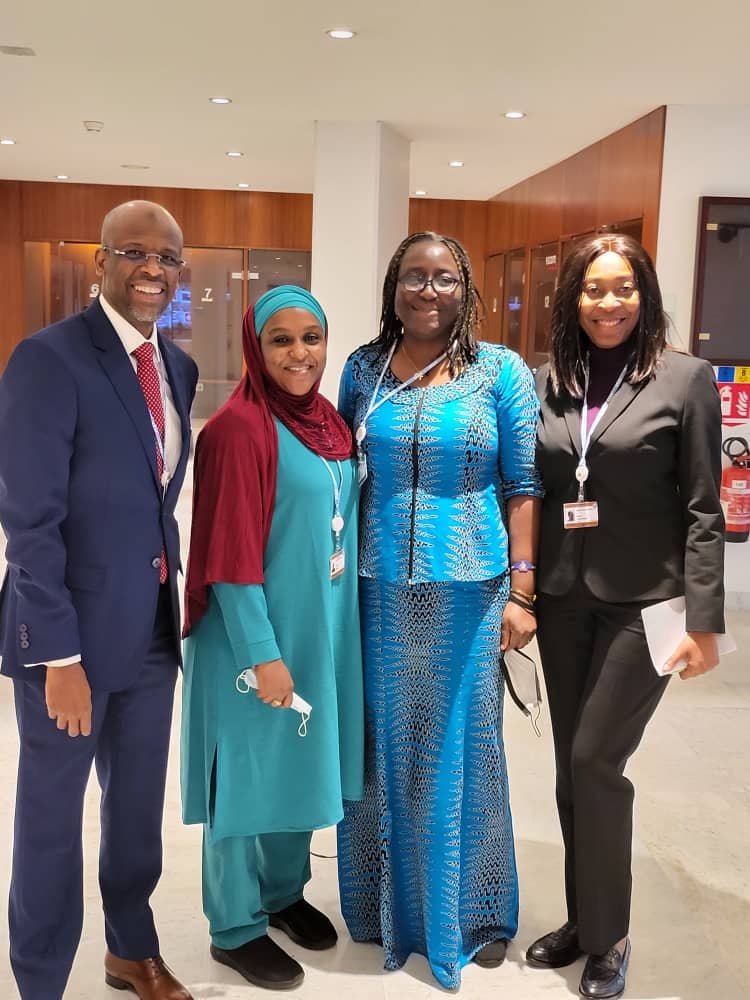
The Nigerian Communications Commission’s (NCC) vast experience as a long-standing member of the International Telecommunication Union (ITU) has served as a booster to the Commission in its effective implementation of government policies, and in stimulating regulatory initiatives focused on advancing Nigeria’s digital transformation. The NCC’s Executive Vice Chairman (EVC), Prof. Umar Garba Danbatta, has said.


Danbatta stated this while addressing global actors in the Information and Communication Technology (ICT) industry at the ongoing Session of the ITU Council taking place in-person at the ITU Headquarters in Geneva, Switzerland, from March 21-31, 2022.


Speaking at the Council session, Danbatta said the challenges posed by the COVID-19 pandemic underscore the important role ICT will continue to play in ensuring peace, security and prosperity around the world.  “It is as a result of the enabling experiences in the ITU ecosystem that Nigeria continue to be active and forward-looking regarding the activities of the ITU as the leading organ of the United Nations (UN) in the area of ICT,” he said.


He emphasised that, as a long-standing member of Council, Nigeria has utilised ICT as a driver of socio-economic development not just for herself, but also for the benefit of the sub-region and the continent, given its role as a founding member and flagship promoter of the West African Telecommunications Regulators Assembly (WATRA).


“Over the years, as a member of ITU, Nigeria has chaired World Radiocommunication Conference (WRC)-15; chaired ITU Council Standing Committee on Administration and Management (SC-ADM), in 2019 and 2022; as well as chaired the Ad-Hoc Committee on ITU Regional Presence”, the EVC said to underscore the strategic, symbiotic relationship between Nigeria and ITU.


Reinforcing the intensity of his assertion on the contribution of Nigeria in ITU, Danbatta said, “Nigeria had also chaired ITU-Standardization (ITU-T) Study Group 20 Regional Group for Africa; served as Vice Chairman, ITU-T Study group 20;  served as Vice-Chair, ITU-T Study Group 12; Vice-Chair, ITU-Development D Study Group 2; as well as provided Financial Support to ITU Headquarters Building, among others”.


The EVC said this robust experience in ITU has continued to enable Nigeria, through NCC, and was particularly instrumental to the recent management of a globally-acclaimed transparent auction of Fifth Generation 5G licence in 2021; achieve 40.88 per cent broadband penetration in Nigeria as at December 2021; implement robust financial inclusion initiatives; as well as in the promotion of universal access across institutions and communities in Nigeria through the NCC’s Universal Service Provision Fund (USPF). “All these were made possible through the successful launch and implementation of policies to foster use of ICTs across all sectors and enhance a digital economy,” he said.


Meanwhile, the EVC has used the opportunity of his brief remarks during the Council session to announce Nigeria’s intent to seek re-election to ITU Council during the forthcoming Plenipotentiary Conferences. According to Danbatta, having Nigeria re-elected will help the country to continue to collaborate with and support ITU’s development agenda, ensure effective and efficient implementation of ITU Resolutions, implement inclusive programmes to foster universal use of ICT across all divides, and provide focused and strategic partnership. “We look forward to a robust Council session and subsequent support for Nigeria during the forthcoming elections,” Danbatta stated.


The ITU is governed by the Plenipotentiary Conference and the Administrative Council. The Plenipotentiary Conference is the supreme organ of the Union. It is the decision making body which determines the direction of the Union and its activities.


The Council, on the other hand, acts as the Union’s governing body in the interval between Plenipotentiary Conferences. Its role is to consider broad telecommunication policy issues to ensure that the Union’s activities, policies and strategies fully respond to today’s dynamic, rapidly-changing telecommunications environment.


The ITU Plenipotentiary Conference for this year is scheduled to take place in Bucharest, Romania, from Monday, September 26 to October 14, 2022

Cloud computing is nothing new, but as the technology continues to evolve, companies are increasingly embracing the cloud to stay current and competitive. Marilyn Moodley, Country Leader for South Africa and WECA (West, East, Central Africa) at SoftwareONE looks at why the cloud is vital to businesses, and why some are still reluctant to make the move.

Are you on the cloud yet? This is an organisation’s equivalent of a young person’s ‘when are you getting married?’ which moves swiftly to ‘why aren’t you married yet?’ And the reasons for not making the jump in both cases are often the same: resistance to change; wariness of taking a risk; caution about compliance to a new situation; and aversion to the initial investment, which can be high.

While these are all valid concerns about cloud migration, it is still unwise to ignore the many benefits of doing so. The COVID-19 pandemic showed businesses that contingency plans are a non-negotiable in the face of potentially catastrophic events. Organisations that deploy to the cloud are very much on the front foot when it comes to being agile, flexible, and able to move quickly when adverse situations do arise.

According to research conducted by the Cloud Industry Forum on the state of cloud adoption, 91 percent of businesses said that shifting to the cloud has been vital in coping with the effects of the pandemic, as going digital enabled them to respond more readily to changing circumstances. In addition, 77 percent feel that the cloud has simplified their IT challenge. 50 percent of IT infrastructure is now cloud based, the first time it has ever topped this milestone in the 12 years since the Cloud Industry Forum started doing research.

Digital Transformation Contractors Use the Cloud for Better Safety and  Productivity

Clearly, the cloud is the place to be, and businesses today are becoming more aware of the benefits of using the cloud to save on costs, enable scalability, innovate at pace, speed up operating systems, and increase flexibility and resilience.

However, making the move to the cloud isn’t always straightforward. One of the main worries expressed by organisations is that they lack the skills to do it. What’s more, over the years, as data centres have grown and evolved, servers added, acquisitions taken place and software installed, it is difficult to know what applications an organisation even has, much less knowing what to migrate and what to leave behind. Gordon Davey, Global Head of Azure Cloud Services at SoftwareONE, refers to this mass of technology as the ‘nachos effect’. Everything is interconnected, like a plate of nachos – when you pick up one nacho, hoping it won’t disturb the rest, strands of cheese bring three or four other nachos with it. So, too, with cloud migration, with so many interconnected parts. 

This is where selecting a trusted partner, like SoftwareONE, is so important. An organisation’s journey to the cloud can be a smooth transition, backed by a clear strategy that takes an organisation’s unique environment and workloads into account.  Experts can assist in establishing a consolidated and rationalised view of the current IT landscape, prioritise and recommend workloads to run in the cloud and define and execute the next steps in the cloud migration. Essentially, they can identify which nachos can be taken alone, and which are inextricably connected to others and need to have a migration plan to address this. Partners can also help organisations understand the licensing and cost ramifications of moving workloads to the cloud, how to optimise spend and ongoing cloud management to ensure value is realised.

The past few years have seen a significant increase in the use of the cloud and 69 percent of companies interviewed as part of the Cloud Industry Forum’s research are speeding up digital transformation plans. By 2025, research company Gartner estimates that 85 percent of enterprises will have a cloud-first strategy. It is undoubtedly the engine of transformation and companies need to keep up with the pace of change or risk being left behind.

While analysing the threat landscape of African countries, Kaspersky (www.Kaspersky.co.za) experts saw a steady decline in attacks on mobile devices in the region, as cybercriminals consolidated their efforts to focus on more complicated, dangerous and profitable threats instead. These and other findings are featured in Kaspersky’s Mobile Threats in 2021 (https://bit.ly/3JPgBkn) report.

Overall, in 2021, South African users faced 38% less mobile malware attacks than in 2020, while other countries in the region have seen even more dramatic changes of their mobile threat landscape: Mozambique saw a 48% decrease, followed by Botswana (58%), Nigeria (59%), Ethiopia (69%) and Ghana (76%). The only countries where the share of attacks increased was Angola, where mobile malware actually grew by 12%.

This dynamic is a reflection of the global trend, as cybercriminals tend to invest less and less into the mainstream threats that are successfully neutralised by modern security solutions. Instead, they choose to invest more into new mobile malware that has become increasingly complex, featuring new ways to steal users’ banking and gaming credentials, as well as other strands of personal data. For instance, in 2021 Kaspersky detected more than 95,000 new mobile banking Trojans in the world, but the number of attacks using such malware remained similar. Additionally, the share of Trojans – malicious programs capable of executing remote commands – doubled, reaching 8.8% in 2021.

In addition to the strategic changes on the mobile threat landscape, experts also attribute the overall decline of mobile malware in 2021 to the enormous wave of attacks seen at the beginning of lockdown in 2020 as users were forced to work from home. That period also saw increased use of various video conferencing and entertainment apps, increasing the volume and spread of attack opportunities. Now that the situation has stabilised, cybercriminal activity declined as a result.

Staying cautious and careful on the Internet and avoiding downloading unknown apps is good practice

“Indeed, there have been fewer mobile attacks in general, however, the attacks we are still seeing have become more complex and harder to spot. Cybercriminals tend to mask malicious apps under the guise of legitimate applications, which can often be downloaded from official app stores. On top of that, with mobile banking and payment apps becoming even more widespread, there is a higher chance of cybercriminals targeting these more actively. Staying cautious and careful on the Internet and avoiding downloading unknown apps is good practice, but I also strongly recommend using a reliable solution. When it comes to the security of finances in particular, it is better to be safe than sorry,” comments Tatyana Shishkova, security researcher at Kaspersky.

Read the full report looking into mobile threats in 2021 on Securelist (https://bit.ly/3JPgwgz).

To protect yourself from mobile threats, Kaspersky shares the following recommendations:

  • It is safer to download your apps only from official stores like Apple App Store, Google Play or Amazon Appstore. Apps from these markets are not 100% failsafe, but at least they get checked by shop representatives and there is some filtration system — not every app can get onto these stores.
  • Check the permissions of apps that you use and think carefully before permitting an app, especially when it comes to high-risk permissions such as Accessibility Services. The only permission that a flashlight app needs is to the flashlight (which doesn’t even involve camera access).
  • A reliable security solution (https://bit.ly/3Hag4YJ) helps you detect malicious apps and adware before they start behaving badly on your devices. Conveniently, you can get protection, like Kaspersky consumer products, directly from mobile operators.
  • If you are a business, consider taking a holistic approach to the protection of your security perimeter, selecting the most appropriate (https://bit.ly/3sYPg8C) one for your company.
  • iPhone users have some privacy controls provided by Apple, and users can block app access to photos, contacts and GPS features if they think these permissions are unnecessary.
  • A good piece of advice is to update your operating system and important apps as updates become available. Many safety issues can be solved by installing updated versions of software.

Kaspersky calls on the mobile industry to enhance cyber protection at all levels, including security for their users, by providing tailored cybersecurity services. Kaspersky Consumer Business Alliances enable companies to offer their customers complete cybersecurity portfolios by backing them with Kaspersky’s global support and expertise.

Airbus Secure Land Communications recently partnered with Wearin’, a division of Conextivity Group, providing connected wearables for workers’ safety and performance, to combine the power of their technologies to make the work of mission-critical personnel safer and smarter.

The two parties signed a Memorandum of Understanding (MoU) on the sidelines of the recently concluded Mobile World Congress (Barcelona) in Spain. The MoU will pave the way for the integration of Airbus’ Tactilon Agnet collaboration platform with Wearin’s IoT-driven wearable sensors.

Under the terms of the MoU, the companies will initially conduct demonstrations of the integration at the referential World Police Summit in Dubai (taking place from 14 to 17 of March) before offering them to interested organizations. Through the demonstrations, Airbus and Wearin’ aim to receive feedback from end-users concerning their approach to IoT and mission-critical services.

Airbus’ Tactilon Agnet allows end-to-end secure instant sharing of information with a defined group of people at the push of a button. It can run on a wide range of devices such as regular iOS and Android smartphones, radios, and special gadgets and gears. Business- and mission-critical users, including first responders, utilize the platform designed with a hybrid work environment for enhanced communication and collaboration.

On the other hand, Wearin’ integrates modular sensors into field gears and use artificial intelligence to create smart, actionable insights. The agent-worn sensors provide real-time insights from user-generated field data to improve productivity, save lives and protect health.

Selim Bouri, Head of Middle East, Africa and Asia Pacific for Airbus Secure Land Communications said : “Airbus shares the mission of Wearin’ to harness the power of cutting-edge technologies to keep people safe, protect lives and property, and maintain public safety. This MoU will benefit our security forces and emergency personnel, as well as improve our response during crises. Our agreement will bring to the fore the important role of technologies in keeping our communities secure.”

###

The Nigerian Communications Commission’s (NCC) vast experience as a long-standing member of the International Telecommunication Union (ITU) has served as a booster to the Commission in its effective implementation of government policies, and in stimulating regulatory initiatives focused on advancing Nigeria’s digital transformation. The NCC’s Executive Vice Chairman (EVC), Prof. Umar Garba Danbatta, has said.

Danbatta stated this while addressing global actors in the Information and Communication Technology (ICT) industry at the ongoing Session of the ITU Council taking place in-person at the ITU Headquarters in Geneva, Switzerland, from March 21-31, 2022.

Speaking at the Council session, Danbatta said the challenges posed by the COVID-19 pandemic underscore the important role ICT will continue to play in ensuring peace, security and prosperity around the world. “It is as a result of the enabling experiences in the ITU ecosystem that Nigeria continue to be active and forward-looking regarding the activities of the ITU as the leading organ of the United Nations (UN) in the area of ICT,” he said.

He emphasised that, as a long-standing member of Council, Nigeria has utilised ICT as a driver of socio-economic development not just for herself, but also for the benefit of the sub-region and the continent, given its role as a founding member and flagship promoter of the West African Telecommunications Regulators Assembly (WATRA).

“Over the years, as a member of ITU, Nigeria has chaired World Radiocommunication Conference (WRC)-15; chaired ITU Council Standing Committee on Administration and Management (SC-ADM), in 2019 and 2022; as well as chaired the Ad-Hoc Committee on ITU Regional Presence”, the EVC said to underscore the strategic, symbiotic relationship between Nigeria and ITU.

Reinforcing the intensity of his assertion on the contribution of Nigeria in ITU, Danbatta said, “Nigeria had also chaired ITU-Standardization (ITU-T) Study Group 20 Regional Group for Africa; served as Vice Chairman, ITU-T Study group 20; served as Vice-Chair, ITU-T Study Group 12; Vice-Chair, ITU-Development D Study Group 2; as well as provided Financial Support to ITU Headquarters Building, among others”.

The EVC said this robust experience in ITU has continued to enable Nigeria, through NCC, and was particularly instrumental to the recent management of a globally-acclaimed transparent auction of Fifth Generation 5G licence in 2021; achieve 40.88 per cent broadband penetration in Nigeria as at December 2021; implement robust financial inclusion initiatives; as well as in the promotion of universal access across institutions and communities in Nigeria through the NCC’s Universal Service Provision Fund (USPF). “All these were made possible through the successful launch and implementation of policies to foster use of ICTs across all sectors and enhance a digital economy,” he said.

Meanwhile, the EVC has used the opportunity of his brief remarks during the Council session to announce Nigeria’s intent to seek re-election to ITU Council during the forthcoming Plenipotentiary Conferences. According to Danbatta, having Nigeria re-elected will help the country to continue to collaborate with and support ITU’s development agenda, ensure effective and efficient implementation of ITU Resolutions, implement inclusive programmes to foster universal use of ICT across all divides, and provide focused and strategic partnership. “We look forward to a robust Council session and subsequent support for Nigeria during the forthcoming elections,” Danbatta stated.

The ITU is governed by the Plenipotentiary Conference and the Administrative Council. The Plenipotentiary Conference is the supreme organ of the Union. It is the decision making body which determines the direction of the Union and its activities.


The Council, on the other hand, acts as the Union’s governing body in the interval between Plenipotentiary Conferences. Its role is to consider broad telecommunication policy issues to ensure that the Union’s activities, policies and strategies fully respond to today’s dynamic, rapidly-changing telecommunications environment.

The ITU Plenipotentiary Conference for this year is scheduled to take place in Bucharest, Romania, from Monday, September 26 to October 14, 2022