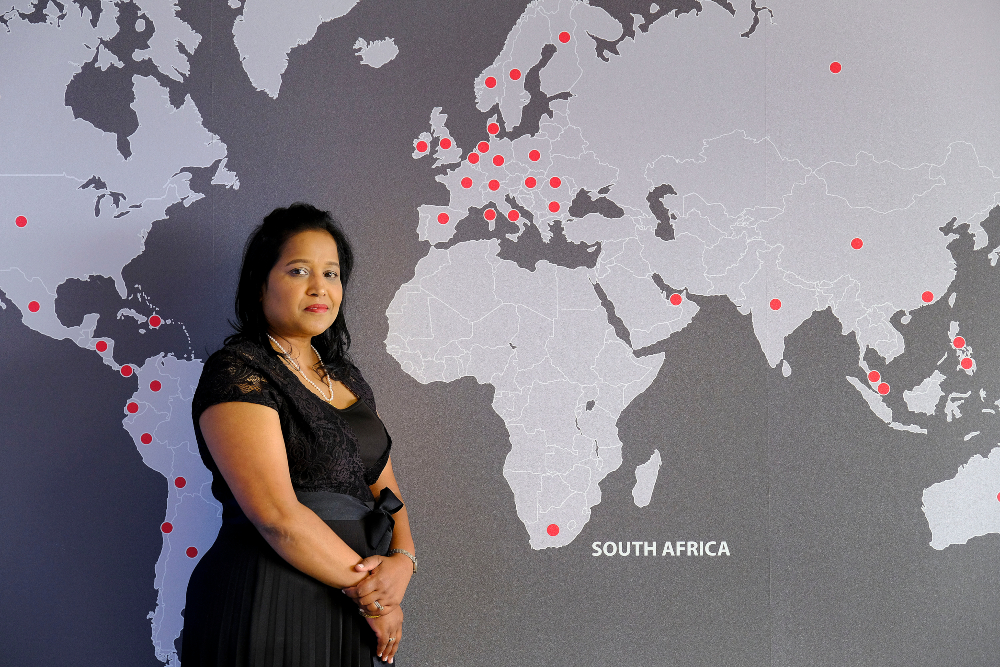
The digital gold rush is here. As more people attempt to make money from cryptocurrencies, criminals and con artists aren’t far behind. Make sure you know how to recognise the biggest schemes that want to part you from your digital coins says Carey van Vlaanderen, CEO of ESET South Africa.

The world seems to have gone ‘crypto-mad’. Digital currencies like bitcoin, Monero, Ethereum, and even Dogecoin, are all over the internet. Their soaring value promises big wins for investors (if you’re “buying the dip”, that is). And the ‘fortunes’ to be made by mining for virtual money have echoes of gold rushes that formed the first mining towns in South Africa back in the 1800s. Or at least, that’s what many, including a long list of scammers, will have you believe.

In reality, if you’re interested in cryptocurrency today, you’re quite possibly at a major risk for fraud. In many respects, in this new unregulated world, bad actors often have the upper hand. In 2021, South African-based Africrypt was reportedly hacked, effectively wiping out a staggering R51 billion of investors’ money. While the apparent hack made global headlines, the founders of Africrypt vanished as international investigators scrambled to piece together what happened in what is now suspected to be a completely fraudulent cryptocurrency investment platform.

The good news is that normal rules of fraud prevention apply too.  Everything you read online should be carefully scrutinized and fact-checked. Don’t believe the hype, or buy into something that seems too good to be true, and you’ll stand a great chance of staying safe.

Why are cryptocurrency scams on the rise?

Fraudsters are masters at using current events and buzzy trends to trick their victims. And they don’t come much more “zeitgeist-y” than cryptocurrency. Headlines and social media posts are partly to blame, creating a feedback loop that only adds to the hysteria over virtual currencies.

  • There are few if any regulations governing the cryptocurrency market for investors, versus the traditional stock market
  • Huge media interest makes it a regular hook for phishing and scams
  • Soaring cryptocurrency prices attract consumers dreaming of getting rich quick
  • Social media helps to amplify the buzz, real or fictional
  • There’s also the lure of mining coins for money which phishers can use as a hook

What are the most common cryptocurrency scams?

If you have virtual money safely stored in a cryptocurrency exchange, it may be at risk from hackers. On numerous occasions threat actors have successfully managed to extract funds from these businesses, sometimes making off with hundreds of millions. However, usually the breached companies will promise to recompense their blameless customers. Unfortunately, there are no such assurances for the victims of crypto fraud. Fall for a scam and you may be out-of-pocket for a lot of money.

It pays to understand what these scams look like. Here are some of the most common:

Ponzi schemes: This is a type of investment scam where victims are tricked into investing in a non-existent company or a “get rich quick scheme,” which in fact is doing nothing but lining the pocket of the fraudster. Cryptocurrency is ideal for thisas fraudsters are always inventing new, unspecified ‘cutting edge’ technology to attract investors and generate larger virtual profits.Falsifying the data is easy when the currency is virtual anyway.

Pump and dump: Scammers encourage investors to buy shares in little-known cryptocurrency companies, based on false information. The share price subsequently rises and the fraudster sells their own shares, making a tidy profit and leaving the victim with worthless stocks or coins.

Fake celebrity endorsements: Scammers hijack celebrity social media accounts or create fake ones, and encourage followers to invest in fake schemes like the ones above. In one ploy, some $2m was lost to scammers who even name-dropped Elon Musk into a Bitcoin address in order to make the ruse more trustworthy.

Fake and copycat exchanges: Fraudsters send emails or post social media messages promising access to virtual cash stored in cryptocurrency exchanges. The only catch is the user must usually pay a small fee first. The exchange doesn’t exist and their money is lost forever. Copycat sites offer what appears to be legitimate wallet services. Users are encouraged to download wallets which then install malware on the user’s device. In these instances, iOS devices have been compromised where in the past the problem was limited to Android.

Impostor apps: Cybercriminals spoof legitimate cryptocurrency apps and upload them to app stores. If you install one it could steal your personal and financial details or implant malware on your device. Others may trick users into paying for non-existent services, or try to steal logins for your cryptocurrency wallet.

Phishing: Phishing is one of the most popular ways fraudsters operate. Emails, texts and social media messages are spoofed to appear as if sent from a legitimate, trusted source with an urgent request for payment in cryptocurrency.

How you can avoid falling victim

The best weapon to fight fraud is a healthy dose of scepticism. With that in mind, try the following to avoid getting scammed:

  • Never provide your personal details to an entity that makes unsolicited contact with you, via email, text, or social media. It may even appear to be your friend, but in reality could be a hacker who has hijacked their email or social account. Check with them separately via another contact method
  • If something is too good to be true it usually is. Take any investment scheme with a heavy pinch of salt
  • Switch on two-factor authentication for any cryptocurrency account you have
  • Dismiss any investment ‘opportunity’ which requires an up-front payment
  • Never use unofficial app stores
  • Download anti-malware software from a reputable provider to your PC and mobile devices

The world may have gone cryptocurrency-crazy. But you don’t need to join in. Keep a cool head and ride out the hype while making good returns


Cloud is a hot topic, with seemingly everyone making the change to cloud. But the numbers don’t add up. What’s happening behind the scenes?

In a recent survey by large-scale tech learning platform O’Reilly, 90% of respondents said their organisations are using cloud, and 30% said they’re fully cloud native. This makes it clear why ‘cloud’ is the buzzword on every IT leader’s lips. Seemingly, if you’re not getting on the cloud, you’re getting left behind.

But other insights reveal that the numbers just don’t add up. Cloud spend still accounts for just 6% of total IT spend, according to tech analyst IDC. And, while global cloud spend surged in the first quarter of 2021, the numbers dipped by 1.9% in Q2 – the first decline after seven quarters of spending growth since 2019.

The reasons

IDC proposes the dip in spending is due to the need for new infrastructure as a result of the pandemic. That may be the case, but it doesn’t explain why total cloud spend remains a small sliver of total IT spend – despite indicators of rapid growth and large-scale adoption, says Andrew Cruise, CEO of Routed.

“It could also be that cloud is, quite simply, cool. For years, decision makers have been told to go big on cloud or risk losing out to competitors. And while this is certainly true, the money doesn’t lie. What organisations are saying and what organisations are doing are quite different. And, until they do make the move, some might be bluffing for fear of sounding like they’re behind.” It might also be that IT leaders, for now, are facing challenges in their move to cloud, he adds.

“They want to make the move, they plan on making the move, but they’re not quite getting there yet. Eliminating traditional infrastructure is a major undertaking and it’s unlikely that every cloud provider is fit-for-purpose for every app. Migrating everything to cloud is a daunting task and, while companies are clearly migrating certain services or apps onto cloud, they’re still running their own datacentres.”

Getting there

“Cloud hype has progressed from the urgent ‘move to cloud!’ call of a decade ago, to ‘hybrid cloud rules’ five years ago, to the ‘multicloud or bust!’ message of today. Of course, each of these blanket statements has merit, but there is no magic silver bullet for a businesses’ infrastructure requirements,” says Cruise.

Multicloud environments have grown increasingly complex, with no comprehensive visibility. Organisations are running different services on the cloud provider that best meets their needs for the given application – with no overarching system to link all these siloes. “That is until you consider the virtual machine, like VMware, which is able to optimise applications independent of the cloud environment. And all the benefits of cloud are not just hype – it truly does increase agility, efficiency, longer-term hardware efficacy and even greater security,” adds Cruise. And decisionmakers are clearly aware of this – albeit that the predicted shift is happening slower than expected. All signs point to ever more adoption. IDC predicts that compute and storage spending for cloud infrastructure will expand at a compound annual growth rate of 12.4% for 2020-2025 before reaching $118.8bn in 2025. 

“Although the move to cloud has been slower than experts predicted, I believe that the multicloud story will be slightly more common than niche. There’s still a long road ahead, but the truth is that it’s not too late to start considering the cloud journey and benefit from the great savings and efficiency that virtual hosted environments offer. Using the right tech, and partnering with the right provider, can create the most efficient systems your organisation has seen to date.”

World Autism Day was celebrated on 2nd of April, this day is to bring to the fore the challenges, awareness and management of autistic individual in the society. In line with this, Kanye Tagbo Okeke, a very creative Nigerian child who has constantly demonstrated over the years that autistic children do not have spiritual problem recently concluded a one-week art exhibition at the prestigious Transcorp Hilton Hotel Abuja. This art exhibition is to bring more awareness to autism in Nigeria.

Autism has always been a challenge for many Nigerians especially parents, schools and caregivers in a country that is very religious. Most folks will attribute autism to spiritual thing. Having seen this,
This is the third edition of Kanye’s Exhibition in the country in support of autism, themed “No Child Left Behind”, the exhibition brought under a roof the finest art collection which is more od abstract paintings of the child prodigy under one roof. Described as fantastic and creative by art lovers, connoisseurs and collectors. The works brought to fore Kanye’s dexterity with brushes on canvass.


Speaking at the event, Mariam Shuaibu, representing the Honourable Minister of Women Affairs said, we believe that this exhibition is in line with the child right act of the country. We believe in promoting the welfare and right of children as it is in Child’s Right 2003. We will sensitise the people and empower their parents. Attention should be focused in identifying these children’s talents. “
It is gives me great pleasure to be part of this exhibition and I will want to use this opportunity to appreciate the wonderful parents for nurturing this boy to this height. Kanye has showcased his gift of arts irrespective of his challenges. As you are aware autism is one of the developmental challenges but Kanye has show that this narrative can be changed”
Doris Izuwah, Director of OLG Autism and Kanye’s Doctor said ” there is inclusion in treatment, autism isn’t just a one man’s business. We need to help our children have access to multi disciplinary approach such as speech therapy, music and art. I commend the Tagbo Okekes family for their understanding and supporting Kanye’s schedule and this has opened doors to others. With their efforts a lot has been known and this has helped in the autism awareness. “


Muhammed Sulieman, the President of Society of Nigerian Artists added that ” Welcome to Kanye’s world and life, it is a reflection of his life and creativity. Kanye must have been thought very well to bring forth these works. Kanye isn’t fighting the ordinary battles you are fighting on daily basis. From age eight, Kanye’s arts have been revolutionary. He is such an amazing artist. He is definition of things that he sees everyday and a representation of things that are in colours and shapes which is creative. “
Tagbo Okeke, the father of Kanye also added that ” We understand the importance of autism awareness that we have decided to build Kanye’s Autism Society to assist in the awareness and intervention in autism cases in the country. we have seen a lot of cases where one of the children was about to be strangled just because he has autism, we have to intervene, what we do is to bring these children with special needs and put them on a platform that will take care of their needs. We encourage people to adopt a child, not that we are telling you to take the child home but we want you to be part of the process.”


Kanye has been called a prodigy over the years for his dexterity and creativity, he has exhibited across the globe in major cities like Vienna, Austria where he was recognised with an Award Flame of Peace and also in New York, UNICEF etc. Kanye has been described as one of the creative children to ever come out Nigeria and his art works are hanging in prestigious places around the world. Kanye is an autistic child of 12 years and a testament of what kids with autism can achieved if properly guided and nurtured.

For faster, more scalable ERP solutions, CIOs are turning to the cloud in greater numbers to help streamline performance across key areas of operations. Marilyn Moodley, Country Leader for South Africa and WECA (West, East, Central Africa) at SoftwareONE, says the industry can expect another big shift to the cloud on the back of SAP customers moving their existing ECC to the cloud and then converting to S/4HANA. Aside from the SAP ECC support deadline in 2027, Moodley says it’s an exciting moment for the industry as businesses are taking full advantage of the time and money saving benefits of S/4HANA.

“Moving from an on-premise system, often with significant custom coding, to a cloud environment can be daunting which is why choosing the right cloud partner for the journey is vitally important. There are so many advantages to running an organisation’s ERP system in the cloud. Businesses can no longer adopt a wait-and-see approach as the time to start your ERP migration to cloud is now,” she says.

Moodley notes the most compelling benefits of moving ERP to the cloud:

Costs:  Your business can shift from a CAPEX to an OPEX model, scaling your infrastructure up or down based on peaks and troughs in demand, so you only pay for what you use, when you use it.

Agility and efficiency: SAP in the cloud will provide you with scalability and access to the latest technologies to help you capitalise on emerging opportunities as they happen. On-premises infrastructure does not benefit from the level of automation and economies of scale available in the public cloud, adding more manual tasks to your workday and building up complexity you must deal with to keep your business running.

Resilience: Hyperscalers provide flexible and cost-effective options to ensure high availability with stringent SLAs and fail-safe disaster recovery so that your business can keep running, no matter what happens.

Innovation: The cloud also makes it easier to adopt emerging cloud trends, like ‘composable architecture’, which involves the breakdown of monolithic architecture into a modular approach. For example, you could have SAP at the centre of your architecture supported by best-of-breed technologies as building blocks. This drives ability to respond to changing environments faster.

Sustainability: Cloud computing is a more sustainable approach than reinvesting in new physical hardware unless you’re able to invest the same levels of environmentally friendly power and cooling systems that are supplied by the big hyperscale cloud providers.

Soludo’s message to Anambra people

I felicitate with Ndi Anambra on the occasion of this Easter celebration.

The solemn occasion of Easter calls for self introspection and deep sober reflection. It is symbolic because it marks the suffering, pains and resurrection of our Lord Jesus Christ after his crucifixion. This also marks exactly a month I assumed office as Governor of Anambra State.

It is therefore of utmost importance for us to inculcate and emulate the noble virtues of the personal sacrifices, sobriety and love which the death and resurrection of our Lord Jesus Christ symbolises.

Therefore, on this special Easter celebration, I call on everyone of us to imbibe the spirit of this solemn occasion as we rededicate ourselves collectively to the onerous task ahead of building a prosperous, safe and liveable homeland for our children, great-grand children and the generations to come.

Let me again, reassure that our dear state will continue to thrive on the trajectory of growth, peace and development despite the current wave of insecurity which is drastically being addressed.

And in the spirit of Easter, I call on those who are still in the bush to surrender their arms and embrace the olive branch which has been offered to them.

Let me reiterate that as a people, we will never cede or yield our homeland to criminals. The irrepressible spirit of the good people of Anambra State shall always triumph.

I therefore urge you all to continue to live in peace and harmony as you also extend love to one another on this special occasion.

I wish you all a Happy Easter Celebrations!

Thirty years in the ministry isn’t a walk in a park, these years are filled with challenges, temptation and tough roads. Knowing how far they have come,this has prompted the General Overseer of Faith Cathedral International Ministry, Egbeda to celebrate the establishment of thirty years of the church in existence this Easter Sunday.

From the humble abode at Ajayi Farm, and around Ikeja, Lagos, the church today has grown in leaps and bounds having different branches in and out of the country. The church rolled out carpet to thank God for what He has done since the inception of the church. The church recently announced that their branch in Germany recently welcomed the Ukrainian refugees that have decided to worship with them.

Speaking on the anniversary, the General Overseer of the church, Pastor Fred Obetoh used the opportunity to thank God especially for seeing them through. He also thanked the members that have been there and stood with him through thick and thin. The church anniversary was in tune with the spirit of the season which is Easter a day that the resurrection of Christ is being celebrated.

Speaking on the importance of the celebration to the church and the body of Christians, Fred Obetoh said that ” I so much appreciate the pastors, the elders, the choir and also those that have been praying for the church. I am very appreciative of all these people who have made a tremendous impact in the life of the ministry.

The church rededicated the children that were born in the ministry these past three decades. The General Overseer said that we are here to celebrate the goodness, mercy and compassion of God. May the will of God be done in our lives, he concluded.

“God has helped us and I pray that may God keep helping us to evolve and grow. We all need help in life and the help of God is imperative in our lives. We appreciate the help of God in this ministry” Pastor Obetoh added.

The preaching for the day was centered on the need to key into help. The issue of Joseph and his relationship with his siblings and how they sold him out. There are people that shouldn’t be offended, because offending them is akin to offending God. The issue of how God intervenes into the lives of people, Joseph was been helped in his life, this help he had he extended to his brother. But we must understand that the genesis of Joseph trouble is started when he told the brothers of his dream and they couldn’t come to terms that they will be under Joeseph.

The message was based on intervention of God in life, the pastor made the congregation to know that help is always on the way and they aren’t forgotten by God!

There was cake cutting, a lot of members were appreciated and there was refreshment. This double celebration is in conjunction with the Easter celebration and anniversary.

Faith Cathedral International Ministry
Egbeda,
Lagos

The brand new governor of Anamabra state, one of the most progressing states in Nigeria has made his position known on social media. Coming from corporate background, Charles Soludo understands the important of information dissemination.

In his Facebook, the banker said “I read you!The social media is a critical infrastructure no serious leader should esteem lightly. Just like life itself, I spend considerable time to read the good, the bad and, if you like, the ugly on this space.”

About spreading fake news, Charles said” I have also observed the efforts by a few faceless persons who proliferate uncanny information with the intent to spread fear, disinform and distort the minds of uncritical readers. I call them “mind bugs”, and would like to propose to our people with some sort of strong following, to step into the gap to begin the process of “debugging” by standing up boldly to dispel shared ignorance. “

” What we consume online is of immense consequence to how we carry on with life on the physical space. There is a lot to leverage on this space, a lot to learn and much more to create from the depth of our limitless minds.”

He added that” Whatever be the case, I have found more reasons to deepen engagements here. Soon, the feedbacks would become more instant. I am also on Twitter and Instagram. “

Anthony Nwosu

More than anything else, look forward to conflicts or disagreements.

In this era, do not lookout for a “God-fearing-man” or a “God-fearing-woman.” The “God-fearingness” of a man or a woman is mostly shaped by his or her religious affiliation. Often, this does not define the person. Rather, it conditioned him or her.

Is it not most of the people you consider to be God-fearing men that pray before opening their shops or offices? Does it stop them from selling fake goods or manipulating the original price of goods? Was Chinmark not you peoples’ definition of a God-fearing man?

Don’t we have plenty of God-fearing men paying tithes to pastors who are yet to pay their workers their salaries? Or you have not seen a so-called God-fearing woman who bows and kneels to call her pastor daddy, but her maid at home sleeps under the staircase and eats leftovers?

In this era, do not look out for physical beauty. He is cute and muscular are all attributes, not the man. She is beautiful and sexy are only accidents, not the essence.

Is it not in our era people enlarge certain parts of their bodies simply because they perceived that their partners prefer them ‘big’? Does it make them have a large heart of love?

My advice to you is, in this era look rather for conflicts, disagreements, misunderstandings, issues, sins. . .

Yeah, it sounds somehow, but that is actually what will help you.

More than anything else, conflicts/challenges reveal the strength or resilience of the person. Disagreements/misunderstandings reveal the way the person thinks and could process things.

If you catch him cheating, do not look merely at the act of cheating; rather pay attention to his reactions and responses. Was he sorry because he was caught? Was he caught because he was sorry? The response and reactions speak more than the act and reveal a lot.

In the Holy Bible, we have an example of Peter and Judas. It was their responses after they sinned, not merely their sin of betrayal that placed one above the other.

When there is a misunderstanding, how does she/he handle it? The issue that caused the misunderstanding is not as important as the reactions. Pay attention to the reaction. That is the one opportunity you have to determine the maturity level of your spouse and choose whether to stay or not.

While you enjoy your partner’s loving and caring side and always long for it, pray earnestly to see his or her angry, sad, and provoked part. Things buried have a way of coming out under extreme emotions of anger or joy.

More than anything else, it is often in a person’s worst condition that his or her real self comes out. If at his or her worst, you like what you saw, or better still, you feel that what you saw can be tolerated or managed by you, then you are good to go.

One of the most unfortunate things that could happen to you is to get married to a man or woman whom you never had time to see beyond their physical looks or your religiously tailored idea of “godfearingness.”

FR KELVIN UGWU

PurestPurity

FacebookTelevision


The Nigerian Communications Commission (NCC) has emphasised that telecommunications consumers in Nigeria have a major role to play in complementing efforts being put in place to ensure effective protection of telecommunications infrastructure. This is important to sustain and improve on the quality of service delivery by the service providers.

The Commission made this request and assertion recently at a sensitization programme it organized at Wannune, Tarka Local Government Area of Benue State.

According to the Commission, aside from the role of the law enforcement agencies in protecting telecom infrastructure, the consumers, who are the subscribers and ultimate users of telecom services, have an obligation to do everything to protect telecoms infrastructure in their environment. These include the base transceiver stations (BTS), the underground fibre optic cable, as well as associated infrastructure.

Addressing audience at the programme, the Director, Zonal Operations, NCC, Amina Shehu, decried the problem of vandalism caused to telecom infrastructure which often result in poor quality of service delivery to the end users.

“One of the major challenges to quality of service that operator provide to you, is vandalism of telecom infrastructure, such as Base Transceiver Stations (BTS). Others are theft, hostility from some host communities, which have continued to pose a major setback to the industry. Therefore, it is imperative for the public to regard telecom facilities as collectively-owned infrastructure that are crucial and essential for the provision of efficient and acceptable telecom services. The more reason these facilities need to be adequately protected,” she urged.

While imploring the indigenes of Tarka Local Government Area of Benue State to ensure that they protect telecom facilities in their community, Shehu, who was represented at the event by an Assistant Director, Zonal Operations, NCC, Abubakar Usman, further enjoined the consumers to always alert law enforcement agencies close to them once they suspect any act of vandalism, theft or other suspicious activities directed at telecom infrastructure because such nefarious activities have implications for quality of service delivery in the communities.

Shehu underscored the centrality of telecommunications sector to the economy and she also informed the audience that in the last 15 years, telecom has been a major contributor to the nation’s economic growth and development. The Director Zonal Operations said the Commission will continue to collaborate with relevant agencies and keep sensitising the consumers on their role in ensuring the security of telecom infrastructure.

One issue Shehu discussed in her speech was the misinformation about Electromagnetic Frequency (EMF) radiation emanating from telecommunications infrastructure which she asserted was not harmful according to studies conducted by the International Telecommunication Union (ITU), World Health Organisation (WHO) and the International Commission for Non-Ionising Radiation Protection (ICNIRP).

Shehu stated that the overall objective of the event is to sensitize members of the public on the need to protect telecommunication infrastructure, and more importantly, to correct the misconception people have on the effect of radio magnetic waves on human health. “So, the Commission is saying again to you that there is no scientific evidence yet that shows that radiation from telecom masts constitute health hazards to human and we want you to help spread this information to those that are not here,” she said.

During the event, participants were also enlightened on the illegality of pre-registered Subscriber Identity Module (SIM) cards, the imperatives of proper SIM registration, the importance of National Identification Number,NIN-SIM linkage exercise. The consumers were also informed about facilities provided by the Commission which they can use to improve their telecom experience and quality of life in general. These include the NCC Toll-free Number (622); the 112 National Emergency Number; and the Do-Not-Disturb (DND) 2442 short code for managing cases of unsolicited text messages, amongst others.

Meanwhile, the Paramount Ruler of Wannune, Chief Gandeorun Orokaa, who attended the event, thanked the Commission on behalf of the participants for bringing the sensitization programme to the Community to educate the consumers on sensitive consumer-related issues as well as correcting wrong notions and clarifying misconceptions. He also called on the indigenes to support NCC in protecting telecoms infrastructure so as to ensure that quality of service improves in the areas.

The event ended with an audience session, where questions and answers were asked, and observations and recommendations were also made on many aspects of telecom services. In attendance at the event were Local Government workers, Village Heads, Community leaders, Students, Women leaders, Staff of the Nigeria Security and Civil Defence Corps (NSCDC).

The recently “concluded” National Identity Numbers (NIN) registration for Nigerians is one thing or exercise that is very important. It is said that it will bring down crime, identify real Nigerians and people have argued that it is duplicity but the issue of banning over 72 million of Nigerians from making basic uses of their phones such as making calls via their mobile phones is a bleeding the economy.

Many have argued that, with SIM registrations where Nigerians queued up in various Telecommunication centers to register to their bank verification Numbers (BVN) where Nigerians line up again for that so that they can get their numbers to enable them bank. Nigerians lined up again for voters’ card, driver’s license, passports etc, all these are forms of valid ways of identifying us Nigerians then NIMC came to town with theirs. Nigerians were of the opinion that they have escaped these now they realized that they cannot make calls again due to NIN number! That is the quagmire of about 72 million of Nigerians as of today.

Being run by National Identity Management Commission (NIMC), this agency has put a deadline on the registration and syncing of these numbers with their mobile phones till March 31st. Today about 50% of Nigerians mobile phone or GSM users have been barred from making calls till they get their NIN numbers synced with their devices. This has already rendered these Nigerians incommunicado!

Some of these Nigerians like the average mechanic can’t even call the parts seller to supply him parts, the lady that is baking cakes can’t order for flour, the boy going to school can’t call the parents to come pick him up! The driver can’t call the boss to inform him of the necessary repairs in his car. These set of Nigerians are in crossroads or quagmire and these are the artisans that drive the economy! These are the over 50% of phone users mentioned ab initio!

Do we blame the regulator of the telecoms space for sitting down and watch the industry loose about 40% of their revenue through calls being lost? I do not blame the NCC to an extent, I do not think they should be blamed here, think that the blame should be on the government and NIMC! The NCC are just acting according to directives in my own view, the NCC is one of the foremost regulators that knows their onions and they are not happy that the telecom industry is bleeding! If Nigerians can’t make calls, the industry loses money, and if the industry loses money, NCC will be sad and unhappy but MIMC doesn’t care because their do not play in the telecommunication ecosystem, and also if Nigerians do not make calls, the government loses money from tax and interconnect, termination rates!

Do NIMC know these basic principles of telecommunications, I doubt that they do, if they do, they can’t stop over 70 million of Nigerians from making calls. We are talking billion lost weekly here as revenue! That is the clearer picture and folks must start smelling the coffee and know how are cookies are crumbling in such a perilous economy. From the above deductions, one can understand that NCC might not and will not be happy seeing the telecom ecosystem bleed!

There is no place in the world that the greater part of citizenry is stopped from communicating just because of they didn’t have their national identity numbers, this is akin to disrupting the greater public their freedom of speech and communication. And the Nigerian government through their agency NIMC have successfully denied Nigerians of this crucial right to speech and communication via this fiasco of mandating NCC to stop their communication while the telecoms industry loses billions daily due to this ill-conceived fact.
Stopping people from communication is very bad way of ensuring that people register up, this NIN numbers of a thing can be likened to social security numbers of many countries, unfortunately, we Nigerians are copycats but bad ones for that matter.

Having a full data base of citizens is crucial, we are thinking that b now NIMC would have been creative by ensuring their online platform is robust where people abroad and diaspora can have their registration done seamlessly. A lot of Nigerians have been in diaspora for many years like three years upwards, they make use of their numbers to transacts businesses at home, they roam these lines and how do you expect them not to make calls due to the singular fact that they do not have NIN numbers our own version of social security numbers. Doing this have successfully cut off these set of Nigerians out! This means the scarce forex we are looking for is cut off! This is cutting the nose to spite the face!

NIMC should be creative, you can’t just wake up one morning and cut of Nigerians! What about those in incarceration? What those in prisons? What about the Nigerians in mental asylums or sanatoriums? what about those Nigerians that have been in admission at various hospitals for months that were unable to do their NIN registrations? Are we saying that because they are incapacitated, they shouldn’t reach out to their family and friends to get support especially those in the health facilities, we understand that those in prisons “cannot make calls”, but what about others? Are they less Nigerians?

There is various way to catch a monkey, you can use a banana or you can use other fruits to catch the monkey, that is a popular saying, what this means is that NIMC should be able to find a middle ground in dealing with this errant and erratic Nigerians that have (un)willingly refused to be captured or counted. Many of their grouse is that they are tired of the government data policies and inconstancies. They have many valid arguments and they are right, what they haven’t thought of is doing a class action against NIMC demanding billions in terms of damages due to loss of revenue from their inability to make calls. Some have questioned the constitution and its position of stopping their fundamental rights of freedom of speech by NIMC? They have asked if NIMC was mandated to take this right away from them? But they are yet to think of class action or any ambitious legal luminary taking up these cases.

In sane climes and nations, there are majors that are taken to ensure that folks get social security Numbers such as inability to get a decent job, inability to get good medical service. Let me break it down, the SSN which is known as the social security number is composed of three parts the first three digits are known as area number, then group number which is two digits while the last is serial numbers. We are yet to understand how NIN grouped their numbers and what they are doing about the dead Nigerians that have NIN. What are criminal elements that will the numbers of the dead to do crazy things like SIM card registrations? Is this nit what NIMC is trying to avoid? What if people get the NIN of dead Nigerians and use it to buy SIM cards and get it registered? Is there a mechanism that is in place to counter this? Did NIMC think of this? Did NCC think of this? Did the telecoms stakeholders such as ALTON, ATCON etc think of this? they ought to know by now that Nigerians are some of the smartest bunches on the face of earth and what are they doing to be in tandem with these “smartness” or bunch of smart Aleks hovering around in our ecosystem?

To ensure about 95% compliance NIMC must devise ways to ensure that Nigerians comply not tampering with their devices. Stopping their devices from communicating is a wrong devise. In other countries as mentioned they have devised ingenious means to ensure that people have their SSN that even make people que for them without even compelled to. The USA government created theirs about 1936 to track how much Americans make during their lifetime and calculate their social benefits. Do NIMC have any form of social benefits for Nigerians after unblocking or unbarring our ability to call ourselves?

With the Social Security Number, you need to have it to collect government benefits, get a job and use for identification. So, in this case where do we place NIN numbers? It is of the opinion that NIMC should harmonize their data as the topmost identity protection agency, they are what CBN is to bank and what NCC is to telecoms, they should harmonize various agencies from CBN, NCC, INEC, FRSC, IMMIGRATION and others that collect identities and sync them with their own data to give Nigerians their unique identities without having to go through making Nigerians que and then for those that didn’t que get the Easter present of not calling their loved ones to wish them Happy Easter. NIMC must start looking at how to deploy robust technology, rejig their IT infrastructure and build world-class capacity that can mandate above mentioned agencies to sync their data in their highly secured tier IV data center and cloud. This sync will make creating of national identity number seamless for many Nigerians without queuing under the sun or loosing ability to make calls. A simple artificial intelligence (AI) solution can get this done.

Anthony Emeka Nwosu