Oluyemi Obadare Chief Executive Officer at Certification Partner Global, West Africa has been accepted into Forbes Business Council, the foremost growth and networking organization for successful business owners and leaders worldwide.

Oluyemi Obadare was vetted and selected by a review committee based on the depth and diversity of her experience. The criteria for acceptance include a track record of successfully impacting business growth metrics, as well as personal and professional achievements and honors.

“We are honored to welcome Oluyemi Obadare into the community,” said Scott Gerber, founder of Forbes Councils, the collective that includes Forbes Business Council. “Our mission with Forbes Councils is to bring together proven leaders from every industry, creating a curated, social capital-driven network that helps every member grow professionally and make an even greater impact on the business world.”

As an accepted member of the Council, Oluyemi has access to a variety of exclusive opportunities designed to help her reach the peak of professional influence, connect and collaborate with other global respected leaders in a private forum and at members-only events. She will also be invited to work with a professional editorial team to share expert insights in original business articles on Forbes.com, and to contribute to published Q&A panels alongside other experts.

Finally, Oluyemi Obadare will benefit from exclusive access to vetted business service partners, membership-branded marketing collateral, and the high-touch support of the Forbes Councils member concierge team.

“I am thrilled to be accepted into Forbes Business Council,” said Mrs. Oluyemi. I look forward to collaborating with fellow respected global business leaders, strengthening my network of excellence and building valuable relationships for a lasting impact,” she concluded.


Nigeria has strategic mineral resources in its seabed, which will be exploited through adequate deployment of technology, President Muhammadu Buhari has said.

The President spoke Friday at State House, Abuja, while playing host to Mr Michael Lodge, Secretary-General of the International Seabed Authority, who was attending a workshop on Africa Deep Sea Resources in Abuja.

He said resources would be deployed, and studies done, believing it would be worth the while.

The President also used the occasion to applaud the Nigerian Navy for its role in protecting the country’s maritime domain, urging it to “continue to guard us jealously.”

Mr Lodge thanked Nigeria for hosting the international workshop, and lauded the country for the leadership it provides on the African continent.

He encouraged the country to explore her deep seabed resources “to support the blue economy,” and pledged solidarity with Nigeria during his administration as the Secretary-General.


  1.  

    Yemi Osinbajo, a legal guru, a jurisprudential genius, a Professor of Law, a highly-acclaimed Pastor, a well-respected Servant of the Living God, a Senior Advocate of Nigeria, a writer and author of many books, an expert on the law of evidence and our nations’s Vice President came from very humble beginnings and yet has done so well.

    His story is one that we can legitimately describe as an excellent example of the accomplishment of the Nigerian dream.

    God is clearly with this man and no-one can take that away from him.

    His humility appears to have opened many doors for him and the Lord has granted him favour both before the Heavens and before men.

    Yet, in my view, the greatest honor that has been bestowed on him so far in his life was to have had the privilege of representing President Muhammadu Buhari and our beloved country Nigeria at the historic and utterly resplendent state funeral of Queen Elizabeth 11.

    He was there with with no less than 200 other Heads of Government and State, 500 officials representing various countries from all over the world and Kings, Queens and members of all the Royal families of Europe.

    In addition to that he was there with with a sea of adoring faces and a massive and utterly devoted Union Jack-waiving crowd that lined the streets of Central London from the gates of the 319 year-old Buckingham.Palace, leading up to the 753 year-old Westminster Abbey and to the beautiful country roads leading to the 952 year-old Windsor Castle just outside the nations capital.

    This was an event that was dramatically and dazzlingly remarkable in its pomp, pageantry, ceremony, magnificence, historical content, military precision, unprecedented perfection and mind-blowing splendour.

    It was also an event which was done in honor of one of the greatest, most majestic, most reverred, most respected, most disciplined and most-loved monarchs of not just the Royal House of Windsor but also of Great Britain, Europe and indeed the entire world.

    Yet it didn’t stop there.

    She was also a monarch who sat on the throne of her ancestors and forefathers and reigned for longer than ANY other in the history of Great Britain whilst in the history of Europe the longevity of her reign was second only to King Louis X1V of France (the Sun King) who built the beautiful Palace at Versailles and who ruled his nation for 72 years years from 1643 till 1715.

    Queen Elizabeth’s reign, which spanned from 1952 till 2022, was as outstanding, dramatic and eventful as was her funeral.

    It was a truly grand occassion the likes of which, in terms of achievement, celebration, solemnity, historical relevance, international significance and good old fashioned splendour, may NEVER happen again.

    Even more remarkably it is one that was watched on live television by no less than 4 billion people which is just over 50% of the world’s entire population and which represents a world record in terms of live television-viewing.

    All this and providence, coupled with the finger of God, made it such that the individual that represented our great nation of 200 million people at such an august gathering and historic occassion was a diligent, scholarly and hard-working yet modest little man with a very humble background from a sleepy small town called Ikene near Ijebu-Ode in Ogun state, South Western Nigeria by the name of Yemi Osinbajo.

    This is a great testimony to the awesome power of the Living God.

    I am aware of the fact that the Vice President is a committed Christian and a praying man and the Lord has clearly answered most, if not all, his prayers.

    For all he has achieved in his life we give thanks to God and we give Him alone the glory.

    Yet having said that we must NEVER lose sight of the fact that God used just ONE person to make all this possible for Osinbajo who, before his political elevation, was nothing more than the Attorney General and Commissioner of Justice for Lagos state.

    That person appointed him as that Commissioner in 1999 when he himself was elected Governor of Lagos state and he kept him there for 8 years.

    In 2015, 8 years after he left the exalted office of Governor of Lagos state, that same person single-handedly nominated him to be the running mate to President Muhamnadu Buhari in the presidential election and his nomination was graciously accepted.

    Consequently Osinbajo was elected Vice President of the Federal Republic of Nigeria and has been there for the last 7 years and will be there, God-willing, till May 29th 2023.

    Today, 7 years after he was elected Vice President, the person that nominated and ensured that Osinbajo reached this exalted height is taking his own shot at the Presidency and is indeed the presidential candidate of the APC, the political party to which Osinbajo belongs.

    It is incumbent upon the Vice President and every other person that has benefitted in any way from that person’s goodwill and favour to support him in this great endeavour.

    I have no doubt that the Vice President will do this and has been doing so ever since the conclusion of the party Convention but it is still worthy of mention as an example to others.

    The person in question is Osinbajo’s political godfather, benefactor and mentor and his name is none other than Asiwaju Bola Ahmed Tinubu, the Asiwaju of Lagos and the Jagaban of Borgu.

    He deserves a hearty congratulations and thanks from all of us for what he has done in the life of his political son Yemi Osinbajo and indeed in the lives and careers of so many of his other political sons and daughters.

    Most political fathers and mentors do not delight in the rise of their protegees and often go out of their way to downgrade and suppress them or even destroy them after they leave power and office.

    The reason for this strange disposition and attitude is inexplicable and I have long pondered over it.

    Yet this is NOT the case with Tinubu. He takes pleasure in his sons and daughters rising.

    He builds up his own, stands behind them and lifts them up despite the fact that he has suffered many betrayals from quite a number of them over the years that were evidently afflicted with what one can only describe as Absalomic tendencies.

    For those that do not know who Absalom was and what he did to his father King David, I suggest you read the Holy Bible.

    Absalom wished death, destruction, shame and disgrace for his father, entered into open rebellion against him and attempted to steal his crown and take his throne.

    He was seized and enveloped by an evil spirit which sought to take, by any means necessary, that which belonged to his father.

    This is what Bola Tinubu has been subjected to on several occassions by some of those he has helped in the past.

    Yet he keeps forgiving, keeps loving and keeps showing them kindness.

    He keeps repaying evil with good not only to those who betrayed him but even to those that may have despised him and poured venom on him in the past for no just cause.

    This, in my view, is actually the secret to his success and the source of his power.

    His forgiving nature pleases God and provides a strong defence for him.

    Constantly doing good to others even though one may be repaid with evil and betrayal in return is a great and holy virtue.

    Few can display this rare trait and Bola Tinubu ranks amongst those few.

    I close with a word to those that he has assisted politically and otherwise over the last 30 years: it is YOUR turn to join hands together and lift him up by praying for him, standing by him, identifying with him and assisting and supporting him to achieve his dream of becoming the 7th democratically-elected chief executive and Head of State of the Federal Republic of Nigeria.

    May God make a way for him and may He crown the efforts and grant the prayers of those of us that have lined up behind him in this great and noble quest.

    May the light of God dispel every darkness, may the finger of God remove every obstacle, may the sword of the Lord cut short every naysayer, may the glory of God return to our nation and may Lagos, the center of excellence and a state that has done so much for our country and given so much to our people, produce it’s first President of Nigeria.

    Finally may all those in the political arena that I respectfully describe as Asiwaju’s disciples, protegees and mentees who have not done so already join the rest of us by saying a big ‘AMEN’ to this prayer.

    God wills it.

    (FFK)


One of the most critical ambitions of every football player is to play on the global stage and also have a European club to play. This has been a tedious and herculean process for indigenous football players in the country. having seen this gap, a Nigerian based in Frankfurt, Germany recent launched a mobile app to assist footballers to have the desired exposures needed. Known as ‘Play2Score”

mobile app which can be downloaded in various mobile stores like Android and Apple.
Speaking during the unveiling, Henry Isaac, the developer of Play2Score mobile app said “As FIFA certified agent, whenever I come to Nigeria, I always see very talented chaps that are good in the game of football. These kids need the desired exposure in Europe, I am just a man that have limitations. I can only help the few that I can. This was one of the core reasons that made me develop this mobile app.”

He added that “a lot of those that are interested to play in Europe have been cheated out of their money by these fraudulent people that parade as agent. With this app, you have been able to bypass these fraudulent agents. This will help the players save money. It is just only a download away on their mobile phones.”


The mobile app has been lauded by football lovers, players and coaches especially in Europe, described as one of its kind in Africa. With no subscription fees and charges, the developers have described the project as a way of giving back to the society.

Play2score is a registered football organization with a mission to create more realistic connections between football players and top European football profiles across Africa. There are talented football players on the streets, in the markets, in our schools, in our society, and in native homes, talented enough to play for popular European football teams and become successful.

As far as injecting new and fresh blood into the game of global football is concerned, with Play2score, reaching out to the target players, including all other logistics in recruiting, organizing, and dispatching them across various teams will no longer be a hassle.
One of the advantages of the mobile app is connection. It connects the local players with other football profiles. There’s nothing better than connecting with top football players/profiles. Grow your connections and increase your chances. Also Sharing of great moments. You can share your great football moments and skills with your connections and the whole community. Who knows? You might just get a life-changing message in the next few hours. Finally, You can discover more. Discover more with football groups and forums and never miss out on important notices.

“Play2score Football Community is all about football. It connects talented football players, clubs, academies, scouts, sports directors, journalists, parents/guardians, etc. to share great football moments and provide support for players. As a football player, Play2score Football Community is where you go to let the world know how good of a player you are and to draw the attention you need to ascend”, Henry concluded.


ANTHONY EMEKA NWOSU


Cloud technology could be a major enabler of economic development on the African continent – but some stubborn barriers need to be cleared first, says Andrew Cruise, Managing Director of vendor neutral cloud infrastructure provider, Routed.


The African continent represents 60 percent of the world’s arable lands and 30 percent of the earth’s mineral reserves – making it a rich continent in many ways. Yet it contributes only 2 percent of the world’s research output and lags behind in several key technological sectors. For the continent to achieve its potential and escape the unsustainable colonial development model of resource extraction, investment in digital competencies is crucial. In certain areas, the continent is faring reasonably well in this regard. Mobile penetration, for example, is skyrocketing – 615 million users in sub-Saharan Africa are expected to subscribe to mobile services by 2025.


But the bigger picture remains disconcerting. According to the World Economic Forum, African Union member countries pledged to contribute 1 percent of their gross domestic product to research and development (R&D) in 2006, yet only four countries reach this figure in their annual budgets. The continent holds just 0.1 percent of the world’s patents, produces 2 percent of the world’s research output, and there are around 198 researchers per million people in Africa – compared to over 4000 in the United Kingdom and United States.


How cloud and other tech can help

Cloud computing has the potential to boost economic development. Not only does it improve mobile productivity and big data, but it allows small businesses to scale without a large capital investment – a possible boon for the SMEs that represent 98 percent of South Africa’s business force, for example.


Effective cloud applications allow smaller businesses to have the same technology at their fingertips that large corporations pay millions for – on a scale and budget that suits their needs. It significantly reduces upfront ICT infrastructure costs, diminishes the burden of IT maintenance, and allows for more efficient updates. It also provides cost-effective security and improves remote work capabilities.


Cloud essentially allows businesses to ‘rent’ infrastructure, so that the technical hardware is always of the highest standard, there’s guaranteed uptime for system availability, and scaling becomes as simple as renting more processing power and storage. Cross-border expansion is also much simpler, as it eliminates the costs and complexities of setting up new infrastructure elsewhere.


According to a paper by the International Monetary Fund, SMEs’ growth prospects can be significantly boosted by digital technologies such as cloud. “Going online enables SMEs to reach new clients and markets at low cost and to reduce communication costs. (Technology such as cloud computing) improves efficiencies, reduces capital expenditure and operational costs, and speeds up cross-border transactions – (helping) firms scale up faster, increasing employment and boosting output growth,” say the researchers.


Of course, cloud would be one aspect of a broader technological economic upliftment picture. Artificial intelligence, machine learning, big data, and the internet of things (IoT) all require major investment on the continent. And before such advanced technologies can truly be successful, more pervasive technologies first need to thrive. One Harvard study looked at the most important technological enablers of economic growth in six African countries and identified digital money, promotion of job-creating digital businesses, better technological infrastructure and fewer disruptions of such infrastructure as key elements required for technological growth across the board.


The hurdle

There is a glaring obstacle in the way of Africa’s cloud and other technological adoption and resultant potential for economic growth: expensive, unreliable, slow internet. World Data Lab’s Internet Poverty Index paints a dismal picture. It adjusts the actual cost of internet services in every country to estimate what a standard mobile internet package of 1 GB at 10 MB/second would cost in that country. It then extrapolates how many people in the country could afford such a package. If the cost of the package is above 10 percent of a person’s total spending, the person is considered internet poor.


Nigeria tops the Internet Poverty list and, of the ‘top’ 20 countries, 11 are in Africa. South Africa, the highest-ranked African country in terms of infrastructure integration, is tenth on the list and has over 38 million internet-poor citizens in its 60-odd million population. To put this in context, the country with the closest population size on the list, Italy (58 million people), has just over 800,000 internet-poor residents.


Though the World Bank hopes to help the continent achieve universal connectivity by 2030, its estimates suggest that Africa will require an investment of USD$100 billion to plug every citizen into the internet by 2030. Hafez Ghanem, the World Bank’s vice president for Eastern and Southern Africa, said on the bank’s website that “no single actor will be able to meet Africa’s 2030 target and carry the burden of a USD$100 billion investment funding requirement alone”.


And the most important condition for cloud to be successful in any country is cheap, reliable, and fast internet. This is normally provided by fibre – a norm in rich countries in Europe, for example. But in African countries where infrastructure is lacking, wireless and satellite technologies hold sway and provide expensive, slow, unreliable connectivity. Some North African countries are faring better because of their proximity to the UAE, but those in the sub-Saharan region mostly rely on cabling from Europe – an expensive endeavour.


There are other hurdles preventing even internet-rich businesses from making the switch to cloud. It’s expensive to move to the cloud initially; some businesses do still require on-premises solutions, albeit fewer; and understanding of the technology is sometimes lacking, especially when organisations opt for a complex multi-cloud environment.


But it all starts with better internet. The internet itself is commonly held to be a driver of economic prosperity. It enables sharing of information, sharing of expertise, sharing of knowledge, and education. It opens doors for people to drive new ideas and improve their business offerings. It is as important as basic services like water and electricity and should be regarded as such. ICT elements of economic growth must revolve around the internet.


What needs to change?

Currently, much of the innovation, R&D and communication in the African tech sphere is being driven by large international corporates connecting global communities – the likes of Google, AWS, Microsoft, Apple, and Netflix have an increasing foothold on the continent. Should governments get more involved, this culture could grow at a community level.


Of course, all of this requires major resources. The capital investment to purchase equipment, the time to upskill workers, and the effort to find ways to divert other resources to such endeavours. According to the World Economic Forum, three things need to happen at a state level for technology to push Africa’s economic growth.


First, language needs to be digitised to improve literacy, and in turn, digital literacy. Communication is at the core of development and interactions within and between communities impact the continent’s economic, social, and cultural welfare. With over 2000 languages spoken in Africa, governments must invest in indigenous languages to improve literacy rates, particularly on digital channels, to unlock critical understanding and improve communication abilities among diverse people.


Secondly, African governments should prioritise R&D investments at higher education institutions, focusing on producing and commercialising scientific knowledge. And, thirdly, Africa’s culture of innovation needs to be extended to the digital sphere. Though the continent shows creative innovation at a community level through projects such as farming cooperatives, digital innovation is not as much part of the continent’s culture – yet.


I would also add a fourth requirement: increasing labour rates. Where labour is cheap, technology doesn’t thrive. Low labour rates create a tendency to use manual labour instead of investing in the efficiencies that technology can bring. In countries where labour is more expensive, technological advances are more likely to happen. Cheap labour is not only holding the continent’s technological advances back but holding its people hostage.


When people value humans more, they’re more inclined to invest in technology. In turn, economies flourish, security grows, and communities thrive.


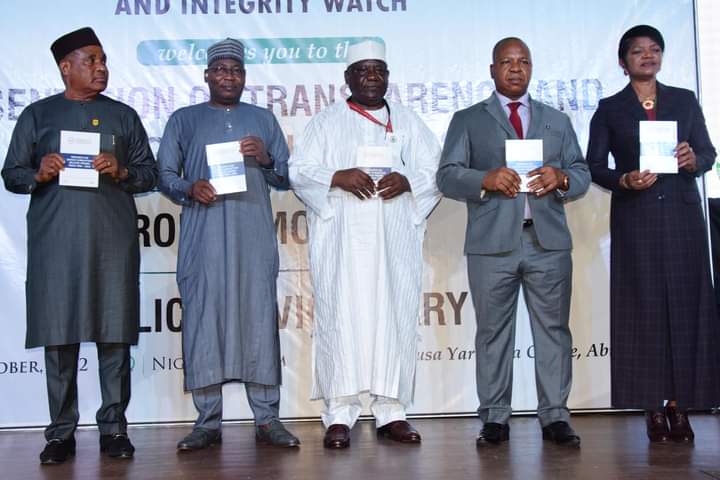
The Center for Fiscal Transparency and Integrity Watch (CeFTIW) has said that its study has shown remarkable improvement in the performance of Ministries, Departments and Agencies (MDAs) in the core areas of open governance and transparency in Nigeria.

The Chairman, CeFTIW Board of Trustees, Amb. Angela Nworgu, confirmed this in Abuja, while presenting Transparency and Integrity Index, Public Service Diaries and Probes Monitor Portals, jointly conducted with the Bureau of Public Service Reforms (BPSR).

She said the ultimate goal of the event was in furtherance of the commitment of the Federal Government and the center’s efforts at promoting transparency and accountability in the nation’s public service, and good governance in general.

The BoT Chairman explained that the initiative was developed to monitor public sector expenditure and provide same to the public. It also monitors issues relating to the integrity of public officers as well as public institutions’ responsiveness to public scrutiny.

Amb. Nworgu said, “Today, we are gathered to present three of our other interventions aimed at promoting transparency in the public sector.

“Firstly, the Transparency and Integrity Index (TII) is one of the Center’s flagship projects supported by the MacArthur Foundation. It was borne out of the need to strengthen existing preventive mechanisms in combating corruption; especially given the concern that huge resources are deployed every year to prosecute corruption without corresponding decrease in incidents.

“Secondly, today’s program will see the presentation of the Public Service Diaries platform developed in partnership with the BPSR. The PSD project leverages technology to create a platform for knowledge sharing between retired public servants and existing public officers.

“Also today, we are physically presenting our Probes Monitor Portal. The PMP was developed in view of the Center’s concerns, first and foremost, about the abuse of constitutional processes in which probe panels are constituted and either abandoned halfway or their recommendations are not implemented, a situation which continuously weakens our democratic processes. The portal hosts information on grand corruption-related probes that were made public between 1999 and 2022; to draw attention of all concerned stakeholders to the litany of abandoned probes,” she added.

She then urged citizens to take advantage of the portal and data provided thereon to demand for transparency and accountability from their elected leaders and the public sector in general.

Earlier speaking, the Secretary to the Government of the Federation (SGF), Boss Mustapha, said the CFTiw initiative by to conduct a Transparency and Integrity Index Assessment for MDAs and other relevant government agencies, is commendable and a welcomed development towards entrenching accountability and good governance.

He said the NGO deployed the use of some parameters to ensure that the set objectives of the project are achievable.

Mustapha said, “Particularly, the six parameters employed by CFTiw namely Website Integrity, Fiscal Transparency, Open Procurement, Anti- Corruption, Citizens Engagement and Human Resources, to benchmark the 2022 assessment of MDAs are remarkable as they are critical indices to determining good governance in the society.

“It is also envisaged that the development of the Probe Monitor Portal and the Public Service diary would become a repository knowledge that would facilitate referrals for judicial prosecution, as well as provide institutional memory within Public Institutions that could deepen principles of integrity.

“Undoubtedly, the quest for Citizens’ greater responsiveness, better use of public resources and development has heightened the need for transparency of public revenues.

“The thrust of government is to ensure that through its fiscal instruments and policies, a verile and sustainable economy is attained. Government alone cannot achieve this feat, this why initiatives and support from non- State actors as exemplified by the Centre for Fiscal Transparency and Integrity Watch(CFTiW) is most welcomed,” the SGF added.

Similarly, the BPSR DG, Dasuki I. Arabi, described the assessment as another milestone that encourages peer review mechanism aimed at stimulating competitiveness for better performances and as well, ensure the compliance to critical indices required for national development by MDAs.

“Accordingly, the unveiling of the Probe Monitor Portal and the Public Service Diary Application is a laudable step towards creating reservoir of knowledge for judicial processes, as well as strengthening track records of Public Servants towards mentorship and promoting core ethical values within Public Institutions.

“The clamour for a transparent and accountable government ever than before became a burning issue to the people, leading to the emergence of the wave of activism into public funds and accountability. Transparency and accountability are critical for ensuring that resource is well managed for the benefit of all.

The DG highlighted some of the credible gains made by his bureau in initiating reforms, with the introduction of the reforms in Public Financial Management, where fiscal instruments have successfully blocked leakages and brought about probity in the Public Financial System in Nigeria.

Aliyu Umar

The Federal Ministry of Agriculture and Rural Development, (FMARD) and
Stakeholders joined the rest of the World to commemorate World Farm Animals Day and World Animal Day while advocating for climate smart Agriculture.

The commemoration with the theme, “GOOD ANIMAL HUSBANDRY PRACTICE IS CLIMATE SMART” was at the Ministry’s premises in Abuja, recently.

In his speech, the Minister of State for Agriculture and Rural Development, Hon. Mustapha Baba Shehuri said that the commemoration of World Animal Day reminded all to examine the animal husbandry practices in relation to the environment in the ever-changing climate situations with the view to adapt and mitigate its effects as we strive for productivity, the profitability of production, and the associated businesses.

He pointed out that the Climate Smart Agriculture strategies which included sustainable livestock production systems was to address environmental issues while ensuring improved productivity, enhanced resilience, reduced greenhouse gas emissions amongst others.

Speaking further, Shehuri revealed that the World Animal Day was officially adopted in May 1931, by the International Animal Protection Congress in Florence, Italy, where October 4th was declared as the day for global Commemoration of World Animal Day, while World Farm Animals Day was declared on October 2nd, 1983

In her remarks, the Director Animal Husbandry Services Department, Mrs. Winnie Solarin noted that the mission of the World Animal Day was to raise awareness, sustainability and profitability of animal production as well as animal protein in nutrition for healthy living.

The Director emphasized that the mission was in tandem with the mandate of Department of Animal Husbandry (DAHS) and Federal Ministry of Agriculture and Rural Development (FMARD) in general, stressing that World Animal Day embraces all animals including domestic animals. She noted that the unique concerns of each, in every country but with emphasis on animals for slaughter as meat as well as those kept for other socio-economic purposes such as farming and transport.

According to her, “In many countries, World Animal Day is now being celebrated by various organizations, government bodies. These include: Society for the Protection of Animal Rights in Egypt (SPARE), Animals Lebanon and Animal Naturalis Colombia. The Himalayan Animal Rescue Trust (HART) and the Sudanese Animal Care & Environmental Organization to mention but a few”.

In his good will message, the Registrar, Nigeria Institute of Animal Science (NIAS) Prof. Eustace A. Iyayi said that animals play a vital role in Agriculture and other sectors hence generates income for the economy.

He reiterated that this is the first time Nigeria is celebrating World Animal day with other countries, pointing out that, what we are celebrating today is to create awareness and sustain the economy.

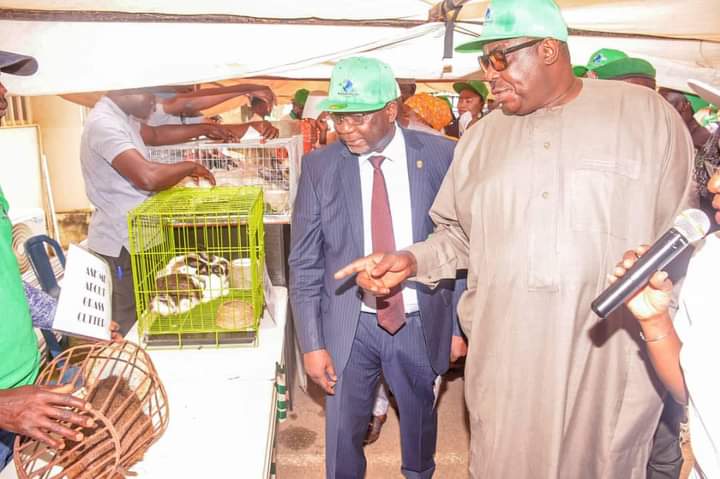
Highlight of the event, was the visitation of the Hon. Minister of State, FMARD, Mustapha Baba Shehuri, the Permanent Secretary, FMARD, Dr. Ernest Umakhihe and other officials to various animal value chains at the exhibition stand.

Eremah Anthonia (Mrs.)
ACIO


Says no society can grow beyond its educational attainments
Teachers are critical in the transformation and development of a country, and this is why they should harness the power of cutting-edge technology in their work so as to better prepare young people for today’s world.

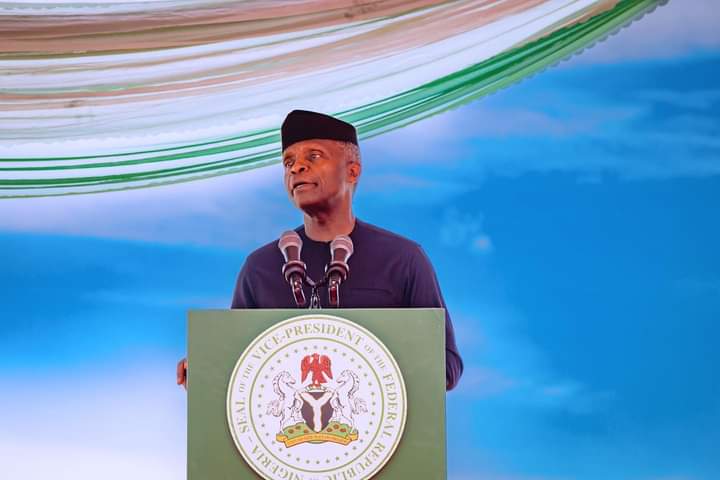
This was the summation of the speech by Vice President Yemi Osinbajo, SAN, today in commemoration of World Teachers’ Day at Eagle Square, Abuja.

Speaking on the theme of this year’s World Teachers’ Day, ‘The Transformation of Education Begins with Teachers,’ Prof. Osinbajo noted that teachers should embrace innovation because they also have an important responsibility to themselves, “for them to be at the cutting edge of advancements in education and especially the use of technology and modern teaching methods.”

Emphasising the significance of the knowledge economy in global development today, the Vice President said, “Whereas our previous pedagogy inadvertently produced students who were good stores of crammed information, the demands of the future require that we position our young people to think for themselves, to absorb and process the wealth of information available to them, and to tease out useful knowledge.

“Education must respond to the dynamism, speed of development and massive changes in society. Educators must understand the skills required to take full advantage of a world dependent on technology. In addition to listening, education today includes writing, ideation, imagining, and critical thinking skills. It is no longer merely learning by rote,” he added.

While thanking them for their services to the country and its people, the VP who himself was a teacher for 40 years since 1981 urged teachers to continue to “plug themselves into the global knowledge pool”

According to him, teachers should “reach for every resource available to us to better equip ourselves for the challenging and rewarding task of preparing our young people to meet the demands of our changing world.”

“We cannot give what we don’t have, so we must stay on the cutting-edge of research, learning, and development. We can only guide our students in the direction where we ourselves have been,” he said.

Similarly, the VP noted that this year’s World Teachers’ Day was a special day to celebrate teachers, describing them as “the very best of us and perhaps the most important persons in our nation,” praising them as “those men and women who daily go into classrooms to banish ignorance, imbue knowledge, inspire and nurture the minds of millions of young people one school day at a time.

“It is the day in the year when we say what we should say every day to our teachers: thank you. Thank you for your patience, commitment, your sacrifice, and your hard work amidst many challenges.

According to the VP, “no society can grow beyond its educational attainments.”

He said one of the major differences between healthy, well-functioning and prosperous societies and poorer societies is education.

“We owe so much of our well-being as a nation to our educators at every level,” he observed.

Continuing he said, “our future as a nation is so heavily dependent on education and our educators. This explains why the Federal Government is determined to return teachers, teaching and the teaching profession to their rightful places.

“To this end, we are fully implementing the professional teaching and teacher qualification framework standards that will invariably impact education outcome and teacher performance at the pre-school, basic, secondary and tertiary levels.

“We are also developing a verifiable database of teachers in Nigeria, already the Teachers Registration Council of Nigeria (TRCN) has registered 2,108,342 teachers and licensed 1,250,000 teachers.”

“Our new teachers’ policy is already being implemented at the Federal level and in some States and I urge States that have not, to do so immediately, the gains are already showing.”

He added that the Federal Government has also launched the Nigerian Learning Passport; a digital learning platform with online, mobile, and offline capability that enables continuous access to quality education.

On the important role of teachers in mediating the transition to the digital age, the Vice President observed that, “we live in one of the most rapidly advancing moments in human history. Technology is redefining every aspect of our lives at a dizzying speed, and those who do not keep pace will be left behind. This is true for our children and the young people under our watch today, as it is true for teachers.

“But in spite of how intimidating and disruptive new waves of technology appear to be, they usher in opportunities for greater efficiency, increased productivity, and growth. We only need to rise to its demands.

“The truth is, we have a huge opportunity in our hands to leapfrog development in education through technology. But to do this we must continue to invest in expanding our capacity as teachers. We cannot integrate technology successfully, as urgently as we need to, without training and equipping teachers.”

The Vice President, who restated the commitment of the Administration to continue championing teacher training and development, noted that under the Buhari Administration, the N-Power Scheme, “provided a technology platform that enabled quick and efficient training for large numbers of teachers in every local government.

“Collaborating with the Massachusetts Institute of Technology, the Oracle Academy, Microsoft, Cisco Academy, and IBM, it was a successful test case for the readiness of Nigerian teachers to run smart classrooms, and for what government, at all levels, could do to deepen teacher training and expand the integration of technology in our educational systems.”

The Vice President also recognized the significant efforts of young Nigerians in the private sector in leveraging technology to democratize access to high-quality education across all levels.

He cited a few examples:

*Over 200 Edtech startups across Africa providing impactful, homegrown, innovations to bridge the gap in education,

*The work of Nigeria’s serial entrepreneur, Sim Shagaya’s U-Lesson, which provides a variety of educational content online for primary and secondary students in line with the curriculum of five countries, including Nigeria, Ghana, Gambia, the United States and the United Kingdom, and

*Edu-Koya, which raised $3.5 million in pre-seed funding in 2021, and is working to build a pan-African classroom.

The VP noted that in addition to leveraging technology and innovation for educational transformation, “we must engage with these homegrown solutions, provide feedback, and adapt them as they fit.”

The Vice President further reiterated that Government will continue to support teachers and the development of education in the country, urging them “to continue to strive and push the boundaries of your most honourable profession.”

Present at the event were Governor Atiku Bagudu of Kebbi State; Minister of Education, Adamu Adamu; Registrar of JAMB, Prof. Ishaq Oloyede; NLC President, Comrade Ayuba Wabba; President Nigerian Union of Teachers, Comrade Audu Amba; representatives of UNESCO, UNICEF and ILO and other senior government officials.

Laolu Akande

Liquid Dataport, a business of Cassava Technologies,  is bringing much-needed access to affordable internet in South Africa. Liquid Dataport has acquired a pair of fibre cables on Equiano, the new West coast submarine cable, capable of delivering up to 12 Terabytes of new internet capacity, providing the South African economy with the boost it needs to ensure the successful digital transformation of businesses and individuals. See www.LiquidDataport.com.


The additional capacity augments Liquid Dataport’s existing pan-African fibre network, global satellite connectivity and subsea cable backbone that ensures businesses on the continent have access to affordable and reliable high-speed connectivity – a vital element as they leverage the digital economy. The Equiano sea cable is the highest capacity cable landing in South Africa. Liquid Dataport foresee a much-needed drop in internet connectivity prices and improved quality in South Africa and numerous sub-Saharan countries. As Liquid’s existing and potential customers deploy digital operations to enhance customer services, the proliferation of connectivity becomes increasingly paramount to success.

The landing of Equiano capacity by Liquid Dataport in South Africa will significantly foster the development of businesses in Southern African countries


According to David Eurin, CEO of Liquid Dataport, “Lack of access to affordable internet connectivity across the continent, be it in the largest cities or the remotest villages, is a significant hurdle for Africans and organisations adopting digital technologies. Therefore, the landing of Equiano capacity by Liquid Dataport in South Africa will significantly foster the development of businesses in Southern African countries through improved access to high-speed connectivity and increased access to digital technologies like Cloud and Cybersecurity, to name a few”.


The Equiano subsea cable has landings planned in Sesimbra (Portugal), Lomé (Togo), Lagos (Nigeria), Swakopmund (Namibia), Rupert’s Bay (Saint Helena) and Melkbosstrand (South Africa), with more landing stations planned in the future. The move extends Liquid’s One Africa Digital Network’s reach, and Cassava’s Africa Data Centres will host Liquid Dataport’s equipment for the Equiano subsea cables. The Equiano cable system will be available in all Africa Data Centres’ facilities and give Liquid Dataport’s customers access to vast amounts of capacity at a reduced price. Liquid Dataport plans to interconnect the Equiano landing stations to its East-West network across Africa, strengthening further its global IP route between Asia, Africa, and the USA.


“This new submarine cable landing is yet another addition to our steadily growing pan-African network, which includes satellite connectivity, subsea links and our cross-continent terrestrial fibre network – the largest independent network of its kind in Africa. It adds to our ability to deliver Cyber Security, Data Centres, Cloud Services, Renewable Energy and Fintech services and more to our customers that range from enterprises, SMEs and governments directly and indirectly,” concludes Eurin.

Cloud technology could be a major enabler of economic development on the African continent – but some stubborn barriers need to be cleared first, says Andrew Cruise, Managing Director of vendor neutral cloud infrastructure provider, Routed.

The African continent represents 60 percent of the world’s arable lands and 30 percent of the earth’s mineral reserves – making it a rich continent in many ways. Yet it contributes only 2 percent of the world’s research output and lags behind in several key technological sectors. For the continent to achieve its potential and escape the unsustainable colonial development model of resource extraction, investment in digital competencies is crucial. In certain areas, the continent is faring reasonably well in this regard. Mobile penetration, for example, is skyrocketing – 615 million users in sub-Saharan Africa are expected to subscribe to mobile services by 2025.

But the bigger picture remains disconcerting. According to the World Economic Forum, African Union member countries pledged to contribute 1 percent of their gross domestic product to research and development (R&D) in 2006, yet only four countries reach this figure in their annual budgets. The continent holds just 0.1 percent of the world’s patents, produces 2 percent of the world’s research output, and there are around 198 researchers per million people in Africa – compared to over 4000 in the United Kingdom and United States.

How cloud and other tech can help

Cloud computing has the potential to boost economic development. Not only does it improve mobile productivity and big data, but it allows small businesses to scale without a large capital investment – a possible boon for the SMEs that represent 98 percent of South Africa’s business force, for example.

Effective cloud applications allow smaller businesses to have the same technology at their fingertips that large corporations pay millions for – on a scale and budget that suits their needs. It significantly reduces upfront ICT infrastructure costs, diminishes the burden of IT maintenance, and allows for more efficient updates. It also provides cost-effective security and improves remote work capabilities.

Cloud essentially allows businesses to ‘rent’ infrastructure, so that the technical hardware is always of the highest standard, there’s guaranteed uptime for system availability, and scaling becomes as simple as renting more processing power and storage. Cross-border expansion is also much simpler, as it eliminates the costs and complexities of setting up new infrastructure elsewhere.

According to a paper by the International Monetary Fund, SMEs’ growth prospects can be significantly boosted by digital technologies such as cloud. “Going online enables SMEs to reach new clients and markets at low cost and to reduce communication costs. (Technology such as cloud computing) improves efficiencies, reduces capital expenditure and operational costs, and speeds up cross-border transactions – (helping) firms scale up faster, increasing employment and boosting output growth,” say the researchers.

Of course, cloud would be one aspect of a broader technological economic upliftment picture. Artificial intelligence, machine learning, big data, and the internet of things (IoT) all require major investment on the continent. And before such advanced technologies can truly be successful, more pervasive technologies first need to thrive. One Harvard study looked at the most important technological enablers of economic growth in six African countries and identified digital money, promotion of job-creating digital businesses, better technological infrastructure and fewer disruptions of such infrastructure as key elements required for technological growth across the board.

The hurdle

There is a glaring obstacle in the way of Africa’s cloud and other technological adoption and resultant potential for economic growth: expensive, unreliable, slow internet. World Data Lab’s Internet Poverty Index paints a dismal picture. It adjusts the actual cost of internet services in every country to estimate what a standard mobile internet package of 1 GB at 10 MB/second would cost in that country. It then extrapolates how many people in the country could afford such a package. If the cost of the package is above 10 percent of a person’s total spending, the person is considered internet poor.

Nigeria tops the Internet Poverty list and, of the ‘top’ 20 countries, 11 are in Africa. South Africa, the highest-ranked African country in terms of infrastructure integration, is tenth on the list and has over 38 million internet-poor citizens in its 60-odd million population. To put this in context, the country with the closest population size on the list, Italy (58 million people), has just over 800,000 internet-poor residents.

Though the World Bank hopes to help the continent achieve universal connectivity by 2030, its estimates suggest that Africa will require an investment of USD$100 billion to plug every citizen into the internet by 2030. Hafez Ghanem, the World Bank’s vice president for Eastern and Southern Africa, said on the bank’s website that “no single actor will be able to meet Africa’s 2030 target and carry the burden of a USD$100 billion investment funding requirement alone”.

And the most important condition for cloud to be successful in any country is cheap, reliable, and fast internet. This is normally provided by fibre – a norm in rich countries in Europe, for example. But in African countries where infrastructure is lacking, wireless and satellite technologies hold sway and provide expensive, slow, unreliable connectivity. Some North African countries are faring better because of their proximity to the UAE, but those in the sub-Saharan region mostly rely on cabling from Europe – an expensive endeavour.

There are other hurdles preventing even internet-rich businesses from making the switch to cloud. It’s expensive to move to the cloud initially; some businesses do still require on-premises solutions, albeit fewer; and understanding of the technology is sometimes lacking, especially when organisations opt for a complex multi-cloud environment.

But it all starts with better internet. The internet itself is commonly held to be a driver of economic prosperity. It enables sharing of information, sharing of expertise, sharing of knowledge, and education. It opens doors for people to drive new ideas and improve their business offerings. It is as important as basic services like water and electricity and should be regarded as such. ICT elements of economic growth must revolve around the internet.

What needs to change?

Currently, much of the innovation, R&D and communication in the African tech sphere is being driven by large international corporates connecting global communities – the likes of Google, AWS, Microsoft, Apple, and Netflix have an increasing foothold on the continent. Should governments get more involved, this culture could grow at a community level.

Of course, all of this requires major resources. The capital investment to purchase equipment, the time to upskill workers, and the effort to find ways to divert other resources to such endeavours. According to the World Economic Forum, three things need to happen at a state level for technology to push Africa’s economic growth.

First, language needs to be digitised to improve literacy, and in turn, digital literacy. Communication is at the core of development and interactions within and between communities impact the continent’s economic, social, and cultural welfare. With over 2000 languages spoken in Africa, governments must invest in indigenous languages to improve literacy rates, particularly on digital channels, to unlock critical understanding and improve communication abilities among diverse people.

Secondly, African governments should prioritise R&D investments at higher education institutions, focusing on producing and commercialising scientific knowledge. And, thirdly, Africa’s culture of innovation needs to be extended to the digital sphere. Though the continent shows creative innovation at a community level through projects such as farming cooperatives, digital innovation is not as much part of the continent’s culture – yet.

I would also add a fourth requirement: increasing labour rates. Where labour is cheap, technology doesn’t thrive. Low labour rates create a tendency to use manual labour instead of investing in the efficiencies that technology can bring. In countries where labour is more expensive, technological advances are more likely to happen. Cheap labour is not only holding the continent’s technological advances back but holding its people hostage.

When people value humans more, they’re more inclined to invest in technology. In turn, economies flourish, security grows, and communities thrive.