
The Minister of Information and Culture, Alhaji Lai Mohammed, has commended the United States for the repatriation to Nigeria of 23 Benin Bronzes, part of the thousands of artifacts that were looted by the British during their invasion of Benin Kingdom in 1897.

The Minister gave the commendation at the Benin Bronzes’ repatriation ceremony in Washington, DC, on Tuesday

”Please permit me, on behalf of the government and people of Nigeria, to most sincerely thank the United States and her major cultural heritage institutions for the return of these highly-cherished Benin Bronzes to Nigeria – which is the reason we are here today,” he said.

”These artifacts are intrinsic to the culture that produced them. A people ought not be denied the works of their forebears. It is in the light of this that we are delighted with today’s repatriation of the Benin Bronzes,” Alhaji Mohammed said.

He thanked the Boards of Trustees of the Smithsonian National Museum of African Art, the National Gallery of Art and the Rhode Island School of Design for engaging in the discussions with Nigeria’s National Commission for Museums and Monuments that led to the repatriation of the artifacts.

The Minister disclosed that Nigeria will soon launch an international traveling exhibition with the artifacts being repatriated ”in a manner that will win more friends and promote greater goodwill for Nigeria and the ethnic groups that produced the artifacts”.

He said the release of the Benin Bronzes found in the US was a testament to the success of the
Campaign For The Return and Restitution of Nigeria’s Looted/Smuggled Artifacts from around the world, which was launched in November 2019.

”We have also received or are in the process of receiving repatriated artifacts from The Netherlands, the University of Aberdeen in Scotland, Mexico, the University of Cambridge in the United Kingdom and Germany, among others,” Alhaji Mohammed said.

He recalled that Nigeria and the US have signed a bilateral cultural property agreement to prevent illicit import into the United States of some categories of Nigerian artifacts.

”This agreement solidifies our shared commitment to combat looting and trafficking of precious cultural property, while also establishing a process for the return of trafficked cultural objects, thus reducing the incentive to loot sites in Nigeria,” the Minister said.

In his remarks, Lonnie G. Bunch III, Secretary of the Smithsonian, said the Institution was “humbled and honored to play a small role in transferring ownership of the art works to Nigeria”, adding that ethical consideration should be at the heart of what Smithsonian as an institution does.

The returned artifacts comprise 21 from the Smithsonian and one each from the National Gallery of Arts and the Rhode Island School of Design.

Also at the ceremony were the Director-General of Nigeria’s National Commission for Museums and Monument, Prof. Abba Tijani; Prince Aghatise Erediauwa, Representative of the Oba of Benin; Ngaire Blankenberg, Director of the US National Museum for African Art (NMAfA) and Kaywin Feldman, Director, US National Gallery of Art (NGA).

 

Recognising the role, the Nigerian Minister of Communications and Digital Economy, Professor Isa Ali Ibrahim (Pantami) is playing globally to foster a digital economy, which has been commended by world leaders such as His Excellency, President Muhammadu Buhari, the outgoing Secretary-General of the ITU, Mr. Houlin Zhao, Executive Chairman, ID4Africa, Mr. Joseph Atick, among others.
The Dubai World Trade Centre (DWTC), organizers of the Gulf Information Technology Exhibition Conference (GITEX), and the Gulf Information Security Expo and Conference (GISEC) added another feather to the cap of Minister Pantami today. The DWTC officially presented a LEADERSHIP AWARD to Prof Pantami in recognition of the role Pantami is playing in advancing Nigeria’s digital economy.
It is on record that under the supervisory leadership of Pantami, the ICT sector attained the position of the fastest growing sector of Nigeria’s economy according to the report provided by the National Bureau of Statistics (NBS). The sector pulled Nigeria out of the COVID-19-induced recession.

In the same vein, within the stewardship of Pantami, Nigeria witnessed an unprecedented rapid increase in broadband penetration, a rapid increase in digital identity, and a rapid decrease in the cost of mobile data.

It is no surprise that the ITU found it worthy of appointing the Nigerian Minister as the chairman of the World Summit on Information Society (WSIS) Forum 2022. Mr. Haolin Zhao went further to call on other African leaders to emulate Pantami in prioritizing commitment to their official duties.

Similarly, in the same feat, His Excellency, President Buhari singled out Minister Pantami’s innovative, doggedness, and resolute approach to duty. ” I commend the Honourable Minister of Communications and Digital Economy, Dr Isa Ali Ibrahim (Pantami), for the landmark achievements of the digital economy sector and his commitment to carrying out his responsibility of developing the sector, including championing the growth of the indigenous telecom sector and NIN-SIM registration process. I also commend the industry stakeholders for their support for the sector.”
Under the leadership of Pantami, 19 National policies have been formulated and are currently being implemented. This is unprecedented in the history of Nigeria. The developmental regulation approach of Pantami has provided the enabling environment that supports rather than stifles development. Nigeria becoming the first country in Africa and one of the first in the world to introduce a digital currency to her citizens is a testament to that.

The digital economy sector in Nigeria under the supervision of Prof Pantami is playing an important role in improving security, fighting corruption, and developing the Nation’s economy. Unregistered or improperly registered SIM cards have been deactivated, IT projects are being cleared to ensure interoperability and transparency in governance in line with digital Nigeria policy and strategy.


Nine Nigerian technology innovators and startups have booked their spots in the semi final of the Supernova Challenge Pitch Competition organised by North Star Dubai, at the Gulf Information Technology Exhibition (GITEX), taking place in United Arab Emirates.

Supernova Challenge is the biggest pitch competition in the Middle East, Africa and South Asia, where Startups have opportunity to become the next unicorn, with upto $200,000 in cash prizes up for grabs.

As officially announced by North Star Dubai on their website, the Startups are Identity Pass, 9JaCodeKids Academy, Floews, MedTech, Paddycover, Pricepally, LiveBic, Technyon Technologies, and Wellness Health Technologies.

The Minister of Communications and Digital Economy, Prof. Isa Ali Ibrahim (Pantami) while inaugurating the Nigerian pavilion, commended the Startups that have so far scaled the competition’s preliminary stages, and expressed confidence in the ability of the team to progress to the finals and hopefully clinch the ultimate prize.

Prof. Pantami said, “Each and every year, Nigeria has been attending the Gulf Information Technology Exhibition GITEX because of its enormous benefits; these benefits are many, critical among them is attracting foreign direct investment”.

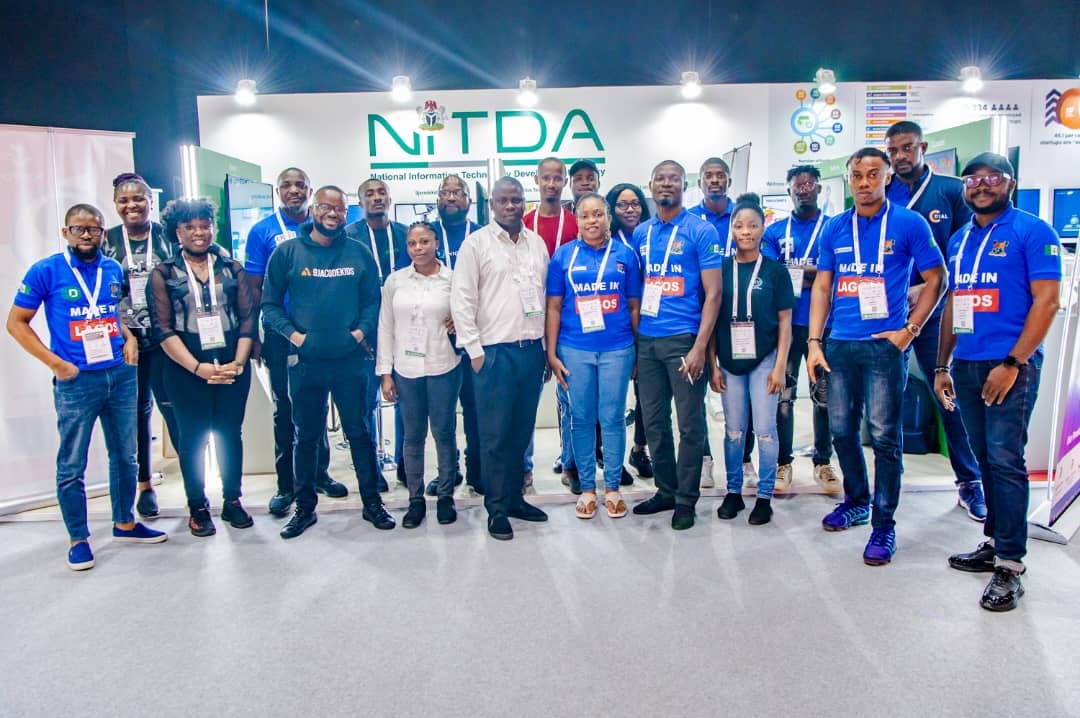
Accompanied by the Director-General of the National Information Technology Development Agency, (NITDA), Kashifu Inuwa CCIE, The Executive Vice-chairman of the Nigerian Communications Commission, (NCC), Prof. Umar Danbatta, the Director-General of the National Identity Management Commission, (NIMC), Engr Aliyu Aziz and the Managing Director/Chief Executive Officer of Galaxy Backbone, Prof. Muhammed Bello Abubakar as well as some Nigerian private ICT entrepreneurs, the Minister expressed delight in the highest number of startups at the 2022 GITEX.

“We have recorded significant milestones and great accomplishments in our bid to drive Nigeria’s economy digitally and our modest successes are verifiable”.

According to Professor Pantami, the federal government, in the last three years launched several programmes, policies and initiatives that are entrenching the trust between the tech ecosystem and the government towards strengthening the Nigerian digital economy sector.

The Director-General of NITDA Kashifu Inuwa CCIE also shared same optimism with the Minister as he noted that the Nigerian team will ace the competition and once again place the country on the global map.

Inuwa urged the tech innovators to ensure they also learn, unlearn and relearn by participating in other sideline events and conferences in order to build the necessary networks to add value to their craft.

GITEX Global 2022 is a meeting point for technology professionals and enthusiasts. The event is a thrust for the Global Startup Movement attracting world’s biggest technology mentors, angel investors and venture capitalists.

Nigerian startups are showcasing their innovative ideas to the world, interacting with other startups from different parts of Asia, Africa and Europe; luring investors to come to Nigeria and invest money in the country’s fast growing Digital economy. See less

The Director-General of NITDA, Kashifu Inuwa CCIE has emphasized that Nigeria is doing pretty well in the Fintech industry and Environmental, Social, and Governance (ESG) especially with the application of developmental regulation approach and enabling policies by the Federal Government toward co-creating the tech ecosystem.
Inuwa said this at the Digital Finance Summit, a sideline event of the ongoing Gulf Information Technology Exhibition (GITEX 2022).
While noting that 2021 was a record year for tech Startups in Nigeria as more than 35 percent of direct investments to Africa came to Nigeria, the Director-General added that the achievement was not by publicity but by structural design.
“In 2019, the President redesignated and expanded our ministry to cover digital economy and the Honorable Minister of Communications and Digital Economy, Prof. Isa Ali Ibrahim (Pantami) formulated the National Digital Economy Policy and Strategy for a digital Nigeria; that set the stage for the tech ecosystem in Nigeria”, Inuwa noted.
According to Inuwa, the FinTech has helped in moving so many people out of poverty.
“Between 2017 to 2019, we have seen in Nigeria where farmers access money from the government and also, during the COVID-19, a lot of people could not access the released funds and when you deliver it using cash, it costs much”.
“The startups are doing fantastically well, but also the government needs to level the playing field for them to plan better”, the DG remarked.
He went further to stress that governments need to work with the United Nations, World Bank, and others to see how they can help build the infrastructures for the Fintech in order to reach the unreachable and connect to unconnectable.
Moreso, the NITDA Boss told the audience that the Start-up Bill which has been passed by the National Assembly and awaiting Presidential assent will address almost, if not all the challenges plaguing the tech ecosystem.
Responding to questions regarding Nigeria’s efforts to entrench the Environmental, Social and Governance (ESG), Inuwa explained that the Federal Government has been working assiduously towards creating a conducive environment for startups to thrive, as the Ministry of Communications and Digital Economy formulated several policies to help drive the digital economy.
“The policies are Startups ecosystem friendly, when we talk about digital economy, we need three keys to drive it which include Digital Identity, Payment System, and Connectivity”
“We have other policies tailored towards the bigger picture, like the National Broadband Plan, Digital Identity Policy, and the National Financial Policy which drives the financial inclusion in the country”, Inuwa maintained.
He avowed that the Agency’s developmental regulation is to safeguard the providers as much as consumers.
“Without the enabling environment, the ESG alone can not help them because the ESG sometimes, we see it as self-centric. As a provider when you come up with any self regulation or ESG, you do it in a way that would enable you to excel”
“The government looks at technology beyond seeing just a capitalist or a consumer, we work with the ecosystem in a way that gives them opportunity to develop new indigenous solutions that have global impact.”, the DG added.


Nigerian youths are one of the most innovative and creative in Africa or do I say in the world. Having worked and reported the “doings” in the Nigerian startup ecosystem for a decade plus. With wide experience working and reporting the small and medium enterprises (SMEs) for years now, one thing that you can’t take away is the resilience and never-give-up attitude of the Nigerian youths in the startup ecosystem. But the snag is this; the Nigerian youth or founder is always short-changed during the time the investor comes to town to invest in his pet project especially the indigenous investor.

A lot of these young turks have decided to avoid Nigerian investors and do their thing by bootstrapping until when a foreign investor shows up. This has created a lot of capital flight for Nigeria when the businesses take off eventually. We have seen a lot of indigenous Fintech that were invested by foreign partners only to have their head office somewhere in USA or Europe while make their money in Nigeria while the local investor mopes.

With the reputation of these indigenous investors, bootstrapping is the order of the day. Shopify defined Bootstrapping as a term used in business to refer to the process of using only existing resources, such as personal savings, personal computing equipment, and garage space, to start and grow a company.

Having resilience spirit is one thing and ability to scale the business in another. A lot of Nigerian youths have seen their vision and businesses go down due to their relationship with local or indigenous investors in the country. With few of them understanding with the start ups or young business founders. Majority of the investors do not have the patience for a full incubation of ideas and growth of these businesses.

Ever wondered why most businesses that had oversea investors from the USA and Europe thrive more than the ones that have local investors. About two tenth 2/10 of most of the businesses that Nigerian investors put their monies crumble before their second or third year. The simple reason is patience and inability to buy into the founder’s vision.

A lot of Nigerian investors have their eyes on their monies, return on investments (ROI) and not the vision of the founders. They get impatience after 12 months of no return. They carry their quick-quick mentality to the start-up ecosystem forgetting that the vision is the key. Without a clear-cut vision or blueprint the money will not come. When these investors don’t start making the money earlier, they put undue pressure on the young founder or in some cases vote them or frustrate them out of business.

Most of these indigenous founders are elderly and with their clout and connection, the young founder can be likened to a cockroach in the courtyard of cocks, he has no option rather than make the money. This scenario has frustrated a lot of Nigerian start-up that they close shop and travel out or go back to salaried job thereby closing businesses that would have employed and mentored other youngsters.

According to Businessday Online, it describes patience in a nutshell “Private equity is not for people looking to make a quick cash. This is a long-term asset for those looking for long-term appreciation. If you can’t wait at least 5-7 years before seeing a payoff, take your money elsewhere. The higher return should make up for the lack of liquidity….Don’t assume private equity is a one-size-fits all investment – it comes in all shapes and sizes, and in all risk profiles. A private equity investment could be a venture capital/start up situation or just as easily an established business. Figure out which side of the game you want to play on.”


ANTHONY EMEKA NWOSU

Ever wondered why most businesses that had oversea investors from the USA and Europe thrive more than the ones that have local investors. About two tenth 2/10 of most of the businesses that Nigerian investors put their monies crumble before their second or third year. The simple reason is patience and inability to buy into the founder’s vision.

Airbus Secure Land Communication is participating at GITEX Global this year to showcase its elite roster of mission-critical collaboration and communication technologies from October 10-14, 2022 at the Dubai World Trade Centre.


Tactilon Agnet, a unique collaboration application, takes the lead in the line-up of Airbus solutions to be exhibited at GITEX. First responders globally utilize Tactilon Agnet for real-time sharing of information via the solution’s multimedia functions, including video, mission-critical push to talk (MCPTT), voice, messaging and photo exchange.


Through Tactilon Agnet, users can collaborate in a single platform despite using different devices. Airbus will also display its solutions that complement Tactilon Agnet such as Tactilon Agnet Aviation, TACteam, a canine robot, and AMA XpertEye.


Tactilon Agnet Aviation and its interoperability features make it easier for airport personnel handling ground operations to securely coordinate. With better collaboration, airports can run their operations more efficiently and deploy their resources more effectively.


TACteam is a collaborative mobile application that supports geolocation, fast detailed situational reports, operational planning, and real-time coordination as operations unfold. The application, which is compatible with smartphones, tablets and PCs, remains operational even in cases of loss of radio coverage and network outages.


A canine robot, which is integrated with Common Objects’ platform and Airbus’ Agnet, is one of the main highlights of Airbus’ GITEX participation. The agile mobile robot features an array of sensors such as CBRN sensors and thermal and hyperspectral cameras. Defense forces can deploy Spot for routine inspection tasks and secure data gathering and transmission.


Last but not least is Ama XpertEye, a web-based platform that allows an operator to initiate or join an assisted reality call. Combined with smart glasses, XpertEye connects remote experts and field users. Using smart glasses, medical workers responding to an emergency can share a complete view of the situation with another specialist hands-free for a quicker and more effective resolution of the case.


“This year’s GITEX is a global platform for us to highlight our next-generation technologies for our first responders and public safety personnel. Technologies play an important role in providing our mission-critical teams with the much-needed connectivity, which is critical to the success of any operation and emergency response. We will demonstrate our solutions made to work even during the harshest conditions and in isolated areas.  In every situation, especially when they need it the most, our first responders can count on our technologies. We look forward to showcasing the power of our solutions and engaging with our fellow exhibitors and GITEX visitors from across the world,” said Selim Bouri, Vice-president for Airbus SLC in Africa, Asia and the Middle East.


The Nigerian Communications Commission (NCC) and the National Lottery Regulatory Commission (NLRC) on Thursday in Abuja set up a committee to work towards the protection of the interest of telecom consumers against malpractices that may attend mobile lotteries in the country.

The Committee, which was inaugurated at the NCC Head Office in Abuja, was tasked with the responsibility of articulating measures to address mutual regulatory issues, including the review of revenue-sharing formula between Mobile Network Operators (MNOs) and lottery operators.

The NCC’s Executive Commissioner, Stakeholder Management (ECSM), Barrister Adeleke Adewolu, who presided at the meeting comprising senior staff of the two agencies, recalled fondly previous engagements between the agencies and stated that the committee was important in order to review and update an NCC-NLRC Memorandum of Understanding (MoU), which was signed on the 6th of August 2018 but has now expired.

The ECSM said the Commission is committed to regulatory collaboration and strategic partnerships and has carefully reviewed NLRC’s requests and is convinced that both organisations can conclusively address issues and other concerns that have been identified in the operation of lotteries in the telecom industry.

“We expect that the Joint Committee of senior members of staff in both organisations will work closely to develop a collaborative framework to progressively improve gaming service delivery for telecoms consumers and further accelerate holistic development in Nigeria’s digital economy,” Adewolu stated.

In addition, the ECSM reiterated that the Committee is expected to articulate a new MoU to address issues around revenue sharing between MNOs and lottery operators, the need to review and recommend a workable model for addressing the needs of both organisations, and present informed recommendations to deepen regulatory collaboration between the two regulatory agencies.

“Given the strong professional pedigree of the members of this Joint Committee, I have no doubt that they will meet and even exceed the expectations of the Managements of both the NCC and the NLRC, and I wish you all success in this task,” Adewolu added.

Speaking on behalf of the Director-General, NLRC, Lanre Gbajabiamila, the Director, Legal Services, NLRC, Olayemi Ajayi, expressed her organisation’s commitment to improving revenue generation from the lottery industry while appreciating NCC for being receptive to inter-organisational collaborations.

Ajayi reiterated the need for renewal of the expired MoU with amendments to accommodate new provisions that will be favourable to stakeholders and fast-track the development of Nigeria’s digital economy.

Ajayi assured that, “The NLRC is working tirelessly to ameliorate its functions and service delivery to stakeholders. Therefore, this renewed collaboration with NCC will help for better and efficient service delivery by both agencies.”


The use of spreadsheets in accounting and finance departments has vastly improved data analysis and enabled fast and accurate reporting, computing and information storage. Life without them is almost unthinkable. However, danger lurks within and although the use of macros in Excel to automate processes can enhance efficiency, macro malware can put your entire business at risk says Ryan Mer, Managing Director of eftsure Africa, a Know Your Payee™ (KYP) platform provider.


Macro malware was fairly common several years ago because macros ran automatically whenever a document was opened. Microsoft has disabled macros by default in recent versions of Microsoft Office. However, Business Email Comprise (BEC) attacks are on the rise, adding an additional layer of risk of spreadsheets being manipulated or fictitious ones being used as a mechanism to inject malware into existing systems. Business Email Compromise remains a threat to any organisation and its clients. In South Africa there is case precedence for firms being held liable for payments that did not reach the intended recipient; a situation that demands email correspondence containing bank details and personal information on Excel spreadsheets be handled with caution.


Macros allows staff in finance and accounts payable teams to automatically run tasks that are executed repeatedly. It can record the steps you take when performing a particular task in an Excel file. When run, the macro automatically executes your key strokes and mouse clicks, and can repeat those steps as many times as you want.


Cybercriminals have been using macros as a vehicle to automatically and secretly execute malware whenever the macro runs. Unlike a traditional phishing attack, which requires someone to actively click on a dangerous link or open a dangerous attachment to run malware, macro malware do not require anyone to actively click or open anything. This makes them particularly difficult to detect and stop.


“Senior managers should be viewing cybersecurity as a business problem and not just a technology problem. In reality, cybersecurity is very much a business consideration”, notes Mer.


Understand the danger

Microsoft Office files that have a macro in them have a different file extension to indicate that they have an embedded macro. A normal modern Word document is a .DOCX file, but if a macro is added to the file it is saved as a .DOCM file. The same goes for a modern Excel workbook that is a .XLSX file, but if there are macros in them the Excel file becomes a .XLSM file. A macro virus could be stored in macros within a Microsoft Office file such as a document, presentation, workbook, or template. Hackers can create and attach macros to any of these files to run arbitrary commands.


In many cases, employees in accounts payable teams use spreadsheets for certain functions that are repeated every month, such as listing all the outstanding invoices the company must pay. In such situations, it makes sense to create macros to automate the process.


It is advisable to enable macros only to staff members who regularly use them. Given the efficiency benefits of macros for accounting teams, it is likely that many in accounts payable teams will opt to enable macros in their Excel spreadsheets. Mer says many organisations also still rely on manual processes, which in turn, have numerous gaps. This offers opportunities to cybercriminals to use macro malware to compromise certain payment functions.


“eftsure identifies errors, fraud and scam attempts before funds can be released. Our Know Your Payee technology ensures that the verification of payees and eft payment data is done on a continuous basis, protecting companies from fraudulently changed or maliciously altered payee information.” Mer believes that well-informed staff, sound business processes and the right technology are at the frontline of fighting fraud and mitigating risk, and, when combined, can put up a formidable defence.


Skills and tools

“Since employees are usually the target of cybercrime, especially those in finance and accounts payable, equip them with the skills and tools to spot threats and respond effectively,” says Mer.


“Make sure teams understand the vulnerabilities of macros. Continuously remind them not to open suspicious emails or attachments and to delete emails for unknown people,” he adds.


Important strategies to adopt in your business when using macros:

  • Only enable macros for specific staff that rely on them on a regular basis.
  • Make sure macros are disabled when they are not required.
  • Ensure you are using the latest version of Microsoft Office and that it is always kept updated to reduce the risks of malware.
  • Provide training to accounts payable staff on the risks of macros, so they understand they must act with extreme caution if they have not been disabled.


The Nigerian Communications Commission’s Computer Security Incident Response Team (NCC-CSIRT) has flagged a high-impact threat to Windows operating system, the Blackbyte Ransomware, which has the capacity to bypass protections by disabling more than 1,000 drivers used by various security solutions.


The NCC-CSIRT said the BlackByte ransomware gang, which is using a new technique that researchers called, “Bring Your Own Vulnerable Driver,” is exploiting the security issue that allowed it to disable drivers that prevent multiple Endpoint Detection and Response (EDR) and antivirus products like Avast, Sandboxie, Windows DbgHelp Library, and Comodo Internet Security, from operating normally.


Recent attacks attributed to this group involved a version of the MSI Afterburner RTCore64.sys driver, which is vulnerable to a privilege escalation and code execution flaw tracked as CVE-2019-16098.


The “Bring Your Own Vulnerable Driver” (BYOVD) method is effective because the vulnerable drivers are signed with a valid certificate and run with high privileges on the system.


Two notable recent examples of BYOVD attacks include Lazarus, abusing a buggy Dell driver and unknown hackers abusing an anti-cheat driver/module for the Genshin Impact game.


The NCC-CSIRT advisory recommended that system administrators protect against BlackByte’s new security bypassing trick by adding the particular MSI driver to an active blocklist, monitoring all driver installation events, and scrutinising them frequently to find any rogue injections that do not have a hardware match.


The CSIRT is the telecom sector’s cyber security incidence centre set up by the NCC to focus on incidents in the telecom sector and as they may affect telecom consumers and citizens at large.


The CSIRT also works collaboratively with the Nigeria Computer Emergency Response Team (ngCERT), established by the Federal Government to reduce the volume of future computer risk incidents by preparing, protecting, and securing Nigerian cyberspace to forestall attacks, and problems or related events.


The world of financial services is changing – for the better. A multitude of virtual banking and payment options, cardless and accountless services, and now, Banking as a Service (BaaS) are making financial inclusion the norm instead of a privilege, says Anton Coertzen, CCO of leading fintech enablement partner Ukheshe


BaaS is the latest technology making waves in the financial services world and Gartner predicts it will hit mainstream adoption within two years. BaaS is one of four technologies that Gartner says have the potential for high levels of transformation in the banking sector – the others being chatbots, public cloud for banking and social messaging payments apps.


A Deloitte report also says BaaS is becoming ubiquitous. “It’s reconfiguring the banking value chain, opening the door to disintermediation, and enabling new sources of growth,” it notes.


How does BaaS work?

BaaS came about because the ability to offer banking services such as cards and loans as a non-bank enterprise improves the customer experience and boosts revenue. However, offering banking services requires a banking licence that is difficult to obtain – it also requires significant capital and compliance with strict regulations.


BaaS allows licenced banks to integrate their services directly into the products of non-bank businesses. This means any business can offer its customers digital banking services such as mobile bank accounts, debit cards, loans, and payment services, without needing to acquire a banking licence. The non-financial business can also distribute these financial products under its own brand.


All of this happens through third-party distributors. These distributors build tech that allows digital banks, fintechs, and other third parties to connect directly with a bank’s systems via APIs.


In a nutshell, it enables embedded finance: banks integrate fintech or other FSP products into the banking journey (BaaS), while non-financial companies embed banking products into their own services (embedded finance).


The benefits of BaaS

BaaS is reconfiguring the banking value chain by enabling third-party distributors to offer banking products and services. It’s opening the door to disintermediation and enabling new sources of growth for all parties – whether the bank, the fintech enabler, or the third party.


Ukheshe offers banks and other financial institutions a cloud-based API-first BaaS platform that can be white-labelled – essentially allowing the bank’s customers to offer embedded finance offerings to their own customers, under their own brand. Examples include wallet as a service, card as a service, KYC as a service, and more.


Here are just some of the benefits of Eclipse within BaaS:


For banks:

  • Increased sources of revenue: Banks BaaS with Eclipse offers increased sources of revenues for their customers. Not only are banks able to enhance their value proposition to their existing consumer and merchant base, but they could also pivot to be the bank of choice for other Fintechs and Telcos in the market.
  • Cost savings: Banks can leverage third-party technology and infrastructure. Eclipse provides a dedicated environment with a frontend that is specific to banking institutions’ specific needs.
  • Increased customer insights: more customers mean increased insight into customer preferences and experiences. Eclipse provides exactly that – BaaS that has the customer at the heart of every solution, with less hassle, all through a single platform.


For non-banks and fintechs:

  • Less red tape: BaaS allows fintechs and businesses to bypass banking licence regulation by integrating directly with a bank’s system through banking APIs.
  • Increased customer trust: businesses can leverage consumers’ trust in banks to increase their customer base.
  • Higher competition: BaaS enables competition in financial services by enabling non-banks to offer core banking services. This means that more players can enter the market, innovation gets a push, customers get access to new products, and it leads to greater financial transparency.


The future

BaaS will become to fintech what Amazon Web Services is to data centres – a game changer; an absolute essential.


Through its multi-functional platform, Eclipse, Ukheshe has long been ahead of the fintech curve by offering both BaaS and embedded finance – even though it falls under the Software as a Service (SaaS) category.


Our strategy has always been to partner with banks, telcos and fintechs to shape their digital payment offering to their customers. It is core to our services to help shape their BaaS solution. We, in effect, enable the enablers and increase financial solutions to banking customers.