
https://registration.africatechallianceforum.africa/


Vehicles with more than 75,000 miles deserve special consideration. For that reason, we formulate and demonstrate why our motor oils for high mileage vehicles provide that protection to keep your vehicle on the road well-traveled. Helps protect worn seals and prevent leaks in high mileage engines.

I wrote about high milage oil and the need to use it for cars that are above 100,000 Km. It is funny that when you are driving a 2010 car that us up to 12 yrs you are using full synthetic oil. Synthetic oil is super good but it is for cars that are less than 5yrs. Let’s say cars produced from 2016 models. Why? Synthetic oils are thin and have low viscosity in them. They aren’t thick and that is what new engine needs because the level of wear and tear are low. The seals and the rings are still at the premium. So, you need a lighter oil which is synthetic. But as a car gets oil, we have what is called depreciation in physic Once an engine gets to this depreciation level, wears and tears sets in. And mind you, every engine that is being used constantly must depreciate!

To combat this depreciation, you then use an oil that is thicker this will reduce the depreciation that has resulted from constant usage of the engine. Wears and tears cause depreciation and the major component of an engine is piston. The piston is the movable parts that is in chambers that powers any ICU engine. These chambers are what needs oil to allow these pistons move freely to avoid friction. So as the engine ages, the chambers and the rings in them expands and you need a thicker oil with special addictive to combat these wears and tears and that is where Hugh mileage oil come into place. Why use a synthetic oil on a car that is above 15yr old. Synthetic oil will work on the car perfectly but due to the lightness of the oil, it will dry easily or sip out of the rings! Most times I recommend High milage oils! They are even cheaper and helps the engine… But if you can still go with synthetic for such cars that will be okay but keep an eye on your oil light and dip stick!

High-mileage oils have ingredients to take care of older engines, like conditioners, seal swells, antioxidants, detergents and wear or friction additives. Typically, they use a viscosity modifier that is durable and won’t lose viscosity very easily. These oils need to stay thicker longer to protect engine parts.

According to Valvoline, one of the world’s best manufacturers, is they said on their website “Do high mileage oils make a difference? Starting to use high mileage oil for your high-mileage vehicle is among the critical aspects of keeping your car’s engine healthy for longer periods of time. These oils are different than regular oils as they contain seal enhancers and special additives capable of minimizing internal and external engine oil leaks.”


Anthony Emaka Nwosu



Financial inclusion is severely skewed in South Africa, with higher income groups having more access to a range of financial services such as bank and savings accounts, loans, and insurance products. Those who are financially excluded have more difficulty accumulating wealth – further deepening this divide. But there are ways of overcoming this serious problem according to Zunaid Miya, MD of local fintech company,  Hello Pay.


Some are excluded by circumstance. Undocumented migrants are excluded by regulations such as FICA, while bigger financial institutions don’t accept asylum documents or foreign passports.


Others are excluded by choice. Some don’t want to be part of the formal banking system; others have a bad credit record and believe bank accounts can be drained by creditors; others believe they wouldn’t qualify for financial products and so they never apply.


The perils of financial exclusion are not just fewer opportunities for personal and business growth but also increased risk. People who don’t have insurance, for example, expose themselves to both financial and physical risk. At its worst, then, it impacts health and longevity. Even at its best, it’s simply greatly inefficient – not having banking products means dealing with physical cash, which is cumbersome and tedious.


How then, do we start bridging this divide?


  1. Integrate the informal economy. Financial institutions need to acknowledge that a large portion of the South African economy is made up of informal trade. Without circumventing regulatory requirements, there needs to be a framework put in place that considers the circumstances of individuals and businesses in the informal space. These businesses need to be given the opportunity to be included in the formal financial system in a simple, easy-to-understand, and convenient manner.


That means education and awareness. Financial institutions need to embark on marketing campaigns that inform individuals and businesses in this informal space of the financial products and services available to them. In many cases, people simply assume that these products are reserved for higher income individuals and formalised businesses, when that’s not the case.


  1. Reframe the ‘debt trap’. There are different kinds of debt and, again, that education is lacking. Bad debt favours consumption. Good debt enables production. When an SME borrows money to build assets, that creates wealth and job opportunities – enriching the economy at large. Consumer lending, however, is not asset-driven and income-generating – and often ends in a debt trap where the borrower is exploited by micro lenders.


We need to reframe debt as a society and enable individuals, small businesses and micro enterprises that have an entrepreneurial flair and the ability to grow to access funding and other financial services. This agenda needs to be driven in the underbanked or unbanked space especially.


  1. Make compliance less onerous. Compliance requirements are a hurdle for consumers and SMEs. When faced with reams of paperwork and seemingly endless documents that need to be submitted, compounded by digital illiteracy, many are deterred.

Application processes need to be simplified so that applicants can be onboarded quickly and easily, in turn improving access to financial services and products. At Hello Pay and the Hello Group, we support our customers in overcoming these challenges by providing a simple-to-use digital transaction platform. Furthermore, we have a ground force of salespeople and agents across the country. They drive out to customers and start the onboarding process, collect documentation, and help them meet compliance requirements.


Though financial exclusion is a multi-faceted problem that won’t be solved overnight, these steps would serve to start bridging that divide. And in the most unequal country in the world, the time to act is now.


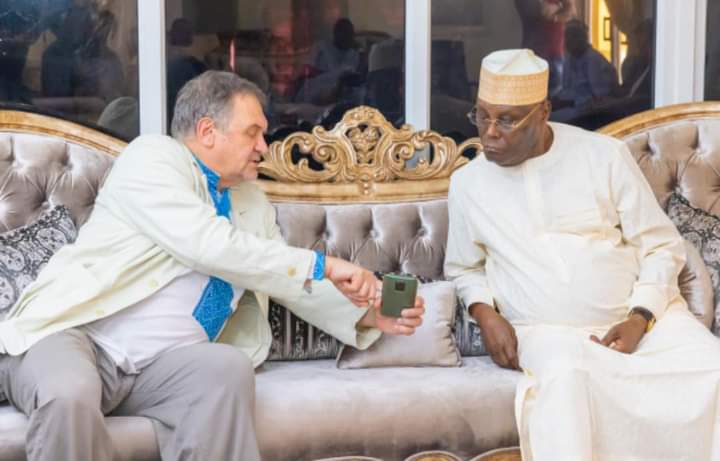
Russo – Ukriane war has affected the global narrative especially in the area of energy supply and food security. Atiku recently Kent his voice to the Ukriane diplomats in his home. This is In line with the global alignment, the diplomatic community in Ukraine recently visited the Nigerian presidential hopeful – 60 Atiku Abubakar in his home to explain the situation of their country Ukraine and the ripple effects it has on the global community especially in the area of food security and value chain.

Speaking on the event, Atiku said “Earlier today, I hosted a delegation of civil society bodies from Ukraine. The delegation explained how the conflict in Ukraine continues to take its toll on human rights and dignity, as well as the attendant food and energy crises, not just in Europe but across the globe.”

He added via his social media that” It was an opportunity for me to, once again, call on the league of democratic nations to unite and intensify engagements that will ensure the de-escalation of the conflict and restore peace.”

This visit has show that Atiku is abreast with the current realities as it pertains to international politics and the need to Call for cessation of hostilities and guarantee food security especially to the developing world and abate famine in arid nations.


Anthony Emaka Nwosu

In a suprise turn of events, president Ruto has committed to building a natural gas pipeline (https://bit.ly/3fZmwd9) from Tanzania’s main city Dar es Salaam, to Kenya’s coastal city of Mombasa and later to the capital Nairobi.


Responding to these developments, Greenpeace Africa’s Campaigner Claire Nasike has said:

“The announcement by the Kenyan and Tanzanian presidents to continue investing limited public resources in building a gas pipeline makes no sense. Beyond accelerating the already run-away climate crisis, investing in gas infrastructure such as this pipeline risks leaving African economies with stranded assets and debts to repay.”

Beyond accelerating already run-away climate crisis, investing in gas infrastructure such as this pipeline risks leaving African economies with stranded assets and debts to repay

“President Ruto has on several occasions demonstrated true leadership (https://bloom.bg/3fUI5eO) on renewable energy but appears to be reading from a different song sheet when it comes to matters of gas. Our president has highlighted strong arguments on why Africa’s governments must seize the opportunity to tackle climate injustice and press ahead with renewable energy solutions (https://bit.ly/3g0Qc9O) and desist from pushing for more fossil fuels. We are dismayed that despite this, he is also committing to building a gas pipeline.”

“Gas is a fossil fuel and is polluting, dirty and contributes significantly to the climate crisis through greenhouse gas emissions. It must therefore be kept in the ground. This pipeline will negate all the progress Ruto has committed to. We urge president Ruto to be on the side of the people and choose what is right for Kenyans”

“This pipeline will put the livelihoods of millions at risk, affect biodiversity, as well as have severe impacts on local communities’ land rights. President Ruto must stop blowing hot and cold. Kenyans do not need a gas pipeline, what we need to see is consistency in his commitment towards being a leader in the transition to renewable energy.”

“Kenya is already a leader in developing energy systems of the future in Africa with more than 80% of its electricity coming from renewable energy sources. Misdirecting resources needed for Kenya to leapfrog to 100% renewable energy sources by 2030 will be undermining Kenya’s current leadership on the African continent.”

“East Africa as a region also has some of the best renewable energy resources in the world, and these resources should be maximised as governments shift away from fossil fuels in a people-centred just transition. Renewable energy has a crucial role to play in achieving universal energy access for all. Decentralised renewable energy systems offer a faster and more affordable way to expand energy access and promote climate resilience. President Ruto can galvanise the rest of Africa to champion a fossil fuel-free continent.’’

The secretary-general of APPO, the African Petroleum Producers Organisation, has come out in support of the recent decision by OPEC to cut production by around 2%, on the side-lines of Africa Oil Week (www.Africa-OilWeek.com) in Cape Town.


“It is a decision well taken,” said APPO secretary-general Dr Omar Farouk Ibrahim, on the sidelines of Africa Oil Week, being held here. “I believe it is the right thing to do to save the industry and also to ensure that there is stability for today and tomorrow.”

The decision by OPEC, which includes major oil producers Russia and Saudi Arabia, as well as African countries and APPO members Nigeria, Algeria, Angola, Congo and Libya, saw the price of Brent crude oil rise 1,5% to more than $93 a barrel.

“Every country has a responsibility to protect the interests of their citizens and if by reducing production, they see it as serving their best interests, so be it. When developed countries make decisions, they don’t sit and think [about] how it is going to affect developing countries. The interest of their citizens is paramount.”

The decision by OPEC (The Organisation of Oil Producing Countries) was made following the 33rd OPEC and non-OPEC ministerial meeting on 5 October. In a statement, the organisation said it would “reduce overall production by 2 mb/d, starting from November 2022.

It said the adjustment was being made “in light of the uncertainty that surrounds the global economy and oil market outlooks, and the need to enhance the long-term guidance for the oil market.”

The move comes in the context of a global economic downturn, the war in Ukraine, and the recent G7 cap on the price of Russian oil exports, as part of a new sanctions package against Moscow.

Africa’s low levels of access to modern energy means that Africa will have to utilize all forms of its abundant energy resources to meet its energy needs

Dr Ibrahim’s comments reflect a growing assertiveness among African oil producers that the region has the right to chart its own energy course.

Africa Oil Week, being held here this week has seen the continent speaking with one voice on the defining energy challenge of our time: that Africa will determine how best to balance its own development with sustainability.

Keynote speakers, government representatives, analysts, industry leaders and panellists have all said that the hardships of energy poverty are every bit as dangerous as the risks of climate change. In this context, Africa is best equipped to determine how it can meet its climate commitments while giving its people access to the energy required to deliver a better future for its people.

“We must all remember that more than half of our continent’s people do not have access to modern energy – specifically electricity,” said H.E. Dr Amani Abou-Zeid, Commissioner for Infrastructure and Energy for the African Union Commission, official Africa Oil Week partners.  “Africa’s low levels of access to modern energy means that Africa will have to utilize all forms of its abundant energy resources to meet its energy needs.”

Abou-Zaid said the AU was guided by Africa Agenda 2063, a development blueprint that calls for universal access to affordable and reliable energy for both production and household use in Africa.

The AU recently adopted the African Common Position on Energy Access and Just Transition, which charts Africa’s development pathways to accelerate universal energy access and transition without compromising its development imperatives.

Rashid Ali Abdallah, Executive Director for the AU’s Africa Energy Commission (AFREC) said Africa’s energy transition was about the continent transitioning from “no energy to energy, to fill the gap of energy access”.

“Decarbonisation or aiming to reach zero emissions by 2050 is not fit for the African context,” he said. “Perhaps it’s fit for other regions of the world. For that reason, as Africa, we need to push development and exploration in the oil and gas market.”

The AU estimates that more than 600 million (https://bit.ly/3SL9VIY) Africans live without electricity, while 900 million lack access to clean cooking facilities. The African Common Position encourages striking a balance between ensuring access to electricity for socio-economic growth and smoothly transitioning to an energy system based on renewable energy sources.

Paul Sinclair, VP of Energy & Director of Government Relations, Africa Oil Week and Green Energy Africa said, “we are delighted to have partnered with the AU this week to ensure we drive regional oil and gas markets in an Afrocentric energy transition.


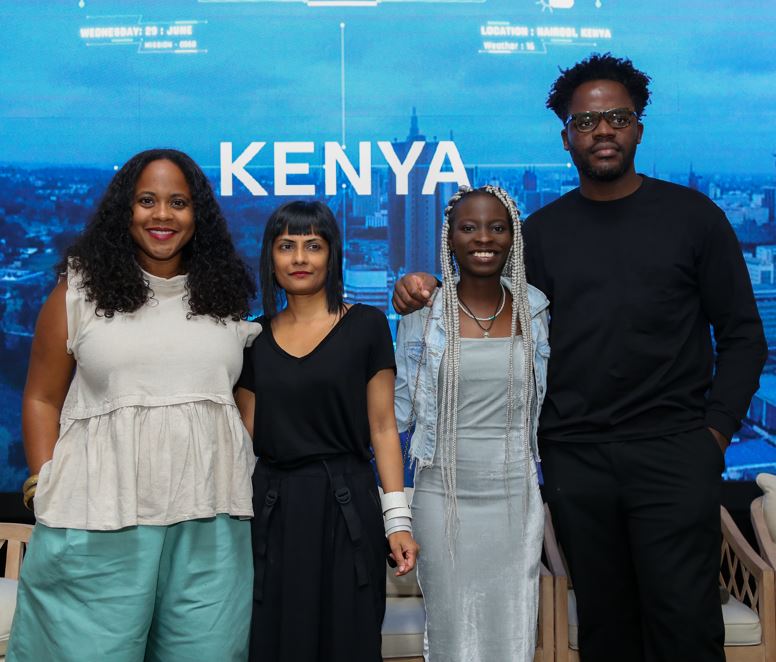
 Meta today unveiled an exclusive XR exhibition featuring the six finalists from the ‘Future Africa: Telling Stories, Building Worlds’ programme, focused on supporting the next generation of Extended Reality (XR) creators in Africa. Developed in partnership with Africa No Filter, Electric South and Imisi 3D this forms part of Meta’s XR Programs and Research investment into XR talents across Africa.


With a focus on owning and shifting the African narrative, whilst telling compelling African stories that are contemporary and immersive, the finalists have developed a range of immersive digital experiences rooted in African culture across various media formats including 360 video, AR/VR and Mixed Reality.


The experiences showcased include:


  • Malik Afegbua, Nigeria: Malik’s ‘Moving Between’ is a 360 documentary that presents a virtual heritage experience of the Kofar-Mata dye pit, a cultural and historical site in Kano, Nigeria, by showcasing it in a three-dimensional virtual reality model. In a 5-minutes immersive experience, a deaf dancer takes the audience on a tour through the historic Kofar-Mata dye pits, using sign language instructions anddance.


  • Xabiso Vili, South Africa: A writer, performer and new media artist, Xabiso’s ‘Black Boi meets Boogeyman’ is a multi-ending, ‘choose your adventure’ style 360° visual album. A speculative fiction piece where Black Boi, our protagonist, goes on a hero’s journey through a South Africa that needs reminding of its light to confront the Boogeyman. This 360 visual album hopes to become an access point in which artists and communities can imagine using XR artistically and intentionally for communalhealing.


  • Dylan Valley, South Africa: Dylan’s Cissie Gool House is a 360 documentary about a precarious housing occupation in a new Cape Town hospital. This 360 documentary will immerse the viewer in the occupation as if they were partaking in reclaiming the building. The film will showcase the voices of the activists and occupiers who call Cissie Gool House home and speak to those who would rather have them gone. The medium of VR will allow for greater empathy for these characters (often demonised in the press). It will impart a deeper understanding of what it means to occupy, especially when it is the only viable option youhave.


  • Nirma Madhoo, Mauritius: A fashion filmmaker, XR creator and Ph.D. candidate. Nirma’s ‘XWE,’ 360 fashion film using volumetric capture and photogrammetry is a tribute to the original stargazers of SouthernAfrica. It will celebrate the constellations of dispersed diasporic African identities through a Noirwave fashion performance set in a VR landscape of astrophysics.


  • Pierre-Christophe Gam, Cameroon: Pierre is a multimedia artist who worked on ‘TOGUNA’, a hybrid (both live and online) Art installation, fusing AR/VR, film, photography, mixed-media sculpture, future-thinking and storytelling, designed to facilitate a forum for an innovative conversation on the future of the African continent. This provides a WebVR experience usingAR.


  • Michelle Angawa, Kenya: A film editor and XR creator, Michelle’s ‘1000 Shillings in Nairobi,’ a 360 fiction film is a short tragicomedy depicting a day in a Nairobian Boda rider’s life. He drifts through a seriesof absurd encounters in an attempt to pay a motorbike loan of KSH 1000 ($10).

Sherry Dzinoreva, Meta’s Public Policy Programs Director, Africa, Middle East, and Turkey, said: “As the next phase of this programme, we’re delighted to be unveiling this specially curated exhibition featuring the work of six talented creators from across the continent, all of whom have created beautiful, thought-provoking African stories and experiences using immersive technology. We know that Africa holds immense talent, which we see reflected in the experiences curated, and as we set our sights on the metaverse, we believe creators, especially those on the continent, will play a key role in unlocking its potential.”


Commenting on the ‘Future Africa: Telling Stories, Building Worlds’ programme, Moky Makura, Executive Director, Africa No Filter added “We know the power stories have when it comes to influencing and shaping perceptions about Africa. That power is amplified when those stories are immersive and that is what today’s technologies offer storytellers. It’s exciting to be part of an initiative that has allowed us to tap into the future of storytelling in Africa.”


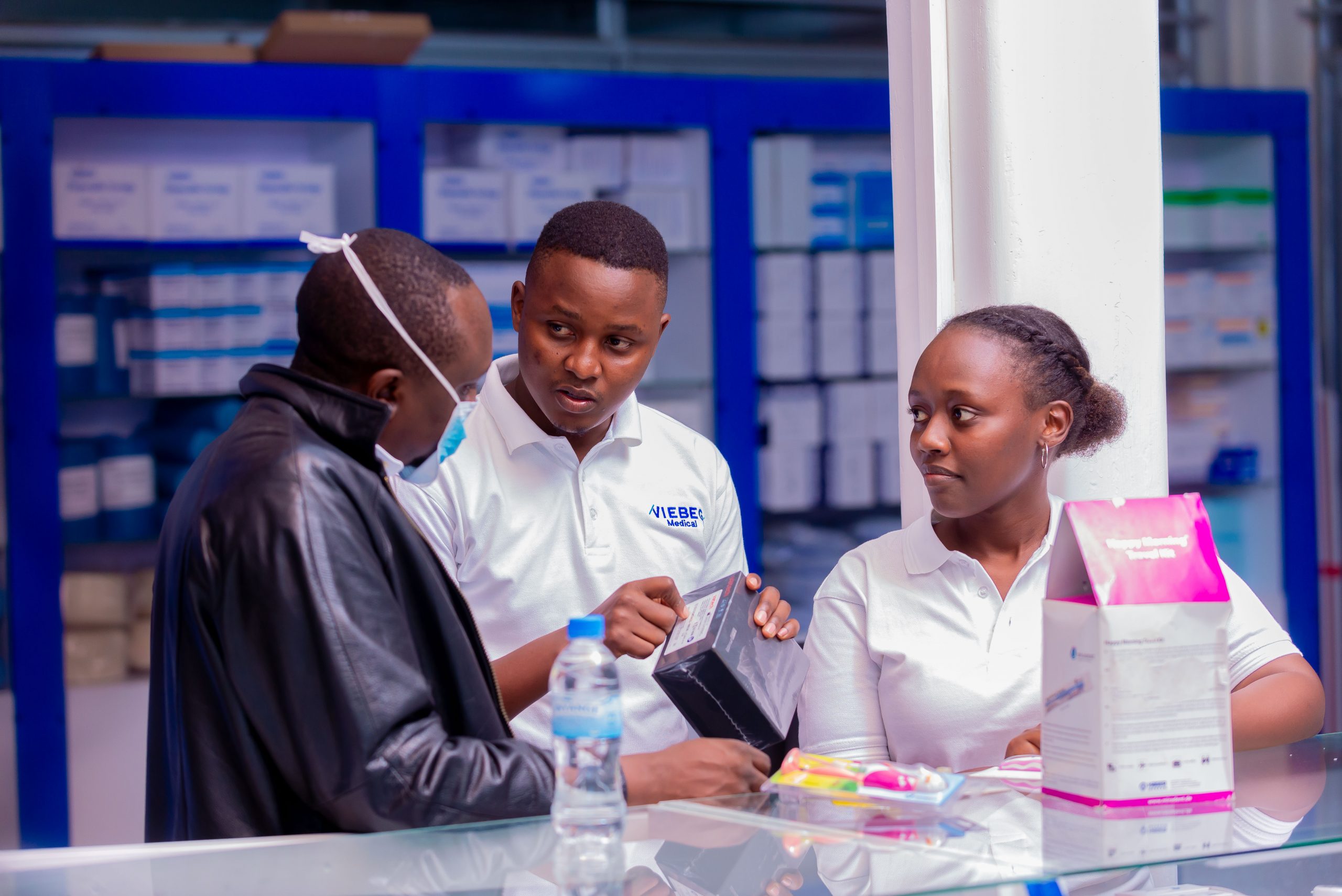
Drug stock-outs and shortage of medical equipment in health facilities in Rwanda are becoming a thing of the past, thanks to an innovation that is addressing procurement constraints.


Viebeg Technologies, a venture capital-backed Health Tech company, is helping to expand access to affordable health care in Central and East Africa by aiding healthcare facilities in procuring supplies in real-time. It uses artificial intelligence (AI) to manage supply chain processes (from shipping to warehousing, distribution and inventory management) to ensure that healthcare facilities have the precise medical supplies in stock.

The Rwanda Innovation Fund, partly financed by the African Development Bank, invested in Viebeg’s data-driven logistics platform.

Tobias Reiter, Viebeg Technologies Co-founder and Chief Executive Officer, says the firm’s AI-driven medical procurement platform directly connects healthcare providers with manufacturers. This removes brokers and middlemen from the value chain, generating cost savings of up to 40 percent for customers.

“We saw that many medical facilities did not have the right supplies; and also from reports that in Africa, in every five minutes, people are dying from conditions that could be prevented if we had the right medical supplies,” Reiter noted.

The company, which was set up in 2018, works with many health facilities in Rwanda, where two million people have been treated with Viebeg products, according to Alex Musyoka, its Co-Founder and Chief Commercial Officer. It is already making inroads in other parts of East Africa, including Kenya, Burundi and Congo, and serving over 500 facilities. The company plans to expand across Africa, Musyoka says.

Many healthcare facilities in Rwanda laud Viebeg, as they can now find essential products for their specific fields at affordable rates. An example is the Kivu Specialist Clinic, established by Dr. Amol Kulkarni, one of only three maxillofacial surgeons in Rwanda.

Many healthcare facilities in Rwanda laud Viebeg, as they can now find essential products for their specific fields at affordable rates

Modern equipment is of utmost importance for specialists who treat defects and injuries of the mouth, teeth and jaws, but they are often not affordable in Africa.

Dr. Amol said Viebeg helped his clinic to acquire an orthopantomogram machine (a panoramic dental X-ray of the upper and lower jaw), thereby boosting its cutting-edge capability.  He added: “In four months, the clinic will have fully paid for the new OPG machine. We are considered one of the best-equipped clinics in Rwanda. Viebeg helped me establish my clinic, and now I am confident having Viebeg as my partner to maintain it.”

Similarly, the Ejo Heza Surgical Centre in Kigali needed a new anesthesia machine as their old one had broken down. But they did not have the funds to purchase a new one. “As Viebeg offers special payment terms for products, Ejo Heza became Viebeg’s client and acquired the new equipment within three weeks. This has allowed our facility to continue saving lives,” says Dr. Dominique Savio Mugenzi, Orthopedic Surgeon and Managing Director at Ejo Heza.

“Thanks to Viebeg’s service, we are now procuring our medical supplies and equipment through the platform, and this has resulted in a significant reduction of procurement costs and stock-outs of medical supplies,” adds Mugenzi.

Mukando Cesarie is a patient who has experienced the power of a well-equipped healthcare facility enabled by Viebeg’s innovation. “I was very sick, but with the gynecological machines here, the doctors were able to finally diagnose the problem. Now I am getting better after four surgery sessions. I am thankful for these services,” she said and expressed satisfaction with the attention she received at the Kigali-based Best Care Hospital in July 2022. She previously underwent a 10- hour surgery at a local hospital, but her condition worsened because the facility lacked the necessary equipment to diagnose her accurately.

Viebeg’s annual revenue increased from $80,000 to $180,000 six months after the funding from the Rwanda Innovation Fund, representing a 125 percent growth. Musyoka projects that the figure will grow to $2.5 million by the end of 2022.

Apart from improving revenues, the funding has enabled the company to, among other things, conduct training for its employees, access working capital, and employ more workers.

The African Development Bank invested $30 million in the Rwanda Innovation Fund. The Bank’s support aligns with the country’s National Information Communication Infrastructure (NICI) III Plan, which underscores the importance of ICT in improving service delivery to citizens.

Dr. Abdu Mukhtar, the Bank’s Director for Industrial and Trade Development, said: “Digital innovation can transform sectors, but it needs investment.  Viebeg is a fantastic example of what can be achieved with the right mix of innovation, entrepreneurship, and financial backing.  It is telling that the Rwanda Innovation Fund, initiated by the Rwandan government and financed, in part, by the African Development Bank, has been catalytic in the development of Viebeg. Local investment in a local business has brought transformative local results. It is a partnership model that can play well in other markets.”

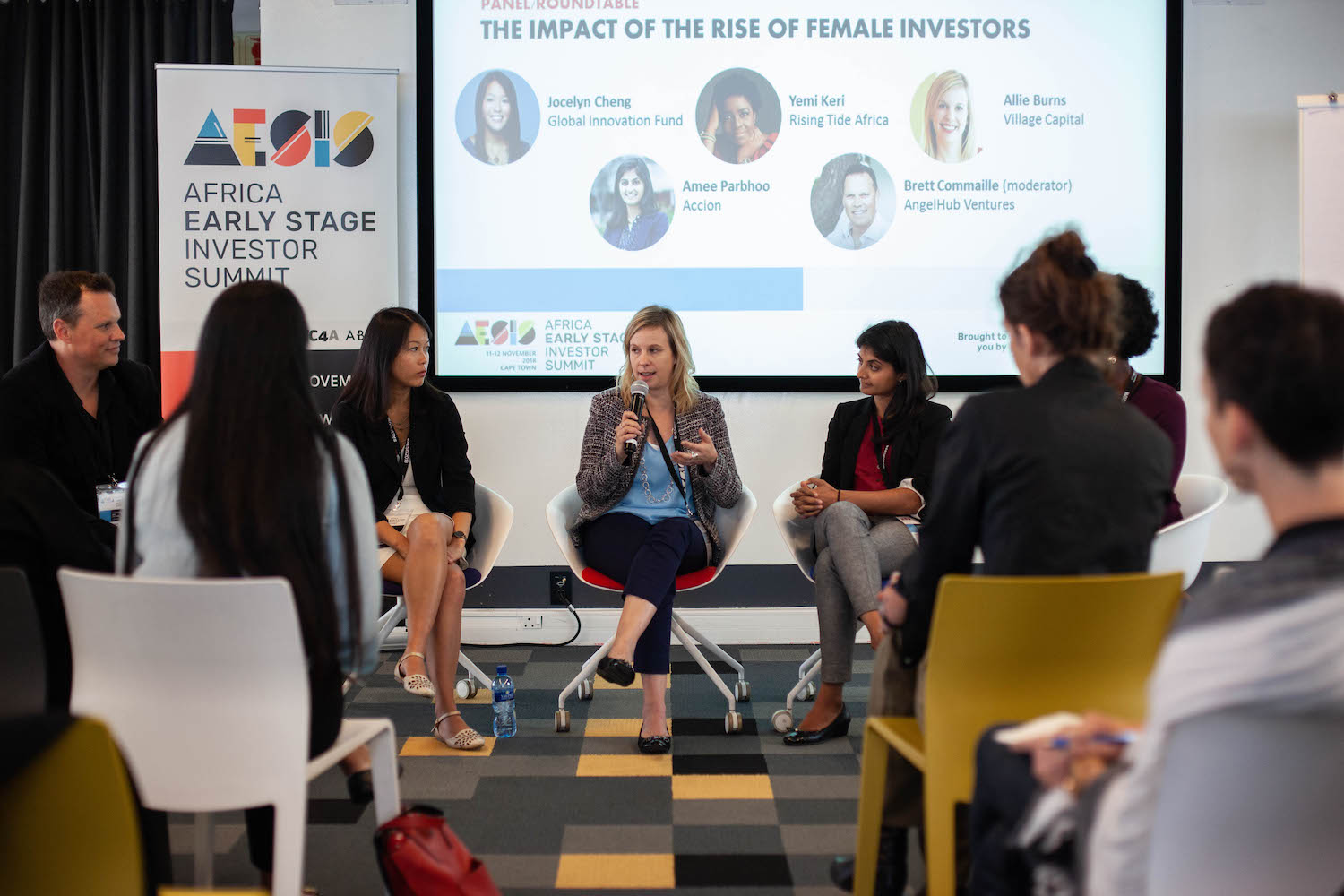
The Africa Early Stage Investor Summit team is proud to announce 9 partnerships for the 9th edition of #AESIS2022 coming up on 2nd, 3rd and 4th, November in person and online. VC4A (https://VC4A.com) and ABAN made the move in order to jointly promote an active Gender inclusive and pro Green/Climate investment mindset in the future.


#AESIS2022 – Strategic Partners

Introducing GIZ – Deutsche Gesellschaft für Internationale Zusammenarbeit and the Work In Progress! Alliance as the Strategic Partners for the Africa Early Stage Investor Summit #AESIS2022.  Through this partnership, attendees will benefit from a powerful keynote delivered on the double-themed Summit “Investing with a Gender Lens & Clean/Green Tech”, GIZ powered roundtables, fireside chats, reverse pitch events, workshops and more. The rich and insightful learnings ensure delegates enjoy a varied yet holistic agenda at The Summit.

#AESIS2022 – Knowledge Partners

As part of our efforts to inspire and educate, AESIS2022 announces two Knowledge Partners namely the FMO Ventures Program and The UNDP – Sustainable Finance Hub. The Knowledge partners will anchor workshops on relevant topics around funding and lessons learned in supporting entrepreneurs across various markets, LP/GP Office Hours and multi-city Investor Meetups.

Friends of #AESIS2022

Introducing the UK-South Africa Tech Hub, Bestseller Foundation, NEXT176 by Old Mutual, Launch Africa and Afrilabs as Friends of #AESIS2022. Meet and greet members of each team in various virtual rooms, workshops and in person Investor Meetups across the globe.

Tickets for #AESIS2022 are free however registration is required to secure your seat

The #AESIS2022 Agenda

  • On November 2nd, 3rd and 4th, VC4A and ABAN are hosting the 9th edition of the Africa Early Stage Investor Summit #AESIS2022
  • IN-PERSON Nov 2nd investor meetups hosted in 30 cities around the world
  • ONLINE Nov 2nd daytime – Ecosystem Side Event
  • ONLINE Nov 3rd and 4th 2022 – Summit


The program includes:

  • Online Summit with the most inspiring investor speakers
  • Virtual investor panels, keynotes, and fireside chats
  • Learning track with masterclasses hosted by investor expertise
  • VC4A Venture Showcase (95 alumni have raised over $500M)
  • LP and GP Office Hours
  • In-person investor meetups hosted by investors all over the world


Brand new to the #AESIS2022 Agenda: The Ecosystem Side Event

#AESIS2022 is for the first time introducing an Ecosystem Side Event, curated for Entrepreneur Support Organizations and accelerators. The segment speaks to the intersection between entrepreneurship development and early stage investing. Attendees can join the Investment Readiness Masterclass powered by GIZ, the Reverse Dragon’s Den where investors will be showcasing, as well as the Hub Sustainability Panel Discussion, where different models of creating value by providing deal pipelines will be discussed.

In addition, #AESIS2022 is thrilled to partner with AfDB and AVCA, to offer a select group of Entrepreneur Support Organizations (ESOs) who are exploring establishing a Fund, an opportunity to learn Fund Management and network with investors.

According to the ICS threat landscape (https://bit.ly/3rGQgxM) report by Kaspersky (www.Kaspersky.co.za), in the first half of 2022 in the African regions computers in the industrial control systems (ICS) environment were attacked using multiple means – malicious objects, phishing pages, and spyware.


ICS computers are used in oil & gas, energy, automotive manufacturing, building automation infrastructures and other spheres to perform a range of OT functions – from the workstations of engineers and operators to supervisory control and data acquisition (SCADA) servers and Human Machine Interface (HMI). Cyberattacks on industrial computers are considered to be extremely dangerous as they may cause material losses and production downtime for the controlled production line and even the facility as a whole. Moreover, industrial enterprises put out of service can seriously undermine a region’s social welfare, ecology and macroeconomics.

In the first half of 2022 in the META region ICS computers in the oil and gas sector faced attacks most often (47% of them got attacked). Attacks on building automation systems were in the second place – 45% of ICS computers in this sector were targeted. The energy sector was also among the top-3 environments that got attacked (41% computers there were affected).

In total, over the last six months various types of malicious objects were blocked on every third ICS computer in South Africa (33%, 11% increase from the second half of 2021), and on 36% of computers in Kenya (20% increase from the second half of 2021). In Senegal there were 41% of ICS computers on which malicious objects were blocked, in Nigeria – 34%, in Gabon – 38%.


Table #1. Percentage of ICS computers on which malicious objects were blocked

Kenya

36%

Gabon

38%

Nigeria

34%

Senegal

41%

South Africa

33%


Malicious scripts and phishing pages were among the most popular means of attacking ICS computers in the African regions. In H1 2022 such scripts and pages were blocked on 19% of ICS computers in South Africa, a 12% increase from H2 2021. In Senegal, Nigeria and Gabon, 13% of ICS computers were affected, in Kenya – 17%.


Table #2. Percentage of ICS computers with blocked malicious scripts and phishing pages

Kenya

17%

Gabon

13%

Nigeria

13%

Senegal

13%

South Africa

19%


Approximately every tenth ICS computer in the African regions in H1 2022 had spyware on it blocked. Specifically, spyware was blocked on 9% of ICS computers in South Africa and Gabon, 12% in Kenya, 11% in Senegal, 8% in Nigeria.

Table #3. Percentage of ICS computers with blocked spyware

Kenya

12%

Gabon

9%

Nigeria

8%

Senegal

11%

South Africa

9%


“Sophisticated attacks have increased the demand for better visibility of the cyber-risks that impact industrial control systems. The integration of IT and OT systems has highlighted the need for a comprehensive yet purposely built cybersecurity program. Digital transformation programs require a new approach to ensure the secure deployment and operation of a variety of new, potentially unsafe devices within plant boundaries. Given this new reality, the Industrial Cybersecurity Maturity Modeling approach* might be used to define clear industrial cybersecurity targets and to measure how these targets are met,” says Emad Haffar, Head of Technical Experts at Kaspersky.

Read more about the ICS threat landscape in H1 2022 on the Kaspersky ICS CERT website (https://bit.ly/3yrRKje).

To keep your OT computers protected from various threats, Kaspersky experts recommend:

  • Conducting regular security assessments of OT systems to identify and eliminate possible cyber security issues.
  • Establishing continuous vulnerability assessment and triage as a basement for effective vulnerability management process. Dedicated solutions like Kaspersky Industrial CyberSecurity (https://bit.ly/3fJgnS3) may become an efficient assistant and a source of unique actionable information, not fully available in public.
  • Performing timely updates for the key components of the enterprise’s OT network; applying security fixes and patches or implementing compensating measures as soon as it is technically possible is crucial for preventing a major incident that might cost millions due to the interruption of the production process.
  • Using EDR solutions such as Kaspersky Endpoint Detection and Response (https://bit.ly/3RPzZl5)  for timely detection of sophisticated threats, investigation, and effective remediation of incidents.
  • Improving the response to new and advanced malicious techniques by building and strengthening your teams’ incident prevention, detection, and response skills. Dedicated OT security trainings for IT security teams and OT personnel is one of the key measures helping to achieve this.

Reference:

*Page 22 of the Kaspersky report The State of Industrial Cybersecurity in the Era of Digitization (https://bit.ly/3T6eBJh).

The Minister of State for Science, Technology and Innovation, Chief Henry Ikechukwu Ikoh, said that the establishment of technology and innovation centres in the six geo-political zones will enhance collaboration of researchers which is necessary for achieving the desired research output in the country, rather than working in silos.
The Minister who was represented by the Permanent Secretary of the Ministry Mrs. Monilola Udoh said this at the North Central Dialogue on the Establishment of the Technology and Innovation Centres for Global Competitiveness and Productivity today in Abuja.
According to the Minister, the centres are aimed at establishing a frame work for consultation, sharing experiences, information and practices as well as creating a conducive environment amongst scientists.
Chief Ikoh stated that Technology and Innovation Centres, under the Executive Order NO. 5 are designed to serve as centres of excellence with the objective of improving the role of STI in the socio-economic development of the country.
He commended the effort of the immediate past Minister of Science, Technology and Innovation Dr. Ogbonnaya Onu for his tenacity, consistency and passion about the role of STI in the development of the country.
He strongly believe that the outcome of the dialogue will result to increased patenting, innovative discoveries and inventions, emergence of commercialization of research and improved research findings amongst scientists in the country.
Speaking, the representative of UNESCO Dr. Moma Enan said that the organization is ready to collaborate with the ministry in some areas of STEM, and research, thereby, making one of the agencies of the Ministry a UNESCO capacity centre.

Earlier, the Commissioner for Tertiary Education, Science and Technology, Niger State, Professor Abubakar Baba Aliyu, commended the ministry for its achievements in the area of STI, adding that Niger State is blessed with natural resources especially gold.
To this end, he called on the minister to convey the message to Federal Government in order to enable the State Ministry of Solid minerals to work in synergy with the Federal Ministry of Mines and Steel.