
ImmuniWeb Announces distributorship partnership with Kecam Technologies Limited to help to increase the Cyber resilience and compliance in Nigeria, Ghana, Liberia, and Sierra-Leone.
The partnership allows Kecam Technologies Limited to offer award-winning and globally recognized ImmuniWeb® AI Platform for Application Security Testing, Attack Surface Management and Dark Web Monitoring solutions to customers based in West Africa.
“We are highly excited about our partnership with ImmuniWeb® to serve the West African market,” said Bonny Mekwunye, Vice Chairman of Kecam Technologies Limited. “This new partnership will enable us to extend ImmuniWeb’s full range of application security testing, continuous monitoring and policy compliance products to meet market requirements for corporate, government and cybersecurity professionals.
This partnership will add value in our operations by enhancing our existing Penetration Testing; Vulnerability Management; Governance, Risk and Compliance (GRC) Management technology portfolio and solutions and our entire spectrum of cybersecurity solutions.
Equally, ImmuniWeb will provide an appropriate platform for us to provide for market segment needs in West Africa with a scalable, self-managed solution that allows corporations to continuously keep a track of and enhance the security and compliance of their IT infrastructure and applications while effectively meeting regulatory requirements.”
Kecam Technologies Limited provides holistic set of cyber security services and solutions for every business. These solutions and services are purely based on industry leading frameworks, expertise and technologies. Kecam Technologies is dedicated to contribute to a more secure and responsible cyberspace in Nigeria.
This partnership with ImmuniWeb® is an important step in that direction especially with the recently amended National Cybersecurity Policy and Strategy 2021.
“We are delighted to partner with KECAM Technologies Limited to expand our presence in West Africa. Cybercriminals are incrementally targeting governments, organizations and private companies in the region by exploiting vulnerable applications, incomplete or missing IT asset inventory and breached suppliers exposed on the Dark Web. Consolidation of our efforts and expertise will deliver outstanding added-value to our customers, providing them with efficient and effective services at an unbeatable price.” said Andrii Slobodyanik, Global Partnership Director of ImmuniWeb.
In clear recognition of the critical role Nigeria is playing on the global telecom stage, the country was re-elected earlier today as a Council member of the International Telecommunication Union (ITU), the United Nations specialised agency that oversees global telecommunication operations. Nigeria will serve on the Council again from 2023-2026.
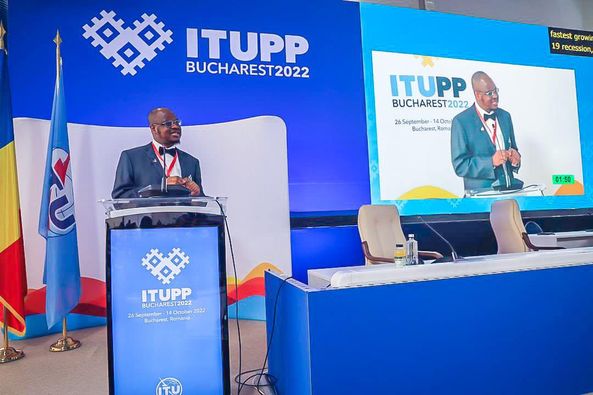
The election of Nigeria and other countries, on Monday, October 3, 2022, into different regional groups that constitute ITU Council, was the highpoint of the Plenipotentiary Conference 2022 (PP-22) ongoing in Bucharest, the capital city of the Republic of Romania.
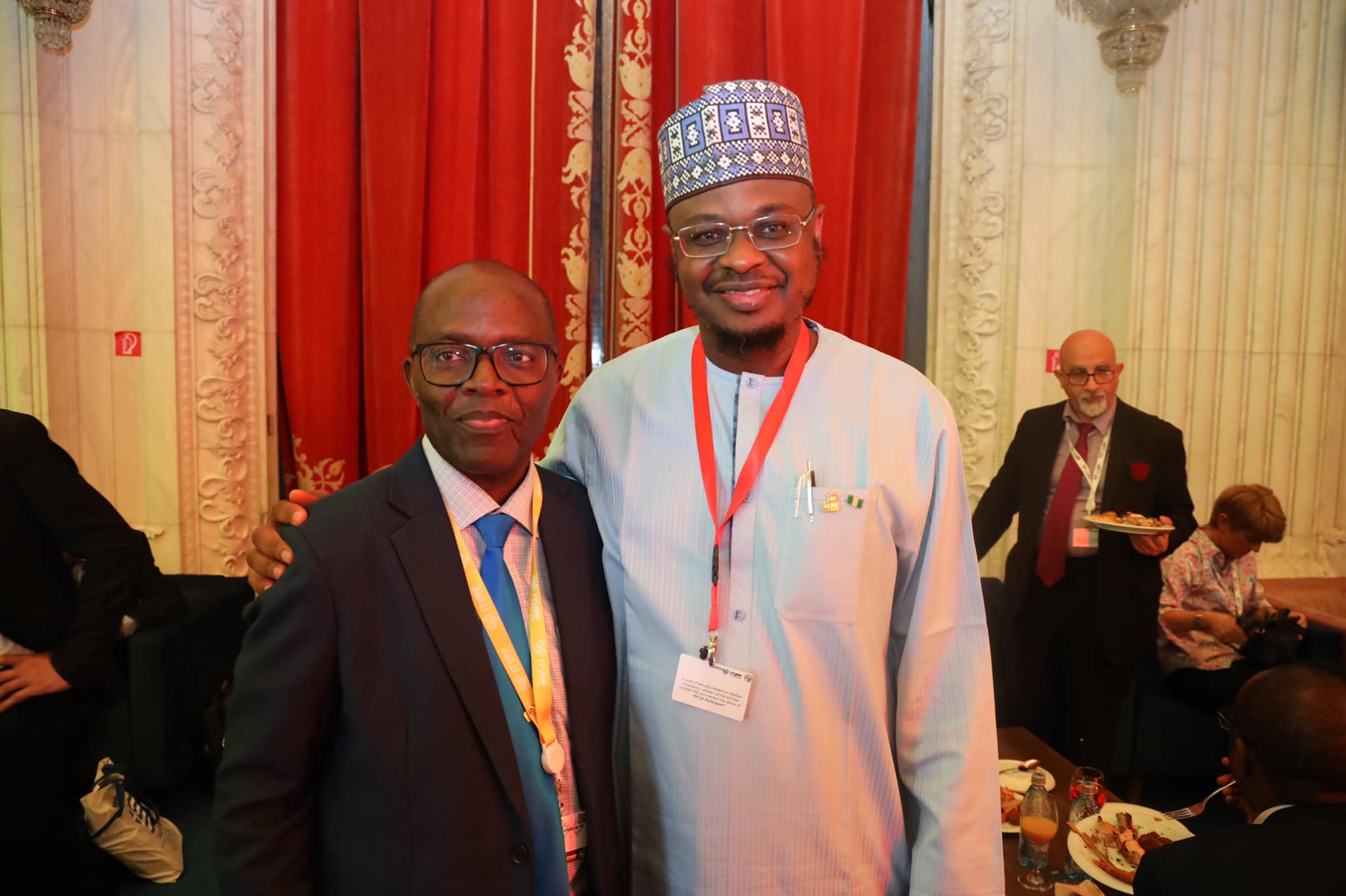
The Nigerian delegation was successfully led to the global event by the Honourable Minister of Communications and Digital Economy, Prof. Isa Ali Ibrahim Pantami. Other members of the delegation include the Chairman, Board of Commissioners of the Nigerian Communications Commission (NCC), Prof. Adeolu Akande, and the Executive Vice Chairman/Chief Executive Officer of NCC, Prof. Umar Danbatta.
At the conference, which started on September 26, 2022 and scheduled to end on October 14, 2022, member states at the event voted on the composition of the next ITU Council and the 12 representatives to serve on the Radio Regulations Board (RRB) for the next four years.
The 21st Plenipotentiary Conference of the Council, also saw the election by member states, of Doreen Bogdan-Martin of the United States of America as the organisation’s next Secretary-General.
Like Nigeria and the countries elected into the Council, Bogdan-Martin, as the first woman to lead ITU in its 157-year history, will begin her four-year term from January 2023, when Houlin Zhao would have completed his second final term of four years in office as ITU Secretary General.
The seats in ITU Council are divided into five regions, A to E. Nigeria was elected into the ITU Council, Region D for Africa, which has 13 seats. Other 12 countries elected alongside Nigeria are Algeria; Egypt; Ghana; Kenya; Mauritius; Morocco; Rwanda; Senegal; South Africa; Tanzania; Tunisia; Uganda.
Elections of member states also took place into the Region A for The Americas (nine seats); Region B for Western Europe (eight seats); Region C for Eastern Europe & Northern Asia (five seats); and Region E, for Asia and Australasia with 13 seats as Africa.
Commenting on Nigeria’s re-election as ITU Council member, the Executive Vice Chairman and Chief Executive Officer, Prof. Umar Danbatta, thanked the ITU member states for the confidence it has in Nigeria expressed by the re-elected into the ITU Council, in which the country has been playing critical role over the years.
“The re-election of Nigeria as a member of ITU Council for the next four years, again, points to the globally-recognised leadership role Nigeria is playing in Africa and at the level of ITU Council in the area of telecommunications policy formulation and technical regulations development to drive ITU’s mission and vision,” the EVC said.
The ITU, originally established in 1865 as the International Telegraph Union and became a United Nations specialised agency in 1947, was set up to coordinate telecommunications operations and services throughout the world. It is headquartered in Geneva, Switzerland.
Nigeria became a member of ITU on November 4, 1961. The USA joined on July 1, 1908; United Kingdom, February 24, 1871, and UAE on June 27, 1972.
The ITU is governed by the Plenipotentiary Conference and the Administrative Council. The Plenipotentiary Conference is the supreme organ of the Union. It is the decision-making body which determines the direction of the Union and its activities.
The Council, on the other hand, acts as the Union’s governing body in the interval between Plenipotentiary Conferences. Its role is to consider broad telecommunication policy issues to ensure that the Union’s activities, policies, and strategies fully respond to today’s dynamic, rapidly changing telecommunications environment.
ITU Council also prepares a report on the policy and strategic planning of the ITU, and it is responsible for ensuring the smooth day-to-day running of the Union, coordinating work programmes, approving budgets, and controlling finances and expenditure.
The Council also takes all steps to facilitate the implementation of the provisions of the ITU Constitution, the ITU Convention, the Administrative Regulations (International Telecommunications Regulations and Radio Regulations), the decisions of Plenipotentiary Conferences, and where appropriate, the decisions of other conferences and meetings of the Union.
Staying in front of the technology curve is now critical.
To set itself apart in the digital era, any bank needs cutting-edge technologies that allow it to quickly and securely respond to customer demands. But with mobile Internet and Financial Technology (FinTech) giants beginning to throw their weight around — offering new and ever higher levels of data processing, analysis, and customer service — many banks’ data storage systems are being pushed well beyond their limits.
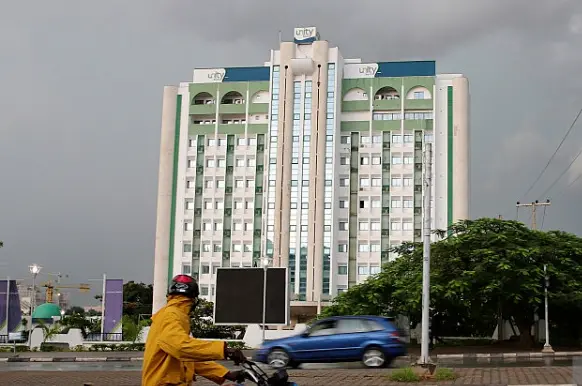
Established in 2006, Nigeria’s Unity Bank is one of the top commercial banks in the country, so it’s no stranger to Information and Communications Technology (ICT) challenges. Unity has a singular, unifying vision that lies at the core of everything it does: to be the retail bank of choice for all Nigerians. With banking transaction surges causing core system performance bottlenecks on its legacy network, affecting service efficiency and the customer experience, Unity knew it was time to act.
Performance Issues Are the Top Priority
Unity has two data centers: one is located in the capital, Abuja, and the other is in the country’s largest city, Lagos. In 2014, the bank deployed storage and network equipment from a range of mainstream vendors. This legacy equipment proved no match for the transaction data surges of recent years. Devices on its legacy network faced slowing transaction application response times, long service rollout periods, and a range of other issues, failing to meet the service performance requirements of Unity’s Information Technology (IT) network.
Unwilling to let the issues compound, nor make sacrifices that would impact the customer experience, the bank committed in 2020 to upgrading its core system infrastructure, in order to meet the business development needs of the next five years and beyond.
Huawei’s all-flash solution is helping Unity build a cost-effective flash resource pool
“Taking into account long-term business growth, we had to act and revamp and upgrade our IT systems,” Ebenezer Kolawole, Executive Director and Chief Financial Officer (CFO) of Unity Bank explained. “Therefore, the first thing we wanted to do was build a faster and more stable core banking system at the network and storage layers.”
Boosting IT Efficiency with Huawei, Now and in the Future
To find the best IT solution, Unity conducted Proof of Concept (PoC) tests with a range of vendors. The results spoke for themselves: Huawei’s OceanStor Dorado all-flash storage outperformed competing vendors across the board. For example, in the POC test environment, the core banking system processing time was slashed from 10 hours to just 30 minutes, going way beyond Unity’s expectations.
Unity’s team wasn’t only impressed by Huawei’s technological prowess. Its customer service stood out, too. “Huawei staff are really just like their corporate culture says — always customer-centric,” Kolawole noted. Such benefits made Unity’s decision an easy one: Huawei’s solution was the best option to replace the legacy storage systems and host the core systems.
This decision is already paying off as Unity pushes ahead with its future-proofing process. Huawei provided high-performance OceanStor Dorado systems to carry multiple core applications — such as the transaction database — in order to accelerate core data processing and analysis while slashing system latency. This has also allowed the transaction database to be accessed by more users concurrently, greatly increasing Transactions Per Second (TPS).
“Before OceanStor Dorado systems were deployed, all systems in our banks had to reserve one day every month to process monthly settlements. But with OceanStor Dorado, we can complete our monthly settlement in 1 hour instead of the 8 hours it used to take,” Kolawole noted. “That means that we no longer need to close the business for a day, which we used to have to do. So we are impressed by the quality of Huawei’s all-flash storage technologies, which have made our IT systems much more reliable and efficient.”
Unity’s new storage solutions have not only helped it address past challenges. They are also helping it prepare for future business development. The bank has implemented active-passive Disaster Recovery (DR) between its Abuja and Lagos data centers, ensuring up to 99.9999% reliability. And this deployment has also provided room for a future upgrade when necessary, to active-active or geo-redundant Three-Datacenter (3DC) DR. Furthermore, OceanStor Dorado supports online performance and capacity expansion as demand grows, protecting Unity’s long-term investment and ensuring the bank can cope with heavier data loads over the next 5 to 10 years. This, alongside Huawei’s three-year warranty, stands Unity in good stead for the future, and ensures that the Service Level Agreement (SLA) of core applications can always be achieved.
Huawei’s all-flash solution is helping Unity build a cost-effective flash resource pool. It’s also improving the performance of its IT infrastructure and helping it transform toward more customer-centric services, including credit cards, online payments, and mobile banking. Equipped with its upgrades, Unity will move further along its financial digital transformation path and create a new, future-proofed business landscape, from where it can claim success.
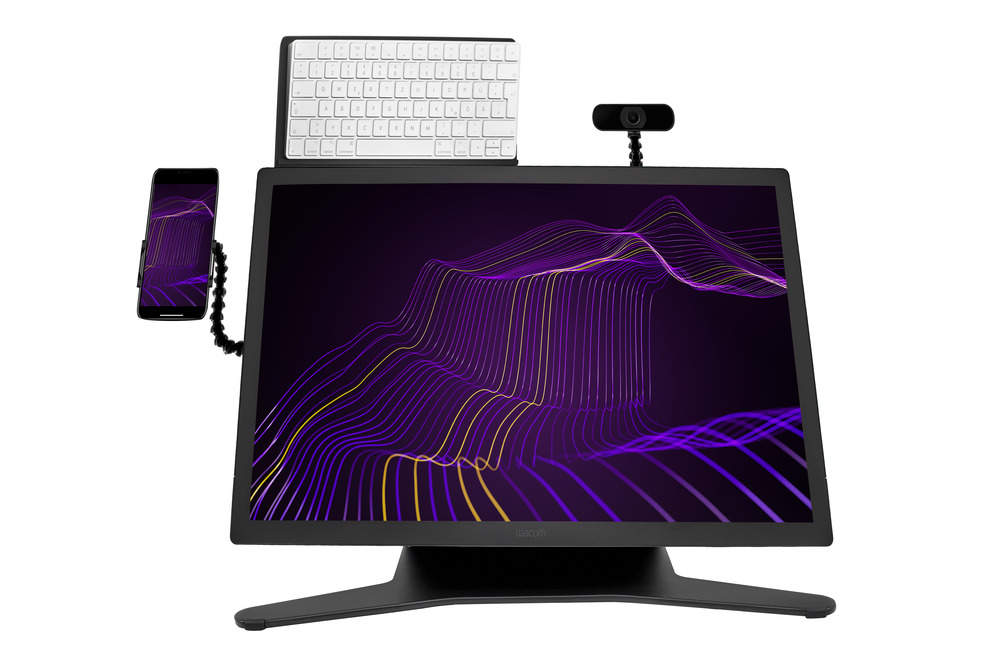
Wacom, the global leader in the pen display and tablet market for creative users, officially revelaved the Wacom Cintiq Pro 27 pen display designed for harmony in a premium launch event held in the UAE’s first digital art theatre ToDA in Dubai. Cintiq Pro 27 is a creative instrument defined and developed by members of the global art and design community in conjunction with Wacom’s product teams to deliver the most immersive and stable pen on screen experience to date,
Purpose built for creative professionals – 2D illustrators, 3D modelers, animators, game developers, virtual production artists, etc. – the Cintiq Pro 27’s large digital canvas offers seamless interaction with creative software applications and provides the comfort and ease of use synonymous with all Wacom devices. The new 27-inch Cintiq Pro represents a major step forward in virtually all categories that matter to digital pen display users, such as improved pen performance and multi-touch, better ergonomics, faster refresh rates, vivid and accurate color as well as a focus on comfort and custom options. Additionally, users will appreciate the modern look, light weight and thin 27” screen that sports a smaller footprint than its Cintiq Pro 24 sibling. Wacom’s latest pen display joins the Cintiq Pro 16 and Cintiq Pro 24 models to form a comprehensive range of sizes for every need and workspace.
“The emphasis on cloud computing and the dependencies placed on professional freelance and studio artists to collaborate freely, quickly and efficiently on a global scale requires a multi-tasking, do-it-all creative tool,” says Faik Karaoglu, Executive Vice President of Wacom’s Branded Business Group. “With the new Wacom Cintiq Pro 27 creative professionals can count on intuitive and natural-feeling pen and touch input, extremely accurate, factory-calibrated color, faster refresh and other design features that allow users to comfortably and confidently produce and share work across the creative pipeline.”
Pro Pen 3 and multi-touch take customization and performance to a new level
The pen on screen experience on the Cintiq Pro 27 has been vastly improved with the introduction of the Pro Pen 3. Users now have the ability to change the weight, barrel size and center of gravity of the pen with interchangeable components that come with the pen. In addition, the Pro Pen 3 has enhanced tilt recognition and still features Wacom’s renowned EMR (Electro-Magentic Resonance) technology with 8,192 levels of pressure and battery-free operation.
Multi-touch also comes standard and is extremely valuable for an artists’ non-dominant hand when working in programs, especially 3D applications, requiring one to pinch, zoom and rotate a model or sculpture while working with the pen. For those working in a virtual production environment, the ten-point selective touch allows users to precisely manipulate on-screen sliders and other navigable features for an extremely efficient workflow.
A brilliant display
The Cintiq Pro 27’s new display features virtually no parallax and latency with a much improved refresh rate of 120Hz, allowing the cursor to track twice as fast as previous models. It is equipped with HLG (hybrid log-gamma) and the PQ (perceptual quantization) curve for displaying and editing HDR (high dynamic range) video content. Delivering brilliant 4k resolution in 10-bit color, 98% DCI-P3 (Digital Cinema Initiatives – Protocol 3), the film industry’s color standard, as well as 99% Adobe® RGB color accuracy, users will delight in the fidelity of the display and the true-to-life visual experience. The display is not only Pantone® validated, but also Pantone SkinTone validated, meeting the Pantone standard for accurately displaying the entire range of human skin tones. For users that enjoy moving their most commonly used keyboard shortcuts closer to their actual workspace, grip-style ExpressKeys®, eight in total, four on each side, have been added to the back of the display for easy, ergonomical access.
New stand designed for designers
The Cintiq’s new stand matches the modern, sleek design of the new pen display. It’s fully adjustable to meet virtually any working position and even supports +/- 20 degrees of screen rotation. For users seeking another stand option, the display does have VESA mounts for other OEM stands.
“Professional content creators in media and entertainment, industrial design and education can all benefit from a tool that’s fit to work the way they want to work,” concluded Karaoglu. “Whether illustrating in 2D, sculpting in 3D or building a virtual production solution, everyone has their own way of working and we are excited to be introducing the Cintiq Pro 27 to the creative community.”
The increase in cyber threats across the board is crippling businesses. Digital security technologies were often in the shadow of fancy new hardware, software and cloud technologies that offered greater gains, but security solutions are fast becoming the foundation for many successful managed service providers, says Jacquie Hough, ESET‘s MSP specialist, “because, without a solid security foundation, even the most advanced technologies will be obsolete if attacked.”
Managed service providers (MSPs) – and resellers before them – play a critical role in the IT ecosystem. By outsourcing many day-to-day IT requirements to these companies, smaller organisations, in particular, can save costs, improve service levels and focus more resources on growing the business. Theoretically, they can also reduce security risks by handing the task over to a more capable and well-resourced provider. Therefore, MSPs looking to offer greater value to their customers have a great opportunity to provide digital security solutions.
ESET has now launched dedicated XDR security solutions, ESET Inspect and ESET Inspect Cloud – currently available to ESET’s enterprise business customers – which will be accessible via ESET’s MSP Administrator platform as used by current MSPs to protect their customers’ digital journeys. The new offering will allow current and prospective MSP customers access to a simplified and unified digital security platform, with MSP-optimised solutions which are easy to use, help minimise their daily operations, and allow MSPs to provide top-rated security to help solidify their own customers’ trust.
This is accomplished without compromising efficiency on behalf of quality, because the new platform integrates balanced breach prevention, detection and response capabilities, and comprehensive threat intelligence. It is modular, adaptable, and continuously innovated with each system upgrade.
Sales through the channel are increasing year on year, regardless of the vendor solution. The line between resellers – our traditional channel for digital security solutions – and MSPs is blurring, highlighting the need for resellers and partners alike to evolve strategies and consider how digital security can play a role in their tech stack offerings.
Canalys recently published a report looking at the MSP tech stack, presenting the layers to the five core MSP technologies: Remote monitoring and management, cloud SaaS, backup, IT service management and now cyber security. MSPs thrive and grow when they understand their position in this ecosystem and that digital security is the foundation for a solid, dependable tech stack.
Customers’ understanding of digital security has also advanced a lot in recent years, and they are shifting from digital security being a compliance item, to providing proactive insights and monitoring that actively protects their investments.
In 2021, digital security within managed services grew by 18%. It is not just about endpoint and networking products anymore. This growth stat reveals that MSPs must provide more holistic security strategies, including consulting, technology, monitoring, analytics and remediation services. Success as a reseller and MSP is no longer rooted in just landing sales.
The report serves as an insightful lens into the MSP world because it reveals the delicate balance between trust and freedom sought by MSPs: the confidence to select any one vendor as a long-term, stable partner committed to its MSP program and the freedom to mix and match several trusted vendors from the tech stack to access the best technologies available. ESET’s interoperability is a feature, and our programme is designed with this in mind.
ESET targets partners who specifically offer SLA-based services to their end customers. With ESET’s industry-leading solutions and backing, this volume-based service is highly flexible and profitable. What makes ESET’s solutions for its partners particularly attractive is the ability to manage the entire suite of ESET security solutions and products from a single console which can be turned on and off as the customer requires.
And when dealing with end customers in the SMB space, where every cost is scrutinised, it is critical to demonstrate value, transforming the service offering from a pure-play protection offering to threat detection and proactive response. ESET’s solution is flexible and scalable in design, future-proofing the MSPs’ multitenancy model and helping clear security engineers’ overflowing helpdesk. In terms of making life easier for MSPs, ESET offers a flexible, self-service, zero-commitment billing model which keeps the pressure off and allows their MSP partners to ‘pay as they go’ monthly and for the subscriptions they actually need.
For many MSPs trudging through this complexity, turning to ESET may be a perfect fit, to put it boldly. The ideal MSP partner is a partner who understands ESET products, firstly. And secondly, they must have the trust of their end user to manage their security requirements.
MSPs are hungry for more revenue so they need a partner that they and their end customers can trust to deliver reliable products and exceptional value. If this is done well, profit and growth will follow.
The working world has changed considerably over the last two years, and many organisations are reconsidering their unified communications (UC) strategy. Workers prefer hybrid work, leaving employers with the task of figuring out the future workplace and how to adjust their remote strategies to accommodate this new hybrid approach.
“Today’s employees have high expectations for being connected at work – voice alone will not suffice. They want messaging, video, creative conferencing options, flexibility, and of course, mobility,” says Marilyn Moodley, Country Leader for South Africa and WECA (West, East, Central Africa) at SoftwareONE. “Software and hardware purchases that enable communications and collaboration should not be left as an afterthought – it’s essential to ensure productivity in today’s hybrid work environment.”
Look to the needs of your employees as a starting point and build a strategy around every team’s work styles and needs, and not just what is on trend in the technology world, she says. “Find out how they best do their jobs, where their pain points lie, what their aspirations entail, and where the future of their work will take them. After all, what works for one user won’t always work for another.”
Here are some things you need to consider when planning a UC strategy for a collaborative hybrid work environment:
Devices
- Multi-media phones: By 2024, only a quarter of meetings will take place in person. Video technology, which frees up valuable time and money, has been favoured since the start of the pandemic. Multi-media phones allow everyone to choose the medium that is best for them in any given situation, from instant messaging to voice calls to video conferencing.
- ATA adapters: IP phones that use VoIP technology allow cost-effective global calling at scale. But any phone can be converted from analogue to digital with an ATA adapter, allowing for digital transformation on legacy phone systems.
- Conference phones: Gone are the days of everyone leaning over one office speaker on conference calls – today’s phones are capable of multi-media communications with video streaming and content-sharing in real-time.
- Wi-Fi phones: Wireless phones enable open-plan offices where employees aren’t tethered to a single spot for their communications. Digitally Enhanced Cordless Telecommunications (DECT) phones are more reliable and secure than Wi-Fi phones, but the latter is more cost-effective and the technology is highly scalable.
- Headsets: Headsets are IP endpoints, too, and come with features like wireless capability, noise cancellation, the ability to mute, and availability lights to let others know an employee is on a call.
Systems
- Room systems: Conference and huddle room systems have become an integral tool in any UC strategy. Huddle rooms are small rooms designed to hold up to six people and are equipped with the necessary teleconferencing technologies. Conference rooms are designed to hold a larger group of people and will also have the proper communication technologies. These rooms allow team members to connect and collaborate no matter if they’re sitting right next to each other or halfway around the globe.
- Platforms: Make sure your devices and platforms will be compatible before spending money – some of your preferred devices may be less functional on certain platforms. Whether you use Microsoft, IBM, or another provider, each platform impacts devices in different ways. At SoftwareONE we understand that a full UC transformation entails the right people, technology, and overall process. When it comes to Microsoft, we’ve developed a fully comprehensive Unified Communications portfolio of services, tailored to meet the needs of the hybrid workplace.
- Virtual spaces: Enterprises are still on the cusp of truly adopting virtual and augmented reality, but it will not be long before these technologies are considered fundamental to work and meetings. Several new updates to Microsoft Teams Breakout Rooms, for example, have been rolled out in an effort to make the workplace more productive than ever. These virtual rooms provide users with the ability to break larger meetings down by placing attendees in up to 50 smaller breakout groups – each with a virtual whiteboard to draw out their ideas. You can move participants to other rooms at any time, send messages to individual rooms to encourage participation, close breakout rooms, and bring participants back to the main meeting whenever needed. This is great for educational workshops, team training, conferences, networking events and even virtual teambuilding events.
Not every device, system or platform will work for every organisation or even team within an organisation. That’s why it’s crucial to get input from users before making decisions, Moodley reiterates. “By truly listening to the different needs in your organisation, you will better understand what elements are crucial to include. Then, you will have a future vision that informs your purchasing decisions.”
. Recovers N8.8billion worth of tramadol from mansion in residential estate
No less than Thirteen Million, Four Hundred and Fifty One Thousand, Four Hundred and Sixty Six (13,451,466) pills of Tramadol 225mg worth Eight Billion Eight Hundred and Sixty Million Naira (N8,860,000,000) in street value have been recovered by operatives of the National Drug Enforcement Agency, NDLEA, from one of the mansions of a billionaire drug baron, Ugochukwu Nsofor Chukwukadibia, in the highbrow residential estate, Victoria Garden City, Lekki area of Lagos.
The arrest of Ugochukwu who is the Chairman of Autonation Motors Ltd is coming barely two months after NDLEA uncovered a methamphetamine clandestine laboratory in the residence of another drug kingpin in the estate, Chris Emeka Nzewi, who was arrested on Saturday 30th July along with a chemist, Sunday Ukah, who cooked the illicit drug for him. At least, 258.74 kilograms of crystal methamphetamine and various precursor chemicals used for the production of the toxic drug were recovered from Nzewis home during his arrest.
Following credible intelligence, NDLEA operatives on Friday 30th September stormed the Plot A45 Road 2 home of the 52-year-old billionaire drug kingpin. A search of the expansive mansion led to the discovery of 443 cartons of Tramadol Hydrochloride 225mg, which contains 13, 451, 466 pills of the drug while some cartons were already burnt in a fire incident in the house same day.
Before his arrest, Ugochukwu who hails from Ihiala local government area of Anambra state has been on the Agencys watch list as one of those behind the tramadol drug cartel in Nigeria. Preliminary investigation shows that he has about six mansions within the VGC, one of which he uses to warehouse the tramadol consignment, while he lives in the one at Plot Z-130 Road 67 and another as his office. Five exotic vehicles have also been located in two of his mansions, out of which two SUVs including a bullet jeep have been successfully removed to the Agencys facility.
Reacting to the latest drug haul, Chairman/Chief Executive of NDLEA, Brig. Gen. Mohamed Buba Marwa (Retd) commended the officers and men involved in the operation for their diligence while also appreciating Nigerians for supporting the Agency in its arduous task of ridding the country of the menace of drug abuse and illicit drug trafficking.
According to him, Ill like to reassure Nigerians and other stakeholders wherever they are located across the country and beyond of our preparedness to work with them on this onerous task of saving our people from the drug scourge. This partnership is a further warning to the drug barons and cartels that there is no hiding place for them anymore, because we remain on their trail and well always get them.
Femi Babafemi
Nigeria’s Communications and Digital Economy Minister, Professor Isa Ali Ibrahim (Pantami) today, Friday 30th September 2022, played the pivotal role in ensuring that Africa won a top level seat on the International Telecommunications Union (ITU) Management team.
The keenly contested position of Director of the Union’s Telecommunication Development Bureau, between Africa, the Bahamas and the Middle East which went into a third round of voting, culminated in the emergence of Dr Cosmas Zavazava of Zimbabwe as the winner.
The elections which had hit a gridlock after delegates had voted twice, with none of the candidates hitting the ninety one vote count required to win, was postponed by the President of the Plenary, Mr Sabin Samas, to Monday 3rd October 2022.
Leader of the Nigerian delegation to the ITU Plenipotentiary Conference 2022, Professor Pantami, then took to the floor and protested the postponement which he emphasized, would disenfranchise the continent as the number of eligible voting candidates would be drastically reduced by then, as most would have travelled back to their various countries. He insisted that the elections be re-conducted in a historic third round of voting.
“It would be unfair to Africa if the elections are postponed as many delegates would have traveled back to their respective bases by Monday. On behalf of Africa, I insist that the elections be re-conducted immediately, so as to give a fair fighting chance to all the candidates and I request that the plenary considers this valid request in the interest of Africa and all concerned”. After deliberations, the plenary accepted his request and the process was repeated.
Following his request which was greeted with a thunderous ovation by participants, candidates from Gambia, Pakistan, Cameroon, Congo and Zambia withdrew their candidatures, clearing the path for Africa to field a consensus candidate who eventually won the elections.
With this victory, Dr Cosmas Zavazava becomes the only African currently occupying a position on the ITU Management team and a formidable voice for Africa, in driving the digital transformation agenda for the most underserved continent.
It would be recalled that Professor Pantami, Nigeria’s Minister of Communications and first ever, of digital economy, has worked tirelessly for the inclusion of Africa in global policy affairs, particularly in the sector, since his appointment as Chairman of the World Summit on Information Society (WSIS) at the ITU.