The Central Bank of Nigeria (CBN) and the Asset Management Company of Nigeria (AMCON) are pleased to announce the completion of a Share Purchase Agreement (SPA) for the acquisition of 100% of the equity in Polaris Bank (‘Polaris’ or ‘the Bank’) by Strategic Capital Investment Limited (‘SCIL’).

Polaris has been operating as a bridge bank since 2018 when the Central Bank of Nigeria intervened to revoke the licence of the former Skye Bank Plc and established Polaris Bank to assume its assets and certain liabilities. As part of the CBN intervention, consideration bonds with a face value of N898 billion (future value of N1.305 trillion) was injected into the bridge bank through AMCON, to be repaid over a 25-year period. These actions were taken to prevent the imminent collapse of the bank, enable its stabilisation and recovery, protect depositors’ fund, prevent job losses and preserve systemic financial stability.

SCIL has paid an upfront consideration of N50 billion to acquire 100% of the equity of Polaris Bank and has accepted the terms of the agreement which include the full repayment of the sum of N1.305 trillion, being the consideration bonds injected. The CBN thus received an immediate return for the value it has created in Polaris Bank during the stabilisation period, as well as ensuring that all funds originally provided to support the intervention are recovered.

The sale was coordinated by a Divestment Committee (the ‘Committee’) comprising representatives of the CBN and AMCON, and advised by legal and financial consultants. The Committee conducted a sale process by ‘private treaty’, as provided in Section 34(5) of the AMCON Act to avoid negative speculations, retain value and preserve financial system stability. In the process, parties who had formally expressed an interest in acquiring Polaris Bank, subsequent to the CBN intervention in 2018, were invited to submit financial and technical proposals. Invitations to submit proposals were sent to 25 pre-qualified interested parties, out of which three (3) parties eventually

submitted final purchase proposals following technical evaluation. All submissions were subject to a rigorous transaction process from which SCIL emerged as the preferred bidder having presented the most comprehensive technical/financial purchase proposal as well as the highest rated growth plans for Polaris Bank.

Commenting on the transaction Mr. Godwin I. Emefiele, Governor of the Central Bank of Nigeria said: “This sale marks the completion of a landmark intervention in a strategic institution in the Nigerian banking sector by the CBN and AMCON. We commend the outgoing board and management for their vital role since the bridge bank was established; in stabilising the Bank’s operations, its balance sheet and implementing strong governance structures to address the issues that led to the intervention. This process has provided the CBN with an unprecedented opportunity to recover its intervention funds in full and promote financial stability and inclusive growth. We wish SCIL well as they implement growth plans to build the bank from the strong foundations that have been established.”


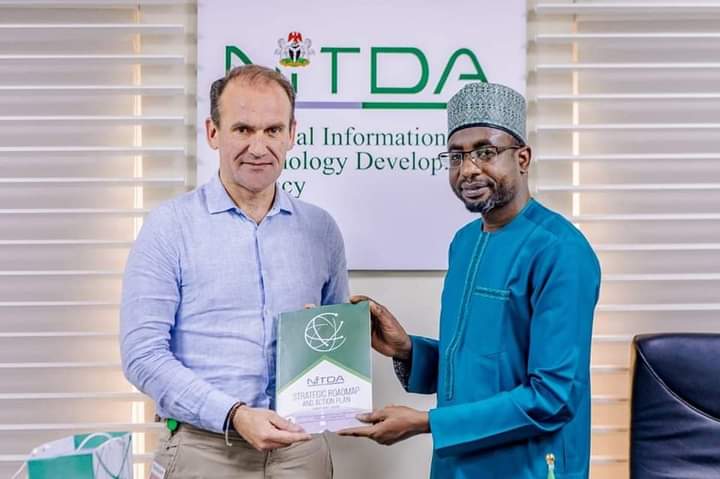
The Director General, National Information Technology Development Agency, (NITDA) Kashifu Inuwa, CCIE, has said Nigeria has a competitive advantage to continue positioning itself as the global talent factory in the areas of technology, sports, music, and movie industries.

Inuwa made this known when he received the Chief Executive Officer, (CEO) of Outsource Global, Ms. Amal Hassan on a courtesy visit to the Agency’s Corporate Headquarters, in Abuja.
The visit was aimed at partnering with NITDA in the area of digital economy policies and initiatives, and to work with NITDA to actualise the rebranding of the country.

While assuring the team of the Agency’s maximum cooperation, Inuwa noted that NITDA is one of the Federal Government’s Agencies in charge of implementing National Digital Economy Policy and Strategy (NDEPS). According to him, the Agency wishes to partner with Outsource Global in achieving the needed result in Nigeria’s digital space.

He reminded the visitors that NITDA was established in 2001 to help with the integration of IT into Nigeria’s system noting that at that time, less than 500,000 Nigerians have access to computers with ICT’s contribution to the nation’s Gross Domestic Product, (GDP) less than 0.5 percent.

However, today, according to Inuwa, more than 100 million Nigerians have access to internet and computers because “our mobile phones are computers and with improved contribution of ICT to the tunes of 18.44 percent to the GDP; almost twice than what oil and gas were contributing to Nigerian GDP, because the latter contributed about 8 percent.”

He added that NITDA was calibrating to transform the Agency and the sector to position Nigeria in the global digital economy map, create and capture value, and become the superpower in Digital Economy.

He said “Outsourcing is the greatest idea in which critical stakeholders, and influential mindsets people have to listen and look into collectively for making Nigeria a strong Digital Economy nation, and working with the tech ecosystem, and listening to them would help stimulate the growth of the tech ecosystem.”

“To believe in the eecosystem, everyone has his own role and responsibilities, and the government’s responsibility is to intervene in terms of infrastructure, policies, and regulations,” he added.

Inuwa reiterated that Nigeria has a brighter future when it comes to Business Process Outsourcing.

In her remarks, the CEO of Outsource Global, Amal Hassan and her counterpart, Ben Faes described the visit as timely considering the warm reception and sharing of ideas on the partnership with NITDA.

She underscored the importance of Outsourcing as a subsector that offers employment opportunities to thousands of people globally.

She concluded that Outsourcing Global would tap from NITDA’s wealth of experience to rebrand Nigeria as a world-class ICT destination.


In furtherance of its digital capacity building initiative, the Federal Government of Nigeria has entered into partnership with Coursera, a global online digital skills acquisition platform, to empower twenty four thousand Nigerians with digital and developer skills in various fields over a three year period.

Declaring the training open on behalf of President Muhammadu Buhari (GCFR), today Wednesday, October 19, 2022, the Honourable Minister of Communications and Digital Economy Professor Isa Ali Ibrahim (Pantami), noted that “we are championing a paradigm shift of prioritizing hard, soft and social skills over theory and this collaboration will go a long way in supporting this shift. Coursera is one of the world’s top online learning platforms hosting thousands of courses for some of the best universities and companies, and has remained at the forefront of providing the global society with the education and resources it needs to build and maintain digital systems”.

Professor Pantami also reiterated government’s commitment to ensure that the nation’s citizenry is digitally empowered and properly positioned for the fourth industrial revolution. “The recent Memorandum of Understanding (MoU) entered into, with Microsoft to train five million Nigerians in various fields of technology, is part of government’s efforts to fulfill the requirements for digital transformation as laid down in the Nigeria Digital Economy Policy and Strategy (NDEPS) document.”

While expressing delight over the partnership, the Honourable Minister called on Coursera to expand its presence in Nigeria and especially in the academia where it already has an existing partnership with Covenant University.

“Coursera is in partnership with Covenant University which is one of the best private universities in Nigeria based on their annual rankings and publications which I have keenly observed. I have no doubt that this partnership has had a huge impact on the institution’s excellent standing. I therefore request that Coursera engages more academic institutions, at least one, in each geo-political zone and bring their expertise to bear within the identified environments.”

The Federal Government of Nigeria, through the Federal Ministry of Communications and Digital Economy, is spearheading this collaboration under the auspices of the National Information Technology Development Agency (NITDA).

Uwa Suleiman


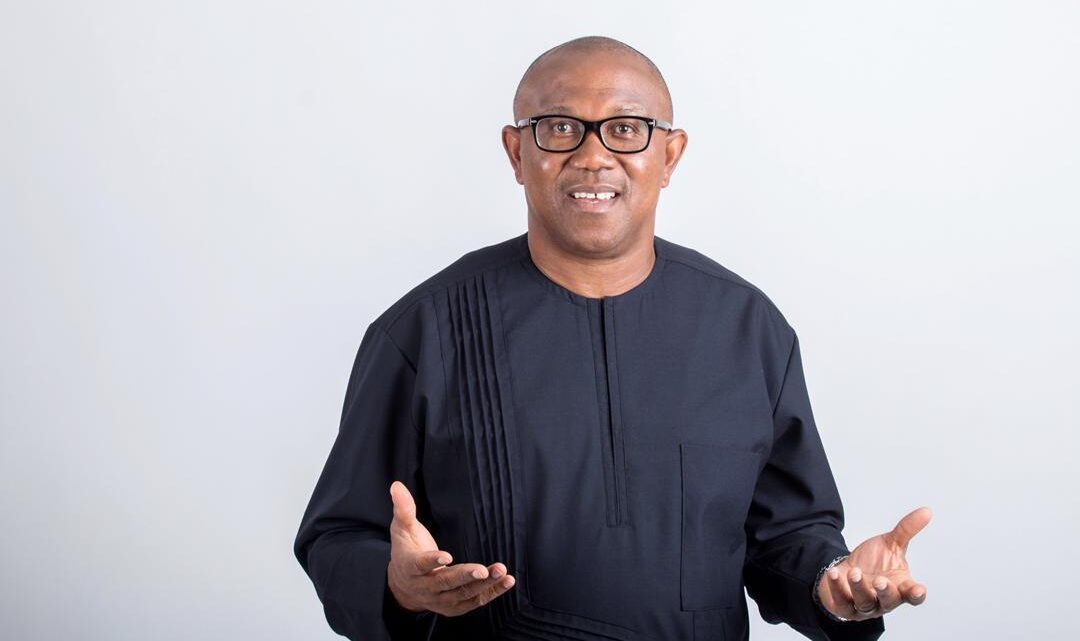
The Arewa house engagement just gave Mr. Peter Obi the best platform to engage with the northern elite, assuage their fears, show his candor and clarify all the fake stories about him. Mallam El Rufai’s attempt to muckrake him actually fell flat and gave Obi an opportunity to rise and shine more brightly. Obi’s plan for agricultural revolution in the north excited everyone so much that even I began to look towards investment in the north if Obi wins.

The engagement also revealed that Obi’s popularity is not only amongst churches and southerners. The man exhumes honesty, humility and courage. The applauds and excitement as he walked into the hall showed that the north has been following on social media unlike what Atiku said. As a show of strength and affinity, he almost walked round the hall shaking hands as almost everyone wanted to shake hands and take photos. The hall almost became rowdy as the organizers quickly started the national anthem so everyone will stand in one place.

Then when the time came to mount the podium. Obi gave the speech of his life. He spoke from the heart. As usual he didn’t read from any script . He even went far by exposing northerners whom he had worked with in the past. From the northerner who nominated him to be chairman of Fidelity bank, to the biggest rice mill in the north which he financed. He talked about his ADC who was from Kano and bonded with him like a brother. He called El Rufai his brother but went ahead to expose that El Rufai clearly lied against him.

But he wasn’t propitiating. He went ahead to tell them how poor the north has become over the years. He told them that they had the biggest out of school children. He linked the poverty, un-education and unemployment in the north to the insecurity and clearly stated how it will be addressed in clear measurable steps.

He told them that the north versus south and Muslim versus christian dichotomy was a strategy of the elite to subjugate the people and keep them poor. He gave instances of places like Dubai where an Emir built the biggest church and England where the Christian queen built the biggest Mosque.

He talked about IPOB and how he will treat all agitators. He responded to the allegation of giving northerners ID cards by challenging them to produce just one ID and he will stop campaigning.

The audience were held spellbound and the applause kept thundering.I’m beginning to wonder how Peter Obi won’t win this election with a wide margin. The man has gradually sold himself to the north.

But on the other hand, Bola Tinubu just lost the 2023 election completely at the Arewa house. The northerners are wise. They wanted to see the candidates one on one and feel them.

Bola Tinubu clearly showed the opposite, The hall looked like a hall filled with people listening to a dirge. He struggled to hold the papers that his aides kept sending to him. You could see that those around him were bored silly. One or two people struggled to clap,.  Then he gave a lot of unrelated anecdotes and proverbs . Which one is Idioms and synonyms? What has Almajiri system to do with a good banana without the peel? What is financing got to do with skinning a cat ? What was he even saying about holy communion and poison in a question about climate change?


Ken Agala


Then when the time came to mount the podium. Obi gave the speech of his life. He spoke from the heart. As usual he didn’t read from any script . He even went far by exposing northerners whom he had worked with in the past. From the northerner who nominated him to be chairman of Fidelity bank, to the biggest rice mill in the north which he financed. He talked about his ADC who was from Kano and bonded with him like a brother. He called El Rufai his brother but went ahead to expose that El Rufai clearly lied against him.

The amount of data we produce, distribute, and consume in our professional and social lives is ever increasing. But it’s all too easy, particularly for non-technologists, to forget that the remorseless increase in data processing and distribution can also lead to a remorseless increase in power consumption.


This dilemma is illustrated by data centres. They are the engine of the compute growth that informs, educates and entertains the world, and enables collaboration that will help us tackle the challenges of climate change.

But substantial research (bit.ly/3ClQW0x) by the International Energy Agency shows that data centres accounted for 200 to 250 TWh, or one per cent of total world electricity demand in 2020, while data transmission networks – mobile and fixed lined – accounted for 1.1 to 1.4 per cent of worldwide electricity use.

It’s a tribute to the ingenuity of the tech world that, so far, data centre operators and tech providers have managed to hold the line on energy consumption. Data centre energy use has remained fairly constant over the last ten years, even as internet traffic has expanded 15-fold. In 2020 alone, global internet traffic surged by 40 per cent.

But can technology providers maintain this level of efficiency? More and more people are connecting to the internet for work or pleasure, and emerging compute-intensive workloads such as AI or IoT are ever more demanding.

Indeed, can technology vendors take the initiative, and support these ever more demanding workloads, while simultaneously making data centres and networks more efficient, and reducing energy consumption down in the process?

At MWC in Barcelona this month, Huawei explained how the company is enabling providers and operators to meet these more demanding use cases, and process and deliver ever more data, while driving down energy consumption at the heart of the data centre, and beyond.

One way to reduce power consumption within the data centre is through the use of all-flash storage, and the all-flash storage market is forecast to grow 7.6 per cent this year according to IDC. With fewer moving parts, and higher density, SSDs require far less power – and cooling – than their traditional mechanically based hard disk forebears and are considered more reliable. Moreover, they are also more efficient from a data point of view, reducing access latency by half to 0.05ms, for example, and potentially increasing backup speed by a factor of three.

Less power, in a flash

And when it comes to the AI driven workloads that are imposing an increasing strain on data centres, Huawei’s all-flash OceanStor Dorado (bit.ly/3CNL9Bg) can improve algorithm efficiency by 60 per cent.

The platform offers both SAN and NAS, with built-in ransomware detection and protection, and delivers 30 per cent higher performance on small files and blocks. The result is higher utilisation of CPUs, helping boost overall compute efficiency within the data centre.

One way to reduce power consumption within the data centre is through the use of all-flash storage

But innovation within the data centre’s storage racks alone won’t solve the problem of increasing power consumption within the data centre. Networking too is an essential, and power hungry, element within the data centre, and beyond. And the data centre is just one component of the cloud, and the overall digitalization equation.

Huawei also used MWC to highlight its CloudFabric 3.0 strategy, which aims to reduce packet loss across networks. At the same time, the platform’s intelligent algorithms reduce opex by up to 30 per cent. Reduced opex results in less resources wasted. The result is an SDN architecture which industry consultants Tolly declared delivers the highest level of autonomous driving (prn.to/3SmAOlj) in the industry.

Meanwhile, Huawei’s CloudWAN 3.0 technology, based on its NetEngine 8000 F8 routers, unveiled at MWC, enables the construction of experience centric IP production networks and office services. The platform launches with forwarding capability of 2Tbps, which will increase to 6.4Tbps in the future. But it also features two patented technologies – SRU warm backup and a rectifier circuit – which help to deliver a 30 per cent reduction in power consumption.

The Cloud Campus 3.0 solution (bit.ly/3eJo3Ui) enables further efficiency, with its “concise structure” reducing the classic three layer model of access, aggregation and core, to just two, access and core. By transforming the access switch into a highly flexible, remote extension Huawei delivers an 80 per cent reduction in equipment management nodes.

Rectifying the power dilemma

The architecture also features Power over Ethernet technology, allowing power to be delivered to terminals over data lines. With each port requiring less than a 1W of power, overall energy consumption is reduced by 30 per cent compared to the industry average. In a campus with 2,000 unit users, that equates to a 23,800 kWh saving Huawei’s figures show. Resources are further preserved, with the PoE optical fibre network being maintenance free for 15 years.

You could think of Huawei’s vision of the Intelligent Cloud Network as the “Power Grid” of the digital world, supplying “digital” efficiently, 24 x 7. While simultaneously reducing the load on the actual power grid.

Looking even further afield, Huawei’s Fiber To The Office (FTTO) (bit.ly/3TlhHJS) and Fiber To The Machine (FTTM) solutions enable the new generation of industry 4.0 applications, such as smart factories, while again, working hard to increase efficiency.

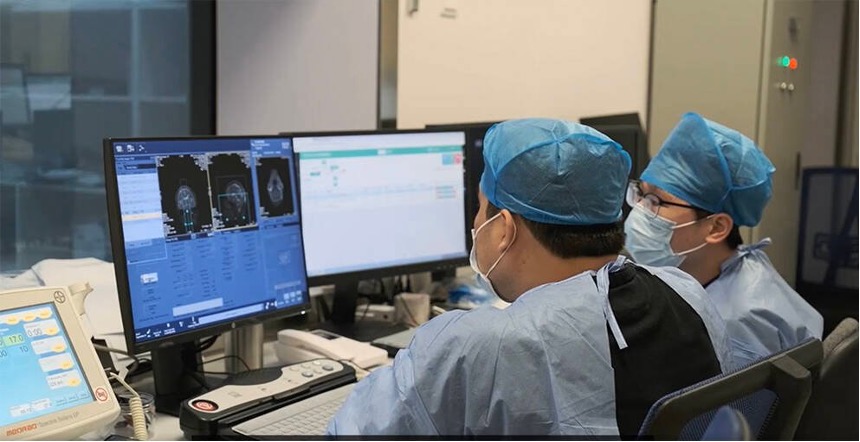
For example, at MWC, Huawei showed how a smart healthcare network project at the Union Shenzhen Hospital delivered 10Gbps coverage, and reduced the number of O&M nodes by 60 percent, while 1000 CT images can be uploaded and downloaded within one second.

Huawei illustrated how the use of FTTM again rationalises the architecture in oil field operations from over 10 layers to just three and combines blistering speeds with secure data collection and intelligent management. Again, this reduces network maintenance costs by up to 70 per cent, while allowing unattended operations across a field of over 60,000 oil wells, all over a single network.

The architecture is similarly applicable to other heavyweight applications such as port management, power infrastructure, and metro transit. Huawei highlighted the application of its FTTM technology in a metro network, which resulted in an 80 per cent reduction in ELV room space, and a 90 per cent reduction in cabling space, while delivering network reliability of 99.999 per cent.

These are just some of the examples Huawei demonstrated at MWC this year. At the event, Huawei showcased how it supports customers in implementing innovative solutions and practices, from government and public sector through finance, transportation, energy, manufacturing, and of course, ISPs. In every scenario, Huawei focuses on reducing carbon emissions, which means that whatever customer problem the company is helping to solve, it also helps solve the biggest problem facing us all.

To go further in depth on how Huawei is changing the data centre, and the industries that rely on it, check out Huawei Enterprise at Huawei Connect 2022 (bit.ly/3VD4I85).

Canon (https://www.Canon-CNA.com) today announces that PRINTING United Alliance has recognised the quality of its large format graphics technology with three Pinnacle Product Awards for its Colorado 1630 UVgel roll-to-roll printer and its Arizona 2380 GTF and XTF flatbed printers, as well as a Pinnacle InterTech Award for its Canon FLXfinish+ technology. Each of the 160+ entries in more than 58 categories, spanning analogue, digital, output and non-output technologies, was reviewed by an independent panel of over a dozen judges made up of distinguished decision makers within the printing industry.


Three Pinnacle Product Awards 2022

Canon products have won Pinnacle Product Awards in the following categories for 2022:

  • Colorado 1630 winning best Roll-to-Roll UV (under 80 in.)
  • Arizona 2380 GTF winning best UV/Latex Flatbed ($200K-500K)
  • Arizona 2380 XTF winning best UV/Latex Flatbed +White ($200K-500K)

Raymond Weiss, Vice President, eLearning and Certification, PRINTING United Alliance, comments, “This juried competition represents the best of the best among commercial hardware, software, consumables, and industrial and screen equipment, and judges are basing their decisions on objective criteria. Some of the categories were decided by tenths of a point—so fierce was the competition this year—and with outstanding entries like the Colorado and Arizona, the judges certainly had their work cut out for them.”

The Canon Colorado 1630 is a 64 inch, roll-to-roll printer that features Canon’s unique UVgel ink technology, combining excellent print quality, best-in-class productivity and expansive application versatility with low cost of ownership. Combining all the media handling and printhead management automation of faster models with modularity of design, the Colorado 1630 allows users to add features as required, keeping the initial cost of acquisition low without sacrificing capability.

Freeing operators to add value in other areas of the business, the Arizona 2380 GTF features award-winning Arizona FLOW technology for zoneless media constraint on the flatbed table. Printing at speeds up to 89 m2/h (958 sq. ft/hr) and with eight colour channels employing Light Cyan, Light Magenta, White and/or Varnish, the Arizona 2380 GFT is capable of handling the most demanding mixed media applications. The 125 x 250 cm (49.2 x 98.4 inches) flatbed table is large enough for most rigid media applications and the available Roll Media Option extends its capability to flexible media up to 220 cm (86.6 inches) wide.

We’re delighted the Arizona and Colorado models and the Canon FLXfinish+ technology have been recognised by PRINTING United Alliance for their innovation

The Arizona 2380 XTF also features Arizona FLOW technology and eight colour channels but offers increased print speeds up to 95 m2/h (1,023 sq. ft/hr). Its key feature, however, is its massive 308 x 250 cm (121.3 x 98.4 inch) flatbed table, which is large enough to accommodate two 122 x 244 cm (4×8 ft) boards simultaneously for continuous printing of most rigid media applications without stopping for media changes. The Roll Media Option also extends its capability to flexible media up to 220 cm (86.6 inches) wide.

Pinnacle InterTech Awards 2022

The Pinnacle InterTech Awards recognize significant new technologies that improve or advance the printing industry with exceptional contributions in quality, capability, and productivity, and are predicted to have a major impact on the printing industry.

The following Canon technology has won Pinnacle InterTech Award for 2022:

  • Canon FLXfinish+, which in the opinion of the judges “represented a new revolutionary and unique feature of UVgel technology”

The new Canon FLXfinish+ technology features in its award-winning range of Colorado printers, powered by Canon’s unique UVgel inks. FLXfinish+ is a unique UVgel feature that allows large format graphics customers to use only one ink set to produce matte prints, gloss prints and mixed matte and gloss on the same print, independent of the media – without a varnish or additional consumables.

Combining the best aspects of alternative ink technologies in one, UVgel offers the colour gamut and light fastness of eco-solvent, the fit-for-indoor use and quick drying time of latex and the productivity and low-temperature printing process of UV. And with customers benefitting from zero VOC emissions, zero hazardous air pollutants and a low average ink usage of 6.4ml/m2 across the more than 2,500 UVgel engines installed worldwide, UVgel has already proved itself to be a sustainable and cost-efficient alternative for latex and eco-solvent technology.

Eiji Ota, Business Unit Manager, Canon Central & North Africa comments, “We’re delighted the Arizona and Colorado models and the Canon FLXfinish+ technology have been recognised by PRINTING United Alliance for their innovation. These awards exemplify our continued commitment to developing innovative technology and help print service providers find new ways of tackling the challenges and tapping into the opportunities of the growing large format graphics market.”

To find out more about the Colorado UVgel printer family, visit:

 https://bit.ly/3EV3oqW/ or https://bit.ly/3MJ8KHT

To find out more about the Arizona family, visit:

https://bit.ly/3F0NTxN or https://bit.ly/3TxCs5n


Now Integrates Telemetry from Third-Party Endpoint, Firewall, Cloud, Identity, Email, and Other Security Solutions with Sophos Adaptive Cybersecurity Ecosystem for Improved Threat Detection and Response


Sophos, a global leader in innovating and delivering cybersecurity as a service, today launched new third-party security technology compatibilities with Sophos Managed Detection and Response (MDR) to better detect and remediate attacks with speed and precision across diverse customer and operating environments.


The industry-leading service with more than 12,000 customers now integrates telemetry from third-party endpoint, firewall, cloud, identity, email, and other security technologies as part of the Sophos Adaptive Cybersecurity Ecosystem.


“The complexity of modern operating environments and the velocity of cyberthreats make it increasingly difficult for most organizations to successfully manage detection and response on their own, and the need for always-on security operations has become an imperative,” said Joe Levy, chief technology and product officer at Sophos. “As with a shield, cyber-risk mitigation technology can aid in defense, yet unless you use that protection to react, the system will eventually fail; a determined attacker will eventually defeat technology alone. Our teams of experts can now detect and remediate threats across a broad range of environments, including complex, multi-vendor scenarios, before those threats turn into something more damaging, like ransomware or a wide scale data breach. MDR is often the difference between defense success and failure in real-world situations.”


Sophos MDR is now compatible with security telemetry from vendors such as Microsoft, CrowdStrike, Palo Alto Networks, Fortinet, Check Point, Rapid7, Amazon Web Services (AWS), Google, Okta, Darktrace, and many others. Telemetry can be automatically consolidated, correlated and prioritized with insights from the Sophos Adaptive Cybersecurity Ecosystem and the Sophos X-Ops threat intelligence unit. Sophos MDR’s expansive set of third-party security integrations is enabled by technology that Sophos acquired through SOC.OS in April 2022.


Leveraging bespoke data processing and correlation techniques across this broad set of telemetry, the Sophos MDR operations team is able to quickly understand the who, what, when, and how of an attack, and is capable of responding to threats across customers’ entire ecosystems within minutes. The Sophos MDR operations team can also use third-party vendor telemetry to conduct threat hunts and identify attacker behaviors that evaded detection from deployed toolsets.

“The approach that many cybersecurity technology providers have taken with their Extended Detection and Response, and their resulting MDR offerings, is to focus on integrating only their own proprietary hardware and software products, resulting in a closed and limited ecosystem offering. The challenge of this approach is that attributes of existing IT architectures may not be negotiable, given the realities of commercial contracts, technical debt or IT complexity,” said Frank Dickson, group vice president for IDC’s Security and Trust research practice. “By expanding its MDR offering to include compatibility with third-party cybersecurity products, Sophos is delivering a more technology-agnostic managed service that truly meets customers where they are and the realities they are forced to embrace.”


Sophos MDR is customizable with different service tiers and threat response options. Customers can choose whether to have the Sophos MDR operations team execute full-scale incident response, provide collaborative assistance for confirmed threats, or deliver detailed alert notifications for their security operations teams to manage themselves.


“Sophos is the leading cybersecurity-as-a-service provider because of its focus on compatibility, accessibility and driving tangible business outcomes,” said Jeremy Weiss, executive technology strategist at CDW. “Unlike many MDR services in the market today, you don’t have to make any compromises with Sophos – you can keep the cybersecurity tools you already have in place, choose what level of support you need, and what outcomes you want to achieve. Sophos is setting a new standard for how MDR should be delivered, and I won’t be surprised when other providers follow in its footsteps.”

Availability

Sophos MDR is available now through Sophos’ global channel of reseller partners and Managed Service Providers (MSPs).


…To address insecurity during the festive period

The General Officer Commanding (GOC) 81 Division Nigerian Army Major General Obinna Ajunwa has flagged off ‘OPERATION STILL WATERS’ in Lagos and Ogun States to address insecurity during the festive period.

Major General Ajunwa during the flag off of Exercise STILL WATERS at Foru Terminal Ikorodu Road Ojota Motor Park, Lagos State stated that the whole idea of the Exercise was to assess troops in various aspects of leadership, CIMIC, critical knowledge of maneuver, and its application as well as command and control in Military Operations Other Than War in a multi-agency setting. The GOC noted that the Exercise would provide a good opportunity for conducting joint operations with other Services and relevant security agencies to strengthen inter-agency cooperation for the efficient conduct of operations in aid of civil authority.

General Ajunwa disclosed that the Exercise will be based on the Nigerian Army Forward Operating Base Concept and will involve Civil Military Cooperation activities as well as media operations. In his words, the objective of the exercise among others is to reduce to the barest minimum the prevailing security threats in the riverine environment such as piracy, illegal oil bunkering activities, pipeline vandalism, cultism, militancy, terrorism, and some other common sundry crimes. He added that the Exercise will be intelligence-driven and will dovetail into real-time operations at any moment a potent threat is encountered.

The GOC assured that the waterways would also be secured because there would be military gunboats on patrol and soldiers would be deployed to water banks and jetties across Ogun and Lagos States.

Also speaking at the event, Commander 9 Brigade Brigadier General Isangubong Akpamoutia stated that a recent intelligence report revealed an unprecedented wave of criminals within our environs who have taken over some communities to perpetuate their criminal acts. He disclosed that despite efforts of security agencies, these criminal elements have continued to engage in criminal activities such as kidnapping, banditry, militancy, cultism, and other crimes within the city of Lagos. He disclosed that given this, the Brigade is tasked to conduct this exercise to curtail these criminal activities in conjunction with other Sister Services and security agencies as the yuletide approaches.

The commander 9 Brigade similarly noted that, the exercise will involve the physical deployment of troops to the field where they would conduct real-time patrols against criminal elements within the environment. Moreover, the exercise would test the unit and sub-unit commanders in battle procedures and decision-making processes regarding the employment of weapons and assets in internal security operations. It will also test the ability of troops to communicate skills and communication security in an operational environment. “This exercise will also expose commanders to levels of service support available to them at the tactical level for Operations, among many other things,” General Akpaumontia said.

The highlight of the Flagged off Exercise included a guided tour of the GOC and other guests around the Exercise area, a symbolic flag-off of the Exercise, and the conduct of Medical outreach at the Ojota Motor Park.


Governors Assemble for Broadband Awareness Forum


All Nigeria State Governors are set to discuss how to empower the citizens with latest telecoms technologies as they partake in the maiden edition of Broadband Technical Awareness Forum for Governors, BTAF, put together by the Nigerian Communications Commission, NCC, and slated for Thursday in Abuja.

The programme, which takes place at the Congress Hall of the Transcorp Hilton, Hotel in Abuja on October 20, 2022, and themed: “State Broadband Coordinating Councils: Potentials and Possibilities”, will appraise the Nigerian National Broadband Plan (NNBP) 2020-2025, which targets 70 per cent broadband penetration and to cover 90 per cent of the population.

With the Minister of Communications and Digital Economy, Prof. Isa Ali Ibrahim Pantami, playing host to the historic and seminal assemblage of governors under the auspices of the Nigerian Governors Forum (NGF), some strategic members of State Executive Council, telecom operators, infrastructure companies (InfraCos), strategic partners, investors and other critical stakeholders, will brainstorm on how Nigeria can achieve the expectations of the Nigeria’s digital economy agenda.

Board members of the NCC, led by the Chairman, Prof. Adeolu Akande, and the Executive Vice Chairman and Chief Executive Officer (EVC/CEO) of the Commission, Prof. Umar Danbatta, will participate at the BTAF, whose overarching objective is to promote the establishment of State Structures required for sustainable broadband infrastructure development at the State and Local Government Council levels, thereby addressing hindrances to the Federal Government’s drive to achieve available, accessible and affordable broadband services for Nigeria’s economy.

The Forum is expected to affirm the commitment of the government to adopt broadband structure and last-mile projects, particularly the economic viability of broadband deployments beyond the cities, with a strategic focus on funding models and procedures for remarkable and measurable impact. There will be a special panel session involving the Governors and development-focused partners both at local and international levels.

The Shared Prosperity Administration led by Senator Hope Uzodimma has visited and assisted the flood displaced victims in Ohaji/Egbema and Oguta with relief materials, funds and food items through the Imo State Oil Producing Areas Development Commission (ISOPADEC).
On arrival, the Deputy Governor, Professor Placid Njoku, the ISOPADEC GM, Chief Charles Orie, Minister for State Education, Hon. Nana Opiah and a host of other officials, were received by the Traditional Rulers of the affected communities with the victims of the flood respectively.
Speaking at the outreach, the GM/CEO Imo State Oil Producing Areas Development Commission (ISOPADEC), Chief Charles Orie expressed sympathy on the tragic incident of flooding in the communities.
He disclosed that Governor Uzodimma in his magnanimity has released funds and palliatives of Bags of 50kg rice, mattresses, pillows, cooking condiments, drinking water, and more.
According to Chief Charles Orie, the Governor insisted that every affected victim must *be* fed daily with hot meals until they return to their homes.
Speaking earlier, the Deputy Governor who represented the Governor, consoled the flood victims, added that Government is doing more to cushion such natural disasters.