
The electronic commerce (e-commerce) market in South Africa has exploded and is expected to continue growing exponentially in the next few years. However, online retailers will not only have to refine their digital strategies, but they will also have to up their security measures, says Gur Geva, Co-Founder and CEO tech innovator, iiDENTIFii.


South Africa is only the 41st largest market for e-commerce with a revenue of $5 billion (R75 billion at average rate of $15) in 2021. It is expected to grow 8% annually between 2021 and 2025, surpassing the global average of 6%, according to ecommerceDB. Major global players have shown great interest in the South African market, notably the recent entry of Amazon – who also see this as a gateway into Africa.


“We believe every single person will eventually have to be biometrically authenticated to be able to transact online. This is not only to protect them, but also the organisations they are transacting with. There is a huge increase in online fraud by dishonest customers as well as by organised crime syndicates,” says Geva.


Digital strategy

Many of the large retail chains  are compelled to increased their online footprint to remain competitive, and need a sophisticated digital strategy to compete with the likes of Amazon. Currently, the biggest player in the South African e-commerce market is takealot.com. The online store had a revenue of US$602 million in 2021. It is followed by superbalist.com and woolworths.co.za as the second and third largest stores with US$85 million and US$57 million, respectively. Estimates suggest that the top three stores account for only 15% of online revenue in South Africa.


Online security is still broadly considered to be in its infancy in South Africa and very few retail chains have strong identity authentication measures in place. “The lack of sufficient knowledge about the person or organisation you are transacting with is a serious threat in e-commerce. The uptake in digital identity authentication has been quite slow relative to the exponential increase in online transactions,” says Geva.


“The main reason behind this slow uptake is the lack of proper regulations for e-commerce verification keeping up with the increase in transaction volumes. Added to this was the impact of Covid, which forced people to transact online.


“The financial sector, however, has made giant leaps with the implementation of enterprise-grade remote digital biometric identity authentication solutions.”


This is because of strict know-your-customer (KYC) regulations to combat identity theft, money laundering and terrorist financing. It is only a matter of time before identity authentication will become more regulated in the retail space.


Better protection

Some companies are gearing up already for stricter regulations by aggressively seeking out various authentication technologies and solutions. iiDENTIFii says account hijackings, identity fraud and data breaches continue to become more prevalent.


Account hijackings (also known as account takeover fraud) are when fraudsters or criminals pose as genuine customers to gain control of an account and then make unauthorized, fraudulent transactions. In the US alone reported cases increased by 90%, costing an estimated US$11.4 billion in 2021 compared with 2020. Around 22% of US adults have fallen prey to account takeover fraud scenarios.


Preferred partner

Biometric face authentication helps organisations to prevent account takeover fraud, says Geva.  iiDENTIFii recently raised US$15 million (R272 million) in growth capital which will be used to fund the company’s expansion across Africa.


“We’re excited to put the investment to work as we close in on our goal of authenticating every face in Africa. We confidently continue our mission of stopping identity theft in Africa,” says Geva.


The investment, led by African investment company Arise, validates the company’s central business thesis that it remains the preferred partner for enterprise-grade identity authentication in Africa. Other investors alongside Arise are private equity firm Sanari Capital and US tech entrepreneur Bill Spruill.
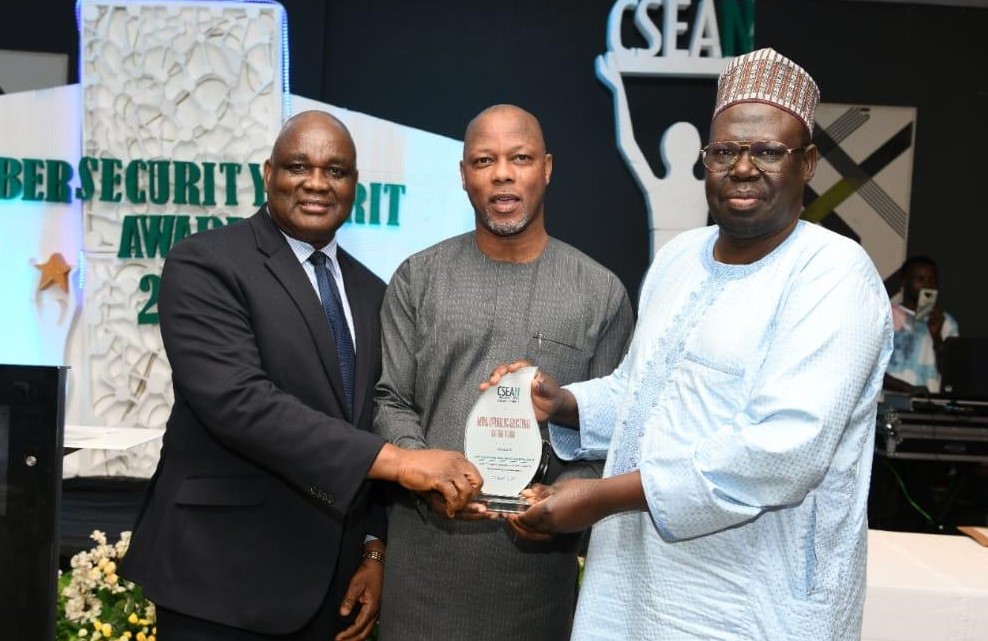

The Nigerian Communication Commission (NCC) at the weekend received a cybersecurity promotion award from the Cybersecurity Experts Association of Nigerian (CSEAN) and called on relevant stakeholders to join hands with NCC to promote safer Internet experience in Nigeria.

The award was conferred on the Commission in recognition of NCC’s sterling contributions to the protection of telecom consumers from all forms of cybercrimes. The conferment ceremony took place at the maiden edition of Cybersecurity Merit Awards (CMA-2022) organised by CSEAN in Lagos.

Receiving the 2022 Cybersecurity Award for Best Public Sector Organisation at the event, the Executive Vice Chairman of NCC, Prof. Umar Danbatta, who was represented by a delegation led by the Director, New Media and Information Security (NMIS), Dr. Alhassan Haru; and Director, Public Affairs, Mr. Reuben Muoka, thanked the orgainser for the recognition.

He told the audience that tackling the menace of cybercrime in the country has become even more imperative as the success of the implementation of digital economy policy and strategy depends on a strong foundation of cybersecurity architecture in Nigeria.

Danbatta said one of the key pillars of the National Digital Economy Policy and Strategy (NDEPS) 2020-2030, is Soft Infrastructure, which is premised on harnessing policy and regulatory initiatives to create an enabling environment that focuses on increased protection for users of digital products and services in the country. “The Commission is committed to ensuring that the Nigerian cyberspace is protected against the nefarious activities of cybercriminals that endanger unsuspecting Internet users in the country,” he said.

The EVC said it is in recognition of the strategic role the cyberspace plays in the advancement of digital economy that the Commission created NMIS department in charge of several activities, initiatives and programmes pivoted on collaboration to enhance cybersecurity and information security in the Nigerian cyberspace. “We have continued to be part of the Internet Governance Forum (IGF), promote Child Online Protection as well as create awareness on cyber threats through the NCC’s Computer Security Incidence Response Team (CSIRT), which constantly monitors the cyberspace and publishes advisories on identified cyber threats,” the EVC said.

Danbatta said as the regulator of telecom sector, the main carrier of cyber communication, the NCC has leveraged NDEPS to work with relevant stakeholders to create an enabling environment where Internet users are able to navigate the cyberspace without being abused, attacked or losing money. The Chief telecom regulator appealed to all stakeholders to join hands with the Commission in tackling every manifestation of cyber threat.

The CMA 2020 is organized to recognise individuals, startups, private businesses, Ministries, Department and Agencies (MDAs) of government, as well as state governments for excellence, innovation, and effective leadership in promoting cybersecurity ecosystem in Nigeria.


Transport Union 7 Days Strike looms in Lagos!

Lagos State Commercial Drivers Threaten Seven-Day Mass Protest Over Multiple Extortion By Parks, Garage Managements

The drivers lamented that despite their dedication to their work, they had been subjected to indiscriminate extortion, violent harassment by the management.

Commercial drivers in Lagos State under the aegis of the Joint Drivers Welfare Association of Nigeria (JDWAN), have threatened to embark on seven days protest and boycott of services across the over multiple and excessive extortion by the management of parks and garages in the state.

The association in a statement by its National Leader, Akintade S. Abiodun; Chairman, Opeyemi Sulaiman; General secretary, Ajimatanarareje A. Feyisayo and Assistant Secretary, Taofik Hassan, scheduled Monday, October 31, for the commencement of the protest, as it instructed its members to adhere to the instruction.

The drivers lamented that despite their dedication to their work, they had been subjected to indiscriminate extortion, violent harassment by the management of state transport agencies, motor parks and garages and Lagos State caretaker committee.

The statement read, “This is to notify members of the public and the Lagos state government over multiple and excessive extortion by the motor parks and garages management.

“The cost of transportation affects cost of goods and services and consequently the cost of living, which has spiraled astronomically in Lagos State as a result of the effect of motor parks excessive and illegal ticketing and tolling at almost every bus stop.

“We have been sentenced to the extortion and violent harassment of the state transport agencies – Lagos State motor parks and garages management and Lagos State caretaker committee.

“On a daily basis, we lose half of our income to the motor park boys. We pay exorbitant charges in the garages and at every bus stop where we drop off passengers, whether we pick up passengers or not, we pay morning, afternoon and night. Some routes have 25 bus stops which also serve as illegal tax collection avenues.

“We crave the indulgence of the public to go through the meticulous breakdown of this unprecedented level of extortion we go through below:

“From Badagry to Mile 2, we pay N3,500 & N5,000 naira apart from 25 illegal tolling/ticketing by motorpark hoodlums who collect two to three hundred naira per bus. From Seme in their park, they do collect N7,100 in the morning before loading our buses yet we are still subject to illegal collection on the highway.

“On Federal Mass & Coaster, we pay over N12,000 on each trip from Oko Afo to CMS or to Oyingbo, which includes loading charges and illegal payments at several bus stops till we get to our destination.

“From Ogijo to Ikorodu, we pay over N5,500 per day. Garage Ticket N850, Chairman ticket N1,700, King’s levy N200, Ita Oluwo N500, Odo Gunyon N1,200, Ile Epo Oba N200. We also pay N900 for passIng by whether you pick up a passenger or not.

(At Ikorodu Roundabout we pay N1,000 in the morning and afternoon and we pay N500 in the evening which makes it N2,500. At Benson Bus Stop we pay N900 for a whole day, loading at N300 each for morning, afternoon and evening.

“At Agric Bus Stop we pay N200 to 8 motor park thugs. It is called welcome to Agric tax. When we stop to load for passengers at the agric bus stop we pay an extra N300 which isn’t part of the N1,600 welcome to Agric tax. When we get to Aunty Kenny bus stop we pay N200 before buying Lagos state ticket for N500.

“”At Ogolonto bus stop we pay N100. At Mile 12 bus stop we pay N500 for plying the expressway and N1,000 for plying service lane (for buses enroute Yaba oyingbo). Mile 12 to Ojuelegba buses pay N1,500 while red coaster buses pay N2,000.

“Red buses from Ikorodu to Oshodi pay N5,000 to motor park boys in the morning and afternoon. At Ketu bus stop we pay between N600 to N1,000 depending on the size of bus for just dropping off passengers or picking up any single one. For buses plying Yaba to Ikeja, we pay N200 at Jibowu bus stop, total bus stop N100, Fadeyi N100, Onipanu N200, Elediye N200, Palmgrove N200, Anthony N100, Ikeja N200 – total N1,300.

“On our way back to Yaba, Palmgrove & Onipanu is N500, Fadeyi & Total N500, Yaba N200 with LASG N800 ticket making it a total of N3,300 in the morning alone. We pay N2,000 each in the afternoon and evening, which makes a total of N7,300 daily. Korope plying lyana Iba-Okoko to Agbara are paying N5,000 per day to motor park boys without the extra LASTMA & Police Department & Lagos Task Force daily extortion.

“When we resist the extortion, we get arrested and pay N10,000 for bail to the police while the motor park boys go scot free and we also have to bail our buses separately.

“Lagos drivers also pay for entertainment, security, unit chairman’s food and many other ridiculous levies with threat of violence at any slight refusal by the drivers. This is the exact case of the popular parlance on exploitation of labourers, “baboon dey work and monkey dey chop”.

“Lagos commercial drivers work like elephants and eat like ants while the urchins under the aegis of motor park workers take a large chunk of our earnings. We can hardly fulfill our contractual obligations with our business partners, feed our family or afford maintenance or repair of our vehicles.

“Our demands are: No to charging drivers three passengers money after loading in parks or garages, we are demanding it should be one passenger’s money per bus. We demand that only Lagos State government ticket should be the only ticket in Lagos. Others like Lagos State parks & garages management, Lagos State caretaker committee are not acceptable to all drivers in Lagos State.

“We kick against Paying motor park thugs at every bus stop. All illegal money paid after we leave the garages and parks should be abolished immediately. Harassment of law enforcement agencies & intimidation with guns, cutlass, broken bottles by LASTMA, task force and RRS must end immediately. They collaborate and hire thugs to attack and extort us every day without violating any law.

“We have lesser bus stops for commercial vehicles. Most bus stops in Lagos are strictly assigned officially to brt buses only and we get arrested for dropping off passengers at existing bus stops which are known to commuters as official bus stops for decades. We demand that the Lagos State government should provide official bus stops in each community to avoid incessant arrests and stress for commuters who complain of having to trek several kilometres back to their bus stops.

“We call on the Lagos State government to quickly respond to avert the current anomaly. Failure to adhere to these demands will only attract more protest and total boycott, the Joint drivers welfare association of Nigeria (JDWAN) is resolute in pursuing justice by all legitimate and peaceful means available.”

#ForAGreaterLagos

To celebrate the transformative power of blockchain technology, Binance (https://www.Binance.com/), the world’s leading blockchain ecosystem and cryptocurrency infrastructure provider, recently launched the ‘My Crypto Journey’ series, a collection of inspirational stories from Binance users in Africa, showcasing how blockchain and crypto have impacted their lives.


Over the last few years, Africa’s interaction with cryptocurrency has established some of its most important use cases and opportunities for greater financial inclusion for people in the region. To showcase this, users shared their crypto journey and how crypto has changed their lives for the better. Over 1000 users across Africa shared their journeys detailing their experience with crypto.

Ebony, a 27-year-old freelancer in Nigeria shared her experience growing up in a financially struggling African home with very limited means and how she found crypto to be her way out of poverty.

“Crypto has helped put food on my table, and for that, my family and I are grateful”, stated Ebony.

Crypto has helped put food on my table, and for that, my family and I are grateful

Ebony’s journey started in 2018, when she came across a Facebook post explaining how crypto can potentially change the world – this was a defining moment for her as it became the turning point that saw her out of what she describes as a low point in her life. With the post sparking her interest in crypto, she did some research and watched videos on YouTube to better guide her on how to begin her journey into crypto.

From that point, Ebony shared that Binance was “the pivot of her crypto journey.” The blockchain giant is trusted by millions worldwide for its security, speed, and robust selection of innovative features. With the company providing free crypto information (https://bit.ly/3yZcAad) to crypto newbies and enthusiasts alike, Ebony quickly learnt that Nigerians could trade on Binance’s P2P platform (https://bit.ly/3eOI5Nk) to receive naira into their bank accounts directly from the Binance app. Ebony added that she was excited to begin this journey because not only does Binance have excellent customer service, she could trust that her funds were safe as security and user-safety compliance is a top priority for the company.

As I was already impoverished, I took a chance on crypto. It doesn’t matter if I don’t become a millionaire, I just needed a little boost.” – Ebony, 27

Ebony’s life has changed for the better since she discovered crypto. Not only has she escaped poverty, using crypto has also opened her eyes to the limitless possibilities that digital assets offer. As a whole, crypto has elevated her confidence and status in life. Now, Ebony uses her story to motivate others to make use of the financial opportunities crypto offers and helps others along the way.

However, to begin any crypto journey Ebony advises that education is important. She believes that if you keep learning, it will pay off. Not only is Ebony’s journey a testament to the transformative power of crypto, it shows the truly decentralised, accessible nature of the technology.

The lifeline blockchain technology can offer is without borders or limits for Africans whether providing greater financial access, supplementing incomes or helping build lifelines, the technology is enabling financial inclusion for millions.


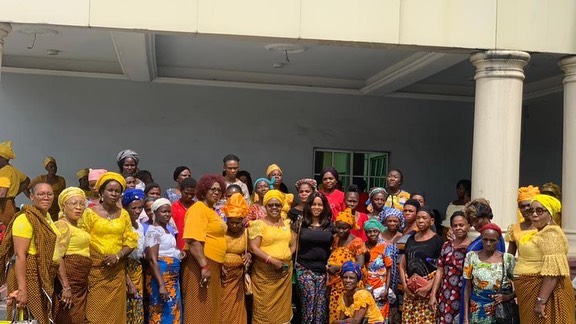
The Shared Prosperity Government of Senator Hope Uzodimma has through the Imo State Oil Producing and Development Commission (ISOPADEC), continue to empower women with soft grants in the Oil Producing communities.

This is in line with the empowerment policy of the Imo State Oil Producing and Development Commission (ISOPADEC) under the Shared Prosperity Government, to cushion the effect of the economic crunch in the country.

According to the MD/CEO ISOPADEC, Chief Charles Orie, a total number of 33 women are chosen every month from the 3 Local Government of the Oil producing communities to help their small businesses.

He further advised the women to make judicious use of the funds given to them.
The empowerment for the month of October was prudently disbursed by the Chairman who was represented by the Special Advisor, Women Mobilization, Mrs. Elizabeth Opara.


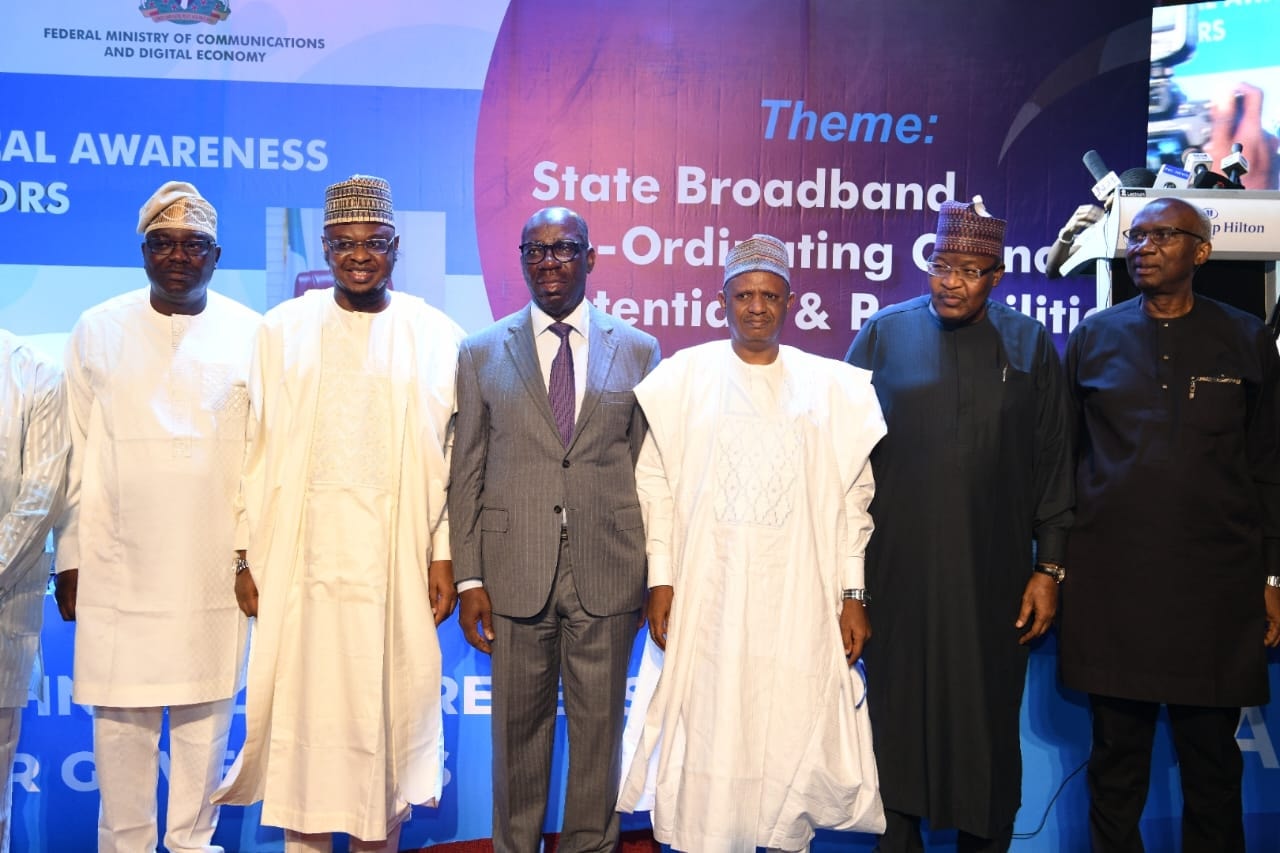
The Minister of Communications and Digital Economy, Prof. Isa Ali Ibrahim Pantami, Thursday in Abuja, told a gathering designed for State Governors that the potentials of broadband are so enormous that if made available for their citizens, will be the best gift for their economic emancipation.

Pantami told the state governors and their representatives and other industry stakeholders at the maiden edition of Broadband Technical Awareness Forum for Governors (BTAF), organised by the Nigerian Communications Commission (NCC), where Governor of Edo State, Mr. Godwin Obaseki, gave an impressive report card about what he has already achieved with ICT in the education sector, and many other sectors of the Edo State economy.

Pantami stated that greater support and collaboration will be required from the State governors towards addressing challenges to broadband infrastructure deployment by the telecom companies, which are expected to deploy required infrastructure to provide broadband services in all nooks and crannies of Nigeria.

“This is because, more than ever before, our security, economic and educational development rely on having state-based broadband structure and framework that will articulate the key targets in the Nigerian National Broadband Plan (NNBP) 2020-2025, and this is the essence of this forum today,” he said.

According to the Minister, access to broadband is globally recognized today as a necessity and not luxury and that explains Federal Government’s decision to develop broadband plans aimed at deepening in-country connectivity to enhance socio-economic development.

The Minister who established correlates between broadband penetration and growth of Gross Domestic Product (GDP), stated that countries with high density of broadband network have higher GDP per capital for the citizens. He said the steady growth in broadband penetration over the years in Nigeria is directly reflecting on the economic growth of the country.

Gov. Obaseki, who delivered a goodwill message on behalf of other state governors and listed efforts made by state governments in encouraging broadband infrastructure deployment, assured stakeholders of the readiness and willingness of the state governments to work more with the Federal Government but emphasized the need for increased open dialogue and trust between the States and the Federal Government.

Representatives of other state governors also expressed their determination to co-operate more with the Federal Ministry of Communications and Digital Economy, the NCC and other telecoms companies to facilitate deployment of fibre infrastructure which they believe would improve the socio-economic lives of citizens.
Chairman, Board of Commissioners at NCC, Prof. Adeolu Akande, had in his remarks, said Nigeria deserves to be in tune as the world goes digital in all spheres, as we cannot afford to lag in being among the countries leveraging broadband for socio-economic development.

“We recognize the fact that Nigeria is a nation with federating units. Hence, it would be difficult to achieve faster and desired broadband penetration level without effective collaboration with the state governors,” he said. Akande particularly emphasised the centrality of synergy to tackle all challenges undermining broadband deployment, particularly multiple taxation, right of way (RoW), denial of access to telecoms sites for maintenance, vandalism, insecurity, among others” the Chairman of NCC Board of Commissioners said.

The Executive Vice Chairman of NCC, Prof. Umar Danbatta, in his own submission, said the objective of the event was to seek better understanding and rich resolutions to all issues affecting faster broadband deployment. He reminded participants that, “though we are making gradual progress towards our target, but this forum will provide us with deeper insights on how to address identified challenges to broadband deployment.”

At the event attended by over 170 delegates and following discussion at the technical panel session, several resolutions were made towards ensuring accessible, available, and affordable broadband services that will support the overall socio-economic development in the country. A key decision taken at the forum is the urgent need to establish State Broadband Coordinating Council, as a Sub-National Structure at the state level which is urgently required to enhance the accomplishment of the objectives of the NNBP.


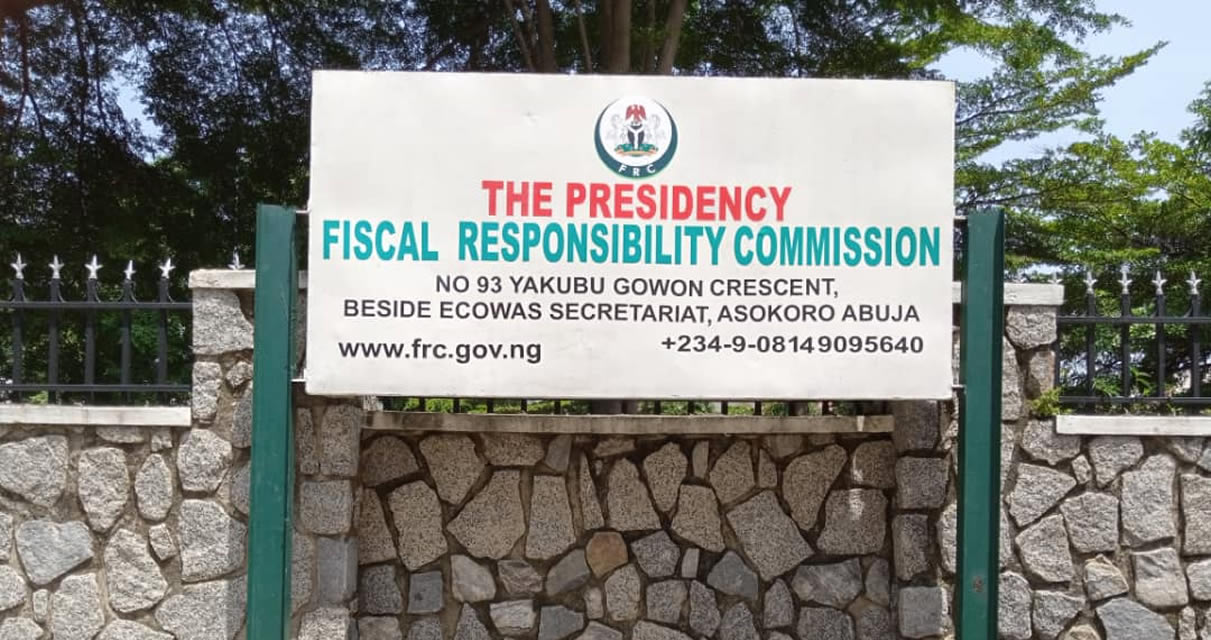
The Fiscal Responsibility Commission (FRC) said between January-July, 2022, Nigeria has saved the total of Operating Surplus and Iiternally Generated Revenue of over N729 billion through its Fiscal Responsibility Act.

The Chairman of the commission, Victor Muruako, disclosed this at the October monthly lunch time seminar organised by the Bureau of Public Service Reforms (BPSR) in Abuja, with the ‘Strengthening Fiscal Transparency, Accountability & Prudence through the Fiscal Responsibility Act, 2007.’

Muruako, Chairman, also highlighted some results achieved by the commission from monitoring and enforcing transparency, accountability and prudence, the core mandates of establishing it.

Some of them according to him includes, ““Treasury Single Account (TSA), Open Governance Portal (OGP), Open Treasury Portal (OTP), Government Integrated Financial Management Information System (GIFMIS), Regular publication of monthly financial disbursement to the three tires of Govt. from the Federation Account after successive FAAC Meetings.

“The introduction of the Treasury Single Account (TSA) which is a public accounting system whereby ALL the FG receipt, revenue and income are collected into ONE single Account maintained and managed by the Central Bank of Nigeria.

“The FRC has been instrumental in driving up the Independent Revenue of the FG and this has helped to fill some of the gaps arising from reduced revenue from oil.
“In 2020, Operating Surplus and IGR that accrued to the FG summed up to N533 billion.

“In 2021, the sum jumped by over 100% year-on-year to N1.25 trillion – the first time in the history of the nation that the Independent Revenue exceeded the one trillion Naira mark.

“As of end of July this year, the total of Operating Surplus and IGR had arrived at N729 billion,” Maruoko explained.

The Chairman also said the commission has continued to reassure the nation that the it is all out to exercise its functions in a manner that will help to achieve the projection of N1.8 trillion for the 2022.

The Chairman however said in spite of these, the act is not devoid of challenges, such as its failure to provide for some offenses, the stipulation of the appropriate sanctions/punishments for defaulters, and that there is lack of holistic adoption of the act by states and Local Governments which gulp more than 48% of the national resources and a major drawback to the quest for transparency and accountability.
“Although, the publication of daily payment report by the OAGF has recorded significant compliance since inception, however, it appears that most MDAs, have not been forthcoming with up-to-date information on their daily financial transaction on the open treasury portal,” Moruako added.

On his part, BPSR DG, Dasuki I. Arabi, said FRC was established by the Fiscal Responsibility Act, 2007, to promote a transparent and accountable government financial management framework for Nigeria.

He also said, “the Bureau’s vision of seeing a Nigeria with a well-functioning, effective and efficient socio-economic system is shared by the vision of the Fiscal Responsibility Commission (FRC) ‘To establish a transparent and accountable government management framework for Nigeria, thus, it is my strong believe that today’s interaction will be both educative, enlightening and fulfilling to all.”
Aliyu Umar Aliyu


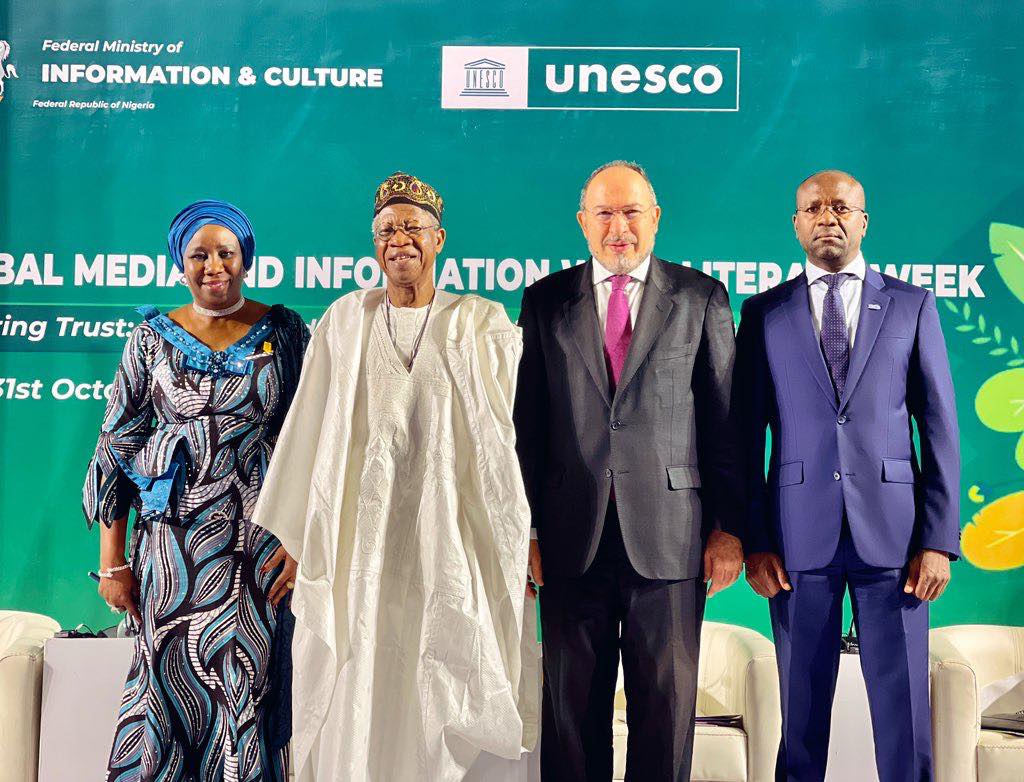
The Minister of Information and Culture, Alhaji Lai Mohammed, has deplored the unregulated use of social media across the globe, while stressing the urgent need for every person to be equipped with the ability to critically evaluate and wisely use information at their disposal.

The Minister stated this in Abuja on Monday while welcoming delegates to the 2022 UNESCO Global Media and Information Literacy Week, holding 24-31 Oct.
“As I ponder on the state of our world, the enormous challenge it faces, especially with unregulated use of social media and other digital platforms, I see the urgent need for every person to be equipped with the ability to critically evaluate and wisely use
information at their disposal,” he said.

Alhaji Mohammed said the theme of this year’s Global MIL Week, which is “Nurturing Trust: A Media and Information Literacy Imperative”, is not only apt but also timely as the world and its leaders contend with the challenge of identifying what is true and what is false, in view of the use of media and information.
He expressed the optimism that contributions at the parallel sessions of the event will be geared towards finding the linkages to build trust among societies and individuals through the use of social media.

“I am optimistic that, starting from the parallel sessions which commence immediately to the last plenary session on Friday morning, contributions and questions will all be geared toward finding the linkages to building trust among our societies and individuals through the use of media and Information literacy.
“As I urge you all to give this your best attention, knowing that the world awaits the outcome of this Global MIL Week, I warmly welcome you to Nigeria. I encourage you all to discover Abuja and to enjoy your stay,” the Minister said.

The welcome ceremony was also attended by the Permanent Secretary, Federal Ministry of Information and Culture, Mrs. Lydia Shehu Jafiya, and Dr Tawfik Jelassi, Assistant Director-General, Communication and Information, UNESCO


Fintech enablement partner Ukheshe continues to execute on its ongoing partnership agreement with enterprise loyalty and rewards company Gratifii.


The agreement gives both organisations and their clients access to industry-leading payments solutions as well as a loyalty rewards platform, explains Pieter de Wet, President of Business Development International at Ukheshe. “Integrating Gratifii’s Mosaic loyalty platform into our Eclipse payment orchestration platform has given our existing and future customers added value, by allowing them to offer their own customers a loyalty programme. This programme can be added seamlessly to card payments – with no additional cards required, and no additional steps.”


Partnerships like this have the potential to be game-changing, says Mark Schoombie, Gratifii’s Chief Technology Officer. “Current payment and loyalty industries have a somewhat narrow focus where finance technology focuses on payments, while loyalty companies focus on driving loyalty. But the loyalty market needs payment technology to create strong data and recommendations, while loyalty programmes in the payments arena drives more payments. Gratifii is proving that loyalty programmes can drive greater revenues, increased basket size, and increased monthly visits. The combination of these two worlds is a powerful play in digital transformation and shared economies.”


Clients of Ukheshe and Gratifii who will use the Eclipse and Mosaic technology to offer embedded finance solutions and loyalty rewards to their own customers, will not only benefit from this added value, but also the combination of two world-class platforms with state-of-the-art technology. They won’t have the stress of planning integration timings with multiple teams, with all those added costs, to fulfil their requirements. “Loyalty programmes in the past have been hard to understand and difficult to execute because of the rate of change,” says Schoombie. “Mosaic prides itself on flexibility and configurability. Changing rules in the system takes seconds, giving our clients the ability to test, try and change without cost. It also allows for targeting specifications, based on segments, tiers, customer preferences, transactional behaviours, and more. We provide a cost-effective solution that is simple to use, simple to implement and simple to adjust without long development lead times or cost.”


Ukheshe’s Eclipse platform, too, has been providing embedded finance before the term even existed, offering non-financial companies ways to integrate payments, transactions, transfers and other digital solutions into their businesses in a seamless way, without the associated development and compliance costs. “Essentially, our platform lets our clients offer banking as a service at lower costs and with less hassle, all through a single platform,” says De Wet. “Many APIs only provide one set of APIs per fintech proposition, whereas Eclipse provides a number of restful APIs – meaning multiple payment solutions through a single-entry point. Our clients only have to integrate once and can then access a number of services and build their offering to their own clients from there, such as digital KYC and onboarding, the opportunity to access issuing and acquiring services such as physical and virtual cards, QR and VAS – all within a single integration and location.”


Importantly, such partnerships create a truly shared economy, because the end consumer also benefits from safe, convenient financial services and now, loyalty rewards – ultimately adding value to the user experience. “Ukheshe’s vision is to change the financial landscape by making true financial inclusion a reality. And offering these benefits to our customers and the end consumer is another step in that direction,” says De Wet.


Background checks reduce a company’s risk for reputational damage and criminal activities such as fraud and theft. They can also verify information on an applicant’s resume and assist HR professionals in determining whether an individual is the right fit for the job description says Sameer Kumandan, Managing Director of SearchWorks, South Africa’s largest and most innovative data aggregation platform.


Finding and managing talent for an organisation is a responsibility that is both time and resource intensive. So it makes sense to do your due diligence before bringing a new hire into the fold. First order of business? Making sure the candidate is exactly who they claim to be. This involves verifying all of the information contained on their CV – checking everything from education to work experience and certifications. Double checking their references, and awards and looking into any potential criminal history. Background checks are a smart way to uncover any red flags that could indicate that the individual is a risk likely to negatively impact the reputation, safety and bottom line of your company. Making a poor hiring decision is more than a costly mistake. It results in lost time and expenses due to the need to recruit and train another candidate. It can also dampen employee morale and productivity.


For dedicated HR professionals, background checks are a critical part of hiring processes. Fortunately, they’ve become a lot easier and it’s no longer necessary to manually check every fact or qualification. All it takes to run a thorough, reliable background check on any individual, is a few clicks. The results will empower HR professionals to make well-informed hiring decisions and allow them to focus on growing the business, building positive relationships with employees and making them feel valued.


It’s not a white lie, it’s a risk

Everyone embellishes their resume, right? Falsifying information to get a job is dishonest, and tantamount to fraud. If they’re willing to lie to get a foot in the door, what else are candidates willing to do? Exaggerating on a job application isn’t harmless, it’s against the law. Particularly when health and safety law requires an individual to have a specific qualification in order to gain access to a workplace. Imagine a surgeon with falsified qualifications performing an operation. Or a mining engineer jeopardising the safety of thousands of mine workers underground because they exaggerated their previous working experience. These scenarios highlight the danger involved in embellishing details on resumes and in job applications.


According to a survey from CareerBuilder, 75% of HR managers confirmed that they’ve caught wind of a CV lie. The most common lies that job seekers tell in their resumes:

  • Lying about their job title/responsibilities
  • Claiming language fluency
  • Inflating their skill-sets
  • Altering dates of employment
  • Lying about their degree or adding fake certifications
  • Concealing a criminal record
  • Falsifying work experience
  • Changing their matric results/grades


Trust is critical in the employment relationship. Employers need to be able to trust their people to do their jobs, and to treat colleagues and customers with respect, while representing your brand with dignity. But how does an employer screen the integrity and reliability of a potential candidate?


SearchWorks has the answer

“SearchWorks is a web-based search application that provides information and services that are instrumental for HR professionals,” explains Kumandan. “It has proven to be an essential tool that enables HR departments to check, verify and confirm any details relating to potential candidates, to ensure that the best possible hiring decision can be made.”


Some of the background check searches that can be run on candidates include:

  • ID verification
  • Trace
  • Qualifications checks
  • Professional Driving Permit check
  • Social media checks
  • Credit checks (relevant if the applicant works in finance)
  • Criminal checks
  • Politically exposed persons and sanctions
  • Matric certificate verification
  • Qualification check
  • FAIS status
  • Social media report
  • SAFPS fraud verification
  • Employment confidence index
  • Gross monthly income
  • CIPC director search


Don’t take applicants at face value

“The people you hire are a reflection on your business,” Kumandan continues, “they are your brand’s ambassadors and they show customers, partners, and clients what you stand for. Doing a background check helps ensure that you are hiring people that uphold your values and expectations.”


Here, a social media screening is a critical component of a thorough background check, and can give valuable insights into characteristics such as the individual’s work ethic, personal values and beliefs. It can also identify key risk areas based on available content, such as racism, homophobia, hate speech, illegal activities, disclosure of confidential information and dishonesty, such as “taking a sick day” when the data subject is not in fact sick.


“The beauty of SearchWorks is that it provides HR professionals with all the information they require, in one system without the need to sign up with multiple data suppliers. A platform like SearchWorks can completely streamline the shortlisting of appropriate candidates. It provides the ultimate HR transparency, and reduces the time, risk and costs associated with the recruitment and hiring processes of any organisation, enabling employers to move forward with certainty in their selected candidates.”