Nigeria’s President Muhammadu Buhari GCFR, has approved with immediate effect, the appointment of Engineer Tukur Mohammed Lawal Funtua, as the new Managing Director of Nigeria Communications Satellite (NIGCOMSAT), following the retirement of the erstwhile Managing Director, Dr Abimbola Alale.

Engineer Tukur Mohammed Lawal Funtua, born on 24th November 1966 is an indigene of Funtua Local Government Area of Katsina State, Northwest Nigeria. He holds a Bachelor’s Degree in Chemical Engineering, PGDM, MBA, a Professional Diploma in Education and a PhD in Environmental and Sustainable Development Management in view, at the University of Port Harcourt. He was before his appointment, Director, health community affairs, safety and environment with BUA Cement Plc, served in various capacities including Health and Safety Manager, Country HSE Manager and Regional Manager for Communications, Public Affairs and Sustainable Development at Lafarge Africa Plc and Group Head, Environment and Community Affairs at Dangote Cement Plc among others.

Engineer Tukur, who has thirty years professional experience in manufacturing, process engineering, health, production, safety and environmental management, communications and various other fields, is a Chartered Environmentalist at the Society for Environmental Toxicology and Pollution Mitigation, a Fellow of the Nigerian Society of Chemical Engineers, and the Professional Leadership Practitioners Institute. He is a Registered Engineer with the Council for the Regulation of Engineering in Nigeria (COREN), a member of numerous professional bodies and institutes. Engineer Tukur is an author and is married with children.

Recall that the Nigeria Communications Satellite (NIGCOMSAT) falls under the purview of the Honourable Minister of Communications and Digital Economy.

Uwa Suleiman (Mrs)

Effective software quality assurance in the Nigerian Digital Economy will greatly impact the digital economy’s accelerated growth, says Professor Isa Ali Ibrahim (Pantami), Nigeria’s Minister of Communications and Digital Economy.


He remarked in the lead address at the first-ever Software Testing Conference in Nigeria with the theme “Impact of Software Quality Assurance in the Nigerian Digital Economy”, organized by Nigeria Software Testing Qualification Board (NGSTQB) on Wednesday, November 23, 2022, at Oriental Hotel, Victoria Island, Lagos, Lagos State. 


Pantami acknowledged that the importance of software in global development cannot be overemphasized hence software powers the hardware, and most of the innovations in all sectors and spheres of life. 


“If you look at the world’s advancement in the internet economy, transportation, financial services, power, cyber security and many life endeavours; software is the secret to that success. I can categorically say that the world would not have achieved much if there was no invention of software.  


“The article by Jeff Lawson in the Harvard Business Review argued that in the digital economy, your software is your competitive advantage. 

“He said ‘many companies respond to digital competition by embracing methodologies like agile, building ‘innovation centres,’ acquiring startups, or outsourcing app development to consulting firms. But the true disruptors know that in the digital economy, whoever builds the best software wins. Companies that want to compete need to empower their developers and adopt a ‘software mindset’”.


“This same argument applies to any country that wants to succeed in the digital economy era. We have seen the implication of this during the Covid-19 pandemic. The technology (especially ICT) industry which is powered by software benefited the most. The industry’s growth skyrocketed”. 


The Minister who spoke through Dr Engr. (Mrs) Falilat Jimoh, Digital Architect Manager, NITDA, said, however, one of the greatest challenges the software industry is facing today is issues of quality. 


He referred to a report by Synopsys Inc in the US which finds that many organisations allow software quality to lag behind other objectives, but that lack of attention comes at a steep price. 


“In 2020, the cost of poor software quality in the US was approximately $2.08 trillion. That is why software quality assurance and testing is a big industry today. According to a comprehensive research report by Market Research Future (MRFR), ‘Software Quality Assurance Market information by Solution, by Deployment, by Organization Size and Region has been forecast to reach USD 14.01 billion market size by 2027’”.


“There is, therefore, a need to take full advantage of the opportunities the software industry is going to play in the digital economy growth while ensuring the challenges that could hinder software quality do not thwart the progress we have collectively in the digital economy sector”. 


Pantami, therefore, said that the theme of the first edition of the Software Testing Conference: ‘Impact of Software Quality Assurance in the Nigerian Digital Economy’ is apt as effective software quality assurance in the Nigerian Digital Economy will greatly impact the digital economy’s accelerated growth. 


“Web portals and apps are now part of our daily routine. This conference provides the platform to discuss and share our ideas on the use and need for Software Quality Assurance and its effect on the Nigerian Digital Economy.  


“In the last two decades, there has been an upsurge in the use of Digital technologies all over the world. Nigerians are not left out in the uses of digital technologies in services provision, trade, socializing and communication with one another. Consequently, Nigeria has seen tremendous growth in digital services, ranging from eCommerce to Fintech Services. Therefore, the potential of the digital economy to create economic growth, employment and innovation cannot be underestimated. 


“Bearing in mind the importance of a digital economy, His Excellency, President Muhammadu Buhari, GCFR, approved our request to redesignate the Federal Ministry of Communications as the Federal Ministry of Communications and Digital Economy on the 17th of October, 2019. The change was officially endorsed at the Federal Executive Council on the 23rd of October, 2019 and the process of implementing a digital economy for the country began on the 24th of October, 2019, which was approved as the Digital Nigeria Day. 


“The redesignated Ministry also had an added mandate of developing the digital economy in line with the focus of the Federal Government and the first step was the development of a Policy and Strategy to drive the development of the Digital Economy.


“Specifically, the ICT sector provided 3 unprecedented contributions to the Gross Domestic Product (GDP) of the country in the last 3 years, namely 14.07% in Q1 2020, 17.92% in Q2 2021and 18.44% in Q2 2022. At each time, that has been the highest-ever contribution of the ICT sector to the GDP. This is unprecedented in our history. 


“We have shown that the digital economy can greatly support the traditional economy.  


“The contribution of the digital economy to the gross domestic product (GDP) of Nigeria and its role in making the economy resilient to adverse events like the COVID-19 pandemic are 2 good examples of the impact of the digital economy on the traditional economy.


“Software quality assurance has a great role to play in accelerating the achievement of the objectives of Nigeria’s Digital Economy Policy and Strategy (NDEPS) pillars. The pillars are Developmental Regulation; Digital Literacy and Skills; Solid Infrastructure; Service Infrastructure; Digital Services Development and Promotion; Soft Infrastructure; Digital Society and Emerging Technologies; and Indigenous Content Promotion and Adoption. 


“With the transition to digital platforms, we must ensure our digital products are tested and certified by members of NGSTQB and if there is a need, a member of the International Software Testing Qualifications Board (ISTQB).  


“We would strengthen our partnership with the NGSTQB to provide training on software quality assurance to many interested individuals. 


“With higher user expectations and the need to deliver higher–quality software, Software Quality Assurance testing and certifications are a must. Everyone in the software business knows the landscape is constantly changing, and testing helps to manage the risks associated with the development and adoption of software. 


“Considering the potential growth of software, the economic and risk-reducing benefits of software quality assurance; there is a need to develop the necessary capacity in software testing and quality assurance to tap this aspect of the software industry. 


“The mission of NGSTQB is ‘to generate public awareness of the economic and risk management benefits that professional software testing practices offer’ is in line with these needs. 


“By ensuring the software we use in business or governance for public service delivery, and social and economic activities are certified, it has the potential to greatly enhance cost-effectiveness, reduce security breaches, promote product quality, and ensure better user experience and customer satisfaction”. 


He said that the Ministry is always willing to partner with relevant stakeholders to advance the course of software quality assurance and testing to promote a sustainable digital economy in Nigeria. In conclusion, it is worth noting that Software Quality Assurance will boost the quality of digital products and services in Nigeria and, in turn, positively impact the Digital Economy. 


TestNigeria Conference 1.0 sponsored by Inlaks, Global Accelerex, Quality Certain, Altaviz Support, The Nigeria Office for Developing the Indigenous Telecoms Sector (NODITS) and others, featured networking cocktail, keynote presentations, panel sessions and fireside chat including special sessions on Software Test Improvement in Organisations; Growing Software Testing Ecosystem in Nigeria’s Educational Sector, and the Need for Certified Test Professionals in Organisations.

Cavista Technologies (www.Cavistatech.com)​ Chairman John Olajide was deeply involved in the recent U.S.-Africa Leaders Summit in Washington. It was the first time in eight years the U.S. has convened a gathering of African leaders and nearly 50 heads of state attended to dialogue on ways the U.S. can work more closely to help the continent prosper in the coming decades.

Olajide was among a select few speakers on a panel during the Business Forum that focused on the importance of U.S. investment and trade across Africa. He also spoke as part of a panel that discussed opportunities to develop and implement strategies that empower digital connectivity to help people, businesses and governments in Africa thrive.

“The U.S.-Africa Leaders Summit provided a great opportunity for me to continue to thoughtfully engage on both continents,” Olajide said. “It enabled me to continue to support and partner with leaders in Africa across government, business, and technology. Africa has untapped potential for future growth and prosperity, and I want to do what I can to help Africa achieve that potential.”

Several health ministers from various countries also attended and spoke of the need to ensure access to healthcare across the continent. Africa imports 80 percent of its medicines so ensuring strong supply chains and creating sound healthcare infrastructure will be key as the population continues to grow. Projections call for Africa’s population to double over the next 30 years, and by 2050 it is expected that Africa will have 25% of the world’s population.

Olajide, who is the founder and CEO of​ Axxess, the leading home healthcare technology company, said​ Cavista​ will play an important role in Africa in the coming decades as it provides technology solutions to ensure access and connectivity to improve lives.​

“The summit was an important reminder that the good work​ that​ Cavista​ is​ doing every day to deliver innovative technology solutions​ will ultimately impact billions of people around the world,” Olajide said.

To date, Cavista empowers clients with world-class, custom software solutions to solve the most complicated challenges in healthcare. As an example, when COVID-19 presented healthcare challenges, the team quickly built new technologies that help healthcare providers to have protocols that give confidence to caregivers, patients and the general public alike that ongoing care could be handled as safely as possible.

Cavista’s mission is to empower organizations with the world’s best technology solutions. It ensures the highest level of client satisfaction through a global network of innovation, and its software solutions are custom-built to accommodate client domains and requirements. With operations globally, Cavista works around-the-clock to provide innovative solutions to take the capabilities of its partners to the next level.


Globally, corporate organizations and businesses are digitizing and protecting their infrastructure, Nigeria inclusive. In this light, Mitiget Assurance and Technology Services Limited operating with the brand name Mitiget, an indigenous information security (InfoSec) company with international affiliates has promised Nigerian business ecosystem of offering a robust and unmatched data security, IT, and compliance solutions to them.
Speaking to the media, the Chief Executive Officer of Mitiget, Sunny Ukeachu said that “as an enterprise Information Security company, we are enabling small and large organizations and business to build efficient information management and functional security resilience. We hand-hold them through building governance for their critical information while using technological innovations to support their strategies of meeting business goals. Our promise is to deliver measurable value from where we take over, a minimum of 25% improvement. Just as our mission statement, we are poised to make a mark in African markets and globally by providing superior assurance and technology solutions to our customers through innovations, professionalism, and ethics. And we have done quite a bit.”

He added that “As part of our security solution offering, we bundle information technology as a leverage for businesses to create value. For instance, in delivering a secure data center, record management for our customers, we design, implement, secure and support all the IT infrastructure, be it, structured cabling for data, voice or power, physical security including CCTV, Access control, vaults, perimeter reinforcement and networking covering supply, configuration and hardening of switches, routers, firewalls and access points, the deployment of IT hardware with supporting applications and services including cloud services. If you are moving into a new office and need a partner to work with for your end-to-end IT and secure tech services, you cannot go wrong with Mitiget. We try to balance leading-edge technology innovation with highly skilled resources to deliver cost-effective, dependable, and adaptive IT solutions that meet or exceed our customer needs.”

The organization has recently made impact in other African nations making it an export for Nigeria and bringing in the much-needed foreign exchange. Mitiget has overtime demonstrated capacity to deliver solutions not only locally but to an international scale. Ukeachu said “We have done couple of interventions for organizations in Ghana, Kenya, and South Africa helping them improve business and IT risk management maturity especially around relevant frameworks and international standards. We also have done a lot of work in reducing operational risks for many businesses by helping them go paperless. You are aware that business communications are largely paper based. Over-time, the paper documents grow in an uncontrollable volume exposing the organization to financial and reputational risks. Our end-to-end records management solution is the answer to this challenge. It does not matter the volume, how messy your archive is, we guarantee 100% success in all our projects. Another area we have excelled is in the provision of Business Continuity Plan (BCP) and Disaster Recovery (DR) solutions. We are the number BCP facility provider in Nigeria. Some financial institutions use our facility to run their periodic BCP/DRP tests to ensure resilience and to meet regulatory requirement.”

Sunny Ukeachu,CEO ,Mitiget Ltd.

On capacity building, Mitiget Learning Academy (MLA) is an arm of Mitiget that provides cutting edge technical and specialist learning interventions and capacity building endeavors for small, medium, and large-scale enterprises both in public and private sectors in Nigeria. Ukeachu opined that “This was our way of helping to develop relevant skills to support our teeming unemployed and unemployable youths. All our courses are hands-on, and project driven with the objective of exposing the trainees to real-life tasks and problem solving. Those that would want to take up a career in cybersecurity, risk management, python programming, web and mobile app development should make Mitiget learning Academy their starting point to build requisite capability to be relevant in the marketplace.”
Mitiget also provides cloud service to firms. “Apart from the adoption of remote working and enabling services and technologies, focus also shifted to hybrid cloud, solid-state storage, and sustainability measures in the data center space. Demand for cloud services will continue even in the coming year. For MSMEs and large organizations conscious of protecting their data, they should think of Mitiget. We do data right anytime, any day, anywhere. We are the home of information management and security expertise. Whether you need a complete design, incremental improvements, accredited servicing, and maintenance or even IT infrastructure decommissioning, we make them happen”, Ukeachu concluded.


Anthony Emeka Nwosu


Today, products, services, and experiences are all being swept up in the phenomenon of Everything-as-a-Service (XaaS) – remote and on demand access to any business offering provided as a service

By Eiji Ota, B2B Sales and Marketing Director, Canon Central and North Africa (Canon-CNA.com)

The ‘as-a-service’ model, whereby businesses can subscribe to a service or offering without the need to pay upfront, has revolutionised B2B operations forever. It was initially introduced, with Software-as-a-Service (SaaS), a pioneering business model for accessing software through the cloud. SaaS helped businesses offer a standard, distributed solution at a lower cost of entry. This new model also meant that customers no longer needed to worry about large installation and ongoing maintenance costs.

Two decades on from its mass introduction, and the SaaS model no longer exists solely within computing, but now touches every industry. While software industries have been spearheading the as a service model for decades, other industries such as print, are in the earlier stages of applying such models to their own business offerings. The market is moving at pace, and it was the cloud that fully accelerated its widespread popularisation.

More recent adaptations of the ‘as-a-service’ concept include Infrastructure-as-a-Service (IaaS), Platform-as-a-Service (PaaS),and more, that utilise the cloud-based model and offer businesses increased flexibility to scale up or down based on need As the service is hosted in a shared environment, the service itself and updates can be rolled out instantaneously, and allows customers to outsource key business functions, revolutionising industry operations.

Today, products, services, and experiences are all being swept up in the phenomenon of Everything-as-a-Service (XaaS) – remote and on demand access to any business offering provided as a service.

The XaaS model

As early as 2018, it was predicted that the global XaaS market will surpass $340 billion by 2024[1]. The pandemic has only served to accelerate this trend as organisations have sought to adapt their business models to thrive in the new normal. In fact, 60% of adopters believe they are gaining a competitive edge through their use of XaaS[2].​ Optimised running costs, freed up resources, faster implementation and providing customers with access to the most up-to-date technology are all benefits too great to ignore.

The rise of the ‘on-demand’ economy has created a shift in consumer behaviour where more is expected from businesses than ever before. The XaaS model uses ‘servitisation’, which is the transformation from merely selling products to also delivering services, to meet these increased demands. ‘Servistisation’ creates an opportunity for businesses to deepen customer relations through engagement and that collaboration is key to the success of an XaaS offering.

Beyond implementation to creating real customer value

Many companies have been using customer delivery techniques for years to analyse how customers are using products and rolling out updates accordingly based on feedback. However, the cloud has advanced this trend by making it easier for businesses to gain real time insights, facilitating a deeper understanding of customer journey.

It is now not enough for businesses to simply provide an as-a-service offering as a tick box. Investment in the model is key to creating a service that the customer sees true value in. Only by leveraging the cloud to engage and collaborate with customers, monitor their usage and make improvements to the product or service, accordingly, can you keep your business truly competitive.

Engagement is the first building block to understanding consumption

Customers are directly connected to a business each and every time they use a product, service or function. The world is changing at speed and customers’ needs are evolving with it. Direct customer engagement allows companies to stay ahead of these changes and understand how, why, and when their product is being used.

Monitoring customer use to ensure a seamless user experience

Businesses can measure how customers are using a product, service or function through usage metrics such as adoption, what functionality is being used, and how quickly an action is completed. This gives them insight to identify and proactively fix any problems that could arise before they impact a customer’s experience. The XaaS model also presents companies with a space to evolve their service or test new strategies in an agile way.

Ongoing collaboration is vital for long-term investment

The XaaS model naturally lends itself to a customer and provider collaborating to ensure that a user gets the best from what they are using. In the old world of purchase and use, solution providers were not so connected to whether a customer managed to extract a purchase’s full value. However, flexibility and scalability has changed this dynamic.

Today, an ongoing collaboration between a customer and XaaS provider is key for long-term investment. The nature of the model means the buyer makes a repurchase decision every subscription term, reconsidering the value of the service more frequently than ever before. In fact, 80% of adopters agree that XaaS has led their organisation to reinvent business processes and even change how they sell to customers[3]. The XaaS model is seeing us into a new era, one in which we ‘pay by outcome’. This payment model holds businesses accountable for bolstering product value on a consistent basis.

XaaS: setting businesses up to thrive in the new normal

The XaaS model represents a new era for the ‘as-a-service’ model and its uptake is quickly becoming an essential building block for business growth. A true XaaS proposition must offer real engagement, close monitoring of a product in use, and a commitment to continuous improvement to meet today’s evolving customer demands. As more and more businesses implement an XaaS proposition it is increasingly difficult to stay competitive just by adding a digital connection and subscription model to current offerings. The as-a-service model is becoming an expectation for consumers, as the demand for convenience and ease is more prominent in a hybrid working world. Customers are now looking for true value in what they consume, and the as-a-service model is no exception.

[


In this interview, John Nwachukwu, the Chief Information/Executive Officer of ZORACOM Communication talks about their strides in the Nigerian information and communication technology (ICT) space. He explained how organisations can key into their cyber security solutions and the need for them to deepen capacity building in this area. He also talked about the NSOC facility and cyber security laws in the country.


Tell us about Zoracom as an IT firm?

Zora Communications Limited (Zoracom®) is a Technology company located in Nigeria with wide regional presence in West Africa. We develop and deliver excellent business solutions, aimed at increasing our customers’ revenue, enhance satisfaction, and provide a real competitive edge for our customers. At Zoracom we pride ourselves in the ability to proffer & provide solution to our clients’ various needs when it comes to Observability (Our ability in understanding what’s going on inside and to answer any question about our client’s network), Cybersecurity (Our Solution protects computer systems, networks, and data from unauthorized access, use, disclosure, disruption, modification, or destruction) & Infrastructure (Helps our clients maximize cost which is secure and scalable)

As an IT firm, what is your take in the Nigerian IT space? 

The Nigerian IT space is a rapidly growing and dynamic industry that has seen significant growth in recent years. With a population of over 200 million people and a burgeoning middle class, Nigeria is a prime market for technology and digital innovation. The IT sector in Nigeria is diverse and includes a range of industries such as software development, ecommerce, cloud computing, mobile technology, and cybersecurity. In recent years, the sector has attracted significant investment from both local and international companies, and many startups have emerged as well. One of the key drivers of the Nigerian IT space is the country’s large and youthful population, which is highly tech-savvy and eager to embrace new technologies. This has led to a surge in demand for digital services such as ecommerce, online payments, and social media, which has in turn helped to drive innovation in the sector. The Nigerian IT space is also home to a number of successful tech startups which Zoracom is part of and we have attracted significant investment and are now leading the way in the country’s tech ecosystem. Overall, the Nigerian IT space is a vibrant and dynamic industry that is poised for further growth in the coming years. With a large and tech-savvy population and a supportive government, it is well positioned to become a major player in the global technology landscape and we are glad to play a major role in it.

You recently launched an NSOC, can we know why?

The life blood of any business is its network systems and as we all know, the digital landscape is constantly changing, and it is becoming increasingly difficult to protect against the various forms of cyberattacks that are targeting organization’s networks of all sizes. That is why Zoracom has invested in the latest technologies and strategies to ensure that we are always one step ahead of the hackers by setting up Our Network & Security Operations Center. Zoracom’s Network and Security Operation Centre (NSOC) will provide unified command, control, communication, intelligence sharing and analysis capabilities to enable physical security of the key state assets which includes IT infrastructure, real-time monitoring of events happening across ICS/SCADA networks and provide dynamic decision support, incident reporting, workflow management and system monitoring capabilities. Our Network and Security Operation Centre (NSOC) is equipped with state-of-the-art facility which serves as the cornerstone to consolidate our core services in Observability, Cybersecurity and Infrastructure management.

One of the challenges of cyber security is manpower and capacity building, do you have the competent personnel to manage this facility? 

Yes, we are very much aware of the shortage of skilled and qualified professionals. There is a high demand for cyber security experts, but the supply is limited, leading to competition among organizations to recruit and retain top talent. This can lead to high salary costs and employee turnover, as well as difficulties in finding qualified candidates. To address this challenge, Zoracom as an organization, we invest a lot in training and development programs to build the skills of our employees/consultants, as well as offer competitive salaries and benefits packages to attract and retain top talent. We also work with educational institutions to promote cyber security programs and help develop the next generation of cyber security professionals. Furthermore, we also consider outsourcing some cyber security functions to specialized firms, additionally we leverage automation and artificial intelligence which helps alleviates some of the workload and improve efficiency, freeing up our cybersecurity professionals to focus on more complex tasks.

Can you assist organizations in training?

At Zoracom, training is the Core of our service delivery to our customers, after or during the deployment of any of our services/projects, we ensure that they are well trained and get certified for it.  This is carried out through various methods such as providing training materials, conducting workshops or seminars, or hiring external trainers to lead training sessions. Additionally, we use technology such as e-learning platforms or virtual classrooms/labs to provide training to clients & employees. The training we have done for organizations has helped improved the performance and productivity of their workforce, as well as increase employee satisfaction.

In this era of eGovernment, do you think that public sectors can key into this facility? 

Yes, the public sector can key into NSOC (Network & Security Operations Center) in the era of eGovernment. At Zoracom, our NSOC can serve as a central hub for coordinating cybersecurity and emergency response efforts across various government agencies. By utilizing our NSOC, the public sector can improve their cybersecurity posture and ensure the protection of sensitive data and systems. This will help to prevent cyber-attacks and reduce the impact of any potential threats. Additionally, our NSOC can provide valuable resources and expertise to the public sector in handling cyber emergencies and responding to incidents in the following way;

On Integration,wWe help the public sectors integrate their systems and networks with our NSOC to enhance the security of their data and systems. This will allow them to share information and collaborate with our NSOC so we can help identify and mitigate potential security threats. Cybersecurity training at Zoracom, our NSOC’s cybersecurity training programs is developed to educate the personnel in the public sector on how to protect their systems and data from cyber threats. We have also Cybersecurity consulting. Here, we carry out consulting services to our public sector client using NSOC’s cybersecurity experts to help assess their systems and recommend the best security measures to implement that are in line with the regulatory bodies. This will help maintain their reputations and avoid costly legal and regulatory penalties. Then we have Threat intelligence sharing. This done by the sharing of threat intelligence with our NSOC team we can help the public sector identify and respond to potential security threats in a timely manner. Finally, Collaboration. Through our collaborative efforts with the public sector, we can develop and implement cybersecurity strategies and policies that ensure the security of their systems & data.

Can we know organizations that you have offered advisory services as a cyber security firm lately? 

We are currently in managed service partnership with the largest mobile network provider in Africa, providing for them through our observability services an end-to-end monitoring of their network. From the success of this deployment, we implemented same solution for her Western African OPCO. We have completed Proof of Concept (POC) for the second largest Mobile Networks in Nigeria with others in the pipeline. Also, we recently completed POC for the major ISP that services the Nigerian government and in an ongoing discussion with the regulatory body in one of the east African countries on how we can help unify the county’s mobile network provider using our observability services. Our Infrastructure management services has helped a truck mobility company in Lagos Nigeria managed mobility and truck traffic issues with callup application to connect existing physical infrastructure, thereby creating order and visibility for operators and regulators within the respective industry sectors we operate.

What is your take on the cyber laws in the country? 

Cyber laws are a set of laws and regulations that aim to protect individuals and organizations from cybercrimes and online threats. These laws apply to various activities such as hacking, cyberstalking, online fraud, and data breaches. One of the main challenges in implementing cyber laws is the constantly evolving nature of technology. As new technologies emerge, so do new forms of cybercrimes and online threats. This means that cyber laws must be constantly updated and amended to address these new challenges.Another challenge is the global nature of the internet, which means that cybercrimes can often cross international borders. This makes it difficult for law enforcement agencies to effectively prosecute and punish offenders, as they may not have jurisdiction in the country where the crime was committed. Despite these challenges, the importance of cyber laws cannot be denied. These laws help to ensure the safety and security of individuals and organizations online, and help to deter cyber criminals from committing crimes. To ensure that organizations are compliant, our NSOC at Zoracom guides individuals and organizations to be aware of and comply with these laws in order to protect themselves and others from cybercrimes.

You offer solutions for Telcos known as MSP, network monitoring & provisioning. How has it been?

It has been successful thus far, our solutions and technologies give us the edge to enable our clients have high end network monitoring, traffic analysis, and performance metrics of their networks. Using a state-of-the-art Network Operations Center (NOC), it provides visibility into various aspects of their network, including traffic patterns, network performance, and service availability. We thrive on the ability to quickly and accurately identify and resolve network issues, through a well-structured change management and configuration process, to prevent downtime and improve network reliability, and also ensuring that users can access the services they need without interruption. Our Infrastructure management services has helped a truck mobility company to manage mobility and truck traffic issues in one of the busiest ports access zones in Africa. A callup application was developed to connect existing physical infrastructure, thereby creating order and visibility for operators and regulators within the respective industry sectors.


Tell us about your Enterprise/IoT networks & application? 

One of our product/solutions called Zmart is specifically tailored to help our customer when it comes to Enterprise /IoT networks & applications. Zmart has the ability of providing our clients the right technology to empower their business by gaining flexibility and agility for connecting, securing, managing, and analyzing data for a seamless, efficient & thriving connected world. It powers visibility control on business process automation, IoT, industry 4.0, IPTV/Multimedia, and smart city & homes.

Financial ecosystem is a peculiar one, you have been offering services such as Fintech/PSP infrastructure monitoring, how has it been?

Our Fintech solution through our Product Miro powered by StableNet can unify our clients core network and cyber security operations with service providers and 3PP. It can Monitor Interconnect transactions through mobile payment gateway for holistic view of critical transactions form one point to another.

You have other services such as Billing solutions and service desk?

Zoracom’s Configuration and Change Management are important considerations when implementing our billing solution, as they have a significant impact on the efficiency and accuracy of the billing process. Our billing solution allows you to easily customize and configure various aspects of the billing process, such as currency, taxes, billing intervals, and billing methods (e.g. recurring, one-time, usage-based). This will help tailor the solution to your specific needs and requirements.The billing solution we have has a robust change management process in place to ensure that any changes made to the system are properly documented, tested, and implemented This will ensure that mistakes are avoided and minimize the risk of errors or disruptions to the billing process. It also offers automation capabilities, such as automatic invoicing and payment processing which will help streamline the billing process and reduce errors coupled with unnecessary loss of valuable time.

Incident management, how can firms key into that?

At Zoracom there are several ways that firms can key into our incident management services, Firstly, firms need to Partner with an incident management service provider that specializes in incident management services like ours which will allow them access the necessary resources and expertise to effectively respond to and manage incidents. Secondly, Firms should establish clear processes for identifying, responding to, and managing incidents. This will help ensure that incidents are properly handled and resolved in a timely manner at the same time firms should ensure that their employees are properly trained to identify and report incidents. This will help ensure that incidents are identified and reported quickly, which will help minimize their impact on the business. Thirdly, investment in technology like incident management software is key to help quickly identify, report and track incidents and lastly establishing clear communication channels between different stakeholders in order to effectively manage incidents. This involve setting up an incident management hotline or implementing an incident management system that allows for easy communication between the stakeholders.

Are you looking at ECOWAS Region this 2023?

We are already operating in some parts West Africa, part of our roadmap for 2023 is to expand to more western and eastern African countries by setting up virtual office in Ghana and Kenya.

our solutions and technologies give us the edge to enable our clients have high end network monitoring, traffic analysis, and performance metrics of their networks. Using a state-of-the-art Network Operations Center (NOC), it provides visibility into various aspects of their network, including traffic patterns, network performance, and service availability. We thrive on the ability to quickly and accurately identify and resolve network issues, through a well-structured change management and configuration process, to prevent downtime and improve network reliability, and also ensuring that users can access the services they need without interruption.




The Director General, National Information Technology Development Agency, (NITDA) Kashifu Inuwa, CCIE has canvassed for the creation of Ministry of Digital Economy in all states of the federation to complement various efforts and initiatives of the Federal Government.

The NITDA’s boss made this remark in Ibadan, Oyo State at the just concluded 10th Council meeting of the National Council on Communications and Digital Economy.
Inuwa disclosed that no government has embark on ambitious and laudable projects that are capable of transforming our economy the way the present government is doing and such efforts should be replicated and consummated by the state governments.

He said, “At the federal government level, the Minister and the ministry are setting the pace for the digital economy and the minister has called on the establishment of the Digital Economy Ministry in Oyo State and I think we need to advance it; we expect all members to also take the message back home and establish the ministry of Digital Economy in all your states.”

Describing the theme of the meeting as very apt considering the pace at which the digital economy sector becoming the fastest growing economic sector in Nigeria, Inuwa said the sector has been the most impacting sector in the recent time and with the establishment of the ministry across board, Nigeria will benefit more from digital innovation and entrepreneurship and it would translate to building a more prosperous nation for all.

Attendants at the meeting were the representative of Oyo state governor and Secretary to the State government, Mrs. Olubanwo Adeosun, the Permanent Secretary, Ministry of communications and Digital Economy, Dr. William Alo, the Executive Vice Chairman, Nigerian Communication Commission, Prof. Umar Danbatta, National Commissioner, National Data Protection Bureau, Dr Vincent Olatunji, Managing Director, Galaxy Backbone, Prof. Abubakar M. Bello, Managing Director Nigeria Communications Satellite, Dr. Abimbola Alale. Director General, National Identity Management Commission, Engr. Aliyu A. Abubakar, Postmaster General, NIPOST, Rt Hon. Adepoju Sunday and commissioners for ICT in some states.

he U.S. Agency for International Development (USAID) accepted a gift donation from IHS Towers, an international communications infrastructure company, to leverage efforts towards eradicating HIV and AIDS in Kebbi State. The donation of 75,300 HIV rapid test kits is part of USAID’s engagement of the private sector in Nigeria’s health sector.


The contribution from IHS Towers will strengthen ongoing U.S. government efforts in Kebbi State to fight the HIV/AIDS epidemic. The test kits will support antenatal clinic services to prevent mother-to-child HIV transmission and provide critical HIV testing services to numerous young children and other at-risk groups.

Our goal is to collaborate with the Government of Nigeria to achieve epidemic control while creating a sustainable framework for HIV in Nigeria

“Our goal is to collaborate with the Government of Nigeria to achieve epidemic control while creating a sustainable framework for HIV in Nigeria,” said Deputy Director HIV/AIDS and Tuberculosis office USAID/Nigeria, Omosalewa Oyelaran, at the handover ceremony. “Today’s partnership with IHS Towers will help build the country’s capacities to be more self-sustaining and encourage local solutions.”

Kebbi State is the second state in Nigeria to benefit from this partnership with IHS, which builds on a previous contribution in Bayelsa state.

Speaking at the event, the Deputy Governor of Kebbi State, Samaila Dabai, said “these rapid test kits will help to effectively manage the HIV and AIDS elimination program in the state and will help improve access to quality healthcare to the people of state.”

The United States government, through USAID, provides comprehensive care and treatment services for 691,000 people living with HIV across 17 states and distributes lifesaving antiretroviral medicines to 1.9 million Nigerians living with HIV/AIDS. In Kebbi State, USAID through the Accelerating Control of the HIV Epidemic Project, provides HIV care and treatment services to more than 16,000 adults and children.


The provision of massive employment opportunities through digital skills has informed the decision of the Federal Government through National Information Technology Development Agency (NITDA) to embark on several initiatives aimed at upskilling and reskilling Nigerians across all walks of life in line with the National Digital Economy Policy and Strategy (NDEPS).

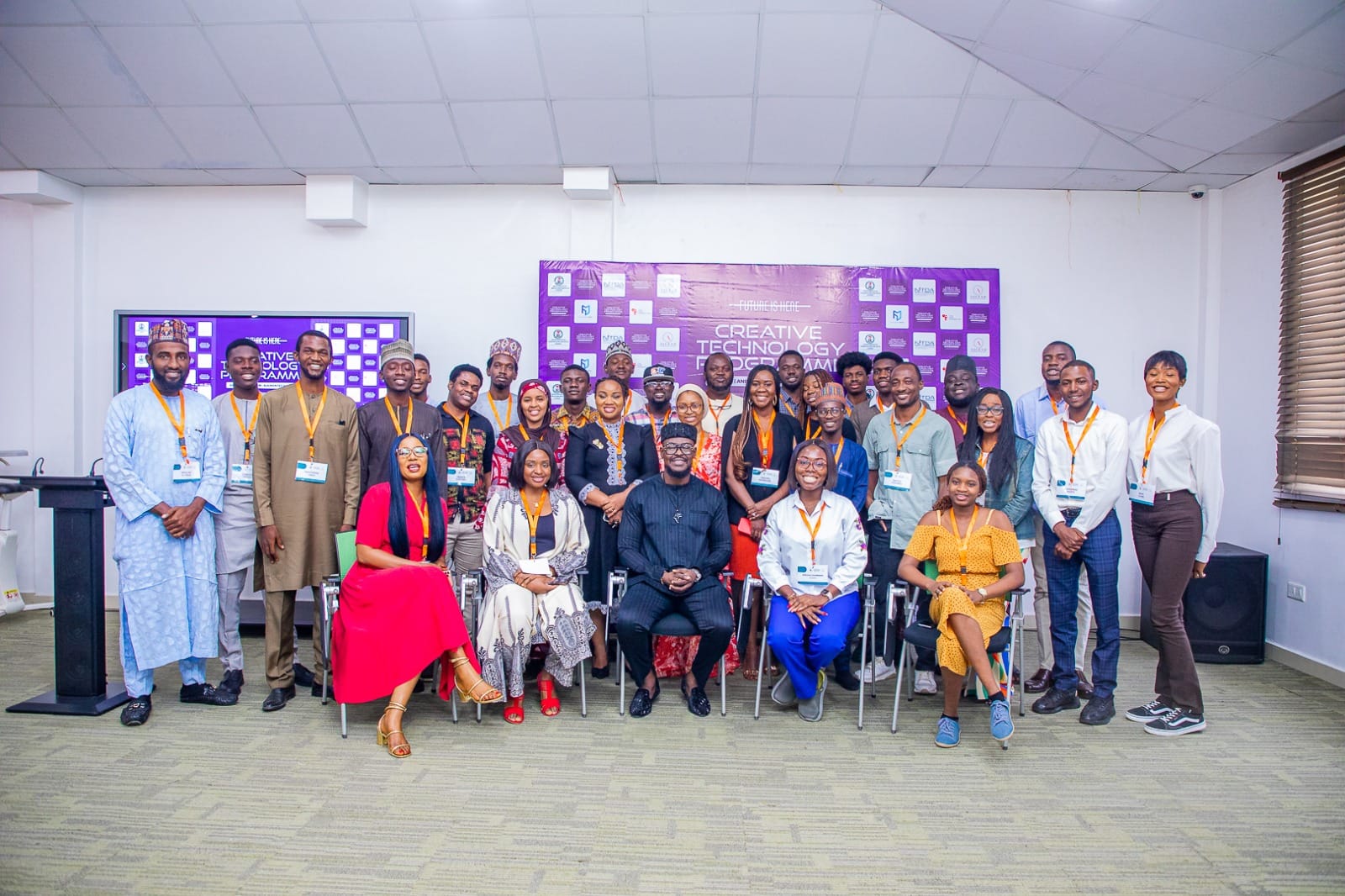
Kashifu Inuwa, CCIE, Director General of NITDA who was represented by Dr Salihu Abdulkarim stated this while delivering his goodwill message at the closing ceremony of the Creative Technology Programme, Phase 1 Training that focuses on business opportunities in Nigeria.

He said Creative Technology Programme is aimed at developing and retaining talents in Nigeria on promoting career skills and providing job opportunities among the beneficiaries with the goal of nurturing and upskilling Nigerians’ talents into viable career options; and create an ecosystem that will boost the economic potential of all participants.

Inuwa stated that the Agency is making tremendous efforts in pursuing a robust and all-inclusive talents development agenda that will create a competitive environment for the development and production of IT goods and services in the country, adding that the program would serve as mechanism for diversifying the nation’s revenue using digital economy.

He said, “The various capacity development programmes in our strategic plan have been designed to serve as a foundation for rapid development in all sectors, and we have built hundreds of digital capacity training centers and IT incubation Hubs across the nation to facilitate these programmes.”

Inuwa maintained that it is very important for Nigerian to build its talent from within because the nation is endowed with abundant talents.

“We have all we need to grow and compete with some of the biggest industries in the world. The retainment of talent within Nigeria can only happen if we all agree to stay here and build what we have. We have started building an ecosystem that will accommodate more people and help the development of a thriving community for tech talents in animation, games and AR within Nigeria,” he opined.

Acknowledging the intensity of the two-weeks training, Inuwa informed the participants that their “work has just begun,” adding that bringing the participants together is very important to the growth Nigeria seeks in promoting the Africa’s narrative in content creation.

“We see you all as creative technology ambassadors who will contribute positively to the Nigerian economy and build business opportunities within your sector. It is time to implement and we believe that you are all interested in bridging the creative technology skill gap,” he said.

While expressing his appreciation to the organiser of the capacity building, Ascend Studios Foundation for partnering with NITDA on the “crucial project of skilling and upskilling Nigerians with the trending digital skill,” the NITDA’s boss enjoined the participants to ensure that they judiciously utilise the knowledge acquired and pledged that NITDA would continue to “support them in any best possible ways.”
30 participants were successfully trained in the first phase of the programme and they are expected to train another 3000 participants across the country.


A malware that steals Facebook account credentials, known as “Schoolyard Bully”, has infected over 300,000 android devices, prompting the Nigerian Communications Commission’s Computer Security Incident Response Team (NCC-CSIRT) to issue an advisory reminding user to only download applications from official sites and application stores.


The NCC-CSIRT advisory in this regard further recommended that users double-check each application and uncheck boxes that request extra third-party downloads when installing apps downloaded from the Google Play Store and to use anti-malware applications to routinely scan their devices for malware.


Researchers from mobile security firm, Zimperium, found several apps that transmit the “Schoolyard Bully” malware while disguising themselves as reading and educational apps with a variety of books and topics for their victims to study.


The malicious apps were available on Google Play, yet they have already been taken down. However, they still spread via third-party Android app shops.


The primary objective of the malware, which affects all versions of Facebook Apps for Android, is to steal Facebook account information, including the email address and password, account ID, username, device name, device RAM (Random Access Memory), and device API (Application Programming Interface).


According to NCC-CSIRT, “The (Zimperium) research stated that the malware employs JavaScript injection to steal the Facebook login information. The malware loads a legitimate URL (web address) inside a WebView (a WebView maps website elements that enables user interaction through Android View objects and their extensions) with malicious JavaScript injected to obtain the user’s contact information (phone number, email address, and password), then send it to the command-and-control server.


Furthermore, malware uses native libraries to evade detection and analysis by security software and machine learning technologies.”


The CSIRT is the telecom sector’s cyber security incidence centre set up by the NCC to focus on incidents in the telecom sector and as they may affect telecom consumers and citizens at large.


The CSIRT also works collaboratively with Nigerian Computer Emergency Response Team (ngCERT), established by the Federal Government to reduce the volume of future computer risk incidents by preparing, protecting, and securing Nigerian cyberspace to forestall attacks, and problems or related events.