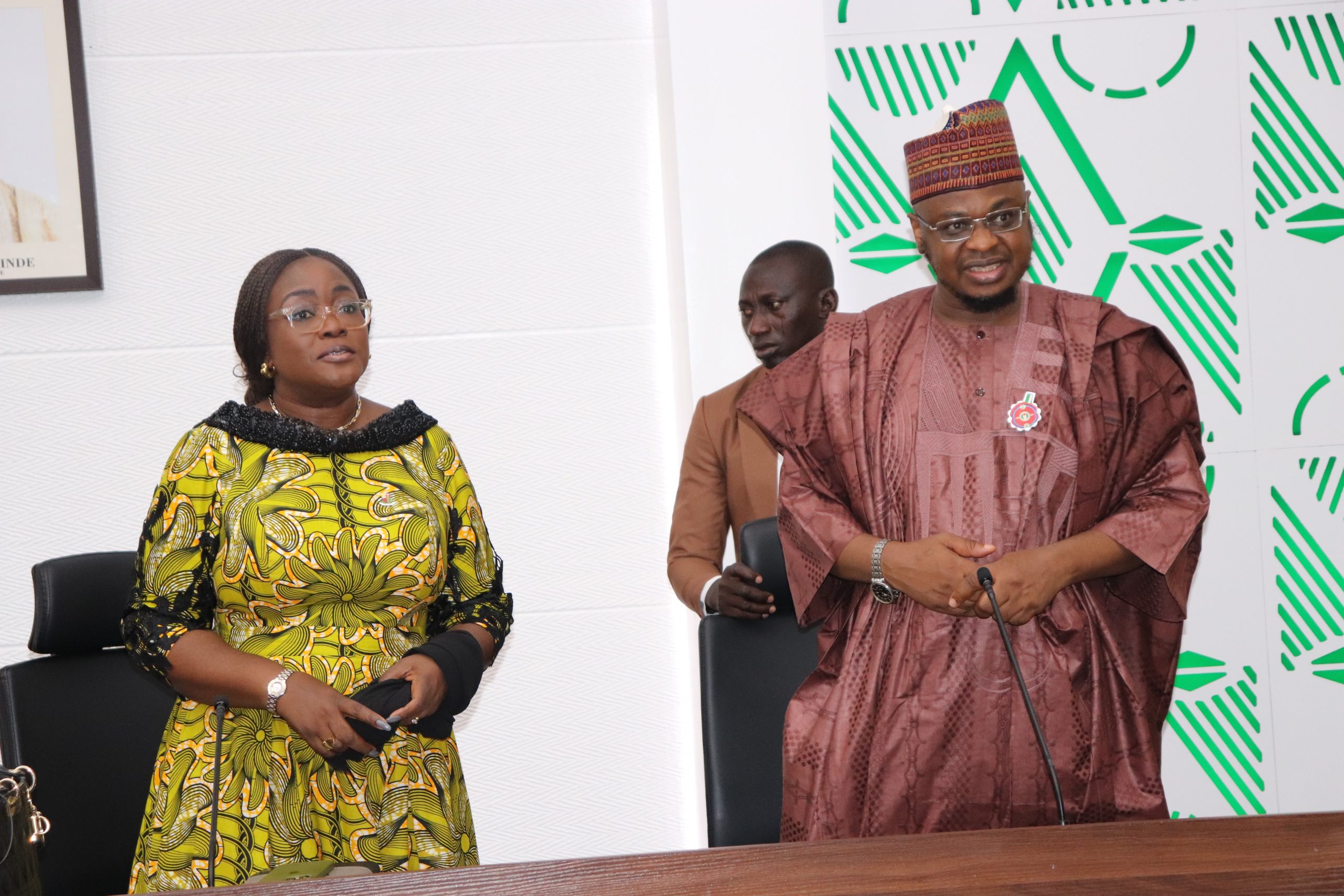
Cross section of participants at the ongoing 10th Edition of the National Council on Communications and Digital Economy, which commenced at the International Conference Centre, University of Ibadan, Oyo State, have commended the Federal Government for its commitment in providing leadership and guide for industry growth.

The commendation followed the listing of about 20 policies by the Minister of Communications and Digital Economy, Prof. Isa Ali Ibrahim Pantami, aimed at promoting different areas of the digital economy, including the flagship National Digital Economy Policy and Strategy (NDEPS) 2020 – 2030, and the Nigerian National Broadband Plan (NNBP) 2020-2025 – all of which have started to yield concrete, positive results for the economy.​

Pantami said the recent assessments by the Foreign Development and Commonwealth Office (FDCO) and the KPMG Consulting, which adjudged the communications and digital economy sector as the best-performing sector in Nigeria, were based on eight key priority areas, one of which was in revenue generation, where the sector has raised government revenue profile by 594 per cent.​

Among those who applauded the Federal Government’s vision for the sector are the Secretary to Oyo State Government, Her Honour Olubamiwo Adeosun, who represented His Excellency Oluseyi Makinde, Governor of Oyo State; and the Executive Vice Chairman and Chief Executive Officer (EVC/NCC) of the Nigerian Communications Commission (NCC), Prof. Umar Danbatta.​

Emphasising the centrality of digital innovation and digital entrepreneurship to a robust digital economy, the Minister commended the participants for the quality of evaluation, recommendations, and criticisms that attended the memoranda presented at the Council.

He urged the media to give the best coverage to the communique to be issued after the meeting and enjoined professionals in the media systems of communication to note specific recommendations and the corresponding role of each stakeholder in the implementation of each item in the communique.

The Minister announced that 110 memoranda and recommendations were presented to the Council, out of which 67 were approved for Council implementation. The remaining 43 recommendations are to be reconsidered in the next meeting of the Council.

Pantami thanked the Government of Oyo State and the Olubadan of Ibadan, His Imperial Majesty, Dr. Lekan Ishola Balogun, Alliwo Okumade II, for receiving him and his team on courtesy visit he paid earlier to the Palace, and to the Governor’s Office where Adeosun had earlier received the Minister on behalf of the Governor.

In his goodwill message, the EVC of NCC, Danbatta praised the Minister for his impeccable supervisory role as the leader of the sector. Danbatta also praised the Federal Government for being the most revolutionary administration in terms of commitment to the utilisation of digital resources for the growth of individuals, businesses and the national economy through design of policies to achieve concrete, measurable and remarkable deployment of cutting-edge technological applications.​

On behalf of the Board and Management of NCC, Danbatta thanked participants for their attendance and active participation, which, he said, attested to the importance they all attached to the promotion of digital economy and culture.​

Amplifying the voice of the Minister, the EVC stated that the participants’ commitment to the government’s digital economy agenda has been well demonstrated in the methodical review of the recommendations of the 9th Council meeting, objective identification of achievements, and the frank approach taken to chart the path towards future goals and expectations.​

The EVC promised that the “NCC remains committed to supporting all policies, strategies, plans and initiatives that promote the provision of modern, universal, efficient, reliable, affordable, and easily accessible communications services and give the widest range throughout Nigeria.” He also emphasised that it is in demonstration of its commitment that the Commission undertook a timely release of spectrum in the 3.5GHz band for the deployment of 5G services to ensure that Nigerian citizens, businesses, public institutions and other stakeholders are enabled with requisite infrastructure to engage in the emergent digital economy and culture.


 

“Why haven’t you made a post for Sammie since he passed?”

“Sammie will not see the post” has been my answer to this question… several times lately.
That’s the exasperating thing about these post-humous posts. They’re not like birthday greetings. We’re not expecting that in a few days, the guy would post a thank-you message appreciating all who took out time to “felicitate with me on the occasion of my passing…”

Let me share with you, instead, what I said to Sammie in one of our conversations; and
I’m so glad and grateful to God that I was able to speak these words to him before he departed.

“God’s trusted warhorse! Weather-beaten, rugged warhorse.”

Those were my first words as we embraced. At that, he flashed a generous smile, his brilliant white teeth, contrasting sharply with his dark (more like black) face.

God trusts you, Sammie. God trusts you so much.

*”All these secular dealings and places wey you de enter, you have never hidden the name of Jesus”.* I’ve never heard that you got on any of those platforms and changed your songs. *Na so so Jesus Jesus you de shout.*
You’re a terribly misunderstood person. *I know say you waka rough.* *The last mess wey you mess never smell finish.* *But na you dem catch, no mean say na you do pass.*
*No lie down where you fall.* Get up and move on.

Many have failed God in many ways. Their failings may be in financial, sexual or emotional infidelity, greed, anger management, lying etc. People who God has shown mercy and spared; people whose shame the Lord has covered are shouting for another to be crucified! Harsh judges of our frailties.

If you listen to the crowd, you may not hear God.

Some people harsh pass God.
I have interacted with many gospel and secular musicians and I know that too few are as humble, God-loving and man-loving as you are. Sammie, I thank God for your beautiful heart.
Ozioma, soldier on!


Buchi


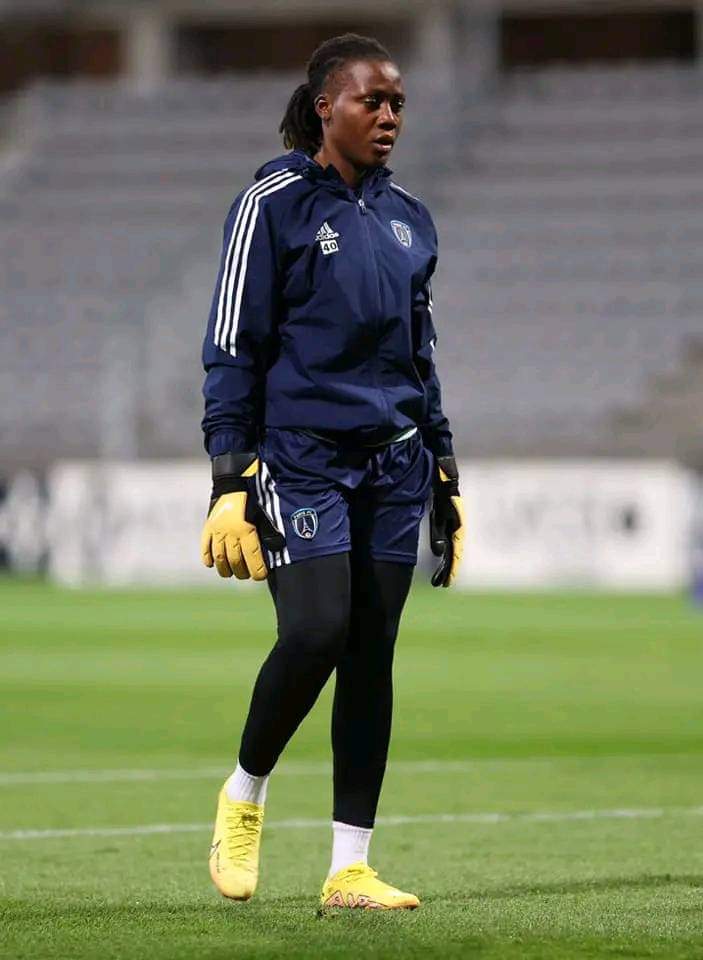
Super Falcons goalie Chiamaka Nnadozie has let the cat out of the bag concerning his little begining as an amateur playing in Nigeria, as a Nigerian under Nigerian parents.

“I kept on going because of my Dad, at a point he swore that I will never become somebody in life,” she told Eagles Tracker in an interview session.

“He has concluded that I’m just going to be a useless person in life.

“At a point, my Dad chased me out of the house because I refused to learn a trade; then I gave myself time that if by 20years of age I don’t make it in life, I will go back to my Dad and ask for forgiveness,” she added.

She continued, “Before I am even 15, I got a call-up by the U-17, that was a stepping stone; and when he saw me on television he was happy and called back that I’m his daughter.”

“He was really the one that motivated me,” she concluded.

21-year-old Chiamaka is playing for Paris FC in France’s Feminine Division and the Nigeria National Team.

#CFC

Update: My Dad Swore That I’ll Never Become Useful In Life; And He Chased Me Out Of The House – Chiamaka Nnadozie


Super Falcons goalie Chiamaka Nnadozie has let the cat out of the bag concerning his little begining as an amateur playing in Nigeria, as a Nigerian under Nigerian parents.

“I kept on going because of my Dad, at a point he swore that I will never become somebody in life,” she told Eagles Tracker in an interview session.

“He has concluded that I’m just going to be a useless person in life.

“At a point, my Dad chased me out of the house because I refused to learn a trade; then I gave myself time that if by 20years of age I don’t make it in life, I will go back to my Dad and ask for forgiveness,” she added.

She continued, “Before I am even 15, I got a call-up by the U-17, that was a stepping stone; and when he saw me on television he was happy and called back that I’m his daughter.”

“He was really the one that motivated me,” she concluded.

21-year-old Chiamaka is playing for Paris FC in France’s Feminine Division and the Nigeria National Team.

#CFC


Cross section of participants at the ongoing 10th Edition of the National Council on Communications and Digital Economy, which commenced at the International Conference Centre, University of Ibadan, Oyo State, since 4th December 2022, have commended the Federal Government for its commitment in providing leadership and guide for industry growth.

The commendation followed the listing of about 20 policies by the Minister of Communications and Digital Economy, Prof. Isa Ali Ibrahim Pantami aimed at promoting different areas of the digital economy, including the flagship National Digital Economy Policy and Strategy (NDEPS) 2020 – 2030, and the Nigerian National Broadband Plan (NNBP) 2020-2025 – all of which have started to yield concrete, positive results for the economy.

Pantami said the recent assessments by the Foreign Development and Commonwealth Office (FDCO) and the KPMG Consulting which adjudged the communications and digital economy sector as the best performing sector in Nigeria, were based on 8 key priority areas, one of which was in revenue generation, where the sector has raised government revenue profile by 594 percent.

Among those who applauded the Federal Government’s vision for the sector are the Secretary to Oyo State Government, Her Honour Olubamiwo Adeosun, who represented His Excellency Oluseyi Makinde, Governor of Oyo State; and the Executive Vice Chairman and Chief Executive Officer (EVC/CEO) of the Nigerian Communications Commission (NCC), Prof. Umar Danbatta.

Emphasising the centrality of digital innovation and digital entrepreneurship to a robust digital economy, the Minister commended the participants for the quality of evaluation, recommendations, and criticisms that attended the memoranda presented at the Council. He urged the media to give the best coverage to the communique to be issued after the meeting. He also enjoined professionals in the media systems of communication to note specific recommendations and the corresponding role of each stakeholder in the implementation of each item in the communique.

The Minister announced that 110 memoranda and recommendations were presented to the Council, out of which 67 were approved for implementation. The remaining 43 recommendations are to be reconsidered in the next meeting of the Council.

Pantami thanked the Government of Oyo State and the Olubadan of Ibadan, His Imperial Majesty, Dr. Lekan Ishola Balogun Alli, Alliwo Okumade II, for receiving him and his team on the courtesy visit he paid earlier to the Palace, and to the Governor’s Office where Adeosun had also received the Minister on behalf of the Governor.

In his goodwill message, the EVC/CEO of NCC, Prof. Umar Danbatta praised the minister for his impeccable supervisory role as the leader of the sector. Danbatta also praised the Federal Government for being the most revolutionary administration in its commitment to the utilisation of digital resources for the growth of individuals, businesses and the national economy through design of policies to achieve concrete, measurable and remarkable deployment of cutting-edge technological applications.

On behalf of the Board and Management of NCC, Danbatta thanked participants for their attendance and active participation, which attested to the importance they all attached to the promotion of digital economy and culture.

Amplifying the voice of the Minister, the EVC stated that the participants’ commitment to government’s digital economy agenda has been well demonstrated in the methodical review of the recommendations of the 9th Council meeting, objective identification of achievements, and the frank approach taken to chart the path towards future goals and expectations.

The EVC promised that, “NCC remains committed to supporting all policies, strategies, plans and initiatives that promote the provision of modern, universal, efficient, reliable, affordable, and easily accessible communications services that give the widest range throughout Nigeria”. He also emphasised that it is in demonstration of its commitment that the Commission undertook a timely release of spectrum in the 3.5GHz band for the deployment of 5G services to ensure that Nigerian citizens, businesses, public institutions and other stakeholders are enabled with requisite infrastructure to engage in the emergent digital economy and culture.


During the early years of America’s Civil War, President Abraham Lincoln sought a limited conflict against people he still regarded as fellow countrymen and with whom he sought reconciliation. Only after three years of stalemate did he turn to “Unconditional Surrender Grant,” who in turn unleashed General William Tecumseh Sherman to “make Georgia howl” and help bring the war to its decisively violent conclusion.

Russian President Vladimir Putin waited only six months before switching from a special military operation to full scale war against Ukraine. Putin’s initial assault was limited to barely 150,000 troops. He expected a quick victory followed by negotiations on his principal concerns: Russian control of Crimea, Ukrainian neutrality, and autonomy for the Russian population in the Donbas, but he was wrong. Putin had not counted on Ukraine’s stiff resistance or the West’s massive military and economic intervention. Faced with a new situation, Putin changed his strategy. Now he is about to unleash his own General Sherman and make Ukraine howl.

Last month Putin gave General Sergey Surovikin overall command of Russia’s war in the Ukraine. Surovikin comes from the technologically sophisticated Aerospace Forces, but has fought on the ground in Afghanistan, Chechnya, and Syria where he is credited with saving the Assad regime. Surovikin has stated publicly that there will be no half measures in Ukraine. Instead, he has begun to methodically destroy Ukraine’s infrastructure with precision missile attacks.

Armies need railroads and while Sherman systematically tore up the tracks leading to Atlanta, Surovikin is destroying the electricity grid which powers Ukrainian railroads. This has left Ukrainian cities cold and dark, but Surovikin seems to agree with Sherman that “war is cruelty, and you cannot refine it.”

Russia has now put its economy on a war footing, called up the reserves, and assembled hundreds of thousands of troops, including both conscripts and volunteers. This army is equipped with Russia’s most sophisticated weapons, and contrary to much Western reporting, is far from demoralized. Ukraine on the other hand has exhausted its armories and is totally dependent on Western military support to continue the war. As Chairman of the Joint Chiefs of Staff General Mark Milley noted last week, Ukraine has done about all it can.

READ MORE

Once Ukraine’s rich black soil has firmly frozen, a massive Russian onslaught will commence. In fact, it has already begun at the important transportation hub of Bakhmut, which has become something of a Ukrainian Verdun. We expect Bakhmut to fall and predict that without much more Western support, Russia will recapture Kharkov, Kherson, and the remainder of the Donbas by next summer.

As the West did in Vietnam, Afghanistan, and Iraq, we are stumbling into another optional, open-ended military commitment. Ukrainian troops are being trained in Europe. Western defense contractors are already maintaining Ukrainian military equipment and operating the HIMAR missile systems. Active-duty American military personnel are now in Ukraine to monitor weapons deliveries. As the Russian offensive gains momentum, we expect loud voices to call for sending ever-more advanced weapons and eventually NATO boots on the ground to defend Ukraine. These voices should be unambiguously rejected for many reasons. Here are a few.

Generations of Western leaders worked successfully to avoid direct military conflict with the Soviet Union. They recognized that, unlike Moscow, the West has very little strategic interest in who controls Donetsk. They were certainly unwilling to risk a nuclear war for Kharkiv. Ukraine is not a member of NATO, and the alliance has no obligation to defend it. Nor has Putin threatened any NATO member, but he has made clear that any foreign troops entering Ukraine will be treated as enemy combatants. Sending NATO troops into the Ukraine would thus turn our proxy war with Russia into a real war with the world’s largest nuclear power.

Some have presented this conflict as a morality play, between good and evil, but the reality is more complex. Ukraine is no flourishing democracy. It is an impoverished, corrupt, one-party state with extensive censorship, where opposition newspapers and political parties have been shut down. Before the war, far right Ukrainian nationalist groups like the Azov Brigade were soundly condemned by the U.S. Congress. Kiev’s determined campaign against the Russian language is analogous to the Canadian government trying to ban French in Quebec. Ukrainian shells have killed hundreds of civilians in the Donbas and there are emerging reports of Ukrainian war crimes. The truly moral course of action would be to end this war with negotiations rather than prolong the suffering the Ukrainian people in a conflict they are unlikely to win without risking American lives.

And then there is always the unexpected turn of events where tensions in one region compound and spill over into another. There is a growing possibility of Iran launching a preemptive military strike on Israel. The revolutionary regime in Iran is facing an increasingly serious popular revolt. A new government in Israel is determined to prevent Iran from acquiring nuclear weapons. The JCPOA is dying and with it any hope of sanctions relief for Iran’s failing economy. A war would unite Iran’s population in a patriotic struggle, damage Israel’s ability to strike Iran, and pressure the West to negotiate an end to sanctions.

There is little doubt that the United States would be drawn into any conflict between Israel and Iran. What worries us is that Iran has been supplying Russia with weapons for the war in Ukraine and Moscow might feel obliged to come to the aid of its allies in Tehran. That sort of domino effect is precisely what started the First World War. Who expected that the assassination of an Austrian grand duke by a Serbian anarchist in Bosnia would lead to thousands of Americans dying in France? We do not need a replay.

Perhaps we are wrong. Perhaps there will not be a Russian winter offensive or perhaps the Ukrainian armed forces will be able to stop it. However, if we are correct and February finds General Surovikin at the gates of Kiev, we need to have soberly considered and honestly debated as a nation and an alliance the extent of our commitment to Ukraine and what risks we are willing accept to our own security.


Note

David H. Rundell is a former chief of mission at the American Embassy in Saudi Arabia and the author of Vision or Mirage, Saudi Arabia at the Crossroads.

Ambassador Michael Gfoeller is a former Political Advisor to the U.S. Central Command. He served for 15 years in Eastern Europe and the former Soviet Union.


A malware, XENOMORPH, that installs Trojan in banking apps on the Android platform to steal login details, raid bank accounts,  and read the users SMS, has been flagged by the Nigerian Communications Commission’s Computer Security Incident Response Team (NCC-CSIRT). The Team suggests that owners of compromised devices take the extreme measure of doing factory resetting of infected devices.


NCC-CSIRT, citing Zscaler ThreatLabz, said, “The Todo: Day Manager hijacks your login info from banking apps, and can even read your SMS messages. It installs a banking trojan malware called Xenomorph that allows the app to intercept your two-factor verification codes (typically delivered over text) to raid your logins – and bank account.


“Xenomorph performs overlay attacks by exploiting accessibility permissions in Android, resulting in the overlaying of fraudulent login screens on banking apps aimed at exfiltrating credentials. The Android app makes itself intentionally difficult to delete. You need to search your phone for it immediately and uninstall it.”


“It starts with asking users to enable access permission. Once provided, it adds itself as a device admin and prevents users from disabling Device Admin, making it un-installable from the phone.  If you haven’t given permission to the app, then you should be able to uninstall it safely. Otherwise, you may have to back up your files and then factory-reset your phone to clear the app completely,” it advised.


In terms of potential solutions to the malware, NCC-CSIRT advised that “Search your phone for the app and uninstall immediately or backup your files and factory reset your phone.


“Only search for an app in the Google Play Store, pay close attention to the search results, look at the apps icons, note that fake apps almost always use the icon from the app they’re faking, then look at the developer’s name and make sure it’s from the right developer.


Also, look at the app’s download count. If the app has a lot of downloads going into millions to hundreds of thousand that’s a clue that it’s the right app.  Then, finally, look at the app’s description and screenshots to ensure that it doesn’t contain multiple spelling or grammar mistakes or otherwise broken English.


“Make use of Google Play Protect, which regularly scans your apps for malware and will alert you to uninstall rogue apps.”


The CSIRT is the telecom sector’s cyber security incidence centre set up by the NCC to focus on incidents in the telecom sector and as they may affect telecom consumers and citizens at large.


The CSIRT also works collaboratively with Nigeria Cybersecurity Emergency Response Team (ngCERT), established by the Federal Government to reduce the volume of future computer risk incidents by preparing, protecting, and securing Nigerian cyberspace to forestall attacks, and problems or related events.


The Nigerian Communications Commission (NCC) hereby announces that by the close of business on Monday, December 5, 2022, only two companies expressed interest in the auction of the 3.5GHz Spectrum band namely;

i.          Airtel Networks Limited (Airtel) and

ii.          Standard Network & Connections Limited (Standard Network).

However, only Airtel paid the Intention to Bid Deposit (IBD) as stipulated in the Information Memorandum (IM) whereas, Standard Network sent an email appeal for the deadline to be extended by twelve (12) working days which was not acceptable in view of the auction timetable.

Having met all the provision in the IM, Airtel has, therefore, emerged as the sole Bidder.

Consequently, there shall be no further bidding and the Commission will proceed to the Assignment Stage in line with the published Information Memorandum guiding the licensing process.

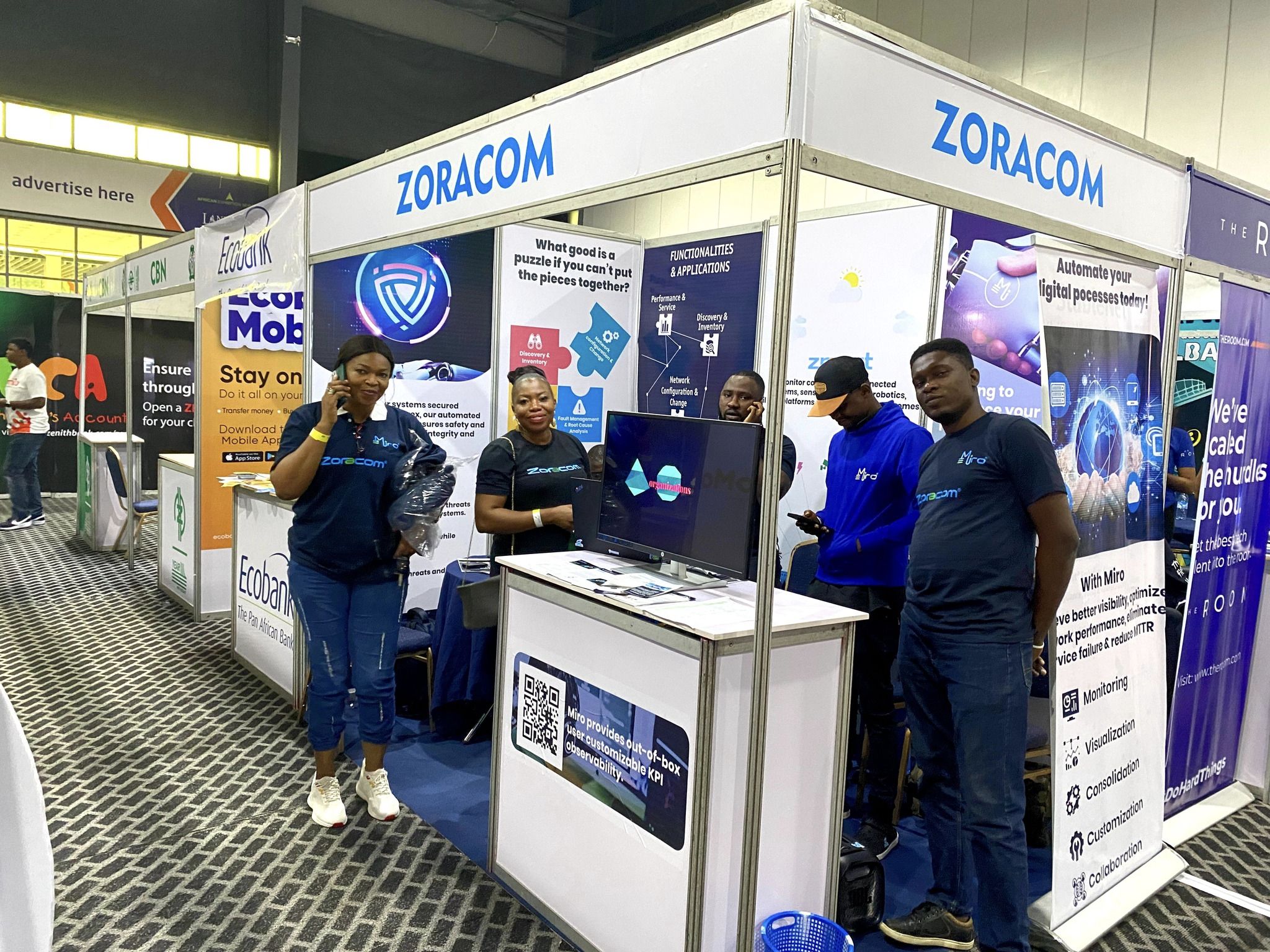
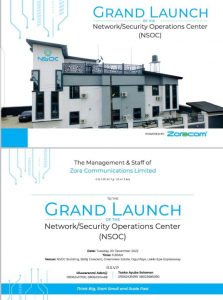
As businesses are getting more digitalized today, with a lot of business processes going online and virtual, the need to rejig and strengthen the cyber security architecture becomes imminent for any business to survive globally, Nigeria inclusive. Breaches are commonplace today, costing corporate world billions of dollars to combat. In line with this narrative, ZORACOM, an indigenous information technology (IT) firm located in Lekki will be launching their Network/Security Operation Centre (NSOC). This is to ensure that corporate organizations in the country have access to world-class cyber-security solutions in a cozy environment manned by competent manpower.

Speaking on the intention of ZORACOM to unveil this facility, John Nwachukwu, one of the Chief  Executives Officer of ZORACOM opined” We believe in doing things right, we are looking at how to service our existing clients better and how we can improve. We have a full grasp of the importance of cyber-security and business continuity; we are here to ensure that organizations are fully protected from these breaches that occur on daily basis. We are going to launch this NSOC facility just to ensure that firms are safe in their cyber environment. “

“Being a Zoracom Ninja (Zoran) means learning and doing new things every day, that revolve around helping digital businesses in data collection and analysis to make informed profitable decisions. Remember, we are on the journey of automating businesses, aimed at increasing end use revenue, enhancing satisfaction, and innovating solutions for business success”, John added.

To be launched this December 20th, the facility will be one of a kind in the country and will be a turning point in the area of cyber security solutions and manpower.  The facility will be a testament of the leading position of ZORACOM as an IT and Cyber-Security solution provider.

Zora Communications Limited is a technology company, automating digital transformation for cybersecurity, cloud, network, and service management. Zoracom, apart from cybersecurity solutions offers Broadband Access Networks,   Mobile Networks(3G/UMTS, LTE/4G, 5G),LoRa Access Networks, Radio Networks(Point-to-Point),Optical/SDH, Ethernet, IP/MPLS Aggregation. Others are Optical, IP/MPLS Backbones, Security/Firewalls and Voice/Soft Switch


Anthony Nwosu


” We believe in doing things right, we are looking at how to service our existing clients better and how we can improve. We have a full grasp of the importance of cyber-security and business continuity; we are here to ensure that organizations are fully protected from these breaches that occur on daily basis. We are going to launch this NSOC facility just to ensure that firms are safe in their cyber environment. “


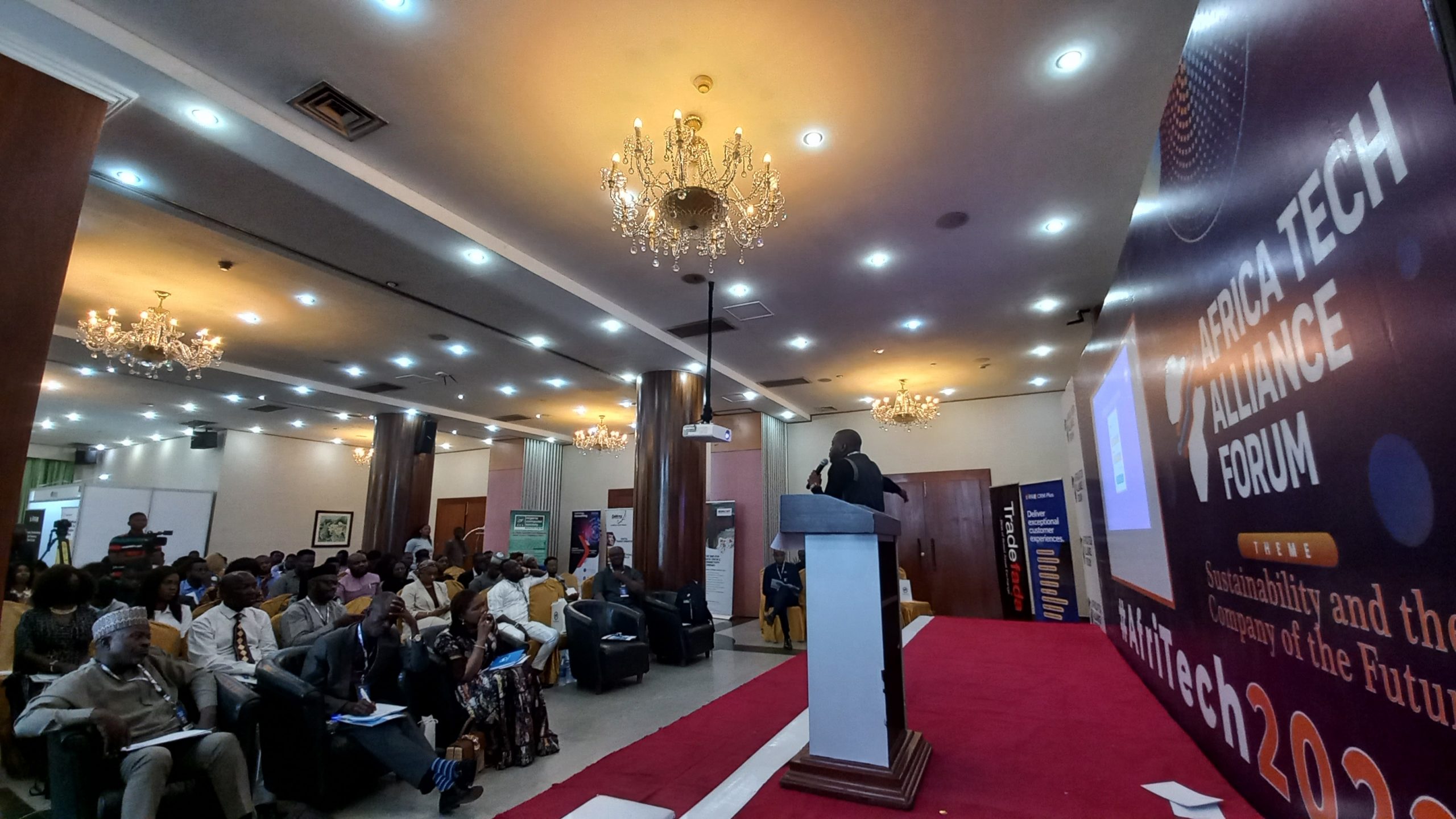
Dr. Oluseyi Akindehinde, the Co-founder and Chief Technical Officer (CTO) of Digital Encode Limited, has identified blockchain and the mobile phone as going to be fundamental to the company of the future.

Making a presentation at the just concluded Africa Tech Alliance Forum, otherwise known as AfriTECH 2.0, held in Lagos, recently, Akindehinde said that with the coming of the 5G technology, it is expected that the company of the future has to provide services along those lines.

The cybersecurity expert however, argued that it is doubtful that humans will completely live their lives using such tools as the mobile phone and the internet without any other thing explaining why he titled the presentation “Web 3.0, Blockchain and a decentralized digital identity.”

According to Akindehinde, “Blockchain is actually three things. Blockchain is a protocol, like when you have an email, for instance. Email has an organized protocol; it is called SMTP. Blockchain is also a protocol.

“Number two, why do you have a protocol? It presupposes that there is a network; there are servers that host the email. The last thing about blockchain is that it is software. That means you have the SMTP, the servers, and the software.

“When we talk about blockchain in this part of the world, it is usually an anonymous cryptocurrency. Cryptocurrency is just the work of four quadrants which are forgeable, non-forgeable, transferable, and non-transferable.

“Cryptocurrency is forgeable and transferable. When we talk about it being forgeable, if I bring out a thousand naira note for instance, you can bring yours, and we exchange it; it doesn’t matter. The problem with a physical asset like that is that we can only make that transaction when we are in the same space,” he further disclosed.

While explaining the difference between electronic transaction and digital transaction, Akindehinde stated that what people often do online is electronic because there is somebody in the middle granting access.

“When you log onto your bank mobile app and you make a transaction from bank A to bank B, what you are doing is transferring messages; it’s like email. When you take your ATM card to an ATM, what you are doing is that you are delegating control of that transfer to that man in the middle which is your bank.

“This brings out two things: The concept of ownership and the concept of control. So, when you are doing that electronic transaction, you do not own that transaction, you are only in control of it. If the network goes down, you can no longer do that transaction.

“Your university degree for instance, is an asset to you, it’s unique to you; it’s non-transferrable. Unlike money you can exchange with another person, you cannot exchange your certificate with another person.

“Why can’t we, therefore, have a digital driver’s license or a digital passport, or a digital identity management system? Why are we still carrying plastics? That is why there is the need to power a digital economy through decentralized identities.

“We all have BVNs and NINs, why can’t I be authenticated with my NIN for instance, and I sign in and go? When you are online and you go and authenticate to your bank, by putting your username and password, your bank is not authenticating to you,” he said.

On the difference between Web 2 and Web 3, the Digital Encode CTO said that “Web 2 simply means that something is entirely online. I can’t use what is online in the physical world. For instance, if you have Gmail, Google Authentication or Microsoft, you can only use it on Google. The authentication resides on the server of the bank. That is the entire concept of Web 2.

“Web 3.0 on the other hand simply means that instead of having all the things stored on a centralized internet, you now have the data in your control; you are the owner, and you are in control of it. And that is why we have what is called a self-solving identity system.”

Dr. Akindeinde also received “AfriTECH Blockchain Technology Mastery Personality Award 2022”.

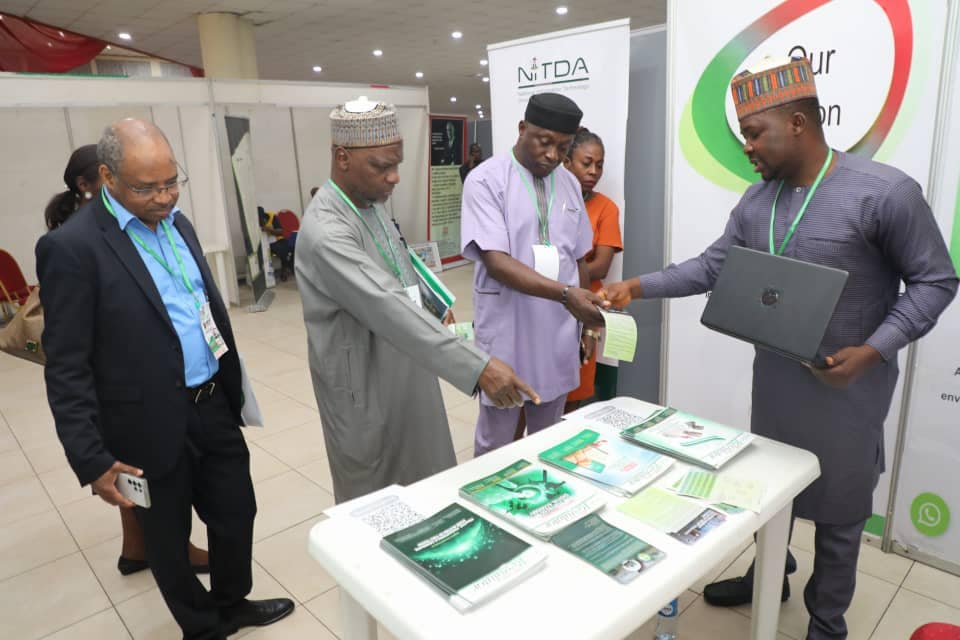
The National Information Technology Development Agency (NITDA), is participating at the ongoing 10th Regular Meeting of the National Council on Communications and Digital Economy, (NCCDE), taking place at the International Conference Centre, University of Ibadan, Ibadan, Oyo State.
Permanent Secretary, Federal Ministry of Communications and Digital Economy, Dr. William Alo led the Board Chairman, National Identity Management Commission and the Director General of the Commission Prof. Usman A. El-Nafaty and Engr. Aliyu Aziz Abubakar respectively to NITDA’s booth
The theme of this year’s Council meeting is ‘Digital Innovation and Entrepreneurship as a Panacea for Challenges to Sustainable Economic Development in Nigeria’.
NITDA is presenting three new memoranda and one updated memorandum to the Council for consideration.