The Federal Government has flagged off the capacity building on emotional intelligence aimed at increasing self-awareness, self-management, social awareness and relationship management for improved service delivery by the rank and file of the Nigeria Police Force (NPF).

The opening ceremony of the One – Day Sensitization Workshop and Capacity Building was graced by the Minister of Police Affairs, Muhammad Maigari Dingyadi ((Dr) at the Murtala Nyako Multi-Purpose Hall in Yola, Adamawa State.

The Minister in his speech pointed out that due to the demanding nature of Police duties, a Police Officer is exposed to stress and anxiety which could be transferred to the members of the public, resulting to infractions. He noted that near absence of self-management in some policemen has resulted to bringing the reputation of the entire force to odium and near disrepute.

“The good news is that the Ministry of Police Affairs is working closely with the Police Management to institutionalize service orientation among officers and men of the Nigeria Police, to deepen citizens’ trust, confidence and increased participation for robust human intelligence,” he stated.

“It is hoped that the workshop will assist in self – critique, in order to strengthen perceived weaknesses in emotional intelligence and improve police – citizens relationship for enhanced internal security management in Nigeria”.

Dingyadi stressed that the workshop has been scheduled to hold in other geopolitical zones in the coming days and weeks as part of the Ministry of Police Affairs’ efforts at reforming and re-orienting the members of the Nigeria Police, with special emphasis on junior officers. He explained that they constitute a vast majority, and interface more with the populace, upon which opinions are formed on the Nigeria Police in general.

The Minister reiterated that the capacity building workshop is coming at a crucial time in the nation’s history when Nigerians will once again, exercise their franchise in performing their civic responsibility, to elect leaders of their choice in the forthcoming general elections. He re-assured of government’s commitments to improving the welfare and working conditions of policemen across Nigeria. This, through enhanced emoluments, upgrading of barracks, working environments and provision of modern security enablers to tackle criminalities.

According to him, these laudable interventions by President Muhammadu Buhari’s administration in policing, deserves Nigerians’ ownership and reciprocity through cooperation with officers and men of the Nigeria Police. He inferred that to realize government’s desire for active citizens’ participation in policing endeavours, Nigerians must embrace global best practice through seeing the Nigeria Police as their own. This he observed will in effect, eliminate subjective apathy which has hitherto hindered efficient police service delivery in Nigeria.

In his goodwill message, the Commissioner of Police in the Adamawa Police Command, Sikiru Kayode Akande (CP) thanked the Ministry of Police Affairs for organizing the workshop to educate the participants in view of the forth coming 2023 General Elections. He avowed that the rank and file would be sensitized in key areas such as improvement in their attitude to work for effective service delivery, enhanced robust relationship between the community and the police and observance / respect for the human rights of citizens.

Earlier in her welcome address, the Director of Reforms and SERVICOM in the Ministry, Maryam Dalhatu Abdulmalik pointed out that the workshop on ‘attitudinal change for effective service delivery’ was part of the varied police reform activities which is poised to identify and fill the gaps that exist between Police Officers and citizens in the areas of unfriendliness and mistrust.


It is said that there is no such thing as a new idea, but rapidly evolving technology, demand for new products and services and the growth of start-up businesses across industrial and geographical sectors means that keeping up with research and development is imperative for businesses large and small, says Andrea Tucker, Business Application Head (R&D) at e4.

In 2019, around 2% of global GDP was ploughed into Research & development (R&D) by industry, governments and research and academic institutions. Most realise that they are playing a long game and that ROI may take time to materialise which is why organisations apply their resources with consistency and continuity.

Traditionally, R&D spend was predominantly in the manufacturing and production sectors – think pharmaceuticals which historically have invested a large proportion of turnover back into new product development. Today, it is common to see equivalent percentages spent by tech companies and new entrants keen to innovate and scale their platforms and processes.

There are a number of challenges, not just for South African tech companies which lag behind in R&D spend of countries like Japan, China, USA, South Korea, and Germany. Irrespective of budget, anywhere in the world, integrating R&D thinking through company structures requires both budget and big-picture thinking on the part of company leadership.

R&D no longer means consigning eccentric professor types to a backroom and waiting for a ‘eureka’ moment. Today’s most successful R&D departments are fully integrated into a company’s operations and open to inputs from all employees who may have a good idea that can be developed to benefit the company.

The most successful R&D departments are also those that are well-resourced financially, with relevant skills, and are able to protect their intellectual property when a new idea flows out of the creative process, and this is often beyond the capacity of SMMEs. But what large companies have in terms of these resources, they often lack in agility, and can be slow to adapt and implement new products and services. There is room for collaboration here.

If a large corporation is not thinking strategically and is allowing R&D to happen in isolation, or if they outsource this service to a company that does not have its finger firmly on the current pulse of the company, it runs the risk of developing in the wrong direction and losing sight of the customer, wasting time and money in the process on a product that was never wanted in the first place. R&D goes firmly hand in hand with market research.

This is not to say, however, that R&D should focus only on the core activities of a business. Failing to plan for the future is planning to fail. Kodak is a great example of a company that did not invest in forward-thinking R&D projects, or at least not in time enough to save the company from extinction.

Strategically applied, R&D can be a silver bullet solution to maintaining a competitive advantage in an extremely competitive world. Companies’ R&D progress is generally a closely guarded secret. Until a product or service is ready to launch publicly and commercially it is often kept closely under wraps, for obvious reasons. There is a case, however, for sharing resources between large and small companies. The dynamism within small business structures can be leveraged by large juggernauts to pilot projects for eventual rollout. This is a ‘win-win’ scenario that can benefit many parties.

With a potentially low or at least long-time-coming ROI on many R&D projects, it is not surprising that in lean times companies see fit to trim their budgets, but we contend that this is short-sighted and can damage a company’s growth potential.

Failing to invest in R&D in virtually any industry sector, but most especially within tech companies, is to be running a business without a vision for a future. There may be a degree of trial and error that businesses must be prepared to accept – not all new ideas will land and work for the business – but if a company never tries, it will never find out.


 Lagos-based communication and events consultancy, AT3 Resources is set to mark its fifth year of providing strategic public relations, events and media interventions to corporates, individuals and brands in Nigeria and across Africa. To mark this milestone, the company will be hosting a week-long digital marketing bootcamp for Small and Medium Scale Enterprises (SMEs), themed ‘Leveraging Possibilities for SMEs in The Digital Age.’

The bootcamp which is the first edition is designed to empower SMEs to seize the growth opportunities presented by the digital era. During the bootcamp, participants will be armed with the best digital marketing tools, tips, trends, tactics and strategies from leading industry experts that will support them in their quest to actualise their full potential as well as shape how they connect with their target audiences.

Speaking on the initiative, Founder and Chief Executive Officer, AT3 Resources, Tosin Adefeko said, “In the course of our journey, we frequently encounter small medium businesses who desire communications interventions but do not have the requisite knowledge or resources to support their growth. In commemoration of our milestone 5th anniversary, we decided to lend our support to the growth of small businesses in tune with our belief that SMEs are the lifeblood of our economy.

The bootcamp will be facilitated by a blend of digital marketing and communications experts such as Nkiru Olumide-Ojo, Founder, The Lighthouse Network; Frankline Ozekhome, Pop Culture Strategist; Rufai Oseni, Global Speaker & Development Expert; Ugochukwu Obi-Chukwu, Founder, Nairametrics and Oluwasola Obagbemi, Corporate Communications Manager, Anglophone West Africa, Meta among many others.

To enrich the learnings, 10 business leaders/corporate titans and accomplished entrepreneurs are lined up to share their personal ‘Recipe for Success’ nuggets with the participants. On the line up are Aishah Ahmad, Deputy Governor, Central Bank of Nigeria; Asue Ighodalo, Founding Partner, Banwo & Ighodalo; Austin Okere, Founder, CWG Plc; Dr. Biodun Shobanjo, Chairman, Troyka Holdings Limited; Dimeji Salaudeen, Partner, KPMG; Folake Soetan, CEO, Ikeja Electric; Ibukun Awosika, Founder/CEO, The Chair Centre Group; Osayi Alile, CEO, ACT Foundation; Steve Babaeko, CEO/Chief Creative Officer X3M Ideas, President, AAAN; and Tara Fela-Durotoye, CEO, House of Tara International.

The digital marketing bootcamp will enable SMEs to take advantage of growth prospects in the digital media era. The bootcamp will include a deep dive into areas like, online reputation management, communications strategy, digital marketing, brand & visuals, and the ‘Always on’ Entrepreneur.


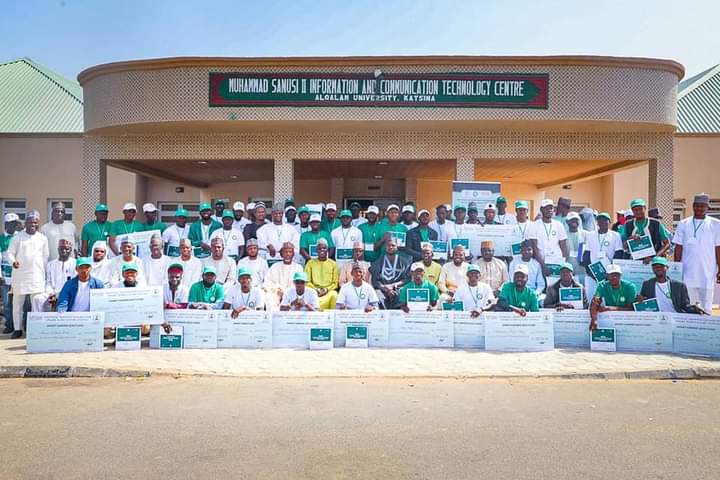
The Federal Government of Nigeria, through National Information Technology Development Agency (NITDA), distributed smart agriculture materials to beneficiaries of the National Adopted Village for Smart Agriculture (NAVSA) 5-Day Empowerment Programme which took place at Al-Qalam University, Katsina, Katsina State.

NAVSA Programme is designed to accelerate massive job creation, economic diversification and growth, facilitate the integration of digital technologies and innovations in the agriculture processes and practices in order to significantly increase productivity, improve food security, ensure an eco-friendly agricultural practice, attract potential talents and youths into agriculture professions to maximise outcomes.

In this edition, the Federal Government has improved green energy-powered smart brooding to enhance the survival rate of broilers, a smart irrigation system to support a year-long production, and a soil nutrient monitoring system to support information-driven farming on a demo land.

This is in addition to other benefits such as: Smart Device, 100,000 Naira seed fund, AgTech training/capacity Building, Connectivity (Internet and CUG), NAVSA Platform, Financial inclusion through digital wallets, e-Extension and insurance services, Continuous reinvestment model opportunities and Unmanned Area Vehicle (UAV)/Drone for smart farm.

Speaking during the closing ceremony on Friday, the Director General, National Information Technology Development Agency (NITDA), Kashifu Inuwa CCIE who was represented by Ag. Director, Digital Economy Development of the Agency, Engr. Salisu Kaka, stated that, “Agriculture remains one of the critical sectors of Nigeria’s economy. This is evident in the policies of the current administration led by President Muhammadu Buhari GCFR. Every economic, developmental and social policy gives agriculture priority.”

Inuwa said the NAVSA Empowerment will enhance agriculture value chain, create new value and opportunities through new business models and services, and ultimately enable the creation of millions of jobs while taking the people out of poverty and enabling economic growth and diversification.

“With our potential in arable land size and youthful population, modernizing the agricultural sector can change the narrative and multiply the contribution of the sector to the national GDP in many folds. Unfortunately, the sector is the least digitized in the country. It has been proved that any digitized business has the potential to grow exponentially.”

“We hold a social contract to ensure IT drives every aspect of life and contributes to every community and national development as a whole. In line with our mandates, we carry out digital technology-driven interventions in any industry and sector of the economy across the country.”

“This is evident in all digitised economic sectors of the world such as the Bank, financial services, media and entertainment among others. Undoubtedly, digitization of the economic sectors has proved to be the game changer for economic transformation across the globe.

It is believed that if the agriculture sector is properly managed and enhanced, it would be a genuine means of eradicating poverty, improving people’s standard of living, diversifying the economy and creating prosperity for Nigerians,” Inuwa noted.

He further said, “We all have it as a duty to ensure agriculture is practised as a business and not a way of life as usual. There is a need to modernise agricultural practices in the country. In view of this conviction and in line with its mandates of universal IT access and integration into every sector of the economy, NITDA has designed a digital technology and ecosystem-driven innovation to address most of our challenges in the agriculture sector.

“The narrative is being changed through NAVSA and other digital agricultural initiatives. This is to support the digitisation of the agricultural sector to address our challenges, exploit the opportunities and accelerate economic growth, in line with the Nigeria Economic Sustainability Plan (NESP) and the National Digital Economy Policy and Strategy (NDEPS) of the Federal Ministry of Communications and Digital Economy.

He added that NESP takes agriculture as a mainstay for economic recovery, diversification, and job creation. The plan proposed a mass agriculture programme to bring 20,000 to 100,000 hectares of new farmland under cultivation in every State of the Federation.

According to Inuwa, the aim is to create 5 million job opportunities, directly and indirectly spanning the entire agricultural value chain, from ‘farm to table’. This can only be achieved by incentivising and engaging millions of Nigerians in farming and agro-processing.

“We have chosen to work with AUK in this edition of NAVSA because we are convinced that being a community-owned institutions, it possesses a unique advantage of a having a highly sustainable business model that can support the sustainability framework of NAVSA. We will be at advantage of having the opportunity to prove that community-based innovations are better ways of proffering solutions to our socio-economic challenges.”

“With the NAVSA, we also believe that unemployment, insecurity and the underdeveloped economy challenges we are facing today in Nigeria can be addressed through agriculture,” he concluded.

Albert Einstein said: “Everything should be made as simple as possible, but not simpler.”

It is the leadership team’s role to set the vison and boundaries as to what is practical, achievable and within what time

In the case of technology and operational excellence, it could be argued that it has taken far too long. Techno-optimism is one of the greatest misconceptions when it comes to solving problems. Many of the problems that the world faces today are more complex than looking to some technological innovation to fix them.  As a start, we must delineate technology and technological tools. The two are not the same especially in this context.  I will explain why. Technology has been with us since the beginning of time. The wheel is a marvel of invention and a tool of technological ingenuity that has served humankind for millennia and will continue to do so. It is a technological tool that has enabled humankind in addition to other tools, to build the world we live in today. Technology’s greatest asset is its applicability and utility depending on what we are looking to achieve. One should always choose wisely when using technology.

In my experience, within the confines of operational excellence, there are four key points that should form your decision making.

  1. What are your key strategic long- term goals?  Usually, the objective has been to set goals for the short-term. To “put out the fires,” or meet the yearly objective, for example. Yet, this mentality usually leads the smouldering embers to flare up at a later stage. One should build for the future. Create a modular platform that enables you to use the right tech tools at the right time to meet your long-term goals and objectives –  it is a methodical and disciplined approach to building operational excellence.
  2. Do you need a digitised environment at the initial stage? In certain cases, what is required is not digitisation, but innovation and thinking around creating an environment that will prosper in a digitised format. That means conducting a thorough rip exercise and audit. Adopt the Five Why questioning methodology if need be, or any other similar framework. I have always found this to be particularly insightful when taking on new roles or dealing with ‘business as usual’ issues. It tends to be the case that what is required, amongst other things, is training, development, organisational restructure, elimination of redundant processes, procedures and documents, a back-to-basics approach – i.e. what exactly is our core function – delivering on that, and making everyone accountable and responsible for each and every action in their respective areas and also, across the value chain which they touch.
  3. Mission: Who are we? What do we do? How are we supposed to do it? It is critical that the right technological tools be used to support the whole organisation for the long-term. Leadership has an instrumental role to set the vision and strategy of the organisation, engage and align all stakeholders to the future target operating model or achievement of the strategic goals and objectives. It may come across as elementary, but leadership’s role is to understand the technological and business environment over the course of each stage in the long-term. A structure must be put in place that allows teams to perform as best as they can in their respective roles and in their careers with the utilisation of the most appropriate tech tools.
  1. Choosing the right tech at the right time. For this to be a successful endeavour you need to align several key stakeholders. These include technology, your teams, and key stakeholders (e.g. front office/business facing) and your leadership team. Each party has a crucial role to play.
  1. Technology. Their key role is to give advice and support to the business.  Technology should account for the current business infrastructure and the proposed infrastructure for the long-term. This will give the business an idea of available opportunities and any imminent challenges.  In addition, technology should support the business in identifying suitable vendors for any infrastructure programme and be part of the selection process at contract award time.


  1. Teams/end users. The end users are regarded as the most important stakeholder.  They must be part of the journey from the time of its inception. They must be thoroughly briefed, have accountability and ownership as to the objectives and what a successful outcome is expected to look like. Smart knowledgeable, and experienced individuals with a good work ethic and an ability to think out-of-the-box should be chosen across a wide spectrum of the organisation’s areas of responsibility (depending on the scope of the initiative), to be part of the core departmental project team.
  1. Leadership team. It is the leadership team’s role to set the vison and boundaries as to what is practical, achievable and within what time.   Transparency and honesty are key here. A roadmap must be developed that has clear quantifiable and qualifiable goals. Usually, end users will compromise if they can see some sort of progress for a better future. All senior management, as the budget holders, should be regularly updated.  These updates must be short, sharp and to the point. Furthermore, they will need to include key metrics, milestones, highlights, and lowlights in their regular reports.  This builds trust and credibility within the organisation and provides transparency for external stakeholders.

These suggestions and recommendations are not prescriptive – they are my observations over the years and what has worked in many instances, and should be considered as rough and ready solutions. I have used these in many instances to achieve my goals and objectives, and I hope I have given you some insight that may prove to be of use in your respective roles.

Yellow Card Financial (www.YellowCard.io) is excited to announce that their revolutionary new payment feature Yellow Pay (https://bit.ly/3QuL1gc), is officially available across Africa. With Yellow Pay, customers can send and receive money through the Yellow Card crypto exchange platform, without any extra charges, instantly with just a few taps on their phone.


The new product uses Yellow Card’s crypto exchange platform to complete customer transactions in USDT. It is important to note that Yellow Pay is not a money remittance or foreign currency exchange service. Rather, Yellow Pay is an advanced crypto exchange product.


“This is more than just a money transfer service – it’s a powerful tool that will unlock new opportunities for people across Africa,” said Chris Maurice, CEO and co-founder of Yellow Card. “By enabling instant, low-cost transactions across borders, we are helping to create a more connected and dynamic Africa”.


Yellow Pay uses Yellow Card’s crypto exchange platform to complete customer transactions in USDT. Yellow Pay is not a money remittance or foreign currency exchange service.

Yellow Pay is just the latest in a series of innovative features that make Yellow Card a must-have for anyone looking to take control of their finances with ease


Since the product’s launch  in Nigeria earlier this year, one of the major upgrades is that customers can now transfer money to anyone in all Yellow Card countries with just their phone number, and the recipient will be able to receive and withdraw the funds once they sign up. Previously only existing customers could send and receive with Yellow Pay. The other upgrade is that transfers within the same country are free.


There are several benefits to using Yellow Pay. Firstly, the service is powered by blockchain technology making it cheaper. Secondly, transactions are instant so there’s no waiting period. And lastly, the uses are endless as one can: send money for business, school and healthcare. Gift cash to friends and family across Africa, pay vendors in other countries, receive payment for services, pay bills and fees in other African currencies and so much more.


“Yellow Pay is just the latest in a series of innovative features that make Yellow Card a must-have for anyone looking to take control of their finances with ease. This new product feature not only makes  it easier for family members to support each other across Africa with ease, but it also opens up the continent to more investment, access to credit, business grants and generally will improve the ease of doing business,” added Chris.


Make use of Yellow Pay today for an instant, seamless and secure way to send and receive money across borders instantly, for free.


The Minister of Information and Culture, Alhaji Lai Mohammed, has mourned the death of the Africa Movie Academy Awards’ Founder, Ms. Peace Anyiam-Osigwe, saying she was a strong and positive force in the nation’s Creative Industry.

In a statement issued in Abuja on Wednesday, the Minister said he was shocked and saddened by the passing of the creative amazon, whose contribution to the entertainment industry in general and the film industry in particular is the stuff of legends.

He condoled with the family, friends and associates of the deceased, praying that God will give them strength and comfort and also grant repose to the soul of the departed.

Alhaji Mohammed said the best tribute that can be paid to the deceased is to keep her dream alive through the sustenance of her much-acclaimed project, the Africa Movie Academy Awards.


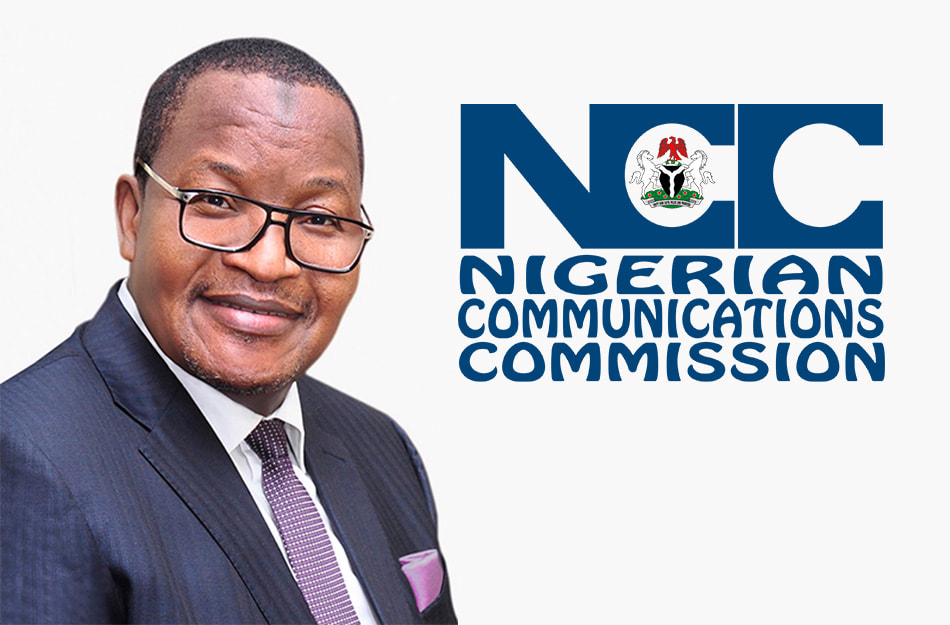
The Nigerian Communications Commission (NCC) is set for a return to the tube with a newly packaged 30 – Minute weekly television programme that will regularly x-ray the Nigerian telecommunications and information communications technology (ICT) industry and provide awareness for telecommunication consumers across the country and beyond.


The weekly programme, aptly tagged Telecom Weekly, will debut on NTA Network Services comprising more than 45 stations across the 36 states and Abuja today, Tuesday, January 10, 2023, at 5.00 p.m. All local NTA stations are expected to hook up to the programme at 5.00 pm every Tuesday.


The radio version of the programme will also air on Thursdays at 8 p.m. on the Federal Radio Corporation of Nigeria (FRCN) Network, for simultaneous transmission to all states of the Federation with all the local FRCN stations expected to hook up during the weekly programme.


The programme is expected to add to the Commission’s share of voice on radio and television in a bid to provide stakeholders with timely information about developments and issues in the telecommunications industry.


Apart from simplifying issues about telecommunications services for the average consumer, one of the cardinal foci of the programme will be to continuously create awareness among various stakeholders about the activities and programmes of the Commission as it seeks to achieve regulatory excellence.


User experiences, gathered through consumer-related events and vox pop, will be used to spice the programme to enable the cross-section of consumers of telecommunications services to learn from such experiences and apply them in the usage of their services.


Expert opinions will also feature prominently to facilitate the process of creating awareness about the industry. Also, quiz sessions where viewers and listeners will win prizes will be a regular feature of the programme.


In this media chat, Chuks Onyebuchi, the Chief Executive Officer of Union System Limited an indigenous fintech and software development firm with “solid” footprints in financial sector in Nigeria and beyond talks about their various solutions in Nigerian banks and how they have been able to deploy world-class financial trading solutions with robust support system. He talks about other issues bedeviling the industry such as dearth of human capacity and skills and perception of Nigerians towards indigenous software. Anthony Nwosu captures this in an exclusive interview.


Union System Limited has been in the ICT ecosystem for some time, can we know the journey so far?

USL has been a player in the delivery of financial software solutions to financial institutions for over 2 decades, in this time, we have seen a steady increase in the intricacies of software requirements from these institutions as their process have evolved to suit the increasing sophistications of their customers. This has inevitably brought about the demand for more efficient but simpler to use solutions, this is what USL prides herself in being able to continuously deliver.

Can you consider yourself as a Fintech considering that you deal with Trade Finance Software?

Yes, USL is a financial technology provider, we however deal primarily at the provision of business to business (B2B) enterprise financial software solutions. These solutions have a longer development cycle, a longer implementation cycle and are very integral to achieving the objectives of the financial institutions that adopts them.

You have deployed your solutions for notable financial houses and banks such as Access, Coronation, FCMB etc., how has this been?

These implementations and many others have not only been successful but have helped these banks meet their strategic objectives. Our solutions are very flexible and highly configurable eliminating almost completely the need for customizations. This has increased the rate of adoption within our client’s organization and faster return on investments (ROI).

You recently had a seamless integration to the CBN monitoring, can we know how this happened?

The TRMS is one of several regulatory portals through which the CBN monitors specific international trade and treasury related transactions. Through collaboration with major financial institutions in Nigeria, we had integrated to similar regulatory portals such as the NSW, NCS and the NIBBS portal, so the integration of the TRMS portal was achieved with little challenges. It also helped that we were involved, also through our existing collaborations, with the testing of the initially release pilot version.

Do you think that Banks are investing much in IT infrastructure now that a lot of skills are leaving the country especially in the area of software development?

Yes, banks are investing more in technology as the volume and sophistication of the transactions and process they must do is increasing. However, banks should concentrate on banking and investing more in technology partners such as indigenous OEMs. Whichever way they choose to invest, whether directly into the business or by paying the right prices for indigenous software solutions, they would be saving money in the long run. These savings can take the form of little or no need to source for FX to pay for software solutions, the availability of local support, reduced maintenance cost, just to mention a few.

What is your take on capacity building in the industry?

We are losing a lot of talents to the sweeping “japa” syndrome engulfing us, as such more targeted social welfare initiatives must be invested in by both the public and private sectors to not only build new capacities but retain existing ones. If there are deliberate regulations in place to support home grown systems and they are paid appropriately for their solutions, these companies would in turn be able to pay those with the needed skillset commensurately with their international counterparts, ultimately reducing the brain drain plaguing the industry.

Do you think that Nigerians have the capacity to build a world-class software?

Definitely yes, USL has demonstrated this already with our flagship Kachasi international Trade Finance solution and our other financial solutions (Sakobia, Optimus, EGORA and tentacles). The same can be said about other sectors of the economy such as health, agriculture, education and so on where we have Nigerians driving change and competing effectively. As the support and adoption for world-class indigenous solutions, such as ours, increases, Nigerians will continue to break the glass ceiling and produce software that can compete on a global stage.

Kachasi, tell us how and where you have deployed this important trade software?

Kachasi is in production in 5 commercial and merchant banks in Nigeria today. We are in advanced stages of negotiation with several other banks in Nigeria and Kenya.

What is your support system like?

Our approach to support starts with building capacities within the banks right from the implementation stage thereby ensuring a formidable first line of support from within and that the right sense of ownership is attained before the end of the implementation project. Where the bank is unable to solve the problem with its first line of support, the issue is logged on our support portal, ISURA, where our team of experts representing a second line of support are available for prompt resolution.

ISURA is accessible by all our clients 24/7 for receiving and managing support request and a dedicated support team that ensures that all support requests are attended to in the shortest time possible. We also provide premium level support services for clients with more intense support requirements.

Did you build Trade-X, Isura and Optimus as software and what are the advantages?

Yes, Kachasi (previously Trade-X), Optimus (Single and multibank), Isura, Sakobia, Tentacles and Egora were all designed and developed by USL in our Lagos, Nigeria Head office. A major advantage of adopting our solutions is the elimination of the need to source for FX to license them. Our multiple decades of experience and understanding of the challenges of a particular market coupled with the ease of configuring a system to adapt to that market while providing international/standard best practices guarantees that all our solutions give the needed advantage to our clients and partners.

What differentiates your Tentacles software from others?

Tentacles is our Enterprise Service Bus (ESB) managing integrations and interoperability between diverse applications, channels, and portals both within and external to a financial institution. The drag and drop simplicity of setting up mediation for multiple message types, real time monitoring of all integration nodes and channels, and the very friendly user interfaces, requiring no technical knowledge are some of its advantages.

Can we know the challenges that you face as an organization?

Every sector has its peculiar challenges, I’d like to believe that one of the major challenges with the sector we operate in is that of a mindset. A lot of decision makers still believe that foreign solutions are always better than indigenous ones, and that the indigenous solutions are synonymous with less quality, this is not true for us as Union Systems. There is also this believe that indigenous software must be cheap because it is indigenous. What most people fail to realize is that the skillset required to create a software abroad is the same required in Nigeria. This is important because we must pay our people commensurably with their counterparts . This faulty mindset and low pricing push local software providers to lower their standards thereby creating products that are subpar when compared to their international counterparts. Ultimately there needs to be a concerted effort in the push for more partnership with credible and experienced local OEM and in turn increased adoption of indigenous solutions.


We are losing a lot of talents to the sweeping “japa” syndrome engulfing us, as such more targeted social welfare initiatives must be invested in by both the public and private sectors to not only build new capacities but retain existing ones. If there are deliberate regulations in place to support home grown systems and they are paid appropriately for their solutions, these companies would in turn be able to pay those with the needed skillset commensurately with their international counterparts, ultimately reducing the brain drain plaguing the industry.


In this media chat, the Chief Executive Officer of Mitiget Assurance and Technology Services Limited, an indigenous information technology (IT), Sunny Ukeachu talked about how Mitiget has been able to help public sectors and financial sector in the area of cyber security and business continuity. He also made a case of challenges of power as it affects their operations and also their strides in other African nations. Anthony Nwosu captured this in an exclusive interview.


Mitiget Assurance and Technology Services Limited  is a leading Enterprise Information Security company in Nigeria, tell us more about the company?

Mitiget is an enterprise Information Security company enabling small and large organizations and business to build information management and security resilience. We help them in critical areas such as cyber-immunity by using people, process, and technological solutions. Our promise is to deliver measurable value from where we take over, minimum of 25% improvement. Just as our mission statement, we are poised to make a mark in African markets and globally by providing superior assurance and technology solutions to our customers through innovations, professionalism, and ethics. And we have done quite a bit.

Mitiget Assurance and Technology Services Limited has been into the IT ecosystem for some time, tell us more about your strides in this ecosystem?

As part of our security solution delivery, we have bundled information technology (IT ) as a leverage for businesses to create value. For instance, in delivering a secure data center or server room for our customers, we design, implement, secure and support all the IT infrastructure, be it, structured cabling for data, voice or power, physical security including CCTV, Access control, vaults, perimeter reinforcement and networking covering supply and configuration of switches, routers, firewalls and access points, the deployment of hardened IT hardware with supporting applications and services. If you are moving into a new office and need a partner to work with for your end-to-end IT and secure tech services, you cannot go wrong with Mitiget. We try to balance leading-edge technology innovation with highly skilled resources to deliver cost-effective, dependable, and adaptive IT solutions that meet or exceed our customer needs.

Mitiget is doing a lot to help organizations go paperless, tell us more about your strides in this space?

You know that our communication in Nigerian and many parts of the world are largely paper based. Many organizations have been carrying operational risks associated with storage of legacy documents with significant impacts. Many may have been exposed to looming financial and or reputational losses without knowing. Mitiget created a model that successfully helps many businesses in different industries to digitize, store and retrieve these critical documents in a controlled manner. From issuing the governance framework for effective records management to setting up a secure archive for documents within the retention period to scanning paper documents to any format, irrespective of volume, to deployment of a document management software to workflow automation. Because, we are an information security company, whenever we are implementing projects of this nature or we are hand-holding organizations through their digital transformation roadmap, protection of information asset is paramount. Apart from our projects with clients, we have also done some interventions for some past failed projects. We cannot stop until you go paperless because it gives any organization competitive advantage.

You have made tremendous strides in the public sector, tell us about these strides such as GDPR Implementation, PCI DSS Implementation, and ISO 22301 Certification?

Yes, we have enabled public sectors to come up with their digitization process and we have been on that journey with select few of them.  Recall that earlier it was stated that we approach security from process point of view. That we have done helping businesses implement and comply with both privacy and security standards in Nigeria. Some examples of them that we or example, GDPR, NDPR, ISO 27001, ISO 22301, and PCI DSS. Apart from helping them walk-through the implementations of the requirement of each of the standards, we hand-hold them through successful certification. We do this once and hit the target for them while entrenching the culture of continual improvement. Our footprints are in financial and public sectors in Nigeria.

What about the ECOWAS Region and other parts of Africa, what are your footprint in these areas?

We have done couple of interventions for organizations in Ghana, Kenya, and South Africa to help them improve maturity in their frameworks around these standards. Another area we have excelled is in the provision of Business Continuity Plan (BCP) and Disaster Recovery (DR) solutions. We are the number BCP facility provider in Nigeria. Some financial institutions use our facility to run their periodic BCP/DRP tests to ensure resilience and to meet regulatory requirement. Apart from that, both individual and corporates use our cloud-based data backup solution with cybersecurity protection for an assurance that their data is secure, and business can quickly recover at any unforeseen event.

How can Nigerian’s key into your training programs such as Cybersecurity, risk management, programming?

Mitiget Learning Academy (MLA) is an arm of Mitiget that provides cutting edge technical learning interventions and capacity building endeavors for small, medium, and large-scale enterprises both in public and private sectors in Nigeria. This was our way of helping to develop relevant skills to support our teeming unemployed and unemployable youths. All our courses are hands-on, and project driven with the objective of exposing the trainees to real-life tasks and problem solving. Those that would want to take up career in cybersecurity, risk management, python programming, web and mobile app development should make Mitiget learning Academy their starting point to build requisite capability to be relevant in the marketplace in their job of dream. We are discussing with a strategic partner, a tech incubator, to collaborate with us in identify and bring together some of our trainees who excelled and are ready to take their solutions and ideas to a startup level to nurture them. Our focus is around tech services using the skills we impart on young people.

What can you say was your greatest achievement this 2022?

Mitiget’s greatest achievement in 2022 was its deliberate stride in helping the governments at all levels to build and deliver physical security and effective surveillance to protect students and staff of schools. We use an innovative technology powered by solar system to help support government efforts in fighting the prevalent insecurity in our country Nigeria. This is apart from helping a financial institution digitize and secure more than 10 million document ranging from active to legacy ones.

What are your challenges that you face as an InfoSec firm in Nigeria?

Inadequate power supply and efficient internet are the biggest challenge tech services ecosystem faces. The cost of generating our own power stifles creativity and innovations. It drains resources that would have been channeled to spark up economic activities and foreign exchange earnings for the country. Another challenge is the lack of a skilled workforce. The ‘Japa’ syndrome has aggravated the issue. However, we see opportunities in all these.

You deploy Acronis as a cyber security solution. tell us more about it?

Yes. We have a strategic partnership with Acronis in delivering disaster recovery solutions with cyber protection. For CIOs or even CTOs, Acronis Cloud is one platform that gives a simplified management console for automation of data backup and cybersecurity. It gives rest of mind to those that value their critical data. More so, the solution is affordable.

Data Centre, Business Continuity and Disaster recovery are huge areas that you have made an impact on. How will you describe this space?

The COVID-19 pandemic triggered a lot of paradigm shifts. Apart from adoption of remote working, enabling services and technologies were also adopted. In the data center space, focus shifted to hybrid cloud, solid-state storage, and sustainability measures. Demand for cloud services will continue even in the coming year. For MSMEs and large organizations conscious of protecting their data, they should think of Mitiget. We do data right anytime, any day, anywhere. We are the home of data center management expertise. Whether you need a complete design, incremental improvements, accredited servicing, and maintenance or even IT infrastructure decommissioning, we make them happen.

What are we to expect from you this 2023?

Great things are coming in 2023. Mitiget is an ambitious brand. Apart from continuing providing superior assurance and technology solutions to our customers through innovations, professionalism, and ethics, we will be a robust solution for schools to secure our children’s future. This is big and will disrupt the educational technology (EduTech) industry. Our goal is to provide exceptional and innovative solutions that enable our customers to make smarter decisions and maximize their potential.


“…That we have done helping businesses implement and comply with both privacy and security standards in Nigeria. Some examples of them that we or example, GDPR, NDPR, ISO 27001, ISO 22301, and PCI DSS. Apart from helping them walk-through the implementations of the requirement of each of the standards, we hand-hold them through successful certification. We do this once and hit the target for them while entrenching the culture of continual improvement. Our footprints are in financial and public