
Last year, exciting developments in South Africa’s payments sector were good reason to be cautiously optimistic about 2023 with new products and services setting the pace of the journey to a digital cashless future, says Andrew Springate, CEO of fintech payment solution provider PAYM8.


“The South African economy is under tremendous pressure with rising interest rates, high energy and fuel costs and debilitating power outages. Despite this, increased competition amongst financial services providers can play a significant part in supporting the country’s overall economic growth.” Springate says PAYM8 has been at the forefront of the continuous reinvention of the payment industry which includes the stabilisation of the Authenticated Solutions (Debicheck) in South Africa and the Enhanced Debt Orders (ENDO) in Namibia.


Future growth

“We are well positioned for future growth with the appointment of Alwyn Fourie as Chief Operating Officer and Petrus Dippenaar as Operations Manager. Taking a broad view, the rollout of the Rapid Payments Program (RPP), as spearheaded by the South African Reserve Bank (SARB) as a proxy payment solution, is a significant development in the payment solution industry.”


The RPP requires South African banks to offer a simpler, more cost-effective real-time payment functionality as a viable alternative to cash payments. BankservAfrica anticipates that Rapid Payments will become the preferred e-payment option in South Africa following its launch. “Rapid Payments will almost certainly be a ground-breaking trend. Proxy payments are convenient, safer, and much more intuitive to use than the alternatives. It is more accessible for people who would otherwise be resistant to digital payments. Proxies also enable further payment innovation to fuel continued growth of the digital economy in South Africa and across the continent.”


PAYM8’s own Payments-Platform-as-a-Service (PPaas) offers access to all payment product requirements for collections, digital commerce, mobile payments, and card transactions. “As a standalone intelligent platform, Axis is secure, with a single view of payment transaction aimed at both existing merchants as well as third-party businesses wanting to use an intelligent payments platform to gain unparalleled greater control over the payments journey and provides unencumbered access to payment products and services.”


As more businesses look to weave payments into their digital offering, payments are rightly being prioritised as a growth catalyst. “As a result, a number of the core problems to be solved in payments are highly technical in nature. They include tasks such as integrating new payment methods and harnessing machine learning to improve authorisation rates. With artificial intelligence (AI) and machine-to-machine learning (M2M) data structures already in place within the Axis platform, it ticks all the boxes for businesses.”


Springate says PAYM8’s value proposition addresses many of the issues facing small and medium-sized merchants. “The technical complexity of some solutions are often not scaled enough to justify the cost for smaller businesses. We help them to unclutter their payment solutions.”


Cashless payment volumes

According to the PwC Payments 2025 & Beyond report, global cashless payment volumes are set to increase by more than 80% from 2020 to 2025, from about one trillion transactions to almost 1.9 trillion, and to almost triple by 2030.


As banks embrace digital transformation broader consumer adoption will follow, which will naturally lead to an increase in online sales. “Once this happens, marketplaces will grow exponentially and will expand to include the free flow of cross-border trade within the continent. The uptake in digital payments, enhanced collection solutions, cross-border collaboration and new payment products will allow for much-needed economic growth in the short to medium term. African economies need innovative payment mechanisms that promote entrepreneurship while accelerating financial inclusion for those who need it most,” notes Springate.


Some macro trends in payment solutions

Digital wallets are the norm – Apple Pay and other digital wallet options are now a common fixture alongside other traditional payment options at the checkout counter.
More buy now, pay later (BNPL) companies. Financial uncertainty during the pandemic led to an influx of applications that allowed consumers to spread payments out across monthly instalments.
QR codes are commonplace. QR codes came back with a vengeance when brands and venues were trying to limit the amount of cross-contamination through money, tickets, and receipts.


The cybercriminal is relentless, often sophisticated, and extremely persistent. In a constantly evolving threat landscape in which cloud adoption continues to grow and passwords are highly coveted by nefarious actors, attacks are expected to increase sharply in the coming year. However, this is being met with incredible advancement and innovation from the cybersecurity industry says Carey van Vlaanderen, CEO of ESET South Africa.

Microsoft published its Digital Defense Report for 2022 which found a 74% increase in password attacks, resulting in approximately 921 attacks per second. “Passwords remain an easy win for threat actors but that is often down to users lending this attack vector to them on a plate. Attackers are cleverly compromising business networks prior to their phishing campaigns in order to look authentic and even when victims believe they are carrying out their due diligence on a site, they can still be duped into believing they are in communication with the real deal,” van Vlaanderen explains.

While nearly 1,000 attacks per second is an astonishing amount, there is much more people and businesses can do to reduce this number. “Passwords continue to be something of an inconvenience in people’s lives, which is often down to not knowing or even trusting the free security layers on offer. Implementing password managers on personal and work devices can help force unique and strong passwords for all accounts applicable. Most importantly, introducing two-factor authentication on every account will help reduce the impact of phishing campaigns hugely,” she adds.

The past year has seen a tremendous increase in businesses and consumers embracing cloud and in 2023 this space will yet again be the target of cybercriminals. Van Vlaanderen says the seismic shift from traditional on-prem to cloud hosting applications and infrastructure elevates cybersecurity risk.

While cloud services offer incredible benefits, it’s imperative that from a risk mitigation perspective, to assign thought and attention to:

•        Using a reputable cloud service provider – a fundamental first step

•        Optimising and configuration using best practices

•        Making use of best-of-breed cybersecurity software

•        Multi-factor authentication (which should be standard)

•        Encryption (which should be employed wherever possible)

•        Strong password policies

•        Assigning credentials and rights only to those that require access

•        Redundancy is essential, backup and a disaster recovery plan should be enforced

•        Test for vulnerabilities timeously

In 2022 spoof emails and ransomware defined the year and look set to remain a leading concern for people, businesses, and cybersecurity teams in 2023. “The damage caused by emails sent by cybercriminals that convincingly look like they originate from people within an organisation is real and extensive. These types of fraud usually try to create a sense of urgency or employ scare tactics to coerce the victim into complying with the attacker’s requests. Emails with requests for quick payment should be handled with caution using as emails can be spoofed with legitimate invoices but with cybercriminal banking details,” says van Vlaanderen.

Despite ransomware reaching record levels this year, van Vlaanderen says many organisations still do not understand where their most valuable data and systems lie, and therefore have inadequate data and protection. “A good place to start then is to build an understanding of exactly all the data points that exists in your business, enabling a clear strategy to be formulated on the data that is collected and stored. Irrespective of the size of your organisation, data protection is a must and can be in the form of staff training, following compliance guidelines, utilising appropriate software, as well as ensuring data storage is secure and backed up, and that there is a data or disaster recovery strategy in place.”

Van Vlaanderen predicts the continued innovation and adoption of smart technologies, IOT devices, car connectivity and infotainment, will also present new attack vectors for cybercriminals in 2023. “Given the reality of attacks becoming more sophisticated and personalised, people and organisations can’t afford to be without some form of a protective solution in place, regardless of where the infrastructure is located or what device it is on.”

The latter half of 2022 was characterised by significant instabilities in the tech industry. E-retailer and cloud giant Amazon announced that it would cut tens of thousands of jobs, social media behemoths Twitter and Meta laid off significant percentages of their workforce, and even Microsoft saw its slowest revenue growth in five years.

“There’s chaos in the industry internationally,” says Andrew Cruise, Managing Director of Routed, a local cloud platform provider and VMware specialist. “The war in Ukraine has kicked off a period of great uncertainty that’s affected global inflation, exchange rates, and general risk appetite. This follows the boom during the early months of the pandemic, when the tech industry saw such growth that many companies made significant investments in new assets, infrastructure, and expertise. Now that growth has slowed, they’re faced with two options: sit tight and wait it out, or shrink.”

When it comes to cloud, specifically, the euphoria around hyperscale cloud (from providers like Amazon, Azure, and more) has also waned, adds Benjamin Coetzer, Director at Routed. “Firstly, enterprises are realising that hyperscale cloud is better suited to development and not everyday business. Secondly, they’re starting to scrutinise their mounting bills, which have grown significantly as their cloud needs have become more complicated and sprawled.”

Interestingly, things look a bit different in Africa. Hyperscalers like Azure and AWS only started arriving in South Africa in recent years, while Google, Alibaba and BCX just announced their arrival. “It surprised me to see how many hyperscalers decided to set up shop in South Africa almost overnight, as well as how many datacentre companies and IT players have started investing in Africa as a whole,” adds Coetzer.

However, the current economic climate and insufficient infrastructure across the continent warrant some caution: “There is big demand in South Africa, there is big money in South Africa, and there is good infrastructure in South Africa. But when it comes to cloud, I always say the one non-negotiable precondition to move into enterprise cloud (or for enterprise applications to move into the cloud) is fast, reliable, cheap internet. Only fibre sufficiently provides that, and only in South Africa. In Botswana, Mozambique, Zambia, Kenya and Nigeria fibre penetration is low and it is still extremely expensive at low speeds. No-one else in sub-Saharan Africa has got the precondition for enterprise cloud to be successful. And yet, we’re still seeing demand from people. And I think the demand is misplaced for the moment,” says Cruise.

Worryingly, some hyperscale resellers aren’t giving potential clients the full story – or perhaps they aren’t aware of the conditions on the ground. “They’re delivering the same message in Africa as in the rest of the world, not understanding that Africa can’t deliver on that until local infrastructure improves. South Africa is five years behind the West, and some other countries in Africa are five, if not ten, years behind South Africa. Sure, you can eventually back up your data with an internet connection speed of five megabits per second – but what happens when you need to recover it?”

And then there are the costs to consider. “I think people are going to be surprised by the price increases from AWS, Azure, Google and the like over the next year. Experts in the West are predicting major increases – and that doesn’t even factor in the weak rand.”

Coetzer adds: “Those who don’t need the bells and whistles that developers use and opt for an enterprise cloud will now start seeing significantly more value for their money as that gap increases. Routed’s pricing, for example, has come down in the six years since the company started, while hyperscalers’ prices have kept climbing.

Cruise concludes: “I’m hoping that allows people to make better decisions going forward. Many think that IT and cloud is exciting and cutting edge, but what most people really want from the cloud, really need, is for it to be boring. It has to work, all the time, no surprises. And that’s what enterprise cloud does really well. This coming year will bring more of the same, and there isn’t a problem with that.”


Today, Meta  released its `2022 Africa Year in Review,  capturing some of the company’s investments and initiatives in Sub-Saharan Africa across innovation, its support of SMBs and Creators as well as its work connecting communities. Showcased through an infographic and short video, this highlights Meta’s ongoing milestones and successes across the region, whilst reinforcing its continued investment and commitment to Africa.

Commenting, Enitan Denloye, Country Director SSA, Meta said: “We remain invested in Africa and the various communities we support here in the region. Our work continues to be rooted in giving people the power to build community, whilst bringing the world closer together – whether as SMBs, creators or tech innovators. We believe Africa, and the immense talent this region holds will continue to play a key role in Meta’s journey.”

Some of the key 2022 Meta Africa Year in Review highlights include:

●        Facebook Reels – Launched Facebook Reels across 20 countries in Sub-Saharan Africa to help creators monetise their crafts, connect with, and discover new audiences in News Feed and Groups

●        Facebook Protect – Rolled out Facebook Protect in Mauritius and South Africa, a programme designed to provide increased protections around the world for journalists, activists and human rights defenders

●        #StaySafeOnInstagram in Ghana and Nigeria – Unveiled an education campaign focused on enabling users to take steps to protect their accounts from phishing and hacking

●        Economic Impact Trainings: Trained over 107,000 SMBs and Non-profits across Sub-Saharan Africa through Meta’s Economic and Social Impact Programs including Meta Boost, SheMeansBusiness and Meta Nonprofit Training Program


●        WhatsApp’s first-ever global brand partnership – Launched with Nigerian-born NBA All-Star Giannis Antetokounmpo, this featured a short film about his Nigerian roots – titled ‘Naija Odyssey’

●        ‘Future Africa: Telling Stories, Building Worlds’ – In partnership with Africa No Filter, announced the six finalists of the programme aimed at boosting the use of Virtual Reality in Africa’s storytelling

●        #ReelAdventures – Created #ReelAdventures aimed at highlighting adventure-focused groups in Kenya who use reels to express themselves and share their travel experiences

●         #NoFalseNewsZone – Launched a campaign and comic books across Ghana and Francophone Africa, aimed at helping people to think critically about the messages they see and read online

●        Made in Africa, Loved by the World – Unveiled our 2022 international campaign aimed at celebrating Africa’s ongoing growing cultural impact on the world, whilst spotlighting eight amazing creators and innovators from across the continent, including rolling out Africa’s first Instagram #AfricaMade Reels challenge

●        No Language Left Behind – Unveiled our single AI model that translates over 200 languages, including 56 African languages

●        Creators of Tomorrow – Spotlighted and celebrated emerging talent from around the world who are inspiring a new movement of creative content online, including here in Africa

●        2Africa Deployment Genoa Landing – Alongside eight local and global partners, announced the landing of the 2Africa subsea cable system to Genoa, Italy which now connects three continents — Africa, Europe, and Asia, making it the longest subsea cable system ever developed at more than 45,000 kilometres


●        AMBER Alerts in Nigeria – In partnership with the National Agency for the Prohibition of Trafficking in Persons (NAPTIP), launched AMBER Alerts, a programme aimed at helping to find abducted children by sending AMBER Alerts to the local Facebook and Instagram community

●        Launched ‘My Digital World’ in Cameroon – Rolled out a digital literacy program aimed at educating users on responsible social media usage and how to stay safe online

●        NFT Digital Collectibles expansion across Sub-Saharan Africa on Instagram – Enabled creators to share their digital collectibles on Instagram, including how to leverage their fanbase to monetise their craft

●        AR/VR Africa Metathon – Partnered with Imisi 3D and Black Rhino VR to launch an AR/VR Africa Metathon across Africa, aimed at supporting African XR talent to build innovative solutions

●        Flex Naija – Launched ‘Flex Naija’ – Meta’s first campaign in Africa, inspiring Nigeria’s creators to be amongst the first to flex in the metaverse

●        Digital Literacy Trainings: Trained over 80,000 participants (youth, educators and the general public) through ‘My Digital World’, Meta’s Flagship Digital Literacy Program for responsible and safe use of digital platforms in over 9 countries.


Union Systems Limited (USL), Africa’s leading  finance software company  located in Victoria Island Lagos has recently made industry players in finance and tech space to understand the unique product(s) offerings that they have and places they have deployed in in various banks in Nigeria and other parts of Africa. This product(s) expose to the media has been lauded by financial players, describing their various solutions like Kachasi international Trade Finance solution and other financial solutions such as Sakobia, Optimus, EGORA and Tentacles as world-class.

Speaking to the team of journalist, Chuks Onyebuchi, the Chief Executive Officer of Union System Limited described Union Systems as “USL has been a player in the delivery of financial software solutions to financial institutions for over 2 decades, in this time, we have seen a steady increase in the intricacies of software requirements from these institutions as their process have evolved to suit the increasing sophistications of their customers. This has inevitably brought about the demand for more efficient but simpler to use solutions, this is what USL prides herself in being able to continuously deliver.

He added that “USL is a financial technology provider, we however deal primarily at the provision of business to business (B2B) enterprise financial software solutions. These solutions have a longer development cycle, a longer implementation cycle and are very integral to achieving the objectives of the financial institutions that adopts them…These implementations and many others have not only been successful but have helped these banks meet their strategic objectives. Our solutions are very flexible and highly configurable eliminating almost completely the need for customizations. This has increased the rate of adoption within our client’s organization and faster return on investments (ROI).”

On the Union System seamless integration to the CBN monitoring, Chuks opined that “The TRMS is one of several regulatory portals through which the CBN monitors specific international trade and treasury related transactions. Through collaboration with major financial institutions in Nigeria, we had integrated to similar regulatory portals such as the NSW, NCS and the NIBBS portal, so the integration of the TRMS portal was achieved with little challenges. It also helped that we were involved, also through our existing collaborations, with the testing of the initially release pilot version.”

On products acceptability in various countries and banks, Onyebuchi said “USL has demonstrated this already with our flagship Kachasi international Trade Finance solution and our other financial solutions (Sakobia, Optimus, EGORA and tentacles). The same can be said about other sectors of the economy such as health, agriculture, education and so on where we have Nigerians driving change and competing effectively. As the support and adoption for world-class indigenous solutions, such as ours, increases, Nigerians will continue to break the glass ceiling and produce software that can compete on a global stage. Kachasi is in production in 5 commercial and merchant banks in Nigeria today. We are in advanced stages of negotiation with several other banks in Nigeria and Kenya.”

The company has built a robust support system for their clients and customers that have virtually eliminated downtime in their platform,” Our approach to support starts with building capacities within the banks right from the implementation stage thereby ensuring a formidable first line of support from within and that the right sense of ownership is attained before the end of the implementation project. Where the bank is unable to solve the problem with its first line of support, the issue is logged on our support portal, ISURA, where our team of experts representing a second line of support are available for prompt resolution”, Chuks said.

As Africa’s leading trade finance software company for over 20 years, the company has been delivering future thinking trade finance software solutions to banks and corporates in Africa to achieve full automation and digitization of their trade operations. Our trade finance software solutions deliver growth, profitability, and regulatory compliance to banks and corporates.

With headquarters in Lagos, Nigeria, the company has a deep understanding of the African market and a team of highly qualified consultants with real-world experience in the delivery of complex software solutions. They have been creating software solutions that solve business problems and provide professional services that give value to our customers such as Kachasi (previously Trade-X), Optimus (Single and multibank), Isura, Sakobia, Tentacles and Egora were all designed and developed by USL in their Lagos, Nigeria Head office. A major advantage of adopting their solutions is the elimination of the need to source for FX to license them


Our approach to support starts with building capacities within the banks right from the implementation stage thereby ensuring a formidable first line of support from within and that the right sense of ownership is attained before the end of the implementation project. Where the bank is unable to solve the problem with its first line of support, the issue is logged on our support portal, ISURA, where our team of experts representing a second line of support are available for prompt resolution”


The Executive Governor of Borno State, Professor Babagana Umara Zulum, and the Honourable Minister of Aviation, Senator Hadi Sirika, have supported efforts to boost skills in the country by obtaining 12,000 copies of a recent book on Skills Rather than Just Degrees by the Honourable Minister of Communications and Digital Economy, Professor Isa Ali Ibrahim (Pantami), who is also a Professor of Cybersecurity at the Federal University of Technology, Owerri, Imo State.

It should be recalled that the book was unveiled on Thursday, 24th of November, 2022 at the Transcorp Hilton Hotel, Abuja. Mr. Brad Smith, the President of Microsoft Corporation, wrote the Foreword to the book. Skills Rather than Just Degrees focused on the importance of skills and its potential impact in addressing the problems of unemployability, unemployment and underemployment. The book is a research and productive work implementing the paradigm shift advocated by Professor Pantami and is in alignment with the approach being adopted in leading educational and technological countries like the United States of America, Finland and India, amongst other countries.

The book was endorsed and unveiled by the Executive Secretary of the National Universities Commission (NUC), Professor Abubakar Adamu Rasheed. Professor Idris Muhammad Bugaje, Executive Secretary of the National Board for Technical Education (NBTE) was one of the personalities that endorsed the book. A number of Vice Chancellors also endorsed and reviewed the book, including Professor M.A. Abdulazeez, Vice Chancellor of the Abubakar Tafawa Balewa University, Professor Owunari Abraham Georgewill, Vice Chancellor of the University of Port-Harcourt and Prof. Sagir Adamu Abbas, Vice Chancellor of Bayero University Kano.

In a bid to boost skilling in Nigeria, Professor Babagana Zulum obtained 10,000 copies of the book for distribution in schools and other institutions in Borno State. Senator Hadi Sirika also obtained 2,000 copies for distribution in institutions across the country. Both high profile personalities were motivated to do this after reading the book and acknowledging the high quality of the content and its capacity to inspire Nigerians to embrace skills as a catalyst for national transformation. They also encouraged well-meaning Nigerians and institutions for follow their example. It is hoped that other stakeholders will try and circulate the book in their communities.

The Federal Ministry of Communications and Digital Economy, under Professor Pantami’s leadership, remains committed to implementing the National Digital Economy Policy and Strategy (NDEPS) in order to ensure that Nigeria’s digital economy remains a leading light and support the country to become the talent capital of the continent and also the world.


The Honourable Minister of Communications and Digital Economy of Nigeria, Professor Isa Ali Ibrahim Pantami, had meetings at Space Exploration Technologies Corporation (Space X) headquarters in Hawthorne, California, as well as a meeting at the World Bank Headquarters and another meeting with Google Corporation in a bid to strengthen partnerships for the development of Nigeria’s digital economy.​

The meetings with the World Bank and Google were held on the sidelines of the US-Africa Leaders’ Forum (USALF), which took place in Washington DC, United States of America, while the visit to Space X was a follow up to the events at the USALF.

Professor Pantami was received at Space X by Samuel (Chad) Gibbs IV, the Vice President of Business Operations, on behalf of Elon Musk, Founder and CEO of Space X. At the visit, both parties discussed how Space X can expand its presence in Nigeria, following their entry into the Nigerian market through the Starlink broadband service.​ ​

The Honourable Minister also asked the Space X team to consider sourcing some of its engineers from Nigeria’s digital talent pool.​ During the visit, the Honourable Minister and his team were given a personalised tour of the SpaceX Rocket Manufacturing Facility, Starlink Assembly Line, and Product Development Facility.​ He also witnessed the live Space X rocket launch of 2 telecom satellites into orbit.​

On the invitation of the World Bank Group, the Honourable Minister had a meeting with top officials of the Bank, including Vyjayanti Desai, the Practice Manager for the World Bank’s Identification for Development (ID4D) and Digitizing Government to Person Payments (G2Px) Programs.​ Also at the meeting were Franz Drees-Gross, Director of Infrastructure, World Bank West African Region and Michel Rogy, World Bank’s Digital Development Practice Manager for Africa and the Middle East.​ The World Bank team commended the Minister for his great leadership, which has led to significant development in Nigeria’s digital economy sector. The meeting also discussed how the Bank can further partner with Nigeria to strengthen the digital economy ecosystem in areas such as infrastructure, skilling, cybersecurity, and digital identity.

Professor Pantami also had a meeting with Karan Bhatia, Vice-President, Government Affairs, and Public Policy at Google.​ Mr. Bhatia was full of praise for the Honourable Minister for the significant progress that has been made in the digital transformation of the Nigerian economy.​

He also commended the Minister for Nigeria Startup Act, noting the potential of the legislation to serve as a catalyst for rapid development of the entrepreneurial ecosystem in Nigeria and other parts of Africa.​The Google Vice-President discussed the company’s growing focus on Africa and looks forward to expanding partnerships with Nigeria in areas such as skilling, cybersecurity, and cloud computing, among others.

The Federal Ministry of Communications and Digital Economy, under Professor Pantami’s leadership, remains committed to implementing the National Digital Economy Policy and Strategy (NDEPS) in order to ensure that Nigeria’s digital economy remains a leading light, both in Africa and across the globe.

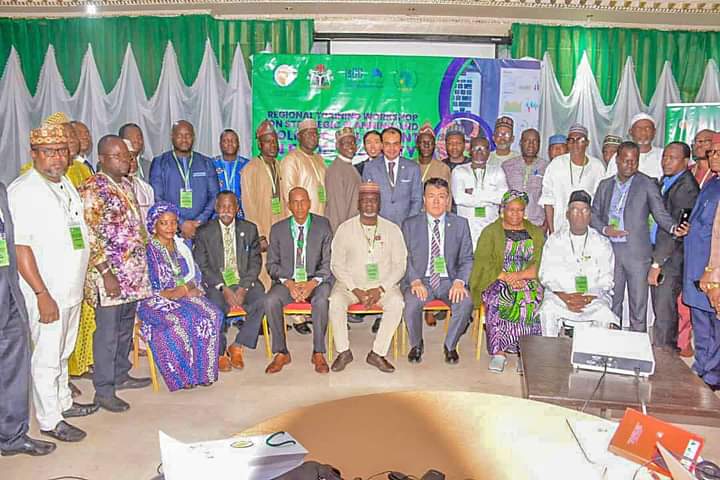
(Federal Ministry of Agriculture & Rural Development Report) – The Federal Ministry of Agriculture and Rural Development (FMARD) and the Islamic Organization for Food Security (IOFS) have converged on Abuja to address the global issue of Food Security and Agricultural Development in the world, particularly among Member States.

Speaking during the Workshop held in Abuja recently, the Minister of State for Agriculture and Rural Development, Mustapha Baba Shehuri represented by the Permanent Secretary in the Ministry, Ernest Umakhihe (Dr) said that the Workshop on Strategic Planning and Policy Development in Food Security would provide opportunity for dialogue and discourse on achieving a strategic food reserve system, increased production, mobilize resources as well as Food and Nutrition Security among Members.

The Minister implied that Nigeria has been selected by the IOC to serve as hub for food grain storage for its member countries. Shehuri also noted that the selection was apt as Nigeria already has over 36 strategic grain reserves across the country, adding that some have been concessioned, while seven are under the supervision and control of the Ministry.

He pointed out that Nigeria has largely demonstrated firm belief in the principles and objectives that established the Organization through the implementation of several initiatives in line with the IOFS Action Plan as conceived during the 40th Session of the Council of Foreign Ministers of the Organization of Islamic Cooperation in Conakry, Republic of Guinea in 2013.

Mustapha Shehuri continued that the Islamic Organization for Food Security was a specialized institution of the Organization of Islamic Cooperation (IOC), an Inter-Governmental Organization that was established in 1964 with Nigeria becaming a member in 1986 as well as member of Agriculture Working Group in 2017.

Shehuri further revealed that the IOFS has not deviated from the core principle of providing expertise and technical know-how to Member States on aspects of sustainable agriculture and Rural Development towards addressing the current issues threatening food security in the world, particularly in the African region. He emphasized that the country is open to direct investments in the Agriculture Sector to leverage on the gains achieved through the diversification policy of President Muhammadu Buhari-led Government. He charged participants to proffer solutions to the current food security challenges at the end of the workshop.

In his remarks, the Director General of the Islamic Organization for Food Security (IOFS), Yerlan Baidulet said that the objective of the workshop was to build the capacity of government officials on the basics and practices of strategy development, legislation improvement and creation of government inter- sectorial mechanisms on food security. He added that the organization would ensure that food systems are capable of addressing the problems of access to food and adequate nutrition.

Earlier in his comments, the Officer in Charge of the Regional Hub of Abuja – IsDB Nigeria, Mamadou Alpha Bah disclosed that over 80 participants from 13 Member States of IOFS were participating in the two-day workshop. Bah pointed out that the significant essentials of sustainable Food Systems was effective and competent Food Security Governance that aimed at overcoming the food security problems, including hunger and malnutrition through developing and implementing the national and subnational legal and regulatory frameworks on food and nutrition security among others.

The highlight of the 2 Day – Regional Workshop was the presentation of certificates to participants by the Representative of Minister. In attendance were the Director – General of IOFS, the Officer in Charge of the Regional Hub, Abuja IsDB, Representatives of IOC Member State among others


Birthed in 2009, started walking fully in the latter part of 2010 at a one block building surrounded by beautifully designed containers at the premises of the Civil Service Training Center and Government Secretarial School at Cantonments, the Accra Institute of Technology (AIT) has defied all odds and become a leader in producing PhDs in Ghana, one of Africa’s major centres of learning.

Once described by a Nigerian journalist as a “potter cabin university” with the registrar’s office labeled as a “two by four cubicle”, the AIT success story provides a model on Africa’s pathway to knowledge and skill development in a more globalised economy. And it is worthy of emulation.

Captained by Professor Clement Dzidonu, a world renowned Computer Scientist, backboned by eminent academics in the Board of Trustees (BoT) including Prof Edward Ayensu (Formerly of World Bank Inspection Panel) as Chairman, Prof. Ivan Addae Mensah (Former Vice Chancellor, University of Ghana) as Vice Chairman, Prof. Jophus Anamuah Mensah (Former Vice Chancellor of University of Education, Winneba), and Prof. Samuel Adjepong (Former Vice Chancellor, University of Cape Coast), the AIT has been built on a solid rock of knowledge champions.

In this league are also Prof. William Otoo Ellis (Former Vice Chancellor, Kwame Nkrumah University of Science and Technology), Very Rev. Ama Afo Blay (Former Director General of Ghana Education Service), Dr. Grace Bediako (Former Government Statistician) and Mr. K.S. Yamoah (Former Managing Director of the Ghana Stock Exchange). All of these academic have helped AIT to lead the way in terms of production of quality PhDs in the country, and the rest of the continent to set the pace in knowledge engineering.

Through its partnership with Open University of Malaysia, the Accra Institute of Technology has produced Eighty-One (81) PhDs since 2016. This translates into an average of Fourteen (14) PhDs per year. This is unprecedented and a great achievement for a young private university like AIT. Considering the fact that the PhD per capita of Ghana is alarmingly low, the contributions of AIT in bridging this gap cannot be underrated. More importantly, the partnership has fostered the new direction of knowledge-sharing across continents to close the gap deep learning and development.

Did this Come Easy? Not at all! To offer, run and graduate students on an internationally benchmarked Doctor of Philosophy (PhD) degree programs in Ghana is by all standards a herculean task. As a non-religiously denominated or related private university which is school fees driven with no support from government nor any other organisations, running PhDs can be very expensive. After paying supervisors, external examiners and reviewers, PhD Research Committee members, internal and external moderators, etc, the university retains virtually nothing and makes no profit. This explains why most of the private universities shy away from this daring venture since it is not financially worthwhile.

Additionally, getting supervisors and external examiners to mentor these PhD students is another huge task. Running PhDs in special areas like Business Administration, Information Technology, Engineering and Education come with so many difficulties in attracting supervisors and external examiners who dully qualify to mentor the students.

However, AIT has surmounted this hurdle with collaborations with several internationally recognized universities with competent Professors who have been working hard to produce these PhDs.

Speaking at the 18th graduation of AIT, held on 17th December, 2022 at the ultramodern Knowledge City Campus in Kokomlemle, where AIT graduated Sixteen (16) PhDs at a goal, the President of AIT could not hide his joy especially having led his team to make this huge contribution to academia in the country.

He stated: “Mr. Chairman, I will need to pause here to comment on the historic nature of the 18th Congregation of this young and dynamic University. Today we are making yet another history in this country’s annals of private university education. Mr. Chairman, it is my great honor and privilege to announce that we are today graduating for the 10th time, PhDs who studied at this university. This major achievement of a university barely ten years old makes AIT the first private university in Ghana to successfully offer and graduate students on an internationally benchmarked PhD program. This is no small achievement if put within the context of the fact that the PhD per capita of Ghana is extremely low. Mr. Chairman, we can claim that we have become one of the leading postgraduate research institutions on the continent. I want to take this opportunity to assure you that we are confident that we will again be graduating more PhDs next year.”

He added: “The Quality? The quality of the PhDs produced by AIT is not in contention. As highlighted by the President in his speech ‘Mr. Chairman, I am delighted to inform you that, at AIT, we are mindful of the need to provide high-standard tertiary education and training not only aimed at producing qualified and highly skilled people to drive the nation’s development in the information age but also to produce job creators, with the requisite entrepreneurial skills and expertise to set up and run their corporations in various fields. Also, as a research university, our focus on cutting-edge research work through our postgraduate programs and research initiatives is geared towards supporting the nation’s science, technology, and innovation (STI) drive towards developing a modern knowledge-based and wealth-generating economy in the information and technological age.”

AIT’s milestones underscored why it was ranked the best private university in Ghana in 2018 and 2019 and was also awarded the Best Technology University in Ghana for the fourth year running by Ghana Tertiary Awards.
Quality of the PhDs produced by AIT is shown in the progress of their graduates. Currently, AIT has Pro Vice Chancellors in public universities who became Professors in less than three years after completion. 60% of the graduates have become Senior Lecturers, Associate Professors and Full Professors few years after graduation. The strict requirements by AIT for students to publish minimum of five papers in a reputable and ranked journal sets the foundation for this growth. The PhD Candidature system where students are mentored by the PhD Research Committee for one year instead of just one supervisor through series of presentations and the strict requirement to write minimum three chapters of your thesis within that period also contributes heavily to the success of these students.

In the last 10 years of the program, AIT has graduated PhDs who are on the academic and administrative staff of almost all the private and public universities in Ghana and a number of Nigerian universities. Given the high international academic standard of the program, more than half of our PhD graduates in academia obtained their Associate or Full Professor within three years after graduation. These are outstanding landmarks pointing to how Africa can close the gaps for deep knowledge and research as it gears into the fourth industrial revolution (4IR).

If anyone thought AIT is resting on its laurels, then such people must rewrite their notes. At the 18th graduation ceremony, thirty-five (35) students graduated to become PhD Candidates after completing the first three chapters of their thesis in the first year. They should be completing their PhDs in two years. This is coupled with a number of students who are going through their Post Viva corrections and the twenty (20) students who are preparing to submit their thesis for examination. Two years from now, it is estimated that AIT will graduate not less than forty (40) additional PhDs.

The Chairman of the AIT Board of Trustees, Prof Edward Ayensu summed it all up in his speech at the 18th graduation: “So far, we are proud to report that our efforts in all directions are proceeding according to plan. We can assure this Congregation, and all stakeholders, that we shall not relent in our efforts to ensure the full fulfillment of that vision”

Conspicuously, the Accra Institute of Technology is showing the way and will fill the PhD gap in the country and across Africa in no time.

My final message to students all of Africa, start your journey with AIT from Bachelor’s, Master’s and PhD in Business Administration, Engineering, Information Technology, Computer Science, Education and Health and Safety.
Indeed! Your journey to the top starts at Accra Institute of Technology as it lives to its payoff as the University of the Future beginning today. Yes! In AIT, Africa has a chance to leapfrog; the milestones achieved by AIT in so short a while proved that point.

Dominic Osei-Boakye is Registrar at AIT


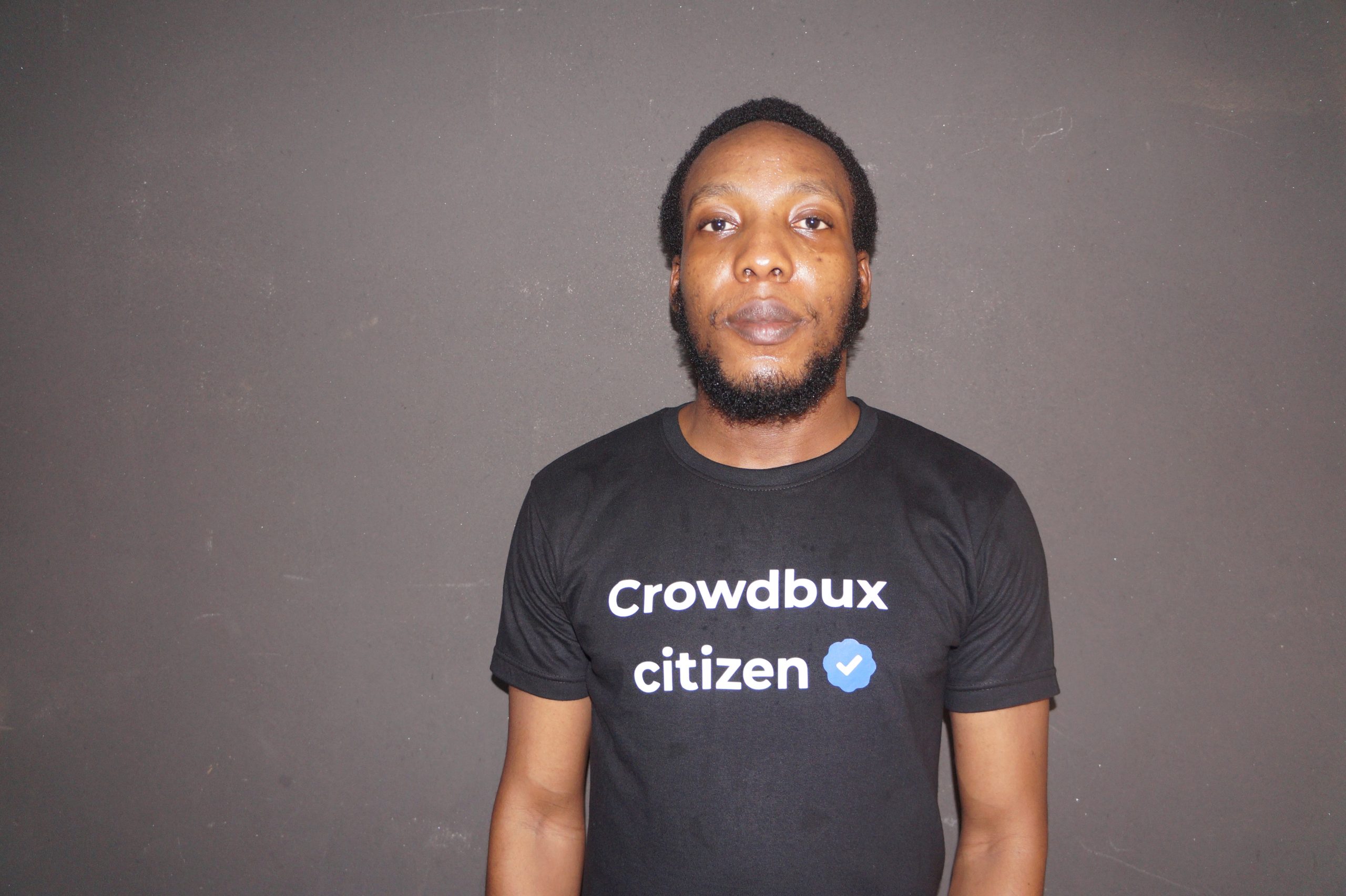
In this interview, Chidiebere Onwuzurike, the founder of DEXTER, A fintech firm and research based firm talks about the fintech ecosystem, Crowdbux and how they will introduce robust credit scoring solutions for Nigerians. ANTHONY NWOSU Captured this in an exclusive interview.


DEXTER has been into Fintech space, tell us more about your solution?

Yes, we are a research-based software startup company founded in May 2021, we are leveraging the boundless powers of data and insights from curated user research to develop and innovate more powerful, and inclusive software for the fintech sector.

Your brand has Crowdbux as a solution do you think that it will make the needed impact in the industry?

Yes, I’m confident that it will. We only innovate software premised on credible insights and Crowdbux is one such innovation as a result of diligently curated consumer research. We have received early validation for the Crowdbux solution from potential investors, current and prospective partners as well as intended users. For context, during our waitlist marketing campaign in October, we successfully waitlisted over 2000 individuals in 3 weeks – a few of whom we identified to be decision makers of potential partner organizations.

When do you intend to launch?

We project to go-live with the Crowdbux solution in test mode by February 2023.

You also said that you are a R&D firm in the fintech space. How has this been?

Yes, research and development are the bedrock of our operations at Dexter, however I must point out that it has been most profitable for us in the sense that, we do not compromise on research as we rely heavily on quality feedback for iterations. It has also been some shades of challenging, largely due to limited resources to recruit volunteers and paid analysts to curate research online and offline, sort through volumes of responses and analyze the data for product development.

What are the challenges you face as a startup?

The same as every other startup creating amazing innovation, access to financing – whether credit or investment facilities – can be challenging when you are new in software industry because you have to prove your worth even to your team – that your solution(s) eases the pain-points of a large group of people and that you are uniquely positioned to generate huge revenues from that as a result.

Are you open to investors or are you okay bootstrapping?

Oh yes, though we have bootstrapped up to $15,000 in the past 1 year, we are very open toinvestment and have been in talks with a few notable potential investors recently.

When are you launching your mobile app?

This for us is a research-informed decision, we want our customers to tell us if and when they want it, however the crowdbux web application will be accessible using any web enabled device from February 2023.


Tell us about the people behind this innovative brand called Dexter?

The Dexter Force as we fondly call ourselves is a 6-member team of determined, cross-functional, diversely skilled and uniquely qualified professionals, led by my noble self, who are collectively positioned to ensure the overall success of the company. We are driven towards the same objectives and trained in several disciplines that make working and creating together, brainstorming new ideas and sharing solutions worth all our whiles. We are committed to throwing our best weights in all the ways necessary behind all our products now and in the future to simplify access to financial services for all.

What is your take of the Nigerian Fintech space?

Oh, what a time to be offering a revolutionary fintech solution in the Nigerian fintech sector. It’s clearly an ever-burgeoning space attracting over $507m in 2022 alone, and I think this trend is going to continue for the foreseeable future as innovation and globalization continue to evolve business transactions in Nigeria.

What do you think about credit ratings and how can you make Nigerians key into this?

Credit scoring is essential in helping us to determine who is creditworthy on the crowdbux solution, we have innovated a fantastic proprietary scoring model that takes important data points into account, constantly learning data and patterns in order to provide accurate scores for users. We are also partnered with Nigeria’s biggest credit bureau to further substantiate our model in order to provide a more robust credit reportage for users, and also provide our lenders with quality information to inform their lending decisions. In same vein, we are leveraging the expertise of our partners to provide 1 free comprehensive credit report to our users annually. Furthermore, as the CBN’s cashless policy continues to soar, the fintech’s in the credit market would begin to experience a growing demand for credit scoring as it’ll become a pre-requisite risk assessment accessory to accessing credit finance in the future.

What advise do you have for startups?

A quote that I picked up during a mentor session on Lagos Innovate’s IdeaHub program, it says “As an entrepreneur you’ll always have problems. That’s what you signed up for. So, my advice would be, consumer research is gold – never compromise it, stay the course of your vision, network as much as possible – seek mentorship, be visible and courteous, protect your IP, delay tough decisions until you have the solutions, feed well, rest well and remain coachable.

What do you think that the regulator (CBN) can do to improve the fintech space?

I must commend the CBN for systematically implementing its cashless policy which has enabled innovation to unlock several layers of alternative transaction channels, in conformation with global social development benchmarks. The CBN can also be commended for creating safe test environments – sandboxes – for financial companies, but must in same vein create safe spaces for information sharing amongst financial institutions (FIs), other financial institutions (OFIs), and other financial regulators (OFRs). More specifically however, I implore the CBN to begin implementing pertinent components of the credit insurance policy which will widen the financial safety net to substantially provide additional incentives for credit finance institutions (CFIs) to encourage long-term lending and cover against non-performing credits. Furthermore, since the CFIs rely heavily on FIs and vice-versa, the CBN can foster the partnership and conversations between these stakeholders to improve the global standing instruction (GSI) guidelines to include a memorandum on the execution of liens between FIs and CFIs on defaulting accounts to improve credit repayment culture and security of credit in Nigeria. Lastly, the CBN can consider creating monitored credit operator groups to categorize licensed CFIs into specialized groups, with each group guided by set standards, differentiated policies and internal operational frameworks based on operating license category, partnerships and public sector affiliation, as well as modes of operation, this will stimulate cooperation amongst relevant stakeholders and bring about standardization of the credit market operation guidelines.


Credit scoring is essential in helping us to determine who is creditworthy on the crowdbux solution, we have innovated a fantastic proprietary scoring model that takes important data points into account, constantly learning data and patterns in order to provide accurate scores for users