Partnership offers growth opportunity in Africa, building on MultiChoice’s footprint across 50 markets, its excellent execution track record on the continent and the successful Showmax brand. MultiChoice (https://www.Multichoice.com) to relaunch Showmax, powered by NBCUniversal’s Peacock technology platform, along with world-class content from NBCUniversal and Sky, offering audiences the best experience with local and global entertainment, as well as live matches of the English Premier League (EPL) football.


MultiChoice Group (MultiChoice) (JSE: MCG) and Comcast’s (NASDAQ: CMCSA) NBCUniversal and Sky today announced a new partnership that will bring some of the world’s best content and technology to streaming customers across MultiChoice’s 50-market footprint in sub-Saharan Africa, at a time when Africa is approaching an inflection point in terms of broadband connectivity and affordability. The new Showmax group will be 70% owned by MultiChoice and 30% by NBCUniversal. (*See Note). It will build on Showmax’s success to date and aim to create the leading streaming service in Africa.

Powered by Peacock’s leading, globally-scaled technology, Showmax subscribers will have access to an extensive premium content portfolio, bringing African audiences the best of local and international programming. The service will combine MultiChoice’s accelerating investment in local content with a unique pipeline of award-winning and critically acclaimed international content licensed from NBCUniversal and Sky, third party content from HBO, Warner Brothers International, Sony and others, as well as live English Premier League (EPL) football. The partnership will also provide access to all the best African content such as Showmax Originals and local content from MultiChoice’s proprietary channels including Mzansi Magic, Africa Magic and Maisha Magic.

Using a significant portfolio of global media assets and Peacock’s streaming platform, which finished 2022 with over 20 million paid subscribers in the US, NBCUniversal and Sky will provide ongoing support through the licensing of both technology and content.

This partnership is an incredible opportunity to further scale the global presence of Peacock’s world-class streaming technology, as well as to introduce millions of new customers

“We launched Showmax as the first African streaming service in 2015 and are extremely proud of its success to date. This agreement represents a great opportunity for our Showmax team to scale even greater heights by working with a leading global player in Comcast and its subsidiaries,” said Calvo Mawela, Chief Executive Officer of MultiChoice.

“The new business venture deepens an already strong relationship and builds on the Sky Glass technology partnership that we announced in September last year. We believe we are extremely well positioned to create a winning platform going forward.”

Dana Strong, Group Chief Executive Officer, Sky, commented, “This new collaboration in streaming and content with MultiChoice, NBCUniversal, and Sky takes our partnership to the next level in one of the world’s most vibrant, fastest growing markets. Last year, we announced MultiChoice as a customer of the Sky Glass platform and now we are excited to help innovate its Showmax streaming service.”

Matt Strauss, Chairman, Direct-to-Consumer & International, NBCUniversal, added, “This partnership is an incredible opportunity to further scale the global presence of Peacock’s world-class streaming technology, as well as to introduce millions of new customers to extensive premium content from NBCUniversal and Sky’s stellar entertainment brands.”

Further details about the new Showmax service, including launch date, content and pricing will be announced at a later date.

[*NB: In Nigeria, NBCUniversal will hold an indirect 23.7% stake in the local subsidiary]

 

National Institute of Security Studies (NISS) has engaged the Nigerian Communications Commission (NCC) to advance strategic collaboration that would enhance the application of Information and Communication Technology (ICTs) towards improving national security.

Speaking during a visit to the Executive Vice Chairman of the Commission, Prof. Umar Garba Danbatta at the NCC’s Head Office in Abuja recently, the Institute’s Director, Research Estimates and Library Services, Dr. Adegboyega Karim said the visit was on a fact-finding mission to enrich ongoing research that focuses on globalization and regional integration for sustainable development in Africa.
Karim led to the Commission a team delegation of Executive Intelligence Management Course Sixteen Participants (EIM16), a study group with representations from various security agencies under the auspices of NISS, typically senior officers in security agencies, including the military, police, intelligence services, and other relevant agencies.

He noted that the Commission has made giant strides advancing the course of digital economy development in Nigeria, and that its regulatory processes provide a good opportunity for the collaboration to enable the group to research further into matters regarding telecommunications and national security.

Director, Special Duties of the Commission, Dr. Ikechukwu Adinde, who received the team on behalf of Danbatta, affirmed the readiness of the Commission to collaborate with the Institute and, indeed, any private and public institution that is focused on national development.

Reiterating on the advancements made in ICTs, Adinde said it is within this context that the Commission continued to promote the deployment of robust digital infrastructure capable of supporting and improving the security of lives and property.

“As a way of consolidating on the tremendous successes that had been recorded in the telecoms industry through effective regulatory regime emplaced by the Commission, the Federal Government has formulated a number of policies such as the Nigerian National Broadband Plan (NNBP) and the National Digital Economy Policy and Strategy (NDEPS), among others, which serve as a compass for our efforts at building a resilient digital economy that supports security,” he said.

Adinde enlightened the visiting delegation on NCC’s efforts towards ensuring adequate protection for telecoms facilities, across the nooks and crannies of the country where it is treated as Critical National Infrastructure (CNI), the building of Emergency Communications Centres (ECCs) across states and Federal Capital Territory (FCT) as well as series of collaborations with relevant agencies to ensure effective connectivity to individuals and institutions.


The Director General, National Information Technology Development Agency (NITDA), Kashifu Inuwa, CCIE, has said that Nigeria can potentially and significantly boost its digital economy by ensuring equal participation of women in the digital economy, quoting the statistics made available by the Council on Foreign Affairs, he revealed that women’s participation in all sub-sectors of the digital economy is equivalent to men’s participation, and the country stands to gain a whopping 299 billion USD in GDP growth by the year 2025.

Inuwa made this statement at the stakeholder press briefing organised by the Ministry of Women Affairs in commemoration of the 2023 International Women’s Day in Abuja with the theme ‘DigitALL: Innovation and Technology for Gender Equality.”

Represented by his Special Assistant on Strategy and Innovation, Mrs. Iklima Musa Salihu, Inuwa stated that in 2021, the UN estimated that Nigeria’s female population was 104 million; as Africa’s largest economy, Nigeria has much to gain by facilitating the inclusion of women in technology industries and bridging the digital divide.

He said that NITDA has over the years been implementing several strategic programmes and initiatives which have seen an investment of 4.4B USD in the last four years.

The National Digital Economy Policy and Strategy (NDEPS) which NITDA is primarily implementing has the objective of bridging the digital gender gap by ensuring that the digital skills training programmes incorporate children, women, internally displaced persons, and the physically challenged.

“In fulfilment of this strategy, we have taken many steps to drive our nation’s prosperity by boosting digital innovation for women, creating an enabling environment that maximizes the potential of all Nigerian women, promoting their ability to contribute to the economy, and ensuring their improved quality of life and well-being,” he mentioned.

He highlighted some of the key initiatives designed to support technology innovation including the Technology Entrepreneurship and Innovation Support Scheme (TIES); Idea Hatch (iHatch); Bridge to MassChallenge Nigeria and MIT-REAP Abuja, which has translated into establishment of vibrant innovation ecosystem and creation of 33,500 direct jobs in 2020.

He said, “In a bid to support digital literacy in women, we have conducted capacity-building programmes on ICT and entrepreneurship for 360 women in the various geopolitical zones.”
Inuwa stated that implementation of the Digital Literacy initiative increases women’s awareness, knowledge, and use of business tools that can help promote their entrepreneurial and career pursuits, increase distance learning and distance work programmes and opportunities, as well as financial inclusion.

He said, “this year, the United Nation (UN) wishes to recognise the women and girls in our lives who are championing the advancement of digital transformation and education.”
“We recognise that different challenges arise in the form of social, economic, and cultural barriers, which are hindrances that forestall this inclusion.
“That is why we have worked to create barrier-circumventing opportunities that will transform lives and create a positive domino effect that cascades greater values into our societies,” Inuwa added.

As CIOs turn to the cloud to help streamline performance across key areas of operations, knowing exactly how to conquer the biggest cloud adoption challenges is more important than ever before says,  Marilyn Moodley, Country Leader for South Africa and WECA (West, East, Central Africa) at SoftwareOne.

One of the first hurdles organisations encounter centres on what it expects cloud adoption to achieve. “Executives and technology teams may have slightly different views on this. While board members might believe the business needs to keep up with cloud trends, IT might focus on the challenges and complexities of cloud migration. Each view has its merits as cloud brings fundamental changes to how an organisation operates – and how it manages critical workloads,” notes Moodley.

With an understanding of what cloud adoption can do for an organisation, the next step is clearly articulating the primary reason for moving to the cloud. “Is it to reduce costs? Provide greater scalability? Or a requirement to grow and expand into new markets? It’s important to clarify key business goals before you can connect these to the capabilities that cloud can deliver,” she says.

A cloud adoption roadmap

Often the sheer magnitude of what organisations face on their cloud journey leads to a state of ‘analysis paralysis’ in which the research phase takes much longer than anticipated. “This can be a precarious juncture for an organisation as there is a temptation to then leap into the cloud wholesale without fully considering whether some workloads are appropriate,” says Moodley.

She adds that organisations can alleviate some of this pressure by focusing on applications rather than on technologies and architectures. “The key is to decide what’s needed for each application. Is it feasible to move the application to the cloud? Does it need to be modernised first? Or would a simple lift and shift work? Knowing this helps to prioritise and break down a migration program into more manageable chunks.”

Moodley says a comprehensive licensing assessment provides important guidance on which software needs must be met and the most cost-effective method of ensuring an organisation remains one step ahead of software audits and can proactively solve IT compliance issues before they happen.

A practical migration plan

After a business has clarified its goals and assessed its licensing and application needs, it can then prioritise which applications should be moved to the cloud first and start building a practical and achievable migration plan.

“SoftwareOne understands how to guide organisations through this process, helping with considerations such as how to time the migration of certain applications to ensure that key business processes aren’t disrupted. For instance, if an organisation has workloads with specific seasonal usage, it might want to migrate the applications used for that process well outside of those busy periods. Having an application-centric approach allows a business to plan its migration more simply than using a more traditional server-centric approach,” Moodley explains.

An effective migration plan should provide a clear view of the costs involved. However, Moodley cautions that while a move to the cloud can reduce some expenses, it is not always the case early on. “An organisation will save on data centre operating costs once migration is 100% complete, but this process takes time. Aspects such as electricity, cooling and even building rent will not necessarily decrease in cost in a granular way if they are still required for the applications that remain. Enlisting the help of a partner who understands the migration funding programs available through all of the hyperscale cloud services providers – Amazon Web Services, Google Cloud and Microsoft Azure –can ease transitional costs considerably,” she says.

Moodley notes that in the complexities of moving to the cloud, many organisations can lose sight of common pitfalls which can be avoided by identifying key cloud drivers in a documented strategy.


A natural Igbo man is a born rebel even to his own God. The stubbornness of the Igbos to their various deities and to even the christian God is very legendary if not more defiant than that of any other race I know.

Igbo’s continuous worship of a deity or a supernatural force is chiefly based on the deity’s performance and not entirely out of fear.

Therefore, it’s a common saying in Igbo land that “Arusi nyebe nsogbo egosi ya osisi ejiri pia ya” meaning that “if a deity becomes unreasonable, it will be told the wood from which its symbol was carved”.

It is an age-long practice in Igboland to “dis-God” a deity by a general consensus or acclamation in a properly constituted meeting of all members or the natural representatives of a village or town .

Once a sentence of “no more worship” or “sack” is passed on a deity in a general meeting of the worshippers or citizens of a community, the shrine of the dis-goded deity is destroyed and the deity is expected to take flight and leave the community.

The same goes for the evil forests owned by powerful deities.

Nnewi people captures this by a saying that “o bu madu siri Edo nwelu Nkwo” meaning ” that Edo deity owns Nkwo market land and the adjoining thick forest was because it was so given by Nnewi people” and that the same citizens could as well repossess their property from the deity at anytime if they so wish.

Edo is the supreme and most powerful deity of the Nnewi people.

The power of Igbos in abridging the influence of their gods was proven in the 1980s at Nnewi, when the town agreed to clear the dreaded Edo evil forest to build the Agbo Edo International Market.

The initial attempts by the state government’s contractors to clear the forest were resisted and frustrated by the deity as powerful snakes, bees and mysterious birds openly chased the workers away even with their earthmoving equipment. They were too hasty.

It wasn’t until all the Ndi Isiobi (or village heads) led by the traditional ruler of the town, Igwe KON Orizu, assembled at the precinct of forest and announced to the deity, the decision of the Nnewi people to repossess their land, that the clearing of the forest became possible.

The Igwe symbolically felled a shrub and all other village heads followed suit, one after the other. By this single act, the supreme deity had been properly served a notice of repossession. Edo had to comply.

The contractor who was asked to commence clearing after this important ritual was surprised that none of those dangerous animals or spiritual soldiers opposed or harmed their workers until the entire evil forest was cleared and a modern market erected.

There is a long list of many deities in Igbo land sacked for either demanding more expensive sacrifices or acting against the interests of the general populace or their worshippers.

It is noteworthy that no one person, not even the chief priest of a deity can summarily sack or de-god a community deity. Due process must be followed. There must be a consensus otherwise the action is severely punished by the deity itself.

Many ignorant converts of new religions have gone mad or their children seriously afflicted because they single-handedly destroyed shrines of their community gods or appropriated property belonging to a deity without first securing the permission of the family or community members.

Igbo men and women wonder how a deity, called God or Allah would expect mere humans to help it punish its enemies. Such abdication of duty by a supreme being is incomprehensible to an Igbo man or woman.

In Igbo land, a deity worth its reverence or worship, demonstrates its ability to fight its own battles. Why would an entity be worshipped if it relies on a man to subdue human beings or elements to its glory?

The tested power to strike dead (as Amadioha deity does) or bloating the stomach of offenders (as Udo deity does) are the marketing tools employed by the Igbo deities to awe their worshippers.

It is by routing miserable diseases and misfortunes on enemies and showing instant justice to the supplicants that the obeisance, trust and greater worship are obtained from Igbo followers of a spiritual being.

Igbos believe that the job of a drummer should be separated from that of a dancer. Hence, they would never obey the instruction from any deity that asks them to the beat drums and at the same time expect them to do the dancing. A god should fight its own popularity fight.

For an Igbo, it smacks of a high fraud for a spiritual being to recruit him or her to kill and coerce unbelievers to worship it when simple miracles or signs and wonders which should be the hallmarks of such a deity, Allah or God, can do the job.

If an Igbo man must kill a fellow human being, it is must be for an earthly gain or an instant benefit, not for a reward that would be received elsewhere.

This is the belief of the Igbos; the very same reason why they fear no human authority because by their nature they can and do fearlessly disinherit, banish and even sack their own gods.

If you are in search of a suicide bomber, count an Igbo out.

They see it as a spiritual fraud.

Ikenga Ezenwegbu
5 March 2016


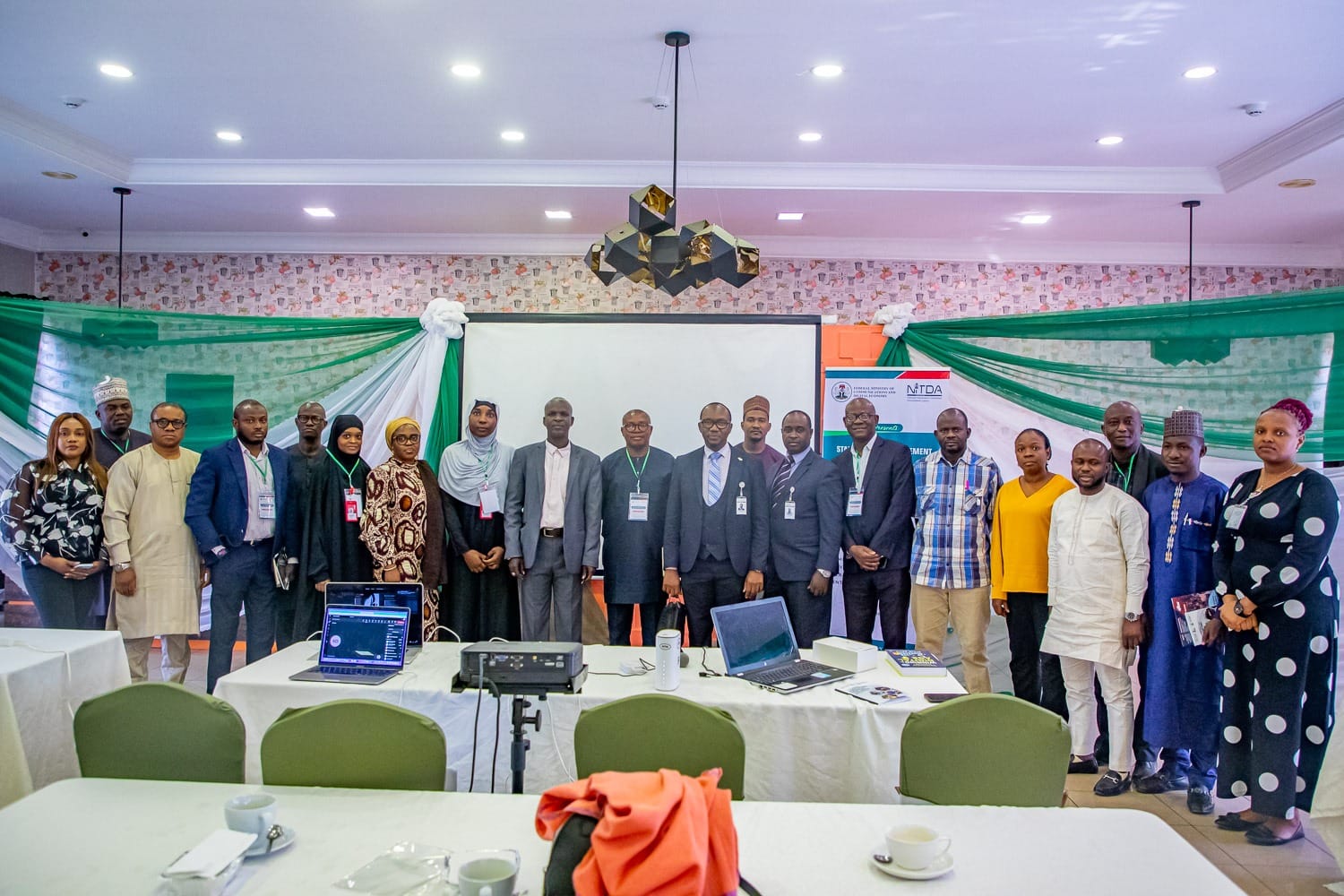
In Its continuous efforts to create fair and inclusive society that provides equal opportunity, the Federal government of Nigeria, through the National Information Technology Development Agency (NITDA), organized a 1-day stakeholders consultation forum on the National Outsourcing Strategy (NOS), in Abuja, to give stakeholders an opportunity for inputs to express their views and opinions on the proposed NOS.

The participants which include the Academia, relevant MDA’s, ICT Related Organizations, as well as Government representatives, and key relevant stakeholders in the Digital Economy sector share ideas and brainstorm for gainful deliberation.

The Director General of NITDA, Kashifu Inuwa CCIE, who was represented by the Ag. Director, Digital Economy Department, Engr. Salisu Kaka said that the stakeholder’s engagement is an avenue where the National Outsourcing Strategy will enable Nigeria to take advantage of the opportunities presented by global value chain, leveraging its competitive advantages of having the largest youth population in Africa, mature telecoms market, strategic geographic location, and vibrant innovation ecosystem to create millions of jobs.

According to him, the vision of National Outsourcing Strategy is to make Nigeria a prime global outsourcing destination. To achieve this, 7 strategic pillars have been carefully chosen based on the country’s unique environment and strengths, in line with the National Digital Economy Policy and Strategy (NDEPS) for a Digital Nigeria.

He noted that, the strategy is also in alignment with the National Development plan and addresses key focus areas of Mr President which are economic diversification, youth employment and security.

“We, in NITDA, call on all stakeholders to support the implementation of the strategy. This, we are confident, will facilitate the development of a resilient and vibrant digital economy”, he noted.

Furthermore, he stated, “as a national strategy, we encourage all stakeholders to cascade this strategy so that we can build a highly competitive market, making Nigeria the prime Global Outsourcing Destination.”

Presenting a paper on the NOS, Dr, Ayodele A. Bakare, Head of Digital Technology Adaption Unit, NITDA, discussed the summary information about the proposed NOS which include the rationale, vision, mission, goals and Objectives of the NOS as well as supporting pillars, governance structure, and implementation strategy.
Laying emphasis on the primary objective of the document, he said, “the National Outsourcing Strategy which align with the National Digital Economy Policy and Strategy aims to deliver 5 Million Jobs in Nigeria by 2030”.

“To achieve this ambitious target, the strategy is focused on seven critical pillars which include the following: Outsourcing, Infrastructure, Human Capital Development, Trust, Privacy and Security, Branding and Promotion, Innovation and Entrepreneurship, and lastly, Finance and Incentives,” he concluded.NITA


At a time when unemployment challenges and economic instability are high, small and medium-sized businesses (SMMEs) are proving to be the engines of economic growth and job creation throughout the African continent.


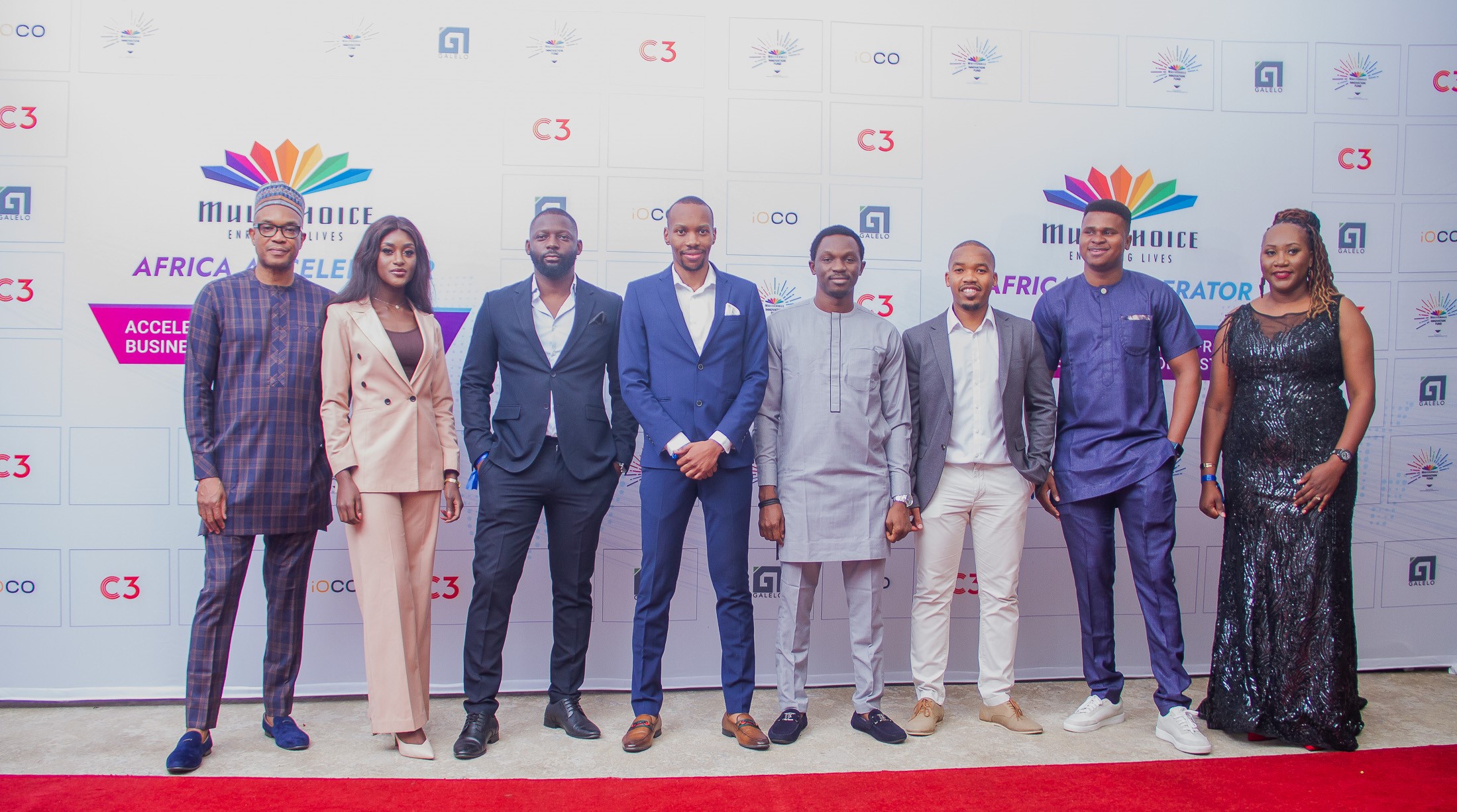
In recognition of the critical role SMMEs play, MultiChoice launched the MultiChoice Africa Accelerator programme which trained 29 businesses across 9 African countries in key entrepreneurial skills.

As the second leg of the programme, a panel of experts has selected 11 of the most promising small businesses and invited them to pitch to prospective international investors in Dubai.

“There’s no denying the impact African SMMEs have on job creation and economic growth,” says Fhulufhelo Badugela, MultiChoice Africa CEO. “Through the MultiChoice Africa Accelerator Programme, our vision is to take that impact and multiply it beyond what our start-up founders ever believed possible. I have no doubt these small businesses will be able to take everything they’ve learned so far to unlock transformative business funding.”

The MultiChoice Africa Accelerator programme, the brainchild of the MultiChoice Group and part of the MultiChoice Innovation Fund, in collaboration with Dubai-based business incubator Companies Creating Change (C3), technical partner EOH, and Galelo Africa, has been designed as a platform to help grow start-up businesses from across Africa.

The programme specifically targets start-ups and small businesses in the technology sectors of health tech, agritech, fintech, edutech, the circular economy, and creative industries.

“The quality of the submissions this year was high. It confirms our view that Africa has enormous potential. The specific focus on tech industries allows us to showcase the innovation of Africa to the world, but also enables these businesses to develop tech solutions to real societal problems,” continues Badugela.

The first phase of the MultiChoice Africa Accelerator Programme saw public and private-sector partners in each country nominating businesses or entrepreneurs for the programme. From there, 29 of the start-ups embarked on an intensive virtual training course during December 2022 and in Johannesburg.

The 11 start-ups attended a dedicated boot camp in Lusaka, Zambia to learn more about how to shape their story for international investors, and to get “pitch ready” before their big presentations.

The 11 start-ups shortlisted to present their business plans to a panel of investors for this year’s MultiChoice Africa Accelerator Programme are:

1. Tupuca from Angola

Tupuca is an on-demand quick-commerce platform and logistical aggregator of uber-like drivers that allows users to order from multiple vendors and service providers ranging from restaurants, grocery stores, small retailers and courier services.

2. Taskmoby from Ethiopia

Taskmoby is the first digital marketplace in Ethiopia that connects customers with qualified home services providers (e.g. plumbers, cleaners, electricians), leveraging a mobile application, SMS/USSD solutions and a dedicated call center.

3. StarNews Mobile from Ivory Coast

Through the MultiChoice Africa Accelerator Programme, our vision is to take that impact and multiply it beyond what our start-up founders ever believed possible

StarNews Mobile is a pan-African media-tech company whose mission is to give financial freedom to African creators from the distribution and monetization of their digital content globally.

4. Tendo from Ghana

Tendo is a social commerce platform that enables anyone to sell online with zero capital.

5. Zuri Health from Kenya

Zuri Health is a virtual hospital (Super Health App) providing affordable and accessible healthcare services to patients across Sub-Saharan Africa via mobile app, website, WhatsApp bot and SMS service.

Through the app, patients can chat and consult with doctors, buy medication from pharmacies, book labs and diagnostic tests and even have a doctor visit them at home.

6.  Dojah Inc and Crop2Cash from Nigeria

Dojah Inc is an end-to-end Identity verification and compliance framework to strengthen confidence, credibility, and compliance across digital businesses.

At Crop2Cash, we have built a digital financial service that allows smallholder farmers anywhere in Nigeria to open a bank account on their feature phones in under 2 minutes, with no internet required.

7. MaTontine from Senegal

MaTontine is a digital financial services platform.

It digitise traditional, African savings groups to provide access to financial services for financially excluded women in Africa.

8. Botlhale AI and Gradesmatch South Africa

Botlhale AI builds Natural Language Processing (NLP) tools for African languages. Developers and organisations can integrate any of these tools into their solutions through its APIs.

Gradesmatch helps students (and families) to transition from education to economic opportunity by making the journey as simple as possible.

The company builds the core enabling infrastructure that simplifies the journey from education to economic opportunity.

9. Mighty Finance Solution from Zambia

Mighty Finance Solution provides SMEs in emerging markets with seamless credit and financial solutions using artificial intelligence. The company leverages proprietary credit rating algorithm to pave the way for a unique lending experience and transforming lives through the provision of simple, quick and affordable loans.

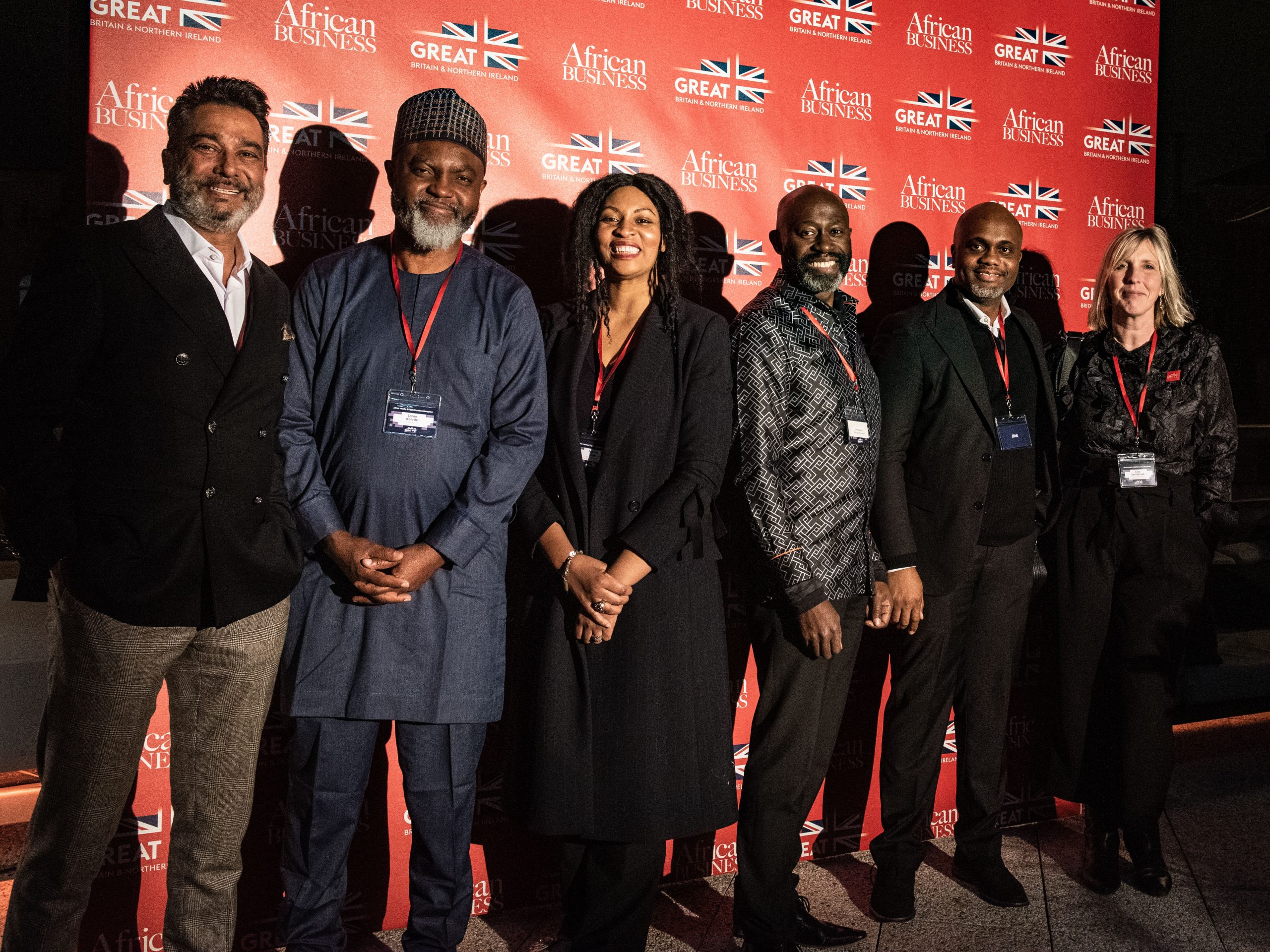
The UK’s international trade department hosted, the Africa Mobile & Digital Leaders Reception. The event, which was hosted on the side-lines of the Mobile World Congress in Barcelona, is the third in a series of events looking at promoting partnerships between the United Kingdom and Africa, specifically in mobile driven digital trade.


Digital trade is a driver of business growth all over the world. Market research company, eMarketer, predicts that online sales will soar from $3.3 trillion 2019 to $6.2 trillion in 2023 and $7.4 trillion by 2025. In Africa, the United Nations estimates that internet business could add $180 billion to the continent’s GDP. However, there are hurdles that need to be overcome to unlock the immense opportunity for mobile-driven digital trade on the continent.

Jamila Saidi, Head of Digital Commerce at the trade department said, “We know that digital trade and digital services powered through mobile and other channels is the future and will be at the heart of growth in Africa. The continent is one of the most exciting in entrepreneurship and innovation and this century will redefine Africa as its population claims the opportunity ahead and reaches for economic empowerment, all powered by entrepreneurship and investment.”

The Department is cooperating with African Business magazine to highlight how Africa’s vibrant and entrepreneurial tech community can leverage partnerships to overcome hurdles to unlocking the potential of digital trade in the continent.

The event also saw the announcement of a new business group, The Africa Forum for Digital Commerce, which will bring together people and organisations who are passionate about advancing Africa’s economic growth, to collaborate and create digital commerce opportunities from the continent and to the continent. The forum’s founding members include ARM (E3)NGAGE which has recently been launching its own digitisation initiatives across the continent.

We know that digital trade and digital services powered through mobile and other channels is the future and will be at the heart of growth in Africa

Stephen Ozoigbo, Snr. Director, Emerging Economies at Arm, said, “Since the inception of our (E³)NGAGE lab model, we have seen tremendous progress across targeted program areas that support our digitization strategies across the continent. Our current ecosystem successes in Africa have also accelerated Arm’s ambitions around launching additional labs, as we expand across the continent.”


Other founding members include:

  • AfricaNenda, an independent, African-led organisation created to accelerate the growth of instant and inclusive payment systems.


  • Connected Places Catapult, the UK’s innovation accelerator for cities, transport, and place leadership. The Catapult has an established track record of working with cities across Africa and around the world on initiatives designed to solve pressing challenges in rapidly growing cities, such as congestion and overcrowded public transport.


  • Vodafone The largest pan-European and African technology communications company, Vodafone operates mobile and fixed networks in 20 countries, and partners with mobile networks in 47 more. Vodafone has over 330 million mobile customers, more than 28 million fixed broadband customers, and 21 million TV customers. Vodafone is also a world leader on the Internet of Things (IoT), connecting over 155 million devices and platforms.  Vodafone has revolutionised fintech in Africa through M-Pesa, the region’s largest fintech platform, providing access to financial services for more than 58 million people in a secure, affordable, and convenient way.


  • what3words, a British founded tech company that has created a simple way to communicate precise locations. It has divided the globe into a grid of 3m x 3m squares, and assigned each one a unique combination of three words: a what3words address. This allows users to find, share and navigate to any precise location using three simple words. The innovative location technology is used by businesses and governments worldwide to solve issues caused by poor addressing – improving efficiencies, enhancing customer experiences, offering smoother journeys and even saving lives.


As S Africans contend with the likelihood of advanced stages of loadshedding for the foreseeable future, more homeowners are looking at ways to mitigate the impact of prolonged power outages on their daily lives. In response, Finance Minister Enoch Godongwana informed citizens during his budget speech that they can receive up to R15 000 tax rebates for installation costs of rooftop solar panels starting from March 1st – leaving many considering sun-based energy sources as their pathway towards uninterrupted power supply.


But having the latest information about where and how to start the process is a crucial first step,” says Andrea Tucker, Director of MortgageMe.


While solar provides the single, most cost-effective solution for homeowners, cost-effective doesn’t necessarily mean easily affordable. “In the same way that we always advise prospective homeowners to have a budget in mind and finance in place, we also recommend that solar shoppers do a needs assessment, cost it and then research the options for financing their solar installation,” says Tucker.


With such a high demand for solar in South Africa, banks and finance companies are starting to offer more innovative and affordable solutions, including adding the cost of solar to a home loan on registration of the bond, extending home loans to cover the cost of installation, or financing solar as a rent to buy option or even on a subscription basis.


“Given that Eskom’s problems are unlikely to be resolved any time soon, the installation of solar will almost certainly enhance the resale value of a property or attractiveness to potential renters – it is therefore seen as a good investment by finance houses,” says Tucker.  “This is, of course, based on the installation being professional, compliant and adequate for the needs of the house and its occupants,” she adds.


Leading residential solar energy company, Versofy SOLAR, connected around 900 homes in 2022, and is looking at a bumper 2023. Owner-managed, Versofy SOLAR is a homegrown South African business, making its contribution to reducing high levels of unemployment while helping address the country’s energy crisis.


Versofy SOLAR co-founder and CEO Ross Mains-Sheard has advised hundreds of homeowners on their solar installations and gives his top tips to consider before making the decision to go solar:

  • Talk to friends, neighbours and your community for recommendations of companies that they have used.
  • Assess your home’s energy needs based on historical usage patterns.
  • Assess your home’s capacity to support solar panels, taking into consideration surface area of the roof, orientation, pitch, and exposure to the sun.
  • When you have completed these two exercises, you will be able to determine – in conjunction with a reputable solar installation company – the capacity of the solar panel and storage system you need to install.
  • Ensure that your installer is accredited and uses only the best-quality materials.
  • Get the necessary approvals including from the municipality, homeowners’ association, body corporate etc.
  • Versofy SOLAR uses only the most trusted components and verified installers and can advise on issues around compliance.
  • Ensure your solar system is maintained regularly and that it is insured the same as any other household asset.
  • Versofy SOLAR’s systems come with generous warranties, but basic ongoing maintenance such as keeping panels free of dust and debris, and monitoring and inspection of the system via Versofy’s app will ensure the system functions optimally at all times.


“We always advise getting a few quotes before making a decision on solar installation, but we are confident that our customer satisfaction rating, high-quality equipment and standard of workmanship speak for themselves,” notes Mains-Sheard.


Solar installation is not only about the number of panels but also of the storage capacity of the captured solar energy based on the size of the home and appliances that people wish to keep on during a power outage. There is also the possibility that in the future, surplus energy generated may be sold back into the grid, which may provide a modest return on your investment. The Western Cape is certainly moving forward with this and it is hoped that the rest of the country will follow suit.


“With the added burden of increased electricity tariffs on top of loadshedding, solar provides a reliable, safe and sustainable energy alternative to the national grid – and it only makes sense in a country with as many sunlight hours as we experience. There are many options that make it cost-effective depending on your immediate needs and ability to outlay a large amount upfront or pay it off over time. It is certainly looked upon favourably by banks and finance houses who are making it easier for homeowners to choose solar,” adds Tucker.


ONE Africa Digital Summit will spearhead a power-packed programme of mind-stretching conference content at the inaugural GITEX AFRICA 2023 in Morocco, unifying government and private sector leaders, policy makers, investors and academics, to steer Africa’s transformation into a single digital market.

The one-day summit on 30 May 2023 is poised to be the world’s most influential and outcome-focused forum for dialogues, exchanges and collaborative intentions, accentuating the vast potential of the globe’s youngest continent and shaping the vision for a more connected, sustainable, inclusive, and tech-driven digital economy.

Organiser KAOUN International expects impactful partnerships to be announced, from collaborations on digital infrastructure projects and capacity building initiatives, to agreeing on solutions to boost regional interconnection.

With more than 80 per cent of Africa’s population having mobile subscription, the digital economy is becoming one of the main drivers of cross-continental growth. This is coupled with strong talent development and a spike in public and private sector investments.

To ensure that positive developments continue at a fast pace, heads of States and Governments adopted a bold strategy to unify the continent into a secure Digital Single Market (DSM) by adopting policies and regulations, and leveraging Africa’s economies at scale.

For the common digital market to become a reality, a lot needs to be done with regards to mobilising investments in digital infrastructure and developing the common regulatory frameworks on national and regional levels which will be examined, debated, and pledged during One Africa Digital Summit.

That will be one of many lofty goals among specific high-level panel sessions on the day covering crucial topics from the state of play in Africa’s digital economy and fast tracking integrated and inclusive Digital Public Infrastructure, to amplifying Africa’s resilience towards global economic crises, and rolling out 5G connectivity across the continent.

An historic launch in the world’s next biggest digital economy

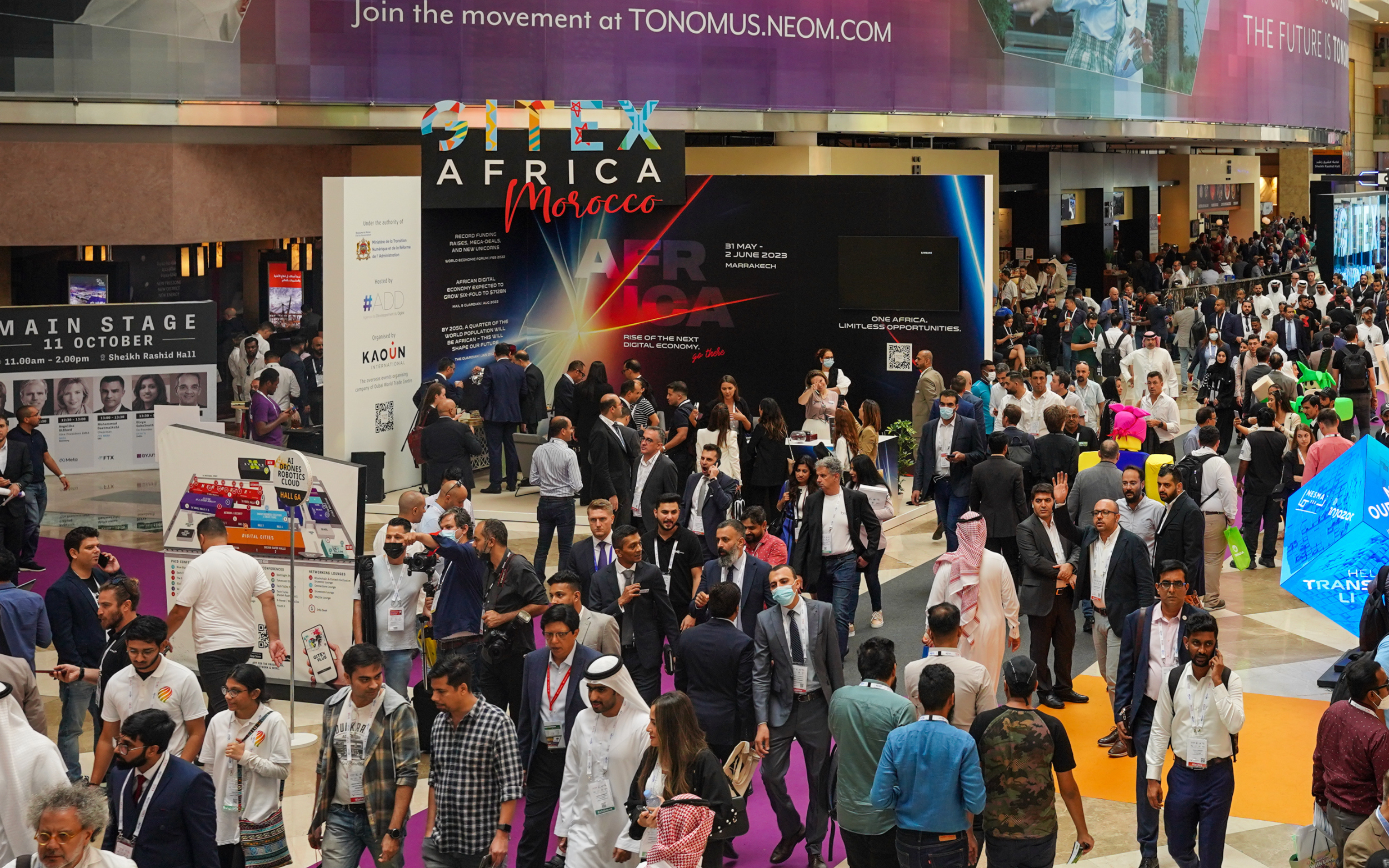
One Africa Digital Summit will raise the curtains and set the scene for the inaugural GITEX AFRICA, the continent’s largest all-inclusive tech event, connecting tech titans, governments, SMEs, start-ups, coders, investors, and academia, to accelerate, collaborate, and explore new ventures in the world’s next biggest digital economy.

The super-connector event will take place from 31 May-2 June 2023, launched in partnership with the Digital Development Agency (ADD), a strategic public entity leading the Moroccan government’s digital transformation agenda under the authority of the Moroccan Ministry of Digital Transition and Administration Reform.

GITEX AFRICA is the first overseas venture for GITEX GLOBAL, the influential tech brand trusted by international tech executives, its record-breaking 42nd edition in October 2022 at the Dubai World Trade Centre attracting more than 170,000 attendees from 176 countries.

More information is available at www.gitexafrica.com