


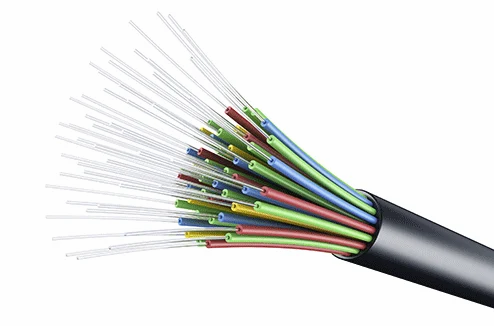
Nigeria is building roads, expanding cities and opening up communities, but the Nigerian Communications Commission (NCC) is warning that the country must not destroy the digital connections that keep those same communities linked to the rest of the world.
The warning follows the disclosure that more than 5,000 fibre-optic cable cuts were recorded across the country in the first six months of 2026, many of them caused by road construction, excavation and other civil works.
The Executive Vice Chairman and Chief Executive Officer of the NCC, Dr Aminu Maida, raised the concern at a stakeholders’ workshop on the protection of fibre-optic cables held in Abuja on August 11, 2026.
For many Nigerians, a damaged fibre cable may sound like a technical problem that concerns only telecommunications companies. But the reality is much bigger.
When one of these cables is cut, the impact can quickly reach the ordinary Nigerian. Phone calls may fail. Internet services can slow down or disappear. Digital payments may stop working. Businesses can lose customers and revenue, while schools, hospitals, banks, government agencies and emergency services may also be affected.
That is why the NCC says protecting telecommunications infrastructure should be treated as a national responsibility.
Maida explained that the issue should not be about blaming road contractors or telecommunications operators. Road construction is necessary, just as reliable telecommunications networks are necessary. The real challenge, he said, is ensuring that the two do not work against each other.
A contractor digging a road may see a buried cable as just another obstacle beneath the ground. But when that cable is cut, thousands or even millions of people could suddenly lose access to services they depend on.
Nigeria has already experienced what such disruptions can mean. The NCC recalled the major network disruption in February 2024, when fibre cuts contributed to widespread telecommunications problems that affected millions of users for several hours.
The Commission is now calling for better planning and communication before road construction and excavation begin. Contractors, engineers, telecommunications operators and government agencies need to know where critical fibre infrastructure is located and work together to protect it.
To strengthen this process, the Permanent Secretaries of the Federal Ministry of Works and the Federal Ministry of Communications, Innovation and Digital Economy had earlier established a Standing Committee on the Protection of Fibre Optic Cables.
The committee is expected to develop practical ways of protecting fibre infrastructure before, during and after road construction. Its membership has also been expanded to include representatives of the Office of the National Security Adviser because of the growing security importance of telecommunications infrastructure.
This is particularly important because telecommunications infrastructure has been designated as Critical National Information Infrastructure (CNII).
In simple terms, Nigeria’s communication networks are no longer just commercial infrastructure belonging to telecom companies. They are part of the infrastructure that supports the economy and the daily lives of citizens.
Today, a trader may depend on a mobile phone and digital payment platform to run a business. A student may need the internet for school. A hospital may rely on connectivity to communicate with another facility. A company may depend on cloud services and online transactions to remain in business.
When connectivity disappears, life and business can come to a standstill.
The NCC’s message, therefore, is bigger than the protection of cables. It is about protecting the digital economy Nigeria is working so hard to build.
The country needs good roads. It needs bridges, drainage systems and other physical infrastructure. But it also needs the invisible digital networks that allow people to communicate, work, trade, learn and access services.
Nigeria should not have to choose between building its roads and protecting its digital infrastructure. With proper planning and coordination, it can—and must—do both.
The more Nigeria becomes digitally connected, the more important it becomes to protect the infrastructure that makes that connection possible.
The NCC’s warning is ultimately a simple message to everyone involved in construction: before you dig, know what is underneath. A single cable may be carrying the livelihood, communication or essential service of thousands of Nigerians.
#NCCNigeria #CNII #Telecommunications #DigitalNigeria #InfrastructureProtection #FibreOptic #DigitalEconomy #Nigeria