


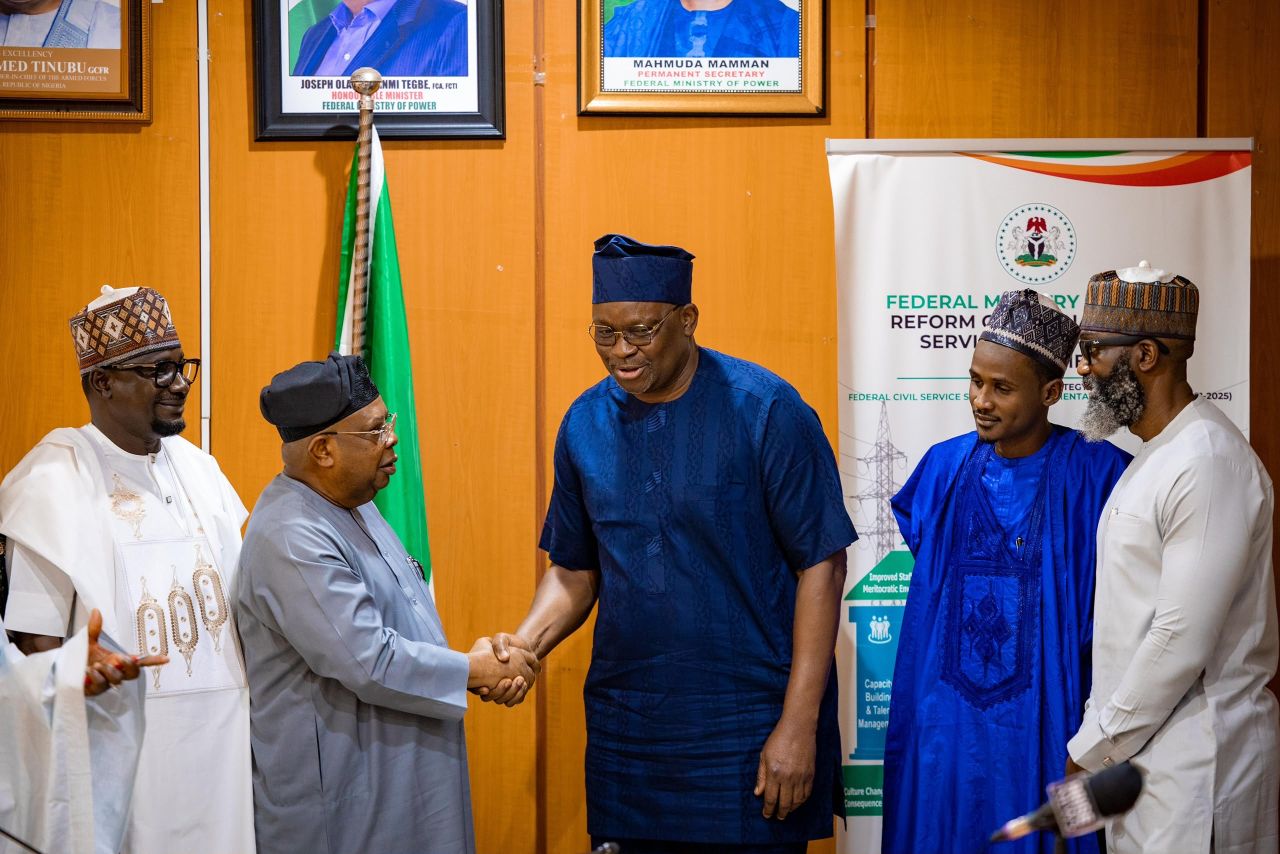




The Minister of Power, Joseph Tegbe, has inaugurated the newly constituted Governing Board of the Rural Electrification Agency (REA), charging members to prioritise initiatives that directly improve the lives and livelihoods of Nigerians.
The inauguration took place in Abuja in the presence of the Permanent Secretary of the Ministry of Power, the newly appointed Board Chairman, former Ekiti State Governor Ayodele Fayose, the Managing Director/CEO of REA, members of the Board and senior officials of the Ministry.
Tegbe urged the new Board to embrace people-centred leadership and ensure that every decision taken by the agency is ultimately measured by its impact on ordinary Nigerians.
According to the minister, the mandate of REA goes beyond simply providing electricity, stressing that rural electrification is closely linked to human development, economic inclusion and national prosperity.
He noted that every mini-grid, solar home system, electrified school, healthcare facility, market and farm represents an investment in the future of Nigerians and has the potential to create new economic opportunities in underserved communities.
“Every mini-grid, solar home system, electrified school, health centre, market or farm represents an investment in human capital, economic inclusion and national prosperity,” Tegbe said.
The minister also charged the Board to strengthen governance and accountability within the agency while maintaining a clear separation between strategic oversight by the Board and the responsibility of Management to execute approved programmes and policies.
He said effective governance would be critical to ensuring that REA delivers on its mandate and contributes meaningfully to the Federal Government’s ongoing efforts to transform Nigeria’s power sector under the Renewed Hope Agenda.
Tegbe emphasised that improving electricity access should translate into tangible benefits for communities, including better healthcare and education, stronger businesses, increased agricultural productivity and improved livelihoods.
He described electricity as more than an infrastructure project, stressing its broader role in expanding opportunities and enabling Nigerians to participate more fully in economic development.
“As we continue to transform Nigeria’s power sector, our goal remains clear: to build a power sector that expands opportunity, supports livelihoods and delivers prosperity for Nigerians,” he said.
The new REA Board is expected to provide strategic direction for the agency as Nigeria intensifies efforts to expand electricity access through renewable energy solutions, mini-grids and other decentralised power systems, particularly in rural and underserved communities.
Tegbe concluded by reinforcing the human dimension of the Federal Government’s electrification agenda, saying: “Electricity is not merely about power. It is about people, possibility and progress.”