


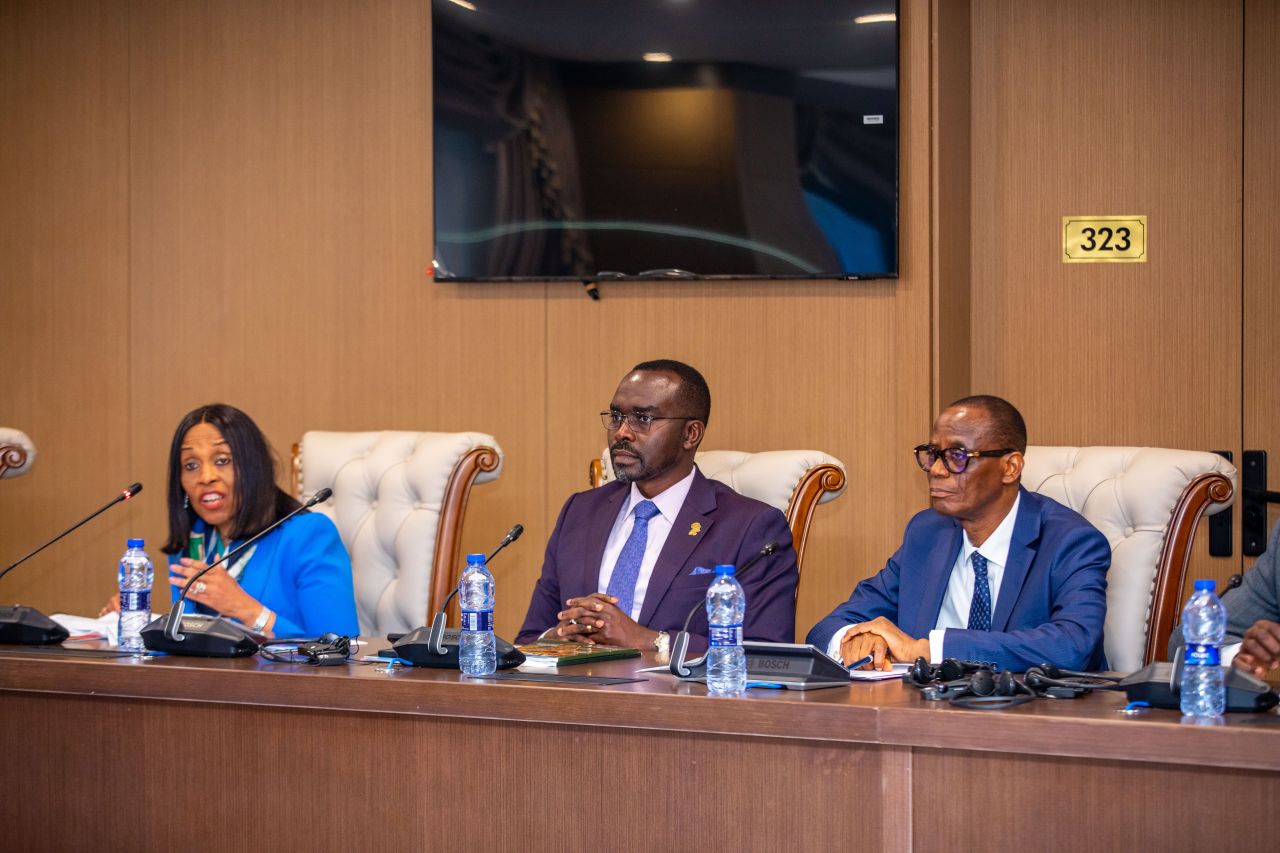
Executive Vice President for Intra-African Trade and Export Development at African Export-Import Bank (Afreximbank), Kanayo Awani, has called for accelerated implementation of the African Continental Free Trade Area (AfCFTA), stressing that Africa’s economic future depends on stronger regional trade, industrialisation, and value addition.
Speaking during the Biashara Afrika High-Level Ministerial Advocacy Dialogue in Lomé, Awani said the continent has reached a critical point where attention must shift from policy design to practical execution of existing trade agreements.
According to her, with 50 African countries having ratified the African Continental Free Trade Area (AfCFTA) Secretariat framework, the foundation for a unified African market has already been established.
“Africa stands at a defining moment in its economic history. With 50 countries having ratified the AfCFTA, the framework for a truly integrated African market is now in place. The challenge before us is no longer one of vision, but of implementation,” Awani stated.
She noted that global economic shifts, supply chain disruptions, and increasing fragmentation in international trade present an opportunity for African economies to rethink traditional export models centered on raw materials.

“At a time of growing global fragmentation and shifting supply chains, Africa must move decisively from exporting raw materials to building regional value chains, strengthening productive capacity, and financing its own transformation,” she said.
Awani highlighted several initiatives being deployed by Afreximbank to strengthen trade financing, industrial development, and regional economic integration across the continent.
According to her, the bank’s interventions include the Pan-African Payment and Settlement System (PAPSS), the AfCFTA Adjustment Fund, industrial parks and export processing zones, transit guarantee programmes, SME development initiatives, export agriculture programmes for food security, and export trading support mechanisms.
She explained that these programmes are intended to create the financing and market infrastructure required to support sustainable economic transformation within Africa.
“At Afreximbank, we are focused on execution. Through interventions such as PAPSS, the AfCFTA Adjustment Fund, Industrial Parks and Export Processing Zones, Transit Guarantee schemes, SME development programmes, Export Agriculture for Food Security, EPC contract promotion, Export Trading Company initiative, and the Intra-African Trade Fair, we are building the financing and market infrastructure required to support Africa’s transformation,” she said.
Awani emphasized that while AfCFTA provides the institutional framework for integration, long-term success would depend on collaboration among governments, entrepreneurs, and financial institutions.
“The AfCFTA provides the framework. Africa’s entrepreneurs provide the energy. Governments provide leadership. At Afreximbank, we stand ready to help translate this ambition into lasting economic sovereignty,” she added.
Her remarks come amid renewed discussions across the continent on how deeper regional trade integration can reduce dependence on external markets, strengthen manufacturing capacity, and accelerate economic growth within Africa.