


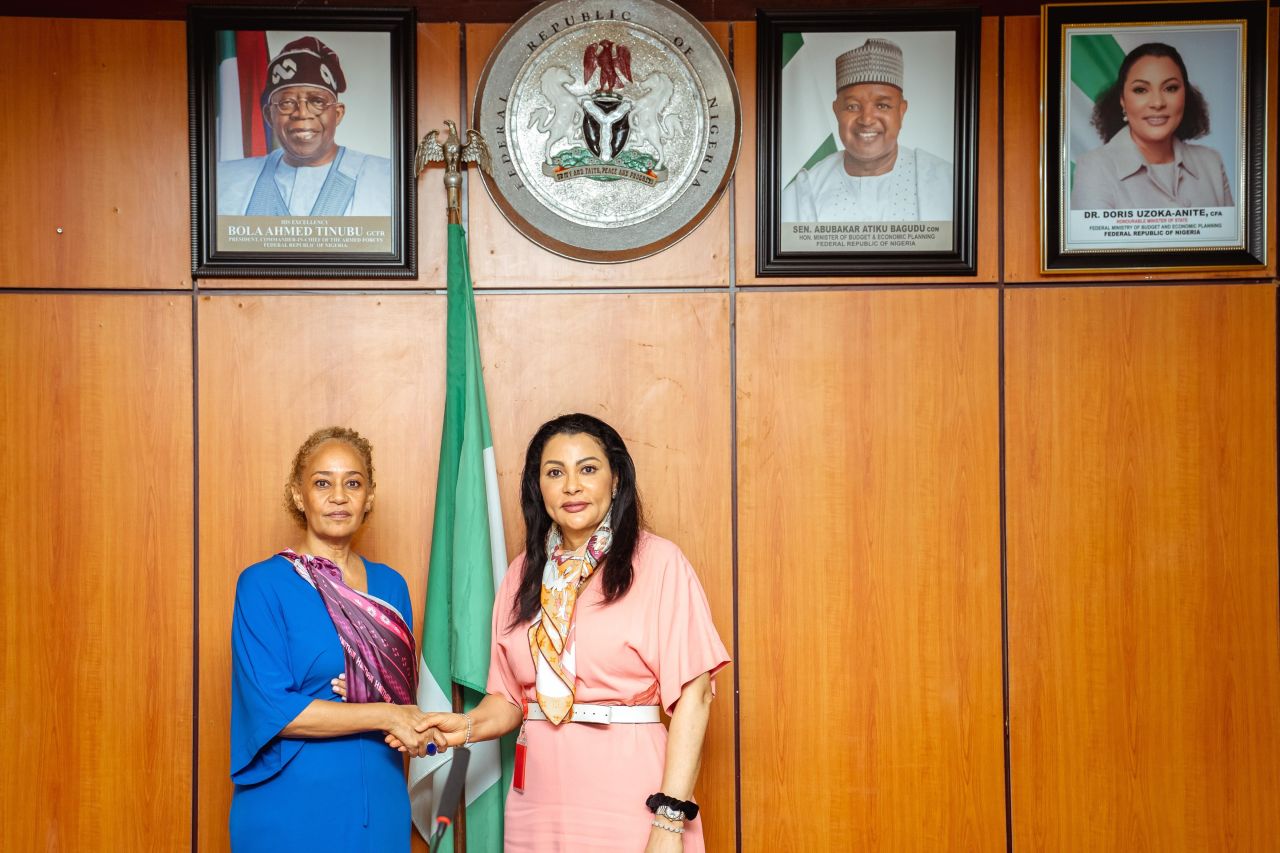






Nigeria is accelerating efforts to transform how it funds national development, with a growing emphasis on private capital, structured finance, and long-term sustainability, according to Doris Uzoka-Anite.
The policy direction was highlighted following high-level discussions with the United Kingdom’s Foreign, Commonwealth and Development Office (FCDO), where both sides explored ways to modernize bilateral cooperation. Central to the talks was Nigeria’s intention to transition from reliance on traditional donor aid toward “catalytic” financing—an approach designed to attract significantly larger pools of private and institutional investment.
A Strategic Financing Shift
Government officials say this transition reflects broader global trends, where development finance is increasingly structured to reduce risk and crowd in private sector participation. For Nigeria, this means scaling up the use of blended finance—where public or concessional funds are used to de-risk projects—alongside guarantees and public-private partnerships (PPPs).
These instruments are already embedded within Nigeria’s National Development Plan, but implementation has faced challenges in the past, including regulatory bottlenecks and limited coordination across agencies. Authorities now aim to address these gaps by creating clearer policy frameworks, improving inter-ministerial alignment, and strengthening institutional capacity.
Analysts note that if effectively deployed, such tools could unlock financing for critical infrastructure, energy transition projects, agriculture value chains, and industrial development—areas where funding gaps have historically slowed growth.
Balancing Investment with Social Needs
Despite the pivot toward investment-driven models, the government acknowledges that not all sectors are immediately attractive to private investors. Education, healthcare, and social protection programs—particularly those targeting vulnerable populations—will continue to depend on grant-based support.
Uzoka-Anite emphasized that maintaining this balance is essential to ensure inclusivity. Development experts warn that a rapid withdrawal from grant aid without adequate safeguards could widen inequality, especially in underserved communities.
Strengthening UK–Nigeria Collaboration
The United Kingdom remains a key partner in Nigeria’s evolving development strategy. Through the FCDO, cooperation is expected to expand beyond financial assistance to include technical expertise, institutional strengthening, and policy support.
Officials say this partnership will also focus on knowledge exchange—helping Nigerian institutions adopt global best practices in project preparation, risk management, and investment structuring. Increased local ownership of development programs is another priority, aimed at reducing long-term dependence on external support.
Looking Ahead
The shift comes at a time when Nigeria faces fiscal pressures, rising debt servicing costs, and a growing need for infrastructure investment. By leveraging private capital and innovative financing mechanisms, the government hopes to ease pressure on public finances while accelerating economic growth.
However, experts caution that success will depend on consistent policy implementation, transparency, and investor confidence. Clear regulations, credible institutions, and a stable macroeconomic environment will be critical in determining whether Nigeria can fully realize the benefits of this financing transformation.
If successful, officials say the new approach could mark a turning point—positioning Nigeria on a path toward a more resilient, self-sustaining, and investment-driven economy.