


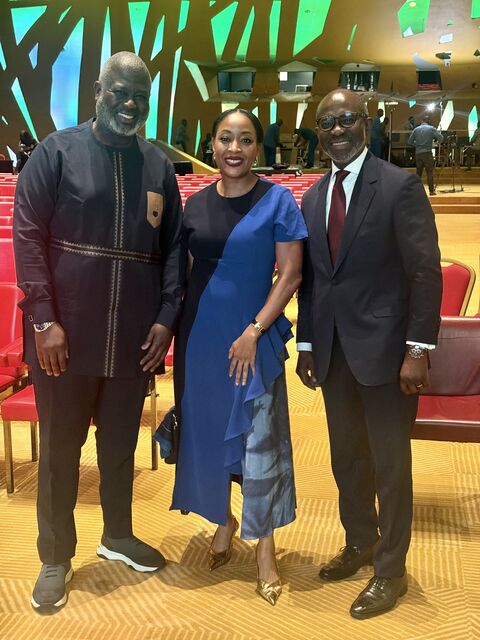






In a room filled with policymakers, investors, and financial leaders, one message stood out clearly: Africa’s future may depend less on raising new money—and more on making existing capital actually work for its people.
At a high-level dialogue convened by the African Development Bank Group and held under the patronage of Alassane Ouattara, conversations went beyond policy language. They focused on real lives—entrepreneurs trying to grow businesses, create jobs, and navigate systems that often don’t meet their needs.
The gathering led to the adoption of the Abidjan Consensus, a shared commitment to rethink how Africa finances its own development. But behind the formal agreement was a deeper, more human story: one of frustration, hope, and the urgent need for change.
For Ada Osakwe, the issue is personal. As an entrepreneur herself, she has seen firsthand how difficult it can be for small and medium-sized businesses to access funding that actually fits their reality.
“Africa doesn’t lack capital,” she said during a session she moderated on SME financing. “What we lack is capital that understands the journey of the entrepreneur—capital that is patient, flexible, and designed for growth.”
Across the continent, SMEs employ the majority of the workforce and serve as engines of community development. Yet many founders face a familiar struggle: loans that are too expensive, investment terms that are too rigid, or systems that are simply out of reach. The result is not just stalled businesses, but missed opportunities for families, communities, and entire economies.
That’s why the vision shared by AfDB President Sidi Ould Tah resonated so strongly. He called for a financial system built on African resources—one that connects institutions instead of keeping them siloed, and channels funding where it can make the most difference.
What made this moment particularly powerful was the scale of collaboration. Institutions representing more than $4 trillion in capital came together—not just to talk, but to explore how they can align their efforts. For many participants, this signaled a shift from fragmented action to collective responsibility.
Industry voices like Wale Adeosun shared practical insights on how financing models can better support entrepreneurs, emphasizing approaches that meet businesses where they are, rather than forcing them into unsuitable structures.
Beyond the technical discussions, there was a sense of shared purpose. Familiar faces, long-time collaborators, and new partners gathered with a common goal: to make Africa’s financial systems more inclusive, more effective, and ultimately more human.
Leaders such as Didier Acouetey and Frannie Léautier were recognized for driving this initiative forward—one that many see as a crucial step toward unlocking not just economic growth, but social impact at scale.
If the ideas discussed in Abidjan are translated into action, the impact could be far-reaching. More accessible financing could mean more thriving businesses, more jobs for young people, and stronger, more resilient communities.
For now, the conversations have sparked something important: a renewed belief that Africa already has what it needs to grow—it just needs to connect the dots.