

A renewed emphasis on the role of higher education in national development has emerged following the convocation ceremony at the University of Calabar, where graduating PhD scholars called for stronger links between academic research and public policy.
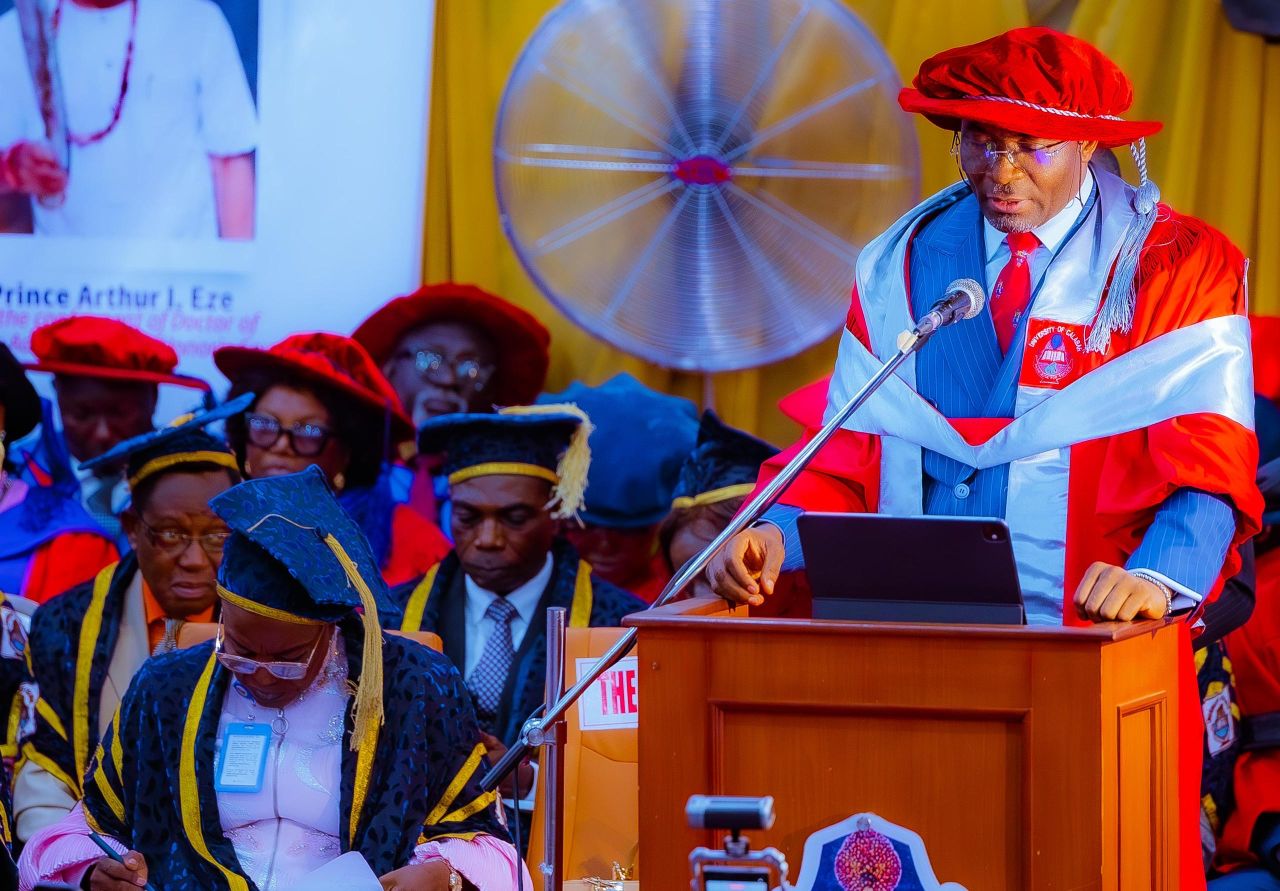
Among the graduating cohort was Benjamin Kalu, Deputy Speaker of the House of Representatives (Nigeria), who delivered the vote of thanks on behalf of the doctoral class.
Kalu described the PhD journey as more than an academic milestone, framing it instead as a call to responsibility and public service.
Education Beyond Titles
Speaking at the ceremony, he emphasized that education should not be confined to academic output such as research papers and dissertations, but must translate into practical impact on governance, innovation, and societal development.
He noted that scholars belong to a global intellectual community with a responsibility to apply knowledge in ways that address real-world challenges.
Bridging Research and National Development
A central theme of his remarks was the need to close the gap between academic knowledge and national transformation. According to Kalu, the true value of advanced education lies in its ability to influence policy decisions and improve the lives of citizens.
Education experts say this perspective aligns with ongoing debates within higher education systems across Nigeria, where institutions are increasingly being encouraged to strengthen research-to-policy pipelines.
Call for Intellectual Leadership
Kalu also highlighted the importance of intellectual leadership among scholars, urging graduates to see themselves as contributors to nation-building rather than mere recipients of academic titles.
He expressed gratitude to lecturers, families, and the broader academic community for their support throughout the doctoral journey.
A Broader National Conversation
The remarks reflect a wider conversation about the role of education in driving development outcomes, particularly in countries where policymakers are seeking innovative solutions to governance, economic, and social challenges.
As Nigeria continues to invest in human capital development, stakeholders argue that the effectiveness of such investments will depend largely on how well academic knowledge is integrated into public decision-making processes.
The convocation ended with calls for continued collaboration between academia and government to ensure that education remains a tool for societal advancement and sustainable national growth.