


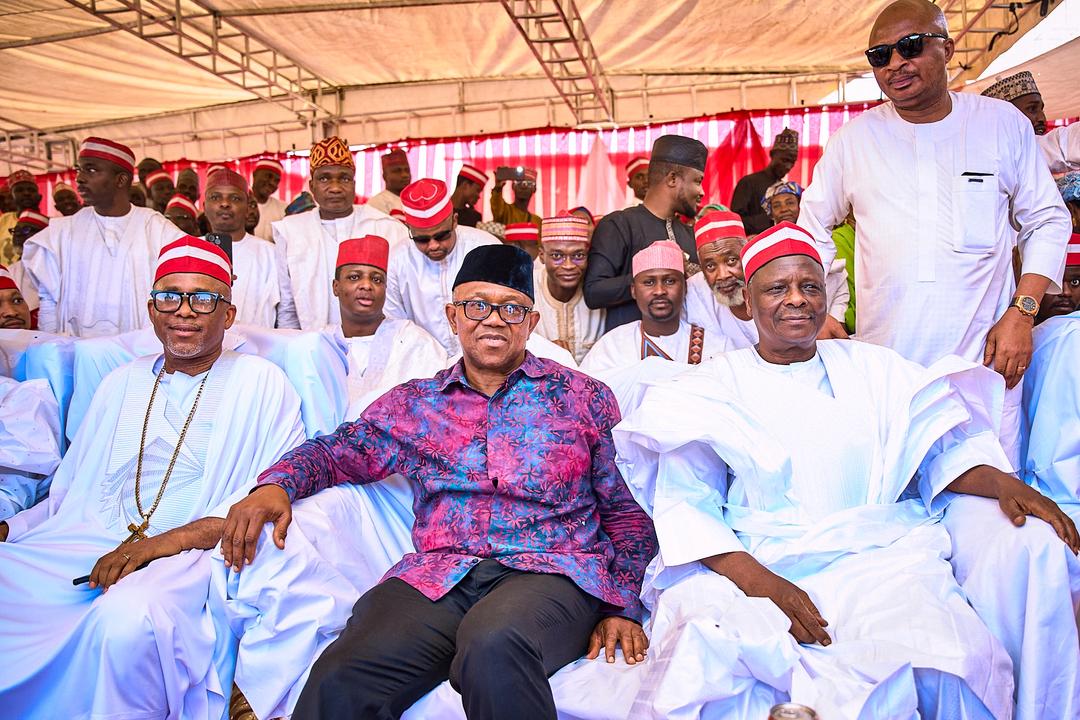
When arrived in for the celebrations, it wasn’t just another political appearance—it felt more like a meeting of people trying to find common ground in a divided moment.
Standing alongside and members of the Kwankwasiyya movement, Obi was received warmly, and the atmosphere reflected something deeper than politics. There was a sense of familiarity, of shared purpose, and of leaders reaching across usual boundaries to connect.
For many observers, the visit sends a quiet but important message. Kano is not just any city—it is one of Nigeria’s most influential political centers, where public sentiment can shape national outcomes. By showing up, engaging, and celebrating with people, Obi is making an effort to be seen not as a distant figure, but as someone willing to listen and belong.
Beyond strategy, the human side of the visit stands out. Joining a major religious celebration like Sallah is about respect, presence, and understanding. In a country where differences often dominate headlines, moments like this remind people of what they share—faith, community, and the desire for a better future.
Reactions have been mixed but thoughtful. Some see hope in the image of two major political figures coming together, even briefly. Others are cautious, wondering what it could mean for future alliances. But for many everyday Nigerians, it’s less about political calculations and more about the simple idea that leaders can sit together, celebrate together, and speak about unity without hostility.
In the end, Obi’s visit to Kano may not change everything overnight, but it adds to a growing feeling that Nigeria’s path forward might depend less on division and more on moments like this—where conversation, respect, and human connection take the lead.