


By Anthony Emeka Nwosu
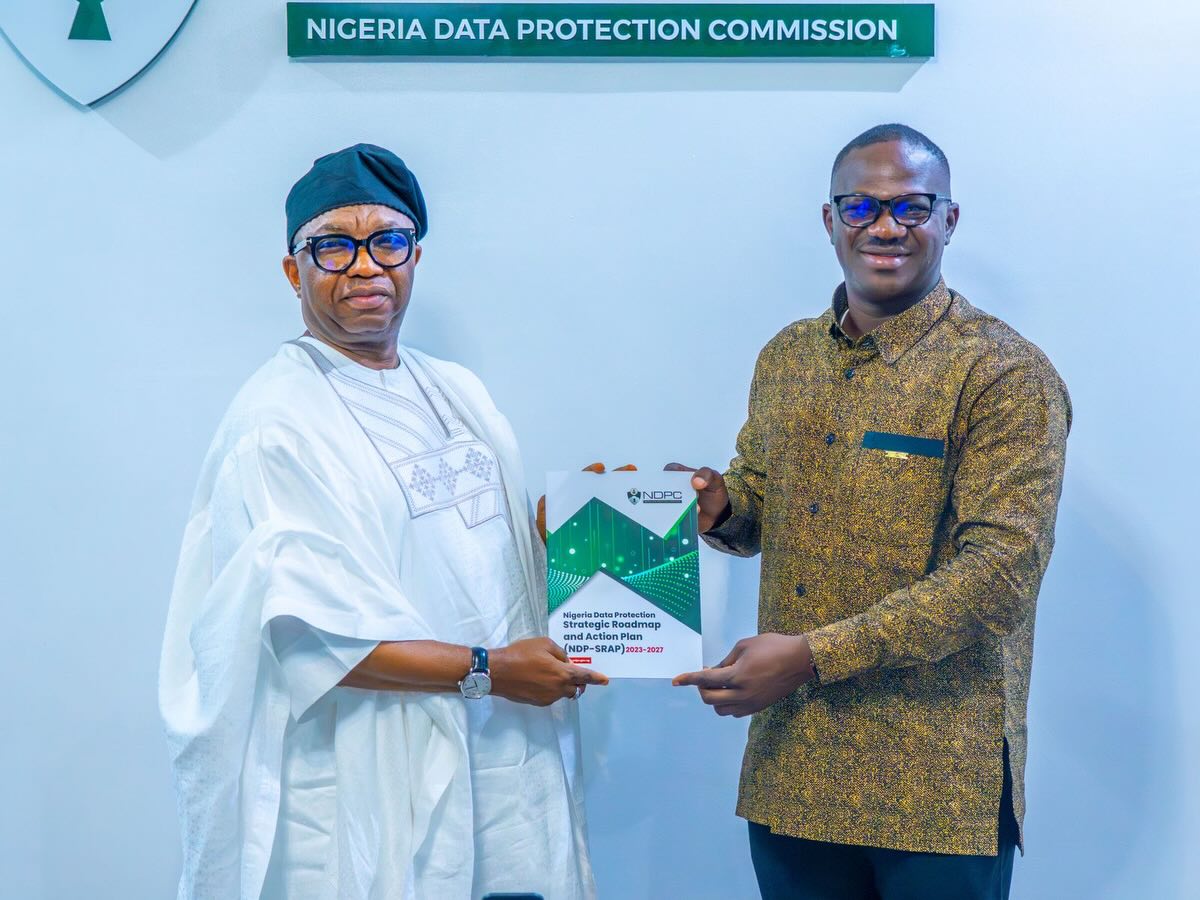
In a significant move poised to strengthen digital rights and data governance across West Africa, the National Commissioner and CEO of the Nigeria Data Protection Commission (NDPC), Vincent Olatunji, hosted his Ghanaian counterpart, Arnold Kavaarpuo, Executive Director of the Data Protection Commission of Ghana, during a high-level courtesy visit in Abuja.
The meeting, far from ceremonial, signals a growing continental push to protect citizens’ data in an era where digital footprints increasingly define economic and social participation. With millions of Africans coming online each year, experts warn that weak data protection systems could expose citizens to exploitation, cybercrime, and systemic inequality.
Dr. Olatunji, while welcoming his Ghanaian counterpart, underscored the urgent need for African nations to build resilient data protection frameworks that prioritize citizens’ rights. He praised Ghana’s progress but stressed that collaboration remains key in addressing shared challenges such as inadequate funding, limited public awareness, and the fast-evolving nature of global data threats.

“We must move beyond policies on paper and build systems that truly protect our people,” he noted, highlighting Nigeria’s ongoing initiatives to deepen awareness and institutional capacity in data privacy.
He further called on Ghana to take a more active role in continental and global platforms such as the Network of African Data Protection Authorities and the Global Privacy Assembly—bodies seen as critical in shaping Africa’s collective voice in global data governance.
In his response, Dr. Kavaarpuo acknowledged Nigeria’s leadership in the data protection space, describing it as both instructive and inspiring. While noting that Ghana’s journey in data privacy dates back several years, he admitted that the country still has much to learn—particularly in scaling awareness and strengthening institutional frameworks.
“Our focus has been on building capacity, raising awareness, and ensuring that our systems are robust enough to protect citizens,” he said, adding that partnerships like this would accelerate Ghana’s progress.
Beyond policy discussions, both leaders exchanged ideas on how Africa’s unique socio-economic realities can shape a distinct, people-centered approach to data governance—one that balances innovation with protection.
Analysts say the collaboration could have far-reaching social impact. Stronger data protection regimes not only safeguard personal freedoms but also build trust in digital systems—an essential ingredient for the growth of fintech, e-commerce, and digital public services across the continent.
As Africa positions itself in the global digital economy, partnerships like this may well determine whether its citizens become empowered participants—or vulnerable bystanders—in the data-driven future.
For millions of Nigerians and Ghanaians navigating an increasingly digital world, this alliance offers a hopeful signal: that their data, and by extension their dignity, is finally taking center stage.