


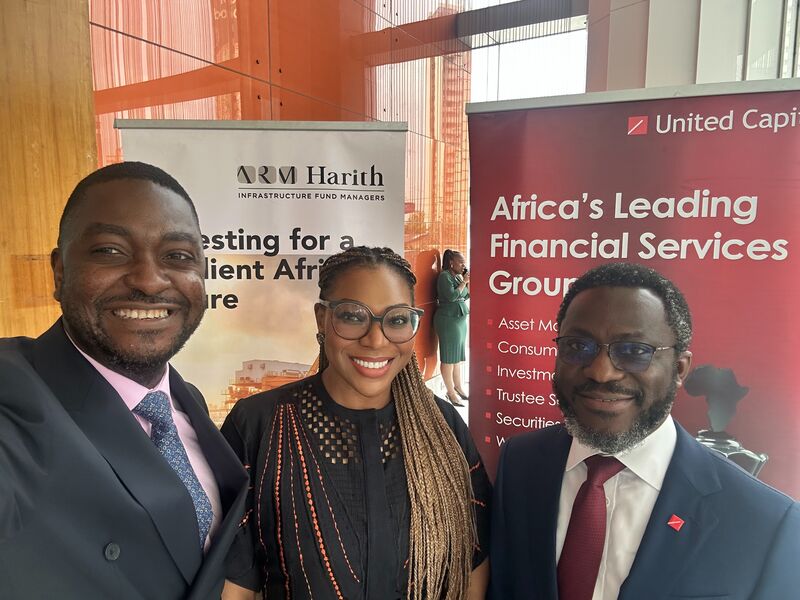






The Chief Executive Officer of ARM-Harith Infrastructure Investment Limited, Rachel Moré-Oshodi, has called for deeper collaboration between public and private sector stakeholders to unlock domestic capital for infrastructure development in Nigeria.
Moré-Oshodi made the remarks following a strategic engagement organised in partnership with the Nigeria Sovereign Investment Authority Sustainable Finance Initiative (ngSFI), which brought together institutional investors, policymakers, and industry practitioners to discuss practical pathways for scaling sustainable infrastructure investments.
According to her, the initiative is part of a deliberate effort in 2026 to move beyond policy conversations toward practical, capacity-building engagements that equip decision-makers with actionable insights into infrastructure financing opportunities.
She explained that the gathering brought together key actors in the financial ecosystem, including pension funds, insurance companies, asset managers and policymakers, to examine how domestic capital can be mobilised to support infrastructure development across Nigeria.
The discussions were further strengthened by the participation of representatives from the Central Bank of Nigeria and the Office of the Senior Special Assistant to the President on Climate Finance and Stakeholder Engagement, creating what she described as an important step toward public–private collaboration in sustainable investment.
Addressing the “Investable Infrastructure” Knowledge Gap
Moré-Oshodi noted that one of the recurring challenges within Nigeria’s financial ecosystem is that many institutional investors still lack adequate exposure to what investable infrastructure opportunities actually look like in practice.
She explained that despite the growing interest in infrastructure financing, many institutional allocators remain uncertain about available opportunities, risk management structures, and investment frameworks that can deliver stable, risk-adjusted returns.
According to her, once practical case studies and real project structures were presented during the session, the conversation shifted significantly.
“The questions became sharper, and the conversation moved into deal terms,” she said, noting that participants began exploring how domestic investors could realistically participate in financing infrastructure projects.
Building Confidence Through Practical Engagement
Moré-Oshodi emphasised that the challenge facing infrastructure investment in Nigeria is not necessarily resistance from investors but limited exposure to practical investment models.
She stressed that showcasing successful examples of infrastructure financing structures—including how risks are mitigated and how investment returns are structured—can help build the confidence institutional investors need to commit capital to the sector.
According to her, sustained engagement between investors, policymakers and practitioners is essential to strengthen Nigeria’s domestic investment ecosystem and unlock new opportunities for long-term economic growth.
Strengthening Sustainable Finance Ecosystems
The ARM-Harith CEO also highlighted the importance of creating platforms where investors and decision-makers can engage in candid discussions about the realities of infrastructure finance, including the challenges and lessons from past projects.
Such platforms, she noted, allow stakeholders to examine deal structures, financing models and policy frameworks that can support the successful deployment of domestic capital into infrastructure projects.
She added that strengthening this ecosystem will play a crucial role in advancing sustainable finance, climate finance and blended finance initiatives across Nigeria and the broader African continent.
Moré-Oshodi expressed appreciation to participants and organisers of the engagement, as well as the Office of the Presidency, for supporting conversations aimed at building a stronger domestic infrastructure investment landscape.
She noted that while capacity building will not occur through a single event, consistent engagements and knowledge-sharing platforms will gradually help institutional investors gain the confidence and technical understanding required to finance major infrastructure assets.
“What is changing,” she said, “is our shared understanding of how to execute and capture this value together.”