



The expansion of digital infrastructure across Nigeria is continuing to deliver significant social and economic impact as MTN Nigeria Communications Plc reports strong operational growth for the 2025 financial year, reflecting the increasing role of telecommunications connectivity in improving daily life, business opportunities, and access to essential services across the country. The performance report was presented by Karl Olutokun Toriola, who described 2025 as a transformative year that demonstrated how sustained investment in technology infrastructure can directly influence national development and social progress.
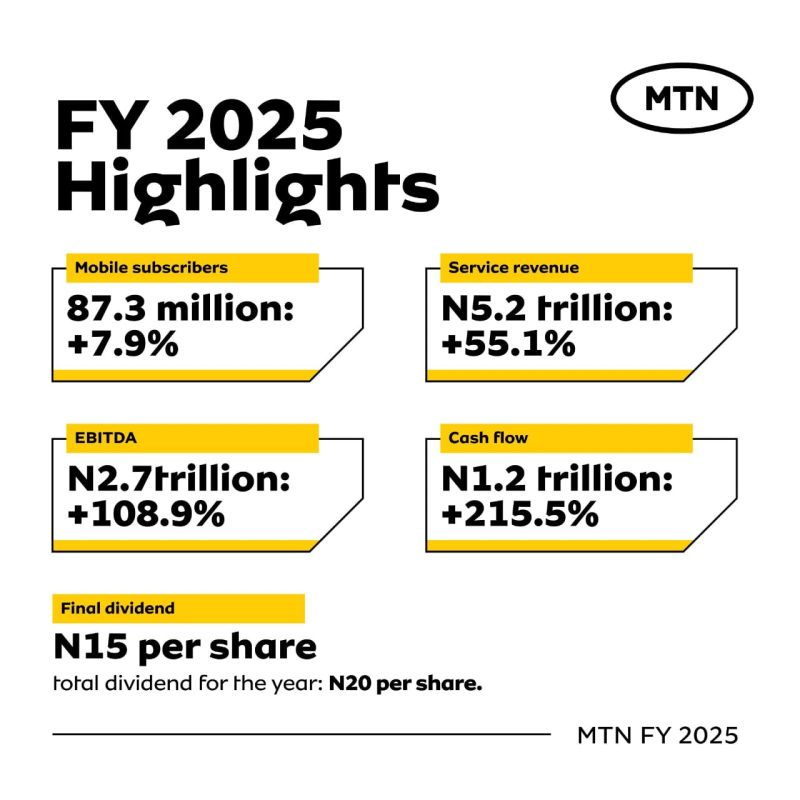
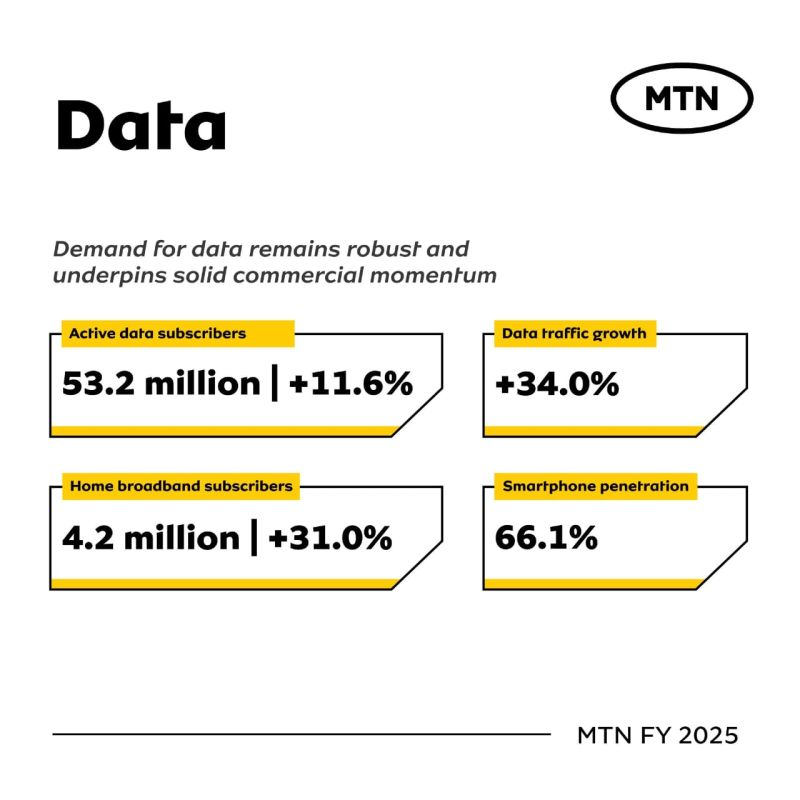
During the year, MTN Nigeria recorded remarkable growth in its customer base, reaching 87.3 million subscribers, representing a 7.9 percent increase in connectivity access across urban and semi-urban communities. More importantly, the company also recorded significant expansion in digital service adoption, with active data subscribers growing to 53.2 million users while data traffic usage increased by 34 percent. Industry analysts believe these figures reflect more than commercial success; they signal a broader societal shift where internet connectivity is becoming a fundamental utility supporting education, commerce, healthcare communication, and social interaction.
Across Nigeria, increasing access to reliable mobile internet services is helping small business owners participate in digital marketplaces, allowing traders, artisans, and service providers to reach customers beyond their immediate geographic locations. Students and young professionals are also benefiting from expanded access to online learning resources and remote work opportunities, helping bridge educational and employment gaps that have historically limited economic mobility in many communities. As digital services become more affordable and widely available, telecommunications infrastructure is playing an increasingly important role in promoting financial inclusion and supporting the growth of Nigeria’s emerging digital economy.
A major highlight of the company’s 2025 operations was the significant investment of approximately one trillion naira in network expansion and modernization. This investment supported the deployment of additional base stations, expansion of fibre optic networks, and strengthening of overall service reliability across Nigeria’s diverse geographical landscape. Telecommunications experts say such long-term infrastructure investment is essential because reliable connectivity is now closely linked to social development indicators such as access to healthcare information, emergency communication services, and digital government platforms.
Toriola emphasized that profitability should not be viewed purely as a business performance metric but rather as a mechanism that enables continued social investment in digital infrastructure. He explained that when customers purchase data services, they are not only paying for communication access but also contributing to the expansion of national digital capacity that supports businesses, educational systems, and public service delivery. This perspective reflects a broader shift in the telecommunications sector, where corporate success is increasingly measured by both financial performance and social development contribution.
The company’s improved financial position also allowed its board to approve a final dividend of 15 naira per share, bringing total shareholder returns for 2025 to 20 naira per share. While rewarding investors, company leadership also emphasized the importance of maintaining a balanced approach between shareholder value creation and continued reinvestment into network resilience and customer service improvement. This approach is particularly important in a developing economy where telecommunications infrastructure directly influences productivity and social welfare outcomes.
Experts across Nigeria’s technology ecosystem continue to highlight the importance of resilient telecommunications networks in supporting sectors such as fintech, digital banking, online retail, and government digital services. As more Nigerians adopt digital payment systems and online business platforms, reliable connectivity is becoming essential for reducing economic barriers and expanding opportunities for small and medium enterprises. Social development advocates also note that improved digital infrastructure can support healthcare outreach programs, emergency response coordination, and remote medical consultations, especially in underserved communities.
Looking forward, MTN Nigeria reaffirmed its commitment to transparency, regulatory compliance, and customer-focused service delivery. The company stated that future investments will continue to prioritize network quality, service accessibility, and technological innovation. As Nigeria’s digital ecosystem continues to expand, telecommunications infrastructure is expected to remain a critical foundation for sustainable economic growth, social inclusion, and technological advancement across the country.
Overall, the 2025 performance results highlight how digital connectivity is evolving from a business service into a social development tool that supports education, entrepreneurship, financial independence, and improved quality of life for millions of Nigerians. The continued expansion of telecommunications infrastructure is therefore expected to play a central role in shaping Nigeria’s future economic and social landscape.
ANTHONY EMEKA NWOSU