


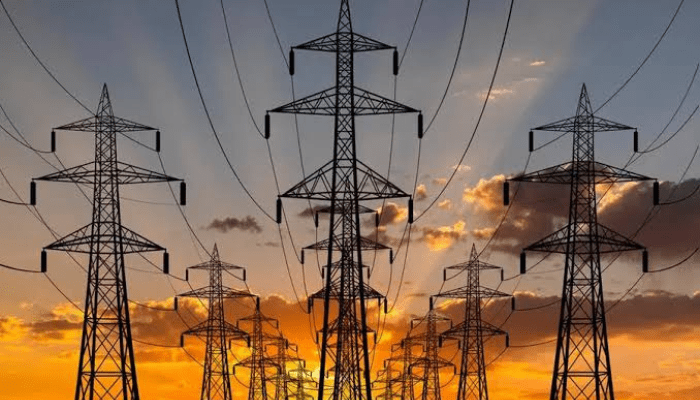



As night falls across Nigeria, the country does not go dark in the same way everywhere. In some communities, lights flicker on, fans spin to life, students open their books, and hospitals hum with activity. In others, darkness settles in completely, bringing with it silence, limitation, and stalled opportunity.
In 2024, just over half of Nigerian households have access to electricity, placing the national average at 53.6 percent. While this figure suggests modest progress, it conceals a deep and persistent regional divide. In the South East, 74.6 percent of households have electricity, closely followed by the South West at 71.7 percent. The South South also performs above the national average, with 65.7 percent of households connected to power. These regions benefit from stronger grid coverage and higher urban concentration, allowing daily life and economic activity to extend well beyond daylight hours.
The picture changes sharply across much of the North. In North Central Nigeria, fewer than half of households, at 46.8 percent, have access to electricity. Conditions are even more severe in the North West, where only 32.1 percent of households are electrified, and in the North East, which records the lowest level of access at just 29.5 percent. This means that in some parts of the country, fewer than one in three families can rely on electricity in their homes.
This gap of more than forty-five percentage points between the most and least electrified regions is not merely an infrastructure challenge. It is an opportunity divide that shapes education, health outcomes, and economic potential. In communities with reliable electricity, children can study after sunset, access digital learning tools, and compete in an increasingly connected world. Where electricity is scarce, learning often ends when daylight fades, quietly reinforcing educational inequality night after night.
Healthcare follows the same pattern. Electricity enables clinics to store vaccines safely, power essential medical equipment, and provide emergency care at any hour. In areas without reliable power, healthcare delivery is constrained, and preventable conditions can become life-threatening simply because basic energy needs are unmet.
Economic opportunity is equally affected. In electrified regions, small businesses can stay open longer, artisans can increase productivity, food spoilage is reduced through refrigeration, and digital enterprises can emerge and grow. In regions with limited access, businesses are forced to rely on expensive generators or shut down early, driving up costs, reducing output, and discouraging investment. Over time, electricity becomes a silent multiplier of income in some regions and a persistent barrier in others.
The national average masks these realities, creating the illusion of balanced progress. In truth, uneven access to electricity risks deepening regional income gaps, accelerating migration toward better-powered areas, and slowing national development. For regions already facing economic or security challenges, limited electrification compounds vulnerability and weakens the impact of development interventions.
Electricity is often discussed in technical terms, measured in megawatts and grid capacity, but its true value lies in what it enables. It determines who can study at night, who can receive quality healthcare, who can run a business efficiently, and who can participate fully in the modern economy. It is not simply about lighting homes; it is about lighting pathways to opportunity.
As Nigeria looks toward long-term growth and inclusive development, equitable access to electricity must be treated as a development imperative rather than a sectoral issue. Expanding grid infrastructure, investing in decentralized energy solutions, and prioritizing underserved regions can help close the divide.
Until access becomes more evenly distributed, Nigeria’s development story will remain uneven, shaped not only by geography or income, but by a simple and powerful question: who gets to live in the light, and who is left behind in the dark?
#StatiSense
(NESG)