




A leading voice in technology policy and governance, Basil Udotai, Esq., has urged the National Assembly to delay the passage of the Digital Economy Bill, warning that the proposed legislation, in its current form, fails to address the structural and institutional weaknesses hindering Nigeria’s digital transformation.
In a statement published on his LinkedIn page, Mr. Udotai—Founder of CreativeAfrica and a renowned expert in African technology law—described the Bill as a missed opportunity to modernize Nigeria’s legal architecture in line with global digital realities. He explained that while the Bill was expected to provide a modern legal foundation for Nigeria’s digital economy, it instead overlooks the critical need for structural convergence among the country’s regulatory institutions.
According to him, telecommunications, broadcasting, and information technology now operate on the same digital infrastructure worldwide, serving a unified market through integrated systems. However, Nigeria still regulates these converged technologies through three separate agencies—the Nigerian Communications Commission (NCC), the National Broadcasting Commission (NBC), and the National Information Technology Development Agency (NITDA). This fragmented system, he noted, contrasts sharply with the approaches adopted by countries such as the United Kingdom, the United States, Singapore, South Korea, and India, all of which first restructured their regulatory bodies to reflect technological convergence before enacting comprehensive digital economy legislation.
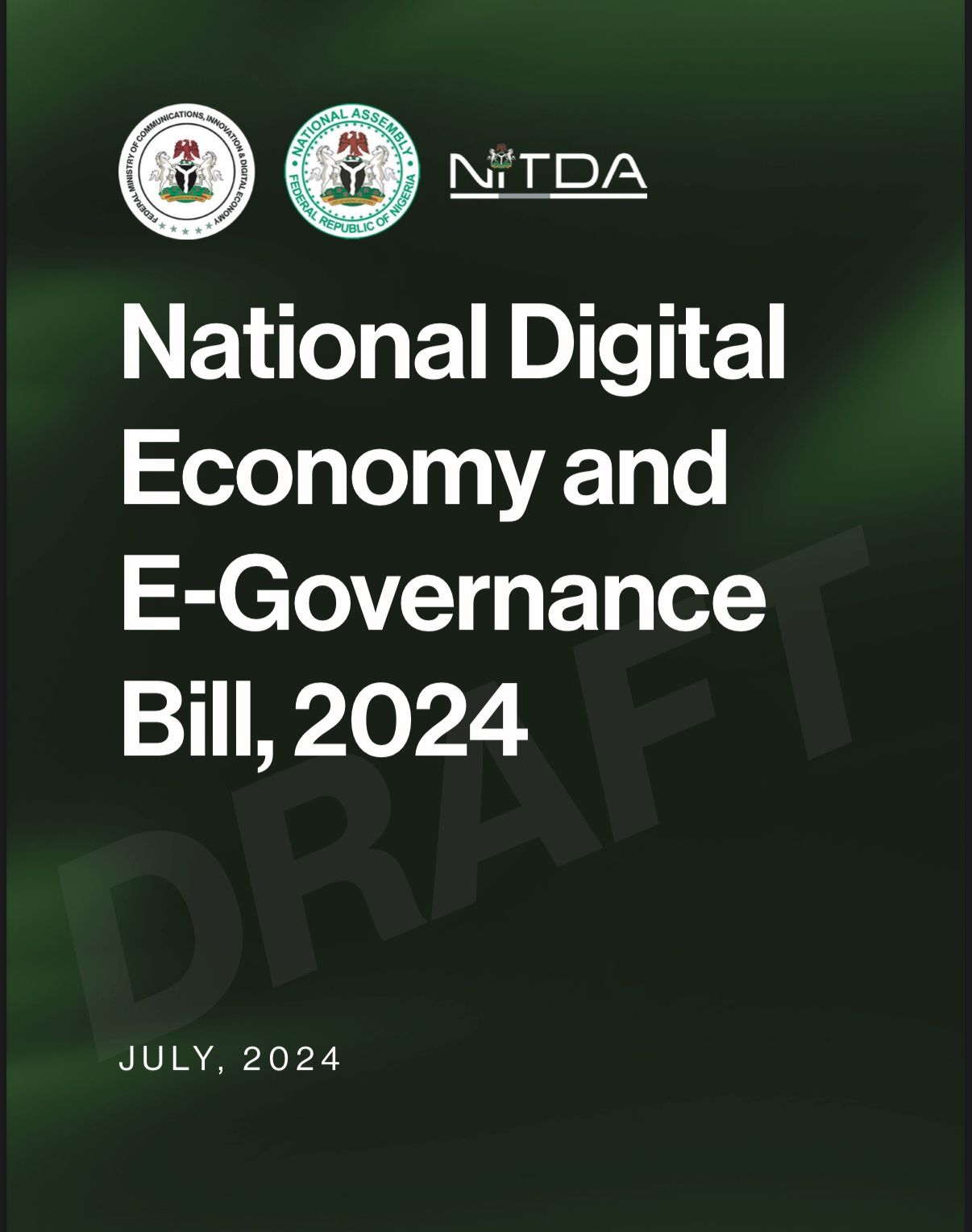
Mr. Udotai further argued that the Bill borrows extensively from international legal models built on converged systems that Nigeria has not yet implemented. This, he said, makes the proposed framework incompatible with the nation’s current realities and risks creating more confusion than clarity in the long run.
He also expressed concern that Section 62 of the Bill grants NITDA overarching authority over “all digital-economy matters,” a provision he believes could ignite turf battles among regulatory agencies such as the NCC, NBC, Central Bank of Nigeria (CBN), Federal Competition and Consumer Protection Commission (FCCPC), Nigeria Data Protection Commission (NDPC), National Identity Management Commission (NIMC), and others. Such regulatory conflicts, he warned, would make implementation and enforcement exceedingly difficult, if not impossible.
Mr. Udotai added that the Bill duplicates responsibilities already covered by existing Nigerian laws and institutions. Domains such as electronic evidence, digital identity, consumer protection, competition regulation, and cyber-insurance already have legal backing, he said, and re-legislating them risks overlap and institutional conflict.
Perhaps most critically, he pointed out that the Bill introduces penal provisions that do not meet constitutional standards. By criminalizing “non-compliance” with yet-to-be-defined directives, the Bill undermines the Nigerian Constitution, which requires that any act deemed criminal must be explicitly prohibited by written law and accompanied by a prescribed punishment. According to him, such vague provisions open the door to arbitrary enforcement and potential abuse of power.
In his concluding remarks, Mr. Udotai emphasized that while Nigeria urgently needs to reform its digital governance framework, this must be done thoughtfully and structurally. “Nigeria cannot regulate the 21st century with analog laws or the institutional architecture of the 20th century,” he asserted. “We must speak the language of modern technology in the grammar of modern law—openly, honestly, and structurally.”
The Digital Economy Bill 2024 remains a subject of heated debate among stakeholders in the technology, legal, and governance sectors. Many experts share Udotai’s view that for Nigeria to truly harness the potential of its digital economy, reforms must begin with institutional convergence and a clear, constitutionally grounded regulatory framework that aligns with global best practices.