



Agbara, Ogun State, Nigeria — June 5, 2026
As artificial intelligence continues to transform industries worldwide, cybersecurity experts are warning that the same technology is increasingly being weaponized by cybercriminals, creating new challenges for governments, businesses, and institutions across West Africa.
The growing sophistication of AI-powered cyberattacks has prompted renewed calls for investment in cybersecurity capacity building and the adoption of globally recognized security frameworks capable of protecting critical digital infrastructure.
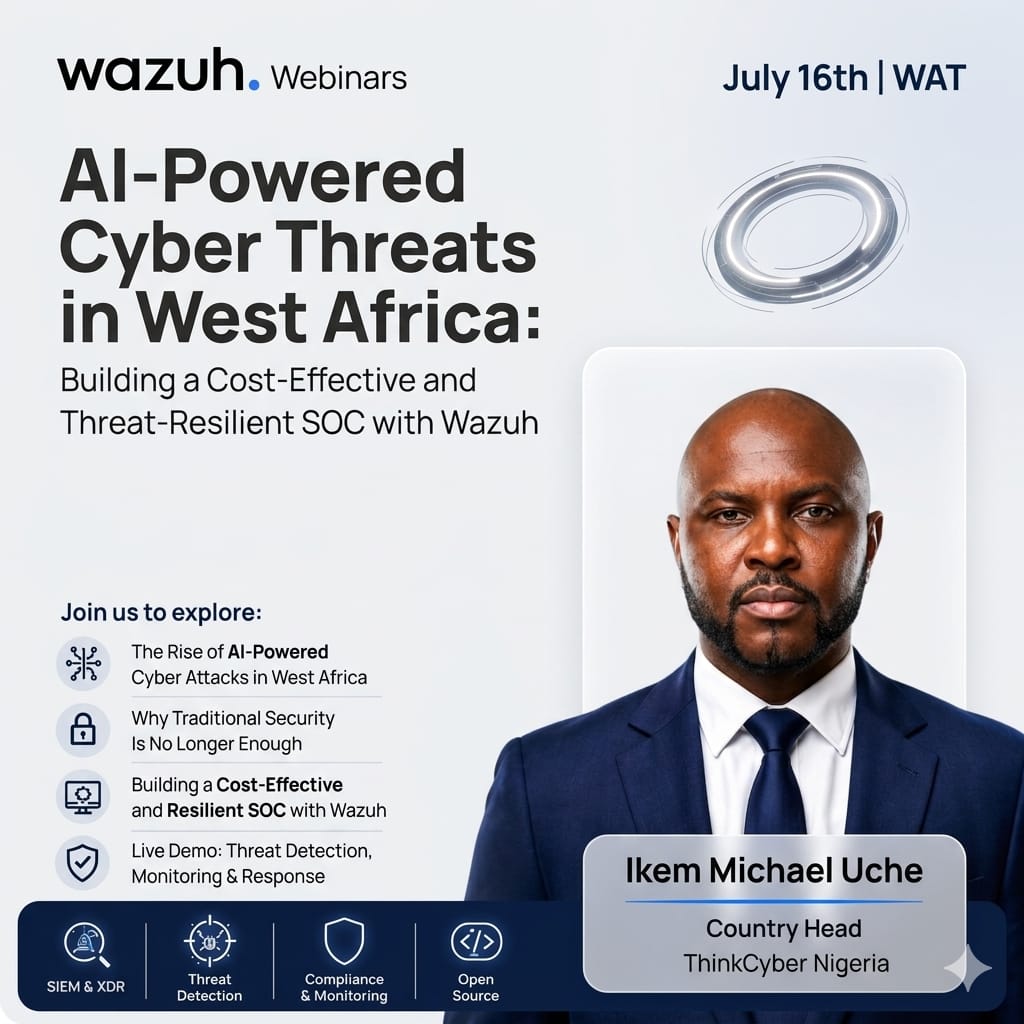
At the forefront of this effort is cybersecurity professional Ikem Michael Uche, Country Head of ThinkCyber Nigeria, who is spearheading a strategic webinar titled “AI-Powered Cyber Threats in West Africa: Building a Cost-Effective and Threat-Resilient SOC with Wazuh.”
The webinar aims to equip cybersecurity professionals, IT leaders, and organizational stakeholders with practical strategies for defending against modern cyber threats using Wazuh, an open-source security platform that combines Security Information and Event Management (SIEM), Extended Detection and Response (XDR), compliance monitoring, and real-time threat detection capabilities.
Speaking ahead of the event, Uche stressed the urgency of preparing for an evolving threat landscape driven by artificial intelligence.
“Cybersecurity is no longer optional; it has become a fundamental requirement for economic growth and digital trust,” he said. “Artificial intelligence has changed the nature of cyber threats, and West Africa must respond with the right skills, technologies, and globally recognized security frameworks to remain resilient.”
According to cybersecurity analysts, AI-powered attacks are becoming more automated, adaptive, and difficult to detect, allowing threat actors to target organizations at unprecedented scale. This trend has raised concerns among businesses and public institutions seeking affordable yet effective solutions to secure their networks.
The upcoming webinar will feature live demonstrations of threat detection and incident response techniques, offering participants hands-on insights into building and managing a modern Security Operations Center (SOC) without the high costs typically associated with proprietary security solutions.
Beyond technology adoption, Uche emphasized the importance of developing human expertise across the region.
“Technology alone cannot solve the cybersecurity challenge,” he noted. “We must invest in people, training, and continuous professional development. Building a sustainable cybersecurity culture requires skilled professionals who can anticipate threats, respond effectively, and protect the digital economy.”
Industry observers believe initiatives such as this could play a significant role in narrowing the cybersecurity skills gap across West Africa while promoting the adoption of internationally accepted security standards.
As digital transformation accelerates throughout the region, experts agree that strengthening cyber resilience will be critical to safeguarding businesses, public services, and national economies against increasingly sophisticated AI-driven threats.
The webinar is expected to attract cybersecurity practitioners, technology leaders, government stakeholders, and students interested in understanding the future of cyber defense in West Africa and the practical steps required to build a more secure digital ecosystem.