


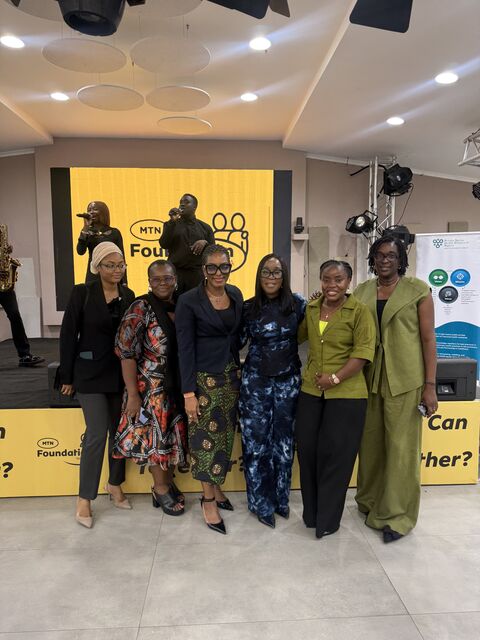

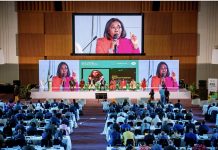

After more than a decade of investing ₦4 billion and directly impacting 3.3 million lives across the country, the MTN Foundation is rethinking how sustainable development truly works. The message that echoed throughout its latest media parley was a simple but powerful question: “What Can We Do Together?”
That question, which also served as the theme for the event, lingered long after the proceedings ended, according to Dr. Nneka Okekearu, Director of the Enterprise Development Centre, who was in attendance. She observed that the phrasing shifts the focus entirely—from what a corporation can do in isolation to what communities and institutions can accomplish in partnership.
Now entering Phase 6 of its long-running intervention programme, the MTN Foundation has kept its focus clear and consistent: education and healthcare that genuinely reach people, especially those at the grassroots. Over the past eleven years, the Foundation has supported more than 110,000 students and transformed countless communities. But at this latest parley, a notable strategic shift was announced. Instead of deciding entirely on its own where interventions go, the Foundation is now asking ordinary Nigerians to nominate public secondary schools—specifically those with active Parent-Teacher Associations and functional alumni networks.

The logic, Dr. Okekearu explained, is that communities which are already showing up for themselves are the ones most likely to sustain any support they receive. She was particularly pleased to see her own alma mater, Queens College Lagos, represented at the event through its Alumni President. For her, that presence was a powerful reminder that strong institutions thrive on the energy of engaged communities, not on occasional handouts.
Beyond the formal announcements, Dr. Okekearu also shared a lighter moment from the gathering. She met Akproko Doctor, a well-known health educator who has dedicated his platform of over two million users to simplifying healthcare information for everyday Nigerians. Impressed by his grassroots impact, she admitted she could not resist taking a selfie with him.
One insight from the parley stood out above all others in her reflection. Public-private partnerships, she noted, rarely fail from a lack of good intentions. Instead, they collapse when roles are unclear, when expectations are poorly managed, and when there is no clarity on exactly who the intervention is meant to serve. When those three elements are properly defined, she said, the results follow naturally—transparency, accountability, and real, measurable impact become unavoidable.
On the healthcare front, the message was equally direct and, for some, challenging. Primary Healthcare Centres, attendees were reminded, are not facilities meant for “other people” in distant or less fortunate communities. They are for everyone, including the educated, the urban, and the affluent. Dr. Okekearu stressed that if Nigerians do not value these centres as their own, they will never demand better from them. And without that demand, she argued, meaningful healthcare reform will remain out of reach.
As Phase 6 of the MTN Foundation’s intervention rolls out, the call to action is clear. Citizens can nominate a public secondary school with an active PTA or alumni network. They can engage locally with ongoing projects. And they can choose to support only those initiatives that are transparent and genuinely impact-driven. For Dr. Okekearu, the path forward is no longer abstract. Nation-building, she concluded, is not a distant ideal reserved for policy makers and philanthropists. It is a shared responsibility that begins with a single question: what can we do together?
—End of report—