


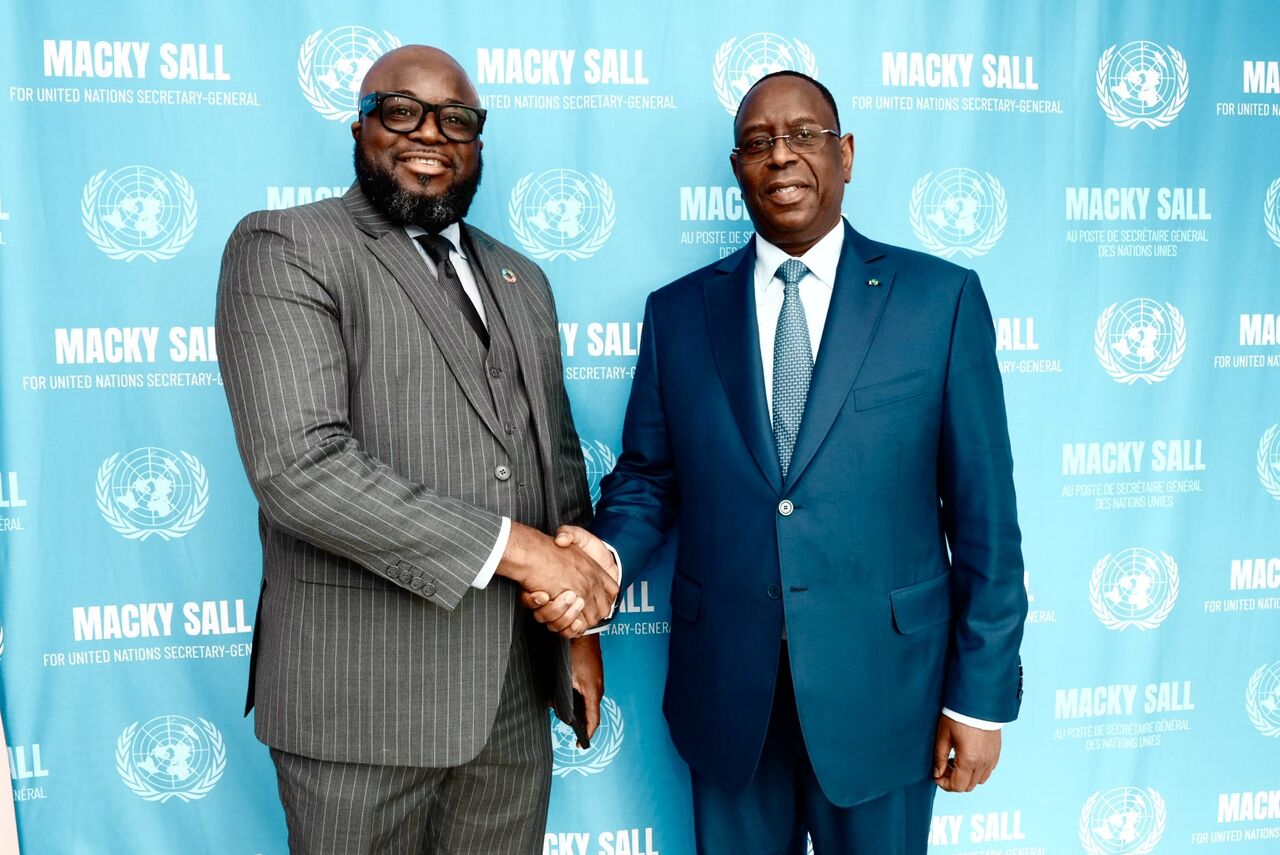




In a move described as a potential shift in global governance norms, former Senegalese president Macky Sall has directly engaged civil society leaders as part of his campaign for United Nations Secretary-General, marking what organizers call a historic first in the selection process.
The engagement, convened by consulting firm Transformunity and led by its CEO Arrey Obenson, brought together a diverse group of civil society actors for an open dialogue with a declared candidate—despite the fact that such groups do not formally participate in the UN Secretary-General voting process.
Observers note that candidates for the top UN role traditionally focus their efforts on member states, which ultimately determine the appointment. However, Sall’s decision to prioritize engagement with non-state actors signals a broader, more inclusive approach to leadership at a time when global institutions face increasing calls for reform.
Speaking during the session, Sall emphasized the need for a redefined relationship between governments, civil society, and the private sector. He described his vision as one where these stakeholders operate in closer partnership to address complex global challenges.
Participants at the meeting highlighted the significance of being included in such high-level discussions, noting that civil society organizations often play a critical role in implementing development programs and responding to local challenges, yet are rarely consulted at the decision-making level.
The dialogue comes amid growing recognition that traditional governance models may be insufficient to tackle emerging global issues—from inequality and climate change to conflict and economic instability. Analysts say greater inclusion of grassroots perspectives could enhance the effectiveness and legitimacy of international institutions like the United Nations.
Sall, positioning himself as a reform-oriented candidate, has framed his campaign around inclusivity, partnership, and a people-centered approach to global governance. Supporters argue that his willingness to engage beyond formal power structures reflects a shift toward more participatory leadership.
While the selection process for the next UN Secretary-General remains firmly in the hands of member states, initiatives like this engagement suggest a growing effort to broaden the conversation—and potentially reshape expectations for the role.
As global challenges become more interconnected, the question of who gets a voice in shaping solutions is increasingly taking center stage.