The Nigerian National Petroleum Company (NNPC) Limited has announced a huge leap in trading surplus of ₦141.96billion recorded in June 2021 compared to a deficit of ₦37.46Billion in May 2021.

This is contained in the June 2021 figures of the NNPC Monthly Financial and Operations Report (MFOR).

A trading surplus or trading deficit is derived after deduction of the expenditure profile from the revenue for the period under review.

In June 2021, NNPC Group operating revenue as compared to May 2021, decreased by 9.07% or N89.27billion to stand at N894.64billion. Similarly, expenditure for the month decreased by 29.32% or N299.44billion to stand at N721.93billion.

Thus, in the period under review, expenditure as a proportion of revenue was 0.81%, compared to the figure in May which stood at 1.04%.

The report also noted that the increase in trading surplus was due mainly to the increased sales of crude oil and gas by the Nigerian Petroleum Development Company (NPDC), an Upstream subsidiary of the NNPC, and the increased gas sales and depreciation postings by the Nigerian Gas Company (NGC).

The positive outlook was further bolstered by the performance of Duke Oil and the Nigerian Gas Marketing Company (NGMC) which also added to the improved bottom line.

Trading surplus or trading deficit is derived after deduction of the expenditure profile from the revenue for the period under review.

According to the report, in plus or trading deficit is derived after deduction of the expenditure profile from the revenue for the period under review.

To ensure continuous supply and effective distribution of Premium Motor Spirit (PMS) across the country, a total of 1.63bn litres of PMS translating to 54.50mn liters/day were supplied in June 2021.

The report indicated that in June 2021, 47 pipeline points were vandalized representing 26.56% decrease from the 64 points recorded in May 2021. Port Harcourt Area accounted for 43%, while Mosimi and Kaduna Areas accounted for 51% and 6% respectively of the vandalized points.

In the gas sector, a total of 223.77billion cubic feet (bcf) of natural gas was produced in the month of June 2021 translating to an average daily production of 7,459.88million standard cubic feet per day (mmscfd).

For the period of June 2020 to June 2021, a total of 2,890.11bcf of gas was produced representing an average daily production of 7,321.36mmscfd during the period.

Period-to-date production from Joint Ventures (JVs), Production Sharing Contracts (PSCs) and NPDC contributed 59.84%, 20.26% and 19.90% respectively to the total national gas production.

The 71st edition of the MFOR highlights NNPC’s activities for the period of June 2020 to June 2021.

In line with its commitment to transparency and accountability, NNPC has continued to sustain effective communication with stakeholders through this report via publications on its website, independent online news portals and in national dailies.

He is popularly called Cubana Chiefpriest. His name is Paschal Chibuike and he is an indigene of Orsu in Imo State. He is a celebrity barman with a huge presence and followership majorly on Instagram. He is an ambassador to multiple brands..

He is called Maazi 46 because as a young man who understands the place of the media in establishing a man who is in show business, the death of his former Boss’ Mum (Odozi) provided him an ample opportunity to steal the show and do that which hasn’t been regularly mentioned in the media space lately while showing gratitude for all the people’s Chairman has done for him over the tears. He went into the market, ordered 46 cows, paid in full (he didn’t have to rent money like that one in Lagos or even rent the cow sef) and brought them to Oba as his condolence gift for his former Boss, Obi Cubana in a trailer.

Prior to the exit of Chief Priest or CP or Maazi Iruefi 46 as Phyno aka PacMan calls him, his relationship with his former Boss was one that I admired so badly such that I wouldn’t have been surprised if it choked me, their love was pure and organic. Moreso, i loved the fact that his family bonded so well with that of his Boss while business thrived.

Unfortunately a few frictions happened which is characteristic of some business based relationships, the Orsu born promoter and the Oba born billionaire had to part ways. Folks like me wrote them a letter then seeking that they reconcile in the interest of most of us that admired them from a distance but that wasn’t to happen in a haste. I got so emotional the day Chief Priest the more younger man came on Instagram live and was crying out in pains for loosing his Boss. He made mention of the fact that a few friends would have sewn this seed of discord but he vowed that he would do everything he can to make sure that he and the people that believe in him are not put to shame in all these.

It is also worthy of note to know that as a way of sealing this bond for life, Chief Priest has the tattoo of Obi Cubana on a part of his body while also naming one of his two sons after the Cubana brand maverick, Obinna. This could be likened to his own way of saying, “thanks Don Pablo aka Okpataozueora” who is now Arthur Eze’s very close ally, for giving him a life he never knew was readily possible. As the son of a man who dealt on shoes in Aba, we must give CP the credit he deserves which anchors on the part that an opportunity was presented and he the young man made use of it greatly to build so much wealth and fortune. Not everybody uses such platforms well.

However, we must also not loose sight of the fact that De Angels whom Chief Priest married has been a well known Event Manager and Chef extraordinare in Owerri and its environs. She has been a very hardworking and smart Lady. So when friends give speculation that the clash of business interest could be fingered for being responsible for the clash, at a time, it looks or seem true but we would still get to know what really happened someday.

This friction in question birthed the “Club Shrine” brand which has on its logo as beads representing Eke, Orie, Afor, Nkwo. This first branch was built in Owerri within a very short space of time and opened with Davido performing at it’s opening on the 17th Of December, 2020 in Owerri. That event has remained memorable. Infact CP claims that there is a form of anointing or grace on OBO and that is why he would definitely have him repeat such feat in Asaba on the 20th of December, 2021.

Hate Chief Priest or like him, you cannot take away the quality of confidence he has in himself. Infact suffix it to say that his confidence level is as obese as his stature. He believes that he has got all it takes to do the unthinkable and more often than not, you see him go at tasks and smash same with excellence. I love that about him. He is loud mouthed but wholly result driven (e dey play e dey show).

Of striking significance is the skull logo in his Club Shrine brand and his never ending chant of “Egede”, their anchoring as Brothers (CP et Davido) and his consistent proclamation of how much of a strong man he is. He would always ask, imakwa onye anyi wu?. He is a show man who understands show business so well. He is a bit more of a rugged street brewed man who had the challenge at a time of being disowned by his Father while the mother who never gave up on him is six feet under the ground now and was never there to feast from the sweat if his son. He often laments the absence of his dear Mother at this time of his rain and abundance.

Furthermore, Club Shrine brand is gradually gaining traction and expanding with each new branch having so much innovations being made. Like Chief Priest once said that one of his sons would definitely follow him to sell these drinks he sales, he has never stopped thanking the Oraukwu Billionaire called Ejison who has the franchise for the importation of Bullet Energy and similar power energy. Omo, money dey this e m hustle if you understand the nitty gritty in it.

The truth is that I have followed this group of friends ( Cubana, CP, Jowizaza, Betro Furniture, Spelendid, Vintage Interior Decor etc) that I can write so much about them by heart without blinking. One of the Billionaire friends of Okpole Yankee, whose mother hails from Nnewi, is an Ekwulobia born Billionaire whom like Chief Priest is not upto forty in age. He is known as being the only son of a Billionaire father and firm adherent to the Catholic faith. If you followed the burial properly you would notice that The Bullet Brand of drinks were only served on Chief Priest’s table from the video made available while another brand was seen all over the place and for the sake of being more specific, The Powerhorse Brand. Chief Priest and the young man described here seems to not want each other in their individual spaces and have kept it at that.

Looking at the White Glass House being built by Chief Priest in Owerri at the same time that he is building his club house in Asaba and also three duplexes in his village, you cannot take away the fact that the big sized Exotic Drink Promoter has an insatiable appetite for excellence, damn! You need to see those structures and the amount of work he is putting into it. Unlike most celebrity influencers, he makes use of most of the things he promote from Geely Motors to Spelendid Furniture to Mikano Generators to Glemorangie and so many more. The doors are built by attitude, then his furniture are built by two major companies in Nigeria and many other highlights of the building. The quality of work going on there says so much about his quality as a person. Did I forget to mention that he tarred the road that leads to white house?

The most heartwarming part of the video he made on the 17th of December is when he reminded his room mate at Akwakuma where they shared a one bedroom space that they have indeed come a long way and that there is no stopping them. Winning with your team is very necessary, Brother.

Obi Cubana should be a proud father who raised a star, whose watchword in all things is excellence. When you feast at De Angels, from their signature dishes to their signature wares and sharp customer service, you would definitely have reasons to visit and revisit their facility. They sell very sumptuous and appetite wetting foods.

This is not a paid advert but its me sharing the little I have come to know about these men and his brand. There are times I criticised him like when he got in bed with Yahaya Bello and Hope Uzodinma. It really didn’t sit well with me and it is good they are addressed as my personal bias for the actors based on my political accessment of their performances in power.

To close it all, the glass house he is building in Owerri could be termed or called a mini white house as it is in Guzape Abuja owned by Obi Cubana. Chief Priest’s private cinema has among other things, a massaging seat to take of men of his stature while watching movies in there and the finishing of the house remains legendary or for the want of better word, a glory to behold. His security man would definitely have the challenge of discharging his gate man duty because the luxurious apartment that is being furnished for him may make the Security man a lazy one or may give him a false sense of arrival.

Indeed De Angels/ Club Chrine brand is another name for excellence. The Asaba club opens on the 20th of December 2021 with OBO in attendance.. I can only imagine how lit that would be. From Aba to the entire world!!

Iruefi 46 was born something in 1981 if I am not mistaking and within such a short time, he has accomplished all these. These are the kind of stories we love to hear as Igbo people. Did I forget to mention that he is a card carrying member of APC too.

Katchy just wrote all this from his head without making any research oo.. I have so much to write in this duo, I swear.

KaTcHmoney Inc.

As we close up for the year, there are a lot of Christians that have at one place or time promised to do something for God. The questions are have you redeemed them? Have you fulfilled it? Vows and pledges are sacred. Be careful and ensure that you fulfil them.

In the bible there is a need to be careful when we make our vow. The bible advised us not to make vow and not fulfil it. It is better not to make a vow than to make vow and do not fulfil it.

One thing we must understand is that Vow brings one to the previous judgement with God.

We must understand the definition of these two terms Vows and Pledges in religions context. The Merriam Webster online dictionary defined the two like this:

Pledge: (1) a serious promise or agreement (2) a promise to give money (3)something that you leave with another person as a way to show that you will keep your promise

Vow: (1) a serious promise to do something or to behave in a certain way

Having gotten a full grasp of these two, we can look at the importance of these two and why it is imperative to fulfil it. When you make a vow try to redeem it no matter how difficult it is. But, be rest assured that God will do his own part. You know women maka more vow than men. You know when Hannah was seeking for Samuel he told God that if you give me a child, I will give him back. So for you as a wife to make a vow to God try to ensure that you are in tune with your husband.

We must come to terms that God is faithful and whatever he said that he would do, he will definitely do. We must also learn how to thank God for his blessings. Being alive is enough testimony for us. Being able to have good health is one of the faithfulness of God.

Vows are solemn and they involve powerful heavenly beings that shouldn’t be toyed with. It is a means of higher communion where the heavenly beings take the vow to a higher realm. So, redeem it. So many Christians are yet to understand the consequences in unfulfilled vows. The book of Ecclesiastics chapter 5 captured this scenerio vividly. The Bible cautioned against this act of pledging and not redeeming it.

You don’t give to God what that doesn’t cost you anything. You don’t need to make it public most times. God that sees in secret will see it. So as a Christian look within and search your soul, ask yourself if there are places that you are lacking in fulfilling these vows and pledges.

Bible is filled with people that redeemed their vows from Hannah to David etc. Solomon vows was legendary that made God appear to him in dream. His vows and pledges was pleasing to God. Our vows should be pleasing to God as we close this year we must ensure that all we promised God is fulfilled.

Message from Faith Cathedral International Ministry
Egbeda
Lagos

To give expression to its faith in the value of strategic partnership and commitment to collaboration, the Nigerian Communications Commission (NCC) has partnered the Small and Medium Enterprises Development Agency of Nigeria (SMEDAN) to establish a SME Digital Academy.

The SME Digital Academy is a public-private partnership initiative being driven by the NCC, SMEDAN, and Sapphital Learning Limited, a leading digital learning platform, essentially to provide micro, small and medium enterprises (MSME) owners with digital skills to enhance their entrepreneurial skills. The partnership also aims to equip entrepreneurs and start-ups with the necessary digital skills required to navigate the increasingly digitised world.

Speaking at the launch, which took place at the NEXIM House in Abuja recently, the Executive Vice Chairman of NCC, Prof. Umar Garba Danbatta, said the setting up of the scheme was based on the realization that in today’s global economy, a borderless educational and economic system will be the next stage of the digital economy.

Represented at the launch by the NCC’s Director, Digital Economy, Dr. Austin Nwaulune, the EVC noted that, while the collaboration between the NCC and SMEDAN was a step towards economic diversification, digital technologies were key in the implementation of this initiative .

He said the NCC had continued to work towards providing information and communications technology (ICT) support to various sectors in the country. He noted that with over 41 million Micro, Small and Medium Enterprises (MSMEs) in Nigeria, proper empowerment of entrepreneurs would create an extremely powerful impact on the nation’s economic growth. 

Danbatta said SMEs’ empowerment would also help in providing employment, lessening societal vices, developing the economy, increasing foreign exchange as well as improving the general well-being of Nigerians.

“Knowledge is pivotal to the growth of entrepreneurship, as it provides the businessman or woman, the know-how on raising capital, strategic partnership, and proper organisational, administrative, sales and marketing skills required to run an effective business. Knowledge is, therefore, the food of every economy, especially, the digital economy, as it fuels its growth and stimulated the digital ecosystem,” he said.

Danbatta recalled that when SMEDAN set up the Digital Academy, in November 2020, as an avenue to support SME development during the Covid- 19 lockdown, the NCC was excited and immediately keyed into the strategic partnership because of the potential impact of the initiative on the Nigerian economy.

He acknowledged the role of SMEDAN as a bridge between the instructors and students, experts and start-ups, funding parties and businesses to the millions of MSMEs. “So, the timing is precise for the collaboration as the country is in dire need of diversification.

Through the Digital Academy, the MSMEs, start-ups, freelancers, would be provided with a platform to access courses “on-the-go” from devices and locations of their convenience,” he said.

The EVC restated the unflinching commitment of the Commission to providing the required leverage needed for ICT development in Nigeria, just as it will support the Digital Academy to provide a digital platform for entrepreneurs and start-ups across the 36 states of the federation and the Federal Capital Territory (FCT), Abuja.

Also speaking at the event, the Director-General of SMEDAN, Dr. Dikko Radda, who was represented by the Director, Enterprise Development and Promotion at the agency, Moses Ewan, expressed delight at the partnership with the NCC, and declared that over 41.5 million MSME were domiciled in Nigeria.

Citing a recent survey, Radda noted that the entrepreneurs had contributed 49.78 per cent to the nominal Gross Domestic Product (GDP), leading to the employment of about 59.6 million Nigerians which translates to 76.5 per cent of the labour force.

“These small-scale enterprises need to be encouraged and nurtured to enable them to create jobs, contribute to the alleviation of poverty, and want. SMEDAN, which is an agency in the Federal Ministry of Trade and Industry and established over 15 years ago, operates on five platforms, namely, dissemination of information, delivery of business development services, networking and cluster formation, policy and public advocacy, and lastly, provision of access to critical resources,” Radda said.

The Group Chief Executive Officer, Sapphital Learning Limited, Amu Ogbeide, in his opening remarks, said his company was excited to be working with SMEDAN on the ongoing efforts to empower entrepreneurs and start-ups in the country. He also said that, through working with SMEDAN, Sapphital has been instrumental to the digitisation of SMEDAN’s entrepreneurial digital literacy journey.

Ogbeide also stated that at the beginning of the digital literacy program, Sapphital started with only three courses which have increased to over 60 courses in its curriculum.

“We believe that the Nigerian diversification journey is a work in progress and the country is on the exalted path towards full digitisation. The combination of the digital economy with SMEs will lead to exponential economic growth of the country,” he said, and concluded that the American company, Uber, was a success story of the power of the ICT and the economy.

Ahead of the anticipated 2022 rollout of Fifth Generation (5G) network in Nigeria, the Nigerian Communications Commission (NCC) has organised capacity building workshops for media executives in the northern and southern divides of the country, as part of efforts to support their continuous professional development critical stakeholders in the telecommunications industry.

The workshops, which took place in Kano and Lagos recently with the theme: “5G Deployment and the Next Level of Nigeria’s Development,’ provided an avenue for media stakeholders to have better knowledge and understanding of the potentials of the new technology.

These workshops, in turn, are expected to position the journalists to be able to accurately report issues around 5G, through explanatory, incisive, analytical, and evidence-based reportage, while also being able to clarify misconceptions and misinformation on the new technology.

Through the workshops, the Commission believes the journalists will be able to focus on how 5G will impact different sectors of the economy, including agriculture, e-commerce, e-banking, Information and Communication Technology (ICT), education, healthcare, tourism and hospitality, security, entertainment including the music and movie industries and other aspects of Digital Nigeria.

Speaking at the two workshops, the Executive Vice Chairman of NCC, Prof. Umar Garba Danbatta, in his opening address, said the theme of the workshops was most apt at a time when the Commission is on full throttle to drive the implementation of 5G deployment in the country, following the approval of the Federal Government on September 8, 2021.

Delivering his address at the Kano and Lagos workshops through the Director Public Affairs, NCC, Dr. Ikechukwu Adinde and the Head, Online Media, NCC, Dr. Omoniyi Ibietan respectively, Danbatta, said the workshops were organised to equip the media stakeholders with greater insights and knowledge around 5G in order to improve their overall understanding of the new technology, its usage, opportunities and the benefits it offers for the overall development of Nigeria’s socio-economic life.

“As we progress in our journey of 5G deployment, the media has a critical role in the process by ensuring proper and adequate reportage of the programmes and activities of the Commission as it unfolds the 5G Deployment Plan of the Federal Government,” he said in his opening address.

The EVC said Nigeria’s promising 5G Plan has the objectives of ensuring efficient assignment of spectrum for 5G deployment, creating an enabling environment for investment in the telecom industry, ensuring effective deployment of 5G to cover major urban cities by 2025, among others.

“In line with the objectives of the National Digital Economy Policy and Strategy (NDEPS) 2020-2025 for a Digital Nigeria, and the positioning of Nigeria as an early adopter of digital technology in the growing global digital economy, the successful and timely deployment of 5G is crucial and it is expected that the roll-out of the 5G will be carried out in phases beginning with major cities in the country, where there is need for high-quality broadband,” Danbatta said.

The Commission also made technical presentations to journalists at the workshops focusing on how the Commission is setting the stage for 5G journey, in terms of requirements, deployment, use cases, and possible challenges which it is working with relevant stakeholders to tackle for effective implementation of 5G Deployment Plan for Nigeria.

While NCC’s Director, Technical Standard and Network Integrity, Bako Wakil, made the technical presentation to media stakeholders at the Kano workshop, the NCC’s Head, Fixed Network and Converged Services, Tony Ikemefuna, handled the delivery of the presentation at the Lagos workshop.

During the technical sessions in Kano and Lagos, the media stakeholders were adequately informed on 5G characteristics such as enhanced mobile broadband, ultra-reliable low latency and speed, explaining to them that 5G will facilitate several emerging technologies, including Internet of Things (IoT), Machine-to-Machine communication, among others.  The media professionals also used the opportunity to ask various questions and clarify conflicting issues bordering on security and health implications of 5G deployment.

aking. They need to be innovative and create an enabling environment that includes infrastructure and de-risking to harness private sector investments in key growth sectors,” said African Development Bank President Akinwumi A. Adesina.

Given that tech-enabled enterprises cut across all the economic growth sectors, the program’s focus on the digital sector will deepen Nigeria’s job creation efforts

The investment in Digital and Creative Enterprises Program will also support the leaders through enterprise support organizations – groups that support, train, and sometimes fund entrepreneurs – including innovation hubs, accelerators, venture capital and private equity firms. Bank financing of i-DICE will help the Government initiative further consolidate Nigeria’s position as Africa’s leading start-up investment destination and as a youth entrepreneurship hub.

“This program is among the latest series of our operations meant to bolster the implementation of the Bank’s Jobs for Youth in Africa Strategy. Given that tech-enabled enterprises cut across all the economic growth sectors, the program’s focus on the digital sector will deepen Nigeria’s job creation efforts,” said Beth Dunford, Bank Vice President for Agriculture, Human and Social Development.

The initiative will stimulate investments in 226 technology and creative start-ups and provide non-financial services to 451 digital technology and small and medium enterprises. The program is expected to create 6.1 million direct and indirect jobs, of which the Bank’s financing will support the creation of about 850,000 jobs. The value added to the Nigerian economy connected to the program is estimated at $6.4 billion.

The program will boost Nigeria’s venture capital market through independently managed funds focusing on digital and creative enterprise. These funds aim to attract an initial capitalization of $433 million in private and public sector financing.

“This program will generate significant economic benefits to Nigeria,” said Lamin Barrow, Director General of the Bank’s Nigeria Country Department. “The program interventions will help respond to the challenges of youth employment in Nigeria, which could intensify without scalable interventions. I want to recognize the strong country ownership, under the leadership of Vice President Osinbajo,” he added.

The African Development Bank’s active portfolio in Nigeria comprises 57 operations across 30 public and 27 private sector operations, valued at about $4.61 billion. The i-DICE Program aligns well with the Bank’s strategic priority areas, better known as the High 5s – specifically, “Industrialize Africa,” “Improve the quality of life for the people of Africa,” and “Feed Africa.”

The attention of the Ministry of Interior has been drawn to news making the rounds on social media claiming that the Federal High Court sitting in Lagos has declared all Marriages conducted by Ikoyi marriage registry to be illegal and invalid.
We would like to state that this statement is false, misleading and a deliberate distortion of the decision of the Court in Suit No: FHC/L/CS/816/18 between Eti-Osa Local Government Council & 3 others v. Honourable Minister of Interior and 2 others, where the Honourable Court held that only the Local Government councils can conduct valid marriages in Nigeria.

It is noteworthy that, the same Federal High Court situated in Ikoyi, Lagos in Suit No. FHC/L/870/2002 between Prince Haastrup and Eti Osa Local Government held that the Federal Government, through the Ministry of Interior is constitutionally empowered to conduct marriages in Nigeria and held that the Local Governments were delegated by the Federal Government to conduct marriages, by virtue of Legal Notices issued pursuant to the Marriage Act.

In that case, the learned trial judge held that nothing in the role of local governments, as defined in the Constitution, suggests that local governments can conduct or contract marriages as alleged in their pleadings. The Court affirmed that powers of the local governments to contract statutory marriages is derived from the Legal Notices issued by the President. The Court also confirmed that the role of local governments, as enshrined in the Constitution is limited to registration of all forms of marriages (including Islamic and customary marriages).

Rather than appeal this decision, the same claimants instituted another action in 2016 Suit no. FHC/L/CS/1760/16 Egor Local Government, Eti- Osa Local Government and 2 others V Hon, Minister of Interior and 2 Others. The Court held that the Suit was an abuse of court process, as it could not be invited to make another pronouncement on the same point of law, which would lead to conflicting decisions coming from the same court and therefore struck out the case.

The same issue was adjudicated in the case of Olumide Babalola vs Ikeja Local Government and the Registered Trustees of the Association of Local Government of Nigeria (ALGON) in Suit No. LD/1343/GCM/2016 delivered on 15th May, 2017. The Court held that while registration of marriages are regulated by local governments, being under the concurrent list, formation of marriage is under the Exclusive Legislative List, within the jurisdiction of the Federal Government, regulated by the Ministry of Interior.

It is further worthy of note that the issue of formation, annulment and other matrimonial causes are by virtue of item 61 of the 1st Schedule of the 1999 Constitution of the Federal Republic of Nigeria exclusively reserved for the Federal Government.

The General Public is invited to note that these judgments are all still subsisting, competent and have not been appealed against till date.

Further to the above, the current decision of the Federal High Court delivered by Hon. Justice D. E. Osiagor of Court 6, cannot set aside a previous decision of the same Court, which is of coordinate jurisdiction, as that would amount to the court sitting on appeal over its own judgment.

In the circumstances, the Federal Government through the Ministry of Interior, has applied for a certified true copy of the judgement and will take appropriate further action including but not limited to filing of an appeal in respect of this conflicting and confusing decision, in line with the provisions of the Constitution.

We would like to appeal to the general public, the international community, to couples who had hitherto had their marriages solemnized at Federal Marriage Registries by duly licensed places of worship and to all intending couples to be calm and continue transacting their normal businesses at all Federal Marriage Registries subsisting throughout the federation in line with statutory and constitutional provisions.

The general public is to please note the foregoing and maintain status quo ante.

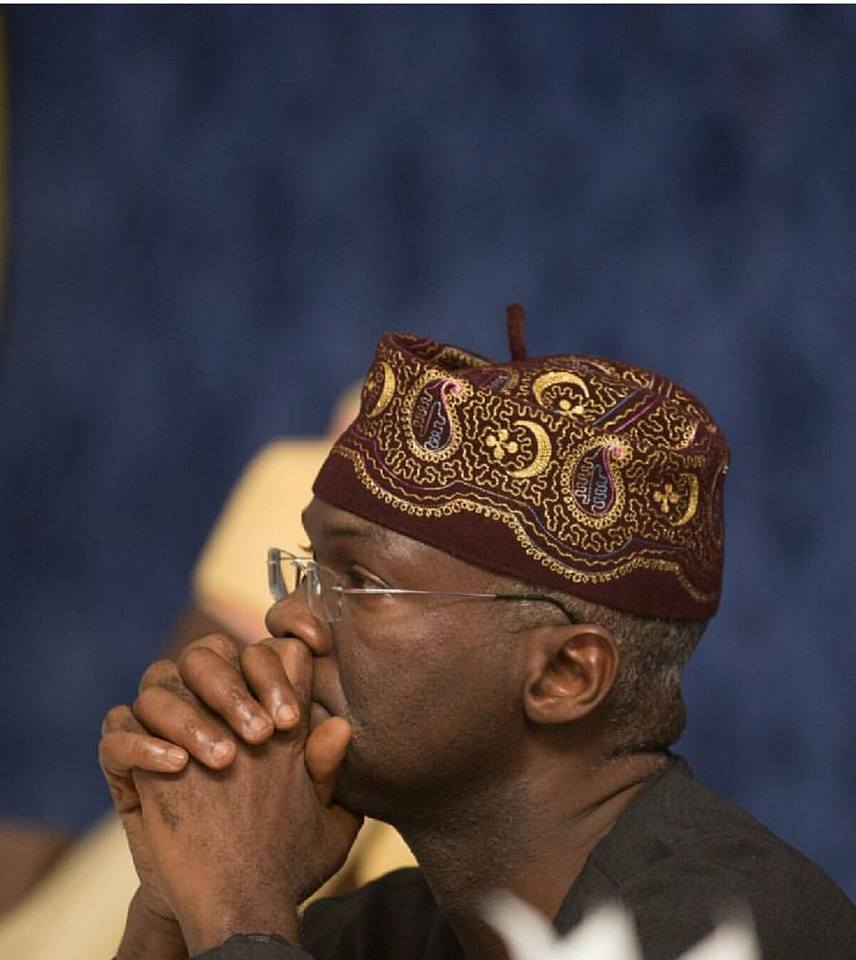
The Minister Power, Works and Housing, Mr. Babatunde Fashola SAN, Wednesday reiterated Federal Government’s commitment to enhancing the distribution segment of the Power value chain saying the approval of a N72 Billion Distribution Expansion Programme by the government was a clear demonstration of that commitment.
Speaking at the December 2018 Nextier Power Dialogue in Abuja, Fashola said the Government, as a 40 per cent shareholder, had to make the approval in order to enhance the distribution of power across the country pointing out that although operationally there is 7,000 Megawatts of electricity ready for deployment, the operation was still constrained at the distribution end.

Reiterating the concern of government towards correcting the anomaly, the Minister, however noted that the decision to intervene was done after asking the DisCos where they would want to spend their money within their franchise, if they have it, that could evacuate “some of the power that is available and that can yield a maximum collection report” adding that it was with that data that Government put the amount together that it would inject into the Distribution sector.

The Minister, who quoted the 3rd Quarter Report of the National Bureau of Statistics as revealing that Electricity made the highest contribution of 18 per cent to the 1.8 per cent growth in the nation’s Gross Domestic Product (GDP) recalled the “Thank You” visit of the Gora Community of Nasarawa State to his office early in the week to express their gratitude to the Federal Government over the provision of Solar Power to their Community saying it was a testimony to the growth in electricity supply and increasing accessibility to the rural communities.

The Community delegation, led by its Traditional Head, Alhaji Jafaru Adamu, thanked the government of President Muhammadu Buhari for initiating the rural electrification programme and the Minister for driving it adding that since the installation of the Solar electricity, the Community has consistently enjoyed several benefits hitherto not known to them, especially in the areas of social life, Education and Health.

Also the Minister seized the opportunity of a question to clear the air on an alleged statement made by him in 2014 as to his ability to solve the nation’s power problem in six months explaining that the statement attributed to him was made in 2015 in Lekki in respect of distributing power to the Lekki community within six months from the residual power in an Independent Power Plant earlier commissioned by him to power some government Water Works and Street lighting on the Island.

He declared, “I think it was in 2015 during the run up to the elections and I was in Lekki where we had gone to commission the Lekki IPP. It was Sam Amadi who gave us a license to do an IPP dedicated to power our Water works in Lekki, our Water Works in Victoria Island and our Water Works in Oniru and the street lighting in Lekki Phase 2.

“When we switched on that power plant that night and all of the street lights came on, as I was leaving, the residents accosted me and said “Governor you can’t go; we like this; but how would we get it into our houses”. I explained that it was Eko Distribution Company’s franchise and if they wanted the power in their houses, there was reserved power still in the IPP and if they could tell NERC to issue him a license, he would do the distribution and connect the Lekki residents in six months. That was what I said”.

The Minister recalled that the policy outline laid by his Ministry at inception set out a roadmap to first get incremental power and then go to steady power and then to uninterrupted power, which, according to him, “is not just a function of how much power you have”, but also “how you manage the power”.

“I think that if you followed the policy outline, we set out our roadmap first to get incremental power and then we will go to steady power and then to uninterrupted power and uninterrupted power is not just a function of how much power you have; it is also a function of how you manage the power. So in terms of our first leg of incremental power, we have delivered what we promised. We have increased the power on all sides”, he said.

Fashola pointed out the amount of diesel that he used to power his residence was now less than two years ago adding, “The man who buys the diesel knows and the man who supplies the diesel knows that I don’t buy as much as before. And that is the story from many parts for people on the grid. But that doesn’t mean that there are no problems”.

Responding to a question posed by a participant during the Interactive Session concerning the supply of transformers, Fashola, who reiterated that all the assets that the Ministry of Power used to control for power distribution have been sold by the last administration pointed out that the people now operating the Generation and Distribution segments of power sector are now privately owned companies.


The Minister added, “I am here because I am concerned. If your telephone is not working, it is not the Minister of Communication that you go to; let us be very clear. My role is regulatory, oversight and policy”, adding, however, “I cannot separate myself from the problem; I am trying to get involved to do what the law allows me to do. So the people you should be talking to about transformer is not me; the Ministry does not supply transformer anymore”.

In response to another question bordering on whether or not to cancel the Privatization policy and hand back power to the government, Fashola, who called for caution, declared, “Let’s be careful what we wish for. We wished, many years ago, after 60 years or so of government run power, we wished and decided that Private Sector should take over this Power. That was our decision. No sooner had we decided, five years after, we are now asking government to take it from them. Is that what we really want?”

“So let’s be consistent here and let us understand that the decision to privatize is a matter of policy. When policy is made, it takes time to take effect. When it begins to take effect, its impact takes time to spread. And that is why we can share here that five years ago nobody could talk about mini-grid, we are talking about it now; five years ago nobody was talking about Meter Asset Provider, we are talking about it today, five years ago who dared to go into the military formation to meter them; the President has directed that all the military formations must be metered”.

The Minister said ministries and agencies of government now pay their electricity bills regularly adding, “I just signed the letter for this month because our office is the collection warehouse. This wasn’t happening five years ago. So we are making progress and let no one downplay that”.

“Can we move faster, certainly we can”, he said adding, however, that if the consensus was that government should take it over the power sector from private hands, then there was need to “go back to Parliament and repeal the law; because I asked you, do you want a five-year old to have a moustache?”

Arguing against the reversal of the Privatization Policy, Fashola, who again reiterated the existence of challenges in the sector which, he assured were being dealt with, declared, “But you must decide in this country whether you want to continue to see devils or angels. I like to see angels; my glass is always half full and problems are opportunities for me to show that nothing is wrong with us and to benchmark what I have achieved. There are problems no doubt and we must deal with them”.

According to the NBS Report for Budget 3, the 3rd Quarter GDP result was 1.81 per cent growth; up from 1.50 per cent in Q2 with Electricity as the biggest motivator scoring 18 per cent, Metal Ores 17 per cent, Telecoms 14 per cent, Transportation 11.9 per cent Quarrying and Mining 3 per cent and, for the first time in about six consecutive quarters, the Services Sector grew by 2 per cent.

“It is not enough”, Fashola said adding, “But it means we are heading in the right direction back up. What is also important to share is that the growth was driven by non-Oil Sector and that is important because the growth came in a quarter when oil prices have not done well and that is what this team set out to achieve; to diversify the economy. We welcome the Oil money, but when the oil money suddenly disappears, our prosperity will not go with it and that is important”.

The Minister added, “So, in a period when oil prices began to flounder Nigeria’s economy did not flounder and that is important. But more importantly, who drove the growth? It means that if we continue with the foundations that are being laid-infrastructure- the jobs that all of us want to see will multiply. That is where we are”.

HAKEEM BELLO

More than 10,000 households at risk; Internally Displaced Persons forced to return home despite attacks by armed groups; At least 6 killed and 14 injured during attacks at resettled camps. 

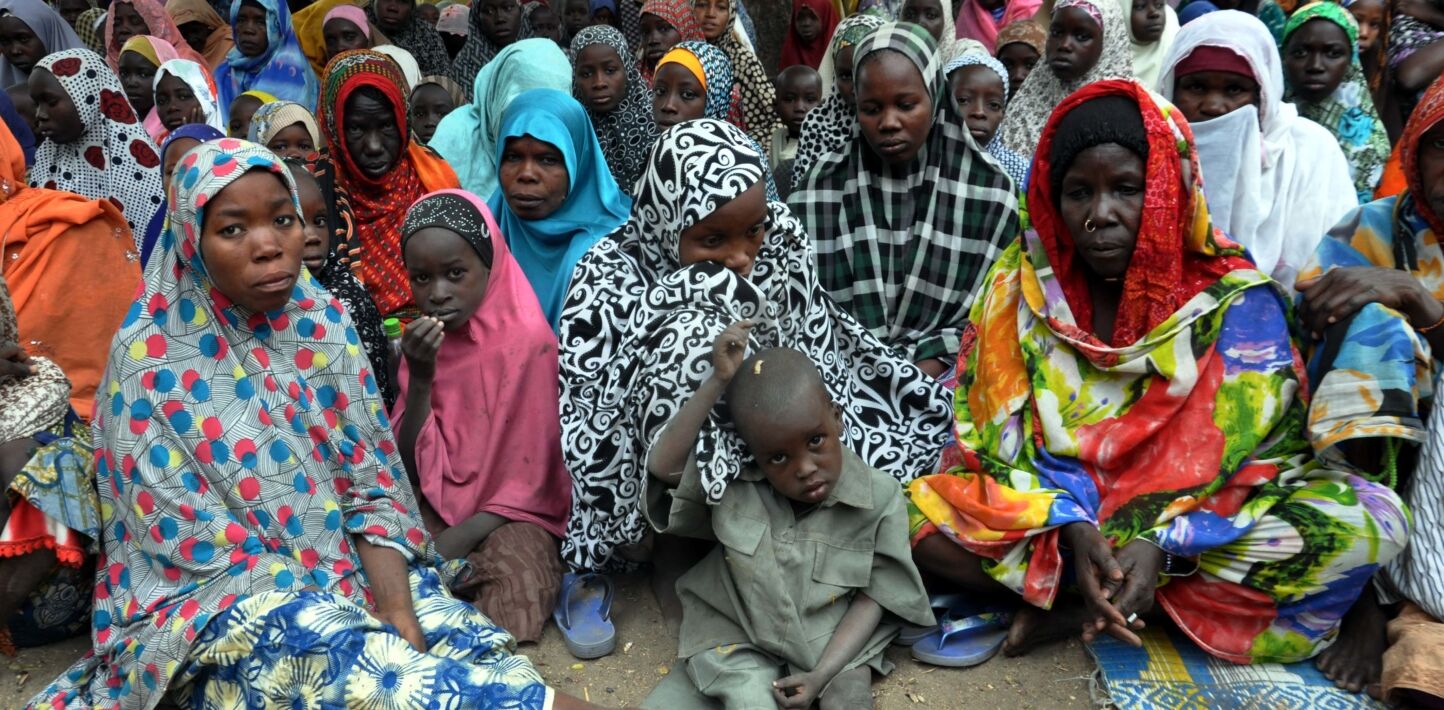
Amnesty International is deeply concerned about the safety of thousands of Internally Displaced Persons (IDPs) in Borno state, who are at risk of forced resettlement as the Borno state governor moves to close all IDP camps within Maiduguri by 31 December 2021, despite continued attacks by Boko Haram and ISWAP and human rights violations by the military. 

In a public statement released today, which is based on 38 interviews with former IDP returnees and individuals currently living in IDP camps within Maiduguri, survivors informed Amnesty International that they fear for their lives as they are being forced to leave the IDP camps with short notice and many are coerced to remain in resettled areas despite escalating attacks. 

“The conflict that made us flee our homes out of fear, is what the government is forcing us to go back and face. We fear the attacks may happen again. I am so scared of going back home after what I faced at the hands of Boko Haram and while in detention in Giwa Barracks. I was arrested by the military for not escaping from our village on time; what if it happens a second time?” – 28-year-old housewife formerly living in Bakassi IDP camp. 

“Returning displaced persons forcibly to villages that are not safe would be in violation of the Nigerian government’s responsibility of protecting the right to life of civilians. Most displaced persons barely escaped from Boko Haram’s campaign of killings, abductions, looting and torture, or from the attacks, extrajudicial killings or torture in unlawful detention by the Nigerian military. They have endured years of gross human rights violations and abuses, including war crimes by the military and armed groups.” – Osai Ojigho, Country Director, Amnesty International Nigeria. 

At least 6 people were killed and 14 injured in Agiri, Mafa Local Government Area on 30 August 2021, one month after they were resettled. Returnees in New Marte, Agiri and Shuwari have experienced multiple attacks by Boko Haram since their resettlement. 

“It is absolutely shocking that people who already suffered so much in the conflict between Boko Haram and the Nigerian military would further be exposed to horrendous possible violations and abuses, instead of receiving protection from the authorities,” says Osai Ojigho, Country Director, Amnesty International Nigeria. 

Most of the resettled IDPs that Amnesty spoke to, have little or no access to essential services like drinking water, healthcare, sanitation and live in extreme poverty. Inadequate housing and lack of job opportunities in resettled villages have further compounded their sufferings. At least 41 people died in early October 2021 during a cholera outbreak in the resettled camp in Shuwari, Jere local government area while 20 older people and 21 children were killed by the disease. 

More than 10,000 households still living in Internally Displaced People’s (IDP) camps within Maiduguri are at risk of forced resettlement by 31 December 2021 as the Borno state government plans to continue their resettlement programme at all cost.  

Amnesty International is calling on the Borno state government to abide by their obligations to IDPs under international law, and ensure all resettled individuals and people living in IDP camps have access to adequate housing, food, water, sanitation and healthcare. The government should also ensure that all children are able to continue their education. 

Multiple attacks at resettled camps 

A woman whose 12-year-old daughter was shot when the armed group Boko Haram attacked their resettled shelter in Agiri, Mafa LGA informed Amnesty International that: “Four days after we arrived Agirimafa, we were attacked by Boko Haram. The military ran away during the attack and our husbands and other men also ran. Boko Haram announced during the attack that we should stay here that they would not touch us but after one month, they came again around 12am in the night. They opened fire on us. My daughter was shot on her leg three times. After the attack, we had to wait till morning before we took her to the hospital. We stayed in the hospital for 80 days and they conducted several surgeries on her but at the end she became paralyzed.” 

Former IDP’s resettled in New Marte in January 2021 have also witnessed multiple attacks. Witnesses told Amnesty International that they spent two days trekking to Dikwa after they were attacked few weeks after their return. 

“Few weeks after we arrived, Boko Haram attacked Marte and the military ran and left us. The attack lasted till the next day but they said they won’t disturb us and that we can stay to continue with our farming. After they left, I told my husband that we need to leave here. You can’t trust an insurgent even though they said they were not going to touch us. An insurgent would always change his mind.” – 30-year-old woman and mother of six children from New Marte, Marte LGA. 

After the attack, all the returnees left New Marte to Maiduguri, leaving behind two older people who were too ill and old to travel with them. During the journey, 4 older people died of thirst and fatigue but on getting to Dikwa, they were refused passage to Maiduguri by the military officers in charge. The military made them stay in Dikwa for 25 days before taking them back to New Marte. 

Forced resettlement amid short notice 

All resettled IDPs interviewed in Agiri and Shuwari villages informed Amnesty International that they were forced to leave the camp on short notice. People were not allowed to share their concerns with the governor or government officials who came to tell them about the resettlement plan.  

“A ward head argued that the authorities must give the IDPs time to consult among themselves, but he was asked to keep quiet and obey the instructions given to him.” – A 55-year-old woman and mother of six children. 

According to a 30-year-old farmer resettled at Agiri, Mafa LGA: “The Chairman of Mafa LGA gathered us and said we are being given three days’ notice to vacate the IDP camp. He said that on Monday and Tuesday, people in Agiri will be returned, while others in surrounding villages will be returned on Wednesday. He said we must prepare ourselves and return to our villages. Everyone was confused with the three days’ notice and we were returned to Agiri on the expiration of the short notice.” 

A 55-year-old woman and mother of six who was forced to resettle at Agiri, Mafa LGA, after living in Muna IDP camp for the past 6 years informed Amnesty International that they had no clue that government planned to resettle them as there was no prior information. 

“When I heard we will be going back, I was so scared. I didn’t want to go because I knew the place was not safe. We have been hearing about the attacks, but they forced us to return.” 

“Taking people back in a rush is not good. People should be consulted and those who are happy to go and start farming should be allowed to go. Others who are not willing should not be forced. Forcing people to leave is a risk. My son was shot in the leg during the second attack because of this,” said a 36-year-old man and father of six whose 4-year-old son was shot on 30 August 2021. 

Returning displaced persons forcibly to villages that are not safe would be in violation of the Nigerian government’s responsibility of protecting the right to life of civilians

“Boko Haram did so many bad things to us, but I would never forget how I felt the day government officials came to the IDP camp on a Wednesday and informed us that by Friday at 4pm, they don’t want to see anyone in the IDP camp. We were given two days’ notice and I didn’t know where to go with my seven kids,” says 28-year-old father of seven now living in Shewari camp, Jere LGA. 

Inadequate housing  

Inadequate housing and lack of job opportunities have further compounded the sufferings of the returnees. Thousands are facing secondary displacements without humanitarian aid. The housing provided by government is grossly inadequate and not distributed fairly: “When we got to Shuwari, I was surprised to find out that there were no houses for us in spite of the governor’s promises. From the 10,000 naira left out of the 20,000 naira the governor gave us, I bought wood and constructed a makeshift homefor my family,” says a 28-year-old father of 7 formerly living in Farm Center IDP camp but resettled at Shewari, Jere LGA. 

The two-bedroom housing built by the government was given to the resettled original inhabitants of the villages whose houses were affected by the insurgency while returnees from other villages face secondary displacement as they are forced to stay in tents or build thatch houses. 

A 40-year-old woman with seven children who lived in Farm center IDP camp for 7 years before being forcibly resettled at Shuwari, Jere LGA informed Amnesty International: “When we arrived at Shuwari they left us by the side of the road. We slept there and, in the morning, we cooked the little food we had with us. Some government officials now came and asked us to go to the back of the village and that the government got a space for us where we could build our tents.”  

Access to water, sanitation and healthcare 

Resettled IDPs told Amnesty International that they have little access to essential services such as drinking water, sanitation and healthcare. In Agiri, Mafa LGA, IDPs told Amnesty International that there are no operational healthcare services. 

A woman whose 4-year-old son was shot when Boko Haram attacked the resettled shelter informed Amnesty International that: “They built a hospital, but it has not started operating. If someone falls sick in Agiri, we take them to Mafa LGA. It is a 9km, 30 minutes’ drive from Agiri to Mafa, but cars are not always available. There are always cars in the morning before 2:00pm, but after 2:00pm you won’t get a car to Mafa.” 

People also have to travel long distances or wait for hours before they can get clean water which they have to pay for. People resettled in Agiri and Mafa depend on one borehole per village for water. 

“Water is the most difficult thing for us as we have only one borehole. If you go to fetch water, you will find over four or five hundred women at the borehole. If we want to perform other domestic chores like washing, we have to go to the river for that. But the water at the river is now dried because of the season. If you go to get water early in the morning, you will only come back after 2 or 3pm because of the crowd. Some people even go as far as Mafa LGA to get water,” said a 55-year-old woman and mother of six. 

In Shuwari, Jere LGA, many children and older people who were forcibly resettled suffered during the cholera outbreak in early October. At least 20 older persons and 21 children died during the cholera outbreak.  

“They built 12 temporary toilet structures for us, but we are more than a thousand people. When the rain came, water flushed the toilets away,” said a 42-year-old woman and mother of four. 

Food shortage  

Returned IDP’s in Agiri and Shuwari face acute food shortages after being cut off from humanitarian aid for more than 4 months after their forced resettlement. Before leaving the IDP camps, government promised to give each head of households N100,000 (242 USD) for foodstuff once they are resettled. Each man and woman head of household received N20,000 (48 USD) at the camps with the understanding that the balance will be given to them once they resettled: “We are suffering, especially the older people in our midst. You can literally see the pains and hunger in them, but there is nothing you can do. In Shuwari, the older people are really suffering. While the governor promised to give us the remaining N80,000 (194 USD) once we arrived in the resettled area, we are yet to receive anything from him.” 

A 55-year-old widow and mother of six in Agiri, Mafa LGA informed Amnesty International that the last support they got was 4 months ago: “Four days after Boko Haram attacked us and many people were contemplating going back to the IDP camps, they brought food for us in order to placate us. This was ten days after arriving Agiri.”  

On 6 December, the Borno state governor banned all humanitarian organizations from distributing food and non-food items to newly resettled communities across the state, but he has failed to adequately provide the needed support to the people. 

Most of the people resettled in host communities don’t have farms and have to beg the original inhabitants of the villages for portions of lands to farm. The returnees face food shortage which may last for months if help is not provided before the next farming season July next year. 

“Where we are resettled is different from our village. They brought us to a place where we don’t have farms. You have to go farm for somebody before you are able to feed your family. You can’t even do business; we are always idle.” – A 35-year-old former trader at Muna IDP camp. 

Amnesty International found that majority of people whose homes were in other villages and are now resettled in Agiri and Shuwari are in urgent need of food support. Several of them in resettled villages complained of not having access to farms. Resettled and registered residents living in the 2-bedroom housing built by the government have been provided with monthly food support since their resettlement in July 2021 but others who were not originally from the Agiri and Shuwari are denied access to this support.

“We call on the Borno state governor to immediately meet the urgent needs of resettled individuals in Agiri, Shuwari and other resettled communities. The authorities must do more to ensure that the human rights of those displaced are met.” – Osai Ojigho, Country Director Amnesty International Nigeria. 

Under international humanitarian law, Nigerian authorities can only order the displacement of a civilian population if the security of the civilians involved or imperative military reasons so demand.  

As civilians’ lives are being put at greater risk by the displacement of IDPs in Borno state from IDP camps to their ancestral homes, these forced displacements likely constitute war crimes, and may constitute the crime against humanity of forcible transfer.  

The 2012 national policy on IDPs in Nigeria recognizes the IDPs’ right ‘to be protected against forcible return to or resettlement in any place where their life, safety, liberty and/or health would be at risk.’ They also have a right to ‘decide if they want to return to their homes or places of habitual residence.’ 

In August 2021, the federal government approved a new national policy for IDPs in Nigeria. The new policy is aimed at strengthening the institutional mechanism and frameworks for the realization of the rights, dignity and wellbeing of IDPs. The new policy has however not positively impacted on the lived realities of IDPs.

Distributed by APO Group on behalf of Amnesty International.

After 11 rounds of bidding that lasted eight hours, Mafab Communications Ltd and MTN Nigeria Plc, have emerged the two successful winners of the 3.5 gigahertz (GHz) spectrum auction for the deployment of Fifth Generation (5G) technology to support the delivery of ubiquitous broadband services in Nigeria.

The two winners emerged in a keenly contested 3.5GHz Spectrum auction conducted by the Nigerian Communications Commission (NCC), in collaboration with the Federal Ministry of Communications and Digital Economy. The event took place at the Transcorp Hilton Hotel, Abuja on Monday, December 13, 2021.

Three companies, namely MTN, Airtel and Mafab Communications Limited, had qualified for the auction, having met the requirements stipulated in the Information Memorandum (IM) for the spectrum auction. The three companies had also participated in a mock auction held on Friday, December 10, 2021, which served as a precursor to the Main Auction conducted on today (Monday, December 13, 2021).

In an exercise that clearly demonstrated demand outstripping supply, with Ascending Clock Auction System adopted by the Commission, the three bidders participated in the intensely competitive auction bid.

In the first Round of the auction, the bid price was fixed at $199,374,000.00; $201,367,740.00 at second Round; $204,388,356.10 at third Round; $209,407,962.50 at fourth Round and $215,782,901.30 at the fifth Round.

The auction prices increased progressively to $224,414,217.43 at the Sixth Round; $231,146,643.96 at the seventh Round; $240, 392,509.71 at the eighth Round; $251, 210,172.65 at the ninth Round; and $263,700,050.00 at the Round 10 of the auction exercise.

The auction process reached its peak at Round 11 when the bid price graduated to $275,904,886.25 with all the three bidders still actively participating. The Main Stage of the Auction, however, ended at the conclusion of the 11th Round, with Airtel listing an exit bid of $270,000,000, while MTN posted an exit bid of $273,000,000, giving way to the Assignment Stage. At this point, Airtel had dropped off from the race having posted a lower exit bid, thus leaving Mafab and MTN as winners of the two available lots.

Announcing the results of the Auction exercise, the Executive Vice Chairman of NCC and Auction Overseer, Prof. Umar Garba Danbatta, who recalled the processes and activities leading to the successful conduct of the auction, said the NCC published a public notice on its decision to award two lots of 100 megahertz (MHz) Time Division Duplex (TDD) available in the 3.5 GHz band through an auction process to support the delivery of ubiquitous broadband services for the deployment of 5G network in Nigeria.

“Subsequently, an Information Memorandum was issued on November 10, 2021, in which Bid applications for the available spectrum lots were invited. By the deadline for receipt of applications on November 29, 2021, the Commission received applications from three licensed telecoms companies, viz: Airtel Networks Limited, Mafab Communications Limited and MTN Communications Nigeria Limited,” he said.

“The auction held successfully today, Monday December 13, 2021 at the Transcorp Hilton Hotel, Abuja with the three bidders competing for the available two slots. The Commission adopted the Ascending Clock Auction format which ended after Round 11 and proceeded to the Assignment Stage. It is my pleasure to announce that at the end of the auction, Mafab Communications Limited and MTN Communications Nigeria Limited emerged as provisional licence winners,” he said.

Arising from the above, Danbatta said that the winning bid price for the auction is $273,600,000 for each lot of 100 MHz TDD and the provisional winners are expected to pay the Winning Bid price, less the Intention-to-Bid Deposit, by February 24, 2022.

He expressed satisfaction that the auction process was efficient, fair, credible, well-organised and transparent and was designed to deliver the ideal outcome.

Accordingly, Danbatta said the strongest bidders have emerged provisional winners, raising a substantial amount for the Federal Government.

The EVC congratulated the winners and thanked the Federal Government for its support and commitment to the deployment of 5G technology in Nigeria, which, he said, will bring substantial network improvements, including higher connection speed, mobility and capacity as well as low-latency capabilities to communications services in Nigeria.

Sequel to the successful auction by the two winners, Danbatta said in line with the processes outlined in the IM, the provisional winners have proceeded to the Assignment Stage.

“MTN Communications Nigeria Plc made an offer of $15,900,000 for the assignment of a preferred Lot, while Mafab Communications Limited made an offer of $11,120,000 for a preferred Lot. Thence, MTN Communications Nigeria Plc, having made the highest offer was given the right to select its most preferred Lot and it selected Lot 1 (3500-3600 MHz), while Lot 2 (3700-3800 MHz) is consequentially assigned to Mafab Communications Limited at no extra cost,” the EVC said.

The EVC thanked all stakeholders, who have contributed to the success of the auction process. He said the huge investment that will accrue from the sales of the spectrum band auctioned will result in increased transformation in life and businesses.

Earlier, at the opening ceremony, the Honourable Minister of Communications and Digital Economy, who doubles as the Chief Host, Prof. Isa Ali Ibrahim (Pantami), who emphasized Federal Government’s commitment to driving digital economy, commended the Commission for its efforts towards implementing the 5G Deployment Plan for the country.

He expressed optimism that the dawn of 5G network in Nigeria will offer significant advantages over current technologies, some of which include much lower latency, higher bandwidth, greater device density, longer battery life for nodes, and greater network flexibility.

Also in his remarks, the Chairman, Board of Commissioners, NCC, Prof. Adeolu Akande, said that spectrum plays a strategic role in meeting the insatiable demand for advanced mobile data services as well as a new wave of wireless broadband such as remote object manipulation, industrial automation, virtual and augmented reality, and next-generation connectivity for vehicles. He said the use cases will continue to increase the impact that mobile services have on societies and economies.

He commended the Minister for his unflinching support, the Board of Commissioners, Management and staff of the NCC for the role they played in making the auction to be successful. He also thanked the bidders for believing in the Nigerian communications sector by their willingness to invest millions of dollars in the sector for the provision of 5G services. He said that the Commission is committed to transparency and openness, which the auction represents.

Prof. Akande’s voice was amplified by the Executive Commissioner Technical Services at NCC, Engr. Ubale Maska, who served as the auction adviser. While delivering the Vote of Thanks, Maska conveyed the gratitude of the Commission to all stakeholders, giving special mention of the Auction Planning Committee, the media and staff of the Commission.