
Despite swirling challenges facing the nation, this is one of the good times to be a proud Nigerian! President Buhari-led government has made me proud. The recent reciprocal reduction of Emirates flights to Nigeria from twenty-one per week to just once, in retaliation to UAE’s limitation of Air Peace’s flights to Dubai via Sharjar Airport, to one flight per week, has sent an assuring message that the federal government will go full length to protect interests of indigenous airlines and Nigerian air travelers.

Gone are the days when indigenous airlines would be left in the winter cold of crippling politics of foreign airlines and its attendant grave implications for Nigerians on the international routes. Nigerians are among the most mobile humans on this planet—we travel a lot. Nigerian route is one of the busiest in the world, yet Nigerian airlines have not really benefited from this huge traffic of the most populous black nation.

Behemoth cum legacy airlines have been using their different home governments to frustrate Nigerian airlines from consolidating in the international routes; thereby monopolising the routes while Nigerian travelers are left at their mercy of arbitrary fares and other forms of exploitative tendencies. I think we have reached elastic limit of tolerating these excesses. Never again!

They had gotten away with this impunity and discriminatory actions in the past because previous administrations did not stand up to these economic bullies but Aviation Ministry under Hadi Seriki is making a difference. No injustice lasts forever. Every serious government of the world defends the interests of its indigenous companies against predatory actions of other nations. I am very happy that our government has etched this belief in its consciousness.

In February of this year, UAE employed fight against Covid-19 as a smokescreen to frustrate Air Peace Airline from coming to Sharjar, using “Rapid Antigen Test” as a flimsy excuse. Federal Government reciprocated by stopping Emirates flights to Nigeria. When UAE had a rethink on the Rapid Antigen Test requirement, Nigerian authorities lifted the ban on Emirates flights.

The foregoing context forms the crux of the matter. While Emirates announced flights resumption to Nigeria starting from 5th December, 2021, it never wanted Air Peace to resume its flights on Dubai route. Emirates Airline loves to retain its age-longed monopoly of the route, but has gotten more than its bargained. Not withstanding several warnings from Nigerian aviation authorities to UAE’s government to allow Air Peace’s flights to Sharjar Airport, at least three times per week, it fell on deaf ears.

UAE even went further to reduce Air Peace’s flights to just once per week. What a diplomatic imprudence! Emirates had permission for 21 flights into Nigeria per week, yet UAE could not allow Air Peace just three flights per week. Nigerian Civil Aviation Authority got infuriated, in commendable reciprocity and display of regulatory acumen, reduced Emirates flights to one per week. Applause! Who losses more? Emirates!

Henceforth, it should be an eye for an eye. This is akin to having 21 slots in my country and refusing me just 3 slots in your own country. Even in a jungle such brazen impunity is not tolerated for long. Nigeria is a country plagued with rising unemployment rate. In fact, debilitating insecurity in the country is tied to youth unemployment. Imagine how many thousands of jobs with its corresponding economic opportunities that would be created for Nigerians if our indigenous airlines are adequately supported to compete strongly in the international routes with other foreign airlines.

When AriseTV contracted Air Peace to airlift its crew and invitees to the Arise Dubai Show, recently, UAE authorities barred their fangs. If not for the prompt intervention of Nigerian government, that chartered flight would have been aborted. As if that was not enough, they mischievously refused to allow Air Peace resume its normal scheduled flight operations into the Sharjar Airport immediately after the AriseTV-charter flight, while Emirates had resumed operations into Nigeria; flying twice daily to Lagos and once daily to Abuja.

This is outrageously unacceptable! Once again, I want to commend President Muhammadu Buhari, Minister of Aviation, Hadi Seriki and Capt. Musa Nuhu, director-general of Nigerian Civil Aviation Authority (NCAA), for rising to the occasion in defense of indigenous airlines. It is a humiliating aberration that foreign airlines whose home countries make flight operations difficult for our indigenous airlines over there, will be allowed to have a free reign here at our expenses, as if ours is a banana republic.

Emirates have been fleecing unsuspecting Nigerian travelers for months now by deliberately announcing flights resumptions on dates they knew would never happen because of flight ban between UAE and Nigeria. It is alarming that this foreign airline made Nigerians pay for non-existent flights. They never refunded them but rather they told these hapless Nigerian travelers to reschedule their flights when the Airline begins operation.

This is synonymous to obtaining money under false pretenses and can be considered criminal acts. Emirates perpetrated this illegality for four consecutive times before NCAA threatened weighty sanctions. Can Air Peace or any other Nigerian airline exhibit a fraction of this impunity in UAE or any other country without being blacklisted as “fraudulent” and its owners blackmailed as “criminals” in the eyes of the world. Not at all.

As response to Nigerian authorities reciprocal decision to cap its flights to one, Emirates Airline has suspended its flights in and out of the country till further notice—hopefully to enable UAE government and Nigerian authorities resolve the diplomatic logjam. Emirates should not be given 21 slots of flights in Nigeria while Air Peace begs to get three in UAE. Why won’t Air Peace have the same 21 slots in UAE as Emirates was having in Nigeria before the ban?

It should be equal slots—if UAE concedes three slots to us, we reciprocate with exact amount of slots. Air Peace has enough planes in its fleet to exhaust similar number of slots that was given to Emirates. With additional 13 brand new E195-E2 airplanes, Air Peace is prepared to give Emirates Airline a run for its money on the ever-busy Dubai route.

Supporting indigenous airlines to withstand stiff competition cum aerospace politics in the international routes, is another window to earn foreign exchange aside crude oil. We should position our indigenous companies to join the scramble for global resources instead of over-concentration on the limited petrodollars. Nigerian government deserves commendation for standing up for indigenous companies against diplomatic bullying of foreign authorities.

By Chidiebere Nwobodo

Nwobodo writes from Abuja via chidieberenwobodo@yahoo.com.
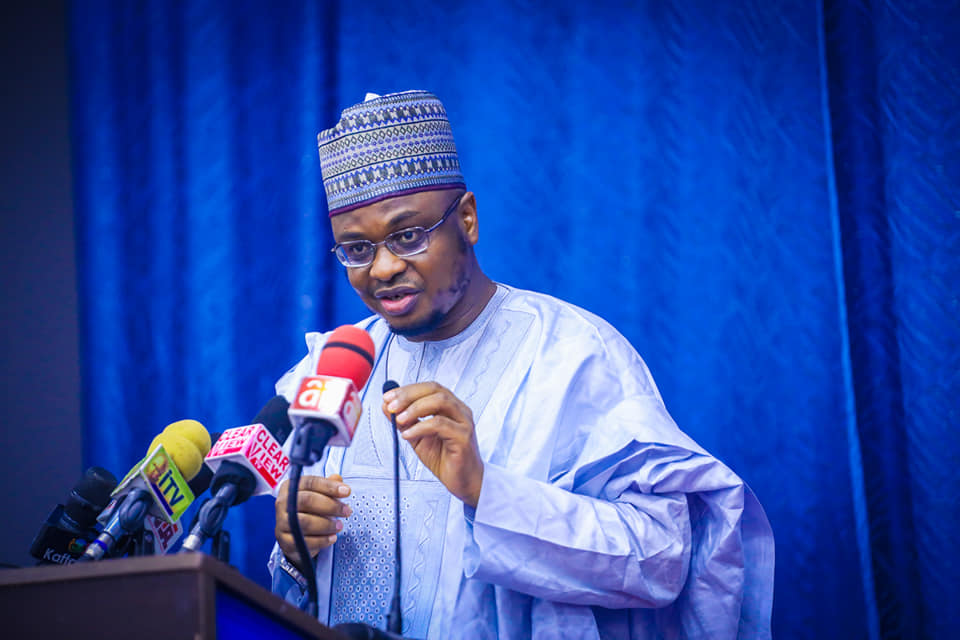
The Federal Executive Council approved the implementation of the Advanced Digital Awareness Programme for Tertiary Institutions (ADAPTI) and the deployment of a regulatory system to support the telecommunications industry at its meeting on the 8th of December, 2021.

This followed the presentation of memos by the Minister of Communications and Digital Economy, Prof. Isa Ali Ibrahim (Pantami). The Minister was accompanied by the Permanent Secretary of the Ministry, Mr. Bitrus Bako Nabasu, the Executive Vice Chairman of the Nigerian Communications Commission (NCC), Prof. Umar Garba Dambatta, Prof Sahalu Junaidu and the Director of Financial Services of NCC, Mr. Yakubu Gontor.

The ADAPTI is aimed at bridging the digital gaps that exist in the academia by promoting the practical application of technology in research, teaching and learning in tertiary institutions. The approved programme will include the distribution of 6,000 digital tablets and is aimed at:

  1. Encouraging the appreciation and use of Information and Communications Technology (ICT) in the country, particularly in tertiary institutions;
  2. Providing access to ICT tools;
  3. Promoting economic empowerment through self-development; and
  4. Stimulating demand for products and services in the telecommunication sector.
    The ADAPTI will be implemented by NCC and it aligns with a number of pillars of the National Digital Economy Policy and Strategy (NDEPS) 2020-2030, including the pillars on Digital literacy and Skills, Solid Infrastructure, Digital Services Development and Promotion, Digital Society and Emerging Technologies and Indigenous Content Development and Adoption.
    The Federal Executive Council also approved the deployment of regulatory systems to monitor, detect and block SIMBox and Call Masking Traffic within the country’s telecommunications industry. These hardware devices are of high-end configurations/specifications meant to ensure seamless optimal functionality, bearing in mind the volume of data inflow from the four (4) major Mobile Network Operators (MNOs). The derivable benefits of the systems include the:
  5. Implementation of a system to continuously monitor incidences of SIMBOXING in the industry;
  6. Detection of incidences of SIMBOXING in the entire MNO networks, round the clock, in near real time or real time preferably and reporting the same in applicable formats;
  7. Effective blocking of calls from SIMBOXES while also blocking the SIMs being used for the activity across all operators;
  8. Implementation of a Call Masking/Calling Line Identification (CLI) Spoofing System to continuously monitor incidences of Call Masking/CLI Spoofing in the industry;
  9. Detection of incidences of Call Masking in the entire MNO networks, round the clock, in near real time or real time preferably and reporting the same in applicable formats; and
  10. Proactive blocking of Masked/Spoofed CLI calls at the origination stage to prevent successful call routing to the called subscriber.

The use of SIMBoxing and Call Masking has posed a challenge in meeting the critical security information needs of the telecommunications industry. The deployment of these systems will address the challenge. The deployment is also in alignment with the Soft Infrastructure pillar of NDEPS.

The Honourable Minister, Ministry and the telecommunications ecosystem are grateful for the tremendous support of President Muhammadu Buhari, GCFR. The Ministry will continue to position Nigeria to leverage technology in order to transform Nigeria into a leading digital economy.

…Sets Stage for Main Auction on Monday

The Nigerian Communications Commission (NCC) has successfully carried out a mock session for the 3.5 gigahertz (GHz) spectrum auction for the deployment of the Fifth Generation (5G) network in the country.

The simulated auction, which took place on Friday, December 10, 2021 at the Transcorp Hilton Hotel, Abuja, was preparatory to the main auction scheduled to take place on Monday, December 13, 2021 at same venue.

The conduct of the simulation exercise was in line with the requirements stipulated in the Information Memorandum (IM) for 3.5 GHz spectrum auction. The IM is a document that defines the process for the licensing of the 3.5 GHz spectrum band, earlier published on the Commission’s website at the inception of the auction process.

Using the Ascending Clock Auction System for the mock session, the three qualified bidders for the 3.5 GHz spectrum, namely MTN Nigeria, Mafab Communications Ltd, and Airtel Networks Ltd, participated in the software-based simulated auction exercise.

The mock auction was witnessed by the Chairman, Board of Commissioners, NCC, Prof. Adeolu Akande; the Executive Vice Chairman and Chief Executive Officer of the Commission, Prof. Umar Garba Danbatta; Executive Commissioner, Technical Services, Ubale Maska and the Executive Commissioner, Stakeholder Management, Adeleke Adewolu.

Others, who witnessed the mock auction include representatives from the bidding companies, senior management staff from relevant departments of the Commission, technical consultants, software consultants, legal consultants and other external observers.

Following the successful mock auction, the stage is set for the Commission to license two slots in the 3.5 GHz spectrum band, expected to be picked by successful bidders at the end of the Main Auction on Monday, December 13, 2021.

The auction on Monday will mark a turning point in Nigeria’s determination to harness the benefits of 5G for the nation’s socio-economic growth, as concrete roll-out of 5G commences in 2022.

In a brief remark at the Mock Auction, Danbatta said the Commission had taken all necessary steps to ensure due diligence on the credibility of the consultants and to safeguard the integrity of the software solution being used to carry out the implementation of this historic national assignment.

“This is consistent with the open, credible transparent and fair manner by which the Commission is known to have conducted previous auction processes, which have been locally and globally applauded,” Danbatta said.

In order to ensure a fail-proof process, the Commission also carried out a simulation of the manual process of the auction, aside the electronic mock. This is to ensure that bidders are also familiar with the manual auction in case of any circumstances on the Main Auction Day that may warrant a need to switch to the Manual Auction. It is pertinent to note that the two forms – electronic and manual – are clearly stated in the IM and they follow the same process.

Representatives of the bidding companies, the Commission, the consultants and other observers at the Mock Auction expressed satisfaction with the conduct of the simulation exercise, which also provided opportunity for the Commission to perfect the auction  process ahead of the Main Auction.

The Commission had commenced the process for the auction of the 5G spectrum in the last quarter of the 2021 and had, since then, carried out a number of activities ahead of the Main Auction.

October 7, 2021, the Commission had published the Draft Information Memorandum (IM) on the auction of the 5G spectrum on its website (www.ncc.gov.ng) and issued a public notice in major channels, including print, electronic, and new digital media. Comments on the draft IM were received by the Commission up until October 28, 2021.

On November 3, 2021, the Commission held a stakeholders’ engagement forum in Lagos at which comments received from a broad segment of stakeholders, including the major operators, were exhaustively discussed and considered.

On November 10, 2021, the Commission published the Final IM, and Stakeholders’ comments thereon on its website and the national dailies, and set the deadline for the submission of bids on Wednesday, November 24, 2021.

As a responsive regulator, the Commission also proceeded to accommodate concerns raised by some stakeholders, due to social disruptions, and extended the date for submission of the bidding applications to Wednesday, November 24, 2021 to Monday, November 29, 2021.

On December 1, 2021, the NCC announced the three companies – MTN Nigeria Limited, Mafab Communications Ltd, and Airtel Networks Ltd – as having successfully submitted their bids in line with the requirements of the IM.

The Commission therefore wishes to thank all stakeholders for all the support, collaboration and partnership they have offered to get to this stage, and implores all stakeholders not to rest on their oars until the bidding processes are concluded successfully. Thereafter, the Commission, as it has now become its culture, will rally stakeholders into the next phase of the implementation of the 5G policy.

A Model university conceived and built by the Divine Mandate Administration of Governor Umahi.

This magnificent edefice with state of the art facilities, will churn out quality graduates of international standards.

It will end Medical Tourism as the institution is built to treat life threatening diseases.

When we say Engr. Dave Umahi is synonymous with Dave(lopment) we state it unquivocally without mincing words.

Says, all 774 LGAs in Nigeria will  enjoy broadband

There is a holistic, strategic plan being conscientiously implemented to address the infrastructure deficit in the telecommunications sector with the objective to bridge the digital divide which had undermined Nigeria’s march to a robust digital economy.

Professor Umar Danbatta, the Executive Vice Chairman and Chief Executive Officer (EVC/CEO) of the Nigerian Communications Commission (NCC), has asserted, and emphasised that telecoms infrastructure deployment across rural communities in Nigeria is at the heart of every effort of Government towards ensuring the socio-economic development of Nigeria.

Danbatta made these declarations at the International Conference Centre Abuja, while delivering a keynote presentation at the 2021 national conference, exhibition, and annual general meeting of the Nigerian Society of Engineers which started two days ago.

At the conference, with the overarching theme “EXPANSION OF THE ENERGY MIX FOR NATIONAL ECONOMIC GROWTH”, Danbatta spoke focusing on a sub-theme, “Strategic Collaboration between the Town and Gown for Effective Rural Development”, at the 6th Roundtable Symposium of the Nigerian Society of Engineers’ College of Fellows.

The NCC CEO said that the vision of the Federal Government as enunciated in the Economic Recovery and Growth Plan (ERGP), National Digital Economy Policy and Strategy (2020-2030) and the National Broadband Plan (2020-2025) is being vigorously implemented. Explaining the connection between these policies and NCC’s operations, Danbatta stated that the NCC’s Strategic Management Plan (SMP) 2020-2024, streamlined in the Commission’s Strategic Vision Plan (2021-2025) to enhance operational and regulatory efficiency, is aligned with the Federal Government’s vision for an all-inclusive digital economy.   

Accordingly, to improve Nigeria’s broadband infrastructure, Danbatta reiterated that NCC has divided Nigeria into seven (7) Zones, consisting of the existing 6 constitutional geopolitical divisions, and Lagos constituting the seventh, considering the importance of Lagos as a strategic commercial and technological hub within the structure of the Nigeria’s telecom ecosystem.

“The NCC has proceeded to licence companies for each of the seven zones, to deploy broadband infrastructure that will ensure speed of up to 25 megabits per second in the rural areas. Each of the 774 Local Government Areas of Nigeria will have an initial access point of at least 10 megabits per second.”

To demonstrate NCC’s readiness to race at the same tempo with the Federal Government as articulated in the policy documents, Danbatta stated that the licensed companies, otherwise known as Infrastructure Companies (Infracos), have been directed to move to site to cascade broadband infrastructure to the hinterland.

The EVC affirmed that there is timeframe for the implementation of these projects, including the building of specialised technology centres in the rural areas to enable stakeholders to harness huge benefits of ICT.

The NCC CEO stated that the Commission is waiting to see the Infracos demonstrate creditable level of deployment in the cities and also discharge the burden of proof of the existence of access points in LGAs in the next five months.

Otherwise, he stressed that the Commission may have “to take firm regulatory decisions” in the interest of the Nigerian people and start-ups, who have been waiting for the deployment of rural tech solutions to make contributions to the growth of the economy by exploring derivable benefits that accrue from a digitised economy.

Prof. Danbatta said one of the benefits of digital economy that NCC has collaborated with stakeholders to bring to fruition, is in the area of digital inclusion, where NCC has been collaborating with stakeholders, including the Central Bank of Nigeria (CBN) to ensure the target of 80 percent digital inclusion is achieved within the timeframe.

He said NCC will continue to collaborate with relevant stakeholders to enhance innovation, competition and participation in governance by the citizenry, which is one of the hallmarks of digital culture.

The EVC informed the enthusiastic audience at the Conference that Nigeria already has about 40,000 unique transceiver stations and their uniqueness is underpinned by their characteristics as enablers of 2G, 3G and 4G technologies. However, Prof. Danbatta asserted that this figure is inadequate for a country with Nigeria’s size and population. “The United Kingdom with less population, according to the EVC, has over 60,000 of such stations” he stated.

Besides, the licensing and direction given to the Infracos, Prof. Danbatta outlined NCC’s interventions to accelerate the bridging of the digital divide to include: construction of 250 kilometer of Backbone Transmission infrastructure (BTRAIN); 72 Rural Broadband Initiative (RUBI) projects; 1,334 School Knowledge Centres (SKCs); 192 Community Resource Centres (CRCs); Development and deployment of 218 of Local Content for E-Learning; 74 Information Resource Centres (E-Library); Clusters of Access Gaps Reduced from 217 to 112; Digitally Excluded Nigerians reduced from 40 million to 15 million.

Danbatta, whose keynote speech is titled, ‘ICT Facilities for Infrastructure Development’, recognised the imperative of ‘Town-Gown’ collaboration and admitted that as communities and universities confront the increasingly complex social and physical pressures, there is need for effective alignment between these two entities to maximize local resources, knowledge acquisition and efforts towards facilitating deployment of ICT infrastructure to the rural communities.

The EVC maintained that the provision of infrastructure in rural areas plays significant role in promoting entrepreneurship and economic progress for its dwellers and serves as enabler of better quality of life for rural dwellers through the diversification of the rural economy that digital culture enhances.

Danbatta bemoaned the level of ICT adoption and usage in the rural areas, declaring that it is low, compared to the rate of adoption in urban centres. This challenge, he attributed partly to inadequacy of ICT infrastructure, cost of ICT infrastructure deployment and challenge of energy (electricity).

Despite being Africa’s largest ICT market, and a dominant player in the sector, Danbatta affirmed that Nigeria still accounts for a sizeable percentage of the 1 billion world population of unconnected people. However, the EVC stated that NCC is driving the implementation of an ambitious infrastructure project to ensure that the unconnected population of the country are given the opportunity for digital inclusion. He said this reality explains NCC’s frontline role in driving improvement in communications infrastructure in the rural communities where majority of the digitally excluded segment of the population resides.

The foregoing according to the EVC, is the reason the Commission has also partnered and collaborated with all relevant stakeholders, as well as explored cooperation through several discussions with both state and non-state actors  to give concrete expression to its commitment to strategic collaboration and partnership, which remains a defining matrix of its operational activities.

The EVC stated that the Commission will continue to engage appropriate stakeholders and explore necessary uptakes towards improving on all infrastructure that support digital economy particularly expansion projects in rural areas because rural infrastructure deployment is central to bridging digital divide in Nigeria.     

How to check the legitimacy of a company you work with to avoid risky business relationships

Approximately 2-5% of the world’s GDP is laundered every year, which amounts to approximately $800 billion to $2 trillion, according to research by the United Nations. As a business, every time you establish a relationship with another business, you are opening your company up to the risk of criminals using your organisation for this kind of criminal activity.

Similar to Know Your Customer (KYC) procedures, knowing the organisations you are dealing with limits the risk of non-delivery, non-payment, exposure to fraudulent activities and failed deals. The only difference between KYC and know your business (KYB) is that the former is used to verify the identity of consumers or customers in compliance with legal requirements, while the latter is for identifying companies and suppliers in business to business (B2B) relationships.

Sameer Kumandan, Managing Director of South Africa’s largest data aggregation platform SearchWorks, says that to properly vet a business you need to make sure it is a legitimate company, verify the details of the directors and the place of business, ensure the company is not and was not involved in any fraudulent activities, and assess the nature of its business to ensure it is aligned to what you are sourcing from it. Always insist on a face-to-face meeting when vetting new businesses, whether it be in person or via Zoom or a similar platform. A meeting will allow you the opportunity to visually match up what you see and what has been provided. Site visits are also a good way of ensuring validity (if possible and depending on lockdown restrictions).

“If KYB is not done correctly, you run the risk of being involved with fraudulent companies or companies involved in other tax crimes or illegal activities.”

Beyond the obvious manual searches, which could include checking a company’s address on Google Maps, confirming a website exists and calling the listed telephone numbers, there are several in-depth searches that can be conducted to verify that a company is legitimate.

This is where an innovative, web-based platform like SearchWorks can be of help, as it gives access to 160 different search types and provides the user with a report with the results in real-time.

“Ordinarily, you would need to go to various organisations individually and ask for consent every time in order to vet a new business contact, but with SearchWorks, this can all be done on one platform,” states Kumandan. SearchWorks is aligned with the National Credit Regulator and the credit bureaus to ensure that searches are performed within the confines of the law and the governing bodies of the associated organisations.

SearchWorks can help with:

  • CIPC reports. Conduct verifications of the company and its directors via the Companies and Intellectual Property Commission (CIPC). By doing this you can confirm that the company exists, the nature of its business, verify the identity of the directors and ensure they are still active in the business, and check its registered physical addresses and its registration status.
  • Business reports. Perform a company profile check to get an overall summary of the business, assess its currentfinancial performanceand business credit score.
  • Account verifications. Confirm that the bank account details provided by the suppliers are accurate and are that of the company. You need copies of bank statements, ID documents and proof of address.
  • Credit reports. This is applicable when you extend a line of credit to ensure that the companies you are about to enter into agreements with are credit worthy.

“KYB checks are vital to help lower the risk of your business being used as a vehicle for criminal activities, so make sure they are always up to date,” advises Kumandan.

……..15 INMATES WITH MINOR OFFENCES REGAIN FREEDOM

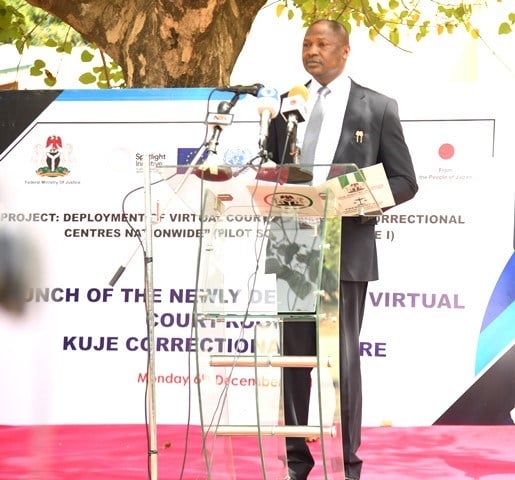
The Honourable Attorney General of the Federation and Minister of Justice, Abubakar Malami, SAN has said that the deployment of virtual court sitting technology in Correctional facilities was aimed at ensuring speedy dispensation of Justice and decongestion of custodial centres in the country.

Malami stated this at the launch of pilot project for the deployment and use of Virtual Court sitting facilities at the Kuje Correctional Centre, Abuja on Monday 6th December, 2021.

According to the AGF, “The essence of the launch of the virtual court sitting facilities is re-enactment and consolidation of spirit of Administration of Criminal Justice Act targeted at speedy determination of cases by way of eliminating delays and displacement of denial of justice which will further support our policy of decongestion of correctional centres across the country”.

The AGF said the project was initiated to ensure the hearing and determination of urgent and time-bound cases, using the digital platform.

He said, “This system would equally ensure speedy dispensation of trials in line with section 36(4) of the Constitution of the Federal Republic of Nigeria, 1999 (as amended), which provides that every person shall be entitled to fair hearing within a reasonable time”.

He explained that it would also eliminate the issue of difficulties in conveying the inmates to court and would further ensure the safety and security of the inmates and law enforcement officers.

According to him, “We are no longer constrained by mobility, space and time in the justice delivery on account of accommodation of the virtual court sitting facilities and deployment of incidental technology”.

“Notably, our justice system is founded on the constitutional principle of fundamental rights to fair hearing that requires the court to hear and determine cases in public and the physical presence of the suspects or parties in court”
The AGF said that the Virtual Court Proceedings are in compliance with the provisions of section 36(3) of the Constitution, which provides for public court sitting or hearing.

Furthermore, the Virtual Court Proceedings would meet up with the expectation of the Constitution and are not private hearings but open to the respective counsel involved, the litigants (inmates) and the general public at large.

In his goodwill message, the Honourable Minster of Interior, Rauf Aregbesola advocated for inclusion of terminal dates in the administration of justice act for quick dispensation of justice in the country. He explained that it would also aid decongestion of prisons across the country.

He said that the project which was fully funded by the UNDP, and supports from the government of Japan was aimed at supporting an Inclusive and multi-Sectoral response to COVID-19 and Addressing socio-economic impact.
Aregbesola noted that many of those in the custody stayed longer than the prescribed period of terms by the law.

He therefore specifically urged the AGF to liase with the Chief Justice of Nigeria to speedily work out terminal dates for cases to help reduce prison congestion in Nigeria.

In her welcome address, Mrs. Leticia Ayoola-Daniels, Acting Director Administration of Criminal Justice and Reforms Department Federal Ministry of Justice, who doubles as Secretary of the Presidential Committee on Correctional Reforms and Decongestion, expressed hope that these virtual court facilities will feed into the already existing virtual court sittings that are in the judiciary, and by so doing fast track the dispensation of court cases while saving costs on security and mobilization of accused persons.

Speaking, the Controller General of the Nigeria Correctional Service, Haliru Nababa said the target of the initiative is to significantly address the perennial challenge of overcrowding in most of their urban facilities.

According to him, the significant note is the fact that Virtual Court room sessions will also drastically reduce the cost and danger of conveying awaiting trial persons to and from courts.

In a goodwill message, UNDP Nigeria Country Representative, Lealem Berrhanu Dinku said its organization is in partnership with the Federal ministry of justice and the Government of Japan to launch the programme to deploy virtual courts in Correctional Centres nationwide, with Kuje Correctional Centre in Abuja as its first pilot location.

He explained that the programme was designed to support the court system to accelerate the hearing of Sexual and Gender-Based Violence/Harmful Practices/Sexual and Reproductive Health and Rights/Violence Against Women and Girls civil and criminal cases, and will allow judiciaries to hear cases without transporting inmates to physical locations.

Dinku added that the project will help to reduce backlog and the time spent in pre-trial detention while also helping to reduce administration and operational costs.


The project was fully funded by the UNDP, with funds from the government of Japan (Supporting an Inclusive & Multi-Sectoral Response to COVID-19 and Addressing Socio-Economic Impact).

The deployment of the project was overseen by Leticia Ayoola-Daniels, Acting Director, Administration of Criminal Justice and Reform department, Federal ministry of Justice and Mrs. Onyinye Ndubuisi of the UNDP.

In her closing remarks Mrs. Onyinye Ndubuisi of the UNDP expressed appreciation to the Attorney General, Nigerian Correctional Service and other Stakeholders for their attendance. She added that the innovation was a welcome development as the pilot scheme commenced.

Dignitaries at the occasion were the Minister of Interior, Ogbeni Rauf Aregbesola, Federal High Court Chief Judge, Justice John Tsoho, FCT Chief Judge, Justice Ishaq Bello, Ambassador of JAPAN, MATSUNAGA Kazuyoshi, Controller-General (NCS), Mr. Haliru Nababa, UNDP Nigeria Deputy Country Representative, Mr. Lealem Berhanu Dinku, Representatives from Nigeria Bar Association, Civil Society Organisation, NAPTIP, among others.

Following the launch of the Virtual Court Rooms, the Presidential Committee on Correctional Reforms and Decongestion in collaboration with the Federal Ministry of Justice, after careful deliberation effected the release of 15 inmates with minor offences with an option of fine. The fines were paid and their releases effected.

President Muhammadu Buhari Tuesday in Abuja said stronger partnership with the private sector will help in improving health facilities and access in the country, adding that a nation needs a healthy population to prosper.

Speaking at the virtual groundbreaking ceremony of African Medical Centre of Excellence, a landmark hospital project that will significantly transform the healthcare sector in West African sub-region, the President said the challenges faced in the health sector require collective will, partnership and more resources, especially in tackling brain drain.

The health project is being implemented by African Export–Import Bank (Afreximbank) in partnership with the Federal Government, Kings College Hospital, London, University of Winsconsin Teaching Hospital, USA and Christies Hospital, Manchester.

“It is my pleasure to preside over the groundbreaking ceremony of the Africa Medical Center of Excellence, Abuja, Nigeria. Today represents more than just the groundbreaking ceremony for a landmark hospital project that will significantly transform the healthcare sector in West Africa.

“Today also demonstrates the commitment of the Nigerian Government and Afreximbank to the wellbeing of the African people, and the recognition that the wealth of a Nation rests squarely on the health of its population,” he said.

According to the President, in addition to providing comprehensive care across the three critical care areas, the AMCE will offer educational services to develop talent and establish itself as a world-class research centre, in partnership with global institutions such as Kings College Hospital and Christies Hospital in the United Kingdom.

“The success of the AMCE will pave the way for future investments and partnerships in the sector while raising the local standard of healthcare and providing a blueprint for quality of services required to address Nigeria’s and Africa’s healthcare and economic challenges.

“The AMCE represents a return to fundamentals, and the understanding that there is no African development agenda without able-bodied Africans to execute our vision of transformation,” he said.

President Buhari thanked the management of Afreximbank, a Pan-African multilateral trade finance institution created in 1993 under the auspices of the African Development Bank, and all the partners for their commitment to Africa, and for the action-oriented approach to resolving the challenges that the continent faces on its path to development.

President Buhari said the rising cases of non-communicable diseases in Africa are well established, adding that, “Cardiovascular ailments, cancers and haematological disorders have increasingly become matters of concern to public health cares. These ailments are now the highest contributors to non-communicable disease mortalities, representing more than 81% of all NCD deaths in West Africa.”

“The World Health Organization projects that deaths on the African continent attributable to cancer and diabetes are expected to rise over the next 10 years. The rising NCD burden coupled with inadequate medical infrastructure on the continent threatens the future of our people. Right now, many hospitals in the West African region are underfunded, underequipped, understaffed and relatively inaccessible to most patients especially from rural areas.

“Inasmuch as this represents an opportunity for investment in African healthcare, it has not necessarily translated into increased investment activity in this most pressing area that requires intervention. This problem is further exacerbated by the significant brain drain experienced by the continent. The flight of doctors and nurses to other continents has resulted in a significant gap between the required treatments for NCDs and the available treatments and care.

“The above challenges combine to create a regional health market with poor access to critical services and low perception of quality of care available,’’ the President noted.
President Buhari said the AMCE will provide world class medical services at par with the world’s best hospitals.

“The AMCE, a 500-bed specialist facility, will provide services in the areas of oncology, cardiology, and haematology and will seek to address the significant shortage of clinical care options in the West African sub-region.

“The AMCE demonstrates that Afreximbank is not only Africa’s trade finance partner, but its development partner.

“I also would like to commend the Ministers of Industry, Trade and Investment, Foreign Affairs, Federal Capital Territory and Health for their tireless support to ensuring this project comes to life. This was truly a team effort,’’ the President added.

In his remarks, the Minister of Health, Dr. Osagie Ehanire said all hands are on deck, with the Inter-ministerial Committee working to ensure that the project is actualized in a way that is beneficial to all parties.

The Minister said a strong emphasis will be placed on maintenance and sustainability of the AMCE.

The President of Afreximbank, Prof. Benedict Oramah said the ceremony was “one step towards self-reliance for Africa’s health care delivery,” as the project will pool world-class technology and global talents, particularly the African diaspora, to provide a full spectrum of quality medical services in oncology, haematology, cardiology, and general healthcare services.

Oramah noted that the 500-bed and estimated 300 million US dollar-AMCE was conceived to promote intra-African medical tourism and reduce the outflow of over 7 billion US dollars annually in out-bound medical tourism.

He added that the vision for AMCE was borne out of a personal experience he encountered following his recovery from a potentially life-threatening blood disorder.

Omicron, take this from me “They” (West) will not respect you… They will not listen to us. We must start to understand that respect is earned not demanded. One thing I like about my folks is that they strongly believe that respect is earned not cascading from parents to kids. In my place nobody cares who your father is.. It is what you are. So the earlier we Africans start seeing this the better for us but unfortunately we would be disregarded in global scheme of things because we have refused to evolve ! We must start contributing to the global community not alway asking for one aid or grant.

I am sorry, this post might be seen as some level of demureness from sane folks but the truth is what it is. If Covid 19 originated from Africa, that would have been our greatest undoing as a group of people.. Thank lord it was a Wuhan Virus and in China but the truth is that the world didn’t want to call it Chinese virus so as not to offend the sensibilities of the Chinese and the Orientals have come a long way to make their mark in the world. The occidentals (West) was careful not to tag it a Chinese thing…

The West is battling the effect of the Covid maybe due to adaptation and environment but unlike us in Africa… We are moving on with less than a fragment of population infected. Providence has a way of Making a way for the black race but we have refused to see it… But then the Omicron came…

The coming of Omicron was the game change… The delta version was there it was downplayed then the omicron variant of Covid came to town.. Having been discovered in South Africa either in lab.. They went to town that Africa has brought an upgraded version… And funny enough no Africa leadership be it AU, OAU, ECOWAS or any fancy acronym have the guts to speak up and change the narrative…. Shame on them.

Embargo and closure are coming left right and centre… Africans are shut out of the global travel space because of omicron. It is like looking for a way to give a dog a bad name to kill the dog… Ochoro mgbafu sịrị na aloru ya anya…

The greatest one was our colonial masters shutting their doors on us. Why wouldn’t they shut the doors… When we have stopped our evolutionary process… I am a bit of Darwinist…

… Why didn’t they lock Chinese out? They can’t because China has shown that they have come of age… If this Wuhan Covid virus came in the 60s and 70s they would have locked them out! But they can’t do that today! Why?

The Chinese have over the years changed the global narratives.. They have shown that democracy isn’t the best form of government and with communism with a little of representation they have been able to make their country a world class lifting billions out of poverty, countries like yours indebted to them, built capacity in technology and infrastructure. They have exported expertise globally and they can’t be ignored. They have earned the respect of others… So you can’t fucking lock them out!

Now African countries are being locked out because of this Omicron that was discovered in South Africa, probably in lab… Why would they not lock us out when we go cap in hand borrowing money and begging for grants. Why will they not lock us out when we don’t have the capacity to manage ourselves, tray ourselves and build our own wealth. We either go to borrow from the West or save our money in the West. We can’t even treat ourselves, we always run their for treatment.

Do you think they will respect you? Hell No! No respect people that will pray everyday in foreign religions to leave their nations to be refugee in other western nations.

To me I don’t see anything bad in the Western nation trying to protect their countries and people. This is the time the African leadership must start looking inwards and move onwards to putting intelligent people that are independent minded to man their affairs and eschew these pettiness, religiosity, tribalism and clannish tendencies that have bedeviled the continent.

Anthony Nwosu

…As SERVICOM commends NCC

The Executive Vice Chairman of the Nigerian Communications Commission (NCC), Prof. Umar Garba Danbatta has said leveraging the potential of Information and Communication Technology (ICT) to automate service delivery should be the next frontier of excellent service delivery to Nigerians by public institutions.

Danbatta made the assertion in a goodwill message presented on his behalf by NCC’s Director, Public Affairs, Dr. Ikechukwu Adinde, at the opening ceremony of a three-day SERVICOM retreat, which started on December 1, 2021 at the Communications and Digital Economy Complex, Mbora, Abuja.

The retreat focused on, ‘Charter Performance Monitoring and Reporting’, was aimed at monitoring the implementation of the NCC’s Client Service Charter, identifying gaps, measuring and evaluating the progress of service delivery in the Commission.

SERVICOM, an acronym derived from SERVICE COMPACT WITH ALL NIGERIANS, speaks to a special social contract between the Federal Government through its institutions (Ministries, Department and Agencies) and the Nigerian people that ensures services are delivered in a courteous, prompt and efficient manner. 

Speaking at the event, attended by staff of NCC, Adinde said the NCC has been living up to its expectation as one of the public institution that has continued to implement the Service Charter with all its various stakeholders. The Director Public Affairs stated that the digital economy drive of the Federal Government should mean that more services be delivered online to the people of Nigeria and in a more efficient manner in line with the philosophy of SERVICOM.

He said the NCC is an important partner of SERVICOM in its journey towards service delivery and excellence, and invited the participants to recall that fact in the passion and commitment of Prof. Danbatta in ensuring that telecom service providers deliver optimal service to varied categories of stakeholders.

“Therefore, from our perspective as regulator of the digital ecosystem in Nigeria, we feel that automation of service should be the next stage of service delivery. While we have started this journey with the example of REMITA, which has brought about a lot of efficiency and transparency into the payment remittances by public and Ministries, Department and Agencies (MDAs) of government,” Adinde stated.

On the implementation of the NCC Charter for SERVICOM, Adinde said the NCC boasts of one of the best and brightest brains that could be found in the public sector as civil servants, who are ingrained with good work ethics and culture. “Our staff are renowned for their warmth and geniality when dealing with internal and external stakeholders. They work as a team on the principle of achieving Specific Measurable, Achievable, Realistic, and Time-bound (SMART) objectives of the Commission,” he said.

Adinde also listed the roles of the Commission in collaborating with other MDAs in various ways, in order to achieve policy objectives of government in many fronts. He also highlighted a number of corporate social responsivity (CSR) projects of the Commission being implemented singly or jointly with other MDAs towards achieving the objective of government to serve the citizenry better.

As a further demonstration of the duty NCC owes telecoms consumers, whose interest must be protected in line with Nigerian Communications Act (NCA), 2003, Adinde said NCC created the Consumer Affairs Bureau in September 2001, to ensure consumer protection through policy development and monitoring, advocacy, as well as information and education of all shades of stakeholders.

“Consequently, NCC is one of the few MDAs that has a dedicated toll-free number, designed specifically for the escalation of issues between telecommunications service providers and consumers. We also constantly monitor the Quality of Service (QoS), ensuring that service delivery issues are within the acceptable key performance indicators (KPIs),” Adinde said.

Meanwhile, the National Coordinator/Chief Executive Officer of SERVICOM, Nnena Akajemili, in her remark at the event, commended NCC for contributing to the cultivation of effective communication between the Commission and its various stakeholders for improved service delivery.

Akajemili acknowledged the commitment of NCC towards facilitating major activities, even as she affirmed that the Commission had improved significantly in delivering its key regulatory functions. Akajemili also observed that NCC went the extra mile in engaging its stakeholders as well as creating affinity between itself and its stakeholders. 

Akajemili stated that she was particularly gratified by NCC’s contribution of 11.94 per cent to the nation’s Gross Domestic Product (GDP), based on the National Bureau of Statistics (NBS) report for the third quarter of 2021. However, the SERVICOM Chief Executive beseeched the Commission sustain and expand on its collaboration with other Ministries, Departments and Agencies (MDAs) specifically in the area of data management, CSR, Value Added Services (VAS) and short codes, to enhance greater synergy among MDAs.

Head, Legislative and Government Relations, NCC and SERVICOM Nodal Officer at the Commission, Bashir Bello, said SERVICOM, as a service delivery initiative, requires everyone to put in his or her best in achieving desired objectives. He emphasized the role of Management’s support, education, and commitment towards improving and consolidating the various SERVICOM interventions that had been initiated.

The event was attended by SERVICOM Team leads, departmental liaisons officers in the NCC, SERVICOM rapporteurs, and other staff of the Commission.