In the fourth quarter of 2021, South Africa’s rape figures were up by 13.7%. There were 1300 more rapes compared to the same period in the previous year. 10818 rapes were reported in the first three months of 2022, with 4635 rapes taking place at the victim’s home, or that of the rapist. Attacks on women and children have also recorded major increases, with a staggering 22.2% rise in murders compared to the same period last year.


Acting against GBV is everyone’s business

The safety of the most vulnerable in our communities is of utmost importance to us, says Warren Myers, CEO and co-founder of AURA, South Africa’s leading security and medical response platform. Common myths, such as that what happens at home should stay at home or that it is nobody’s business what happens behind closed doors are extremely powerful. This makes it hard for individuals to speak up against violence in the family, and it may affect the provision of help and support services, exposing the abused person to greater harm, with possibly fatal consequences.


“Our women and children need to know that if they reach out for help in a moment of crisis, that response will be swift and reliable. That’s where AURA can assist.” Myers explains. Technology can be an essential tool in crime prevention and incident response by empowering women and children with the means to call for assistance should they feel threatened or unsafe.


A swift response to calls for assistance

“The AURA platform provides access to private security companies in order to reach victims of domestic abuse. It acts as a safety net and provides on-demand emergency services through which potential victims of crime can get help from the closest response vehicle in five minutes or less,” he says.


Harnessing technology to address our country’s most deep-rooted problems has the potential to make a measurable and lasting impact on society, says Myers. He adds that this is just the one of many steps that need to be taken to tackle the GBV crisis in South Africa. “We want to break the silence that often surrounds domestic violence. We want to ensure that women and children feel safe in using their voices to seek help. We want them to know that there is a network of people who are able to help, and who are dedicated to making it harder for people to get away with being an abuser.”


Help is at hand for individuals experiencing GBV

One in three women experiences physical or sexual violence, mostly by an intimate partner. Violence against women and children is a human rights violation that takes place every single day around the world. Domestic violence and abuse are often carefully concealed, but if we  know the signs of an abusive relationship we may be able to better identify abuse and seek or offer help.


South African women and children deserve to live without fear of violence. If you or someone you know has experienced gender-based or sexual violence, you can find support here, make contact with organisations fighting GBV, or you can call the SA National GBV helpline on 0800 150 150.

Kingston FURY, the gaming division of Kingston Technology Company, Inc., a world leader in memory products and technology solution, is pleased to announce a multi-year European partnership with leading global esports organisation Team Vitality. As part of the partnership, Team Vitality’s world-renowned players will be provided with the best SSD and RAM on the market to enhance training and performance.

This offering of leading memory products extends to all of Team Vitality’s facilities, including V.Hive, Stade de France, and Berlin performance centers. In addition, the Kingston FURY brand will benefit from digital visibility on Team Vitality’s social media channels, with a focus on the CS:GO roster which is made up of some of the best players in the world, including two-time HLTV Best Player in The World Mathieu “ZywOo” Herbaut. Fans will also be able to participate in digital sweepstakes throughout the partnership.

This is just the latest in a long line of partnerships for Team Vitality which sees them aim to partner with the most iconic endemic brands in order for their players to have the best equipment to enable peak performance.

“Kingston is proud to announce this sponsorship with Team Vitality, as the first French esports club, they have come a long way since 2013 to be one of the leading esports organisations in Europe.” said Robert Allen, Marketing Director, Kingston EMEA. “We look forward to being part of the team for many years to come, and with our performance DRAM and SSD upgrades in the V.Hive we look forward to enabling players to unleash their FURY in high level competition. Kingston has been at the heart of esports for the last two decades and this partnership is part of Kingston stepping up our game for fans and gamers from across the globe.”

“It’s a real pleasure to be able to partner with a brand that has such a rich heritage in esports,” said Nicolas Maurer, CEO and Co-founder of Team Vitality. “For years now, Kingston has leveraged its leading hardware to elevate the performance of teams to the next level and we couldn’t be happier about having the opportunity to work alongside them.”

For more information visit kingston.com.


Africa’s burgeoning digital identity startup Verified.Africa has launched in Ghana, South Africa and Kenya with its verification services now available to businesses and individuals in these countries.


With initial operations in Nigeria since 2021, Verified.africa is making good on its roadmap to achieve digital inclusion for all on the continent.


Since its inception, Verified Africa has recorded over 300 thousand digital identity verifications from a thousand plus businesses – enabling startups, banks and SMEs to confirm the true identity of people safely.


As Frank Atube pointed out in the company’s blog release, “Ghana, South Africa and Kenya represent key markets for Verified’s roadmap into continental dominance and with this launch, we’re thrilled to open our doors to businesses and individuals in three more countries – bringing the best of digital verification to your shores.”


The digital identity industry has never been more important to online security and customer trust. KYC (Know your customer) and AML (anti-money laundering) protocols have become stricter with governments looking to secure economic growth and eliminate loss from fraudulent transactions.


Verified.africa through the use of machine learning & facial recognition technologies, facilitates this process for both businesses and individuals by helping them eliminate fraud, onboard online customers faster, and meet KYC compliance in minutes.


With this expansion, businesses in Ghana, South Africa and Kenya can now enjoy these benefits as they easily verify IDs in real-time anywhere in Africa using any of verified.africa’s services.

From National IDs to Business Certificates to Tax IDs, Verified.africa connects to multiple databases of identity records across the continent to enable you to confirm that people are exactly who they say they are.


The company plans to expand its footprint to other African countries over the next 18 months, becoming the most widely used verification platform on the continent.


To get started with Verified.africa, you can sign up on their portal at verified.africa/signup.


About Verified.africa


Verified.Africa is a product of Seamfix Ltd, a technology partner for thousands of global organizations on their journey of Digital Transformation for business growth and customer satisfaction.


Through their Verification Platform, businesses in Africa can easily verify the identity of customers, partners, and employees – helping them grow their customer base faster, prevent fraud and operate with better turnover.


Minister of Communications and Digital Economy, Prof. Isa Ali Ibrahim Pantami, has applauded consistent growth in Information and Communication Technology (ICT) contributions to the nation’s Gross Domestic Product (GDP), which hit 17.92 per cent in the last quarter of 2020, and in the first quarter of 2021, and continued on an impressive trajectory.


The Minister, who gave the figures at the opening of the International Telecommunication Union (ITU’s) – (Foreign, Commonwealth and Development Office) FCDO Roundtable, and Technical Workshop on Building Capabilities for Sustainable and Inclusive Digital Transformation in Nigeria, said this “percentage is unprecedented, and this is only the contribution of ICT to our GDP without calculating digital services”.


Pantami said digital access and connectivity have become a necessity, as they play an increasingly vital role in our everyday lives and have become key drivers of the Fourth Industrial Revolution.


The Minister assured his audience, including representatives of ITU, FCDO, and other international agencies, embassies, and the Executive Vice Chairman of the NCC, Prof. Umar Garba Danbatta, that the “Federal Government understands that enormous private sector support, as well as support from international organisations, are essential to enable us to realise our lofty goals for Nigeria’s digital economy and this has informed our decision to partner with key international organisations such as the ITU and FCDO.


“The digital age is upon us, and all relevant stakeholders must be prepared for the enormous but inevitable change that will occur,” he said.


The Minister also assured of the Federal Government’s committed to the development of the digital economy, with a promise that “the Nigerian government will ensure that all critical infrastructure is made available for the facilitation of digital connectivity, transformation and ultimately, the realisation of a robust digital economy”.


The Executive Vice Chairman (EVC) of the Nigerian Communications Commission, NCC, Professor Garba Danbatta revealed that the Federal Government’s policies in the communications and digital economy sector are already yielding positive results including a reduction in the access gap, improved digital financial inclusion and a steadily increasing contribution to the GDP.


He stated that the sector has remained the most resilient in the country while stressing that the Commission recognizes the need to do more in strengthening the telecommunication sector and improving internet penetration.


“As of the end of 2021, the estimated population of people living in the underserved areas declined from 31.16 million in 2019 to 28.87 million in 2021, and the access gaps reduced from 227 to 114,” he said.


Danbatta assured that the Commission will not rest on its oars in supporting Internet penetration and improvement of services but prepared to support internet penetrations and digital skills to give concrete expressions to policies and initiatives to close identified gaps.


“The Commission is quite conscious of the need to do more and considers this Roundtable as another opportunity to gather feedback as well as expert opinions of participants. Therefore, all participants are enjoined to contribute freely and recommend measures that will further support Nigeria in meeting its connectivity target and develop a robust digital economy. We look forward to the outcome of your deliberations and expect feedbacks that will deepen the conversations on policies and initiatives for digital access and connectivity in Nigeria,” the EVC urged participants.


Over 50,000 cases of major destruction to telecom infrastructure and facilities have been reported across the country in the past five years, raising alarm over the implication of these incidents to the quality of telecommunications services in Nigeria.


Executive Vice Chairman of the Nigerian Communications Commission (NCC), Prof. Umar Danbatta, who disclosed this at the 2022 edition of Youth Civil Society and Stakeholders Summit (YCSSS), which took place midweek at the Army Resource Centre, Abuja, expressed worry over how the incidents have continued to affect the Quality of Experience, (QoE), of consumers, and called for concerted efforts by the members of the public, and security agencies, to stem the tide.


Danbatta, who spoke through the Head, Corporate Communication Unit of the Commission, Mrs. Nnena Ukoha, said the negative impacts of incessant vandalism of telecom equipment, evidenced in fibre cuts, theft of telecom facilities like generators at sites, vandalism of base stations, among other vices, have become a major burden on the service providers, while telecom consumers have continued to suffer unwarranted disruptions of their hard-earned services.


“The impact of  vandalism of infrastructure is felt by all in the quality of services rendered, as it results in increasing drop calls, data and Internet connectivity disruptions, aborted and undelivered short messaging services (SMS), as well as countless failed calls”, he said.


The NCC‘s Chief Executive Officer said that, considering the well-known fact that the ability to connect and communicate is fundamental to human existence, improvement in businesses processes, government services, education, as well as social and family networking through seamless connections, every community should get involved in protecting the critical infrastructure that makes these services possible.


“Therefore, as a community, you are expected to report cases of vandalism of telecoms infrastructure to the nearest law enforcement agencies such as the Police, Nigeria Security and Civil Defence Corps, and also share adequate information received from NCC with your family, friends, and neighbours.


“We believe, with your cooperation as critical stakeholders in the telecoms sector, we can all work with the law enforcement authorities in protecting telecom infrastructure in your community”, Danbatta stated to emphasise the role of the communities in protecting critical national assets.


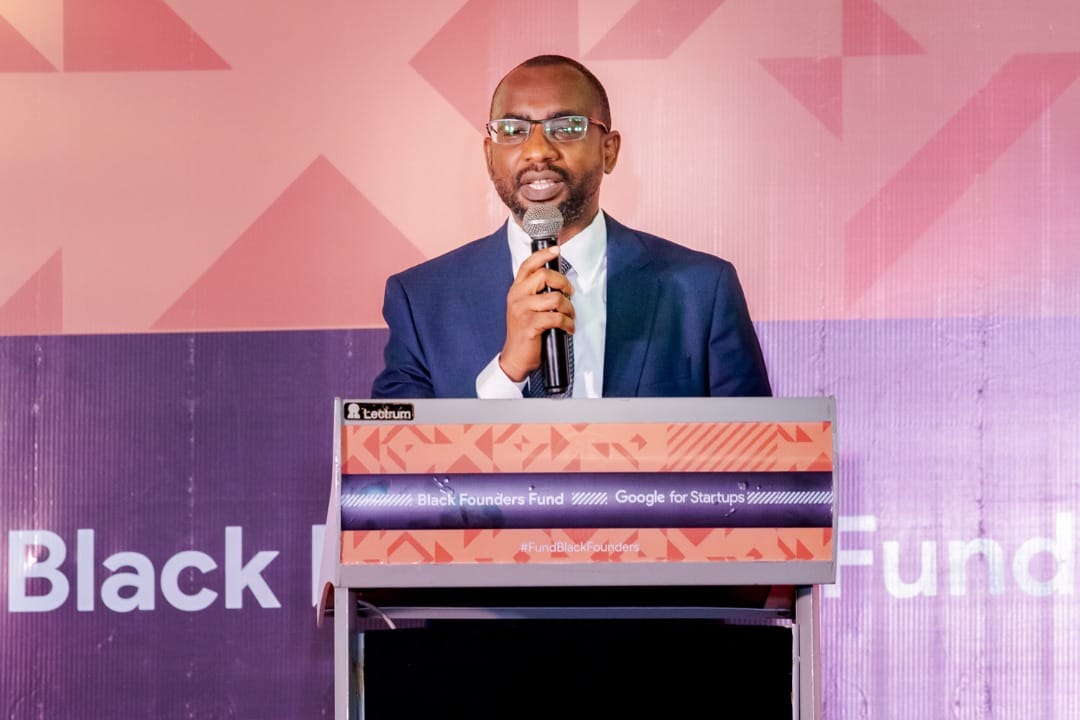
As Nigeria moves to harness the potential of its digital economy through co-created regulations and provide enabling environment for growth, attraction and protection of investment in the sector, the Director General, National Information Technology Development Agency (NITDA), Kashifu Inuwa CCIE, has said that the recently passed Nigeria Startup Bill by National Assembly will help institutionalize legal frameworks that will enhance the growth of startups easily, quickly and conveniently in the country.

Inuwa stated this while delivering a Keynote Address at the Google Black Founders Fund in Africa 2022 Launch Event, which took place at Transcorp Hilton Hotel, Abuja

The DG noted that part of the challenge being faced by startups especially in Africa is legal backing. According to him, starting and growing businesses in Africa used to be a big challenge, but with such Bill in place, it will be easier to start a business.

Speaking on the importance of the event, Inuwa said the gathering is an opportunity for startups to get funding and start a business. Also, it is coming with other incentives like the training Google offers which can be accessed via their Cloud.

While affirming government’s commitment to the growth of digital economy in Nigeria, Inuwa said “we believe our own responsibility is to come up with policies that can enable a level playing field, and the government has been doing a lot in this area, starting with expanding the mandate of our ministry to cover digital economy, and the ongoing implementation of National Digital Economy Policy and Strategy for a digital Nigeria, which outlined its strategic pillars that are key to the ecosystem.”

“We are currently working on a project called “Talent Gap Assessment”, because we believe talent is the people side of technology. In Africa, we cannot compete with the rest of the world in terms of hardware and any technology infrastructure, but when it comes to talent, we have a competitive edge over the rest of the world.

Advising the Startups to have it in mind that technology is making things easier, Inuwa noted that customers’ demand is changing rapidly, so they should envisage how human lives will be tomorrow and come up with innovative products that will be sellable in the future market.

“Don’t waste your time on what is happening today, the problem of today may be irrelevant tomorrow. Focus on Emerging Technologies and change the way we do things in this world. What helps you to succeed today may not help you succeed tomorrow.”

“Try and turn your products into services because the world is moving to a service platform markets. You will make more money in service than in products. It is easier to provide a service in Africa because of our challenging infrastructure. Let us explore that, that will help us to excel,” he added.

He assured that the government is ready to partner with people or organizations like Google and the ecosystem in general, especially five key critical stakeholders needed on board to build a strong ecosystem; Entrepreneurs, Higher Institution, Corporate Organisations, Multi-national and Government.

“Entrepreneurs brings idea, higher institutions provide human capital development, corporate organisations absorb products, and government’s role is basically in the policy-making and intervenes in a situation whereby there is shortage in unserved and underserved areas. This is why the government came up with the start-up bill which is also going to come up with a seed funding that can help with early-stage funding as well,” he noted.

Inuwa thanked Google for the opportunity provided to African startups and also encouraged other multi-nationals to look at how they can help the African startups ecosystem with funding, adding that it is going to be a win-win situation, the more startups in Africa, the more digital offerings, the more market they will create for the multi-nationals.

On his part, Mr Adewolu Adene, Government Affairs and Policy Manager, Google Nigeria, applauded the Nigerian Government for the support it provides on easy system, and contributing to their data in terms of physical incentives and the registration process of Corporate Affairs Commission.

He said, “We are really grateful for the support that we have been getting from policy-makers and all the forces behind. We have done a lot to get to this point and we hope that we can continue to do even more to take us further such that we are able to deliver to the respective mandate.”

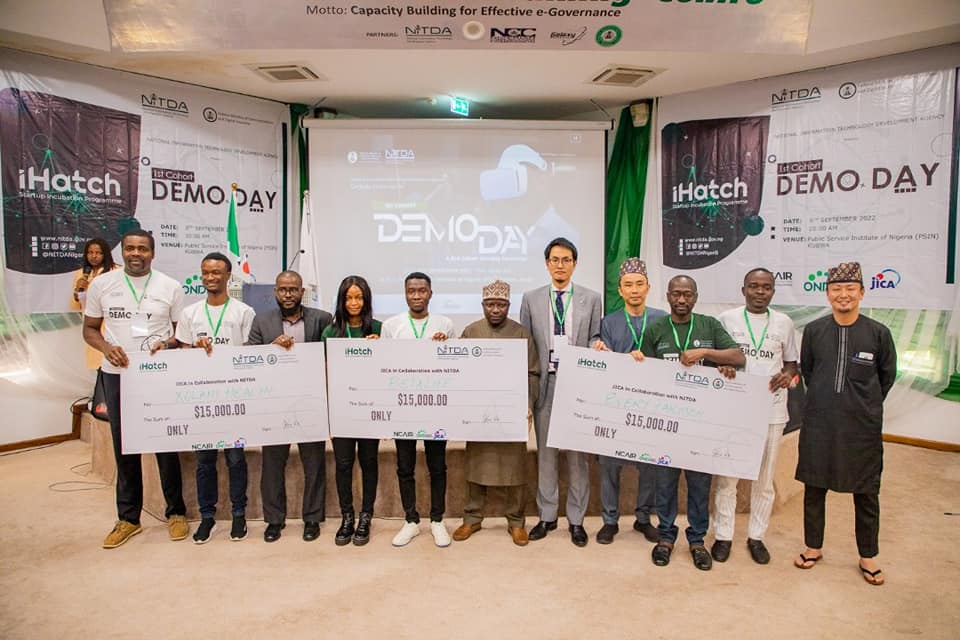
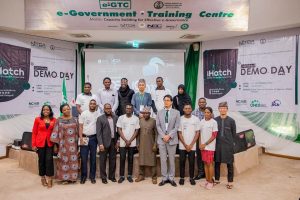
As part of efforts toward sustaining the promotion and growth of digital innovation and entrepreneurship derived from the seven (7) pillars of its Strategic Roadmap and Action Plan (SRAP) 2021-2024, the National Information Technology Development Agency (NITDA) through Office for Nigerian Digital Innovation (ONDI), a subsidiary of the Agency, in partnership with Japan International Corporation Agency (JICA) held Idea Hatch (iHatch) 1st Cohort Demo Day with a commitment to work with relevant stakeholders and partners in implementing programmes and initiatives that will accelerate innovation and provide the much-needed jobs for Nigerian youths.
The Director-General of NITDA, Kashifu Inuwa CCIE, represented by National Director of the National Centre for Artificial intelligence and Robotics (NCAIR), Engr. Ya’u Garba, lauded the Startup Incubation Programme which he described as a vibrant demonstration of the importance of collaboration for the promotion of innovation and entrepreneurship in Nigeria’s digital economy.
He said, “The partnership with JICA in the implementation of the iHatch programme is part of our initiatives to strengthen the tech and innovation ecosystem for the creation of more IDEs that will invariably contribute to creation of jobs for our teeming youth and the prosperity of our country”.
Inuwa expressed hope that the programme would go a long way in nurturing the entrepreneurial spirit of young innovative Nigerians to catalyze the Nigerian digital economy to the next level.
“This is to increase the number of Innovation-Driven Enterprises (IDES) viz a viz sustaining the growth of Nigeria’s digital economy.”, the DG asserted.
Inuwa, who gave a comprehensive overview of the different processes during the incubation period noted that over five thousand (5,000+) entries were received in the countdown to present moment.
“The number was pruned down to 8 startups, comprising a Founder and Co-Founder for each startup, after undergoing two levels of rigorous selection process conducted by a panel of 10 judges, constituted of experts from diverse areas of technology and innovative entrepreneurship.”
“The selection process assessed the startups’ ideas based on the criteria of profitability, scalability, social impact, idea technique, competitive advantage, experience, and a clearly defined future roadmap”, he added.
According to Inuwa, in the course of the programme, the startups benefited from free virtual and physical interactive lectures with experienced mentors, free workspace, mentorship meetings with tech professionals, pitch deck enhancement, and networking opportunities, and four startups that were initially not legally registered, successfully registered with the Corporate Affairs Commission (CAC) while work is in progress on the prototyping and Intellectual Property (IP) registration of their business ideas.
Inuwa maintained that the Demo Day also marks the inauguration of the Second Cohort of the iHatch Incubation Programme.
While appreciating the Honourable Minister of Communications and Digital Economy, Professor Isa Ali Ibrahim (Pantami), for facilitating the partnership between the Japanese and Nigerian governments and for making the iHatch programme a reality, Inuwa also appreciated the Japanese Government, through the Japan International Cooperation Agency (JICA), for keeping faith in the highly impactful partnership.
“Flowing from this partnership, NITDA and JICA conceptualised and designed the iHatch, a 5-month free intensive incubation programme executed by the ONDI and hosted within the National Centre for Artificial Intelligence and Robotics (NCAIR).”
“Essentially, the programme is designed to help Nigerian entrepreneurs refine their business ideas through a series of coaching, lectures, and bootcamps to generate scalable and adaptable business models in the country”, he noted.
Referencing Statistic where Nigeria is reported to have an estimated 3,300 startups in 2020, which is highest on the African continent; the NITDA Boss stressed that Nigerian startups have continued to attract more investment than other countries on the continent, with a number of the startups raising about USD$600 million in the first quarter (Q1) of 2022.
“The top ten startups that attracted the funding are Flutterwave ($250 million); Moove ($105 million); ThriveAgric ($56.4 million); Reliance Health ($40 million); Bamboo ($15 million); Credpal ($15 million); SeamlessHR ($10 million); DrugStoc ($4.4 million); Casava ($4 million) and Sudo Africa ($3.7 million). These clearly indicates the vast potentials that abound within Nigeria’s tech and innovation ecosystem”, Inuwa averred.
Meanwhile other speakers including the Chief Representative, JICA Nigeria, Susumu Yakzorio and the AG. National Coordinator, ONDI, Yakubu Musa were optimistic that the programme will inspire Nigerians to become active players in the global innovation-driven market.
Highpoints of the event witnessed eight innovators including e-dokta, SolutionMed, Authentic QRTech, EveryFarmer, XTID Network, Afrinet Powertech, Beta life, and Xolani Health who took turns to pitch their solutions with Xolani Health, Evlvery Farmer and Betalife clinching the first, second and third positions respectively.
The winers were awarded the sum of $15,000 each, courtesy of JiCA.
The Demo Day also signaled the end of the first cohort and inauguration of the Second Cohort of the iHatch Startup Incubation Programme; with the key players hoping that the third cohort would be extended across the six geopolitical zones in Nigeria.


In this interview with the top executive of NowNowDigital Systems  Limited, Oyenike Owomoyela who is the Head of Growth at NowNow, a financial technology (FinTech) firm based in Lagos. She talks about their strides in the fintech ecosystem such as the launch of their debit cards and virtual cards for their customers. She spoke of the impact the apex bank; the Central Bank of Nigeria (CBN) has made in the sector and how thy have made their API available for fintechs to use. Anthony Nwosu captured this in this exclusive interview. Oyenike is an expert in Financial Inclusion, Mass Retail & Youth Banking, digital sales products and loans, SME, process improvement and innovations to increase digital adoption by customers for seamless customer onboarding and retention via USSD, APS and Web.


Tell us the mission behind NowNow as a fintech firm?  

Our mission as a leading African B2B and B2C FinTech company is to deliver best in class financial services to SMEs, Agents and Consumers alike. We have a passion to deepen financial inclusion and provide job opportunities to the unemployed youths in Nigeria. We are a mobile bank that gives you control over how you spend your money. Be the Boss when you send money, receive money and pay bills for everyday essentials such as recharge card and data, insurance, electricity, shop online and instore-all in one place!

What informed the name NowNow?

We wanted to resonate first with one of the country’s local languages; Nigerian Pidgin English, what NowNow means in pidgin is to make haste or get something done instantly. The name also connotes that we are a fast-paced technology company that offers efficient services with speed! Our mission is to be a leading African B2B and B2C FinTech company whose mission is to deliver best in class financial services to SMEs, Agents and Consumers alike. We are building the world’s best technology that digitizes cash payments and provides financial empowerment for a better life for everyone.

Your slogan is “The New Way to Bank”, how has the journey been over these years?

We wanted to play on the double words ‘NowNow’ hence the slogan. Also, we realized there were a lot of negative sentiments with brick-and-mortar banks which included crowded banking halls, non-presence of bank branches at remote locations, slow response to customer complaints and resolution of issues. We wanted consumers to believe there is a new digital bank that will ensure they have control over their finances 24/7. Our customers resonate with the New way to bank and we have seen a steady increase in the adoption of our products and services.

Nigerian Fintech ecosystem can be said to be pretty busy, maybe one of the busiest in the continent, what are the unique things that set you apart from other players?

One thing we have done right in NowNow is to gather experienced professionals from across the world in the FinTech and Financial Services space hence we have a global view of what we need to do to achieve our goals as an organization. We are also focused on agile and adaptive technology and have a presence not only in the urban centers but rural communities also. We offer financial literacy tools as well as business solutions to all our consumers and merchants as a whole and have empowered a lot of youths and the unemployed through our agency banking model.

Opening an account in minutes is one of your selling points, how and what are you doing to ensure compliance with CBN regulation in the area of KYC?

Absolutely, this has been one of our major achievements; fast and seamless onboarding. What we have also done is to leverage API integrations with NIBSS and other 3rd party providers to ensure that we are opening quality wallets and profiling customers in line with the CBN 3-tiered KYC policy. Our Compliance team is also doing a lot at the backend to ensure transaction monitoring takes effect and processes related to KYC upgrades are done as at when due digitally. We also carry our EDD on transactions when the need arises.

How many downloads are we, looking at present from Nigerians?

We are aspirational when it comes to our consumer app, hence, we are on track to hit more than 1 million downloads by the end of the year. Yes, we know our competitors have well over that amount but what is paramount to us is not just the downloads but retaining those users to be loyal consumers for the long haul. Here we strongly believe in offering world calls financial services to people. We might not have millions of downloads yet but we are looking at offering seamless services to many people and these people will be with us on a long haul.

What is your market share in Nigeria, and do you have footprints in other African countries?

We think of ourselves as an embedded finance business, no longer a start-up. With that being said, it is part of our mission statement to have digital footprints all over Africa and really make a difference wherever we go. However, more information will be unveiled as we commence operations in more countries in the near future. We are looking seriously at the sub-Saharan fintech market. We have the expertise and the traction.

Some of the online banks do give debit cards, have you ever thought of that?

We recently had a soft launch phase of our Naira debit Mastercard in early August 2022 and we already have over 2000 active cards. We also have a virtual card which most of our consumers currently use for online transactions. So, we can say that we are abreast with the technology trends in the country. We do give out cards for those that love using cards but our strength also is in cardless transactions.

Do you think that the CBN is creating the enabling environments for fintech like yours to thrive?

In affirmative, the Apex bank created licenses that FinTechs can explore for financial services businesses all through. CBN believes that FinTechs are key actors in achieving National Financial Inclusion goals with Technology, Innovation, Speed and Scale. They also created a sandbox environment for product testing and innovation.

What are the challenges that you face in this business?

There are various challenges but I will mention the items that have the most impact: The rapid changes in macroeconomic landscape and terrain, upsurge and threats of competitors in various shapes and forms, shortages of skilled human capital, infrastructure not supporting scale i.e. internet penetration and switching infrastructure, insecurity and lastly, lower margins and ROE inhibiting access to capital (equity or debt).

What do we expect from NowNow this latter part of the year?

A few things! Firstly, our card campaign, which is aimed at our B2C customer segment – a project that we have been working on extensively for quite some time. We also have a new product launch to tackle the SME segment in Nigeria, which has one of the largest footprints of SMEs in Africa. We want to empower this segment by creating a digital platform that moves them from offline to online, provides access to market channels as well as financial capabilities, and ERP solutions. All these and many more are in the pipeline to really propell business owners to the next level of exposure and success. We will begin to roll out these products as we progress.


One thing we have done right in NowNow is to gather experienced professionals from across the world in the FinTech and Financial Services space hence we have a global view of what we need to do to achieve our goals as an organization. We are also focused on agile and adaptive technology and have a presence not only in the urban centers but rural communities also.


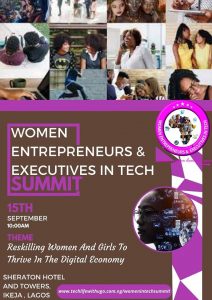
As the world is getting highly digitalised which has brought the narrowing of gaps between the roles each gender play in the global stage, Nigeria inclusive. Women in the country have been advised to take up roles that will add value in their lives and that of the family. Technology has been seen as a bridge that connects productivity and progress in any society. Women in Nigeria will be meeting in the annual seminar and conference to discuss, network and proffer solutions on how to drive technology to a higher level of appreciation from the female business manager perspective.

The summit known as “The Women Entrepreneurs and Executives in Tech Summit” , this is an ANNUAL event geared towards generating new ideas on how best to encourage the womenfolk (from the girl-child stage to the corporate woman) in strongly keying into and playing outstanding roles towards closing the technology gender gap.



Speaking on this event, the convener of the summit, the delectable media executive, Success Ugo said “Unarguably, women in contemporary times; are trying their best to excel in every facet of life, yet it has become extremely important that as the global space is now technology-driven, efforts should be made to ensure that the average woman is not left behind at any stage. It is in this light that the proposed Summit is planned, among other things; to inculcate in the young secondary school girls, the spirit of being technology conscious and the need to make right choices in seeking admission into the universities or other tertiary institutions when the time comes. They need to be properly encouraged and guided in the choice of subjects that would lead them into studying technology related courses.”

Ugo added that “The Summit will also bring together stakeholders especially women in major economic sectors, policy making, regulatory services, business, fashion, science , media arts, entertainment, education and health to learn more how women can take advantage of the opportunities offered by the technological age to improve their lives, careers and businesses.

Even though technology has been with us prior to the outbreak of the Corona Virus as a pandemic, not many people had believed in the possibility of hosting virtual corporate conferences, meetings and other social engagements successfully and achieving great mileages at minimal costs, all courtesy of technology. The proposed Summit would therefore, be an avenue to discuss further how best to maximize such opportunities even in post Covid-19 era.”

Apart from bringing women together as role models to the young ones and captains of industries. The occasion would also feature the honoring of some personalities/corporate bodies with awards for their outstanding contributions in the field of technology over the years.This years events is themed: RESKILLING WOMEN AND GIRLS TO THRIVE IN A DIGITAL ECONOMY. The date and venue for the event are as follows: Kindly register with the form below to participat. The date is Septmber 15, 2022 at SHERATON HOTESL AND TOWERS, IKEJA GRA-LAGOS.

ANTHONY EMEKA NWOSU


Prostate cancer is the most common non-skin cancer diagnosed in men, and the second leading cause of cancer deaths in men, after lung cancer.

The prostate is a gland in the male reproductive system located just below the bladder and in front of the rectum. It is about the size of a walnut and surrounds part of the urethra (the tube that empties urine from the bladder). The prostate gland produces fluid that makes up part of semen.

According to the National Cancer Institute (NCI), almost all prostate cancers are adenocarcinomas (cancers that begin in cells that make and release mucus and other fluids). Prostate cancer often has no early symptoms. Advanced prostate cancer can cause men to urinate more often or have a weaker flow of urine, but these symptoms can also be caused by benign prostate conditions.

Because of effective screening options for prostate cancer, the disease is often caught before it spreads, and as a whole, survival rates are good for this type of cancer.

The NCI’s Surveillance, Epidemiology, and End Results (SEER) Program estimates that more than 268,490 men in the United States will be diagnosed with prostate cancer and 34,500 men are expected to die of the disease in 2022.

Prostate cancer is more common in older men. It is more likely to occur in men with a family history of prostate cancer and in men of African-American descent. Other risk factors include smoking, being overweight, and not getting enough exercise. In the United States, about 11 percent of men will be diagnosed with prostate cancer at some point during their lifetimes.

September is Prostate Cancer Awareness Month.


AACR