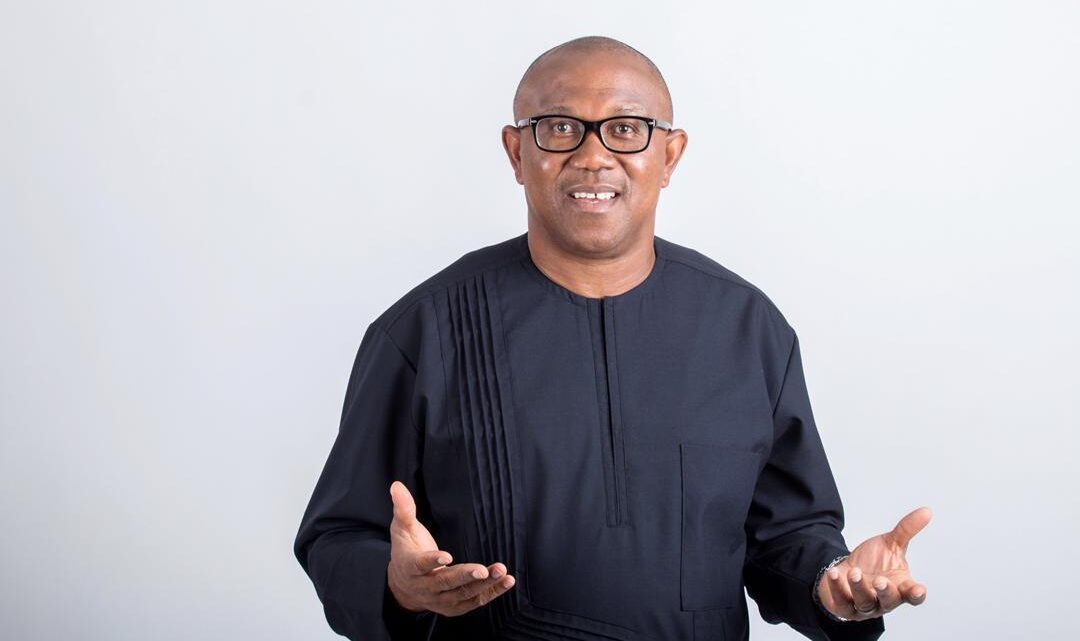
The political space in the country today is getting highly competitive and the question on the lips of every Nigerian is; Who will be the Nigerian President come 2023. A lot of the political gladiators and juggernauts have started marshaling out their plans and laying bare their blueprints on how to secure votes. With lots of them promising Nigerians a lot of goodies – which is expected. With the three major political contestants represent the three major Parties known as Labour Party, PDP and APC which is the ruling party. A Nigerian Man of God, Prophet Felix Ekene whom God has used to touch lives of people in faraway Ghana has seen a vision that the Labour Candidate, Peter Obi is destined to be the new president of Nigeria come 2023, but there are challenges he must tried to surmount and warned that nobody should touch his life.

In his message during one of his weekly ministrations in Ghana, He said that ministration that a lot of people want to know who will be the next president of Nigeria in 2023. In his word he opined that ” As of today in the spiritual realm that Peter Obi is standing as president of Nigeria come 2023, but he foresawa problem coming and if he overcome the problem, then he will manifest physically in 2023 as president of Nigeria.”

Prophet Felix added that ” that no one should attack him as he is not a support to any political party saying “I don’t know any of them, am a prophet of God, I say things the way I see it in the spirit”.

“There is so much diversity, there is so much nepotism in the system and justice has become elusive. There should be equity and fairness in the coming up election He therefore urged Nigerians and Christian bodies to pray for the right candidate to emerge. God reveal to redeem but you have a role to play. Matthew 6:33. Isaiah 48:3. 1Corinthian 2:10-16”, he concluded.

The candidate of Peter Obi has been gaining momentum and widespread acceptance due to his honest, simplicity and sincerity to political and social life. Peter has shown that he has the capacity to take the country to the next level, this was known when he was the governor of Anambra state. He revolutionized the state and turned the fortunes of the state around, economically and educationally. The greater Nigerian populace have asked him to replicate this magic at the national level. Hie emergence have made a lot of political stakeholder uncomfortable.

ANTHONY EMEKA NWOSU
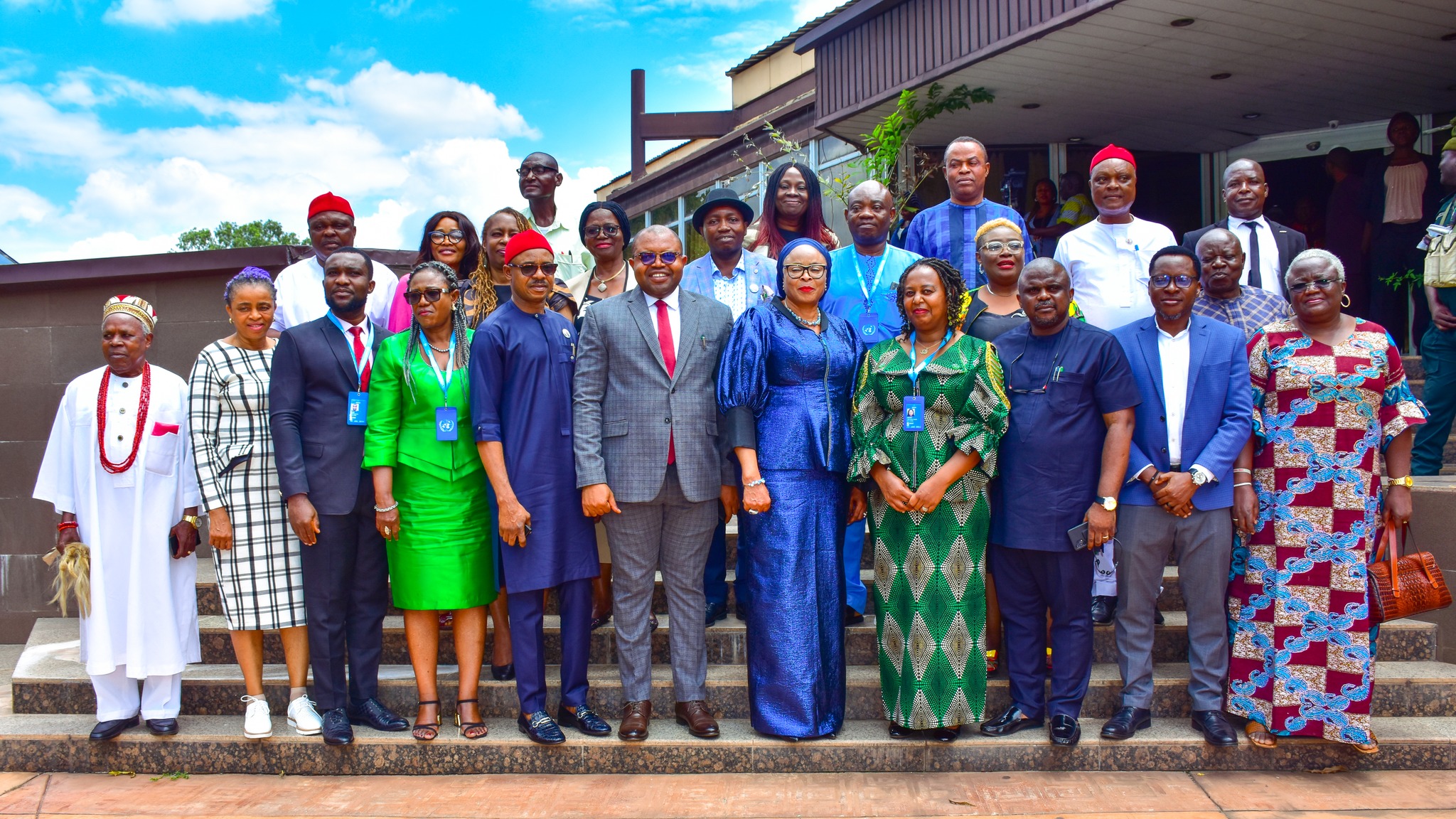
 

Earlier this week, the Enugu State Ministry of Budget and Planning, in collaboration with UNICEF, held a meeting with nutrition stakeholders including; government officials, policymakers and development partners.

The UNICEF-supported platform emphasized the importance of nutrition and the need for the government’s commitment towards the implementation of the ‘State Multisectoral Plan on Nutrition’ that is in line with the implementation of the National Policy on Nutrition.

Mrs. Juliet Chiluwe, Chief of UNICEF Field Office in Enugu, took advantage of the occasion to raise awareness about Enugu State’s 15% stunting rate, which results in approximately 147,816 children being shorter than expected for their age, with associated poor cognitive functions. She also noted that only 11% of children aged 0–6 months are breastfed exclusively, stating : “Unfortunately, malnutrition has become a silent emergency in the state, and this silent emergency receives far too little attention”.

When kidnappers arrived at a certain school in one of Nigeria’s northern states recently to abduct students, they failed! Their targets were simply nowhere to be found when they got to the school!


“That happened because the students applied the knowledge they gained from school safety training,” explained Hassan Abdullahi, chairman of the institution’s School-based Management Committee (SBMC).

“Don’t ask me what they did because I won’t reveal that for obvious reasons,” said Abdullahi when asked.

But what the students did to avert the attempted attack on their school might be helping restore confidence in school attendance, notes Abdullahi.

“I’m not saying that students can confront the abductors, but they have skills on how to respond to attacks, and this is important.”

Abubakar Surajo, from north-west Nigeria, was one such parent. His son, Ibrahim, 13, was abducted at school in late 2020. Some gun-toting men had invaded Ibrahim’s school about midnight and abducted him and his classmates. They spent one week in captivity before they were rescued.

“Ibrahim is not going back to that school, or indeed any other school soon,” his traumatized father had said.

Attacks on educational facilities are a grave violation of children’s rights

But the confidence of parents to see off their children to school despite the threats of school attacks is returning, said Suleiman Alhassan, principal of a junior secondary school whose school is among several that have benefitted from a training on Crisis and Disaster Risk Reduction and School Safety, supported by UNICEF.

The first known abduction of school children in Nigeria took place in 2014 when 276 girls were taken from the Government Secondary School in Chibok, Borno State, north-east Nigeria.

Since then, attacks on schools have continued to recur.

Between 2020 and 2021, there was a spike in attacks on schools in north-central and north-west Nigeria, severely impacting learning. Learning for 5.3 million children was disrupted when 11,536 schools were shut for a specific period in 2021 by the authorities as a precautionary measure to avert more attacks.

Some parents whose children were affected said they would not allow their children go back to school.

With funding by the Foreign, Commonwealth and Development Office of the UK for the Girls’ Education Project 3, UNICEF has supported the training of learners, teachers and school-based management committee members in several schools on school safety, especially on how to respond when their schools are attacked.

Following the training, schools have established school safety task teams; developed school Emergency Preparedness and Response Plans; while community-level sensitisation have also been carried out, including the development of school safety guidelines which will soon be disseminated.

“Attacks on educational facilities are a grave violation of children’s rights,” says Peter Hawkins, UNICEF Representative in Nigeria. “Such attacks deprive children of the right to an education. They make children fearful of going to the classroom, and parents afraid to send their children to school. Schools must be safe places to study and develop, and learning cannot become a perilous endeavour.”

As the world marks this year’s International Day to Protect Education from Attack, analysts and education stakeholders have reiterated calls for authorities in Nigeria to find a permanent solution to attacks on learning institutions. Stop-gap measures, and palliatives are not good enough, they say.


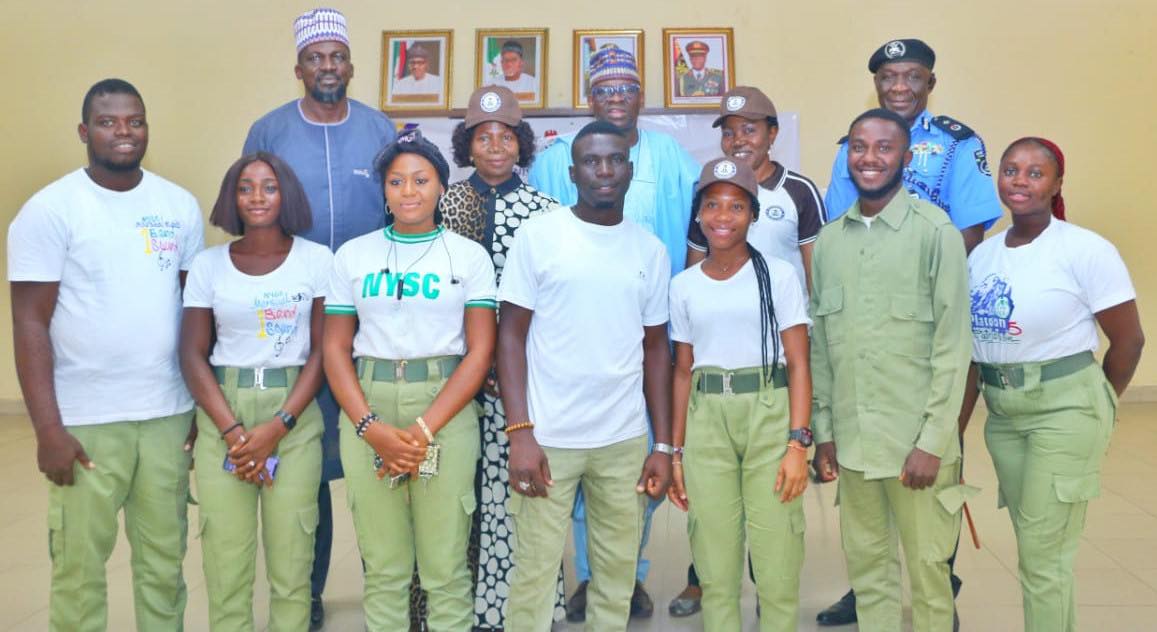
The Honourable Minister of Police Affairs, Dr. Muhammad Maigari has sought the support and patronage of the Police Public Complaints Committee (PPCC) in the North East Zone to help in building the nexus of cooperation between citizens and the Police.

This was made known to the public during the North East sensitization campaign on Police Public Complaint Committee held at the Command Guest House, Obieneu Barracks Bauchi state.

The Minister in his address read by AIG Zone 36, AIG Audu Adamu Madaki stated that Governments’ resolve to entrench Community Policing through collaboration with the community, adherence to the rule of law, and respect for human rights necessitated the resuscitation of PPCC in 2019.

In his words, “expectedly, this will promote the elimination of apathy and discourage resort to self-help over acts of an infraction by a few non-conformist personnel of the Nigeria Police. It is hoped that this initiative will help in building the nexus of cooperation between citizens and the Police, to enable the police to perform its statutory duties of ensuring safety and maintenance of law and order”.

He pointed out that government remains committed to promoting issues relating to welfare, strict adherence to professionalism, and modernization of critical policing enablers to sustain the ongoing fight against violent crime in Nigeria.

According to him, ’the PPCC which has since become operational, is thus serving as additional layers, for citizens to seek redress. Inauguration of the resuscitated PPCC on 7th April 2021, is a sequel to Mr. President’s directive to breach gaps between the populace and the police, to elicit confidence and mutual cooperation”.

Dingyadi posited that the overriding objective of the PPCC is to serve as a platform that oversight on activities of Police Personnel viz-a-viz their interaction with the public. He added that the sensitization campaign on Police Public Complaints Committee (PPCC), is in furtherance of our earlier sensitization in Lagos, Sokoto, Kogi, and Calabar for the South West, North West, North Central, and South-South Geopolitical Zones respectively.

He said, “the enormous benefits of deepening realization of the systematic shift from state-centered security approach to collective security paradigm, through enhanced welfare, police reforms, rebuilding of critical policing infrastructure to meet current security concerns, underscores the need for collective support for our policing system in Nigeria”.

In his goodwill message, the Governor of Bauchi State, Senator Bala Mohammed represented by the Special Assistant (Special Duties), Hashimi Yakubu pointed out that the generality of Nigerians needs to be educated on the duty of police as it affects their rights and privileges.

He added that there is a deficit of trust and confidence by the public which was created by a few bad eggs among the police as obtained in other organizations that drag the name of the police into the mud noting that there are many responsible and patriotic officers in the Nigeria Police Force.

The Inspector General of Police, IGP Usman Alkali Baba represented by the Deputy Commissioner of Police (Operations), DCP Bello Shehu stated that the initiative is timely and would enhance and enrich accountability in the nation’s policing system, especially at such a crucial time when there is the need for a standard and functioning police service.

He saluted the courage and vision of President Muhammadu Buhari and the police ecosystem for the unrelenting efforts in ensuring an absolute drive towards reforming the police to conform to international standards and global best practices.
Bolaji O. Kazeem


Minister of Science, Technology and Innovation, Dr. Adeleke Momora has said that rapid socio-economic growth of the African continent cannot be achieved without collaboration of African countries.

Dr. Adeleke said this today when a delegation from Tanzania Commission for Science, and Technology led by the Director-General of NOTAP, Dr. Dan-Azumi Ibrahim paid a courtesy visit to him in his office, Abuja.

According to him, National Office for Technology, Acquisition and Promotion, (NOTAP) has the mandate of Technology Transfer and acquisition in Nigeria.
The Minister further stated that Nigeria is operating in a global village where no one is an Island to himself stressing that African nations should synergize, share knowledge and experiences in order to move the continent to greater height.

He noted that African countries have common history, ancestry, culture, and challenges which will enhance easier synergy for the economic emancipation of the continent.

According to Dr. Adeleke, African is in the age of 4th Industrial Revolution which is Technology driven and it involves the concept of Science , Engineering and Mathematics (STEM) pointing out that most countries of the world are moving from resource based to knowledge acquisition economy, necessary for the desired development and progress of Africa.

To this end, Dr. Adeleke said that the Forum for African Research Innovation (FARI) was launched recently and Nigeria will be privileged to host the maiden edition in October, this year.

Earlier, the Leader of the Delegation, Director-General of NOTAP, Dr. Azumi Ibrahim informed the Minister that after due consultation with Tanzanian Commission for Science and Technology the Agency identified areas of collaboration which will be of mutual benefit to both countries and decided to lead them to the ministry.
Speaking, the Director-General, Tanzanian Commission for Science and Technology, Dr. Amos Muhunda Nungu informed the minister that the aim of the delegations visit is to seek for collaborate in Technology Transfer with Nigeria.


You know Lagos is a funny place! A lot of folks in Lagos are annoyingly religious and stupidly fanatical. I get to see them daily! I was going to office yesterday and if you know Lagos driving can be hellish! You have many devils to avoid such as LATSMA, VIO, POLICE, FRSC, OKADA, KEKE, Korepe, Yellow Buses, Molue and maybe Agbero! So sometimes to regain sanity you do taxi or last mile which is Keke! Now in Keke from Computer village to Oregun (Bikkingsway) a woman in her 50s said thag it is not her time to die yet and she started doing these pentecostal mumbo jumbo! I got so irritated and I told her madam you no be small pikin again! That they horn kids today they die tomorrow! That we should learn to live our lives as if everyday is the last! They should stop this madness of I will not die! God can call us anytime in life! I lost my mum at 40yrs..such a sweet woman! It was her time to leave and she left making impact in our lives! Jesus died at 33yrs! Muhammed not even upto 75yrs! So these pentecostal should stop these thihgs I love Muslim on how they treat the dead.

You know at a stage in life you start seeing things from different angles. I was raised in a catholic home, I am still a catholic at heart, I do receive communion once in a while if I go to Mass but I am not a fanatical catholic. We have lots of them around! They have this huge chalet hanging around their necks and have tons of holy water to ward of the evil spirits. They believe that! I think thag is good for them.

Married a pentecostal, nice experience, dteted getting used to pentecistal stuff though I find it a bit funny and still I do… You know one thing about them is lack of uniformity and cohesion amongst them! Then the fanatics will be there! Those that do not drink not smoke… And I do drink yiu know! I love Trophy beer… The taste is heavenly and I quit smoking few years ago! So, in their face I am a sinner! Well, it is established that I can’t be a Born Again! For obvious reasons! It is too expensive! Born again wahala too much! They are judgemental and see everyone that is not a member of their church as a sinner! They can pray for so long and speak in tongue and me I don’t know how to pray that long or shout. I pray måx 15mins I am done!. Y God isn’t deaf and he can’t have me shouting fire fire fire like a pyromaniac! So I can’t be a born again! In short I am a sinner and I am comfortable with that.

Also, I grew up with the celestial church in owerri! The Cherubim at Zander was amazing! Their music was awesome and their dances were esoteric! Been there and have a lot of them as friend. The prophets, the holiee etc. In short I grew up selling 555 incense, Red, Blue and white candles! Mum has a shop and we sell those things to the celestial people… And having joined them in worship.. I must tell you the truth.. Their women can twert like hell… It looks as if the Lilith has possessed them when dancing. Their twerking will make Nicki Minaj and Tiwa Green with envy! In short going to Cele churches if you are person of the world, you might cum and get to cum without even touched due to their twerking… But they are such a nice folks.

Then as an igbo Mami don’t know how it happened, I am conscious of my culture and the need to understand thag those of our folks that died.. We call them Ndi Ichie while the oyibo call them ancestors and in Christianity they call them saints. Now, I have come to understand that the Ndi Ichie live on even after their demise. The concept of hell doesn’t even add up to me! It is a Abrahamic religion importation and that doesn’t talky with us. We Igbo do not believe in thag travesty. I don’t also believe in the hell issue personally. I think that providence will reward us as we live either we move to a higher plane or we reincarnate.

Now coming to that… I also remember growing up! I love reading, in our house we had library and I stumbled into a book by Ross Order and the Freemanson! Those books I can’t realise how I laud my hands on them,dis I borrow the most or did I find the best in archive but the fact is that I read up a lot and I was like 14yrs then! Was also in school. So I came to realise the purpose of life, the path and the eyes of horus and other spiritual enlightenment stuff. As I grow up, I realize that all religious proponents and dramatics personae like Krishna, Muhammed, Jesus, Abraham etc were all mesamagers of the Source or The Light or God! Now this level of spiritual enlightenment was refreshing and mostly all the religion have the same tenets and laws and the karmic laws are same everywhere.

When I read the book of Lobsang Rampa! A Buddhist monk explaining in five and sublime details the spirituality of souls and how we are on path then researched on NDE! The clinical and psychiatrist evidence of the bear dead experience and the concept of tunnel and tune of return! Then I realize that there is nothing to fear of after life only life right and do the right thing.

At the end of the day, most of these readings have elevated my conciousness! So most times when I go to churches and some preachers preach, I just sit down and laugh at them or I just listen to something they have to say and sift the one I want…

Anthony Emeka Nwosu

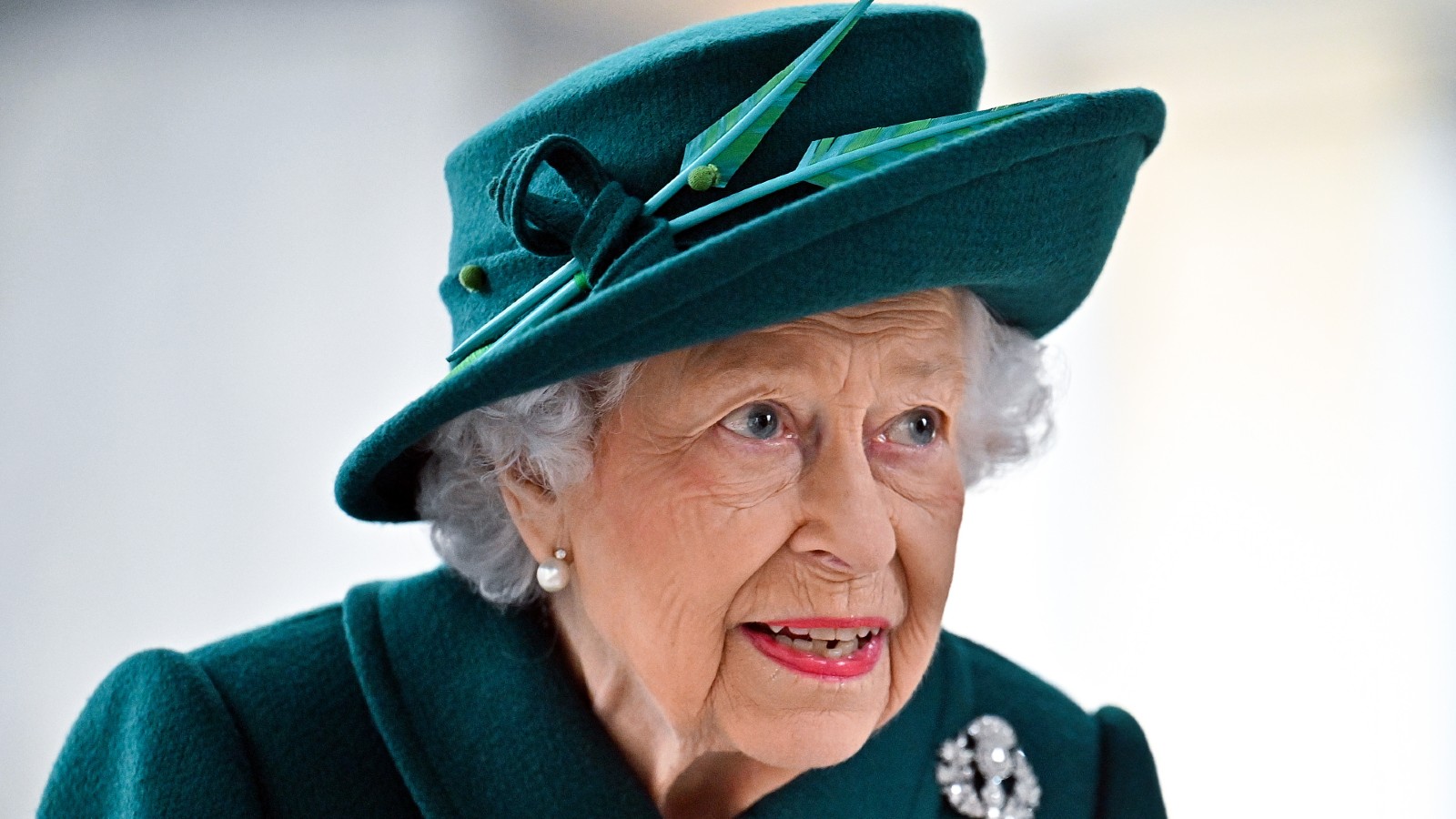
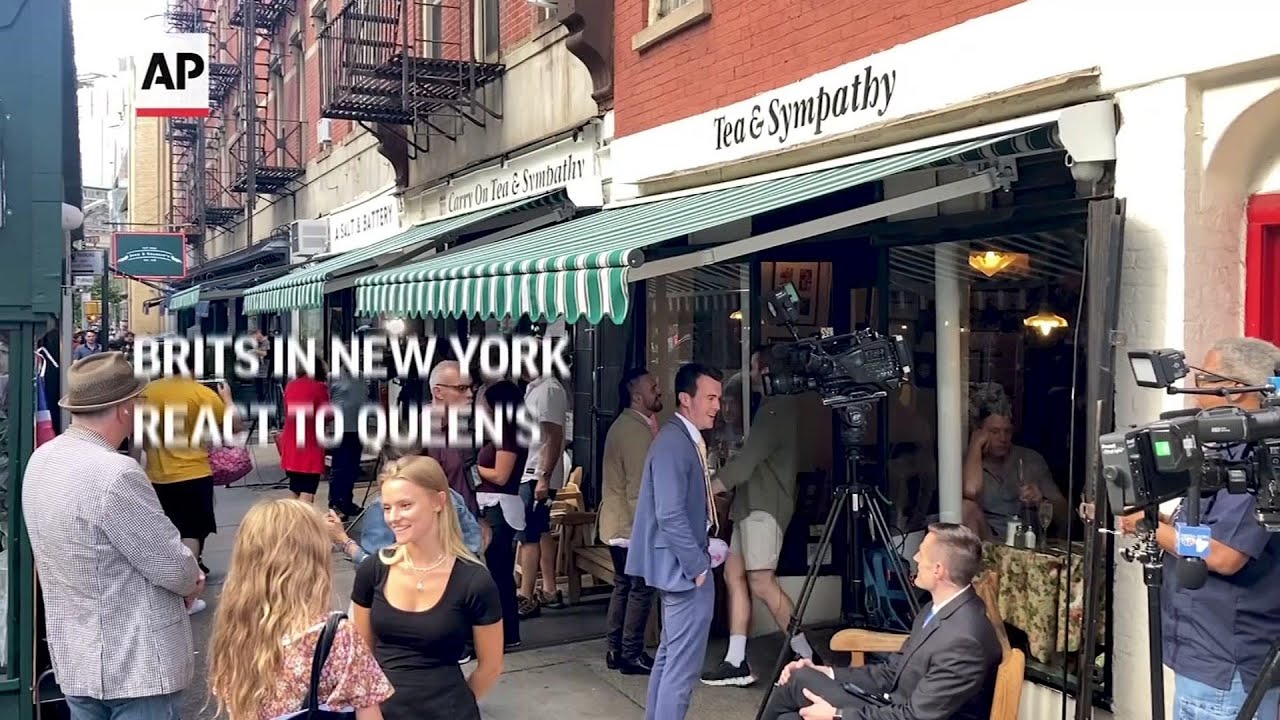
Across the globe, the death of Queen Elizabeth II has prompted reflections on the historic sweep of her reign and how she succeeded in presiding over the end of Britain’s colonial empire and embracing the independence of her former dominions.

Tributes to the queen’s life have poured in, from world leaders to rock stars to ordinary people — along with some criticism of the monarchy.

It was in Cape Town, marking her 21st birthday in 1947, that the then Princess Elizabeth pledged that her “whole life, whether it be long or short, shall be devoted to your service and the service of our great imperial family to which we all belong.”

The British empire soon crumbled, but Elizabeth managed to maintain a regal — if ceremonial — position as the head of the Commonwealth, the 56 nations of mostly previous British colonies.

“The Queen lived a long and consequential life, fulfilling her pledge to serve until her very last breath at the age of 96,” Cape Town mayor Geordin Hill-Lewis, said in a statement Friday. “She was an exemplary leader of the kind seldom seen in the modern era.”

As queen, Elizabeth was seen as endorsing the birth of democracies in former colonies in Africa where Black citizens previously had been denied basic rights, including the vote. When in glittering tiaras she danced with new African leaders in the 1960s and visited their capital cities, she burnished the new institutions.

When white-minority rule finally fell in South Africa in 1994, Elizabeth welcomed Nelson Mandela as a world leader. Her openly warm friendship with Mandela was enjoyed by him, and it gave her a new relevance.

“In the years after his release from prison, (Mandela) cultivated a close relationship with the queen. He hosted her in South Africa and visited her in England, taking particular delight in exploring Buckingham Palace. They also talked on the phone frequently, using their first names with each other as a sign of mutual respect as well as affection,” the Nelson Mandela Foundation said in a statement Friday.

“For Madiba (Mandela’s clan name) it was important that the former colonial power in southern Africa should be drawn into cordial and productive relations with the newly democratic republic of South Africa. For the same reason, South Africa becoming a full member of the Commonwealth again after its long apartheid-era absence had a special significance.”

ratio

Youtube video thumbnail

Fellow radical anti-apartheid fighter, Anglican archbishop of Cape Town Desmond Tutu, also enjoyed good relations with the queen, and his foundation paid tribute to her.

“Although ensconced in the pomp, ceremony and lifestyle of royalty and empire, in a world of profound inequality, she was a servant queen,” Tutu’s foundation and trust said Friday.

In contrast, a scathing view of the queen’s rule was issued by South Africa’s populist party, the Economic Freedom Fighters. The queen was “head of an institution built up, sustained, and living off a brutal legacy of dehumanization of millions of people across the world,” said the statement.

“We do not mourn the death of Elizabeth, because to us her death is a reminder of a very tragic period in this country and Africa’s history,” said the party. “During her 70-year reign as queen, she never once acknowledged the atrocities that her family inflicted on native people that Britain invaded across the world. She willingly benefited from the wealth that was attained from the exploitation and murder of millions of people across the world.”


SOURCE


The Nigerian Communications Commission’s Computer Security Incident Response Team (NCC-CSIRT) has identified five malicious Google Chrome Extensions that surreptitiously track online browser’s activities and steal their data.

According to NCC-CSIRT, the five malicious extensions which the McAfee Mobile Research Team earlier discovered are Netflix Party with 800,000 downloads, Netflix Party 2 with 300,000 downloads, Full Page Screenshot Capture Screenshotting with 200,000 downloads, FlipShope Price Tracker Extension with 80,000 downloads, and AutoBuy Flash Sales with 20,000 downloads.

The NCC-CSIRT said the five google chrome extensions identified have a high probability and damage potential and have been downloaded more than 1.4 million times and serve as access to steal users’ data. The telecom sector-focused cybersecurity protection team alerted telecom consumers to be cautious when installing any browser extension.

“The users of these chrome extensions are unaware of their invasive functionality and privacy risk. Malicious extensions monitor victims’ visits to e-commerce websites and modify the visitor’s cookie to appear as if they came through a referrer link. Consequently, the extensions’ developers get an affiliate fee for any purchases at electronic shops,” the advisory said.

In addition, the advisory stated that, although the google team removed several browser extensions from its Chrome Web Store, keeping malicious extensions out may be difficult. The NCC-CSIRT, thus, recommended that telecom consumers observe caution when installing any browser extension.

“These include removing all listed extensions from their chrome browser manually. Internet users are to pay close attention to the promptings from their browser extensions, such as the permission to run on any website visited and the data requested before installing it. Although, some extensions are seemingly legit, due to the high number of user downloads, these hazardous add-ons make it imperative for users to ascertain the authenticity of extensions they access.” the advisory stated.

Google Chrome extensions are software programmes that can be installed into Chrome in order to change the browser’s functionality. This includes adding new features to Chrome or modifying the existing behavior of the program itself to make it more convenient for the user. They serve purposes such as block ads, integration with password managers and sourcing coupons as items sent to a shopping cart.

The Computer Security Incident Response Team (CSIRT) is the telecom sector’s cyber security incidence centre set up by the NCC to focus on incidents in the telecom sector and as they may affect telecom consumers and citizens at large.


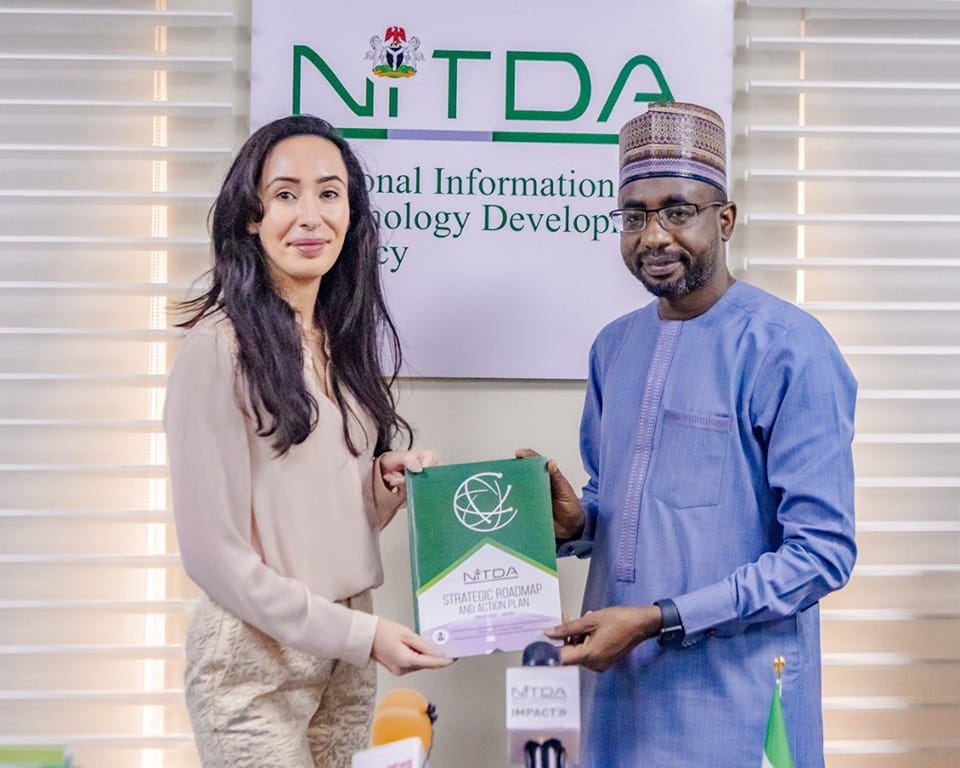
In furtherance of the actualisation of the digital literacy agenda of President Muhammadu Buhari’s administration, the Director General, National Information Technology Development Agency (NITDA), Kashifu Inuwa, played host to the Amazon representative in Africa and the Middle East, Narrimane Benakcha, in the company of her team from Anderson Nigeria, where discussions were centred around open-door policy in developmental regulation and digital services for the benefit of local operators.

The familiarisation visit to the NITDA’s Corporate Headquarters, Abuja, provided an opportunity for the DG to expatiate on the mandates of the Agency and its scope of operation in implementing the National Digital Economy Policy and Strategy for a digital Nigeria, and expressed concerns of a group of Fintech operators who were disturbed by the enormous cost incurred in accessing hosting services from Amazon Web Services (AWS), Microsoft, and other related services.

He said, “As a government, we have a cloud-first strategy. We encourage even the government’s Ministries, Departments, and Agencies (MDAs) to go to Cloud because it is easier, cheaper, faster, and convenient to deploy your services without the stress of overhead and other costs.”

Inuwa proposed self-sufficiency in terms of digital infrastructure requirements in the country, stating that, “no government in this world would prefer to be dependent on other countries when it comes to digital services, because our life today is centred around digital services.”

He urged Amazon and other multinational organisations to have a common interest in Nigeria, adding that the market is appropriate and foretells that Nigeria will be the next frontier in digital services, while postulated that digital services would thrive in Nigeria because of her youthful population.

“Africa has the fastest-growing population and one of the youngest populations in the world, with the fastest-growing broadband penetration and other factors that can accelerate digital business,” he added.

He, therefore, implored Amazon to consider investing in the data centre in Nigeria to support startups and other entrepreneurs, especially now that the government is creating enabling environment and leveling the playing field for everyone in the industry.

Inuwa further appreciated the fact that Amazon now has offices in Nigeria but said the country would benefit more if Amazon could collaborate with the government on areas that would enhance and support startups and innovators, while referring to Google’s recent selection of 60 startups across Africa where Nigeria got 23 slots in its Google Black Founders Fund (BFF) to enable the upscale of their ongoing projects.
According to Inuwa, the public sector policy, which is the National Digital Economy Policy and Strategy (NDEPS), has an ambitious target of digitising all government services with 98% of broadband coverage by 2030.

He noted that the Head of Civil Service is working with MDAs to implement the Electronic Management System (EMS) to ensure paperless documentation processes by 2030. All of these, he asserted, are already implemented at NITDA.

Inuwa affirmed that the government, through NITDA, is ready to learn from Amazon experience in other jurisdictions especially in policy and regulations.

“We are interested in building talents because it’s one of the major global challenges,” he noted.

He said NITDA is already working on the National Talent Strategy, training of 1 million developers in the next 18 months, and several digital capacity training programmes.

Amazon Web Services, Head of Data Policy, Africa & Middle East Ms Narrimane Benakcha appreciated the open-door policy of NITDA, while assuring that her organisation is ready to operate in Nigeria.


In today’s ever changing and dynamic world – Nigeria inclusive, there is a crucial need for businesses to be technologically relevant and on point. Many local nosiness in the country are finding it a bit cumbersome and hard to get the appropriate technology that will drive their businesses and deepen their productivity. In a nutshell, many Nigerian Chief Executive Officers  have constantly asked the critical question of; who do we outsource our information technology (IT) framework to that has the requisite expertise and skill? A question, NETCOM AFRICA, an indigenous ICT firm with global experience has constantly answered over the years with their innovative solutions that are in line with the global best practices.

From Enterprise Security to Enterprise Technology. And from Infrastructure Services,Managed IT Services and Strategy Analytics, NETCOM AFRICA has been able to satisfy their clients ver these years. This has made them receive accolades in the industry. The company said that “Since 2004, companies across Nigeria have been relying on Netcom to ensure that they are connected to the world. Over time, we have transformed to meet our clients demands with a host of leading solutions by partnering with local and global experts and OEM’s. Today we are the leading MSP (Managed Service Provider) in Nigeria with hundreds of companies relying on our expertise and leading solutions to help them navigate their digital transformation. The technology landscape is complex and ever changing, and we have a solid understanding of the problems today and the solutions that will drive your business into the future. We not only have the expertise and solutions to bring about fundamental change in the way you do business, but we have also taken that journey ourselves.”

Not yet resting on their oars literally, On the area of Cybersecurity and Cyber breach, We must bear in mind today that more than eight in every 10 organizations from Nigeria are currently experiencing cyber-security breaches, especially in public cloud. Globally cyber-crime has increased by 600% since the start of the Pandemic alone. NETCOM AFRICA has been able to bring solutions that will mitigate against these breaches and be on step ahead the criminals. They have in place Managed Cyber Security , Disaster Recovery and Backup. Also not forgetting their solutions in the areas of   Email protection, Email encryption, Endpoint protection,   Next Gen Firewall, Web security,Penetration testing and  MDM.

NETCOM AFRICA help organizations in their digital transformation and build up their business agility/continuity by deploying robust ERP solutions for them. These Enterprise Resource Planning (ERP) will assist organizations in the area of  Productivity and   Unified Communications.Having robust partnership with world acclaimed brands such as Zoho,Tally,Sage and Microsoft Dynamics. NETCOM AFRICA has one of the best support systems in the industry.

As of today, NETCOM AFRICA has been positioned to be the leading Managed Services Provider (MSP) & technology consultancy company in Nigeria, enabling successful results for people and organizations. This they have been able to achieve by offering technology consultancy services in Nigeria.

Anthony Nwosu.E


“The technology landscape is complex and ever changing, and we have a solid understanding of the problems today and the solutions that will drive your business into the future. We not only have the expertise and solutions to bring about fundamental change in the way you do business, but we have also taken that journey ourselves.”