FG To Obasanjo: Don’t Truncate Electoral Process

The Federal Government has urged former President Olusegun Obasanjo not to truncate the #2023GeneralElections with his inciting, self-serving and provocative letter on the elections.
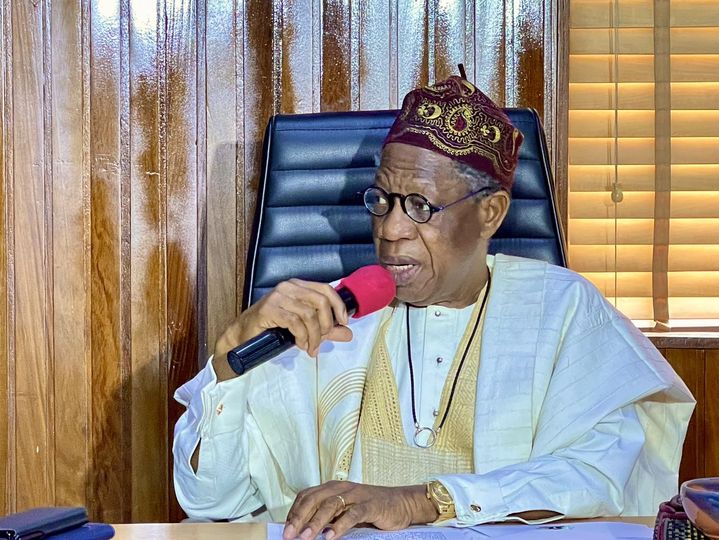
In a statement in Abuja on Tuesday, the Minister of Information and Culture, Alhaji Lai Mohammed, said what the former President cunningly framed as an ‘appeal for caution and rectification’ is nothing but a calculated attempt to undermine the electoral process and a willful incitement to violence.

The Minister expressed shock and disbelief that a former President could throw around unverified claims and amplify wild allegations picked up from the street against the electoral process.
”Though masquerading as an unbiased and concerned elder statesman, former President Obasanjo is in reality a known partisan who is bent on thwarting, by subterfuge, the choice of millions of Nigerian voters,” he said.

Alhaji Mohammed recalled that the former President, in his time, organized perhaps the worst election since Nigeria’s return to democratic rule in 1999, hence he is the least qualified to advise a President whose determined effort to leave a legacy of free, fair, credible and transparent election is well acknowledged within and outside Nigeria.”As the whole nation waits with bated breath for the result of last Saturday’s national elections, amid unnecessary tension created by professional complainants and political jesters, what is expected from a self-respecting elder statesman are words and actions that douse
tension and serve as a soothing balm.

”Instead, former President Obasanjo used his unsolicited letter to insinuate, or perhaps wish for, an inconclusive election and a descent into anarchy; used his time to cast aspersion on electoral officials who are unable to defend themselves, while surreptitiously seeking to address his personal choice in the garb of the people’s choice. This is duplicitous,” he said.

The Minister reminded the former President that organizing elections in Nigeria is not a mean feat, considering that the voter population of 93,469,008 in the country is 16,742,916 more than the total number of registered voters, at 76,726,092, in 14 West African nations put together.”With a deployment of over 1,265,227 electoral officials, the infusion of technology to enhance the electoral process and the logistical nightmare of sending election materials across our vast country, INEC seems to be availing itself creditably, going by the preliminary reports of the ECOWAS Electoral Observation Mission and the Commonwealth Observer Group, among other groups that observed the election.

”Therefore, those arrogating to themselves the power to cancel an election and unilaterally fix a date for a new one, ostensibly to ameliorate perceived electoral infractions, should please exercise restraint and allow the official electoral body to conclude its duty by announcing the results of the 2023 national elections.”After that, anyone who is aggrieved must follow the stipulated legal process put in place to adjudicate electoral disputes, instead of threatening fire and conjuring apocalypse,” he said.



While 92% of South Africans say sustainability is important to them, only 58% claim to live sustainably according to a 2022 study by global consumer insights agency InSites Consulting. It’s clear South Africans want to make a change; they just don’t know where to start. That’s where online retailers and e-commerce merchants come in, says Steffen Burrows, CURBON co-founder and director.


The ‘sustainability paradox’, or the gap between acknowledgement (92% importance score) and action (42% not living sustainably), should be treated by brands as an opportunity. Since 86% of consumers believe that companies have a duty to take care of the planet, merchants and e-commerce businesses can help consumers overcome barriers to adopting more sustainable habits in their daily lives. This means making sustainable living more accessible, as 60% of consumers would adopt a more sustainable lifestyle if it cost less time or effort.


Brands must make the first move

According to ‘Online Retail in South Africa 2022’, a study conducted by World Wide Worx with Mastercard, the total growth for online retail in South Africa in 2022 was 35%, boosting the total value of online retail to R55 billion. Furthermore, South Africans are ready to commit to brands that are sustainability-oriented. Such brands are already perceived as more trustworthy (62%), along with providing a higher level of quality (65%). So where is the most immediate opportunity for brands to take a stance on sustainability? The e-commerce space already operates on razor-thin margins, with very little to differentiate companies apart from the speed of delivery and customer support. There is no room to compete on price, so online sellers need to seize every advantage they can to grow their customer base and increase checkouts.


On trend with sustainability

Significant sustainability trends include an increased focus on creating circular economies. Additionally, companies have a heightened expectation to ensure that they put their sustainability commitments into action. In other words, lip service is not a differentiating factor. There has been a visible push for fashion retailers to deliver on their professed values by taking real action on their climate impact, particularly in the fast fashion industry.


Offsetting is a good start

Carbon offsetting is an immediately accessible action that online sellers can take to prove their commitment to adopting business practices that are progressively more sustainable. Why should businesses consider carbon offsetting? Everything consumers purchase has already impacted the environment through greenhouse gasses and carbon dioxide emissions from their manufacture and transport. By allowing shoppers to offset their purchases, businesses can ensure that their customers can continue to consume with a reduced impact on the environment.


Immediate benefits

Many consumers feel jaded about their ability to help, halt, or reverse climate change. However, since so few companies choose to offset their emissions internally, there is now a golden opportunity for brands to help consumers feel more empowered by giving them the mechanism to put their money where it matters, right now. Although companies might not be able to make complete operational changes right away to reduce their environmental impact entirely, they can instead offset their products all the way up the value chain. This has an immediate tangible benefit in helping to move the needle for everyone involved, allowing businesses the breathing room they need to redesign their processes and business models.


Plug in and offset

Curbon provides a way for companies to step up and give their shoppers the tools to bridge the sustainability paradox gap for themselves, in a way that does not require much time, effort, or cost much more than they are willing to spend. Using a simple e-commerce plug-in, companies can allow their customers to offset the carbon footprint of their purchases by paying for carbon credits. CURBON’s system uses industry standards to calculate the total emissions of the contents of a cart at checkout and adds this amount to the total amount pad.


By adding CURBON to their checkout suite, companies can significantly improve their brand’s image as being environmentally conscious in an industry where the calls to boycott fast fashion and impulse purchases are only getting louder. This is a defining moment that allows online merchants and e-commerce brands to differentiate themselves and add value to their customers by being a conduit for more sustainable consumer decisions.

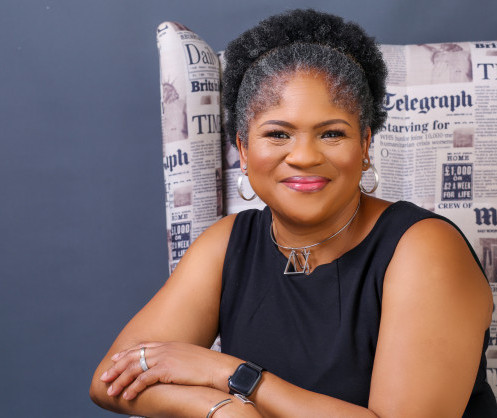
Africa Public Health Foundation (https://APHF.Africa) is pleased to announce the appointment of Dr. Ebere Okereke FFPHM FRSPH MSc (Public Health) DTM&H MBBS as its Chief Executive Officer (CEO). Dr. Okereke brings with her over 30 years of experience as a global health physician in various fields, notably in the United Kingdom, Kenya, Ethiopia, Nigeria, and Trinidad & Tobago.


She brings a depth of expertise in leadership, change management, system strengthening and organizational development, programme design and implementation team building, stakeholder engagement and management communication, training, advocacy, report writing, presentation and, generally technical expertise in public and global health.

She has co-authored e-learning resources for the UK’s Royal College of General Practitioners and the London School of Hygiene & Tropical Medicine (LSHTM). Additionally, she was an honorary senior lecturer at the School of Medicine, Leeds University and, is an associate member of the Bradford University School of Health Studies Centre for Inclusion and Diversity and on the steering committee and faculty of the Africa CDC Kofi Annan Global Health Leadership programme.

As the CEO, Dr. Okereke’s key priorities will include strengthening Africa Public Health Foundation’s role as a leader in promoting health equity in Africa

Africa Public Health Foundation is a non-profit charitable foundation committed to improving public health outcomes and promoting health equity in Africa through the provision of resources, knowledge, and support for health systems strengthening, health workforce development, and community-based health interventions.

As the CEO, Dr. Okereke’s key priorities will include strengthening Africa Public Health Foundation’s role as a leader in promoting health equity in Africa, building strategic partnerships with key stakeholders, and enhancing the Foundation’s capacity to respond to emerging health challenges in the region.

Dr. Okereke has been an honorary senior public health adviser to past directors Director of Africa CDC and has led several special programs, including being one of those who played a key role in the development of the Partnership for African Vaccine Manufacturing, the steering of the development of Africa CDC’s 2022-2027 strategy and leadership capacity programs, and the ongoing transition to an autonomous African Union agency.

As a medical consultant in global public health, Dr. Okereke led the development of the £16 million Public Health England (PHE, now UK Health Security Agency (UKHSA)) program, which strengthened the capacity of low- and middle-income countries to comply with the International Health Regulations. She also has extensive experience in developing capacity and training health professionals and the public about public health programs, including co-authoring e-learning resources for the UK’s Royal College of General Practitioners and the London School of Hygiene & Tropical Medicine (LSHTM).

Commenting on her appointment, Dr. Okereke said, “I am honored and excited to be taking on the role of CEO of Africa Public Health Foundation at this critical time. I am committed to working with our partners and stakeholders to promote health equity and improve public health outcomes in Africa.”

Africa Public Health Foundation has been in operation for two years and a half under the guidance of an Interim CEO, Dr. Francisco Songane, who is part of the Governing Council. The Governing Council led by Dr. Bernard Haufiku, welcomes Dr. Okereke and look forward to working with her to achieve the Foundation’s mission of improving public health in Africa.


The attention of the Nigerian Communications Commission, NCC, has been drawn to fraudulent and misleading information circulating in some social media platforms, insinuating there is a planned shutdown of all telecom networks and relevant ICT Units, including online transfer facilities of the banks, with effect from today, February 23, 2023.


The Nigerian public, consumers of telecommunications services, and all bank customers are advised to ignore these or similar messages that insinuate deliberate network shutdown or disruption of services in the Nigerian telecom network.


These malicious and subversive messages originated and are being circulated by fraudsters and unscrupulous elements in the society with the intent to cause chaos and panic among the populace.


The Commission has received unequivocal assurances from all the service providers to the effect that all the network services are currently in optimal performance, and will not witness any deliberate shutdown or disruptions, especially at this very crucial period of general elections in the country.


Therefore, all users of telecommunications and banking services utilizing network facilities are assured of continued optimal service delivery before, during, and after the general elections in Nigeria.


The Hon Minister of information and Culture, Alhaji Lai Mohammed and his team deserve our commendation for compiling the Ministerial Score card series, and to-be- unveiled PMB legacy portal, an attempt at keeping a faithful record in audio, video and print of the achievements of the Buhari administration in the last eight years.
The whole exercise is important for various reasons. First, it is a historical record, and a fairly reliable one because it is a nearly contemporaneous record of what transpired in that eight year period. Second, the records being kept in many different forms help to reinforce their accuracy and authenticity.

Third, this detailed record, even though some will argue is the biased view of active participants in the matters being recorded, will nevertheless provide very useful source materials for researchers and historians in the future whether they are for or against our administration. In other words, by undertaking with great diligence and commitment this incredibly difficult task of record keeping, the Minister and his colleagues in this effort have provided a body of systematically structured facts in writing , photographs and film footage on the most recent eight years of almost a quarter of a century of democracy in Nigeria.

Fourth the Scorecard series is more than a self report card it is also, a programmatic agenda that has provided a platform for Ministers to highlight their challenges, and unfolding plans for their respective ministries.

But some aspects of this record keeping exercise standout , for their sheer poignancy -The 19-minute teaser of the documentary series and the testimonial series we just saw are just some of such star features. Through the testimonials of actual beneficiaries we are able to practically present the largest social investment programme in Africa and also gauge the impact of the programme and some accompanying policies over the years. Hearing from citizens themselves; the petty trader who was able to expand her business because of TraderMoni; the unemployed graduate who benefitting from the N-Power programme discovers a new and profitable path; in addition we see and hear recorded for history, the passengers who could not hide their excitement at the seamless operation of the modern railway system or the state-of-the-art airport terminals; and the President of the rice farmers association who told us how rice production in the country has increased exponentially under the Anchor Borrowers Programme. These are real people provided with a springboard to do more for themselves and for their communities; real people inspired to hope and believe that Nigeria can be positively transformed in our lifetime.

But aside from the ultimate usefulness of this work as an anthology of the life and times of the Buhari administration , it is also a fascinating and riveting account of unfolding facts and stories of some of the most intriguing events in contemporary Nigeria and I think these accounts must be given the widest possible reach across traditional and new media channels; let the Documentary and Testimony Series resound on radio, television, and across social media; let the Compendium be circulated, in hard and soft copies, far and wide, to engage, provoke and maybe even inspire Nigerians and others who may come across it.

As we launch this Compendium, Documentary, Testimonials, and Legacy Portal to the public, we must salute the cross functional effort that has produced these achievements; the tireless input of civil servants, and political appointees, the men and women, young and experienced, who working to reverse the developmental tides against us, in the face of fierce criticism and great sacrifices, have pursued the realization of our promises for better security, laying a foundation for prosperity, and creating a fresh burst of hope for the future.

And of course the work continues. Government, as we know, is a continuum. It is the desire of every elected government that the unfinished business of its administration finds continuity and fulfillment in subsequent governments.

I believe I speak the mind of the President when I say that our administration considers it a privilege and an honour to serve the people of our great nation as we have done in the last 8 years. These accomplishments are the hard-won dividends of the social contract we entered into with the Nigerian people when we came into office in 2015. Still, time and history will no doubt speak more eloquently of our stewardship. But for now we can confidently say that we have given of as much as we could. Life, for the living , also offers a continuum, such that even when we are no longer in office, we can and must continue to pursue the fulfilment of our country’s great promise and potential wherever we find ourselves.

Congratulations again to the Ministry of Information and Culture for this impressive, innovative, and robust archival material that I’m sure will provide a veritable template for future administrations.

Congratulations to all the ministers, heads of agencies, and their respective teams for your hardwork and commitment through the years. And On behalf of His Excellency President Muhammadu Buhari, I say thank you for your service. The accomplishments rolled out in these documents are a testament to your work, and you should be as proud of yourselves as we are of you.
Thank you for your kind attention.


In view of the importance attached to the upcoming Presidential Election, the Nigerian Communications Commission (NCC) has dedicated its Consumer Toll-Free Number 622, to serve as 2023 Presidential Election Incident Hotline to enable voters and members of the public across Nigeria to report any issues that may affect them, or others, during the elections on Saturday, February 25, 2023.


This step is to support the Independent National Electoral Commission (INEC), in its patriotic commitment, towards the conduct of hitch-free elections in Nigeria.


The Toll-Free Number 622 is the second-level complaints centre through which consumers of telecommunications services are allowed to make calls directly to the Commission, to resolve issues concerning their telecommunications services which the service providers are unable to do.


However, in consideration of the critical nature of this election and to alleviate emergent issues that may arise at the voting centres, or any parts of Nigeria thereof, the Commission has considered it expedient to dedicate the Toll-Free Number 622 to accommodate all types of complaints on election day.


This is with a view to resolving such issues by contacting and conveying such to relevant agencies, authorities, or organisations for timely resolution.


The 622 Election Incident Monitoring Centre will be manned by top Management officials of the Nigerian Communications Commission. The hotline will be open to the public from 8.00 a.m. to 6.00 p.m. during the Presidential and National Assembly elections.


Members of the public are, therefore, invited to take advantage of the Election Incident Monitoring Centre Hotline, 622.


Nigeria’s rich Cultural Heritage and the Creative Industry were spectacularly showcased as Nigeria participated at the Surajkund International Festival, 2023. The historic event is the largest Arts and Crafts festival in the world. Nigeria got two (2) significant mentions as audience choice and VIP pick; culminating in the Presidential performance by the Ekiti State Performing Troupe and artists from the Bida Niger State Creative Cities that successfully represented Nigeria at the event. In view of Nigeria’s top notch performances and exhibition, African Countries at the Festival unanimously chose Nigeria as their leader. Nigeria effectively led African Countries Collaboration Performance.

The event featured Cultures of 56 countries and all the provinces of 1.4 billion people of India including over 50 million visitors and tourists. The delegation made Nigeria proud, and their hard work, commitment, discipline and unparalleled sense of patriotism is highly commendable.

These remarkable qualities earned Nigeria, the respect and preference of the entire audience and VIPs as she emerged winner of the Surajkund International Arts and Crafts Festival. Congratulations

Nigeria and God Bless the Federal Republic of Nigeria.

Akudo-Nwosu, U.N


How do you get staff on board with security? By making it personal, says Kevin Halkerd, Senior Risk & Security Analyst at e4.


Most successful cyber breaches have one thing in common: People. Your company can be protected from every tech angle, with the latest security updates and most advanced threat detection, but it takes just one employee accidentally sharing their password for a major breach to occur.


Human-targeted attacks will remain the number one threat to cyber security and will only keep increasing in volume and complexity this year. As even casual observers have become more adept at spotting emails that don’t look quite right, criminals constantly work at creating more sophisticated traps. This year, we’ll likely see more complex attacks as well as automation and the monetisation thereof, as bad actors leverage and repurpose the likes of ChatGPT and other AI chat tools.


Human error is not only the biggest security blind spot, but also requires more effort to remediate. It necessitates training and buy-in, as opposed to a security threat you might patch or reconfigure to a more secure mode. And after all that, your security still depends on the will of those humans to engage with the training and execute the learnings. There are no quick solutions, and any solution in place requires constant reviewing, reengagement, and reporting.


So how do you get staff members to engage in security messaging and implement these instructions correctly? By making it personal for and applicable to them.


South Africa already has a security-first culture due to our sensitivity to crime in general. Your toughest challenge is then to broaden the scope of staff members’ security mindset.

Do this by always providing consistent, friendly, and supportive engagement on security topics. If your security team can add value to other staff members’ lives, whether through support, personal advice, or leading by example, these quality exchanges will become a foundation for further interaction. If staff members perceive that they, too, get value out of engaging with security teams and materials, they’ll be more inclined to adopt your overall organisational strategy and awareness mission.


You could tailor such initiatives by:

Using strong awareness content about the threats most prevalent in your business to regularly keep security in focus.
Adding additional customised content to such materials to dig deeper and create interest in current trends.
Sharing ‘inside info’ such as vulnerability notices and remediation steps for consumer phones, tablets, and wireless routers that staff members may use in their personal lives.
Running routine unannounced simulations and sharing the results with the group.
Incentivising participation by rewarding star performers – but still supporting stragglers.


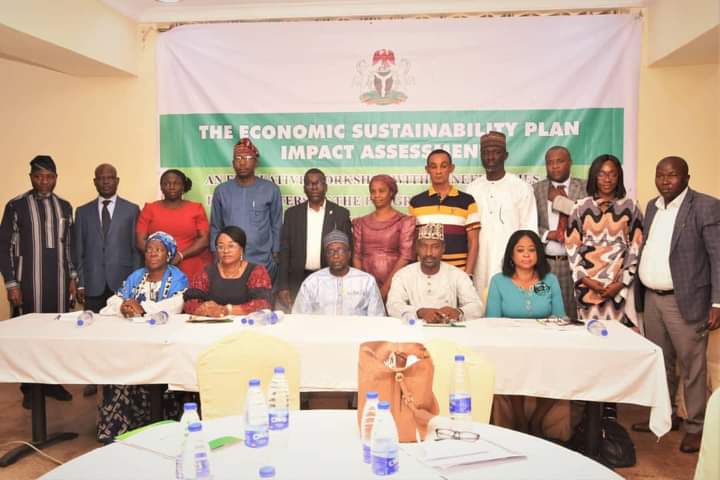
The Minister of State Budget and National Planning, Prince Clem Ikanade Agba has said that the Ministry will strengthen its collaboration with MDAs to ensure the smooth operation of the Economic Sustainability Plan (ESP) in planning, executing, and evaluation of programs and projects aimed at enhancing the socio-economic wellbeing.

The Minister made this known during the evaluative workshop on the implementation of programs and projects under the Economic Sustainability Plan (ESP) held at the Custodian Hotel in Abuja.

The Minister who was represented by the Director Economic Growth of the Ministry,Mrs Elizabeth Egharevba informed that “ESP was conceptualized by the present administration to mitigate the impacts of the COVID-19 Pandemic and the effects of global recession resulting from economic meltdown worldwide, adding that the pandemic led to massive loss of jobs, disruption in supply chains, low global oil prices due to low demand and low revenue generation for the country”.

Prince Agba pointed out that “the Federal Government invested ₦500bn in the implementation of the ESP projects and programs from July 2020 and were completed towards the end of 2021, noting that about 1.3million jobs were saved through the Micro, Small and Medium Scale Enterprises (MSME) payroll support, 774,000 people were engaged in the public works program under the National Directorate of Employment (NDE) and 26,021 jobs were generated from construction/rehabilitation of Federal roads under the Federal Roads Maintenance Agency (FERMA).

The Minister further stated that about 400 units of housing were constructed in Borno, Katsina, Edo, Zamfara, and Kano State to address the housing needs of displaced Nigerians, adding that 495 kilometers of rural roads were constructed to boost agricultural production by enabling timely access to markets by farmers and to prevent post-harvest losses, 129,000 crop farmers and 38,333 animal farmers were supported from the farm input support loan facility.

He emphasized that the country also improved its Biovaccine production and testing capacity through the acquisition of reagents and establishing the state of the art laboratories in the following institutions:
The Nigerian Institute of Medical Research (NIMR) in Lagos; The National Agency for Food and Drug Administration and Control (NAFDAC) and
National Institute for Pharmaceutical Research and Development (NIPRD).

In his remarks the Permanent Secretary Engr. Nebeolisa Anako represented by the Director of National Monitoring and Evaluation, Dr. Zakari Lawal said that “the objective of the meeting is to provide a platform for government to evaluate the performance of the project implementation and the impact on individuals and communities after their completion in 2021, urging participants to provide the evaluators with all the relevant information/data that will support in determining the impact of the projects on the beneficiaries”.

He further stated that the outcome of the exercise will help in addressing sustainability issues, and guide the conceptualization and implementation of similar future projects and programs of government.

Olatunji Modupe Susan(Mrs)
Senior Information Officer
For: Director, Information (FMBN)

Participants at the Evaluative Workshop with Beneficiaries and Implementers of the Programmes and Projects under the Economic Sustainability Plan, in Abuja.


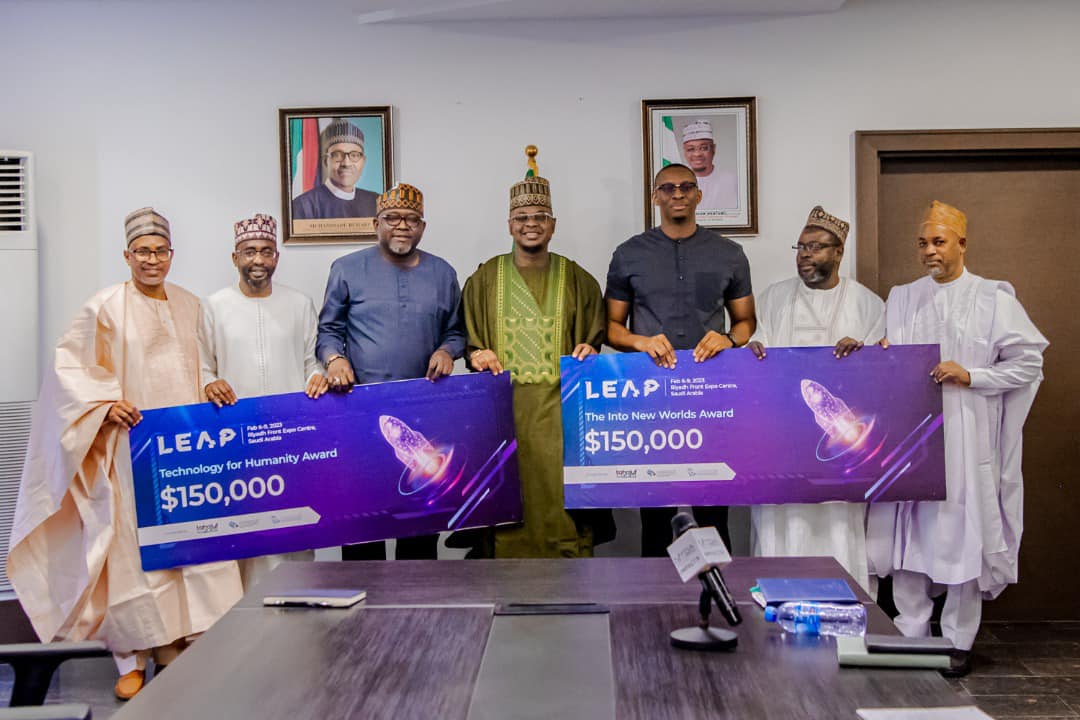
The Honourable Minister of Communications and Digital Economy, Professor, Isa Ali Ibrahim Pantami, FCIIS, FNCS, FBCS, officially received the Two Nigerian Startups that emerged global winners in different categories at the #LEAP23 “Rocket Fuel Pitch” Competition held in Riyadh, Saudi Arabia.

The Startups “WICRYPT by Aronu Ugochukwu and RICE AFRIKA by Maigari Ahmadu” who won a cash price of $150,000 each were officially presented to the Honourable Minister who led the Nigerian delegation to LEAP 2023 by DG-NITDA, Kashifu Inuwa CCIE.