Anambra state is one state that their developmental strides is visible in the Southern part of Nigeria, with lots of development powered by indigenes, recently Gov Soludo recently commisioned an engineering project, a steel mill and foundry. This mill Milton Steel Manufacturing Company founded by Hon. Innocent Ojike (Ojicam), who is also the company’s majority shareholder. The company, which is the first steel facility in the south-east of Nigeria, is located in Awkuzu, Oyi LGA. It will manufacture rods and steel of all sizes, one of the basic resource required for full industrialization.

Speaking about the milli, the excited governor said, “I commissioned Milton Steel Manufacturing Company founded by Hon. Innocent Ojike (Ojicam), who is also the company’s majority shareholder.The company, which is the first steel facility in the south-east of Nigeria, is located in Awkuzu, Oyi LGA. It will manufacture rods and steel of all sizes, one of the basic resource required for full industrialization.
My administration’s objective is to transition from a primarily informal commercial sector to one that is industrialized, a technology hub, and a spot for leisure and entertainment.”

“As a government, we stand ready to provide every assistance. We have signed an agreement with EEDC to provide the state with 24-hour electricity. We will put in necessary infrastructure to make this happen now that power is on the concurrent list.
My primary responsibility as a Governor is to serve as the chief marketing officer for everything produced in Anambra. The best way to create jobs is to buy items made in the state. When you buy products made in the diaspora, you are creating jobs in other countries. ”

He concluded by saying, “I am here to celebrate three things; the company, industry, and the homeland consciousness of the Founder. This is another reminder to Ndi Anambra in Diaspora and, indeed the world, that Anambra is ready for business.
Come invest in Anambra! ”

ANTHONY EMEKA NWOSU


The Imo State Governor and Chairman of the Southeast Governors Forum, His Excellency, Distinguished Senator Hope Uzodimma has hosted South-East Leaders to discuss and identify issues of concern in the region like insecurity and other related matters.

In his address, Governor Uzodimma disclosed that all Igbo leaders and Stakeholders are on the same page to tackle insecurity in the region.

He stated that while security is an exclusive responsibility of the Federal Government with the collaboration of the Governors, plans are underway for the south-east leaders to collectively table the matter before President Bola Ahmed Tinubu whom he believes will give the necessary support.May be an image of 2 people, dais and crowd

Speaking earlier, the President of Ohaneze Ndi Igbo Worldwide, Chief Emmanuel Iwuanyanwu expressed satisfaction at the success of the meeting as problems of the region were identified and adequately discussed.
He gave his assurance that the problem of insecurity will soon be a thing of the past

It was an all-encompassing gathering of South-East Governors, National Assembly members, Houses of Assembly members across party lines, members of the Ohaneze Ndi Igbo and other stakeholders from the South East region.


May be an image of 5 people and crowd


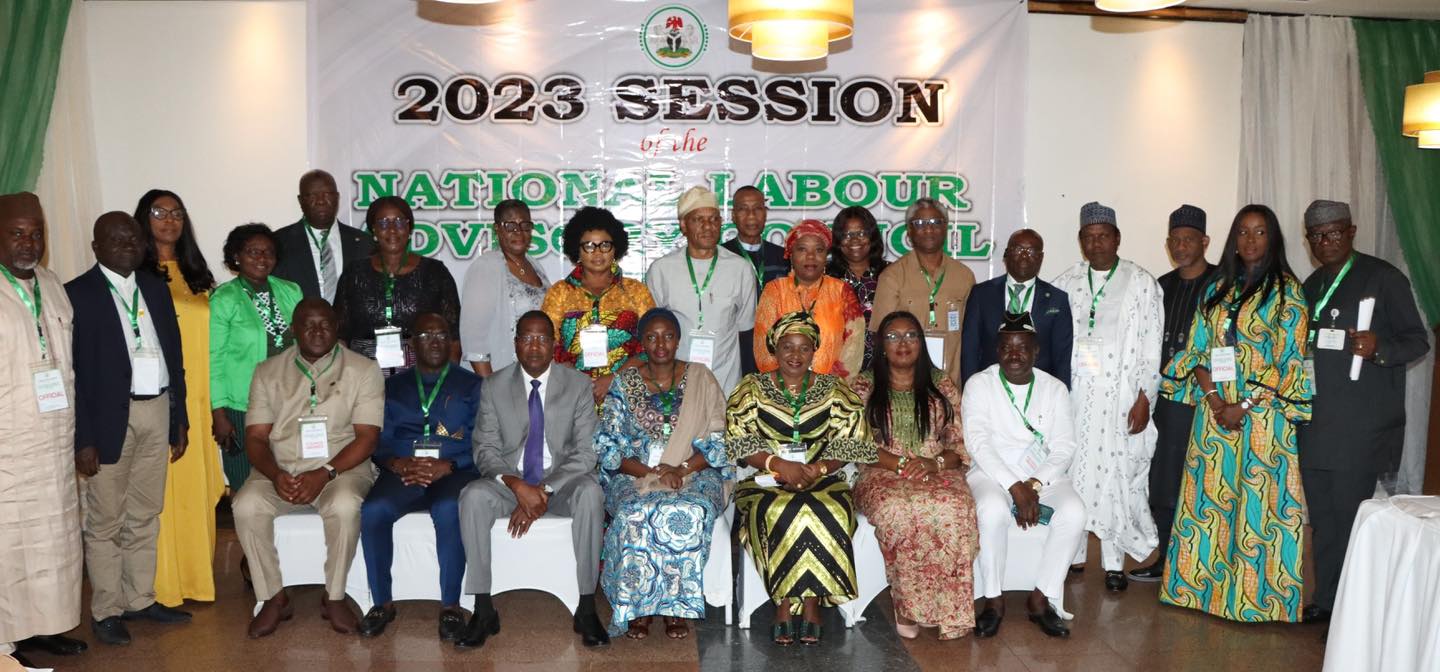
The Federal Government has faulted the irregular practice of state governments establishing ministries and departments of Labour, and implementing parallel guidelines and policies to those developed at the federal level.

The Permanent Secretary, Federal Ministry of Labour and Employment, Kachallom Daju, mni, criticised this trend by states while flagging off the 2023 Session of the National Labour Advisory Council (NLAC), taking place in Uyo, Akwa Ibom State from 13th to 14th July.

She said NLAC would critically discuss that emerging trend, which if left unchecked, could destabilise the already challenged Labour administration system in Nigeria.
Daju described that practice as counter-productive, and pointed out that it went against Section 34 of the Second Schedule of the Constitution of the Federal Republic of Nigeria, 1999 (as amended), which placed labour matters on the Exclusive List, thereby reserving the power to legislate on labour-related matters exclusively to the Federal Government.

According to her, another crucial item for discussion by the Council would be the need for state governments to embrace a uniform implementation of the Minimum Wage Act, 2019.
She noted the need to align the minimum wage with the current economic realities, as well as the International Labour Standards that serve as the bedrock of legal framework for labour administration in Nigeria.

Daju also remarked that Nigeria needed to develop strategies to bridge the gaps identified by the Committee of Experts on the Application of Conventions and Recommendations (CEARCR), on the application of Conventions No. 26 on Wage Fixing Machinery, 1928; and No. 95 on Protection of Wages, 1949.

She noted that this has become crucial in the face of the impact of the recent removal of subsidy on petrol on the Nigerian workers.

The Permanent Secretary disclosed that the Council was established in 1955 to offer advisory services to the Minister of Labour in the areas of Labour Administration, Employment Relations and Labour Productivity, and it also plays the critical role of promoting and ensuring a Labour Administration System in line with international best practice.
She added that the Council was inactive between 2013 and 2021, when it was revived, and a new Council was inaugurated.

Earlier, Director, Productivity Measurement and Labour Standards department of the Ministry, Juliana Adebambo, stated that the revival of the NLAC was evidence of Government’s political will to increase collaboration between social partners and governments (Federal and State) to ensure lasting industrial harmony, socio-economic development, as well as national growth.

Membership of the Council comprises the Federal, the thirty-six states and the FCT governments, Nigeria Labour Congress, Trade Union Congress, Nigeria Employers’ Consultative Association (NECA), the country representative of International Labour Organisation, and other stakeholders.


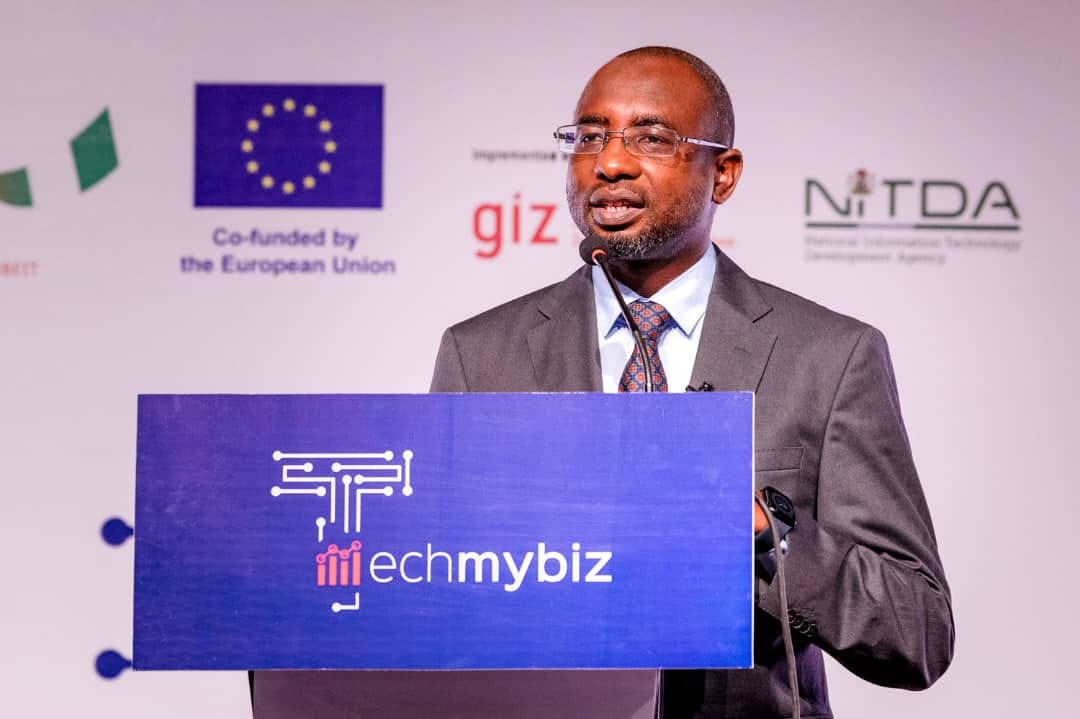
As SMEs make up a huge percentage of businesses and economic growth, the Director General, National Information Technology Development Agency (NITDA) Kashifu Inuwa CCIE, FNCS has said that digitisation of MSMEs will increase revenue by 26 percent as well as reduce operating cost by 22 percent, and contribute 53b USD to the Nigerian economy.

Inuwa stated this while delivering opening remark at TechMyBiz Pitch-A-Thon event held at the Digital Transformation Center Nigeria (DTC Nigeria), Lagos which was jointly funded by the European Union (EU) and the German Federal Ministry for Economic Cooperation and Development.

The TechMyBiz Pitch-A-Thon which is a process of selecting Digital Innovations in Africa started with a “Call for Digital Solutions” campaign, that offered a platform for many innovators, entrepreneurs and Startups within the Nigerian ecosystem to register their already created digital solutions, from which 30 are expected to emerge as winners out of the 50 selected for the Pitch-A-Thon event running from the 12th -14th July 2023.
The DG noted that, digitisation is about operational excellence, using technology as an enabler for business efficiency, more productivity, increased revenue and cost savings,” he said.
He said despite the available opportunities, there are challenges that need to be addressed in order to realise the potential of digital transformation in SMEs.

“Firstly, we need to create innovation-friendly conditions in our country in terms of enabling policies and laws, government services, ease of doing business, and so on.”

“Secondly, we need to have support organisations — platform that will assist to digitise MSMEs for innovation hubs around the country to incubate ideas, because innovation is a process of taking an idea from inception to impact that means you can have an idea, and you can be innovative, but that is not enough, you need to commercialise your ideas.”

“Then we need the infrastructure, this is important to MSMEs, but Africa is lacking in digital public infrastructure. Digital public infrastructure is beyond having connectivity and access to computers. The Second Industrial Revolution was about massive production which requires enabling infrastructure for transportation, but today we are in the Fourth Industrial Revolution, which is about digital services, therefore, we need the required infrastructure to aid digital services.”

“Lastly, is the challenge of digital skills and literacy. The digital offerings require digitally literate consumers to benefit from the services, therefore there is the need to enlighten and educate the populace to acquire digital literacy skills, ” he said.

Quoting the DG of SMEDAN, Inuwa reiterated that MSMEs contribute to 96 percent of businesses, 83 percent of the workforce and 43 percent of the nation’s GDP. “With digital technology SMEs can have an exponential growth transformation that will upscale businesses.”

In his conclusion, he expanded on the need to have a digital sovereignty through adequate infrastructure, adding that the Nigerian government through NITDA is implementing the National Digital Economy Policy and Strategy (NDEPS) to promote in-country skills to address these challenges.

“The Start-up Act, if fully implemented, will address all these challenges, in policy development, friendly environment, enabling infrastructure, innovation clusters around the country and many more.”
“This form of engagement, places the continent on the right track and together we can build the kind of environment, infrastructure, and the required skills we need to accelerate digitisation in Nigeria,” he affirmed.


  • As sector added N10.126 trillion to GDP in 2022


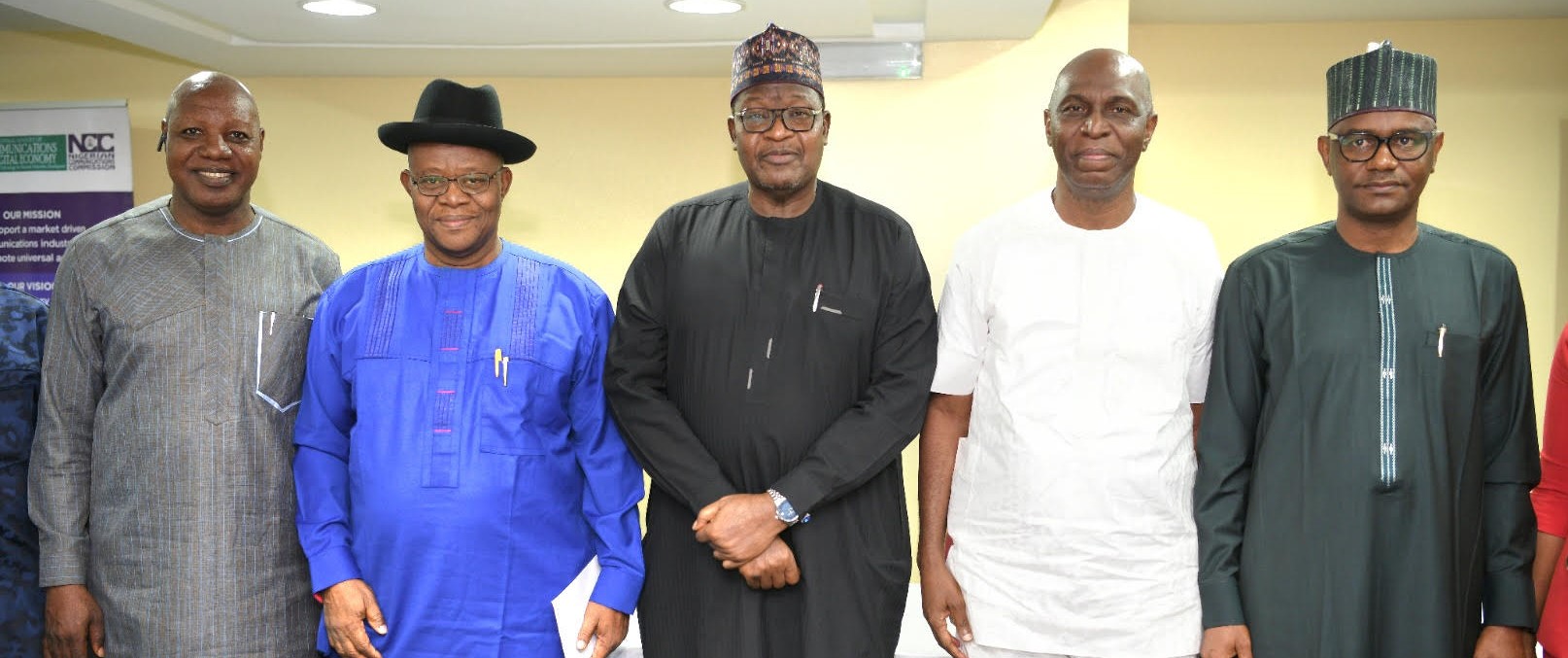
The Executive Vice Chairman (EVC) of the Nigerian Communications Commission (NCC), Prof. Umar Garba Danbatta, has officially announced that the investment profile in the nation’s telecommunications sector, comprising foreign direct investment (FDI) and local investment, has reached $75.6 billion as of 2021.


Danbatta disclosed this at an interactive session with stakeholders in the communications media ecosystem, in Lagos on Wednesday where he provided his scorecards and landmark developments that have shaped the trajectory of growth in the telecoms sector since he became the chief telecom regulator in August 2015.


According to Danbatta, in 2018, investment profile in the sector stood at $68 billion. This increased to $70.5 billion in 2019 and $72 billion in 2020. At the end of 2021, the figure rose to $75,560,563,417.79 ($75.6 billion). The latest figure is the current official investment profile computed in the industry up from the initial $70 billion investment in the last few years.


Investment in the telecommunications sector in Nigeria is computed from two sources: the Central Bank of Nigeria (CBN), and the financial data obtained from service providers by the Commission.


While the CBN collects and calculates an element of the telecoms sector to include FDI, portfolio and others, the Commission collects investment figures from telecom licensees described as domestic investment arising from capital expenditure (CAPEX) which form part of the total investment in the industry.


The NCC CEO said through effective regulatory environment put in place by the Commission, the telecom sector has recorded tremendous growth from an initial investment profile of $500 million as at 2001, when the sector was fully liberalised.


Similarly, Danbatta said the telecom sector has continued to be a major contributor to the Nigeria’s economy through an impressive the sectoral contribution to the nation’s Gross Domestic Product (GDP) quarterly, up from about 8.5 per cent in third quarter of 2015, contributing N10.126 trillion to the nation’s GDP in 2022 alone.


Citing data from the National Bureau of Statistics (NBS), Danbatta said the telecoms sector contributed N10.126 trillion as an aggregate quarterly contribution to GDP in 2022.


“In the first quarter, the sector contributed 12.94 per cent equivalent to N2.246 trillion while the second quarter witnessed an all-time high GDP contribution by the telecom sector to the nation’s economy, standing at 15 per cent and valued at N2.593 trillion. The sector’s contribution to GDP in the third was 12.85 per cent and in the fourth quarter, it grew to 13.55 per cent, which are valued at N2.436 trillion and N2.851 trillion respectively.


“The growth trajectory continued this year as telecommunications and Information Services sector in Nigeria delivered a handsome N2. 508 trillion in terms of financial value contribution to the nation’s gross domestic product, GDP, representing 14.13% in the first quarter 2023,”he said.


Telecoms contribution to national GDP has grown significantly since assumption of Prof. Danbatta as the EVC of NCC in August, 2015, according to available data from NBS.


From 8.50 per cent in 2015, it grew to 9.13 per cent in 2016 and to 8.66 per cent in 2017. In the last quarter of 2018, telecoms contributed 9.85 per cent to national GDP while it added 10.60 per cent in the fourth quarter of 2019.


Also in the second quarter of 2010, it added 14.30 per cent to GDP; 14.42 per cent in the second quarter of 2021. The highest quarterly contribution to GDP by the sector to the economy was 15 per cent in the second quarter of 2022.


Overall, Danbatta said the sector has become a major enabler of economic development in Nigeria, as it continues to positively impact all the facets of the Nigerian economy. “As the regulatory authority for the telecom sector in Nigeria, we are happy that the sector has recorded phenomenal growth statistics in the past two decades of the liberalization of the telecoms sector. However, we will not rest on our oars. We will continue to push upward to greater heights by encouraging expansion of frontiers to put Nigeria’s imprint on the global map of digital economy,” he said.


In addition to the growth in investment and GDP contribution, Danbatta said, “As of May, 2023, active voice subscriptions reached 221.3 million, equivalent of 115.91 per cent teledensity, while Internet subscriptions rose to 159.6 million.


According to the CEO of NCC, broadband subscriptions on Third Generation (3G) and Fourth Generation (4G) networks increased to 92.2 million, representing a 48.28 per cent broadband penetration in the country.


Also, following the issuance of 3.5GHz spectrum licences for the deployment of Fifth Generation (5G) networks in Nigeria, marked by ultra-high speed internet, low latency and high capacity, and the subsequent commercial launch by two of the three licence holders, 5G subscriptions have grown to over 60,000 in many cities in at least 12 states of the Federation.


Danbatta assured of the Commission’s commitment to always give concrete expression to the Federal Government Executive Order 001 focused on Ease of Doing Business and other digital economy-oriented policies, by embarking on various regulatory initiatives that support a friendly investment climate for investors in Nigeria and enhance value for money for telecom consumers.

The EVC particularly commended the media as a strategic partner and enabler of growth in the telecom sector “through accurate, adequate and timely reporting of all regulatory activities of the Commission.”


As EVC/CE Craves Support of Governors’ Forum for Agency


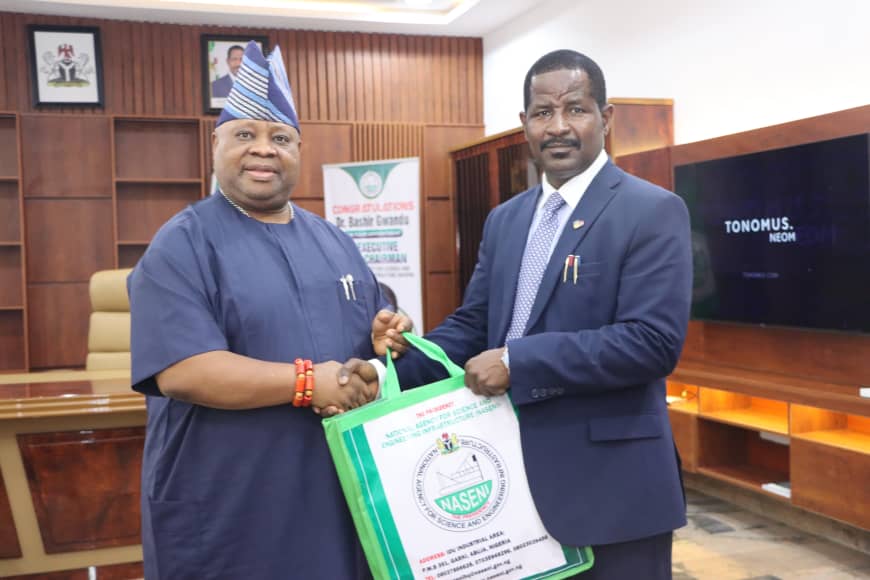
The Osun State Governor, Senator Ademola Adeleke has expressed interest by the Osun State citizens to participate in the on-going Skill Acquisition Training and Youth Empowerment Programme by the National Agency for Science and Engineering Infrastructure (NASENI).


 This is even as the Governor requested the Agency’s management to fasttrack take- off of the proposed Agricultural Machinery and Equipment Development Institute (AMEDI) approved to be sited in Osun State by the Federal Government.


The Government had approved six (6) Agricultural Machinery and Equipment Development Institutes (AMEDI), one per geopolitical zone of the country. One of the institutes is to be located in Osun State (South-West).


The Governor who paid a courtesy visit to NASENI headquarters today in Abuja said that Osun State needed NASENI’s support and partnership, adding that the Agency was key to national development. As an indication of readiness by the State to host the new institute, the governor disclosed he had already approved a land for the development of AMEDI in Oshogbo.


According to Governor Adeleke “We are ready for action not only on the establishment of AMEDI, but also the establishment of technology industrial park in Osun State. We will also welcome NASENI services and products in our State. My requests are many, so I recommend that both NASENI and Osun State work out a Memorandum of Understanding (MoU) between your Agency and my State”.


Responding, the Executive Vice Chairman/Chief Executive Officer, NASENI, Dr. Bashir Gwandu expressed appreciation to Osun State Governor for finding time to visit NASENI while remarking that Governor Adeleke was the first State Chief Executive to visit him since he resumed office as EVC/CEO in May, 2023. Dr. Gwandu thanked the Governor for the allocation of land and issuance of Certificate of Occupancy for NASENI Institute in Osun State free of charge.


Dr. Gwandu added that NASENI as an Agency has a lot to offer to the country and that is why it became necessary as the Chief Executive Officer of the Agency to tour the institutes to see for himself what the Agency has and to find out where there is need to change how things were done in the past. He said his vision for NASENI was to introduce new strategies of how the Agency would work or to see its products in the market, not only competing in Nigeria but with technology products from other countries across the world.


The EVC used the opportunity to solicit support of the Nigerian Governors’ Forum in funding the Agency to realize its mandate of processing all the necessary resources and products that would create job opportunities and to guarantee economic well-being of the people at the States level.

Tezza Academy and the Pentecostal Fellowship of Nigeria (PFN) have partnered to establish an IT specialization training facility in Lagos. The goal of the partnership is to train young Nigerians in high-end IT skills, particularly in software testing and software quality assurance. The facility will offer comprehensive training programs in areas such as product development, technology stack specialization, and customer experience management.

The collaboration aims to address the increasing issue of youth unemployment in Nigeria by providing young individuals with industry-specific knowledge and skills in technology. The training facility will cater to youths from all tribes and religions, offering equal opportunities to acquire valuable tech skills.

The PFN believes that partnering with Tezza Academy will contribute to reducing unemployment and job insecurity in the country, thereby enhancing the nation’s prosperity. The partnership will also benefit various industries, including banking, oil and gas, insurance, healthcare, and telecommunications, by providing a pool of skilled IT professionals within Nigeria, reducing the need to search for talent abroad.Tezza Academy Expands Partnerships to Bridge IT Skill Gaps - THISDAYLIVE

Tezza Academy, since its launch in the previous year, has been successful in bridging the gap for local talents by providing a curriculum that combines structured instructional programs with practical field experience. The academy fosters a collaborative learning environment that equips trainees with the necessary IT skills and real-world exposure.

The partnership with the PFN will expand opportunities for more young Nigerians to benefit from the academy’s residency training model, which is provided at no cost to the trainees. The partnership also aims to secure placement opportunities for trainees upon successful completion of their training and attainment of the required certifications, leveraging PFN’s extensive network.

Mr. Jide Modele, a partner at Tezza Business Solutions and the Managing Director of Tezza Academy, described the partnership as groundbreaking and emphasized its potential to positively impact Nigerian youths by enhancing their capacity and relevance in the global economy. He highlighted the ongoing demand for highly skilled IT resources and stressed the importance of concerted efforts from both the public and private sectors to address the skill gap.

In summary, Tezza Academy and PFN are collaborating to train young Nigerians in software testing and IT skills. The partnership aims to address youth unemployment, provide industry-specific knowledge, and empower Nigerian youths with high-end IT competencies, bridging the skill gap in the country.


The Accra Institute of Technology, AIT, is an independent technology-focused research university based in Accra, Ghana.

Since its inception in 2009, AIT has extensively been deploying cutting-edge educational delivery technologies and systems to support teaching and learning in all its undergraduate and postgraduate programmes.

As one of the ECOWAS sub-region’s top education centres, AIT is home to thousands of Nigerians and other West African students.

The AIT has consistently ranked as the top private University in Ghana and one of leading educational institutions in West Africa.  It has unswervingly come top at the UMB Ghana Tertiary Awards. In 2020 for instance, AIT won three most prestigious awards including: The Most Outstanding Institution in COVID-19 Times Award, The Best Technology University Award and the Best Educator of The Year. The university has kept the flag flying producing top-notch graduates gradually occupying  strategic positions as leaders across diverse sectors of Africa and global economy.

Benefit from AIT’s decades of leadership as a Tertiary Institution

There are several potential benefits for Nigerian students attending AIT in Ghana. Some of these benefits include:

Quality Education: AIT is known for providing quality education in various fields of study. The institution offers programs that are aligned with industry standards and taught by experienced faculty members. Nigerian students can benefit from the academic excellence and practical training offered at AIT.

International Exposure: Studying at AIT provides Nigerian students with the opportunity to gain international exposure. Interacting with students from different countries and cultures can broaden their perspectives and enhance their global awareness. This exposure can be valuable for personal growth and can also boost career prospects in an increasingly interconnected world.

Regional Networking: Ghana is situated in West Africa, and attending AIT allows Nigerian students to network with their counterparts from neighboring countries in the region. Building connections with students and professionals from Ghana and other West African nations can open up future collaborative opportunities and contribute to a stronger regional network.

Cultural Exchange: Ghana has a rich cultural heritage, and studying at AIT provides Nigerian students with the chance to immerse themselves in a different cultural environment. They can learn about Ghanaian traditions, customs, and way of life, fostering cross-cultural understanding and appreciation. This exposure can enhance their cultural competence, which is increasingly valued in today’s globalized world.

Affordability: Compared to some educational institutions in Nigeria and other countries, AIT offers relatively affordable tuition fees and living expenses. This can make it a more accessible option for Nigerian students seeking quality education abroad without significant financial burden.

Enhanced Employability: AIT’s academic programs are designed to equip students with practical skills and knowledge relevant to their chosen fields. The institution has collaborations with industry partners, providing opportunities for internships, projects, and industry exposure. Nigerian students who graduate from AIT may have an advantage in the job market due to the institution’s reputation and industry connections.

Alumni Network: AIT has a growing network of alumni across various industries and sectors. Nigerian students who graduate from AIT can benefit from this network, gaining access to potential mentors, job opportunities, and professional support. Alumni networks often provide a strong support system, and being part of the AIT alumni community can be advantageous for career growth and lifelong learning.

Register today at AIT. Click Here.

It’s important for prospective Nigerian students to conduct thorough research and consider their individual goals and circumstances when evaluating the benefits of attending AIT or any other educational institution abroad. For over 20 years, AIT has been helping to build Africa’s knowledge and skill sets.


Studying at AIT provides Nigerian students with the opportunity to gain international exposure. Interacting with students from different countries and cultures can broaden their perspectives and enhance their global awareness. This exposure can be valuable for personal growth and can also boost career prospects in an increasingly interconnected world.


Importance of robust data management and protection laws in today's digitized world

Purpose of the National Commissioner of Nigeria Data Protection Bureau (NDPB)


In today’s highly digitized world, it is crucial for nations to have robust data management and protection laws. These laws are necessary to safeguard both corporations and individuals from data breaches and identity thefts, such as stolen information, recording keystrokes, phishing, and others. Recognizing this need, the Federal Government of Nigeria established the National Commissioner of Nigeria Data Protection Bureau (NDPB). The primary purpose of this agency is to create, manage, and ensure compliance with global best practices in data protection and management among organizations in Nigeria.

Dr. Vincent Olatunji, the first National Commissioner of the NDPB, spoke to a select group of media personalities and emphasized the agency’s commitment to enforcing stringent requirements for data protection in Nigeria. He stated, “We are here to ensure that Nigerian corporations and public offices align with national laws and acts concerning data protection. We are fully aware of this responsibility and will not hesitate to penalize any organization that fails to comply with these laws.”Why Nigerians need to leverage on data protection ecosystem – NDPB - Daily  Post Nigeria

“We have already imposed fines on several banks that neglected data protection measures. We ensure that these fines are paid promptly. The minimum fine we impose is 2 million naira or two percent of the organization’s annual earnings. Our aim is to create a safe environment for organizations and instill confidence in data subjects conducting business in Nigeria.”

Regarding the recent announcement by the Central Bank of Nigeria on Nigerians submitting their social media handles, Dr. Vincent expressed his concerns. He believes that this requirement is improper and imposes an undue burden on data subjects. He assured that the NDPB is actively working with the Central Bank to find a lasting solution to this issue.

Addressing the funding of the new agency, Dr. Vincent clarified, “We are a non-profit agency, currently receiving funding from the presidency for the initial two years. After that, we will gradually become self-sustaining. While penalties will contribute to our funding, our primary focus is ensuring organizations adhere to global best practices in data protection rather than generating profits.”

In terms of capacity building, Dr. Vincent highlighted the NDPB’s efforts to train approximately five hundred thousand officers across the country. These trained officers will be deployed in various organizations to ensure compliance with data protection and management processes. Furthermore, he emphasized that the NDPB collaborates with the National Identity Management Commission (NIMC) and other agencies to enforce Data Protection Laws effectively.

Anthony Emeka Nwosu

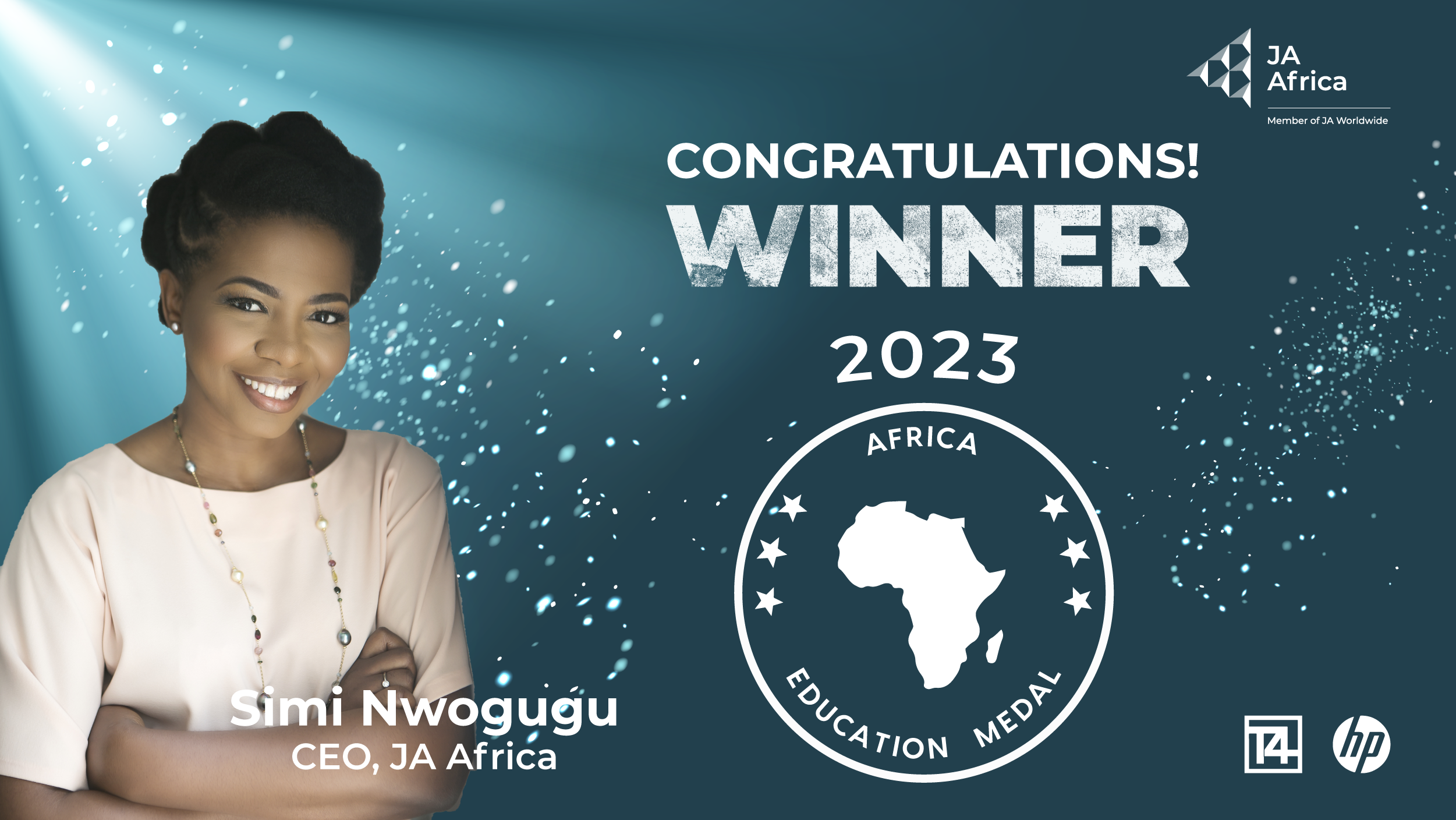
Nigeria’s Simi Nwogugu, CEO of Junior Achievement (JA) Africa (https://JA-Africa.org/), has today been named the winner of this year’s Africa Education Medal, Africa’s most prestigious education accolade which was founded last year by T4 Education and HP in collaboration with Microsoft.


The Africa Education Medal was founded to recognize the tireless work of those changemakers who are transforming African education. UNESCO data show that sub-Saharan Africa has the highest rates of education exclusion in the world. Over one-fifth of children between the ages of 6 and 11 are out of school, with girls particularly disadvantaged. However, tireless international efforts have seen Africa make great strides in boosting enrolment in the decades leading up to the pandemic. By celebrating the stories of those working every day to expand upon these vital gains, the Africa Education Medal aims to inspire others to follow in their footsteps and bring lasting change in African education.


Simi Nwogugu is CEO of JA Africa, part of the Nobel Peace Prize-nominated JA Worldwide, one of the world’s largest youth-serving NGOs that prepares young people for the future of work. She was first introduced to JA while working at Goldman Sachs in New York City. Impressed by the organization, she quit her lucrative job at age 24 to bring JA to Nigeria, where it now reaches more than 100,000 young people annually, before going on to head up JA’s operations across the continent.


The vital importance of Nwogugu’s work is highlighted by the fact that 60% of the population of sub-Saharan Africa and about 37% of its workforce are under the age of 25. By 2025, Africa will be home to 25% of the world’s youth population. Through the delivery of hands-on, blended learning in financial literacy, work readiness, and entrepreneurship, her organization empowers young people to grow their entrepreneurial ideas, hone their work readiness skills, manage their earnings and secure better lives for themselves, their families, and their communities.


For 25 years, Nwogugu has been leading JA’s efforts in various capacities as it embarked on a mission to help young people to generate and effectively manage wealth, create jobs for their communities, as well as apply entrepreneurial thinking to the workplace and skills that will secure their financial future. Her passion for strategy and innovation led to the development of many impactful programs that ensure young Africans have the skillset and mindset to succeed.


She is a passionate advocate for girls’ education and one of her unique initiatives includes the Leadership, Empowerment Achievement & Development (LEAD) Camp for Girls, which has inspired and empowered over 1,200 young girls to become high-achieving women leaders in society. Another initiative she has championed is the Venture in Management Program (ViMP), which is designed to empower young people in the different facets of managing a business, making crucial business decisions and developing skills for General Management and social responsibility. Graduates of the program have gone on to become founders of Nigeria’s leading businesses as well as leaders of the most impactful non-profit organizations on the continent. She also built digital and out-of-school youth programs that enabled her organization to reach underserved populations in the North of Nigeria, even during the Boko Haram crisis and the COVID-19 pandemic.


Prior to becoming JA Africa CEO in 2020, she led JA Nigeria to impact the lives of over 1 million Nigerians in 5,000 schools. Among the many JA alumni who have gone on to become job creators and social entrepreneurs is Iyin Aboyeji, the founder of two unicorns, Andela and Flutterwave, who said, “JA gave me my first taste of entrepreneurship when I participated in the Company Program in secondary school.  I’m grateful to Simi for bringing this program to Nigeria.”


Nwogugu also serves as President of the governing board of the Harvard Business School Alumni Association of Nigeria (HBSAN) and has been recognized by the school with numerous awards including the Bert King Award for Social Impact presented by the Harvard Business School African-American Alumni Association. She is currently a fellow of the Aspen Institute’s Africa Leadership Initiative for West Africa (ALIWA) where she is pursuing her passion to empower and equip 10 million African girls to build thriving communities by 2050.


Mayank Dhingra, Senior Education Business Leader, Southern Europe, Middle East and Africa, at HP said:


“Congratulations to Simi Nwogugu on the fantastic achievement of winning the Africa Education Medal 2023. Her work at JA Africa is truly empowering the continent’s next generation to face the future with confidence.

The Africa Education Medal brings together all those who are changing the face of African education, whose vital work deserves to be celebrated

“She is an inspiration to all of us at HP, where we have a bold goal to accelerate digital equity for 150 million people globally by 2030. Only by joining forces and aligning with NGOs, government, educators and businesses can we truly improve the education environment. The Africa Education Medal brings together all those who are changing the face of African education, whose vital work deserves to be celebrated.”


Simi Nwogugu said:


I am so honoured to receive this accolade, but it is not just about me. This award is for all the fantastic staff at JA Africa, and for all the inspirational young people they have worked with, helping to pave the way to a brighter future for our continent’s young. I want to thank T4 Education, HP and Microsoft for giving these people hope that together we can make a difference.”


Asheesh Advani, CEO of JA Worldwide, said:

“Simi Nwogugu is a role model for changemakers. From leading JA Nigeria to leading JA Africa and serving on the senior leadership team of JA Worldwide, she has been a passionate advocate for Africa’s youth throughout her life and career. On behalf of the JA network, I congratulate Simi on winning the Africa Education Medal 2023.”


Olumuyiwa Moyela, JA Africa’s Board Chair, said:


“Congratulations to Simi Nwogugu on winning the Africa Education Medal 2023. This well-deserved recognition highlights Simi’s passion and tireless commitment to empowering African youth through education. Under Simi’s guidance, JA Africa continues to ramp up its support for Africa’s education and youth development agenda, galvanizing new partnerships and innovative programs, and shaping the future of countless young individuals across the continent.”


Vikas Pota, Founder and CEO of T4 Education, said:


Simi Nwogugu has dedicated her life’s work to skilling up Africa’s young people, equipping them with the tools to not only survive but thrive in the world they’re entering. Congratulations on winning the Africa Education Medal 2023. Your success will serve as a rallying cry for changemakers to come forward and help Africa unlock its potential.”


Nominations for the Africa Education Medal opened in February 2023 for individuals working to improve pre-kindergarten, K-12, vocational and university education who are either educators, school administrators, civil society leaders, public servants, government officials, political leaders, technologists, or innovators.

The winner was chosen by a Jury comprising prominent individuals based on rigorous criteria (https://apo-opa.info/3pBttGj).