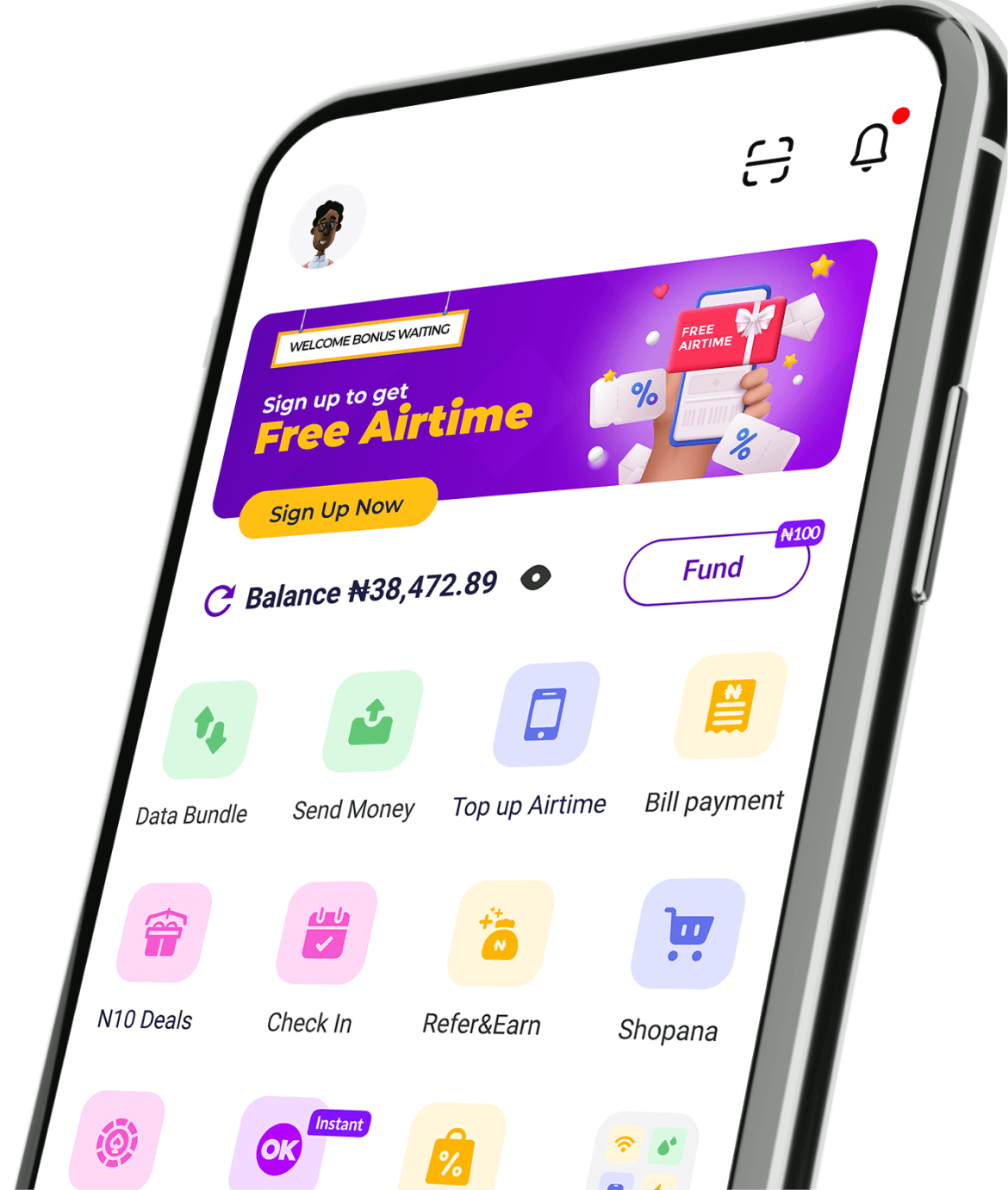
PalmPay, a leading Africa-focused fintech platform, has said that the future of money is now; therefore, the company has put in place adequate infrastructure, and the right measures to ensure that its millions of customers are guaranteed adequate security.


Speaking while making a presentation titled “Future of Money, Security, Customer Experience (CX)” at the Africa Tech Alliance (AfriTECH 3.0) held at The Providence Hotel, Ikeja GRA, last week, Mr. Chika Nwosu, the Managing Director of PalmPay, said that besides the operator putting the right things in place, the consumers also must the aware of how to protect themselves.


Nwosu who was represented at the Forum by Temitayo Oduwole, Head of IT and Payments at PalmPay, recounted the origin of money and its evolution to this moment and said that people are gradually moving away from paper money, where physical cash transactions are made, to what is today known as digital money where online and digital transactions now hold sway.


“All the services that we need are driven by technology, even the medium of exchange is also driven by technology. And the future of money right now is digital. If you look at the before and the now, right now because money has gone digital, we are experiencing a kind of transformation in the digital space. In terms of convenience, in terms of the ease of payment, that is what the future of money holds and that’s what we’re getting right now.


“I’m sure most people don’t even go around with cash again. Any transaction that you want to do, you can easily do that transaction on your phone, using your mobile wallet, using your card. So that is how money has transformed from being a cash-oriented medium to a digital medium right now,” he said.


Nwosu said PalmPay was prepared for this new regime of money and put a lot of robust infrastructure in place for risk management aimed at balancing the user experience with security in its app, adding that it has ensured that at any point in time, it puts measures in place that forestall a customer’s account being compromised.


“We have an AI in place, a logic that understands the pattern of your account, the pattern of your transaction. If it sees that somebody is doing something irrational or something out of the ordinary that you do on a normal day, because of the pattern that we’ve been able to build, we can block that transaction.


“And because we’re also going to have to look at technology-as-a-service, rather than having our infrastructure on prep, we’re having our infrastructure on the cloud. These are things that speak to infrastructure as a service, and technology-as-a-service, and are driving our reliability and sustainability today,” Nwosu said.


Nwosu admitted that though digital money is essential due to its speed, convenience, and accessibility, it also comes with its own threats and its own security challenges, especially in the face of nefarious activities around cybercrime.


“There are different channels by which people can access their money. However, in accessing this money, there is a potential challenge of having your funds being taken over by some people that you don’t want them to have access to it. There are lots of things happening around the future of money in terms of safety and in terms of security.


“We have online fraud. We have a local simulation. Identity theft is on the rise. We are being infused into devices, into servers. We have phishing in which e-mails are sent to deceive you to believe that the e-mails are coming from a genuine source. These are things that can affect or impact the digital money currency.


“The most important thing, again, is that at any point in time, as much as we are creating the environment to make sure that fraud is actually reduced in terms of cyber security, we are addressing all the things that need to be addressed so that from a digital money perspective, we are able to access the money without any fear. We can do a transaction without any fear.


“It’s also very important to understand that any time a fraud happens, a notification is very important. Next slide, please. Lack of security awareness is top of the reasons why consumers are scammed or defrauded. And what we try to do in PalmPay is to raise that awareness, to let our customers know that their personal information is only personal to them,” he said.


The Managing Director stated that lack of knowledge to protect personal information, patronizing fake sites and social media pages, and attempts or pivots on unofficial channels, are some of the things that could lead to customers being scammed or defrauded.


On PalmPay’s approach to enhancing customer security on its app, Nwosu said over the past four years it has been in the Nigerian market, it has been able to marry security with customer experience, which has remained the attraction to its brand.


“What we’ve done is binding. Your phone is bound such that even if you change your phone, you put in your credentials, and there’s an OTP that has been sent to revalidate and authorize the customer who is trying to do that transaction. One of the other things that we’ve also done to make sure that our customers are well protected is to have an inactive session set up.


“An inactive session has to do with if you’re not doing anything on your app, then it’s time out. It doesn’t give room for people to have access to that phone or your mobile app and try to do something. Because if you keep the mobile app up, anybody could actually have access to it, and they could do any transaction. Not to forget the fact that for every transaction that you do as well, it’s been enabled. We have a metric just to make sure that it is the right person that is accessing your account at any point in time,” Nwosu concluded.



The Executive Vice Chairman of the Nigerian Communications Commission (NCC), Dr. Aminu Maida has applauded the proposal by the Hon. Minister of Communications, Innovation and Digital Economy, Dr. Bosun Tijani, to enlist and train three million Nigerians over a period of four years, which will make the country an exporter of digital skills.


Maida, who spoke recently in Lagos at the City Business News Summit, said the programme, which has already attracted 1 million applicants, is capable of increasing Nigeria’s pool of technically-skilled persons in the global market leading to potential employers of digital and technical skills in the international scene to begin to engage more Nigerians.


Speaking on the theme of the summit, ‘Repositioning Nigerian Economy through Telecommunications: 2023 and Beyond’, NCC boss noted that, in recognition of the rapid pace of technological advancement that is disrupting industries across the globe, Nigeria’s vision is rooted in the belief that embracing this disruption and fostering innovation will propel the nation toward sustainable growth, economic diversification, and enhanced living standards for all Nigerians.


Represented by the Commission’s Director of Research and Development, Ismail Adedigba, the NCC’s chief executive officer said “the vision is, thus, to accelerate the growth of Nigeria as a global technical talent hub and a net exporter of talent; to deepen and accelerate our position in global research in key technology areas and raise the complexity and dynamics of our economy by significantly increasing the level of digital literacy across Nigeria. In this regard, the Honoruable Minister is looking to create a pipeline of three million technical talents.


“This programme, which has commenced already with over 1 million applications by potential trainees, is expected to increase the level of digital and technical skills among Nigerians, especially young and middle-level talents, to 70 per cent by the end of 2027. This will position Nigerians to productively contribute to the economy and place us in the top 25 percentile of research globally in the key areas of Artificial Intelligence (AI), Unmanned Aerial Vehicles (UAVs), IoT, Robotics, Blockchain, and Additive Manufacturing in keeping with the strategic plan unveiled by the Honourable Minister,” he said.


Maida said the policy direction of the Ministry, which is being driven by five pillars, will deliver on the goals of fostering economic growth and development. These pillars which include policy; infrastructure; innovation, entrepreneurship and capital; trade and knowledge, are the bedrock of the Strategic Vision Plan (2023 – 2025) and form the guide to channel our efforts to harness the potential of the telecommunications sector and drive positive change in Nigeria.


He said the Commission remains committed to providing an enabling environment for the building of the critical infrastructure required to power a strong digital economy, guarantee improved access to quality broadband connectivity, and the efficient management of the nation’s spectrum resources.


“As we work with our supervising Ministry – Communications, Innovation and Digital Economy – to take these steps to provide the enabling environment for repositioning the Nigerian Economy through telecommunications in 2023 and beyond, we call on Nigerians—and especially our compatriots in the media—to tap into the aspects of these interventions that are relevant to them. The ambitious plans we have set out may seem lofty and even incredible, but through strategic partnerships and collaborations with all stakeholders, we believe that they are achievable,” the EVC said.


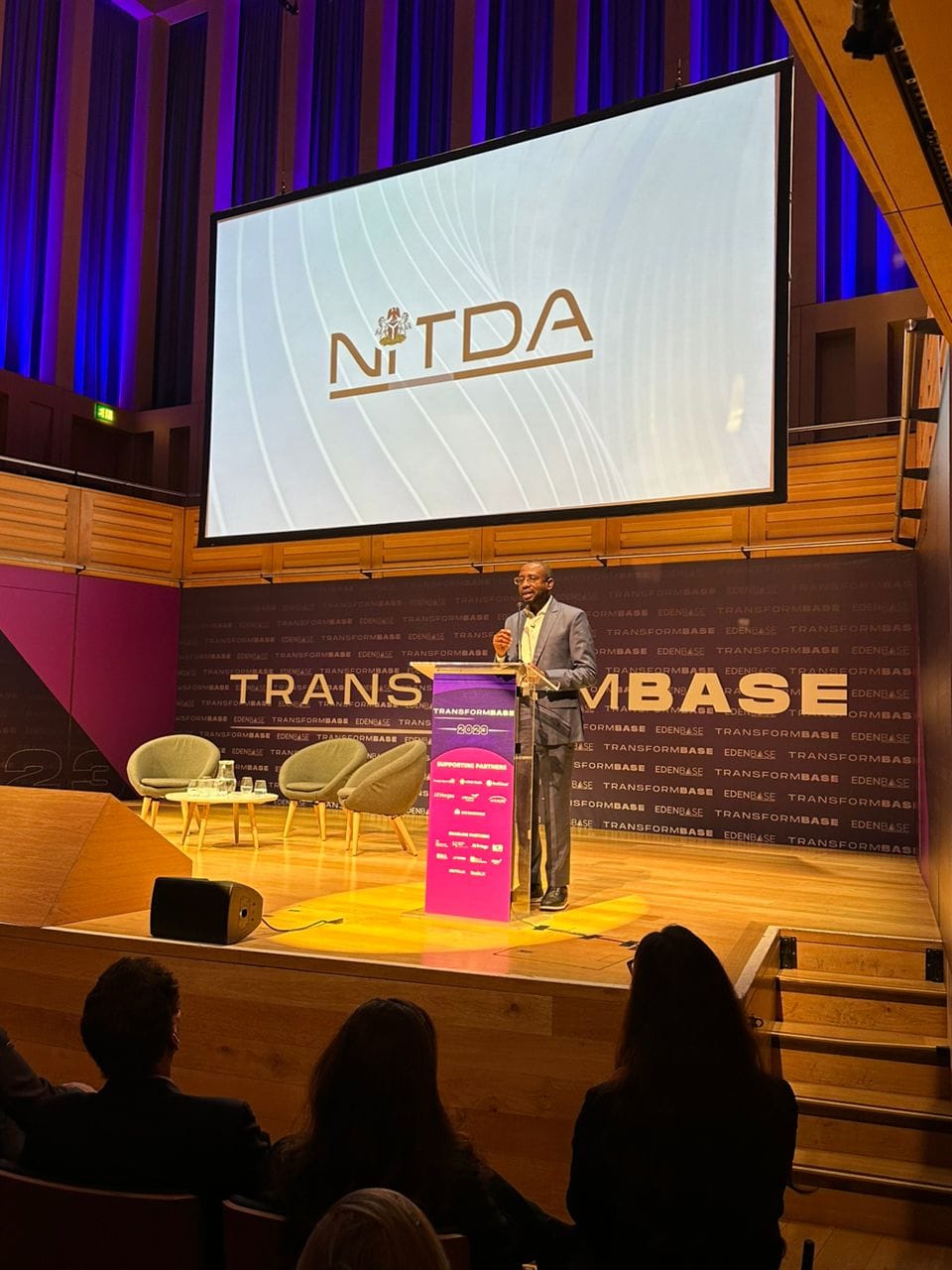
The Director-General of the National Information Technology Development Agency (NITDA), Kashifu Inuwa Abdullahi, was a featured speaker at the prestigious TransformBase AI Forum held at King’s Place, London. The forum, meticulously organized by EdenBase, attracted over 250 senior leaders and forward-thinking individuals to explore the future of emerging technologies, with a particular focus on AI, quantum computing, immersive technologies (AR/VR), blockchain, and 5G/6G.

During a fireside discussion skillfully moderated by Eric Van der Kleij, Co-Founder and Partner at EdenBase and TransformBase, Director-General Inuwa delved into the theme “Tech Nation Africa: From skills to investment to international connections – a strategy unfolds.”May be an image of 1 person and text

In his insightful address, Inuwa shared the transformative journey of NITDA in shaping Nigeria’s IT strategy. He shed light on the agency’s strategic development, supervision, and utilization of emerging technologies for societal benefit. Providing crucial insights, he discussed the continent’s potential to capitalize on its comparative advantages, such as market size and a young, talented population. Inuwa emphasized how digital literacy and emerging technologies could act as catalysts for the economic transformation of the region.

In a proactive move, Director-General Inuwa extended an open invitation to investors present, urging them to explore opportunities in Africa’s largest economy. He highlighted the conducive regulatory frameworks and policies, including the Nigeria Startup Act 2022, the National Digital Literacy Framework, and the recent Strategic Blueprint issued by the Federal Ministry of Communications, Innovation, and Digital Economy.

The TransformBase AI Forum proved to be a platform for thought leadership and collaboration, fostering dialogue on the intersection of technology, investment, and international connections. Director-General Inuwa’s keynote address added valuable perspectives to the ongoing discourse on leveraging emerging technologies for Africa’s digital and economic advancement.


Adaptive DDoS Protection for AED Defends Against DNS Water Torture   

  NETSCOUT SYSTEMS, INC. (NASDAQ: NTCT), a leading provider of performance management, cybersecurity, and DDoS attack protection solutions, has launched Adaptive DDoS Protection for Arbor Edge Defense (AED) to protect ISPs and enterprises from DNS water torture attacks. According to the NETSCOUT DDoS Threat Intelligence Report, Domain Name System (DNS) water torture attacks increased 353% in the first six months of 2023, overwhelming Authoritative DNS server resources and bringing down critical DNS services.


“DNS water torture DDoS attacks have been around since 1997, yet many organisations still struggle to efficiently identify and mitigate them,” said John Grady, principal at Enterprise Strategy Group. “These attacks send invalid requests to an Authoritative DNS server to slow it down and prevent legitimate requests from getting a response. Security teams cannot broadly block this traffic without potentially impacting valid requests due to the pervasiveness of DNS and can easily misdiagnose an attack as a performance issue. NETSCOUT’s Adaptive DDoS Protection auto-learns and adapts to changes in DNS server configuration, enabling AED to identify and mitigate these attacks.”


DNS water torture is one of many attack techniques adversaries can adopt to bring down DNS infrastructure. NETSCOUT’s Adaptive DDoS Protection for AED protects against many DDoS attack techniques at scale by:

  • Auto-learning legitimate hostnames for each domain by continually analysing DNS query and response packets
  • Adapting to DNS server configuration changes to prevent blocking legitimate domains and changes to attack techniques
  • Intelligently blocking DNS water torture IP sources on a query-by-query basis


Adaptive DDoS Protection gives SOC teams a scalable, always-on, stateless packet processing solution that uses unmatched visibility into more than 50% of all internet traffic, real-time global DDoS attack threat intelligence, and decades of DDoS mitigation experience to automatically detect, adapt to, and mitigate dynamic DDoS attacks.

“Adaptive DDoS Protection for AED provides customers with a unique hybrid multi-layer DDoS defence architecture,” said Scott Iekel-Johnson, AVP, DDoS and Threat Intelligence at NETSCOUT. “It can learn and filter millions of legitimate hostnames and thousands of domains backed by our ATLAS® Intelligence Feed (AIF) to thwart modern-day attacks and advanced threats.”


In the dynamic realm of business, where leaders dream big and executives chart new frontiers, MPG CLUB AND EVENTS emerges as the catalyst for unparalleled growth and expansion. Whether by meticulous planning or the power of collaboration, the journey to success is paved with connections. Introducing the game-changing MPG CLUB AND EVENTS, the world’s largest hub uniting Manufacturers, Distributors, and Service providers, now extending its transformative business networking platform to Africa, Nigeria included! Explore more at https://mpgclubandevent.com/.

Born from the rich legacy of MPG PARTNERING, an international powerhouse in procurement and logistics based in Houston, Texas, MPG CLUB AND EVENTS recognizes the need for a global business networking platform. Tailored for chief executives, business leaders, and managers seeking seamless interactions with manufacturers, OEMs, and suppliers, the MPG CLUB AND EVENTS ecosystem fosters collaboration while upholding global best practices.

Why Join MPG CLUB AND EVENTS?

  • Unite and Ignite: Immerse yourself in a premier destination where Manufacturers, Distributors, and Service Providers come together to ignite potential and forge powerful connections.
  • Innovation Meets Excellence: Be part of a space where innovation meets excellence, pushing boundaries with cutting-edge solutions and dynamic visionaries.
  • Global Reach, Local Impact: With events spanning continents, MPG CLUB AND EVENTS is your passport to a global network, locally enriching the African business landscape.

Membership Benefits: From Corporate Connections to Teaming Agreements, Procurement to Logistics, MPG CLUB AND EVENTS covers it all across industries like Nuclear, Government, Aviation, Oil & Gas, Medical, Construction, Agriculture, Energy, Real Estate, Production, Technology, and more.

MPG CLUB AND EVENTS, invites you to embrace a transformative experience where connections flourish, innovation thrives, and excellence becomes the norm. Join us now to unlock a world of opportunities, fuel your growth, and redefine what it means to be at the forefront of your industry


Tony Nwosu


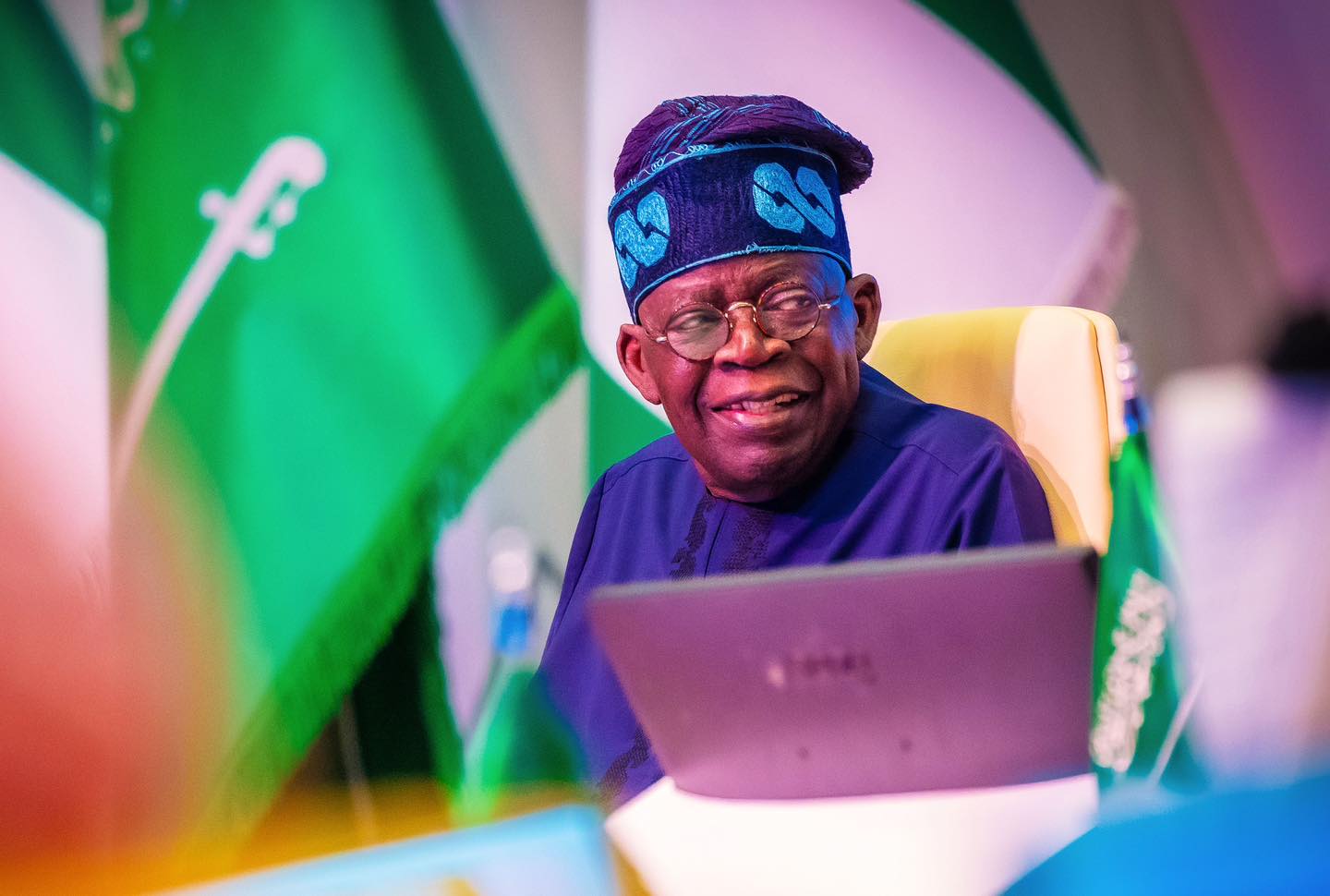
President Bola Ahmed Tinubu on Saturday in Riyadh, Saudi Arabia, began his deliberation with the Captains of Saudi Arabian Industry at the Nigeria-Saudi Investment Roundtable by making clear that with his team in place, every negative perception or notion about what Nigeria has represented in the past with respect to the ease of doing business, monetary policy, and trade cooperation is no longer applicable now and in the future of Africa’s largest economy, which he firmly declared is “open for business.”

“I believe in this team that I have brought from Nigeria. When I took office, I declared the immediate commencement of bold and fundamental economic reforms. We have executed them, and we sustain the reform process. Today, I declare that red tape is gone!

“I believe in the full application of free market economics. Your money will flow easily in and easily out. The arbitrage around our nation’s old foreign exchange policy regime and the corruption that was associated with it is also gone!

“We took on those bold endeavours from day one in preparation for serious investors like you seated here. The greatest opportunity for any entity to prosper lies in its human capital. My team is prepared. We can produce. Our market is full of Nigerian youths who are brilliant, highly educated, industrious, and passionate about innovation and engagement with world-class services.

“The navigation of the ship of this great nation lies in the membership seated here. We are ready to answer all of your questions directly, even into this night if need be. The sky is not just the limit, but it is the destination for our two countries and peoples,” the Nigerian President confidently affirmed.
Saudi Arabia’s Trade and Investment Minister, Kahlid El-Falih, noted the passion and candid expression of the Nigerian leader, saying that after listening to the President speak from his heart without any written remarks about what is possible between the two nations, Nigerians can expect that the Saudi investment community will respond not in words alone, but with substantial new investment across several sectors of the Nigerian economy.
“The Minister of Commerce and I will be visiting Nigeria either before the end of this year or very early next year with a very large delegation of Saudi CEOs from all key sectors. We know you are ready for business, so we do not want to come to Nigeria for any exploratory discussion. We are coming for implementation. It is an action visit.

“Mr. President, you agree with me that good intentions alone will not take us anywhere, so we will prepare well with your team and our investors will align with your officials, beginning now, to develop a concrete work plan of investments in the key sectors for takeoff when we meet again. When we meet soon in Abuja, it will be to sign and begin delivery on all agreements. We will also use the opportunity to formally inaugurate the Nigeria-Saudi Business Council.

Saudi Arabia’s Commerce Minister, Majid bin Abdullah Al Qasabi, previewed how Saudi Arabia can further contribute to the soft infrastructural reforms needed to unlock game-changing quantums of foreign direct investment in Nigeria.

“We have signed an agreement with the World Economic Forum on the reform of the services sector in Africa. In developed economies, the services sector contributes enormously to GDP. But in the developing world, we tend to focus on goods. So, we would like to make Nigeria the pilot country in this agreement with WEF to study Nigeria’s service challenges to make it seamless and make the supply chains across sectors streamlined and raised to international standard to enhance Nigeria’s economic and investment viability over the long-term,” he stated.

Chairman of Dangote Industries, Alhaji Aliko Dangote told Saudi investors that Nigeria, under the leadership of President Bola Tinubu, will be unearthed to the world as a foremost global investment haven.

“What I always say about Nigeria is that it is the world’s best kept secret in terms of investments and returns. We are also looking to ensure that our investments are a two-way process. Nigerian companies have a lot of value to add to the Saudi economy, and we look forward to working together in expanding our Nigerian operations as well. The soon coming launch of the Nigeria-Saudi Business Council will be a huge opportunity for both countries to expand on what has been established here.

At the Investor Roundtable, dozens of Chief Executive Officers from several Saudi conglomerates specializing in construction, finance, new and traditional energy, healthcare, agriculture, electric power, mining, aviation, telecommunications, creative arts, and hospitality were present and made their exploratory pitches to President Tinubu on areas of tangible collaboration.

Taking notes, the President listened carefully with eyes fixed on each investor as they made their contributions concerning new investment opportunities in Africa’s largest market.

“I have listened to all of you very intently, and I am not only impressed, but I am determined to be your partner in progress and prosperity. Nigeria will reward your faith. Our people are ready, and we will not disappoint,” President Tinubu concluded.

The Nigerian government delegation comprised of the Executive Governors of Bauchi, Niger and Katsina States; Minister of Finance & Coordinating Minister of the Economy, Mr. Wale Edun; Minister of Budget & Economic Planning, Sen. Abubakar Bagudu; Minister of Industry, Trade & Investment, Dr. Doris Uzoka-Anite; Minister of Communications, Innovation & Digital Economy, Dr. Bosun Tijani; Minister of Agriculture, Sen. Abubakar Kyari; Minister of Humanitarian Affairs & Poverty Alleviation, Dr. Betta Edu; and Minister of State for Petroleum Resources (Oil), Sen. Heineken Lokpobiri.
The Nigerian business delegation comprised of the Chairman of Dangote Industries, Alhaji Aliko Dangote; Chairman of the Chagoury Group, Amb. Gilbert Chagoury; President of Flour Mills Nigeria, Mr. John Coumantaros; CEO of Oando Energy Company, Mr. Wale Tinubu and many others.


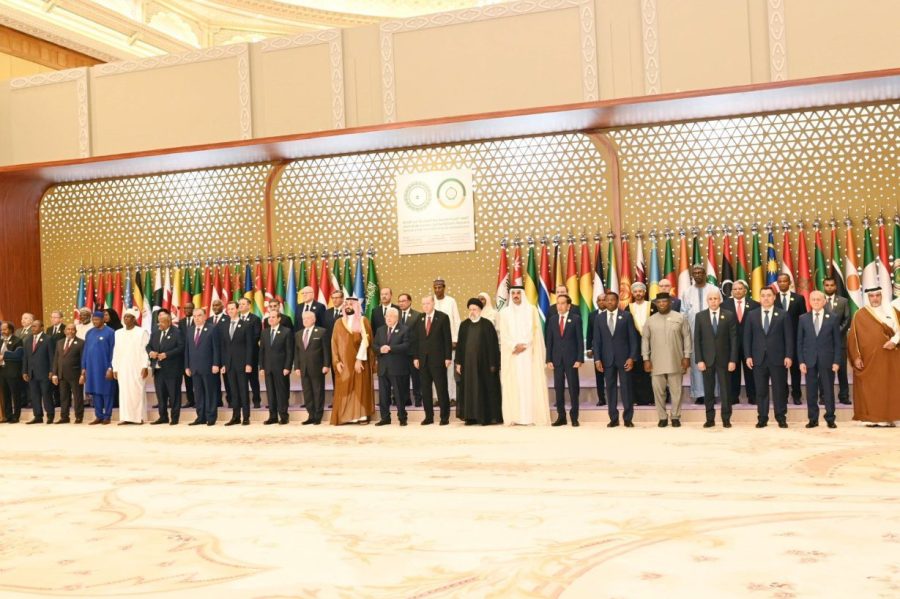
The Joint Arab Islamic Extraordinary Summit, convened on Saturday, November 11, in Riyad, Saudi Arabia, has condemned Israel’s military offensive in Gaza as war crimes and barbaric killings of Palestinians, as it also called for a convening of an international peace conference through which a realistic peace would be launched.

A communique from the Summit attended by world leaders of states and governments of Organisation of Islamic Cooperation and the League of the Arab States, called for an immediate halt to all Israeli military operations in Gaza and rejected any rationalisation of the war, claiming it was a continuation of the 1967 aggression against Palestinians in Gaza, the West Bank, Al-Quds Al-Sharif, and East Jerusalem.

The Summit demanded for a decisive and binding resolution by the United Nations Security Council that will impose a cessation of aggression and put an end to Israeli occupation practices that violate international law, international humanitarian law, and international legitimacy resolutions, the most recent of which is UNGA Resolution No. AES-101.25 dated 10/26/2013.

The Summit charged the UN Security Council to “adopt an immediate resolution condemning Israel’s barbaric destruction of hospitals in the Gaza Strip, the prevention of the entry of medicine, food and fuel into it, and the cutting- -off of electricity, water supply and basic services, including communication and internet services, being a collective punishment that constitutes a war crime under international law.”

It said failure to heed to the demands amounts to legitimization of Israel’s violent onslaught, which ends in the deaths of innocent people, children, the elderly, and women, and the destruction of Gaza, adding that it was imperative for Israel to lift the blockade it has imposed on the Gaza Strip for years.

The Summit condemned some nations’ shipment of arms and ammunition to Israel, which it said have been used to commit horrific crimes such as the killing of Palestinians and the destruction of their houses, hospitals, schools, mosques, churches, and other facilities, asking, therefore, for the International Criminal Court Prosecutor to complete the investigation into Israel’s war crimes and crimes against humanity committed against the Palestinian people in all occupied Palestinian territories, including East Al-Quds.

The General Secretariats of the Organisation of Islamic Cooperation and the League of Arab States was mandated to establish two joint specialised legal monitoring units to document the crimes, with a view to “Prepare legal arguments regarding all violations of international law and international humanitarian law committed by Israel, the occupying power, against the Palestinian people in the Gaza Strip and the rest of the occupied Palestinian territories, including East Al-Quds.”

The Summit condemned the killings of journalists, children, and women, as well as the targeting of paramedics, and urged the Organisation for the Prohibition of Chemical Weapons to investigate Israel’s intentional use of banned chemical weapons on the civilian population in Gaza.

It said it was rejecting any proposals involving the separation of Gaza from the West Bank, including East Al-Quds, and insisted that any approach to Gaza’s future must be placed within the context of a comprehensive solution that guarantees the unity of Gaza and the West Bank as the territory of the Palestinian State, which must be embodied in a free, independent, sovereign state with East Al-Quds as its capital along the borders of June 4, 1967.

The Joint Arab Islamic Extraordinary Summit was attended by Nigeria’s President, Bola Ahmed Tinubu, as well as other prominent government figures.


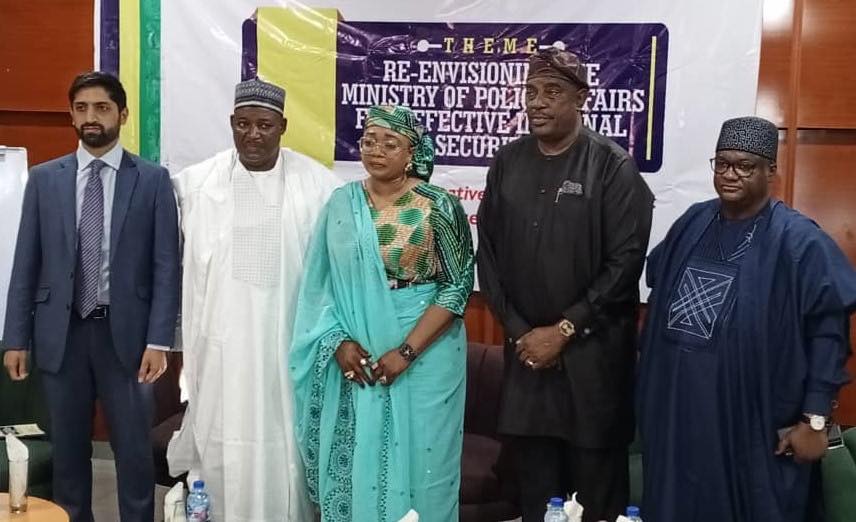
The Honourable Minister of State for Police Affairs, Hajia Imaan Sulaiman-Ibrahim has pointed out that the key mandates of the Ministry are developing and implementing a harmonized police reform report, amending the Police Act, executing Mr President’s directive on the withdrawal of police personnel from VIP security duties, and developing a community policing strategy,

She stated this during a 2-Day Retreat for the Directorate cadre with a theme Re: Envisioning the Ministry of Police Affairs for Effective Internal Security: strengthening Administration and Management Functions for Resilience and Efficiency holding at the Wetland Hotel, Abuja.

The Minister stated that the mandates are not mere tasks but transformative initiatives that can enhance internal security in Nigeria noting that the two-day management retreat will inspire a collective commitment to align efforts of the Ministerial mandate to contribute to the realization of Mr. President’s vision for a renewed, highly effective Nigeria Police Force.

She recalled that the Nigeria Police Force finds itself at a critical juncture, and currently struggling with the consequences of decades of neglect that have hindered its ability to fulfill its constitutional mandate.

In her words. “the Ministry of Police Affairs has also not been spared. However, given Mr President’s commitment to reforming the Nigeria Police Force, the Ministry is now positioned at the forefront of the Police transformation agenda, and it must rise to the challenge. The Ministry must bear this weighty responsibility of ensuring coordination and creating the enabling frameworks to steer the Nigeria Police Force towards improved technical and operational effectiveness”.

Imaan opined that management staff must demonstrate unwavering commitment and the will required to yield tangible results adding that the Police Inspectorate Department, in particular, should evolve its operations to focus on robust Monitoring, Evaluation, Accountability, and Learning.
She said, “Reports must be factual, practical, evidence-based, and serve as critical tools for enhancing police performance. It must champion the review of the curriculum of the training institutions to ensure they are reflective of the evolving landscape of law enforcement, incorporating contemporary practices and international standards”.

The Minister charged the Police Service and Planning, Research, and Statistics Department to ensure administrative optimization and relevant policies as well as procedures for the Police to be up to date, adoption of Cutting-edge Technology, intelligence-led, technology-driven, inclusive, and community-based Police Force in Nigeria. “Fostering partnerships with renowned research institutions and staying current with global trends, this department will play a vital role in shaping evidence-based strategies for the Nigeria Police Force. She stressed.

In his goodwill message, the representative of the British High Commissioner to Nigeria, Head of the Conflict and Security Programme (Nigeria and Lake Chad Basin), Mr. Annup Vyas said that the United Kingdom is committed to Nigeria’s Police reforms and ready to do more in the spirit of partnership adding that they are interested in the plan for the future, how to adapt and identify new opportunities that will help the need of Nigeria system.

In his contribution, the Chairman, of the Police Service Commission, Dr. Solomon E. Arase expressed that the Nigeria Police Force is fundamental to the Ministry, as to the Commission adding that the principal mandate of both organizations is to ensure the smooth functioning and effectiveness of the Nigeria Police Force.

In his welcome address, the Permanent Secretary, Ministry of Police Affairs, Dr. Nasir Sani-Gwarzo stated that the retreat is targeted at improving efficiency and enhancing performances of the service, in the face of the current global dynamics.

In his words, “I would like to encourage every participant at this retreat to be resilient in service delivery. We must never tire of improving ourselves and our performance; we must never be shy of telling ourselves the truth”.
He added that to avoid current false alarms being raised by criminals in society, the Ministry and Nigeria Police Force would be guarded with evidence-based statements on issues in the society.


NAPAfrica, Africa’s leading Internet eXchange Point (IXP) and the sixth largest exchange globally, has welcomed social media platform TikTok to its growing community.


At the same time, NAPAfrica announced a significant milestone in its growth journey by surpassing the 4Tbps (Terabits per second) traffic milestone, solidifying its position as the pivotal exchange for internet traffic across the African continent. NAPAfrica reached the 3Tbps traffic threshold in March 2023, representing a 33% growth in traffic volumes in under a year.


“The presence of over 250 carriers and networks is the drawcard for content providers like TikTok to join the exchange,” says Michele McCann, Head of Platforms at Teraco. “One of the most significant benefits of an active peering community (or IXP) is the cost-effective, efficient distribution of content to the consumer – and the demand for business services like cloud and entertainment just continues to increase.


“This continued surge in data traffic is primarily thanks to an African internet community that has embraced the value of peering, the increasing use of data-intensive applications, enterprises continuing to move into the cloud, and the ever-increasing demand for video, content, and gaming delivery services. These trends have driven greater traffic levels between cloud and service providers, enterprises, and end users.


“This rapid traffic growth mirrors the increasing demand by users for content and cloud services via NAPAfrica. Our steadfast commitment lies in propelling digital transformation throughout Africa, empowering our clients to cater to their user communities across the continent seamlessly,” she adds.


Content providers and enterprises looking to expand into Africa can accelerate their plans by partnering with the right infrastructure providers as businesses commit to moving more of their functions to the cloud. Increased investment by global cloud providers is driving wider availability of internet-based digital services across Africa.


Most enterprises in larger African economies prefer a hybrid cloud approach to their IT infrastructure, allowing them to select the most suitable workload solution, avoid large capital expenditure by moving from capex to opex, and better control their data. This includes adopting Everything as a Service (XaaS), which allows businesses to increase operational agility by deploying IT infrastructure without waiting for physical hardware to be deployed.


NAPAfrica has become organisations’ cornerstone, supporting their internet and communication needs and cloud adoption strategies. The continued investment into critical telecommunications infrastructure in Africa has contributed enormously to the growth of NAPAfrica, as has the continent’s demand for content and cloud services like Microsoft Azure and AWS.


Enterprises are leveraging the benefits of peering by connecting with cloud deployments, networks, security providers, and content providers within the NAPAfrica ecosystem to move to a digital economy. Increased network demand to service remote users has driven the adoption of key cloud and security applications. These include Akamai, Amazon, Cloudflare, Microsoft, and Zscaler.


Established in 2012, NAPAfrica today has over 560 members actively peering and has grown to become Africa’s biggest internet exchange and the sixth largest globally by the number of members, playing a pivotal role in transforming Africa’s internet access and interconnection.


Ends.

About NAPAfrica

Home to global carriers, cloud providers, content delivery networks (CDNs), ISPs, internet security, and gaming platforms, NAPAfrica is the continent’s largest aggregation point. In a world where the ease of interconnection, seamless peering arrangements, and platform reliability are essential, the NAPAfrica internet exchange delivers. NAPAfrica operates internet exchange points (IXPs) within Teraco’s Cape Town, Durban, and Johannesburg data centres that service the Southern Africa region. The IXP’s founding goal is to help make internet access more accessible for Africa. With more than 560 member ASNs from over 50 countries, NAPAfrica is the sixth largest IXP globally. Members are encouraged to participate in online discussions and meet at technical events throughout the year.


About Teraco

Teraco, a leading carrier-neutral colocation provider in Africa, is the first provider of highly resilient, vendor-neutral data environments in sub-Saharan Africa. With its world-class data centre infrastructure and network-dense ecosystems, Teraco forms a vital part of the African Internet’s backbone and is essential to the modern enterprise’s digital transformation strategy. Teraco is majority-owned by Digital Realty (NYSE: DLR) – offering customers a global data centre platform designed to enable digital businesses to scale within a highly connected data community across 300+ data centres in 50+ metros and 25+ countries on six continents – together with a continuing interest maintained by a consortium of private equity investors, including Berkshire Partners LLC and Permira. For more information, please visit teraco.co.za or follow us on LinkedIn and X.


About Digital Realty

Digital Realty brings companies and data together by delivering the full spectrum of data center, colocation and interconnection solutions. PlatformDIGITAL®, the company’s global data center platform, provides customers with a secure data meeting place and a proven Pervasive Datacenter Architecture (PDx®) solution methodology for powering innovation and efficiently managing Data Gravity challenges. Digital Realty gives its customers access to the connected data communities that matter to them with a global data center footprint of 300+ facilities in 50+ metros across 25+ countries on six continents. To learn more about Digital Realty, please visit digitalrealty.com or follow us on LinkedIn and X.


The domino effect of a stolen password


The digital era we live in is a double-edged sword. While it offers convenience and accessibility, it also poses risks, especially when it comes to our personal data and online security. One critical aspect that is often underestimated is the power of using strong passwords. With Black Friday drawing near and online activity peaks, it’s a good time to think about how passwords are managed and why good password hygiene is essential to safe online shopping, says Carey van Vlaanderen, CEO of ESET South Africa.


The vulnerability of shared or recycled passwords

Having one password for multiple accounts is like placing all your eggs in one basket. If a hacker manages to crack that single code, a domino effect is set in motion, with potentially damaging results. “Imagine a scenario where your phone, which acts as a gateway to your digital life, falls into the wrong hands. This stolen password can open a Pandora’s box of issues, such as unauthorised purchases made by a hacker exploiting your saved payment details on your online shopping apps,” explains van Vlaanderen. This could also provide access to sensitive information, such as your personal data, purchase history, and shipping addresses, which become vulnerable to misuse. One stolen password can lead to an individual’s identity being compromised, as the same password can be used to log in to other accounts, allowing the hacker free rein to assume your identity and undermine your privacy.


Tips for effective password management

Stringent password hygiene is essential to avoid falling victim to password theft and identity compromise. Craft distinctive, robust passwords for each online account, combining letters, numbers, and special characters. Avoid password predictability by staying clear of easily guessable information, such as birthdays or names. “Consider using a reputable password manager to generate and securely store complex passwords. ESET Smart Security Premium, equipped with ‘ESET Password Manager,’ offers a robust tool that secures password management,” she says.


Use smart technology to maintain password integrity

At a personal level, implementing two-factor authentication on all accounts and devices adds a critical extra layer of security, ensuring that even if one password is compromised, unauthorised access remains challenging. “To guard against phishing attempts to steal passwords, it’s wise to use security tools with anti-phishing protection while exercising caution with unsolicited communications, verifying website authenticity before entering your credentials, and enabling email filters that block known phishing attempts,” notes van Vlaanderen.


Maintain password security through the lines of defence

Securing account recovery options is also a critical step in maintaining the safety of your online accounts. This means using strong, unique passwords for recovery email addresses (the account that password reset information is sent to in the case of a forgotten password), enabling 2FA for account recovery, and ensuring recovery information is kept up-to-date and secure. This account recovery email address is the last line of defence against password theft and is all too often overlooked until it’s too late.


What happens when a password is compromised?

Unauthorised access to accounts is unethical and illegal, carrying potential criminal charges and severe penalties. “However, this isn’t stopping criminals from attacking individuals and businesses in various ways. Regularly backing up data is crucial in case of a breach, as this offers a way to recover information. In the event of a password breach, it’s vital to take swift action to change the compromised password immediately, keep an eye on all accounts for unauthorised activity, and promptly notify the platform or service provider,” says van Vlaanderen.


Make better, safer e-commerce choices

Van Vlaanderen says vigilance and education are the best defence. “Stay informed about cybersecurity best practices, keep devices and software updated, and exercise caution when sharing personal information online. As Black Friday approaches, take the time to fortify digital boundaries to ensure a safer, more secure, and more enjoyable online experience.”