
By NJ Ayuk, Executive Chairman, African Energy Chamber (www.EnergyChamber.org)


Behind every discovery, final investment decision (FID), and first oil announcement in our continent are companies of all sizes, advancing our energy industry and bringing Africans closer to realizing the energy security and prosperity that their petroleum resources represent.

Collectively, these companies are validating the African Energy Chamber’s (AEC’s) long-held assertion that the African continent represents the next frontier for energy exploration and production.

Despite concerns over corporate divestment from the African oil and gas sector in recent years — moves made largely in an effort to conform to expanding global ESG expectations — international oil companies (IOCs) and African national oil companies (NOCs) continue to be the key driving forces behind Africa’ short-term supplies, hydrocarbon potential, medium-term production, and spending.

As detailed in the African Energy Chamber’s (AEC) newly released report, “The State of African Energy 2024 Outlook,” NOCs collectively hold the continent’s largest working interest share of African hydrocarbon potential and supplies due to their involvement in upstream operations while IOCs hold the second largest share from their legacy operations in both North and sub-Saharan Africa.

But we are also seeing increased activity by international NOCs (INOCs) and independent companies in Africa. These entities are also contributing to the overall success of Africa’s fossil fuel industry.

National Oil Companies in Leading Roles
As our new outlook report explains, we expect African NOC flow rates to reach approximately 2.63 million barrels per day (bpd) of liquids and 13.55 billion cubic feet per day (Bcf/d) of gas in 2023. In 2024, while we expect NOCs’ total liquid product to drop to 2.57 bpd of liquids, we are forecasting a significant increase in their natural gas production: to 14.17 Bcf/d.

Of all the NOCs operating across Africa, the efforts of just four amount to the lion’s share of the total supply. Estimates predict that, together, Sonatrach of Algeria, Angola’s Sonangol, Libya’s National Oil Corporation, and the Nigerian National Petroleum Corporation (NNPC) will be responsible for 85% of liquids and 88% of natural gas produced by African NOCs between 2023 and 2024.

The prominence of oil and gas production in the nations that these NOCs represent is due in part to an open and cooperative approach to development and a commitment to progress shared between them.

In September 2023, having failed to meet its OPEC quota and contending with a decline in production, the NNPC announced a substantial reduction of its standard contract negotiation period from three years to just six months. Formalizing the new terms in an agreement signed with oil majors Shell, Chevron, Eni, ExxonMobil, and TotalEnergies, the NNPC hopes they will help expedite foreign investment in Nigeria’s hydrocarbon sector. With $13.5 billion secured at present, Nigeria aims to reach a production level of 2.1 million bpd by December of next year.

Amidst the Angolan oil and gas industry’s return to a more prosperous position, which this year saw the nation outpace Nigeria, taking the top spot among Africa’s largest oil producers, Sonangol brokered a deal with the China National Chemical Engineering Company (CNCEC) outlining the development of a refinery in Lobito. With a projected production rate of 200,000 bpd and a slated completion date in 2026, the refinery should eventually reduce Angola’s reliance on imports for gasoline and diesel.

As we encourage every hydrocarbon-bearing African nation to engage in uncomplicated, mutually beneficial trade negotiations — our own optimism grows

In Algeria, Sonatrach has been working with Italian multinational energy company Eni on natural gas production and the export of liquefied natural gas (LNG) to Europe. Since signing a Memoranda of Intent in January of this year outlining future joint projects, including upstream decarbonization and energy transition initiatives, the two companies have made progress on these efforts, meeting in Algiers as recently as October 2023 to discuss fugitive gas emission detection and flaring-down options at Sonatrach’s natural gas fields.

Other recent developments include the Memorandum of Understanding established between Norway’s largest oil and gas producer, Equinor, and Libya’s NOC. The agreement includes plans to evaluate Libya’s maritime region in the Mediterranean for its oil and gas potential and extend oil and gas sector training to local personnel.

Oil Majors Advancing Exploration
In March of this year, in partnership with Shell and QatarEnergy, Namibia’s national petroleum corporation, Namcor, publicized a third oil discovery in the Jonker 1-X well in the Orange Basin off Namibia’s southern shore, adding to the sizeable discoveries made by Shell and France’s TotalEnergies in the Graff-1X and Venus-1X wells in 2022. Namibia expects to see first oil from these finds by 2030.

At the Angola Oil and Gas 2023 conference and exhibition in September, Melissa Bond, Managing Director for ExxonMobil Angola reported 18 new discoveries in Block 15 and plans for further drilling in the Namib Basin next year.

Numerous oil and natural gas discoveries in West Africa continue to show great promise as well. Considering just the BP-Kosmos Yakaar-Teranga discovery in Senegal, BP and Kosmos’ Orca discovery in Mauritania, and Eni’s Bailene discovery off the Ivory Coast amount to 3.6 billion barrels of oil equivalent, with additional sites in Ghana, Gabon, and Angola, this region is an exploration hot spot.

As exploration is crucial to sustainability for Africa’s oil and gas industry, the AEC is pleased to report active exploratory drilling schedules over the next two years, with oil majors operating in Algeria, Egypt, Nigeria, and Namibia as the main drivers behind these efforts.

Filling Voids and Capitalizing on Opportunities
Where international corporate divestment from Africa’s oil industry is occurring, smaller players are taking up the slack.

Whether under public pressure to decrease emissions and focus on sustainable development goals or stakeholder pressure to sell off mature fields in pursuit of higher returns, as oil and gas majors pull away from portions of their operations, INOCs and wholly independent entities remain eager to take over where they left off.

By taking on ventures like the re-development of declining wells to boost production, these smaller companies are helping to satisfy the increasing global demand for fossil fuels while offering continued support to host communities facing the perils of abandonment otherwise, and their cumulative efforts add up to a significant percentage of Africa’s energy economy.

As documented in our 2024 outlook report, the 24-month period of 2023-2024 will see INOCs like Equinor, PetroChina, the China National Petroleum Corporation (CNPC), and several more responsible for three-quarters of all INOC liquids output in Africa. In the same time frame, we project that independents like the APA Corporation, Marathon Oil, Wintershall DEA, Perenco, Seplat Energy, Tullow, and ConocoPhillips will collectively produce the third-highest natural gas output.

As the AEC continues to advocate for a thriving African energy industry and encourage investment in our continent — just as we encourage every hydrocarbon-bearing African nation to engage in uncomplicated, mutually beneficial trade negotiations — our own optimism grows.

For the AEC, each outlook report we publish indicates that the African oil and gas industry is secure, strengthening with time, and well on its way to becoming an invaluable asset to the global energy market.


Check Point® Software Technologies Ltd. (https://www.CheckPoint.com/), a global leader in cybersecurity solutions, has released its Global Threat Index for October 2023, unveiling an alarming trend in cyber threats. The Remote Access Trojan (RAT) NJRat has dramatically risen from sixth to second place, with a particular focus on targeting government agencies and organizations in the Middle East and Africa. This escalation in cyber threats has been particularly severe in Africa, with Mauritius ranking 6th, Nigeria 11th, Morocco 15th, and Kenya 25th in terms of being targeted and attacked. South Africa follows, ranking 55th globally.


Download document: https://apo-opa.co/3MHq2pZ


In addition, the report highlights the expanding reach of the sophisticated RAT AgentTesla, driven by a new and complex mal-spam campaign using corrupted email attachments. The education sector continues to be the prime target, underscoring the ongoing vulnerability of this industry to cyber attacks.


Last month, AgentTesla was found being disseminated through archive files that contained a malicious Microsoft Compiled HTML Help (.CHM) extension. These files, disguised as typical order and shipment documents, were distributed via emails with .GZ or .zip attachments, tricking recipients into downloading the malware. Once installed, AgentTesla exhibits a range of harmful capabilities, including keylogging, capturing clipboard data, accessing file systems, and secretly transmitting stolen data to a Command and Control (C&C) server.


“We cannot overlook the sophisticated tactics used by hackers to distribute malware, such as impersonating trusted brands or using malicious email attachments,” said Rudi van Rooyen, Sales Engineer at Check Point Software. “As we enter the busy shopping season in November, it’s crucial to stay alert. Cybercriminals are taking advantage of the increased online shopping activity, and no region, including Africa, is immune to these threats.”


CPR also revealed that “Zyxel ZyWALL Command Injection (CVE-2023-28771)” was the most exploited vulnerability, impacting 42% of organizations globally, followed by “Command Injection Over HTTP” which impacts 42% of organizations worldwide. “Web Servers Malicious URL Directory Traversal” was the third most used vulnerability, with a global impact of 42%.


Top malware families and their impact in Africa

*The arrows relate to the change in rank compared to the previous month.


Formbook was the most prevalent malware last month with an impact of 3% worldwide organizations, followed by NJRat with a global impact of 2%, and Remcos with a global impact of 2%.


1.     ↔ Formbook – Formbook is an Infostealer targeting the Windows OS and was first detected in 2016. It is marketed as Malware as a Service (MaaS) in underground hacking forums for its strong evasion techniques and relatively low price. FormBook harvests credentials from various web browsers, collects screenshots, monitors and logs keystrokes, and can download and execute files according to orders from its C&C. Its impact in Kenya and Nigeria is significant at 16.9% and 9.2% respectively, while impact in South Africa is lower at 3%.


2.     ↑ NJRat – NJRat is a remote accesses Trojan, targeting mainly government agencies and organizations in the Middle East. The Trojan has first emerged in 2012 and has multiple capabilities: capturing keystrokes, accessing the victim’s camera, stealing credentials stored in browsers, uploading and downloading files, performing process and file manipulations, and viewing the victim’s desktop. NJRat infects victims via phishing attacks and drive-by downloads, and propagates through infected USB keys or networked drives, with the support of Command & Control server software. NJRat’s impact in South Africa is just above 2% while Morrocco is at 8%.


3.     ↓ Remcos – Remcos is a RAT that first appeared in the wild in 2016. Remcos distributes itself through malicious Microsoft Office documents, which are attached to SPAM emails, and is designed to bypass Microsoft Windows UAC security and execute malware with high-level privileges. While its presence globally is concerning, Remcos has not made a a significant appearance in Africa.


 Top Attacked Industries in Africa


Last month Education/Research remained in first place as the most attacked industry globally, followed by Communications and Government/Military. However, in Africa the top industries that came under attack are:


We cannot overlook the sophisticated tactics used by hackers to distribute malware, such as impersonating trusted brands or using malicious email attachments

1.     Communications

2.     ISP/MSP

3.     Finance and Banking

4.     Government and Military


Top exploited vulnerabilities


Last month, “Zyxel ZyWALL Command Injection (CVE-2023-28771)” was the most exploited vulnerability, impacting 42% of organizations globally, followed by “Command Injection Over HTTP” which impacts 42% of organizations worldwide. “Web Servers Malicious URL Directory Traversal” was the third most used vulnerability, with a global impact of 42%.


1.     ↑ Zyxel ZyWALL Command Injection (CVE-2023-28771) – A command injection vulnerability exists in Zyxel ZyWALL. Successful exploitation of this vulnerability would allow remote attackers to execute arbitrary OS commands in the affected system.


2.     Command Injection Over HTTP (CVE-2021-43936, CVE-2022-24086) – A command Injection over HTTP vulnerability has been reported. A remote attacker can exploit this issue by sending a specially crafted request to the victim. Successful exploitation would allow an attacker to execute arbitrary code on the target machine.


3.     ↓ Web Servers Malicious URL Directory Traversal (CVE-2010-4598,CVE-2011-2474,CVE-2014-0130,CVE-2014-0780,CVE-2015-0666,CVE-2015-4068,CVE-2015-7254,CVE-2016-4523,CVE-2016-8530,CVE-2017-11512,CVE-2018-3948,CVE-2018-3949,CVE-2019-18952,CVE-2020-5410,CVE-2020-8260) – There exists a directory traversal vulnerability on different web servers. The vulnerability is due to an input validation error in a web server that does not properly sanitize the URL for the directory traversal patterns. Successful exploitation allows unauthenticated remote attackers to disclose or access arbitrary files on the vulnerable server.


Top Mobile Malwares

Last month Anubis remained in first place as the most prevalent Mobile malware, followed by AhMyth and Hiddad.


1.     Anubis – Anubis is a banking Trojan malware designed for Android mobile phones. Since it was initially detected, it has gained additional functions including Remote Access Trojan (RAT) functionality, keylogger, audio recording capabilities and various ransomware features. It has been detected on hundreds of different applications available in the Google Store.


2.     AhMyth – AhMyth is a Remote Access Trojan (RAT) discovered in 2017. It is distributed through Android apps that can be found on app stores and various websites. When a user installs one of these infected apps, the malware can collect sensitive information from the device and perform actions such as keylogging, taking screenshots, sending SMS messages, and activating the camera, which is usually used to steal sensitive information.


3.     Hiddad – Hiddad is an Android malware which repackages legitimate apps and then releases them to a third-party store. Its main function is to display ads, but it can also gain access to key security details built into the OS.


Check Point’s Global Threat Impact Index and its ThreatCloud Map are powered by Check Point’s ThreatCloud (https://threatmap.CheckPoint.com/) intelligence. ThreatCloud provides real-time threat intelligence derived from hundreds of millions of sensors worldwide, over networks, endpoints and mobiles. The intelligence is enriched with AI-based engines and exclusive research data from Check Point Research, the intelligence and research arm of Check Point Software Technologies.

Faith Cathedral International Ministry cordially invites the general public to join them for their much-anticipated Men’s Annual Convention scheduled for November 17th to 19th at the church’s premises. This event coincides with the Annual Thanksgiving celebration on the concluding day.

The convention will feature Pastor Fred Obetoh, the esteemed General Overseer of the church, who will share his profound experiences as a father and a dedicated preacher. The Men’s President, Uchenna Alaribe, emphasizes the convention’s inclusivity, stating, “It promises to be a wholesome experience, offering valuable takeaways ranging from business networking to spiritual and even real estate development.”

Jude Awoko, a key member of the coordinating team, expresses enthusiasm, declaring, “In this era of economic challenges, we aim to showcase that God remains constant in His provision and protection. The convention will elevate attendees from spiritual growth to financial and social prosperity. Don’t miss this one-of-a-kind event.”

Pastor Fred Obetoh, the General Overseer of Faith Cathedral International Ministry

Event Highlights:

November 17th, Friday

Time: 5:30 PM to 7:30 PM

One Hour of Praises

Words of Exaltation

Special Prayers

November 18th, Saturday

Time: 10:00 AM to 1:00 PM

Seminars:

Health Talk for Men and Families

Entrepreneurship (How to Be Your Own Boss and Money Management)

(How to Build Your Own House/Properties/Real Estate Management)

November 19th, Sunday

Time: 9:00 AM to 12:00 PM

Sunday Service/Thanksgiving

Theme: Men of Honest Report (Acts 6:3)

All are invited to partake in this transformative experience. Please mark your calendars and join us for a weekend of inspiration, learning, and gratitude.

May God bless you as you come.

About Faith Cathedral International Ministry

Faith Cathedral International Ministry is a vibrant community committed to spiritual growth, community service, and empowerment. Led by Pastor Fred Obetoh, the ministry strives to impact lives positively through faith and action.


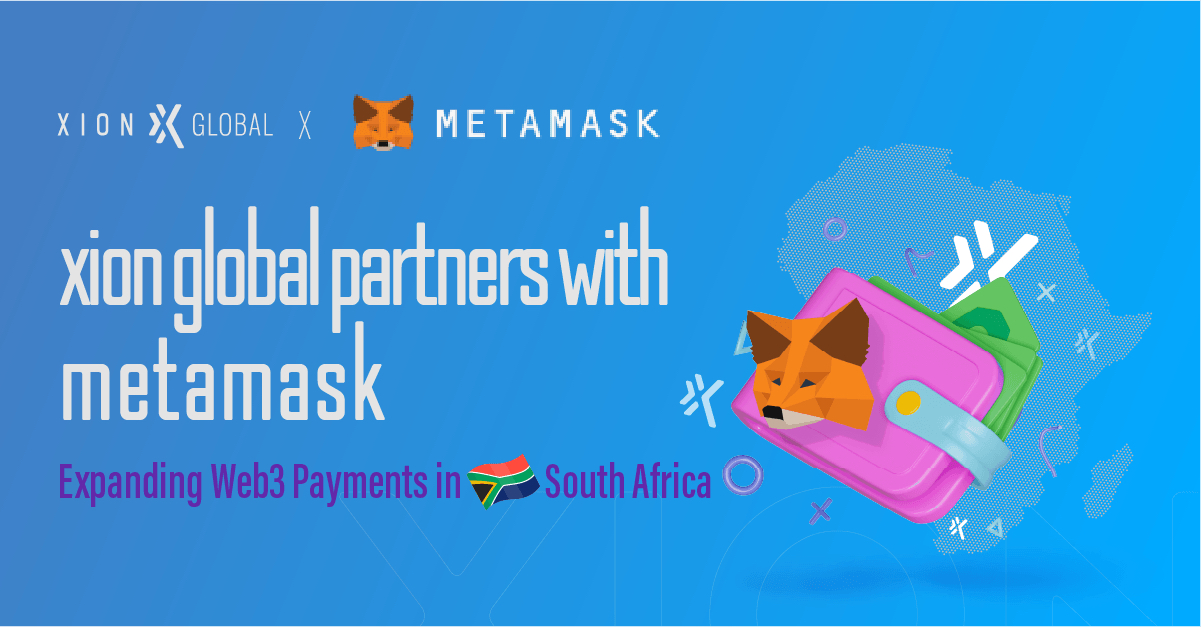
In today’s digital landscape, two prominent players are set to reshape the decentralised payments scene in South Africa: MetaMask and Xion Global. Their collaboration is not just a fusion of strengths; it’s a vision, a roadmap to the future of payments in South Africa.

Web3 Payments in South Africa

MetaMask (MM), globally recognised as the world’s leading self-custody wallet with 30+ million users, serving as a bridge to the decentralised web and a primary wallet provider for web3 payments on Xion Global. With that in mind, Xion Global offers a user-friendly web3 payment solution, ensuring that both tech enthusiasts and everyday users can navigate the crypto payments world with ease.

With MetaMask’s integration into Xion Global’s web3 payment products, South African consumers will be able to connect their MetaMask wallets and perform once-off token approvals to enable 1-click web3 payments on any of Xion Pay’s client apps.

According to a Consensys and YouGov global web3 perception survey conducted earlier this year among a representative sample of over 15,000 people aged 15-64, which included 983 respondents from South Africa, the findings indicate that 21% of South Africans currently own cryptocurrencies, and 38% have had ownership of cryptocurrencies in the past. These statistics signal that South Africans are already embracing cryptocurrency and are well-prepared to take a leading role in the web3 evolution.

Scan to Pay: Modernising Transactions

Central to this partnership is the integration with Scan to Pay, powered by Ukheshe. They are the largest QR ecosystem in South Africa that is used by more than 700,000 vendors, 14 banks and fintech companies and 94 payment service providers.

This means that whether you’re ordering online, grabbing a quick bite, or making a significant purchase, it’s as simple as scanning the QR code, choosing your connected MetaMask wallet, and clicking “Pay”.

One Click, Multiple Chains

Don’t forget Xion Global’s 1-click payment solution, powered by their Cross-Chain Payments Protocol (CCPP). This ensures users can transact effortlessly across various blockchain networks with supporting AML/KYT checks to prevent illicit funds entering the Xion ecosystem. But the innovation doesn’t end there. Xion Global is introducing a range of incentives for MetaMask users, from covering token approval gas costs to rolling out loyalty rewards and cashback offers. Every transaction is not just streamlined but also rewarding.

“Our mission at Xion Global is straightforward: to make every web3 payment as simple as a single click. Partnering with MetaMask, leveraging the robust infrastructure of Polygon Labs and Scan to Pay’s extensive user base, we’re turning this vision into reality,” shares Aeryn Quarmby – Co-Founder & COO at Xion Global.

“Thanks to the robust capabilities of the MetaMask SDK and developer APIs, we have seamlessly integrated the MetaMask wallet with Xion Global’s payment solutions. The MetaMask Provider API ensures a smooth and secure connection, enabling seamless interaction with the MetaMask wallet,” remarks Liz Mathew, Go-to-Market Lead at Consensys.

The Journey Ahead: MetaMask and Xion Global

While the immediate goal is to revolutionise South Africa’s digital payment ecosystem, there are a series of integrations in the pipeline (e.g. Embedded MetaMask, Linea, the Consensys L2 solution) to roll out web3 payment solutions across African payment and financial service providers.

The synergy between MetaMask and Xion Global is a testament to what the future of finance in Africa could look like. It’s a world where the boundaries between traditional and digital finance are blurred, offering a seamless, integrated, and rewarding financial journey for both the web3 community and traditional users.


MPG Club and Events, a global hub for Manufacturers, Distributors, and Service Providers, unveils an unprecedented opportunity for businesses with the introduction of exclusive membership packages. This initiative aims to provide world-class business owners, Original Equipment Manufacturers (OEMs), suppliers, and distributors with a platform to converge, connect, and thrive in today’s rapidly evolving business landscape.

Overview: MPG Club and Events stand as the ultimate destination, propelling business potential by forging powerful connections and accelerating success. With a focus on various sectors, including Nuclear, Government, Aviation, Oil & Gas, Medical, Construction, Agriculture, Energy Refineries, Real Estate, Production, Technology, and Agriculture, MPG Club and Events provides a comprehensive network for businesses to flourish.

Key Benefits:

  1. Networking Opportunities: By becoming a member of MPG Club, businesses gain access to a global community of executives, creating unparalleled opportunities to connect with like-minded peers, potential partners, and clients. The relationships forged within the club can lead to valuable collaborations and business ventures.
  2. Industry Insights: Membership offers exclusive access to seminars, workshops, and presentations by renowned experts in various industries. Staying updated with the latest trends, technologies, and best practices provides a competitive edge, allowing companies to remain at the forefront of innovation.
  3. Teaming Agreement: MPG Club and Events fosters collaboration through the creation of teaming agreements between members. These agreements express shared goals to work together, boosting productivity and achieving more collectively.MPG Club and Event | LinkedIn
  4. Procurement and Supply Chain: Membership provides the advantage of connecting with top-tier suppliers and Original Equipment Manufacturers (OEMs) that meet business needs. Collaboration with organizations following global best practices ensures high-quality products and services.
  5. Event Planning Services: MPG Club and Events go beyond traditional memberships by offering expert event planning and management services. Members benefit from seamless organization, invitations, and showcasing their strides to clientele and prospects.

Customized Membership Packages: Recognizing the uniqueness of each organization, MPG Club and Events offers personalized membership packages designed to match specific goals and needs. Whether aiming to grow networks, gain industry insights, or enhance brand presence, the membership choices cater to diverse objectives.

Limited-Time Offer: Businesses joining MPG Club and Events on or before December 31st, 2023, enjoy lifetime benefits without the need for annual renewals, ensuring enduring advantages for members.

Membership Tiers: Choose from exclusive membership tiers – Silver, Gold, Platinum, and Diamond, each offering a unique range of benefits thoughtfully designed to enhance the MPG Club and Events experience.

Expanded Benefits Package: MPG Club and Events members access an extended benefits package, including funding and investments, technical partnerships, research and development opportunities, capacity building, MPG teaming agreements, online training and education, and global brand visibility during events.

Conclusion: MPG Club and Events provide a unified platform offering comprehensive solutions across various sectors, addressing critical business questions. Joining the MPG Club and Events community ensures a boost in revenue potential and positions organizations at the forefront of industry advancements.


Teraco: A Digital Realty Company, Africa’s largest interconnection hub and vendor-neutral data centre provider, has announced a 30 megawatt (MW) expansion of its CT2 hyperscale data centre facility in Brackenfell, Cape Town, South Africa. The expansion is scheduled for completion in early 2025 and will incorporate the latest environmentally sustainable cooling and water management designs.


The facility expansion caters for the increasing demand by enterprise customers and hyperscale cloud providers for data centre capacity. The CT2 facility offers highly resilient and secure colocation facilities in line with Teraco’s long-term vision of enabling digital transformation across Africa.


Jan Hnizdo, CEO at Teraco, said the new CT2 facility represents a strategic addition to Platform Teraco. It offers enterprises a scalable platform for IT infrastructure deployment while providing performance, reliability, stringent security, and the widest choice of carriers and network service providers – a crucial component in building a robust interconnection strategy.


“Teraco is committed to growing its capacity footprint across its core hubs. We ensure our clients have the flexibility to scale and take advantage of the digital transformation across sub-Saharan Africa. We continue to invest significantly in the region’s ICT infrastructure and have built out Africa’s largest data centre platform. We take pride in enabling open access interconnection and providing world-class data centre infrastructure for our clients,” he said.


CT2 Phase 2 construction has commenced with the new capacity scheduled to be available in the first quarter of 2025. CT2 Phase 2 will comprise four data halls of 5.3 megawatts (MW), two data halls of 3.1MW, and a further two data halls of 2.2MW. Set to be built over three levels upon completion, the entire CT2 facility will support a total IT load of 50MW.


As part of Teraco’s broader Cape Town Campus, CT2 is connected to CT1 with diverse fibre routes and provides enterprises with direct access to Platform Teraco, a rich ecosystem of over 250 network providers, global cloud on-ramps, subsea cable systems, access to over 50 managed service providers, and direct peering at NAPAfrica, Africa’s largest internet exchange point. Clients deployed in either of these facilities can connect directly to AWS Direct Connect and Microsoft Azure ExpressRoute or via Teraco’s Africa Cloud Exchange.


As one of Africa’s most digitally connected cities, Cape Town is a logical destination for Teraco’s continued investment into data centre infrastructure on the continent. Cape Town is home to thriving digitally connected enterprises, including telecoms, financial services, e-commerce, logistics, and retail. The city benefits from its enviable location at the southern tip of Africa and is the confluence point for major subsea cable systems such as Equiano, ACE, WACS and SAT-3/SAFE. The abundance of subsea cables landing in Cape Town continues to gain momentum, with the 2AFRICA cable system landing expected soon.


CT2 has been designed to put sustainability first and minimise its environmental footprint. Incorporating state-of-the-art cooling designs with a closed-loop chilled water system that offers 100% free air cooling. This design introduces industry leading PUEs, minimising energy consumption and reducing to zero water used in the ongoing cooling process.


CT2 is the latest expansion to Teraco’s growing data centre platform. It increases the critical power load capacity at Teraco facilities to 185MW, which includes the Isando Campus JB1/JB3/JB5 (70MW), Bredell Campus JB2/JB4 (64MW), Cape Town Campus CT1/CT2 (50MW), and Durban (1MW).


Organisations working to accelerate their digital transformation use Teraco to scale their IT infrastructure dynamically, adopt hybrid multi-cloud architectures, and interconnect with strategic business partners within the Platform Teraco ecosystem of global and local clients.


Key facts CT2

  • On completion, CT2 will comprise 73,000 square metres of building structure serviced by 90 megavolt-amperes (MVA) of utility power supply.
  • Strategically located as part of the Cape Town Campus and connected to CT1 with over 6,500 interconnects.
  • The expansion will add eight data halls, taking the total facility to 16 halls with 18,000 square metres of deployment space.
  • CT2 expansion significantly adds to South and sub-Saharan Africa’s data centre infrastructure.
  • The data centre expansion is being built in line with global hyperscale requirements.
  • It will augment the existing portfolio of ISO9001, ISO27001, ISO50001, ISO14001, PCI-DSS and ISAE3402-certified data centre facilities.
  • CT2 will feature environmentally conscious designs and monitoring technology to reduce water use and improve energy efficiency.


  • At inq.Digital, We Offer Technology-as-a-Service – Akosionu

inq.Digital Nigeria, a leading-edge solutions provider has said that its service offering entails letting its customers and partners through the entire value chain of technology, from connectivity, which is a bedrock of technology, all the way down to software.

Speaking at the Africa Tech Alliance (AfriTECH 3.0) Forum held on Wednesday at The Providence Hotel, Ikeja GRA, Mr. Ifeanyi Akosionu, Managing Director/Chief Executive Officer of inq.Digital Nigeria said the digital service provider offers services from the Internet to broadband connectivity, enabling its customers to connect to their applications and last-mile customers.

“We offer co-location services for partners that are just starting out their digital transformation journey. With co-location services, you can bring your servers to our data centre. We also offer voice solutions which you can communicate with an official line to your customers. We give you the platform to be able to digitize, to be able to transform your business,” Akosionu said.

The Chief Executive Officer who spoke through Olumide Obafemi, stated that the vision of the technology startup is to imagine a better world using technology, and being able to do that by constantly learning, innovating, and leaving a lasting legacy for its teeming customers.

He disclosed that inq.Digital’s value proposition is to offer its clients and partners access to cutting-edge digital solutions and give them increased revenue opportunities by allowing them to focus more on innovation and creativity rather than focusing on their daily tasks.

He said that while ensuring that these are achieved, inq.Digital takes care of its client’s operational tasks, by making available the platform for transformation, adding that all these are done by offering competitive pricing and technical support.

“We also have in-country cloud hosting where you can spin up virtual machines, spin up databases for you, and a backup and disaster recovery service for you. In a city like Lagos, this gives you reduced latency and also allows you to comply with Nigeria’s Data Protection law that has just been signed.

“We also have partnerships with public cloud providers such as Microsoft, AWS, and Google that can provide public cloud hosting to you if you don’t want in-country cloud hosting. We are also leading the charge for the revolutionization of artificial intelligence in Africa by building systems that are enhanced and integrated with artificial intelligence.

“We are working on a solution for the FMCG industry, manufacturing industry, to be able to do object counts in their warehouse so you do not have to wait for the supervisor to go and count and have pay-off rate happened; the system can easily do that for you. You can also link it up with your CCTV so you don’t have to employ a CCTV operator, you get real-time incident events on the train,” he added.

Akosionu disclosed that inq.Digital Nigeria has a monitoring solution that can monitor an operator’s network, application and infrastructure in one dashboard and enable him to have a view, react, and be proactive in monitoring and service delivery especially when there is a DNS attack.

On cybersecurity, Akosionu said inq.Digital Nigeria believes that cybersecurity solutions help organisations reduce cyber risks and attacks, and therefore, is in partnership with some cybersecurity providers such as Sophos to enable them to deliver their cybersecurity solutions to their customers.

He stated that inq.Digital also provides Data management and data warehousing solutions that will be able to constantly meet client data across the entire business from Human Resources, finance, and procurement, to analytics, and machine learning, and access the reports on the dashboard.

Akosionu further disclosed that inq.Digital Nigeria has a contact centre solution that is integrated with Customer Relationship Management (CRM) where one can contact their customers. “It has intelligent voice recording so that when your customers call you, you can have an automated response to them and also transfer them to the necessary customer service agent.

“You also have it integrated with CRM, that way you can have your customer history and you can easily follow up with them regularly. All these services can be in the line of basically what we are talking about technology-as-a-service. A managed IT service solution can offer you that. At inq.Digital Nigeria, we offer you security, offer you application development, offer you infrastructure,” Akosionu said.

Distinguished scholar and renowned educator Professor Clement Dzidonu, President of AIT, delivered a thought-provoking address directed at the youth of Africa at the recent graduation ceremony of the Accra Institute of Technology (AIT). The event, held at the esteemed AIT campus on 14th October, brought together a gathering of accomplished graduates eager to embrace the power of knowledge to impact their field in the Artificial Intelligence (AI) era. The renowned scholar, futurist, and technology visionary shared invaluable insights on the profound impact of Artificial Intelligence (AI) on the future of Africa and the world.

In his captivating speech, Professor Dzidonu shed light on the paradoxical nature of knowledge in the age of AI, stating, “In the age of AI, the more you know, the less you know.” He emphasized the exponential growth of information and the boundless possibilities that AI presents, urging the graduating students to remain humble, curious, and open-minded in their pursuit of knowledge. Professor Dzidonu encouraged them to recognize that as Africa’s youth, they need to delve deeper into their respective fields to uncover new questions and complexities that will continuously expand their awareness of the vast unknown in the age of AI. “The vast expanse of AI capabilities continually reveals new horizons, pushing the boundaries of human knowledge”, he noted.

Expanding on this concept, Professor Dzidonu underscored the correlation between action and capability, asserting, “The more you do, the more you can do. Using knowledge acquired to do and accomplish things in one’s field is the catalyst for growth and transformation in the age of AI. Embrace innovation, take risks, and be proactive in shaping your future. As African youth, you have the power to harness technology to drive positive change on the continent and beyond.”  He emphasized the importance of applying knowledge through action, highlighting that true growth and competence arise from actively engaging with the world. Encouraging the graduates to embrace challenges and take calculated risks, he inspired them to leverage their skills and knowledge acquired at AIT to make a meaningful impact in their communities and beyond.

Professor Dzidonu’s words resonated deeply with today’s African youth, igniting a collective sense of purpose and determination. His message served as a catalyst, empowering the African youth to embrace their roles as catalysts of change in an ever-evolving world where AI reshapes industries and societies.

The AIT Graduation Ceremony, showcasing the achievements of the graduating class, symbolized the culmination of years of hard work, dedication, and intellectual growth. The event highlighted AIT’s commitment to fostering excellence in education and equipping African youth with the necessary skills and mindset to thrive in the age of AI. The graduation ceremony marked the culmination of the graduates’ academic journeys and the beginning of their role as catalysts for progress in the digital age. Professor Dzidonu’s address left a lasting impression on the graduates, inspiring them to take the lessons learned at AIT and apply them to the real world.

In a statement released by the University, the 19th graduation ceremony witnessed the graduation of a number of PhDs for the 11th time, over 300 Bachelor’s degree holders, and 14 Master’s degree recipients. Over 1,500 students in various academic programs were also matriculated into the University.

Accra Institute of Technology (AIT) [www.ait.edu.gh], ranked as the top private University in Ghana by the Ghana Tertiary Awards, is an independent technology-focused university dedicated to academic excellence and cutting-edge scientific and industrial research and R&D work. The University offers programs up to the PhD level. For the fourth consecutive year, the University was awarded the Best Technology University in Ghana Award by the Ghana Tertiary Awards. AIT also received the Best Technology-Focused University in Ghana Award from Global Business Insight of the United Kingdom.

For media inquiries or interview requests with Professor Clement Dzidonu, please contact:  Mr. Osei-Boakye, Mobile: +233-577668801 or Email: osei-boakye@ait.edu.gh


Accra Institute of Technology (AIT), the esteemed private university recognized as Ghana’s top private educational institution by the Ghana Tertiary Awards, recently hosted the 2023 edition of the Science, Technology, and Innovation Expo (STI Expo). This spectacular event took place at the university’s Knowledge City Campus in Kokomlemle, Accra on Thursday, October 19, 2023, and drew a diverse audience that included AIT’s faculty, staff, and students, industry leaders, and student representatives from selected schools and tertiary institutions in Accra.

The AIT STI Expo is an annual showcase event designed to allow AIT students to present their final-year projects to the public. The expo is conducted in collaboration with industry and commerce, serving as a bridge between academic research and real-world applications. Students from various schools within the university, including the Advanced School of Systems and Data Studies (ASSDAS), School of Advanced Technologies and Engineering Sciences (SATES), and AIT Business School (ABS), presented their research projects.

On the event’s agenda were presentations on current research undertaken by AIT’s final-year students in fields such as Engineering, Information Technology, and Business, highlighting remarkable advancements and innovations. The program also included student pitch and project plan competitions, offering valuable experience to graduating seniors in the startup process, as well as an afternoon exhibition of Senior Design Projects, which represent the pinnacle of the AIT undergraduate experience.

Accra Institute of Technology’s overarching goal is to establish itself as a hub of excellence in science, technology, and innovation. The university’s unique curriculum integrates entrepreneurial experiences, equipping students with skills in design, teamwork, project management, and business in partnership with leading industry and government collaborators.

Among the projects showcased were a wide array of innovations, including an IoT-based Palm Oil quality monitoring and notification system, a SMART UV-C Disinfecting sanitizing closet, a Domestic Power Supply Management System, an Electronic Cart (Advanced Smart Shopping Basket), a Smart Multi-User Energy Meter, a Portable Microwave Oven, and a Refrigerator operating on a Hybrid Power Source with optimal battery storage. Additionally, students presented projects related to Helmet detection and license plate recognition systems, Gaseous Pollutants Level Monitoring, Pneumonia detection, algorithm visualizers, real-time face mask, gender and age detection systems using Python, a mobile application for detecting plant diseases and pests based on deep learning and computer vision, and research on the effects of artificial intelligence on human resource functions, bancassurance’s impact on the performance of financial institutions in Ghana, and an assessment of work-related stress management practices among female staff, among others.

Professor Benjamin Aggrey Ntim, who chaired the event, emphasized AIT’s commitment to practical education, bridging the gap between industry and academia. AIT’s curricula extend beyond traditional classroom teaching and online learning, incorporating site visits to various industries, hydropower plants, and rural communities. Students gain hands-on experience by working in various industries before earning their graduation certificates.

Prof. Clement Dzidonu, the President of Accra Institute of Technology, underlined the importance of science and technology in global economic development. He urged students, particularly those in secondary schools, to take science and technology education seriously and make a positive impact on the world. The President also commended the organizers and exhibitors for their innovative STI Expo concept, encouraging all participants to prioritize sharing their research findings for commercialization. He believed that this collaboration would assist the Ghanaian business community in developing products for economic growth and prosperity.


The Executive Vice Chairman/Chief Executive Officer of the Nigerian Communications Commission (NCC), Dr. Aminu Maida, has said that the convergence of Technology-as-a-Service and infrastructure deployment marks a new era in technological advancement.


He said the emergence of Technology-as-a-Service (TaaS) stands as a beacon of innovation, providing businesses with the tools to adapt, grow, and thrive in the ever-evolving dynamic environment.


Maida, who described this convergence as a paradigm that not only fosters innovation and growth but also democratizes access to cutting-edge solutions for businesses of all sizes, implored service providers to embrace this transformative concept.


Speaking while presenting his keynote address at the Africa Tech Alliance Forum (AfriTECH 3.0) held at the Providence Hotel, Ikeja GRA on Wednesday, Maida stressed the need for service providers to leverage infrastructure deployment to drive Technology-as-a-Service, which will propel the country into a future where technological barriers are minimized, and possibilities are limitless.


Represented by Mr. Reuben Muoka, Director, Public Affairs at the NCC, Maida said that through infrastructure deployment within the TaaS model, businesses have the power to access and utilize cutting-edge technology, catering to their needs without the shackles of long-term commitments or heavy investments.


“At the heart of the five pillars of the Strategic Blueprint of the Ministry of Communications, Innovation and Digital Economy is Infrastructure. The role of critical infrastructure in enabling TaaS cannot be overemphasized; it is thus the goal of the Commission to boost Nigeria’s broadband penetration rate to 70% by the end of 2023 through the laying of 95,000 kilometres of fibre optic cables across the country.


“In a similar vein, and in line with the vision of the Ministry, we are targeting the provision of coverage for at least 80% of the country’s population, especially the underserved and unserved populations by the end of 2027,” Maida said.


The EVC, who stated that the deployment of infrastructure forms the backbone of TaaS, noted that by leveraging scalable and efficient infrastructure, organisations can harness cloud solutions, edge computing, and other advanced technologies, adding that the dynamic nature of infrastructure deployment ensures that businesses have the right tools at the right time without the constraints of physical infrastructure.


He stressed that the cornerstone of TaaS lies in its ability to revolutionise how technology deployment is approached, emphasising that traditionally, organisations would grapple with the complexities of infrastructure ownership and management, which is often a costly and inflexible endeavour.


“However, through infrastructure deployment within the TaaS framework, there is a paradigm shift where the burden of infrastructure ownership is alleviated, and the focus is shifted to accessibility, scalability, and service-oriented solutions.


While noting that the significance of TaaS is underpinned by infrastructure deployment, the NCC helmsman remarked that this marks a fundamental change in how businesses consume technology.


“It enables on-demand access to a vast array of technological resources and services, providing the flexibility to scale resources according to immediate needs, without the constraints of traditional ownership models. It is about unlocking the power of technology without being encumbered by the weight of infrastructure maintenance and management.


“This innovative approach carries with it a multitude of benefits. Firstly, it diminishes the financial burden by transforming capital expenditures into operational costs. This allows businesses to redirect resources to innovation and growth rather than fixed infrastructure expenses.


“Secondly, it offers unparalleled agility, enabling organisations to pivot, expand, or contract rapidly in response to market demands. Moreover, Infrastructure Deployment within TaaS ensures that the latest technologies and updates are readily available, eliminating the overhead of constant maintenance and upgrades,” Maida stated.