

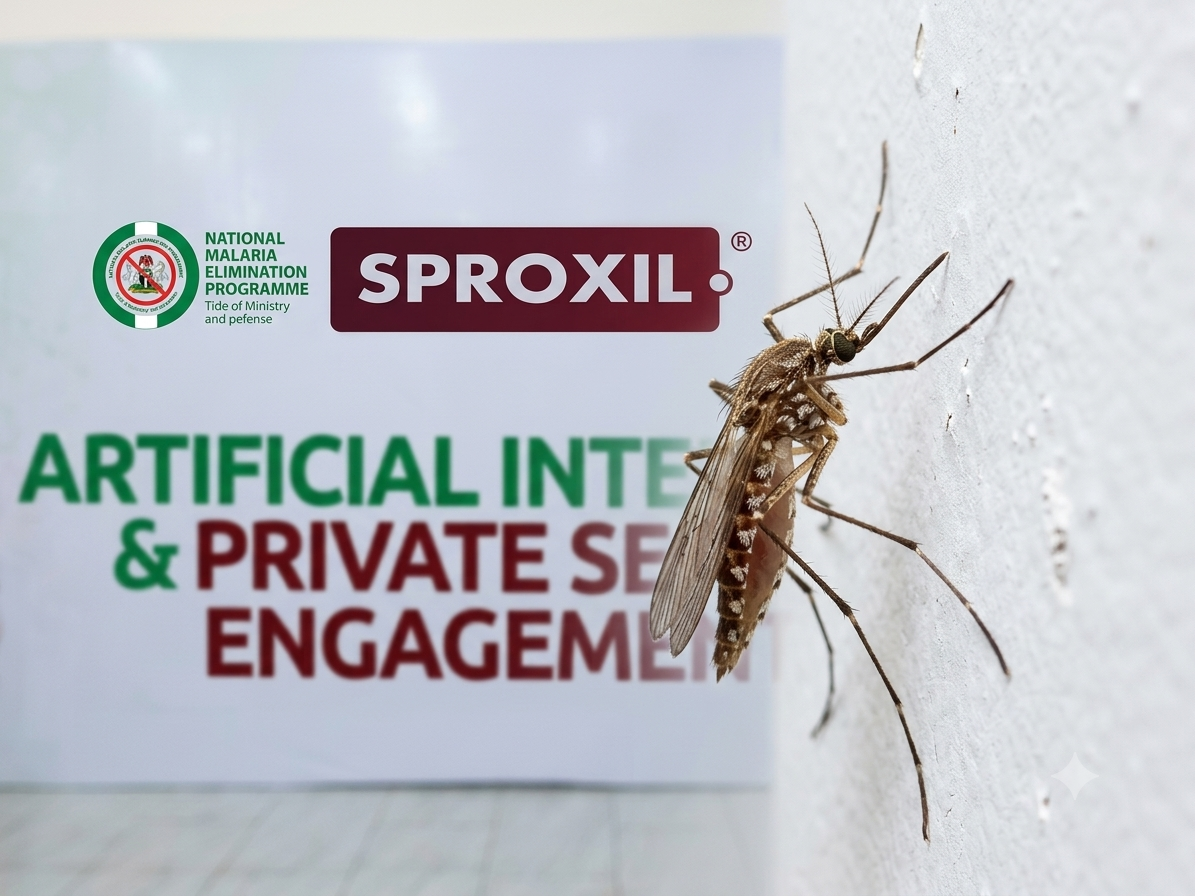
The National Malaria Elimination Programme and Sproxil Nigeria Limited have opened a two-day Strategic Alignment Meeting in Lagos to explore how artificial intelligence and structured private sector collaboration can bolster Nigeria’s malaria elimination efforts.
The meeting, holding at Bon Hotel, Lagos, brings together NMEP leadership, Sproxil, and key partners including the World Health Organization to address two critical data gaps: the lack of continuous national malaria data from the private sector, and the need for faster Test Positivity Rate reporting from government facilities.
Day one focuses on establishing the Sproxil Nigeria Malaria Survey as a complementary routine data channel alongside the existing public sector system. With a substantial share of malaria care in Nigeria occurring outside government facilities, NMEP recognizes the need for a structured private sector reporting mechanism. The survey, already operational across all 36 states and the Federal Capital Territory, tracks fourteen NMEP-aligned indicators. Discussions will subject its methodology to scientific appraisal led by Professors Olugbenga Mokuolu and Wellington Oyibo, with breakout sessions addressing methodology, governance, data flow interoperability with DHIS2, and sustainability models.
Day two will examine how Sproxil’s AI-assisted mRDT reading and digital verification techniques can be adapted to speed up TPR data capture in government facilities, addressing current test kit archiving bottlenecks and DHIS2 integration. The meeting will also showcase the AISHA conversational AI WhatsApp platform for potential use in social and behaviour change communication and health worker training and support.
By the close of the meeting on Friday, participants aim to deliver a shared position on the methodological standing of the survey, a clear roadmap for integrating AI-assisted mRDT techniques into government facilities, an agreed approach for deploying AISHA, and a communique with named workstreams, responsible parties, and timelines.
Nkoyo Pascal of the NMEP secretariat said, “This meeting represents a pivotal moment in our journey toward malaria elimination. By harnessing artificial intelligence and structured private sector engagement, we are building a more complete picture of malaria across Nigeria. The private sector channel we are discussing today will not replace what government already collects, but will sit alongside it, giving us visibility into the substantial portion of malaria care that happens outside our facilities. The quality assurance standards we are establishing for AI-assisted diagnostics will ensure that we can rely on these new tools with confidence. We are committed to leaving this meeting with concrete workstreams, clear responsibilities, and timelines that will move us from dialogue to action.”
The meeting underscores Nigeria’s commitment to leveraging innovation and multi-sectoral partnerships to accelerate progress toward malaria elimination.