


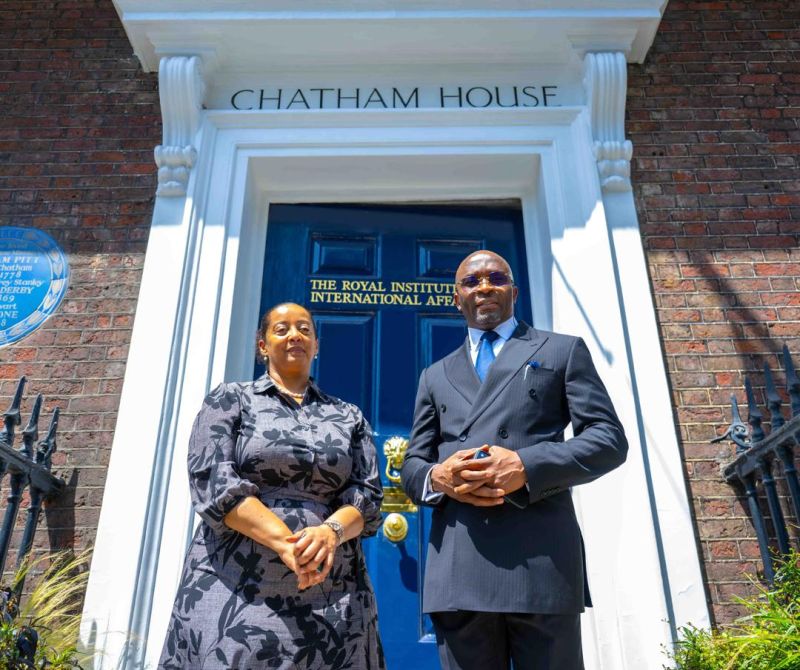
London, United Kingdom — Nigeria’s Deputy Speaker of the House of Representatives, Rt. Hon. Benjamin Okezie Kalu, has outlined ongoing electoral and security reforms aimed at strengthening the country’s democratic process ahead of the 2027 general elections.
Speaking at the Chatham House Africa Programme Roundtable in London earlier this week, Kalu delivered a presentation titled “Nigeria 2027 Elections: Electoral Integrity amid a Deepening Security Crisis” to an audience of policymakers, diplomats, and scholars.
During the presentation, the Deputy Speaker discussed provisions of the proposed 2026 Electoral Act and broader reform efforts designed to enhance electoral integrity. He highlighted measures focused on security investments, accountability frameworks, the proposed State Police Bill, and strategies to address the growing threat of disinformation.
On security, Kalu pointed to increased defence and security allocations in the 2026 national budget as evidence of ongoing efforts to strengthen the country’s response to security challenges. He emphasized that the legislature’s responsibilities extend beyond budget approvals to include oversight of implementation, ensuring that allocated resources deliver measurable results.
Addressing concerns surrounding the proposed State Police Bill, Kalu said the legislation contains safeguards such as merit-based recruitment processes, national operational standards, independent oversight commissions, and legislative controls. He argued that Nigeria’s highly centralized policing structure faces limitations in responding effectively to local security challenges across the country.
Kalu noted that Nigeria’s democratic system remains a work in progress, stressing that continued institutional reforms and active civic participation are essential to its development. He expressed confidence that sustained commitment to these reforms would contribute to a more secure, sustainable, and prosperous nation.
The Chatham House Africa Programme Roundtable brought together stakeholders to examine governance, security, and democratic developments across the African continent.