


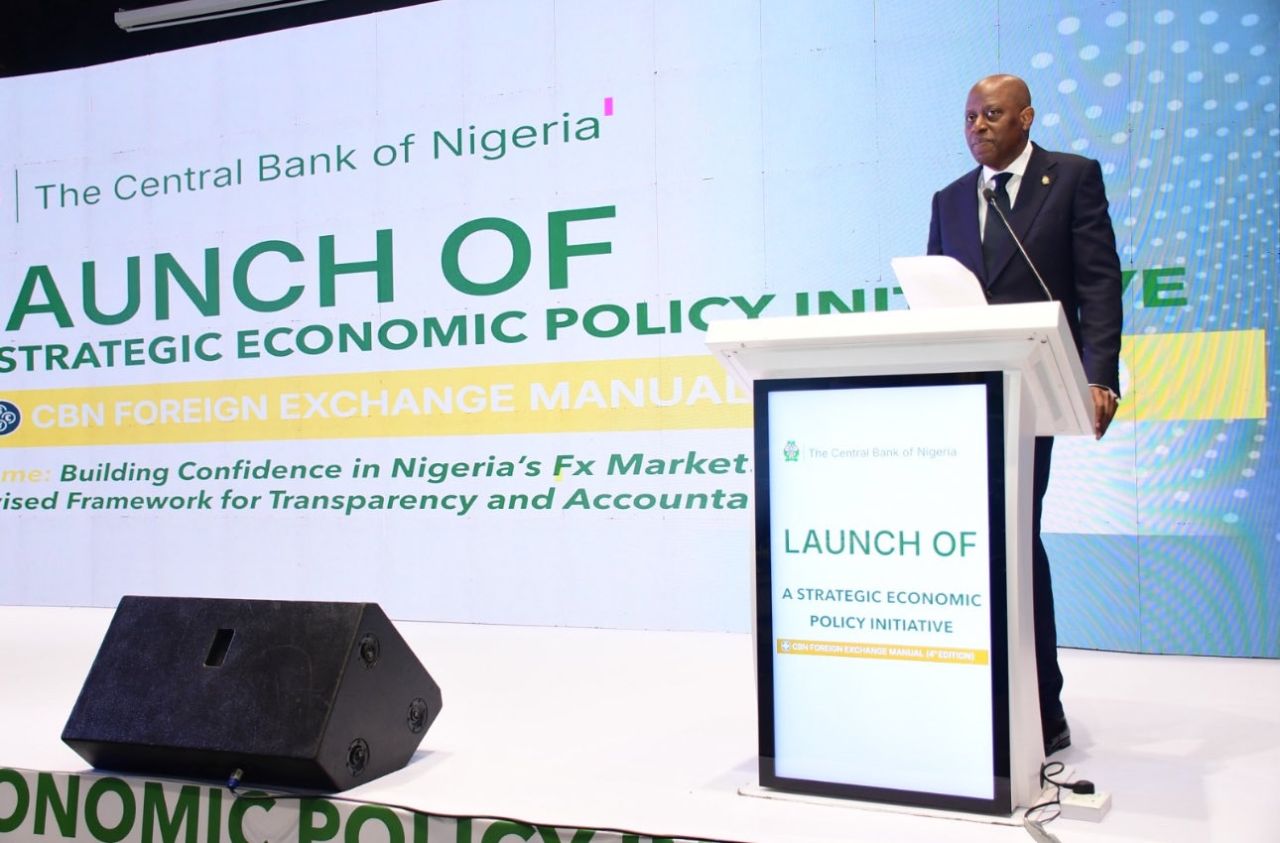






ABUJA, Nigeria — The Central Bank of Nigeria (CBN) has emphasized that structural transparency and market predictability, rather than the scale of foreign reserves alone, are the primary drivers of sustained foreign investment.
Dr. Muhammad Sani Abdullahi, the CBN Deputy Governor for Economic Policy, made this assertion in a policy brief reviewing the newly implemented Fourth Edition of the Foreign Exchange Manual. He noted that international capital aligns with operational certainty, arguing that a well-regulated, frictionless market environment is critical to anchoring long-term economic stability.
According to Abdullahi, the decision to systematically overhaul the regulatory framework was driven by a need to mitigate the high costs that procedural ambiguity imposes on businesses, exporters, and international investors.
Tackling Bottlenecks and Modernizing Trade
The freshly updated Foreign Exchange Manual—marking its first significant revision in nearly a decade—introduces specific institutional shifts designed to reduce operational frictions. A key structural update includes the integration of the Pan-African Payment and Settlement System (PAPSS) directly into the framework to optimize regional trade architecture.
The revised rules also eliminate redundant documentation processes and introduce heightened flexibility into the administration of domiciliary accounts. This targeted deregulation aims to lower transaction costs for legitimate businesses and eliminate the procedural delays that have historically pushed participants toward informal parallel markets.
Furthermore, the new guidelines establish dedicated operational frameworks explicitly tailored to support service exports and technology-enabled enterprises, reflecting the modern realities of an increasingly digital global market.
Rebuilding Market Integrity
The structural updates are part of an ongoing, broader reform agenda led by CBN Governor Olayemi Cardoso. Apex bank officials state that the strategic objective is to foster a deeper, highly liquid, and structurally sound foreign exchange market capable of naturally attracting autonomous capital inflows.
Abdullahi concluded that successful foreign exchange regimes across both advanced and emerging economies are defined by their clarity, liquidity, and transparency. By prioritizing robust market governance over short-term interventions, the central bank aims to create a reliable ecosystem where corporate entities can safely map out long-term expenditures and commit capital with absolute certainty.
This Arise News analyst breakdown offers a detailed look at the sweeping structural revisions implemented in the Central Bank of Nigeria’s updated Foreign Exchange Manual.