


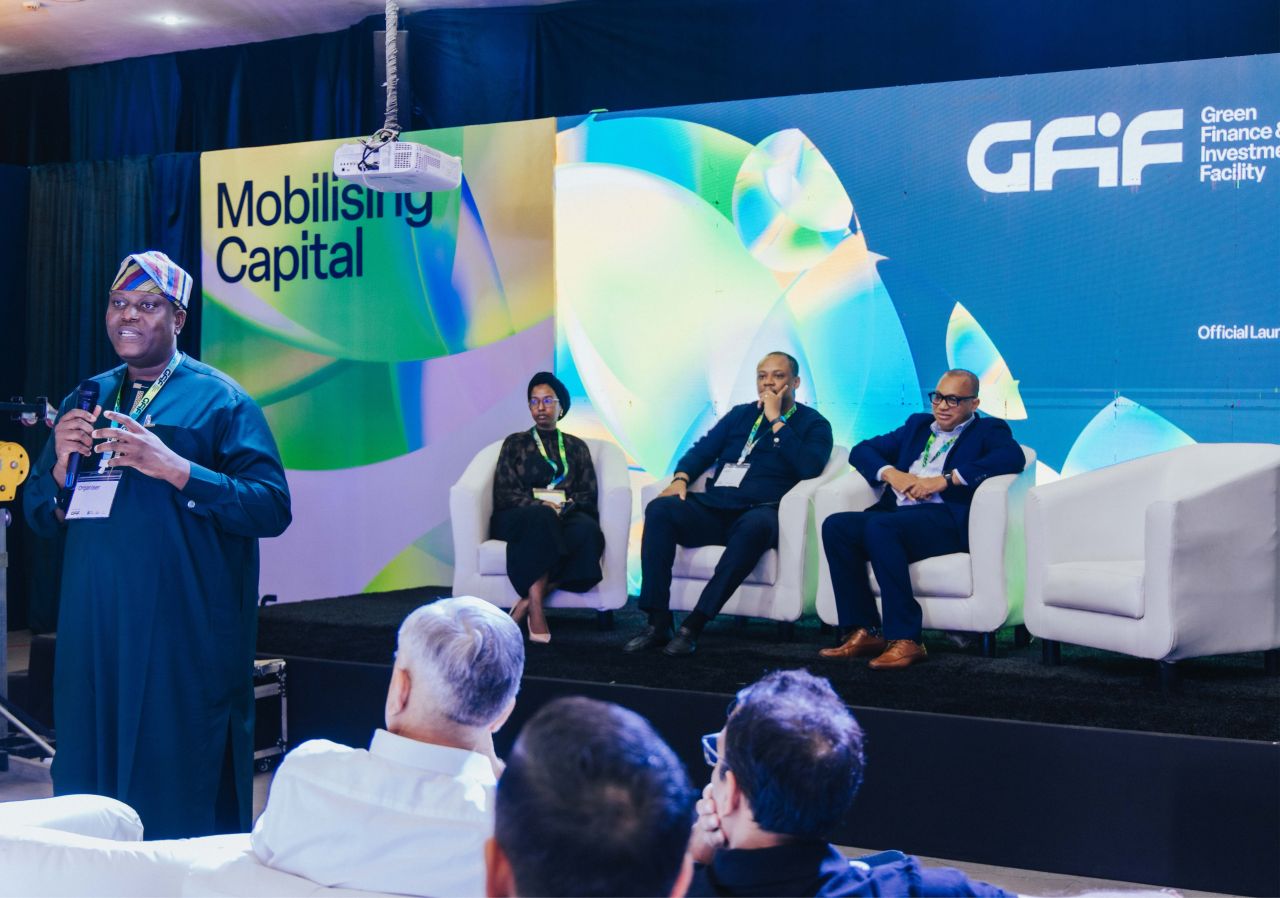





ABUJA — Abba Aliyu, Managing Director and Chief Executive Officer of the Rural Electrification Agency of Nigeria, has announced the launch of the Green Finance and Investment Facility (GFIF), a major financing initiative aimed at accelerating renewable energy deployment and expanding electricity access across underserved communities in Nigeria.
Describing the initiative as a critical milestone for the country’s renewable energy sector, Aliyu said the GFIF was created to address one of the industry’s longstanding challenges — the transition from isolated renewable energy projects to large-scale, sustainable implementation.
“For years, one of the biggest conversations in Nigeria’s renewable energy sector has been simple — how do we move from isolated projects to sustainable scale?” he said.
According to Aliyu, the GFIF represents a long-term financing platform designed to provide consistent, scalable, and sustainable funding for renewable energy projects nationwide. He noted that the facility marks a significant shift away from fragmented, project-by-project financing toward a more institutionalized framework capable of supporting long-term sector growth.
Industry experts have often identified financing limitations as one of the major barriers slowing renewable energy expansion in Nigeria, particularly in rural and underserved areas where access to electricity remains limited.
Aliyu explained that the new financing architecture is intended to give renewable energy developers more reliable access to capital while strengthening investor confidence in the sector.
“This is exactly the kind of financial architecture the sector needs if we are serious about accelerating universal energy access,” he stated.
The initiative is being implemented through a strategic collaboration involving public and private sector institutions. The REA is expected to anchor the project pipeline and Results-Based Financing mechanisms, while Barton Heyman will lead blended finance structuring.
Other partners involved in the initiative include First City Monument Bank and ARM-Harith Infrastructure Investment Limited, alongside renewable energy developers operating under the World Bank-supported Distributed Access through Renewable Energy Scale-up (DARES) programme.
Aliyu described the partnership as a strong example of how collaboration between government agencies, financial institutions, and private investors can drive sustainable infrastructure development in Nigeria.
“The signing of the Programme Launch Declaration officially moves the GFIF from concept to implementation, and that transition matters,” he noted.
When fully operational, the GFIF Pilot is expected to deliver reliable solar-powered electricity to approximately 1.2 million Nigerians while supporting more than 230,000 household connections in underserved and unserved communities across the country.
Beyond expanding electricity access, stakeholders say the initiative could play a significant role in stimulating economic activity, improving education and healthcare delivery, and supporting small businesses in rural areas through more reliable power supply.
Nigeria continues to face significant energy access challenges, with millions of citizens lacking stable electricity despite growing demand for renewable and decentralized energy solutions. Analysts believe financing platforms such as the GFIF could help bridge investment gaps needed to achieve national electrification goals and support the country’s clean energy transition.
Aliyu emphasized that the launch of the GFIF is not simply about funding individual projects, but about building a sustainable financing ecosystem capable of supporting renewable energy deployment at the scale required to meet Nigeria’s long-term energy needs.
“The work continues,” he said.