


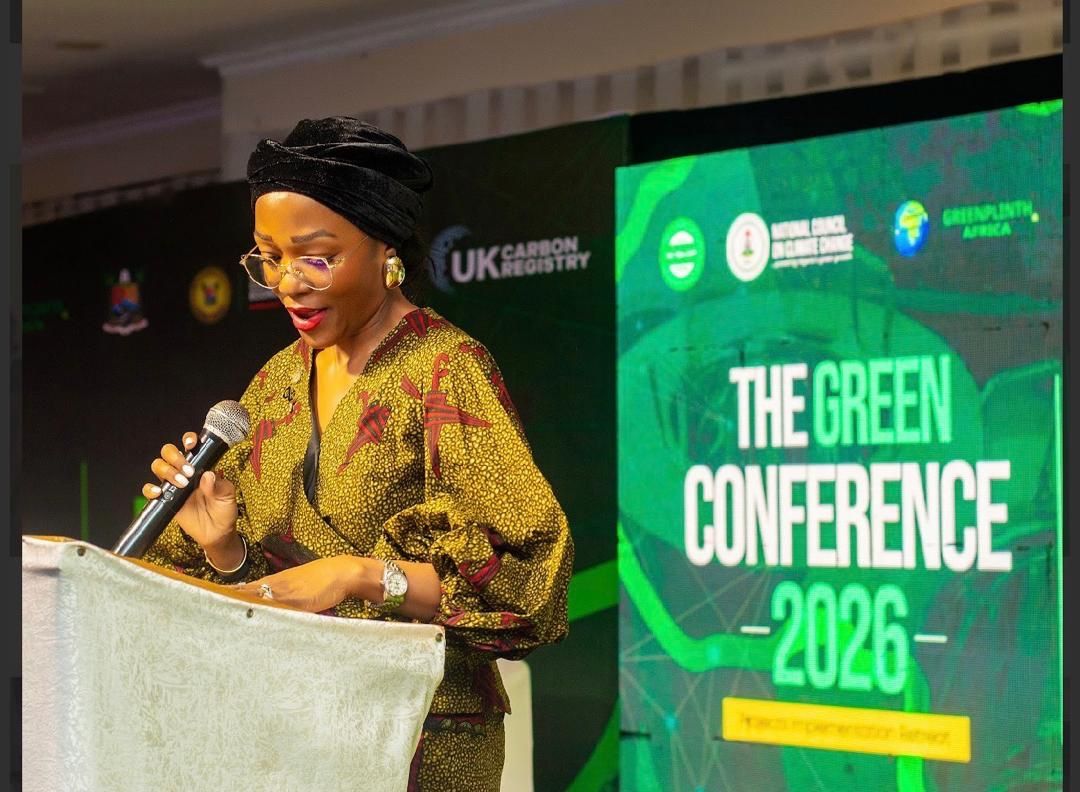





Lagos, March 10, 2026 – At The Green Conference 2026 in Lagos, Nigeria’s climate agenda was redefined not merely as an environmental responsibility, but as a strategic pathway for economic transformation. Dr. Tenioye Majekodunmi, Director-General of the National Council on Climate Change (NCCC), delivered a keynote policy address urging policymakers, investors, and development partners to rethink Africa’s climate strategy through the lens of industrialization, job creation, and sustainable prosperity.
“It is about jobs. It is about industries. It is about prosperity,” Dr. Majekodunmi emphasized, presenting a vision where climate action is fully integrated into economic planning. Her remarks reflect a global shift in which climate policy is increasingly economic policy, positioning Africa to leverage its abundant natural resources—ranging from forests and agricultural ecosystems to renewable energy potential and critical minerals—to become a leader in the emerging green economy.
According to Dr. Majekodunmi, harnessing these resources responsibly can unlock new green industries, mobilize climate finance and sustainable investments, create millions of jobs, and support resilient, sustainable economic growth across the continent.
The NCCC, as Nigeria’s apex climate governance institution, continues to play a pivotal role in aligning national development priorities with global climate commitments. Key initiatives include decarbonization strategies, climate finance mobilization, carbon market development, and strengthening climate governance and implementation. These measures are designed to ensure that climate action delivers measurable socio-economic benefits, particularly in employment, industrial development, and inclusive growth.
In recognition of her leadership and transformative impact on Nigeria’s climate agenda, Dr. Majekodunmi was presented with the Green ICON Award at the conference, symbolizing her role in advancing both environmental stewardship and economic development.
Experts note that integrating climate policy with economic planning is particularly crucial for Africa, where youth unemployment remains high, industrial capacity is developing, and investment in green infrastructure can simultaneously address environmental challenges and spur job creation. By linking sustainability initiatives with industrialization and economic prosperity, Nigeria can position itself as a regional leader in the green economy, attracting investments while fostering inclusive growth and resilience.
As Dr. Majekodunmi highlighted, the conference made it clear: climate action must do more than protect the environment—it must build industries, create jobs, and deliver tangible prosperity for citizens. The message represents a transformative approach that integrates environmental responsibility with human and economic development, signaling a new era of policy-making for Nigeria and Africa at large.