


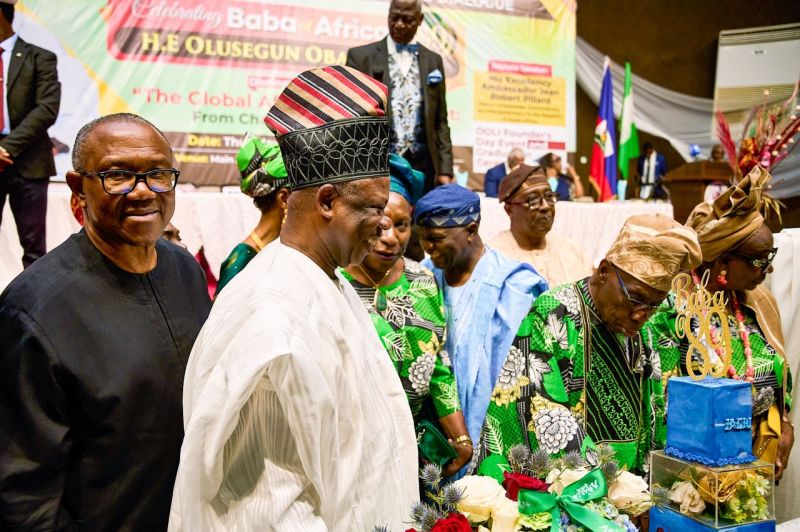





As tributes continue to pour in for former Nigerian President Olusegun Obasanjo on the occasion of his 89th birthday, stakeholders in Nigeria’s technology ecosystem are drawing attention to a less discussed but highly consequential part of his legacy—the policy decisions that helped lay the foundation for the country’s digital economy.
Among those reflecting on this impact is Hanson Johnson, Founder and Chief Executive Officer of Start Innovation Hub, who described Obasanjo’s reforms in the early 2000s as a turning point that triggered Nigeria’s technology revolution.
According to Johnson, while many tributes focus on Obasanjo’s political and diplomatic contributions, the former president’s role in liberalising Nigeria’s telecommunications sector remains one of the most transformative decisions in the country’s modern economic history.
He pointed to the landmark 2001 Global System for Mobile Communications (GSM) licensing auction conducted under Obasanjo’s administration, which opened the sector to private operators and ended the long-standing monopoly of the now-defunct Nigerian Telecommunications Limited.
Before the reform, Nigeria reportedly had fewer than 400,000 telephone lines for a population of over 120 million people at the time. However, the licensing of operators such as MTN Nigeria, Airtel Nigeria (then Econet), and Globacom helped to transform connectivity across the country.
Johnson noted that the $285 million-per-license auction created the backbone of the telecommunications infrastructure that would later support Nigeria’s digital and startup ecosystems.
Industry analysts widely agree that the explosion of mobile connectivity in the years that followed created the enabling environment for the emergence of Nigeria’s internet-driven businesses, digital platforms, and innovation hubs that now define the country’s modern tech landscape.
Beyond telecommunications, Johnson also highlighted the evolving role of the Olusegun Obasanjo Presidential Library (OOPL), which he described as more than a historical archive.
Located in Abeokuta, Ogun State, the presidential library has gradually developed into a knowledge and innovation hub, offering programmes through its Youth Development Centre and Digital E-Library designed to connect young Nigerians with digital learning resources and leadership training.
Johnson noted that initiatives such as youth-focused digital education programmes hosted at the facility demonstrate a continued commitment to building human capital and equipping the next generation with skills relevant to the digital age.
The tech entrepreneur also drew attention to Obasanjo’s long-standing interest in agricultural innovation. According to him, the former president has consistently advocated the integration of technology with agriculture—often described as the intersection of “soil and silicon.”
From the adoption of hydroponic farming techniques on his agricultural estates to his participation in agricultural innovation discussions, Obasanjo has remained an outspoken proponent of modernising Africa’s food systems through technology-driven solutions.
Observers say such perspectives reflect a broader understanding that Africa’s food security challenges will increasingly depend on innovation, data, and digital tools rather than solely traditional farming methods.
Johnson further emphasised the importance of documenting Nigeria’s technology journey, referencing Obasanjo’s support for narratives that capture the policy decisions and institutional reforms that enabled the country’s tech ecosystem to flourish.
He noted that well-crafted policies often function like foundational code in a digital system—when designed correctly, they can influence economic growth and innovation for decades.
As Nigeria’s technology sector continues to expand, with innovation hubs emerging across cities such as Lagos, Uyo, and Abuja, many industry stakeholders now view the telecommunications liberalisation of the early 2000s as one of the most significant catalysts for the country’s digital transformation.
For Johnson and many others in the ecosystem, the milestone birthday of the former president offers an opportunity to reflect not only on political leadership but also on the long-term impact of policies that enabled Nigeria’s connectivity revolution and laid the groundwork for the nation’s thriving innovation economy.