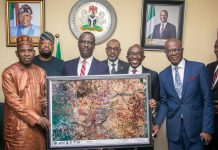


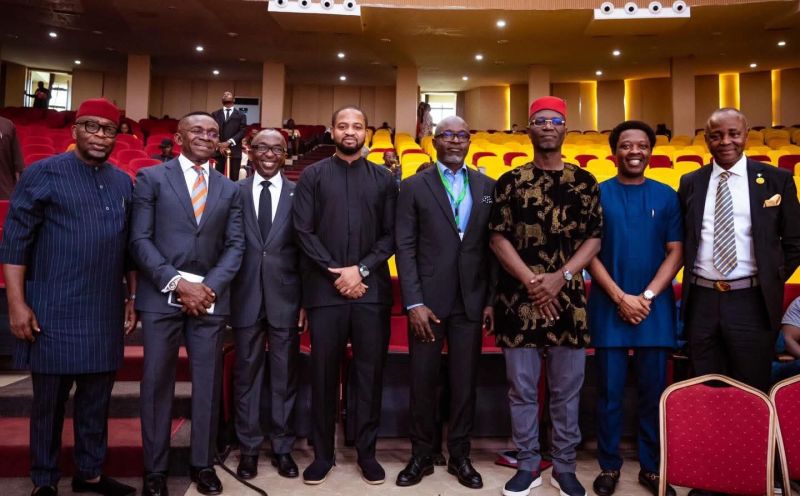
Key government officials, financial experts, and regional leaders recently converged in Enugu for the South East Vision 2050 (SEV2050) Regional Stakeholder Forum, a high-level engagement aimed at crafting a long-term investment and development framework for Nigeria’s South East region.
The forum was convened by the South East Development Commission (SEDC) in collaboration with the Office of the Vice President, the Federal Ministry of Regional Development, and the governments of the five South East states. It brought together policymakers, investment strategists, and development partners to discuss sustainable financing mechanisms and institutional frameworks needed to drive large-scale economic transformation across the region.
Among the key speakers at the forum was Armstrong Takang, Chief Executive Officer of the Ministry of Finance Incorporated (MOFI), who presented a compelling case for structured investment and asset-backed development strategies to unlock the economic potential of the South East.
Takang described the forum as a critical platform for shaping the long-term economic trajectory of the region, noting that it offered stakeholders an opportunity to explore practical pathways for mobilising capital and strengthening institutional frameworks that can attract both domestic and international investment.
Drawing from the experience of MOFI in managing public assets and structuring investment vehicles, he highlighted several strategies capable of transforming the region into a viable investment destination. According to him, sustainable growth in the South East will depend largely on building credible governance systems and institutional structures capable of supporting large-scale investment.
During the panel session, Takang joined other notable experts including Ike Chioke, a board member of MOFI, and Emomotimi Agama, Director-General of the Securities and Exchange Commission Nigeria. The panel examined critical financial and structural mechanisms necessary for unlocking long-term development funding in the region.
Discussions focused on four key pillars considered essential to the Vision 2050 agenda. These include strengthening institutional systems and governance standards to create credible investment platforms, structuring public assets to make them bankable, and developing credit enhancement mechanisms supported by sovereign-linked guarantees.
Panelists also explored the need for structural reforms that would enable the creation of regional asset platforms capable of attracting institutional investors. Another major theme was the development of innovative financial structures designed to channel diaspora capital into infrastructure and economic development projects across the South East.
Takang emphasized that MOFI remains committed to supporting the development vision for the region through strategic partnerships and financial innovation.
According to him, the organisation stands ready to collaborate with the South East Development Commission and other stakeholders to help translate the Vision 2050 blueprint into bankable projects that can deliver measurable economic outcomes.
He also commended Mark Okoye II, Managing Director and Chief Executive Officer of the SEDC, for convening what he described as a timely and impactful forum.
Observers say the Vision 2050 initiative represents one of the most ambitious regional development frameworks for the South East in recent years, designed to position the region as a major economic hub through infrastructure development, industrial expansion, and improved investment flows.
The blueprint was officially launched by Kashim Shettima, Vice President of Nigeria, who reiterated the federal government’s commitment to advancing regional development through coordinated economic planning and strategic investment platforms.
The event was hosted by the Governor of Enugu State, Peter Ndubuisi Mbah, who welcomed participants and emphasized the importance of collaboration among state governments, federal institutions, and the private sector in achieving sustainable growth across the South East.
Governors from other states in the region were also in attendance, reflecting a growing consensus on the need for a unified economic strategy that aligns regional aspirations with national development priorities.
Analysts say the SEV2050 initiative, if effectively implemented, could unlock billions of naira in infrastructure investment, strengthen regional industrial capacity, and mobilise diaspora resources toward long-term economic transformation.
For many stakeholders at the forum, the gathering marked an important step toward translating policy ambition into concrete development outcomes for one of Nigeria’s most commercially vibrant regions.