


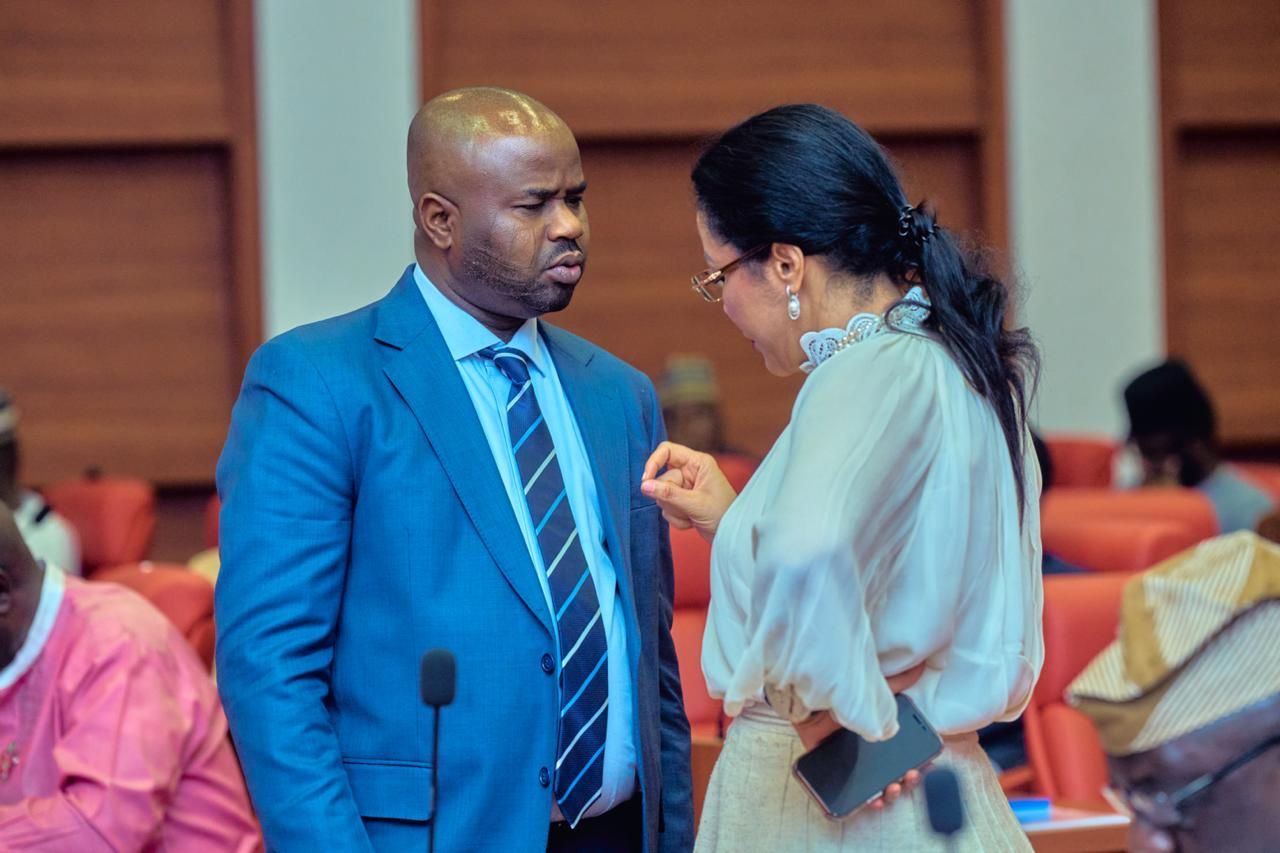



The Senate Committee on Finance has held an interactive session with key government officials to deliberate on Nigeria’s 2026–2028 Medium-Term Expenditure Framework (MTEF) and Fiscal Strategy Paper (FSP), underscoring the importance of close cooperation between the Legislature and the Executive in shaping a credible, disciplined, and growth-oriented fiscal framework.
The meeting focused on strengthening Nigeria’s fiscal governance in order to promote inclusive economic growth and ensure that public resources are managed efficiently and transparently.
During the session, lawmakers and government officials engaged in rigorous discussions on revenue projections, deficit financing, public debt thresholds, and the economic impact of recently introduced tax laws. These discussions were aimed at ensuring that fiscal policies are realistic, sustainable, and aligned with Nigeria’s development priorities.
Participants were also briefed on the progress of capital budget implementation. Updates included plans for budget rollovers to align with a January–December fiscal calendar, a move intended to ensure that projects receive full funding and are executed more efficiently. Officials explained that this approach would help reduce delays, improve project completion rates, and deliver better value for public spending.
Another major focus of the session was revenue optimisation. Government representatives highlighted ongoing efforts to improve revenue collection through automation, digitalisation, and greater transparency. These measures are designed to ensure that every naira collected is properly tracked and used for national development, while also reducing leakages and inefficiencies in the system.
The meeting also addressed public debt management, job creation, and the need to link fiscal planning to policies that support inclusive economic growth. Lawmakers stressed that fiscal decisions should not only stabilise the economy but also create employment opportunities and improve the living standards of Nigerians.
Officials noted that sessions like this play a vital role in promoting policy coherence, accountability, and public trust in government spending. By encouraging open dialogue between the Legislature and the Executive, the process helps ensure that fiscal planning delivers measurable benefits to citizens and supports long-term, job-rich growth.
As Nigeria looks ahead to the 2026–2028 fiscal period, stakeholders reaffirmed that transparent, collaborative, and realistic budgeting remains the foundation of national development and economic stability.