The Central Energy Fund and Africa Oil Week (https://Africa-OilWeek.com) are proud to announce a three-year partnership to drive investment and energy security for South Africa.


The Central Energy Fund (CEF) is a state-owned diversified energy company that reports to the Department of Mineral Resources and Energy of the Republic of South Africa. Its mandate is to contribute to the security of the energy supply of South Africa and the Region through exploration, acquisition, development, marketing, and strategic partnership.

“We are incredibly excited to join up with the CEF to carry the torch for future energy security across a diversified energy mix. We are dedicated to creating prosperity and economic growth for South Africans,” said Paul Sinclair, VP of Energy and Director of Government Relations for Africa Oil Week.

We believe that this partnership will also unlock our newly adopted strategy of being a ‘strategic investor’ in securing energy solutions to power the region’s energy needs

“Our partnership with AOW will create a platform for CEF Group to initiate strategic partnerships geared to appeal to potential funders to support its R67 billion project pipeline in the energy value chain.”

We believe that this partnership will also unlock our newly adopted strategy of being a ‘strategic investor’ in securing energy solutions to power the region’s energy needs, leading the energy security and a just transition programme for South Africa”, said CEF Group CEO, Dr Ishmael Poolo.

This strategy is reflected in the critical work being done in South Sudan through CEF subsidiary, the Strategic Fuel Fund as well the acquisition of the 40% shares in the 865-kilometre gas transmission pipeline (ROMPCO) from Mozambique to South Africa in fostering partnerships aimed at promoting regional integrated energy development critical for socio-economic development, added Poolo.

“We are so pleased to partner with CEF and cannot wait to complete more of the work needed to ensure a brighter future for South Africa,” said Sinclair.

Register your interest now to play your role in sustainably developing our industry and Africa via the African upstream. Attend the conference alongside senior delegates and 50+ Ministers and leaders of government: Africa Oil Week 2022 (https://Africa-OilWeek.com).

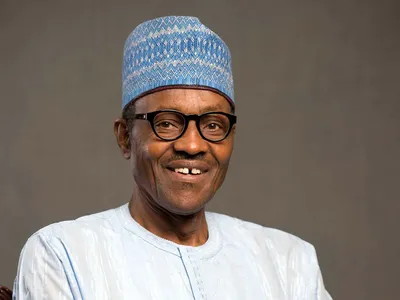
 

President Muhammadu Buhari, Monday, congratulated the Chairman of the National Drug Law Enforcement Agency (NDLEA), Brig. Gen. Buba Marwa (retd), on the recent very successful operation of the Agency leading to the smashing of an international drug syndicate and recovery of 1,855kilograms of cocaine.

In a telephone call to the Chairman of the anti-narcotics agency from New York where he is attending the 77th session of the United Nations General Assembly (UNGA 77), President Buhari said that the news of the recovery gladdens his heart.
“I deeply appreciate the work that you have put into the eradication of the drug menace. It gladdens my heart as I continue to follow the successes achieved under your leadership.

“You have demonstrated over and again that choosing you to lead this fight against wicked merchants of death whose sole aim is to endanger and truncate the future of our youth is a very good choice. Please keep up the good work.”
At a meeting later with members of his delegation, the President said, “Buba Marwa is doing well. Two tonnes of cocaine, that’s a haul.”

The NDLEA had announced the “highest cocaine seizure” worth over 278 million dollars and arrest of drug barons including a foreigner in a major operation lasting two days across different locations in Lagos.
Femi Adesina


In its continued bid to further open up the country’s economy to international capital and attract foreign investment, the Nigerian government, in collaboration with the Africa Business Roundtable, is organizing the second edition of the Nigeria International Economic Partnership Forum (NIEPF), a global economic investment platform, this time in New York, United States.

This high-level event is scheduled for Thursday, September 22, 2022, on the sidelines of the 77th United Nations General Assembly taking place in the American city.
Holding alongside the annual global gathering, the NIEPF is expected to draw the presence of world leaders in politics, economy, media as well as Civil Society Oganisations and international media to focus on the vast economic potentials of Nigeria and Africa’s leading economy.

Most significantly, President Muhammadu Buhari will deliver the keynote address at the event and will also host a High-Level Presidential Session with fellow Presidents and Heads of delegations on Issues That Need Joint Action for African Countries on the Development Drive such as the Post COVID-19 recovery and financing priorities; Africa’s Investment Climate and Market as well as De-risking the Continent.

The NIEPF will bring together top Nigerian government functionaries as well as renowned and highly respected global public and private sector players rubbing minds on Nigeria’s Economic Outlook, focusing on Nigeria in The Global Economy; and International Partnership for Nigeria on The Development Drive.

In view of the wide spectrum of personalities attending the forum, there will be cluster thematic sessions on: (i) Growing Nigeria’s Agriculture for Food Security & Access to Export Market with special focus on Impact of the Russia-Ukraine War which presents opportunities for G7/G20-Nigeria Partnerships in Agriculture; (ii) Scaling Up International Resources for Financing Education in Africa with emphasis on Making facilities to Link Government, Deal Sponsors and International Pools of Capital in Education; and (iii) Nigeria’s Oil and Gas Sector: Reforms, Results and the Road focusing on Scaling Up Investment into the Gas Market—Plants, Parks, Cylinders, Reinjection.

Other issues slated for discussion include: Scaling Up International Resources for Healthcare in Africa bordering on: Upgrading and expanding Nigeria’s Healthcare Infrastructure towards making Nigeria the “healthcare hub” for Africa; Climate Change and Paths to Clean Environment with emphasis on Paths to Clean Economy, Clean Energy and Clean Development; and Financing Nigeria’s Infrastructure with emphasis on Developing infrastructures such as Farm to market corridor, Farm to ports corridor, Export transport corridor, Railway network, Road network upgrade and expansion, Airport upgrade, including dedicated airports for exports, Power generation, transmission and distribution.

Speakers and panelists at the event include Aliko Dangote, President of Dangote Group; Bill Gates, Co-Founder of Bill and Melinda Gates Foundation; Satya Nadella, Chairman Business Council of the United States and Chief Executive Officer Microsoft Corp, Antony Blinken, Secretary of State of the United States, Florie Liser, President of the Corporate Council on Africa, and Members of the Business Council of International Understanding, Geoffrey Onyeama, Minister of Foreign Affairs, Zainab Shamsuna Ahmed, Minister of Finance, Budget and National Planning, John Kerry, US Special Presidential Envoy for Climate; and Abdul Samad Rabiu, Executive Chairman of BUA Group, who is also the President of the France-Nigeria Business Council.

Others are Mark Zuckerberg, Chief Executive Officer of Facebook, Dr. Ngozi Okonjo-Iweala, Director General of the World Trade Organisation, Dr. Akinwumi Adesina, President of the African Development Bank and Amina J. Mohammed, Deputy Secretary General of the United Nations to mention but a few.


Defence and security operations can hardly be achieved without undertaking critical surveying and mapping that can help in defining locations or areas of incidents covering all manners of unjustified actions against government and the state. Such actions may include armed banditry and robbery, insurgency and other act of terrorism, kidnapping and abduction, invasions and smuggling.

The activities of the various groups of armed criminals culminating into the insecurity facing the country today formed the contention and confrontation of our gallant military and other security agencies to restore a sense of security countrywide.

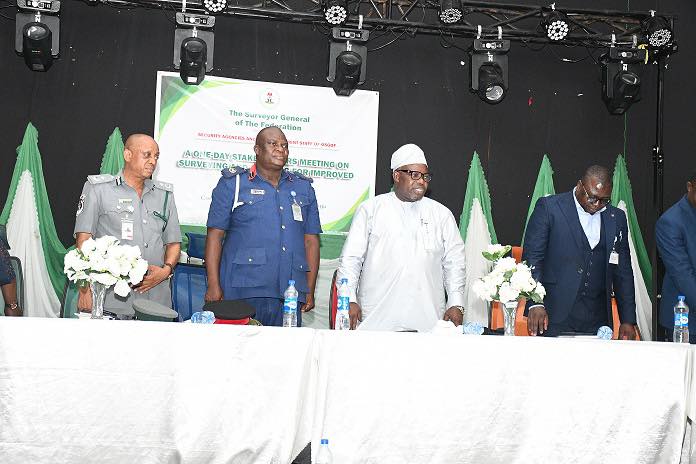
In an effort to actualize part of its mandates and achieve the strategic interagency synergy strongly encouraged and honed by the Federal Government in order to attain our common national interest, the Office of the Surveyor General of the Federation (OSGoF) recently organized a one-day meeting with the representatives of the Office of the National Security Adviser (ONSA), the military and other security agencies.

The essence of the meeting according to the Surveyor General of the Federation (SGoF), Surv. Abudulganiyu Adeyemi Adebomehin was to have sessions of deliberation with our defence and security stakeholders for the purpose of identifying their geospatial needs, suitable surveying and the mapping required for effective operations.

Surv. Adebomehin explained that current purpose maps of the country would be converted to 3-Dimensional (D) Maps that would be highly interactive for a well-coordinated air and ground operations for the military and other security agencies. He said the bio-data and National Identification Numbers (NINs) of people could also be integrated into the maps to track or trace criminals.

He maintained that issues of security remained the business of various government authorities as well as all-and-sundry stressing the need for collaborative and concerted efforts to free Nigeria from any threats to lives.

He pledged that OSGoF would explore other areas of collaboration with the military and other security agencies to make Nigeria a haven of peace, security and development. He announced that his Office would before the end of the year hold a conference with the military and all other security authorities in order to evolve a strong security network for the country.

Surv. Adebomehin noted that the heart of OSGoF goes out to all the gallant military men and women and the personnel of all other security organizations making huge sacrifices for Nigerians and Nigeria as he stressed the need for the support of all.
The meeting featured an exhibition of various administrative and operational maps produced by OSGoF


In today’s world, social media platforms have come to stay. Whatsapp has been one of the fastest means to communicate either in group or privately. A social critic and an avid PDP card carrying Member, Reno Omokri has opined that Whatsapp groups can be a distraction to people and clutter their minds with useless things. Though a lot of his readers did not find his position acceptable.

Remo said in his social media handle “Reduce those WhatsApp fora that you are on if you want to have a productive life. Many of them clutter your mind with useless information that distracts you from focusing on serious business that brings money and helps you make a positive impact in life. Focus! It is virtually impossible to have the type of ideas that bring wealth if your mind is not allowed to settle for at least 15 minutes. But these WhatsApp groups don’t allow your mind to settle. They constantly disturb it with one alert or the other. Leave those fora if your want to excel!”

Nnadede IykDaniel responded that “You want us to reduce our WhatsApp fora in order to have a settled mind but you have clutter our minds with your unnecessary attack on Peter Obi who did you nothing. Reno practice what you preach. Allow Peter Obi and have a settled mind. ”

Another, Jerry Nwankwegu added that ,”See who is teaching productive life. Years as SSA to the president, years of noise as social media influenza, years of blablabla about Bitcoin and so on, and you come get mind de boast of having no house. What does an unproductive life look like?Wahala for those trying to learn from teachers who teach what they haven’t learnt themselves”

In support of Reno,Adaranijo Temitope Emmanuel added “This is profound and apt, and I like to extend it beyond WhatsApp groups to other social media handles.”

While Prince Afam added that “If people decide to follow what you just said then many people should leave this page also because you have tried distracting a lot of people from voting for the right person.You that don’t stay in Nigeria, don’t understand the sufferings people are passing through.Your so-called best candidate stays in Dubai because he doesn’t believe in Nigeria yet he is the one you want people to vote for.”

According to Wikipeadia profile, it describes Reno Omokri is a Nigerian author and social media influencer. Omokri was the host of Transformation with Reno Omokri, a Christian teaching TV show broadcast on San Francisco’s KTLN-TV and Detroit’s Impact Network

ANTHONY EMEKA NWOSU


The fast pace of digital transformation for financial services is vital for the empowerment of small businesses and their customers. However, in this transformation process, traditional payment methodologies are being bypassed by new technology and products.


Understandably, merchants are finding it increasingly difficult to keep abreast of all the latest payment products and solutions that are available. “It is complex and costly for merchants to manage their own integrations into multiple solution providers. Merchants should be focusing on their core businesses and leave payment complexities to specialist companies,” says Andrew Springate, CEO of tech and financial gateway service provider PAYM8.


Founded in 2001, PAYM8 quickly expanded its footprint across the African continent and now processes over R3 billion in annual transaction value for its clients, and is one of the few payment solution providers in Africa capable of providing a single offering to merchants spanning both payer and payee-initiated payments.


Merchants want all payments to flow through a centralised merchant account. “As an aggregator, we do the integration into a myriad of products, services, solutions and value-added service providers. This includes taking care of data security and analytical requirements,” says Springate.


“PAYM8 offers via a single integration, access to all payment product requirements for collections, digital commerce, mobile payments, and card transactions, all off a single  platform. The alternative is for the merchant to manage their own integrations, but this is nothing short of a nightmare given the multitude of channels and solutions to choose from,” he adds.


The advantage of one platform

The PAYM8 platform allows for a single view of payment transactions no matter the product channel used, making long-term decision making easier. Through machine learning data structures merchants will be able to track consumer payment behaviour, resulting in improved transaction and payment management. With a primary focus on financial collections and online payments, PAYM8 can offer merchant and third-party access to its intelligent technology platform called AXIS.


AXIS is aimed at both existing merchants as well as third-party businesses wanting to use an intelligent payments platform offering greater control over the payments journey and provides unencumbered access to payment products and services.


With artificial intelligence (AI) and machine-to-machine learning (M2M) data structures in place, the platform “ticks all the boxes” from an outsourced payments aggregation perspective. “The way customers pay shouldn’t affect your revenue. There are cost-effective structures and solutions available no matter what channels you use,” notes Springate.


The company is PCI DSS (Payment Card Industry Data Security Standard) accredited. PCI DSS is a set of requirements ensuring that all companies involved in the processing, storing, or transmitting credit card information maintain a secure environment.  Cybercrime is rapidly increasing as the world continues on its digital transformation journey. The risk of reputational damage due to data breaches and the exposure of personal information is greater than ever before. “Therefore, we understand the importance of keeping the account and sensitive information of all our merchants secure,”  says Springate.


As the digital world evolves, so do the needs and circumstances of businesses. Some of the merchants who will benefit from using a payment platform include:

  • Merchants both new and existing who want to increase their collection successes.
  • New companies requiring a specialist payments partner to guide them with their collection strategies.
  • Merchants requiring implementation guidance with both DebiCheck and other cost-effective solutions.
  • Merchants requiring cross-border payments and collections.
  • Merchants who are not big enough for a bank and need an aggregator.
  • Credit wary merchants who are not willing to take risks.
  • Merchants battling with debit order authentication; or
  • An existing merchant currently using more than one payments partner and wants to reduce the number of payments partners.


Peace of mind

Merchants want freedom and peace of mind about their payment and collection processes to focus on their core business.  This includes knowing that their data security and analytical requirements are met. “Our understanding of the rapidly changing payments landscape has allowed us to remain a step ahead in transaction interoperability, machine learning and business-driven processes, allowing us to offer our clients best-of-breed payment solutions,” says Springate.


…As Danbatta Bags ‘Icon of Digital Revolution Award’


The Nigerian Communications Commission (NCC) has reiterated its unwavering commitment to bridging growing gender-oriented digital divide to accelerate inclusive economic prosperity for all Nigerian citizens.

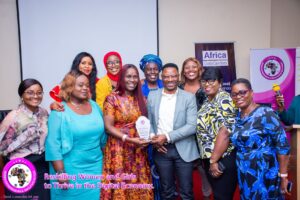
Executive Vice Chairman of the Commission, Prof. Umar Garba Danbatta who restated this commitment in Lagos at the 2022 Nigerian Women Entrepreneurs and Executives in Tech Summit (WEETS), Thursday, September 15, 2022, where he was conferred with the ‘Icon of Digital Revolution Award’ for his role in stimulating digital connectivity in Nigeria, said promotion of gender equality is a major component of ICT development.

He noted that the gender dimensions of ICT, manifests in access and use; capacity-building opportunities; employment and potential for empowerment, and that all these dimensions need to be explicitly identified and addressed, to leverage on technology and communication as powerful catalysts for political, economic, and social empowerment of women, and the promotion of gender equality.

Speaking to the theme of the event, “Reskilling Women and Girls to Thrive in the Digital Economy”, Danbatta, who was represented by NCC’s Head, Digital Media Management, Nafisa Usman Rugga, said the theme resonates deeply with the drive by the Federal Government to ensure an all-inclusive digital economy that drives the strategic vision plan of the Commission.

He expressed his appreciation to organizers, Techlife Media and Communications Limited, a Lagos-based media organisation, for the iconic recognition for his contribution to Nigeria’s digital progression which is an encouragement that he would dedicate to the entire NCC team of professionals that are dedicated to the digital revolution in the country. Danbatta commended the organization for holding forth its annual gathering that pivots discussions on promotion of digital access, skills and knowledge among the women and girls in Nigeria.

Danbatta indicated that one of the ways through which the Commission strives to achieve an inclusive growth, is through increased digital connectivity to all, regardless of gender and other accidental circumstances, and that the Commission has continued to play a front-seat role in driving the implementation of the National Digital Economy Policy and Strategy (NDEPS), 2020-2030; the Nigerian National Broadband Plan (NNBP), 2020-2025; and related policies aimed at deepening connectivity for all citizens, thereby bridging digital gender disparity.

“The NCC has put in the front burner the need to expose girls and young women to more opportunities in the digital ecosystem, in line with the International Telecommunications Union (ITU) resolution 70, which advocates gender mainstreaming and promotion of gender equality, as well as the empowerment of women through information and communications technology (ICT), and we are fully committed to this,”, Danbatta said.

The organizers, while justifying the reason for conferring the award on Nigeria’s chief telecom regulator, stated that after“ reviewing the criteria set for the award, we reckon that Prof. Danbatta deserves the award for blazing the trail in accelerating digital revolution in Nigeria, especially with the historic auction of 3.5 GHz spectrum in a fair, transparent, and credible manner, and considering the various initiatives embarked upon by the Commission under his leadership, to inspire girls and women to play active roles in the evolving global digital economy,”.


The Nigerian Communications Commission (NCC) has deployed 84 assistive Information Technology projects at different locations in Nigeria to support people with special needs while supporting policies that enable disadvantaged members of the society to live a more qualitative life.

“The E-Accessibility project seeks to meet the ICT needs of persons living with disabilities in Nigeria by providing ICT tools, assistive technologies, training, and Internet provision in the identified locations. Between 2012 to 2020, the NCC has deployed the E-Accessibility Projects in, at least, 84 locations nationwide.”

The Executive Vice Chairman (EVC) of the Commission, Prof. Umar Danbatta, disclosed this during a courtesy visit by a delegation from National Commission for Persons with Disabilities (NCPWD) to the NCC over the weekend in Abuja, where the EVC also restated NCC’s commitment to continually support people with special needs across the country.

Danbatta, while receiving the NCPWD team led by its Executive Secretary, James Lalu, said the telecom regulator has always implemented initiatives aimed at ensuring digital inclusivity for all Nigerians regardless of their circumstances.

Represented by the Director, Human Capital and Administration at NCC, Usman Malah, the EVC said telecoms sector has become the backbone of the national economy and has recorded tremendous growth from 400,000 telephone lines on the eve of sectoral deregulation in 2000 to over 208 million active telephone lines now, just as active Internet subscription rose to 156 million in the last two decades.

The EVC stated that the Information and Communication Technology (ICT) Industry’s contribution to the Gross Domestic Product (GDP) currently stands at 18.44 per cent, going by the data released by the National Bureau of Statistics (NBS) as at the second quarter of 2022. Additionally, Danbatta said that NCC has continue to ensure quality of service delivery to the consumers and digital inclusion for all.

Accordingly, Danbatta said the NCC recognises and aligns with the noble objectives behind the establishment of NCPWD as enabled by the Discrimination Against Persons with Disabilities (Prohibition) Act of 2018.

The NCC Chief Executive stated that in addition to implementing the five per cent inclusiveness of persons with disabilities in NCC’s staffing efforts in accordance with the law, the telecom regulator, through the Universal Service Provision Fund (USPF), has executed many projects within the framework of its E-Accessibility Programme in last 10 years that targets the challenged members of the society.

“In other words, the project provides ICT tools and Assistive Technologies (ATs) to the blind, the deaf, dumb, crippled, cognitively impaired, and other categories of people living with disabilities. As disadvantaged members of society, the project is designed to assist in improving the quality of life of people living with disability,” he said.

In his remarks, the NCPWD’s Executive Secretary, Lalu, said the purpose of the agency’s visit was to keep the NCC management abreast of its mandates and activities, and to seek greater collaborations with NCC for the benefits of estimated 35.5 million persons with disabilities in Nigeria.

He commended the NCC for the “wonderful work it has been doing through various projects in support of people with disabilities in the country.” Lalu slso appealed to the NCC to help in creating awareness among telecoms service providers to comply with the legal requirement to dedicate five per cent of their employment quota to persons with disabilities. He said this category of Nigerians are ‘smart, professional and intelligent’ and can make significant contribution to the growth of the respective organizations employing them, despite their disabilities.

“What we want to achieve is to make Nigeria a country that is comfortable for PLWD by ending discrimination and providing adequate reporting system and we have seen NCC as a strategic and important partner in this journey,” Lalu said.

The NCPWD was established, pursuant to section 31 of the Discrimination Against Persons with Disability (Prohibition) Act 2018, to promote, protect and prioritise the rights of persons with disabilities, and to further enhance their productivity through education, health, and other socio-economic activities and programmes.


Carey van Vlaanderen, CEO of ESET South Africa shares critical safety tips when buying or selling on Facebook Marketplace and how to tell if you’re being scammed.


Last year, Facebook Marketplace passed one billion global users. With this, it has become a giant in the consumer-to-consumer commerce space, allowing individual Facebook users to buy and sell seamlessly. Online retail in South Africa has more than doubled in just two years and with 29.5 million-strong Facebook users, more than half of the country’s population has a Facebook account.


Dominating the online classifieds

Marketplace has become so popular in South Africa that similar platforms are struggling to compete. Previously-popular OLX has closed its doors, while Gumtree still hangs on by a thread. Facebook Marketplace has outstripped the popularity of these online classifieds portals for several reasons. It is free and simple to use, as most people already have a Facebook account. It also allows users to search for listings from their local area, making pick-up much easier. Furthermore, because people can view sellers’ profiles, they feel more assured of safety and security on the site. Unfortunately, this is often a false sense of security.


Facebook fraud is becoming increasingly common

One recent global survey revealed that one in six (17%) respondents have been defrauded on the site. Of course, while much of the commerce on this classified side of Facebook is legitimate, like any other online marketplace, it is also a haven for scammers.


With fake listings extending to even apartment sales and car purchases, the stakes are high. That puts great pressure on users to understand the typical tricks that con artists use, and what they can do to avoid falling prey to online scammers.


Here are the top six scams to watch out for on Facebook Marketplace and how to spot any red flags:


  1. Defective items

Sellers may advertise a product that looks fine from the photograph they posted. But once you receive it, it turns out to be broken. This is particularly tricky when buying electronic items because you usually can’t toggle through every functionality before handing over your money.


  1. Fake items

You might accidently buy a fake item. Designer clothes, perfume, jewellery and cosmetics are particularly common targets for counterfeiting. Like defective item scams, it’s difficult to ascertain whether items are genuine or not just from a small photo. Everyone’s looking for a bargain but we all know the saying, “when the offer seems too good to be true, it usually is.”


  1. Overpayment

Sellers can also get scammed by fraudsters on Facebook Marketplace. In one classic example, fraudsters could claim to have overpaid for an item you’re selling and send a screenshot showing the alleged transaction. They’ll ask for the difference to be refunded. But of course, there was no original payment, and if you comply with their request, you’ll be out of pocket.


  1. Non-delivery (advance fee)

A classic trick is to sell an item and collect the money but then never deliver it to the buyer. This usually only applies to items sent from outside the buyer’s local area.


  1. Fake giveaways/phishing

One way for scammers to get personal details is to spam out giveaway offers via Facebook Marketplace. Simply by clicking on a link and filling in a short form, the victim believes they’re going to be in line for some free luxury items, crypto or other special deals. Unfortunately, the scammers just want their personal information to commit follow-on identity fraud or theft.


  1. Bait-and-switch

Scammers advertise what is often a high-quality product with a very tempting price tag. When you want to grab the “bargain”, that product is suddenly “out of stock” or “sold out” and you will be offered a similar item for a much steeper price, or an inferior alternative.


How to spot a Facebook Marketplace scam

As with any kind of online fraud, the key for users is to err on the side of scepticism and always remain alert.  Here are some tips to help you navigate Facebook Marketplace safely:

  • Inspect items before purchasing by only buying from local sellers in your area.
  • Always meet in a public place rather than at your home, ideally during daylight hours.
  • Check buyer/seller profiles for user ratings and reviews and be cautious if the profile was only recently created.
  • Check the original price of items and if there is a significant difference between the usual price and the sale price, be aware that it may be counterfeit/stolen/defective, etc.
  • Beware of giveaway deals and never enter your personal details to access them.
  • Only use trusted payment methods via Facebook Messenger (PayPal, Facebook Checkout) as they offer a way to dispute payment. Gift cards, EFTs and services like eWallet and Instant Pay are commonly requested by fraudsters.
  • Keep your conversation on Facebook – scammers like to move the conversation to another platform where it’s easier to swindle people and prevent them from disputing transactions.
  • Never ship items before payment has been made and the money is reflecting in your account. Check your account to verify that the payment has been cleared. Do not accept an emailed “proof of payment” as these can be fraudulently generated.
  • Do not send two-factor authorisation codes to prospective buyers. Under no circumstances should you ever share these types of codes.


If any red flags are raised and you suspect fraud, you should report the seller immediately via Facebook help.


As the cost of living continues to soar, more users will be turning to online platforms like Facebook Marketplace to buy goods at discounted rates. More users mean more potential victims for scammers, so be cautious.


Traditional banking models have been disrupted long before the Covid-19 pandemic fundamentally changed the way we live, work and shop.


“We are seeing a rapid rise in digital banking and niche banking, mainly driven by the changing needs of consumers and merchants in the informal economy”, says Zunaid Miya, MD of Hello Pay.


The pandemic also played an important role in making people more comfortable with digital payment channels and the use of digital products to conduct business in a faster, safer and cheaper way.


In South Africa the informal sector is vibrant and a large contributor to the country’s gross domestic product (GDP). Small businesses have blossomed due to rising unemployment, the high costs of living, and persistent structural barriers to economic participation.


Full potential

However, many of these small businesses are not able to achieve their full potential. Several barriers remain, amongst others:

  • Internal skills gaps preventing businesses from identifying the digital solutions they need, and adapting business models and processes;
  • Financing gaps because small businesses still face difficulties in securing a business loan. Earlier reports by the International Finance Corporation showed that the funding gap for South Africa is estimated at $30 billion.
  • Infrastructure gaps as access to high-speed broadband is a prerequisite for the digital transformation of small businesses. Internet penetration rates have been increasing, but the gap between leading countries and businesses; and lagging countries and businesses remains large.


Migrant entrepreneurs

South Africa has seen a growth in migrant entrepreneurs opening shops or taking over the ownership of informal businesses in townships across the country.


Close to three million migrants reside in South Africa, many of whom struggle to access financial services in order to start small businesses like spaza shops, salons and kiosks or to expand their existing businesses.


“Real access to financial services remains low in the foreign national community as well as in local informal and micro enterprises,” says Miya.


Major compliance restrictions in the traditional financial services offering mean many migrants or low-income earners find it difficult to open bank accounts and get access to financing. They may have a bank account, but cost factors prohibit access to other services. An overwhelming number of clients also hold dormant accounts.


“Hello Pay is one of the few companies preparing the migrant market to embrace digital financial processes. We are assisting migrant businesses such as spaza shops, tuck shop and small businesses to move from cash to card payments.”


Our payment devices, allow users to process payments on their mobile phones, get an auto cash-up daily and activate and control multiple devices with one account. It allows them to accept card payments and sell airtime and electricity. By being a Hello Pay customer, merchants also have access to business loans, business cover and armed response through the Hello Pay Business Solution.


Misconceptions

There is a common misconception that card machines are expensive and difficult to operate and maintain. However, township merchants and their customers should realise and understand the risks and costs associated with cash.


Miya also refers to the misconception that spaza shops, hawkers, pavement sellers, street vendors and various other micro-enterprises won’t qualify for a bank account. “We wanted to even the playing field by offering small merchants and migrants the same opportunities as everyone else. The solution not only offers them a way to go cashless but also to protect and grow their business.”


Miya says their digital solutions are “affordable and convenient” offering small business owners the opportunity to expand their businesses, or to gain a competitive advantage. “We offer solutions that resolve business owners’ most pressing pain points,” says Miya. He adds that digital alternatives to cash can offer more bespoke offerings to merchants, enabling them to gain greater traction in the market.


The world continues to evolve towards a cashless and even cardless financial environment. It is becoming more viable, mainly because of financial offerings by companies like Hello Pay. Niche banking focuses on personalisation and offers unique tools because of a better understanding of the needs of underserved markets.