In a world where societal pressures often focus on superficiality, Ugochi Nwizu stands tall as a beacon of intelligence and inspiration. Today, we celebrate her remarkable achievements as the 2023 Best Graduate of the University of Nigeria, Nsukka, in the field of Medicine & Surgery, showcasing a level of excellence that transcends societal norms.

Ugochi Nwizu’s academic journey has been nothing short of exceptional. She not only claimed the title of the Best University of Nigeria, Nsukka Graduating Doctor for the year 2023 but also achieved the distinction of being the top-performing student in Medicine & Surgery. Her academic prowess shines through with a remarkable eight distinctions in Anatomy, Biochemistry, Oral Biology, Pathology, Pharmacology, and Maxillofacial Surgery.

This achievement is a testament to her unwavering dedication to the pursuit of knowledge and excellence in the medical field. Ugochi Nwizu’s success serves as an inspiration to all, demonstrating that beauty and intelligence are not mutually exclusive, and that one can excel beyond societal expectations.

We extend our heartfelt congratulations to Ugochi Nwizu, the golden girl of academia, an original slay queen, and a true celebrity in her own right. Her accomplishments are a source of pride for her family, the academic community, and society as a whole. She truly deserves the recognition and accolades that accompany her remarkable journey.

In a world that often celebrates superficiality, Ugochi Nwizu’s achievements serve as a reminder that true success is measured by one’s dedication, intelligence, and commitment to excellence. As she continues to shine brightly in the medical field, we eagerly anticipate the positive impact she will undoubtedly have on the healthcare landscape and society at large.

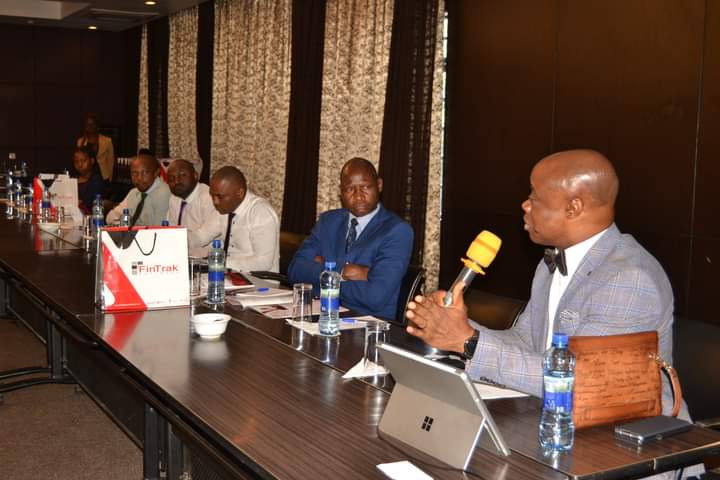
Fintrak Software, a leading financial technology (Fintech) solutions provider, made waves in Uganda over the past weekend, marking a significant step in its strategic expansion program within East Africa, spanning from Uganda to Kenya and Tanzania. This milestone event showcased the company’s commitment to delivering seamless banking solutions to the East African region.

During the event, Bimbo Abioye, the Group Managing Director (GMD) of Fintrak Software, expressed his enthusiasm, stating, “We connected with brilliant minds, delving into fintech trends and software solutions. Thanks to our partners, attendees, and the vibrant Ugandan tech community for the huge success! Together, we shape the future of finance and tech.”

Abioye further emphasized, “Stay tuned for updates and more insights as we empower businesses with cutting-edge software. Tanzania, Uganda, thank you! Let’s keep the innovation flowing!”

On the 21st of September 2023, Fintrak Software hosted an unforgettable event in Tanzania, celebrating innovation and collaboration in finance and technology. The event was a testament to the company’s commitment to driving technological advancements in the East African region and fostering partnerships that will shape the future of finance and technology.

Fintrak Software is a renowned financial technology solutions provider, dedicated to delivering cutting-edge software and innovative fintech solutions. With a focus on expanding its reach in East Africa, Fintrak Software continues to make strides in reshaping the financial and technological landscape.

Anthony Nwosu

Today, on the 10th anniversary of Connect, Meta CEO & Founder Mark Zuckerberg shared how the rise of AI and metaverse technologies are reshaping the way we experience our physical and digital worlds. While the physical world around us is amazing —and it’s the combination of our physical and digital worlds that defines our reality. Yet too often, we rely on screens to tap into virtual spaces and content—and that can pull us away from the moment and the people we’re physically with.

Imagine replacing your TV with a fully customizable home theater you can take with you anywhere. Or sitting around a table with friends, some of whom are in the same physical room while others are avatars of those who live miles away—and yet still feeling fully present in the same space and experience. Or a meeting where some of the avatars are embodied AIs that can help you accomplish a variety of tasks. All of that could be possible when our physical and virtual worlds come together seamlessly.

Many of the foundational technologies needed to make that vision a reality are either already here or on the way. Mixed reality lets us bring digital objects into the physical world or create fully immersive experiences to explore. Advances in AI let us create unique characters that we can interact with in different ways. And future AR glasses will eventually bring these technologies together in a stylish form factor.

Today at Connect, Zuckerberg shared our progress on all three fronts.

Mixed Reality Goes Mainstream with Meta Quest 3

Meta Quest 3 is the world’s first mainstream headset built for mixed reality—and our most powerful headset yet. With double the graphic processing power of Quest 2,* Quest 3 is also the world’s first device to feature the new Snapdragon XR2 Gen 2 platform we helped develop in collaboration with Qualcomm Technologies. And it’s completely standalone: no PC, no console, no battery packs—nothing to break the feeling of presence. It understands your physical space, so you can play with the world around you. With mixed reality, the limits of your physical space can expand, and you can be part of a much larger world—like opening a portal to the Upside Down from your living room in Stranger Things VR.

With Quest 3, you can immerse yourself in an expansive content library with games and experiences to suit every taste and mood. More than 100 new and upgraded titles are coming to Quest 3 this year, and many of them will incorporate mixed reality. Because Quest 3 is backwards-compatible, you get access to a vast library of 500+ VR and MR experiences on day one. And with Xbox Cloud Gaming coming to Quest in December, you’ll be able to play Halo Infinite, Minecraft Legends, Forza Horizon 5, and hundreds of other high-quality Xbox games—all on a massive 2D screen you can take with you anywhere.**

Starting at $499.99 USD, Quest 3 ships October 10, and pre-orders are open now. Click here for all the details.

Advances in Artificial Intelligence

While it’s been an amazing year for AI, most people today still haven’t experienced this new technology firsthand—and we have an opportunity to change that by building state-of-the-art AI into apps that billions of people already use.

We’ve talked about the Llama ecosystem of large language models, and today we unveiled our image generation model. Emu (short for Expressive Media Universe) uses your text prompts to generate high-quality, photorealistic images in just seconds. And thanks to Emu and technology from Llama 2, ou can create your own custom AI stickers in chat to liven up conversations on the fly.

We also introduced restyle and backdrop—two new features coming soon to Instagram that use the technology from Emu to let you transform your photos or even co-create AI-generated images with friends. Restyle lets you reimagine your images by applying the visual styles you describe (you might type out “watercolor” or “collage from magazines and newspapers, torn edges,” for example), while backdrop leverages learnings from our Segment Anything Model so you can change your image’s scene or background. Prompts like “put me in front of a sublime aurora borealis” or “surrounded by puppies” will keep your subject in the foreground while creating the background you’ve described. Images created with restyle and backdrop will indicate the use of AI to help reduce the odds of people mistaking them for human-generated content. We’re also experimenting with forms of visible and invisible markers to help people distinguish AI-generated content.

Unlike most others in the industry, we don’t believe there will be one single super-intelligent AI that everyone uses. Rather, we think you’ll want different AIs for different things, like finding information, communicating, being entertained, playing games, helping you get work done, and more. You might even want to create your own AI that’s aligned with your goals, whether you’re a small business, a creator, or anyone really.

That’s why we’re building AI studio—a new platform for creating AIs that can help you get things done and just have fun. People will be able to interact with these AIs across the whole Meta universe of products. They’ll have profiles on Instagram and Facebook, and you’ll be able to chat with them in WhatsApp, Messenger, and Instagram. Eventually, they’ll be embodied as avatars in the metaverse too.

We’ve created some AIs of our own using AI studio that we’ll start rolling out in the US in beta today.

Meta AI is a new assistant you can interact with like a person. It uses a custom model based on Llama 2 technology and has access to real-time information through a partnership with Bing search. And Emu is built into Meta AI, so you can generate high-quality photorealistic images for free in seconds.

We’ve also been creating AIs that have more personality, opinions, and interests, and are a bit more fun to interact with. There’s Victor, a motivational coach who encourages you to hit your goals. The Dungeon Master can take you on an old-school text-based adventure. And our sous chef Max can take the random assortment of ingredients in your pantry and come up with a delicious recipe on the fly.

Those are just a few of the AIs we’ve trained so far, and there are several more coming over the next few weeks across a range of interests, from gaming and philosophy to sports, fashion, and beyond.

We want to give people the chance to build AIs of their own, so AI studio will ultimately let developers build third-party AIs for our messaging services. We’re building a sandbox that will let people who don’t code create their own AIs. We’re working on a way for creators to build AIs that represent them and help them engage and grow their communities. And we’re making it so businesses can create AIs that interact with customers and help with commerce and support.

Generative AI will bring with it new challenges, so we’re putting in the time and effort to make sure we get this right. That includes training and fine-tuning models to fit our safety and responsibility guidelines, red-teaming with external experts and internal teams to help ensure our models are safer and more inclusive, programming in guardrails around inappropriate conversations, and sharing system cards publicly so people better understand how these models work.

This next generation of artificial intelligence will enable a wide range of experiences and interactions, which will transform how people, businesses, and creators use all of our products. And we’ll continue innovating to ensure everyone has a chance to participate in the upside. Click here to learn more.

Introducing the Ray-Ban | Meta Smart Glasses Collection

Built in partnership with EssilorLuxottica, our next generation of smart glasses are designed so you can stay connected and capture the moment without having to stop and take out your phone—and easily share your experiences with friends, family, or the world.

We’ve upgraded them from the first generation in basically every way, and for the first time, you’ll be able to livestream directly from your smart glasses to your friends and followers on Facebook and Instagram.

These are also the first smart glasses to ship with Meta AI built in.*** Starting in the US in beta, you’ll get our state-of-the-art AI hands-free, wherever you are, whatever you’re doing, in real time. And next year we’ll roll out a free update so your smart glasses will be able to understand what you’re looking at and help you out. If you want to know what building you’re standing in front of or get a translation of a sign on the fly, your Ray-Ban Meta smart glasses will have the answer.

Smart glasses will be an important platform in the future not only because they’re a natural way to see digital holograms in the physical world, but also because soon you’ll be able to let your AI see what you see and hear what you hear—which will make your smart glasses more useful over time.

Starting at $299 USD, the Ray-Ban Meta smart glasses collection will launch on October 17, and they’re available for pre-order today on meta.com and ray-ban.com. Click here for more information.

While we’re hard at work delivering new technologies the world has never seen before, we’re equally focused on making those advances available for everyone. And innovation to bring the future to millions and eventually billions of people—affordably—is what Meta does best.

There’s a long road ahead, but we look forward to traveling it with the developer community and all of you.

*Based on the Qualcomm Snapdragon XR2 Gen 2 platform vs. Snapdragon XR2 Gen 1 platform.

**Requires Xbox Game Pass Ultimate subscription and supported controller (sold separately). Streaming limitations apply; server availability and wait times may vary. Select regions.

***Voice features available in English, Italian and French. Select voice features available only in English. Voice features and functionalities may differ by language. Initially Meta AI features available only in the US.

****Ray-Ban Meta smart glasses collection will be available in 15 countries, including the US, Canada, Australia, and throughout Europe.


 

In today’s rapidly evolving digital business landscape, customers are raising the bar for their partners and vendors.

Customers no longer settle for basic support; instead, they demand effective assistance to expedite their digital transformation and overcome industry-specific challenges. As these projects become more intricate, it’s clear that no single provider can cover all bases.

In response to these escalating customer expectations, it’s imperative for businesses to recognise and harness the potential of partner ecosystems. Marilyn Moodley, Country Leader for South Africa and WECA at SoftwareOne, emphasises that the collective value generated by these ecosystems surpasses what individual players can achieve.

Meeting the demand for holistic customer solutions

Customers are no longer content with standalone products or services; they seek comprehensive solutions that yield tangible business outcomes, underpinned by genuine support. They prefer to collaborate with companies committed to ensuring customer success, rather than mere product or service suppliers.

Establishing a network of trusted partners who prioritise customer needs is pivotal. These partners, working together, form an ecosystem—a collective of players from diverse industries or verticals collaborating to develop and deliver solutions. This transforms them from passive suppliers to active contributors to their customers’ businesses.

Embracing collaboration over competition

A partner ecosystem represents a network of businesses collaborating to provide more extensive solutions to customers. This model is increasingly prevalent in the digital technology sector, especially when resources are limited, and companies need to expand their reach and scale.

Creating a partner program offers mutual benefits, particularly for smaller partners in South Africa who can thrive with the support of larger distributors. By pooling resources and knowledge instead of directly competing, businesses can efficiently reach and serve more customers as a collective, rather than attempting individual customer outreach.

Defining a partner ecosystem: unity in diversity

In our increasingly complex work environments, no business can tackle every challenge in isolation. The abundance of service providers offers both obstacles and opportunities for customers. The era of limited choices among a few established players is over; customers now enjoy the freedom to select providers based on value, compatibility, and shared core values.

In this customer-centric market, partners must unite to demonstrate trustworthiness, credibility, and the ability to deliver outstanding services, setting them apart from competitors.

Furthermore, knowledge sharing within the partner ecosystem is crucial, as no single partner or organisation can offer all-encompassing solutions. Collaboration among resellers, distributors, and partners paves the way for more effective market service.

Cultivating trust, transparency, and collaboration

Establishing robust relationships and trust between partners and the organisations they serve is pivotal for mutual success. When contemplating the creation or joining of a partner ecosystem, several factors must be considered.

Firstly, identifying the right partners is essential, with an emphasis on complementarity in business, shared values, and aligned goals. Secondly, clear value propositions for these partners must be outlined to ensure mutual understanding of the benefits derived from ecosystem participation. Effective ecosystem management, encompassing transparent expectations, regular engagement, and accessible conflict resolution mechanisms, is also vital.

Transparency and trust are the cornerstones of successful partner programs.  Incentives, targets, and transparent communication of value are integral components of every partner program, with partners having access to a shared portal for tracking their share of gross profit. However, a customer-first approach is indispensable within these ecosystems to facilitate cooperation, ensuring faster delivery, higher service quality, and exceptional customer satisfaction.

Driving satisfaction, innovation, and efficiency

When customers take center stage within an ecosystem, businesses are more inclined to develop products and services tailored to their needs. This can result in heightened customer satisfaction, loyalty, and advocacy.

A customer-centric approach also fosters innovation, as businesses prioritise meeting customer needs, inspiring the creation of new products and services that cater to those requirements. This, in turn, positions businesses to lead in the competitive landscape and expand their market share collectively.

Another significant benefit of a customer-centric approach is the potential for cost reduction. As businesses focus on meeting customer needs, they are more likely to develop efficient and effective products and services, ultimately leading to cost savings and improved bottom-line results.

Uniting for greatness

In a customer-driven market, trustworthiness, credibility, and outstanding service delivery are the hallmarks of a great partner ecosystem.

The importance of a robust partner ecosystem should not be underestimated. SoftwareOne leverages a global ecosystem for access to a collective of various industry professionals. Such collaborations ensure that the company can approach challenges with a diverse set of insights and resources. It’s not merely about providing services; it’s about leveraging a vast network to deliver well-rounded solutions that add value.

By nurturing strong relationships through knowledge sharing and collaborative efforts, businesses can harness the collective strength of resellers, distributors, and partners to offer comprehensive solutions that meet customer needs and drive their success.


Scan to Pay, Powered by Ukheshe, has partnered with Xion Global to offer crypto payments on the Scan to Pay app.


Scan to Pay, powered by Ukheshe, is the largest QR ecosystem in South Africa and is used by more than 600,000 vendors, 14 banks and fintech companies and 94 payment service providers. Now, this new partnership will seamlessly introduce more crypto payment options to mainstream South Africa through the Scan to Pay app.


Tracy-Lee Schoeman, Vice President of Loyalty and Rewards at Ukheshe, says the rise of cryptocurrencies has created a new wave of opportunities for performing financial transactions. “Cryptocurrency payments have the potential to transform the way people transact with lower fees, faster settlement times, and greater financial sovereignty – something Ukheshe is excited to offer through Scan to Pay.”


A Deloitte survey revealed that almost 75% of retailers in the USA plan to accept either cryptocurrency or stablecoin payments in the near future. And with crypto already available as a payment option at major South African retailers and even spaza shops, it’s clear that the local market is heading in the same direction.


Ronan Quarmby, CEO at Xion, says approximately 12.5% of South Africa’s population owns cryptocurrency. “With 83% of these owners falling within the 18-44 age group and 52% using crypto for purchases, it’s evident that web3 payments represent the future of online transactions in the country.


With increasing cryptocurrency adoption, South African businesses recognise its potential and 94% of business owners already believe that integrating cryptocurrency payments would be advantageous. As web3 payments continue to evolve rapidly, especially in emerging markets, South Africa is poised to lead the charge in Africa.”


Users can expect a seamless payment process akin to traditional payment methods. After linking their Metamask wallet, the customer will simply scan a QR code on their receipt, check the amount in the Scan to Pay app, select ‘pay with crypto voucher’, and complete the transaction in one click.


In addition to 1-click multi-chain payments, Xion Global’s infrastructure also incorporates robust security features such as AML, KYC, KYB, and KYT to protect against unauthorized funds and deter malicious merchant actions. Furthermore, with their strategic collaboration with Polygon Labs, Xion Global is poised to spearhead the Web3 payments movement in South Africa.


And it’s only the beginning. Says Quarmby: “Xion Global recognised the expansive reach and potential of Scan to Pay, powered by Ukheshe, and this new partnership made absolute sense. The solution will be rolled out in phases. Consumers can benefit from gasless USDT (Polygon) transactions during phase 1, expanding to multi-chain payments in phase 2. Phase 3 will offer cashback rewards, loyalty programs, and discounts at specific Scan to Pay merchants, motivating users to incorporate crypto payments into their daily routines.”


Schoeman says the partnership is another step towards Ukheshe’s ultimate vision of financial inclusion for all South Africans. “As a decentralised form of finance, cryptocurrencies are being embraced by consumers in emerging markets as they help overcome many of the challenges commonly faced when engaging with traditional banks. This partnership merges traditional payment methods with the decentralised world of web3 to reduce transaction fees, enhance incentives, and ultimately increase financial inclusion.”


The 11th edition of the Digital Africa Conference and Exhibition (DACE) commenced with a resounding keynote address delivered by Professor Umar Garba Danbatta, Executive Vice Chairman/Chief Executive Officer (EVC/CEO) of the Nigerian Communications Commission (NCC). Prof. Danbatta’s insightful speech revolved around the conference’s theme: “Artificial Intelligence and Africa.”

Represented by Dr. Emilia Nwokolo, Head of Consumer Information and Education at the NCC, Prof. Danbatta began by emphasizing the significance of the chosen theme. He noted that the theme, “Artificial Intelligence and Africa,” perfectly aligns with Africa’s ambition to harness technology for economic growth, social development, and innovation.

Artificial Intelligence (AI), Prof. Danbatta stated, is undeniably one of the most transformative technologies of our era. Its potential to reshape industries, boost productivity, and enhance the overall quality of life cannot be overstated. He pointed out the widespread presence of AI-powered technologies in our daily lives, from voice assistants to mobile phone facial recognition and machine learning-based financial fraud detection.

The EVC/CEO also highlighted the remarkable progress made in AI across various sectors, including healthcare, agriculture, finance, transportation, education, and governance. AI-powered solutions, he emphasized, have the potential to tackle Africa’s pressing challenges, such as limited healthcare access, food security, financial inclusion, and infrastructure development.

However, to fully harness the benefits of AI, Prof. Danbatta outlined several crucial considerations. First and foremost, there is a need for substantial investment in digital infrastructure, including the expansion of broadband connectivity. He cited Nigeria’s broadband penetration of 47.01% as of July 2023, underlining the importance of closing the digital divide.

Digital skills development emerged as another priority. Prof. Danbatta stressed the importance of educating and training the youth to be proficient in AI technologies, as these skills are essential for the development, deployment, and maintenance of AI systems. Nurturing a generation of AI experts, he argued, would elevate Africa’s standing in the global AI landscape while creating job opportunities for the youth.

Ethical considerations also played a significant role in Prof. Danbatta’s address. He emphasized the need for transparency, accountability, and fairness in deploying AI systems. Guarding against biases, ensuring privacy and data security, and upholding human rights were all essential principles to ensure that AI is used for the betterment of society.

Collaboration and partnerships were highlighted as key drivers for unlocking AI’s potential in Africa. Prof. Danbatta called for cooperation among governments, regulatory bodies, academia, the private sector, and civil society. Such collaborations, he argued, would enable the sharing of knowledge, pooling of resources, and the leveraging of expertise to drive innovation and create an environment conducive to AI adoption.

In concluding his address, Prof. Danbatta reiterated the NCC’s commitment to supporting AI technology development and deployment in Nigeria and across Africa. He spoke of the NCC’s efforts in establishing an enabling regulatory framework, collaborating with stakeholders to create AI research and development centers, incubation hubs, and startup ecosystems aimed at nurturing local AI talent.

The 11th DACE conference, with its theme of “Artificial Intelligence and Africa,” promises to unveil a world of possibilities. As AI continues to evolve, it holds the potential to transform African societies, spur economic growth, and enhance the well-being of its people. Prof. Danbatta’s keynote speech set the tone for a conference that will explore the boundless opportunities that AI offers, with the ultimate goal of building an inclusive, sustainable, and AI-powered Africa.


Chikwe Ihekweazu, the Assistant Director General at the World Health Organization (WHO), shared his reflections on the recent 78th United Nations General Assembly (UNGA) and its pivotal role in advancing global pandemic preparedness and response efforts.

In a historic moment, Ihekweazu attended his first United Nations General Assembly, where he proudly represented the World Health Organization as part of its delegation. The UNGA, held annually, included a High-Level Meeting on Pandemic Prevention, Preparedness, and Response this year.

The highlight of this gathering was the unanimous approval by all 193 United Nations Member States of a crucial political declaration. This declaration underscores a collective commitment to enhance global readiness for future pandemics and reaffirms the vital role played by organizations like the WHO in tirelessly addressing health challenges around the clock.

Just four months ago, Dr. Tedros Adhanom Ghebreyesus, the Director-General of the WHO, declared an end to the COVID-19 pandemic as a public health emergency. However, the world continues to grapple with the aftermath of the pandemic, alongside increasingly complex and protracted health crises. The UNGA provided a platform to harness political momentum and reiterate the dedication to safeguarding the global population from health threats.

With the political commitment secured, the next imperative for WHO’s Member States is to implement the new pandemic instrument by May 2024. This instrument aims to establish a united global ecosystem that bolsters local, national, and regional health systems while emphasizing global trust and solidarity in delivering equitable and timely countermeasures.

The WHO Hub for Pandemic and Epidemic Intelligence is playing a pivotal role in transforming global surveillance and public health intelligence. Through collaborative surveillance, the WHO is enhancing the capacity and cooperation among diverse stakeholders in surveillance, transcending borders and sectors. The ultimate goal is to empower leaders with the ability to make rapid and flexible decisions through improved public health intelligence.

Recognizing the uniqueness of each country’s situation, collaborative surveillance underscores the importance of intentional collaboration. It is essential to work together across geographical boundaries, disciplines, and disease surveillance systems to foster regional and global cohesion for future health emergencies. At the core of this collaborative effort are national public health agencies, with statutory responsibility for surveillance in every country.

While the High-Level Meeting at UNGA23 marked a significant milestone, Ihekweazu emphasized that there is much work ahead. The global community remains committed to the continued pursuit of a safer and healthier world.

Chikwe Ihekweazu serves as the Assistant Director General at the World Health Organization (WHO).

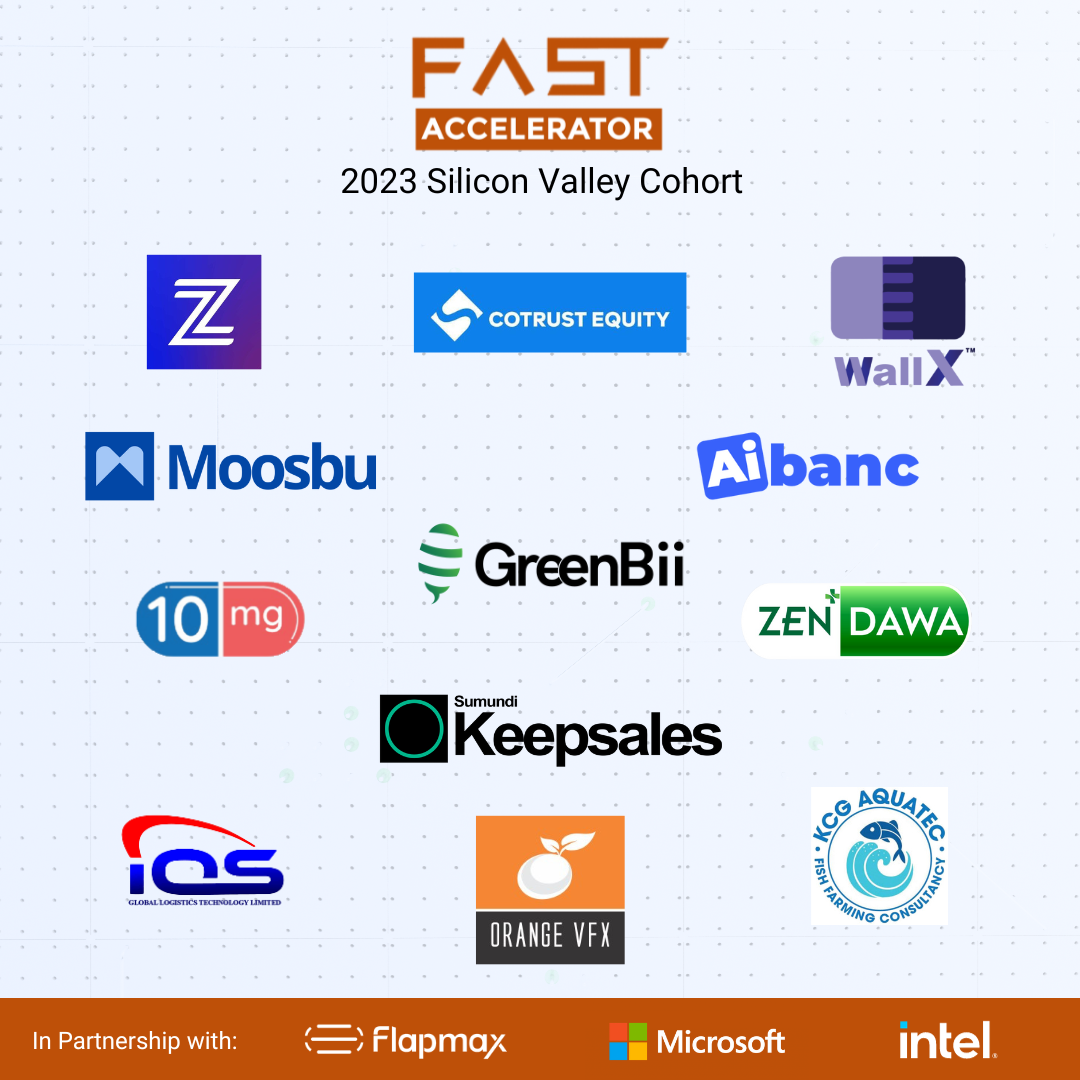
Flapmax (https://Flapmax.com/), a leading data and AI technology company, announced today the twelve companies selected for the second cohort of the FAST Accelerator (https://apo-opa.info/3sYswcx) startup program, created in partnership with Microsoft to help strengthen and scale Africa’s digital ecosystem. Following the conclusion of its 2-week Online Bootcamp, which saw 60+ tech companies participate in an intensive online training with experienced mentors, FAST Accelerator’s cohort of 12 startups will progress to a 5-week comprehensive acceleration experience in Silicon Valley, California starting in October.


“Microsoft believes that African startups and small and medium-sized enterprises (SMEs) are well-positioned to become a bedrock for the African digital economy, with relevant solutions to local societal and economic challenges. Participation in the FAST Accelerator program will help these entrepreneurs capture growth opportunities and expand their market reach,” said Mame-Fatou Gueye, SME Program Manager, Microsoft Africa Transformation Office.

The FAST Accelerator program received over 1200 applications from 35 countries in Africa, spanning a diverse range of industry sectors, including Financial Services (128 applications), Healthcare (95 applications), Agriculture (235 applications), Transportation & Logistics (60 applications), Clean Technology & Energy (57 applications), and Creative Media & Entertainment (40 applications). Applicants represented a broad mix of cloud-based products and services serving businesses throughout Africa, harnessing AI to drive innovation, enhance efficiency, and address critical challenges in their respective domains.

“At Flapmax, our mission is to build societally impactful solutions that harness the power of AI to transform multiple industries through long-term partnerships with startups, SMEs, and global enterprises,” said Dr. Dave Ojika, founder and CEO of Flapmax. “Collaborating with technology partners like Microsoft and Intel, we are assembling a unique fusion of cutting-edge AI technologies, business development strategies, and global-scale growth opportunities for Africa and other emerging markets. Our objective is to empower startups and underrepresented entrepreneurs to rapidly and sustainably scale their businesses and create new job opportunities using AI as a catalyst.”

FAST Accelerator 2023 (FA23) applicants had to be based in Africa, ready to scale or expand within the continent, and have an established product-market fit while addressing one or more of the United Nations Sustainable Development Goals (SDGs). The FA23 cohort features the following startups:

  • Zeeh Africa (FinTech) (https://www.Zeeh.Africa/): AI-powered open banking platform connecting businesses to financial data
  • Sumundi (eCommerce) (https://Sumundi.com/): Intelligent eCommerce platform for Africa’s retail businesses
  • Cotrust Equity (FinTech) (https://Cotruste.com/): The Uber for micro-lending in Africa
  • Trucki (Supply Chain) (https://ioslogistics.com/): AI-powered haulage infrastructure connecting cargo stakeholders
  • Orange VFX (Creative Media) (https://OrangeVFX.com/): Delivering high-quality animation and visual effects that help African businesses
  • 10mg Pharma (HealthTech) (https://10mg.co.uk/): AI-driven cost savings on medications for chronic pain patients
  • Wallx (FinTech) (https://www.Wallx.co/): Payment and business solution for small business owners
  • Moosbu (FinTech) (https://Moosbu.com/) : Empowering SMEs with AI for sales and financing
  • KCG Aquatec Fish Farming (AgTech) (https://KCGaquatec.com/) : Aquaculture infrastructure helping fish farmers grow their businesses sustainably
  • Aibanc (FinTech) (https://Aibanc.co/): AI-powered Banking for High Earners Not Rich Yet (HENRY)
  • Zendawa Africa (HealthTech) (https://Zendawa.Africa/): Enabling neighborhood pharmacies to sell online
  • Greenbii (FinTech) (https://www.Greenbii.com/): AI-driven asset financing and software management platform for SMEs

Beginning October 23, the FA23 cohort will participate in a wide array of activities, including training, AI integration, business development, fundraising, and various other events. They will work closely with Intel and Microsoft on co-innovation projects, receive sales and marketing support, and gain go-to-market enablement to broaden their audience reach. Additionally, members of the Flapmax engineering team will assist startups in applying optimized Large Language AI models (LLMs), as well as in scaling and fine-tuning these models on Microsoft Azure and Intel platforms.

Previous participants of the Online Bootcamp program had the following to say:

“It is inspiring to learn what is happening in the AI and tech space across sectors and to interact with cohort members and speakers who are experts in their fields.” – Cohort member HealthX Africa


“This [will] provide us with mentorship, networking and fundraising opportunities with global startups. This is a huge one for us and we are more than excited to embark on this adventure!” – Dataleum.


“It was such a great privilege participating in the FAST Accelerator program! Thank you for the phenomenal classes and the opportunity to build new cross-national networks with other amazing entrepreneurs creating global solutions to local problems with one single aim to make the world a better place for everyone!” – Michael Oboh, Co-Founder and Creative Director of Orange VFX Studios


Flapmax has also announced the launch of its digital matching platform, FAST Portal (https://portal.FASTAccelerator.com/), designed to connect investors with startups. FAST Portal will be leveraged to facilitate introductions between investors, partners, and startups within the FAST Accelerator community. Corporate partners and organizations are invited to join us in our mission to empower entrepreneurs and innovators in underserved markets around the world.

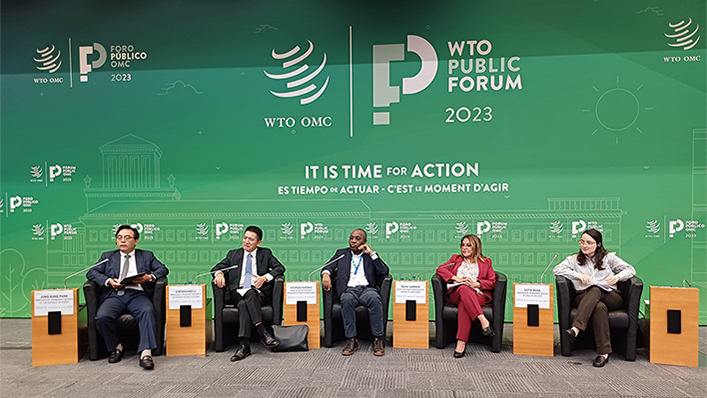
The World Trade Organization (WTO) Public Forum 2023, themed It is time for action, examined how trade can contribute to a greener and more sustainable future.


“Climate change exacerbates existing issues. A just and inclusive green transition must involve the active participation of small businesses, especially those led by youth, women, Indigenous communities, and marginalized groups,” said Pamela Coke-Hamilton, the Executive Director of the International Trade Centre (ITC) at the Public Forum’s kick-off session.

Sharing the stage with WTO Director-General Ngozi Okonjo-Iweala, United Arab Emirates’ Minister of State for Foreign Trade and Chair of the 13th WTO’s Ministerial Conference Thani AI Zeyoudi, and COP28 Director-General Ambassador H.E. Majid Al Suwaidi, Coke-Hamilton emphasized that small businesses are key to driving the green transition. Therefore, their voices need to be heard at negotiation tables, including at the two major forthcoming global events, the 2023 UN Climate Change Conference (COP28) and the 13th WTO Ministerial Conference in early 2024.

Small businesses often lack information, skills, technology and finance to take climate action. In ITC’s SME Competitiveness Survey 2022, conducted among African firms, only 38% of micro, small and medium-sized enterprises reported to have taken at least one measure to reduce exposure to environmental risks while the equivalent figure for large firms was 60%.

What do small businesses need to not only mitigate and adapt to climate change but also to take advantage of emerging green business opportunities and participate in relevant decision making?


A closer look at ITC-hosted sessions

The International Trade Centre brought practitioners from Africa, the Caribbean and the Pacific to amplify the voices of those most affected.

In a session co-hosted with the Caribbean Development Bank, Tasneem Essop, the Executive Director of Climate Action Network, Marike de Peña, the President of the Latin American and Caribbean Network of FairTrade Small Producers and Workers (CLAC) based in the Dominican Republic, and Jerry Spooner, the Executive Director of Regenerative Vanua shared their recommendations for a ‘A just and inclusive climate transition for small business’.

“Greater collaboration is needed to advocate for a paradigm shift in the international financing system, and for the need to measure better, build resilience, and adopt better measures for sustainable development,” said Hyginus ‘Gene’ Leon, President of the Caribbean Development Bank in Saint Lucia. “Helping small businesses in the climate transition, demands that Multilateral Development Banks and International Financial Institutions strengthen their advocacy as well as their financing, policy advice, capacity building, technical assistance, and other institutional support.”

Marike de Peña emphasized the importance of small holder farmers for food systems and food security. Therefore, they should be at the heart of policy development, as they are the ones affected by changing regulations and landscapes and receive more support to comply with new requirements regarding climate change adaptation and mitigation.

Greater collaboration is needed to advocate for a paradigm shift in the international financing system

From an indigenous perspective, Jerry Spooner shared the success of Vanuatu’s new tourism strategy, that involves indigenous communities as business people – while preserving climate, culture and food and building resilience.

Making up 90% of businesses in most countries, small businesses are a transformative force. In ITC’s session ‘Small businesses Driving Africa’s Green Transition: The AfCFTA as a catalyst for environmentally friendly production, trade and consumption’, Deputy Executive Director Dorothy Tembo shared these three messages:

  1. Sustainable and resilient value chains are central to deliver on the UN Sustainable Development Goals and the AU Agenda 2063
  2. The African Continental Free Trade Area (AfCFTA) offers an opportunity to advance sustainable production and trade in Africa – small businesses must be the driving force.
  3. ITC places environmental sustainability at the heart of its interventions to promote small business competitiveness.

The Ambassador of The Gambia in Geneva, H.E Muhammadou M.O. Kah replied by saying that climate crisis was a reality and greening a must. “We cannot do this as individuals, we must partner, and we have to make sure that we make it right. Multilateralism is the only hope, it must work,” he said.

Peter Nyeko, co-founder and CEO of Mandulis Energy from Uganda believes that small businesses can swiftly deliver solutions on a small scale and take advantage of international initiatives through the AfCFTA. However, communication was key to understanding the range of offers in the Free Trade Area.

Colette van der Ven, Founding Director of TULIP Consulting, added that the AfCFTA could be a lever for Africa’s green transition. Governments could look at implementing existing national provisions, including on non-tariff barriers, and to capitalize on value chains.

Jayasurya Kalakkal, Expert in Environment and Trade at the UN Environment Programme emphasized the importance of cooperation at the trade and environment nexus and that UNEP, as a partner, stood ready to support.


Artificial Intelligence for Greener Trade

At ITC’s booth ‘AI for Greener Trade’, Senegalese entrepreneur Babacar Birane demonstrated how entrepreneurs can make their green business idea a reality by using artificial intelligence. His company Concree is supported by ITC’s FastTrackTech project that is part of the Netherlands Trust Fund, Phase V.

ITC was also proud to offer more examples of small business capacity-building tools, including ITC’s diagnostics tool for tech start-ups, the SME Trade Academy, and the Climate Smart Network, a directory of businesses with climate smart credentials.

Find the full programme of ITC’s participation at the WTO Public Forum here.


In a moment of great pride and excitement, Rukevwe Toka has been nominated for The Future Awards Africa Prize in Professional Services for the year 2023. The Future Awards Africa is a prestigious platform described by The World Bank as “The Nobel Prize for Young Africans” and lauded by Forbes International as the “most important youth awards.” These awards are dedicated to recognizing the outstanding achievements of young Africans between the ages of 18 and 31 across diverse fields.

Rukevwe Toka expressed deep honor and gratitude for this remarkable nomination, acknowledging the invaluable support received from a dedicated network of well-wishers throughout the journey. She particularly extended her appreciation to those who took precious time out of their busy schedules to nominate her for this prestigious accolade.

In addition to the thrilling announcement, Rukevwe Toka took the opportunity to share key factors that have significantly contributed to her journey of success. These insights are intended to inspire and guide others on their paths to achieving excellence:

1. Clarity of Vision and Tenacity of Purpose: Rukevwe emphasized the importance of maintaining a crystal-clear vision of personal and professional goals, coupled with an unyielding determination to bring them to fruition. This clarity of purpose empowers individuals to stay focused and resilient in the face of challenges.

2. Continuous Learning and Intellectual Humility: Prioritizing continuous learning and embracing intellectual humility are crucial for personal and professional growth. Rukevwe underscores the idea that the journey of knowledge is perpetual, and intellectual humility allows one to remain open to new discoveries.

3. Courage to Take Risks and a Pioneering Spirit: She highlighted the value of courage in stepping outside one’s comfort zone, embracing calculated risks, and nurturing a pioneering spirit. These attributes enable individuals to seize new opportunities and challenge conventional wisdom.

4. Grit, Innovation, Entrepreneurial Alertness, and a Growth Mindset: Rukevwe emphasized building resilience, displaying grit in the face of adversity, fostering innovation, and maintaining an entrepreneurial spirit. A growth mindset allows individuals to view challenges as opportunities for personal and professional development.

5. Strong Support System including Sponsors, Mentors, and Colleagues: Rukevwe recognized the significance of a robust support system, which includes seeking guidance and wisdom from sponsors, mentors, and colleagues. Leveraging their collective experience and insights plays a pivotal role in individual growth and navigating complex situations.

Rukevwe Toka concluded her briefing by extending heartfelt gratitude to The Future Project teams, including the central working committee and the esteemed jury members who work diligently behind the scenes to ensure the recognition of young African achievers. She commended their commitment to celebrating the hard work and dedication to excellence demonstrated by young Africans. In closing, she offered her thanks and invoked blessings on their endeavors.